David Nkotanyi, 25, was arrested on Saturday, June 25, after residents became suspicious of his dealings and reported him to the Police.
At the time of his arrest, Nkotanyi had already collected money amounting to Rwf31,000 from two families, according to Superintendent of Police (SP) Hamdun Twizeyimana, the Police spokesperson for the Eastern region.
“Last month, Nkotanyi reached out to Jean Pierre Akijuru and Drocelle Akimana; two neighbouring residents in Nshoro village of Taba cell, guising as an employee of REG, promising to connect their houses with electricity. He took copies of their National ID and Land Title, and each paid him Rwf15,500. Nkotanyi made them believe that the money was for registration and cash-power meter, and he disappeared,” said SP Twizeyimana.
The victims, he added, called the Police on Saturday after they saw him in Muhura trading center, where he was arrested.
SP Twizeyimana advised the public to be vigilant against such fraudsters and not to pay money to individuals claiming to be officials offering certain services.
The suspect was handed over to RIB at Muhura station for further investigations.
Article 279 of the law determining offences and penalties states that; any person who, without tittle usurps public, civil or military functions or poses the acts of one of these functions or falsely attributes to himself/herself the quality of a public official or publicly wears a costume, a uniform, badge or an emblem with an intention to mislead the public, commits an offence.
Upon conviction, he/she is liable to imprisonment for a term of not less than two years and not more than three years, with a fine of not less than Rwf300,000 and not more than Rwf500,000.
Obtaining property of another person by deception, under article 174 of the same law, is punishable with imprisonment for a term of not less than 2 years and not more than 3 years, and a fine of not less than Rwf3 million and not more than Rwf5 million.
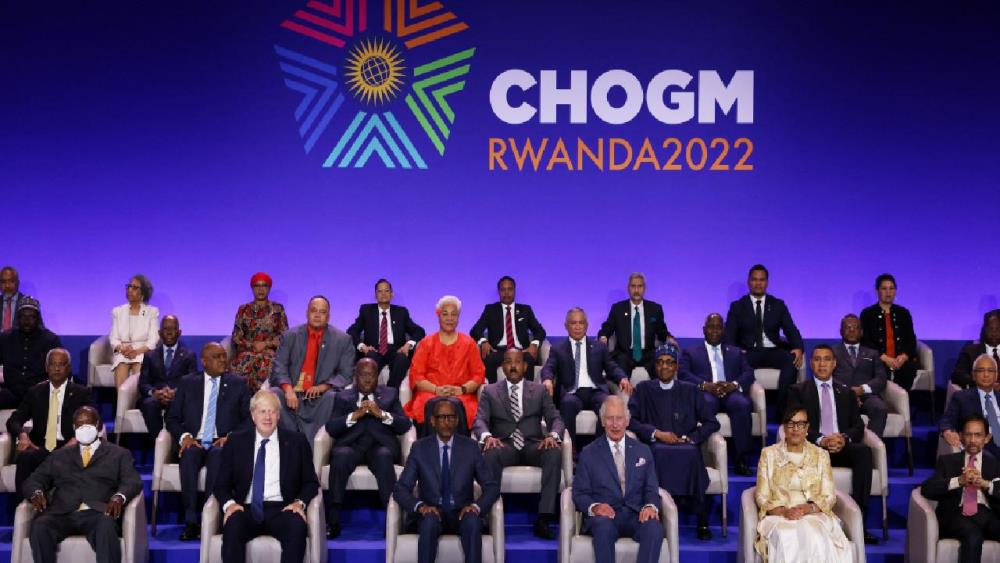
Leaders accepted applications by the two west African countries at the closing session of the Commonwealth Heads of Government Meeting in Kigali, Rwanda. It follows formal expressions of interest by Gabon and Togo and consultation with member countries.
Rwanda was the last country to join the Commonwealth, in 2009.
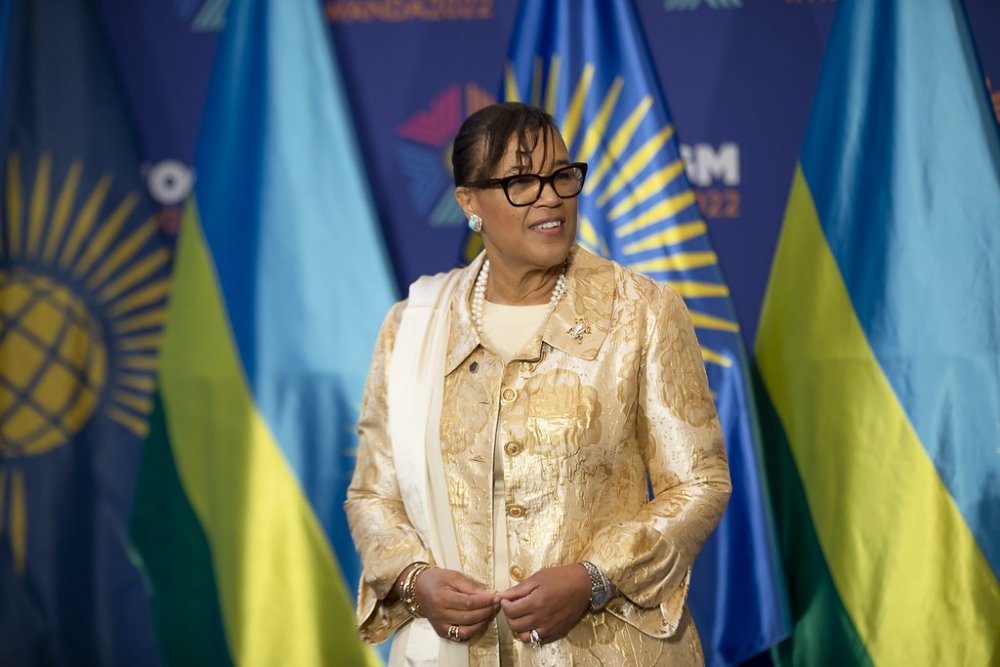
Welcoming the announcement, Commonwealth Secretary-General, Patricia Scotland, said: “The Commonwealth, which began as eight nations in 1949, is growing to 56. Our continued growth, beyond the scope of our history, reflects the advantages of Commonwealth membership and the strength of our association. I am thrilled to see these vibrant countries join the Commonwealth family and dedicate themselves to the values and aspiration of our Charter.”
Gabon is a sparsely populated country of two million people, bordering Cameroon – also a member of the Commonwealth – and Equatorial Guinea, and the Republic of Congo.
Togo is bordered by Ghana – a Commonwealth member – and Benin and Burkina Faso. It has a population of approximately 7.8 million people.
Neither country has an historic association with the Commonwealth, with both gaining independence from France in the 1960’s.
The eligibility criteria for Commonwealth membership, amongst other things, state that an applicant country should demonstrate commitment to democracy and democratic processes, including free and fair elections and representative legislatures; the rule of law and independence of the judiciary; good governance, including a well-trained public service and transparent public accounts; and protection of human rights, freedom of expression, and equality of opportunity.
With 47 out of 54 Commonwealth countries bordering the sea – including 25 small island developing states or ‘large ocean states’ – the Commonwealth Blue Charter Project Incubator will assist governments in developing pilot projects that accelerate their transition to sustainable and inclusive maritime development and conservation, while mitigating and adapting to climate change.
The initiative is supported by an initial contribution from the Commonwealth Fund for Technical Cooperation, with matching commitments from various partners, to the tune of approximately GBP 400,000 in total, with more expected in the coming year. Focusing on proof-of-concept and small-scale projects in particular, the incubator will be managed by the Commonwealth Secretariat, in close cooperation with member countries and Commonwealth Blue Charter Action Groups.
The project aims to address the dearth of financial support for ocean action worldwide, with Sustainable Development Goal 14 (‘Life Under Water’) receiving the least funding globally among all the SDGs. Small island and coastal states are particularly affected, with even fewer funding options for typically marginalised groups, including women, youth, indigenous peoples and local communities.
Deputy Secretary-General of the Commonwealth, Dr. Arjoon Suddhoo, said: “Commonwealth member nations are stewards of more than one third of the global ocean within national jurisdictions. Our island states have many times more ocean area than land… The pandemic over the past year has underlined how mutually reliant we all are upon one another. We now know that decisive joined-up, cooperative, multilateral actions are the only way to tackle global ocean challenges. There is no doubt that we need to redouble our efforts.”
Head of Oceans and Natural Resources at the Commonwealth Secretariat, Dr Nicholas Hardman-Mountford added: “The ocean sustains the lives and livelihoods of billions on this planet but its core life-support functions are critically threatened by climate change, pollution and unsustainable exploitation. Yet, the ocean continues to be eclipsed in climate financing discussions. SDG14 is the least funded of any of the sustainable development goals. For ocean investments to be sustainable Governments need to be supported to lead on the projects they know are most needed in their context. The Blue Charter Project Incubator will uniquely enable Governments to develop a pipeline of bankable projects to mobilise ocean financing where it is needed the most.”
Ocean Governance Adviser and Blue Charter programme lead, Dr Jeff Ardron noted: “There are many very good ocean incubators out there already, but none address the needs of governments. The Blue Charter Project Incubator fills that critical gap.”
All Commonwealth member countries will have access to the project incubator.
Among the many services it offers, the incubator will provide mentoring and technical support to governments on the development of ocean-related pilot projects that build social, ecological and climate resilience, while also facilitating project partnerships with non-governmental entities. It will review proposals, leverage seed funding for projects and encourage planning for sustainability and scaling up initiatives, including at the regional level. Support will also be provided through unique customised tools, including machine-learning.
Project ideas that ‘dare to be different’, offering innovative and cooperative solutions, while also engaging women, youth, indigenous peoples and local communities, will receive particular attention.
{{Commonwealth Blue Charter progress}}
This new initiative continues the significant track record of practical solutions delivered by the Commonwealth Secretariat under the Commonwealth Blue Charter – an agreement by all 54 countries made in 2018 to work collaboratively to address global ocean challenges. It is implemented by 10 Action Groups, led by 16 champion countries.
Over the past four years, more than 450 officials from 40 countries have been trained in ten topic areas. Members have benefitted from 13 online learning courses and 15 resource ‘toolkits’ on various themes, such as mangrove restoration and ‘blue carbon’.
In addition, more than sixty case studies illustrating good and best practices have been published by the Secretariat and shared to Commonwealth member states. An online database of more than 200 online training opportunities, and another database of more than 100 marine funding opportunities have been launched.
The long-term goal of the Commonwealth Blue Charter is to build on its track record of supporting countries through capacity-building, towards small-scale project development and eventually mainstream impact, with enhanced financial support via a potential dedicated ‘action fund’.
Find out more about the progress of the Commonwealth Blue Charter in the report ‘An Ocean of Opportunity’
The announcements were made during a side event in the margins of the Commonwealth Heads of Government Meeting in Kigali this week, where leaders have gathered to discuss pressing global issues facing member countries and to decide actions and work programmes for the organisation.
In their new roles as Champion Countries under the CSET Agenda, Kenya and Eswatini will take the lead in forming voluntary coalitions made up of member countries willing to work together to develop shared strategies and align action on each issue.
Deputy Secretary-General of the Commonwealth, Dr. Arjoon Suddhoo, said:“The Commonwealth Sustainable Energy Transition Agenda is the Commonwealth flagship for accelerating the global energy transition.
Our Commonwealth is blessed with a wealth of precious natural resources, including renewable energy sources such as wind, solar, geothermal, tidal and wave energy. However, our shared economic recovery will depend upon learning from the past and continuing to learn from one other as we build a better future.
“The Sustainable Development Goals point the way, particularly SDG7 on sustainable energy, SDG13 on climate change, and SDG14 concerning the ocean.”
{{Maximising untapped potential of geothermal energy}}
Launching the Action Group on Geothermal Energy, a spokesperson delivered a statement on behalf of Rebecca Miano, Managing Director & CEO of Kenya Electricity Generating Company PLC (KenGen). She said:
“Kenya is pleased to take the lead to champion the Action Group on geothermal energy under the CSET Agenda. Globally, geothermal energy makes up less than 1 per cent of renewable energy sources, but significant potential exists to increase this to make geothermal baseload by 2050. Kenya is already leading the way in this sector. We are happy to share best practices and in-depth experience with fellow Commonwealth countries who also wish to develop this opportunity and to contribute to the global transition to low carbon forms of energy.”
Currently, four Commonwealth member countries have installed geothermal energy. New Zealand and Kenya have the highest installed capacity at 984 MW and 823.8 MW, respectively, followed by Papua New Guinea (56 MW) and Australia (0.31 MW).
However, there is great potential for its development in the Commonwealth, particularly in geothermal resource-rich countries such as Canada, Dominica, St Lucia, St Vincent, St Kitts and Nevis in the Caribbean and the Americas; Kenya, Mozambique, Tanzania and Uganda in East Africa; and Australia, New Zealand, Papua New Guinea and the Solomon Islands in the Pacific.
{{Promoting energy literacy}}
At the same side event, Senator Manqoba Khumalo, Minister for Commerce, Industry and Trade of Eswatini, invited other countries to join the Action Group on Energy Literacy, stating:
“Knowledge is power, and energy literacy empowers people to make informed and better decisions concerning energy. Research has shown that despite increasing concerns about sustainable energy and its role in addressing climate change, energy literacy levels remain low among most people.
“Eswatini is proud to steer this Action Group with the hope of collaborating with other likeminded Commonwealth countries to raise awareness among our societies about energy issues, and then translate these into concrete actions that will help achieve a more sustainable future for all.”
The Action Group on Energy Literacy will share information, know-how, best practices and collaborate to support energy literacy amongst children, young people and local communities, facilitate dialogue amongst various stakeholders on sustainable energy, and encourage cooperation with potential partners such as regional organisations, community-based organisations and the private sector.
Countries such as Malta, Ghana, Seychelles and Sri Lanka have already signed up to join the Action Group.
In support of this work, the Commonwealth Secretariat recently unveiled a children’s book series on sustainable energy, targeting school students aged 7 to 12, which were presented to Commonwealth Education Ministers in April this year.
Advancing the clean energy transition in the Commonwealth
The two new action groups are the first to be launched under the CSET Agenda, in addition to another on youth, which was announced at the Commonwealth Youth Forum last week. This action group on youth is led by an interim steering committee made up of representatives from Nigeria, the United Kingdom, Tanzania and Singapore.
The CSET Agenda was developed in response to a mandate given by Commonwealth leaders at their previous CHOGM meeting in 2018.
In June 2019, the inaugural Commonwealth Sustainable Energy Forum was held, which outlined three pillars of action to guide Commonwealth action: (I) Inclusive Transitions; (II) Technology and Innovation and (III) Enabling Frameworks.
The second Commonwealth Sustainable Energy Forum took place virtually in May 2021 to facilitate consensus building, knowledge sharing as well as raised ambitions amongst member countries to achieve the targets under Sustainable Development Goal 7 (SDG7), as well as the Paris Agreement on Climate Change.
It was agreed that member countries will drive the implementation of the CSET Agenda through Action Groups, which will meet regularly and shape their own respective workplans, supported by the Commonwealth Secretariat.
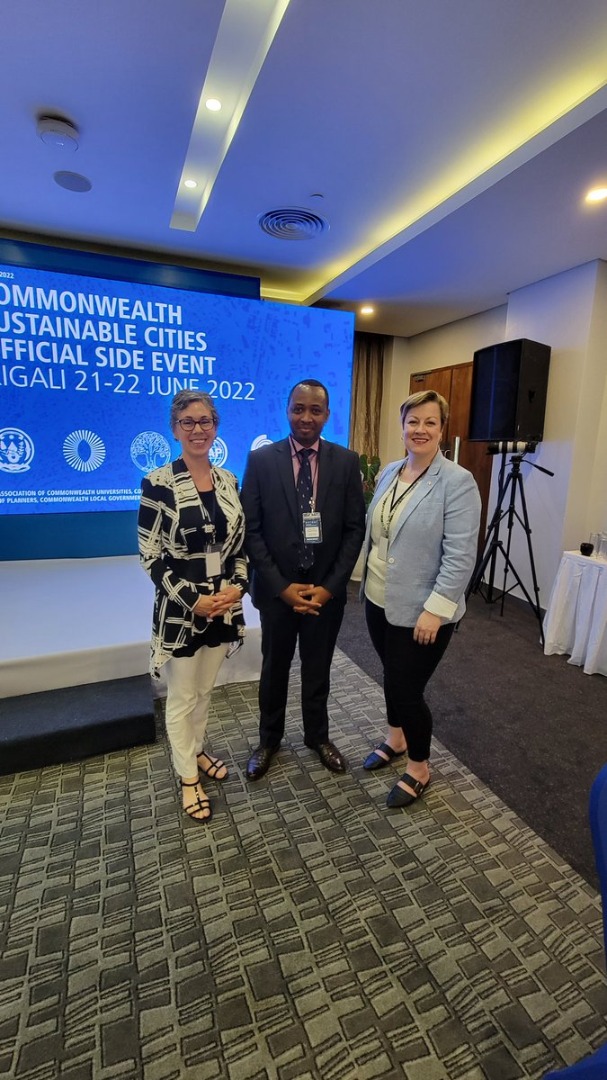
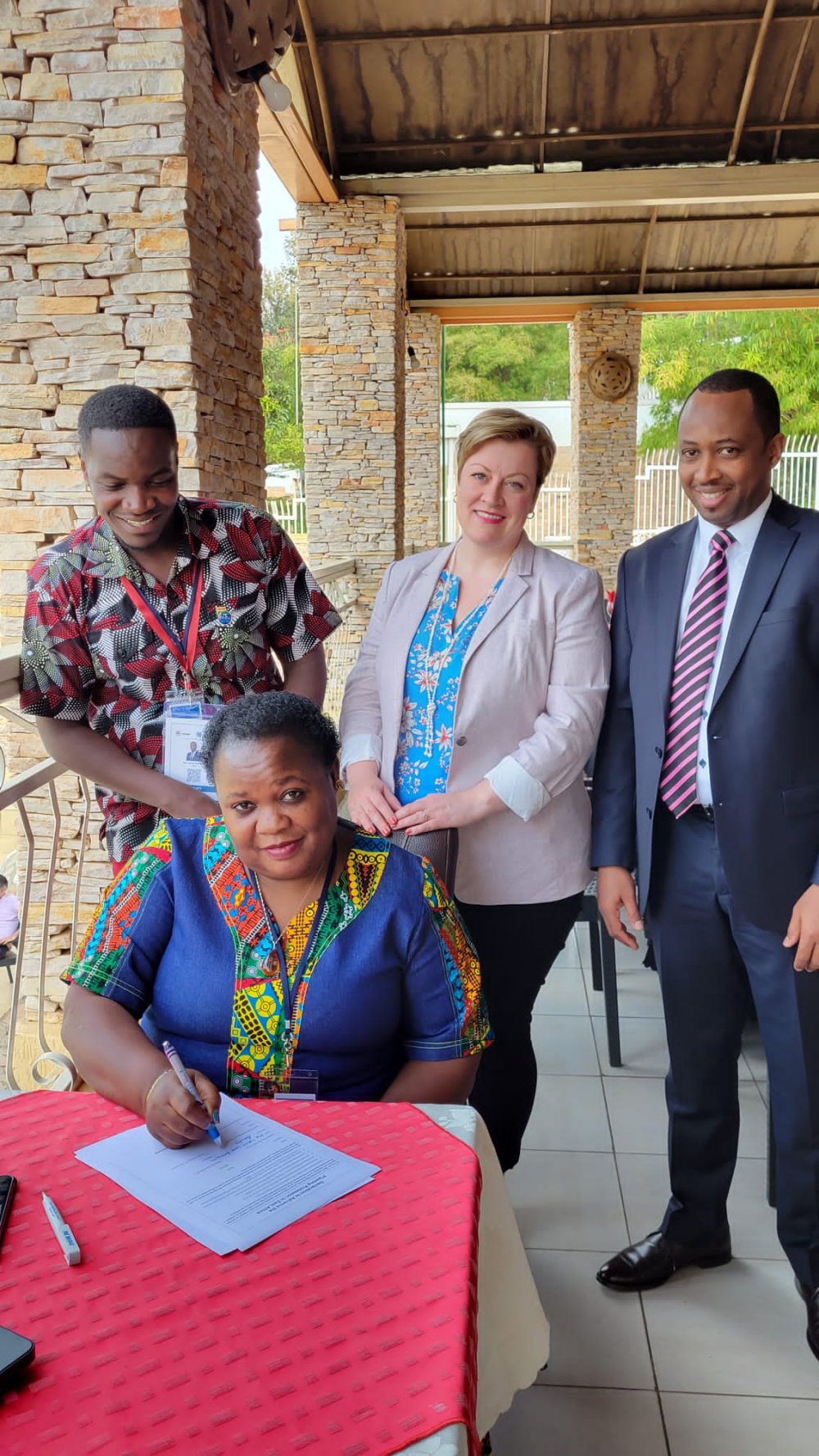
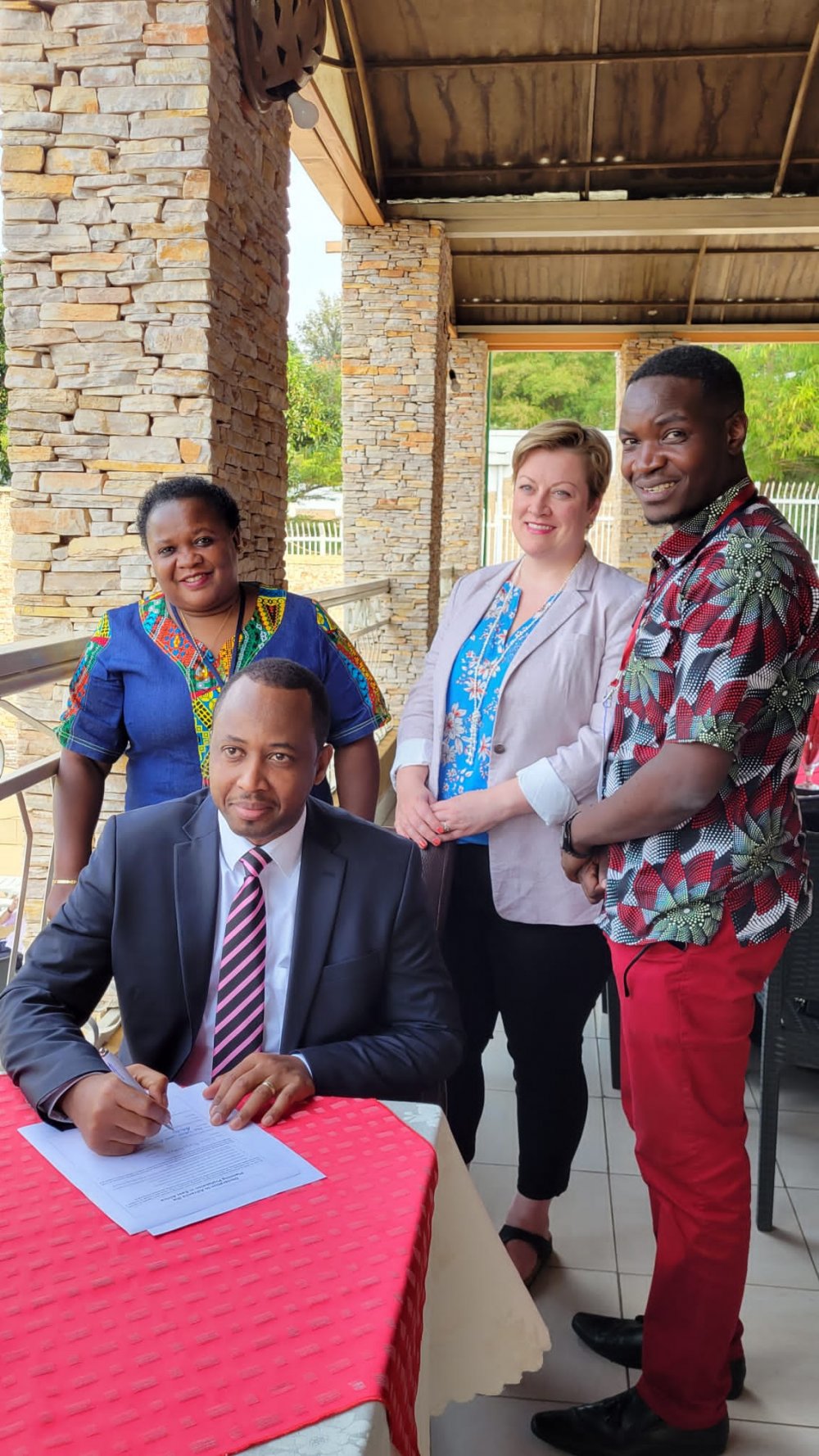
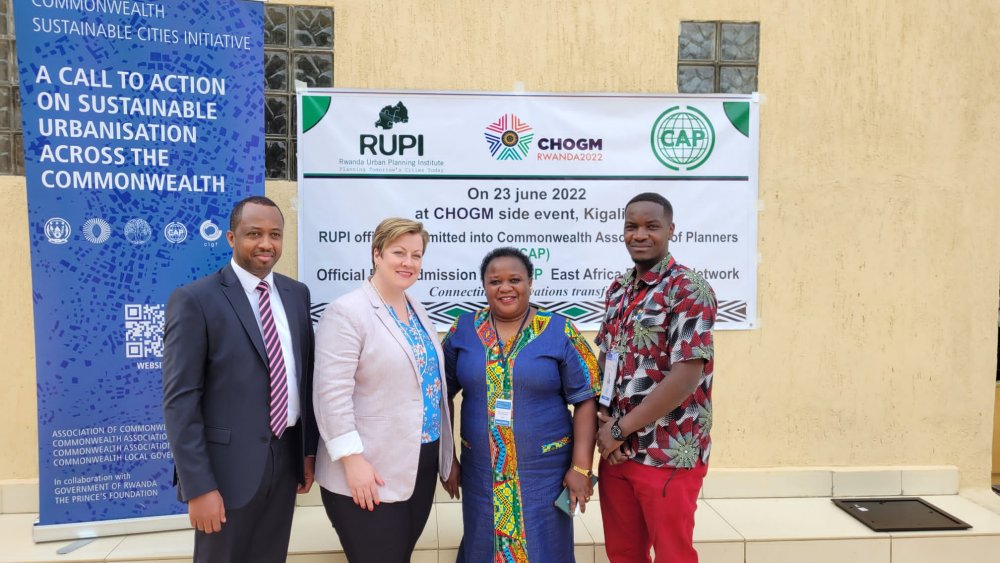
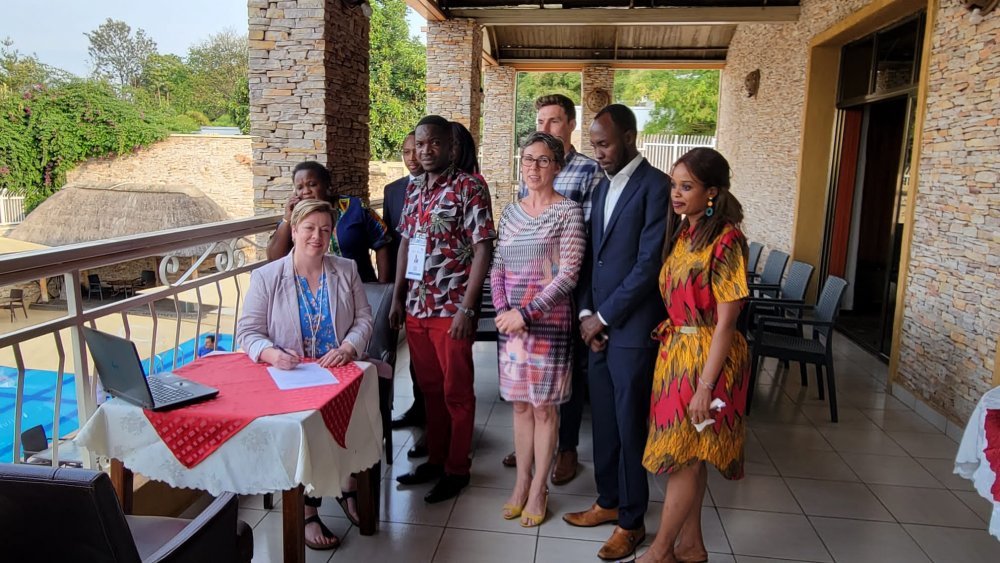
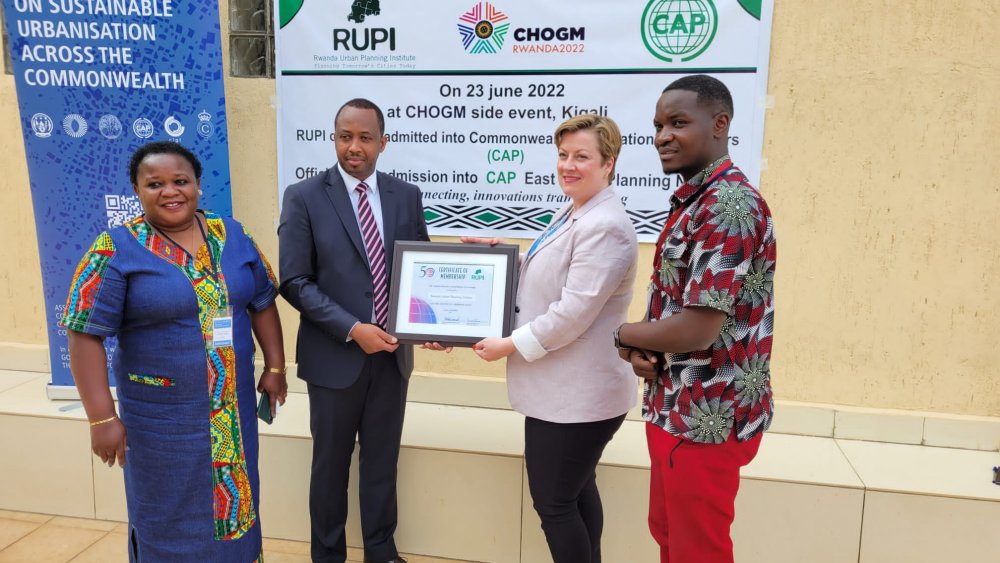
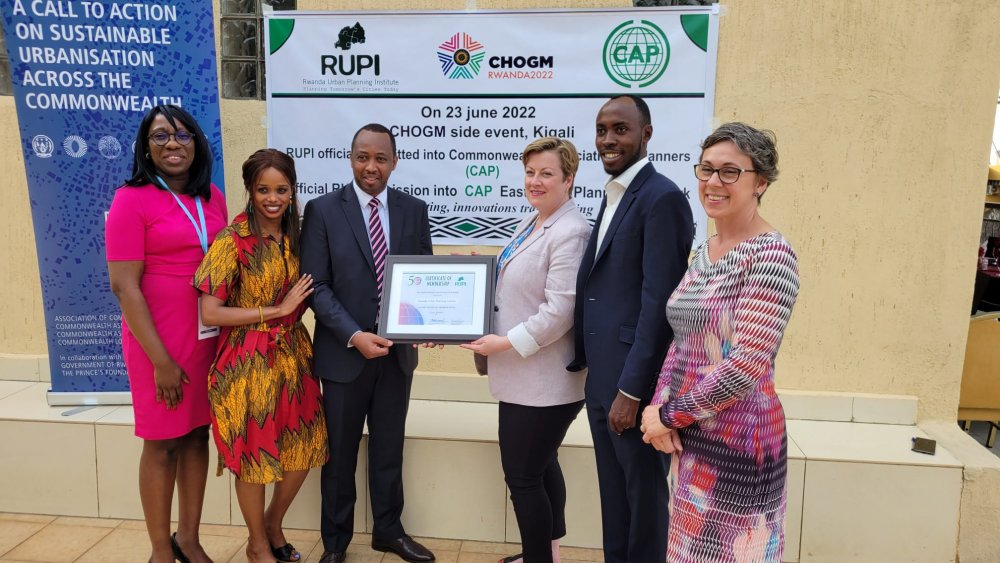
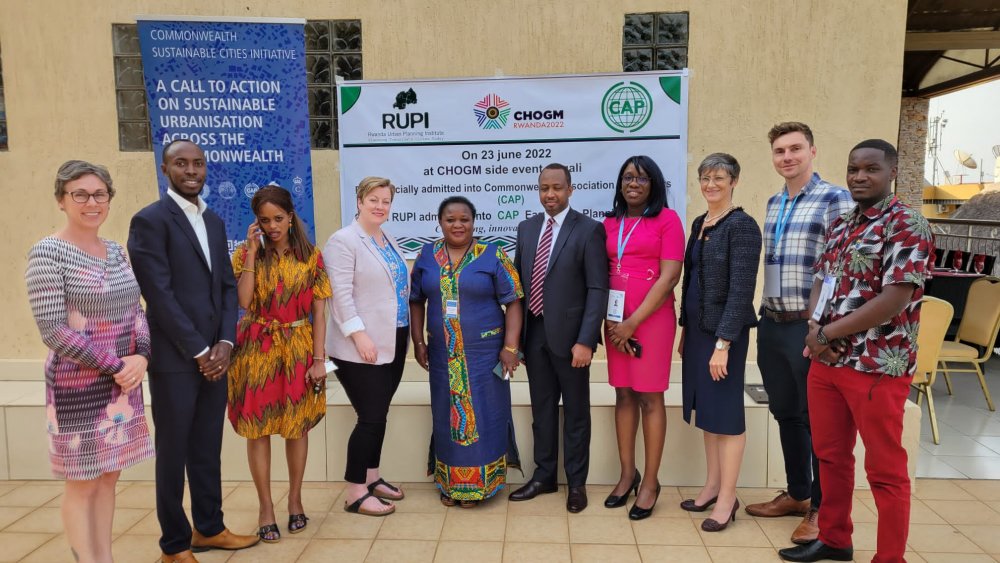
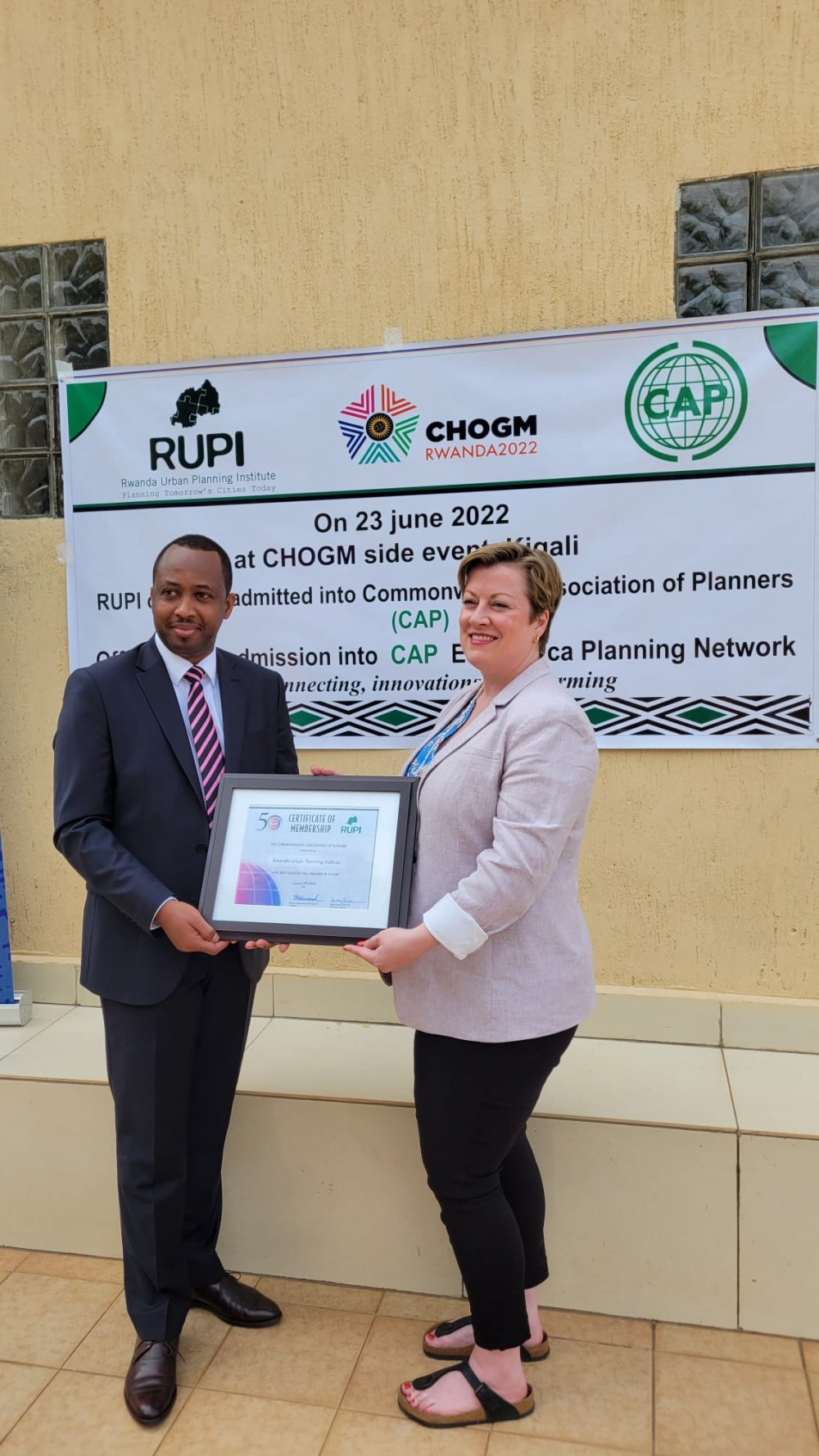
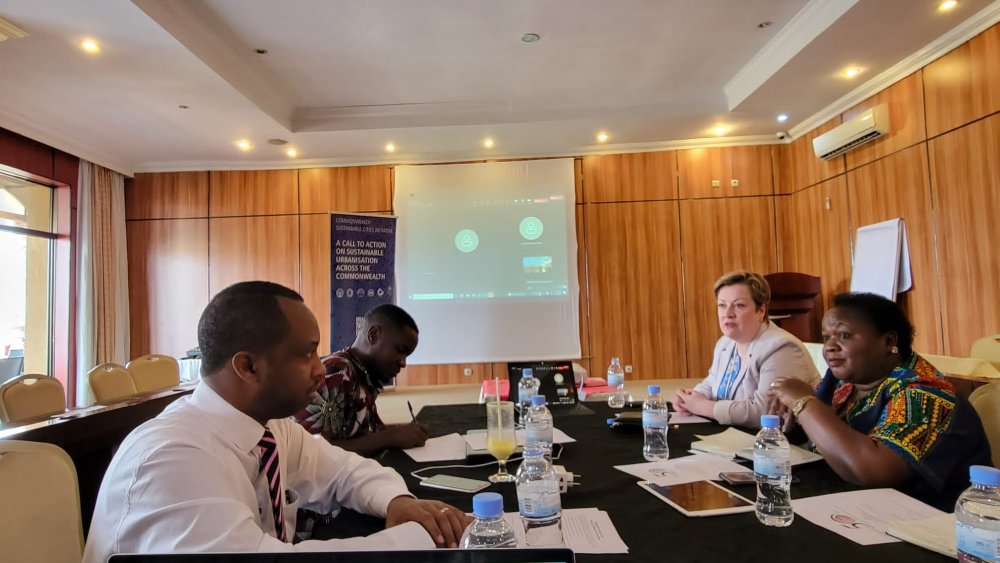
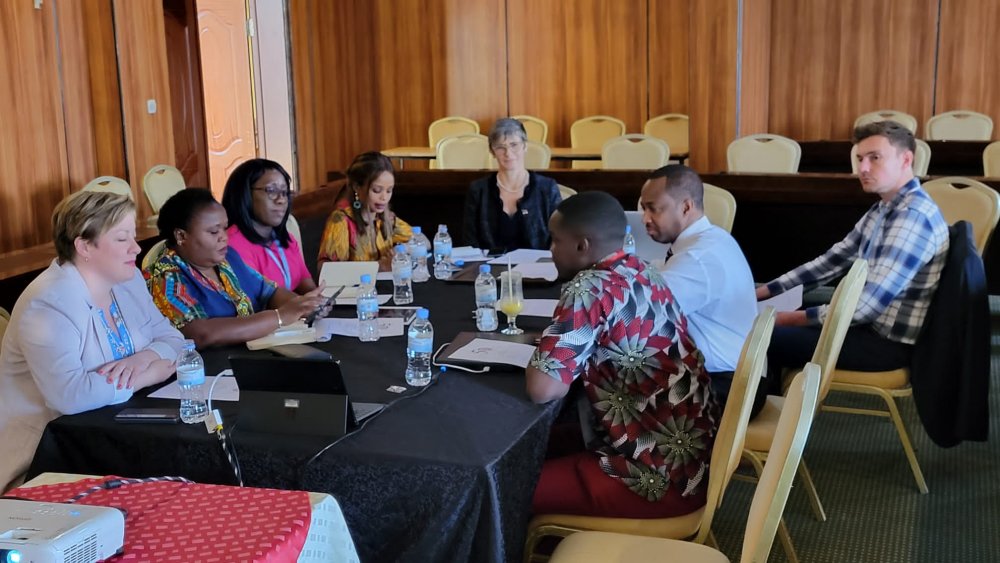
The agreement to admit the association with 300 members was signed on 23rd June 2022 on the sidelines of the Commonwealth Heads of Government Meeting (CHOGM) 2022 held in Kigali, the capital of Rwanda.
Joining the association presents huge opportunities ranging from sharing of expertize, execution of joint projects and partnerships with colleagues from different countries.
Urban planners association is among bodies providing technical support for preparations and implementation of master plans across different sectors.
These include master plans in the areas of agriculture, transport, water distribution, tourism, climate change mitigation resulting from growing population demography.
Evariste Nsabimana Barahira, one of urban planners has told IGIHE that the government works with the association and other relevant institutions to make thorough planning enabling residents to settle on small land aligning with the National Strategy for Transformation (NST1) and other master plans.
He went on to explain that joining international associations presents enormous opportunities, which include among other things, the sharing of experiences with counterparts.
“We shall meet for discussions and share knowledge. We shall execute joint projects and work together in capacity building initiatives. There are tenders requiring international competencies where partners might intervene to fill the gap,” Barahira said.
Rwanda has a rapid urbanization and plans to increase the current urban settlements from 18.4% to 70% by 2050.
Protais Mpayimana, the Division Manager of Urban and Rural Planning at Rwanda Land Management and Use Authority (RLMUA) has said that joining international associations will help planners to play a vital role in the country’s development.
“We need experts in urban planning so that we can develop these towns with appropriate master plan and avoid informal settlements. We need to share expertize with other cities with advanced development,” he noted.
Mpayimana has also disclosed that urban planners will stand chance to upgrade their knowledge to gain international competencies through sharing of expertize with countries from the East African Community (EAC) and Commonwealth.
“It is essential for the association to work with others to gain prowess to ensure smooth urban planning,” he stated.
Dr. Merard Mpabwanamaguru, Kigali City Vice-Mayor in charge of urbanization and infrastructure has observed that establishing firm urban and rural planning associations sharing expertize regularly, discussing ways to enhance use of land would be fundamental to the development of Rwanda and East Africa’s cities.
He underscored that the association will help Kigali and districts to make proper planning and enhance smooth implementation of master plans.
Dr. Mpabwanamaguru said that the recent development is a great milestone to shape the future of Rwanda’s urbanization as one of members of Commonwealth and EAC.
The State Minister in the Ministry of Infrastructure, Eng. Patricie Uwase has expressed optimism that the expansion of such associations will pave the way for green urbanization.
“Joining Commonwealth gives us more strength because engaging in discussions with different experts helps to identify gaps, learn from each other’s approaches with a view to continue accelerating urban development,” she said.
Considering rapid growth of cities in EAC; Kelley Moore, the Commonwealth Secretary-General of the Association of Planners (CAP) stressed the urgent need for shared knowledge, tools and skills among planners ‘so that cities and human settlements are inclusive, safe and resilient’.
The association of planners seeks to draw much emphasis promoting participation of citizens in master plans to become more meaningful to national development.
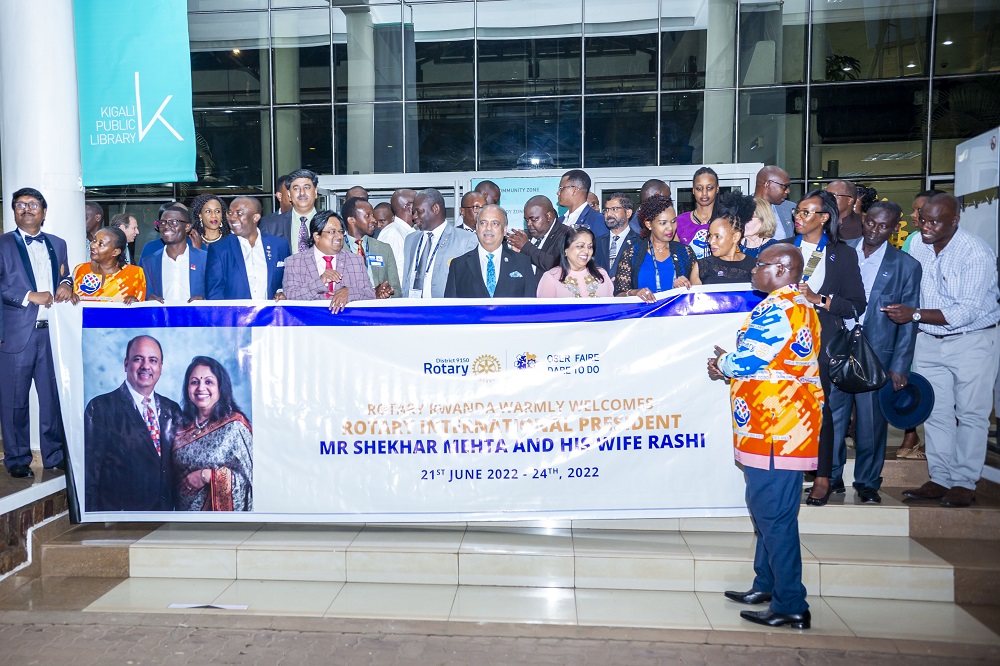
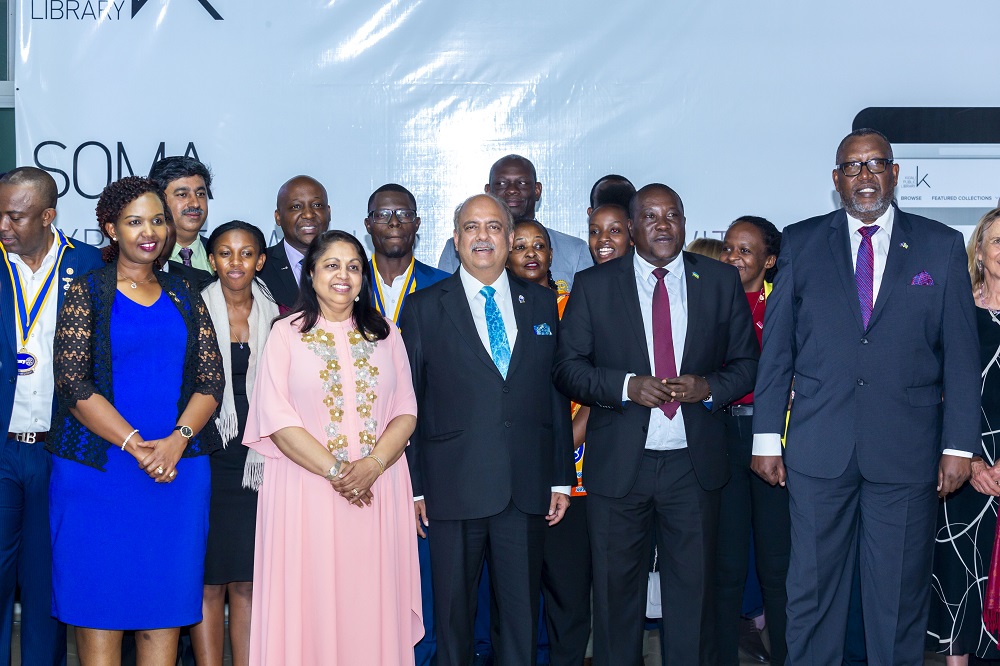
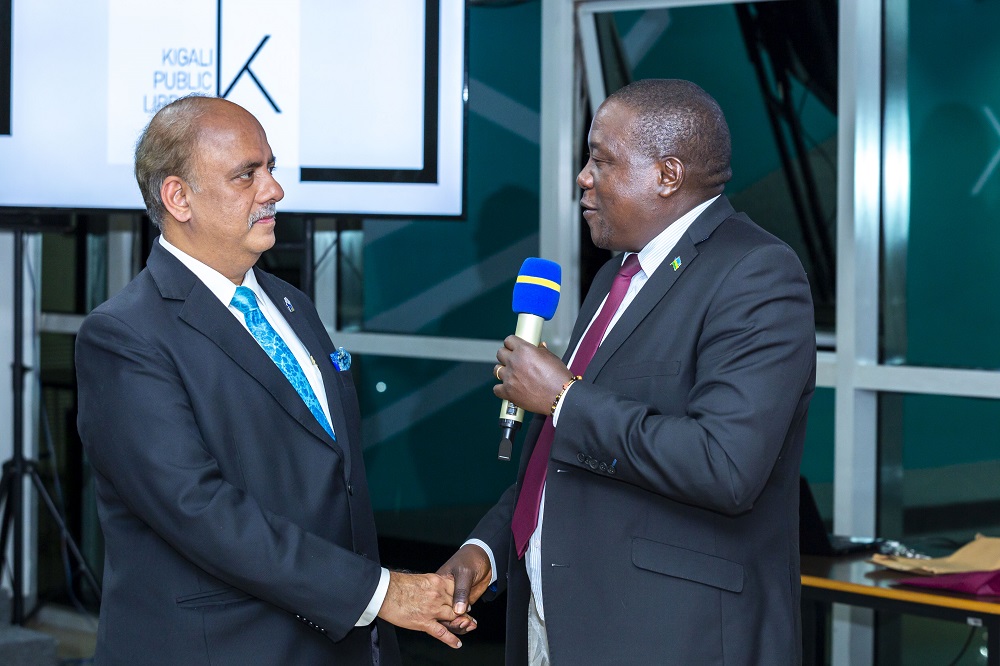
The appreciation was made on Thursday 23rd June 2022 as the President of Rotary International, Shekhar Mehta, visited Kigali Public Library built on the funding of Rotary Club Kigali-Virunga in partnership with donors and the Government of Rwanda.
The facility was completed at a tune of Rwf4.1 billion. It has 34, 010 printed books, 613 digital books and 87 audio books.
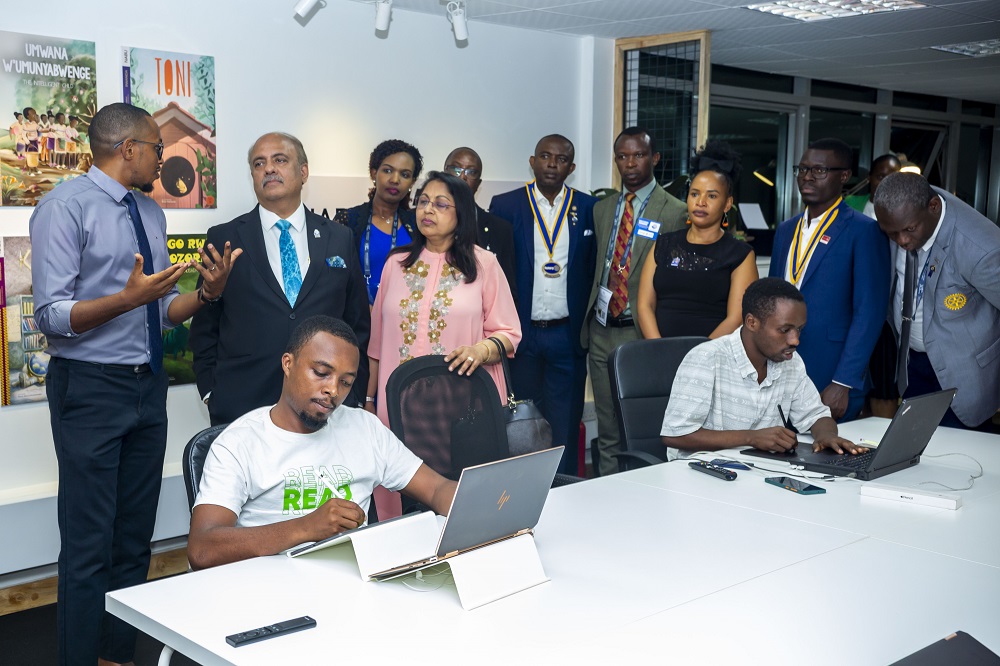
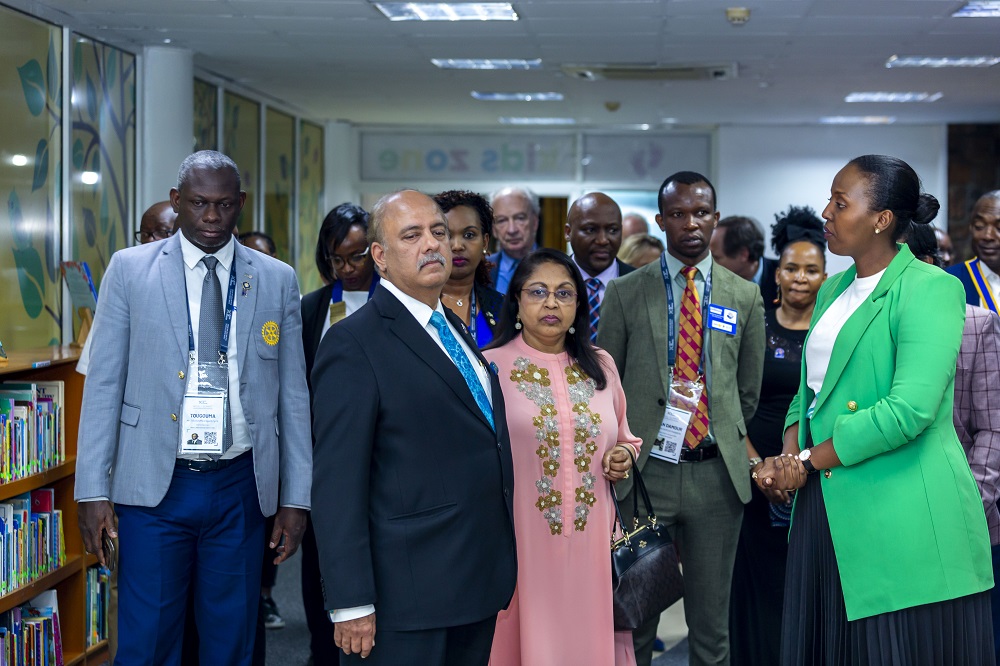
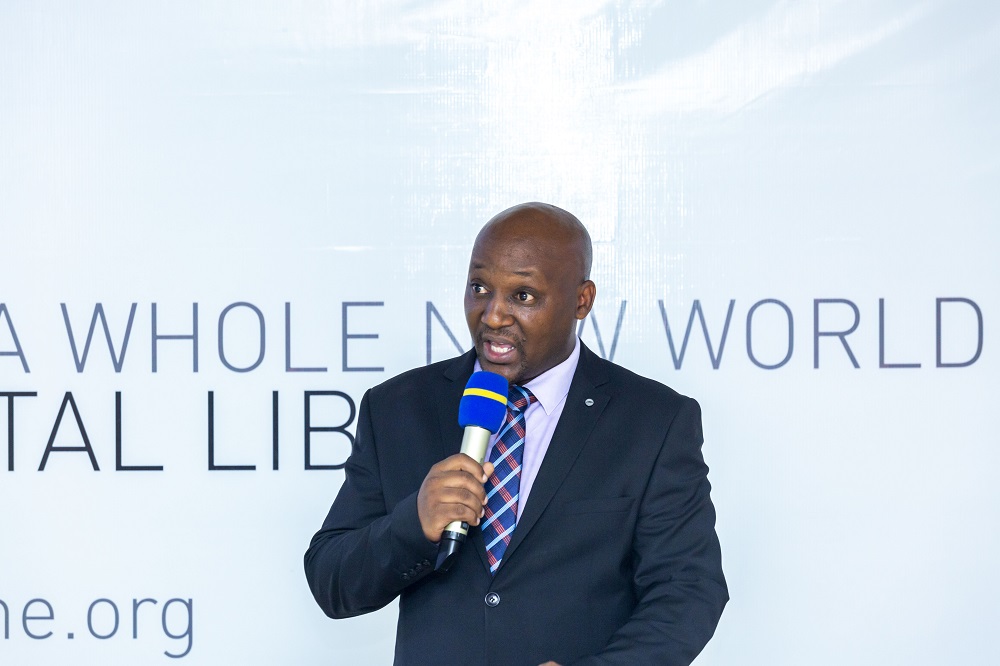
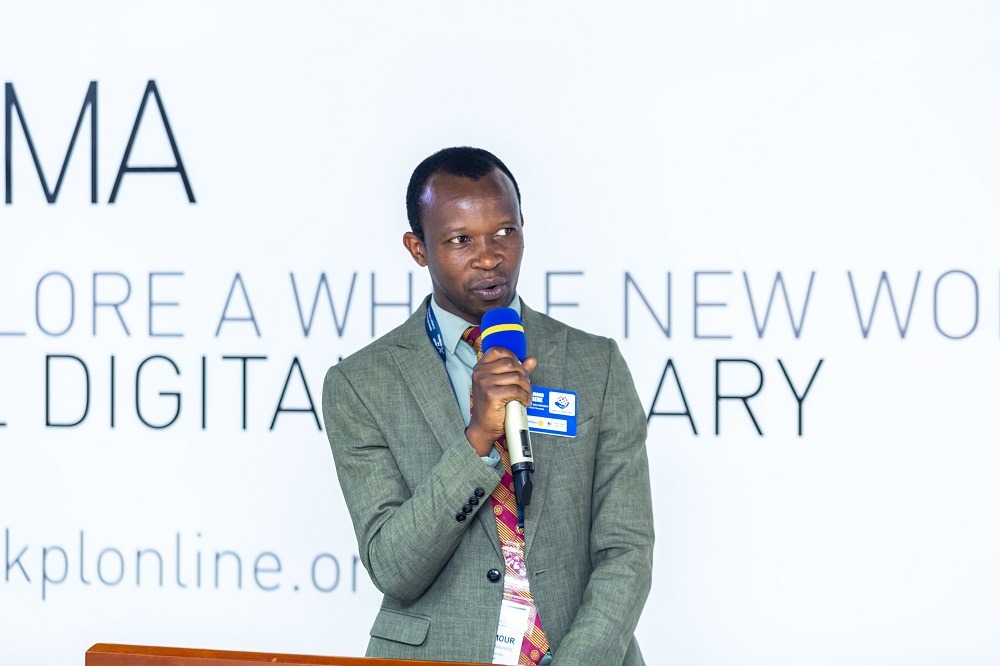
After touring different sections of the library including seats for children, visitors using online books and conference hall among others; Shekhar Mehta thanked people behind the establishment of the library observing that it aligns with the objectives of Rotary to strive for happiness among communities.
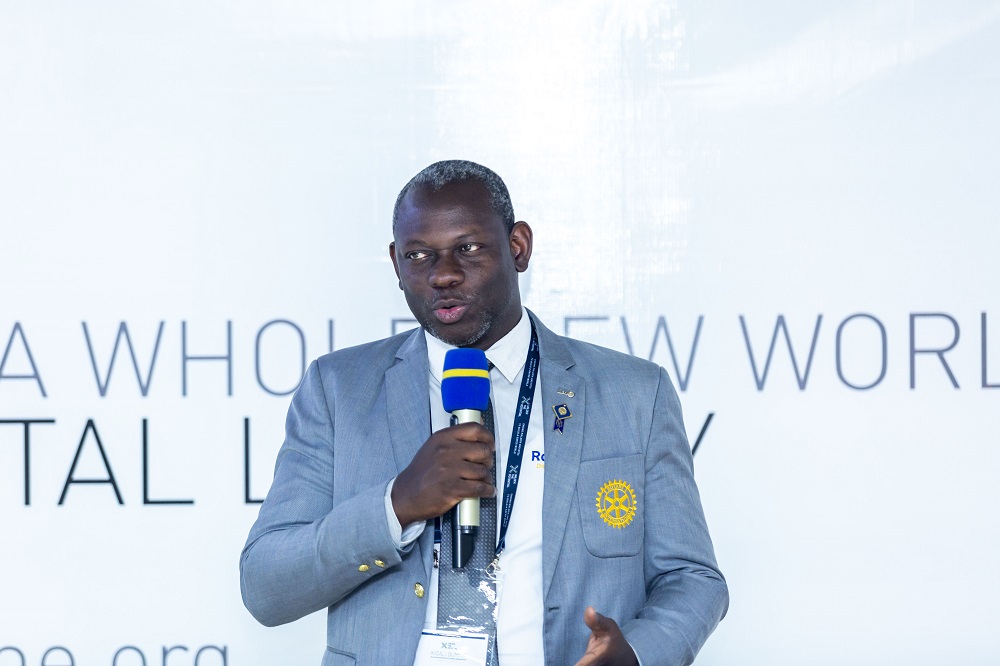
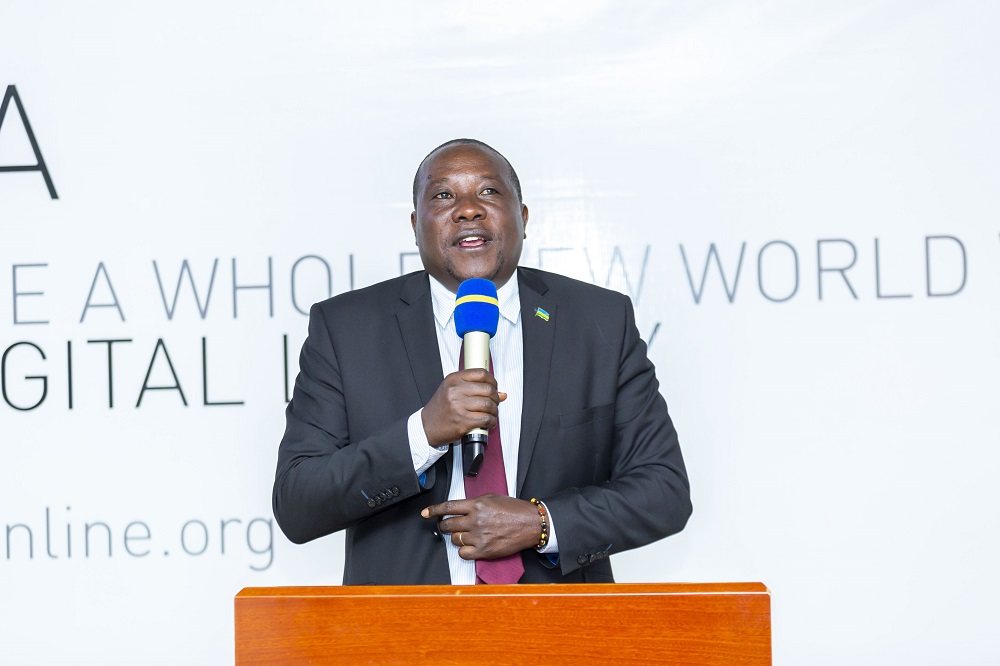
The Director General of Rwanda Basic Education Board (REB), Dr. Nelson Mbarushimana said that the library provides huge contribution to Rwanda’ education.
“This library is open to everyone. Be it children from kindergarten, primary schools, university students and everyone conducting research. All of them come here to read books,” he said.
Dr. Mbarushimana has also revealed that the library has promoted the culture of reading.
The Minister of Local Government, Jean Marie Vianney Gatabazi has also extolled Rotary’s daily activities and stressed need to have them extended across the country.
“The activities of Rotary are self-evident. These include support to cancer patients, patients with cardiovascular diseases, enhancing access to safe water among citizens among other projects. We want to see their impact across the country,” he noted.
Gatabazi observed that the organization’s activities align with the vision of President Paul Kagame and requested Rotary to keep up the momentum.
Rotary club is an organization purposed to bring together businesses and professionals to provide humanitarian services as well as providing support in addressing problems facing the world by combating illiteracy and poverty, contributing to the provision of safe water, enhancing economic and community development, handling disputes and fighting disease.
Rotary Club International was established 116 years ago. It is currently comprised of 1.2 million members from 200 countries.
The club has been in Rwanda for more than 20 years where it has established clubs that contributed to the country’s development in different areas.
The Commonwealth Heads of Government Meeting (CHOGM) which officially opened in Kigali, the capital of Rwanda on Friday 24th June 2022 also re-elected Patria Scotland re-elected as the bloc’s Secretary-General.
A Commonwealth Secretary-General serves a maximum of two terms of four years each.
However, Scotland’s first term has lasted for six years as a result of the COVID-19 pandemic, which delayed the Commonwealth Heads of Government Meeting by two years.
Leaders of the Commonwealth have reappointed Patricia Scotland for a further two years to complete the balance of her period in office.
Scotland was facing off a candidate designated by Jamaica, Kamina Johnson Smith.
The latter is the Minister of Foreign Affairs and Foreign Trade of Jamaica.
Meanwhile, President Kagame will serve as the Commonwealth Chair-in-Office for two years.
Customarily, the Head of State hosting CHOGM takes over the chairmanship for two years until the next meeting.
Kagame replaces Boris Johnson who held the position since 2018. He was supposed to handover to Rwanda in 2020 but the meeting was delayed due to the pandemic.
As he handed over on Friday, Boris Johnson said that he was passing the baton to President Kagame, one of the newest members of the commonwealth, and wished him success as he chairs, by encompassing 54 countries and a third of humanity.
“One of the newest members is now at the helm, and more nations are seeking to join, which tells you everything about the health and vitality of our Commonwealth, because for all the differences between us, we are united by an invisible thread of shared values, history and friendship”, he said.
The UK Prime Minister noted that he was able to make some remarkable achievements in the face COVID 19 and expressed optimism that the Commonwealth will make immeasurable progress as Kagame chairs the body.
“For now, it only remains for me to thank every Commonwealth member for having given the United Kingdom the chance to serve as Chair-in-Office. And as I pass on this responsibility to President Kagame, a close friend and partner.
I know that he shares my boundless optimism about the future of the Commonwealth at the forefront of the international agenda, and benefiting all our peoples”, he said.
The Chair-in-Office represents the Commonwealth at high-level international meetings and reinforces the Good Offices role of the Commonwealth Secretary-General.
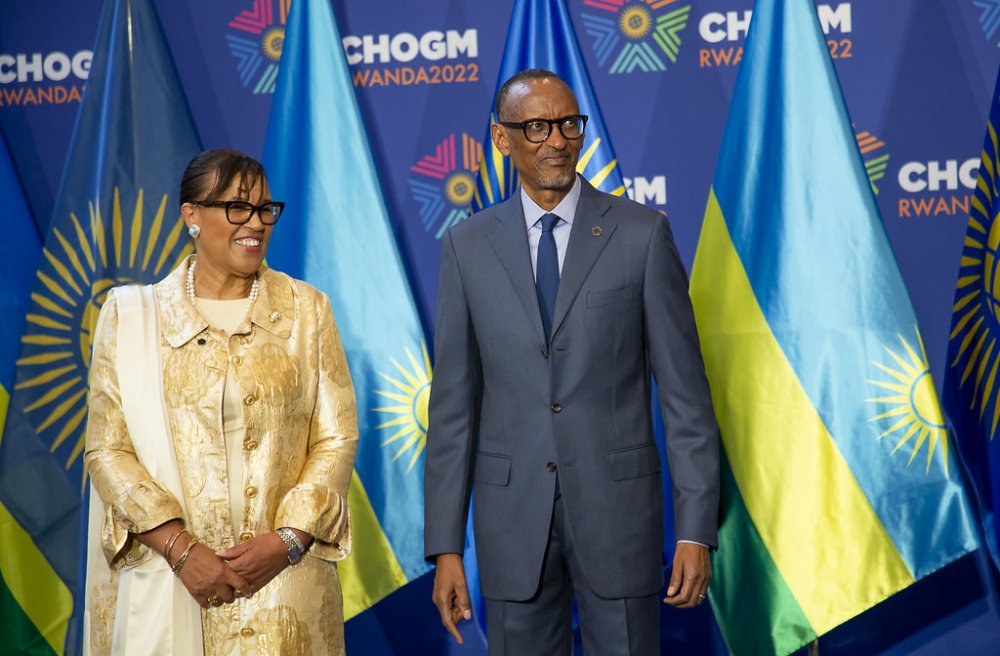
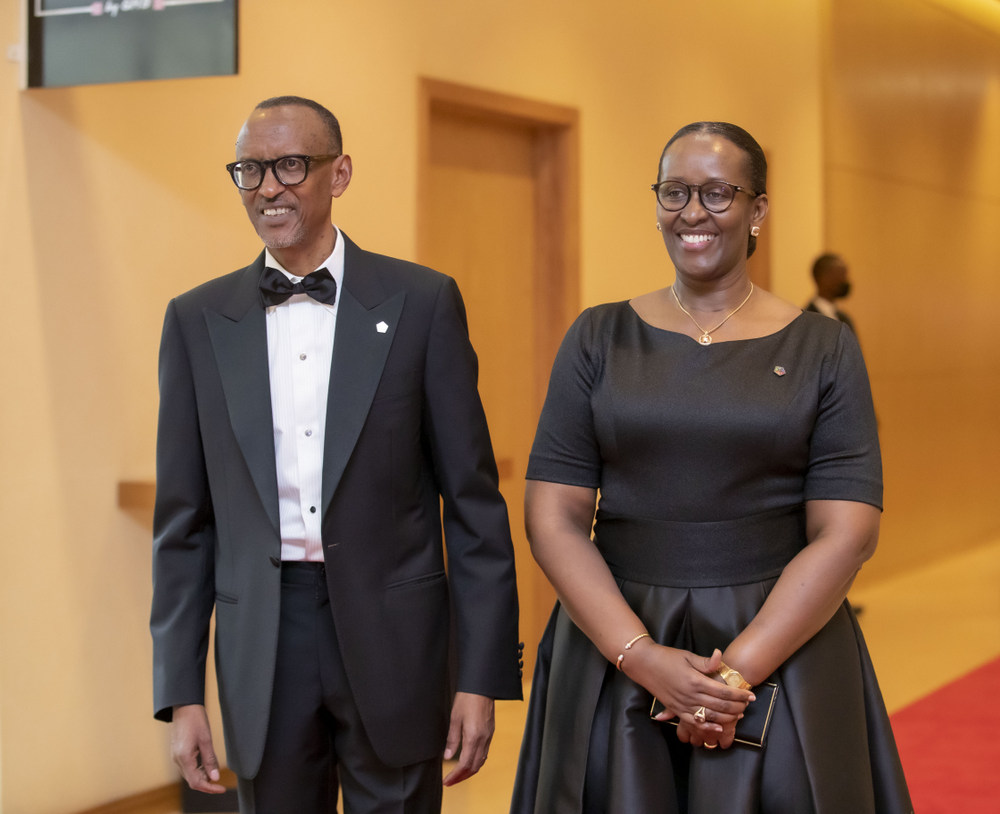
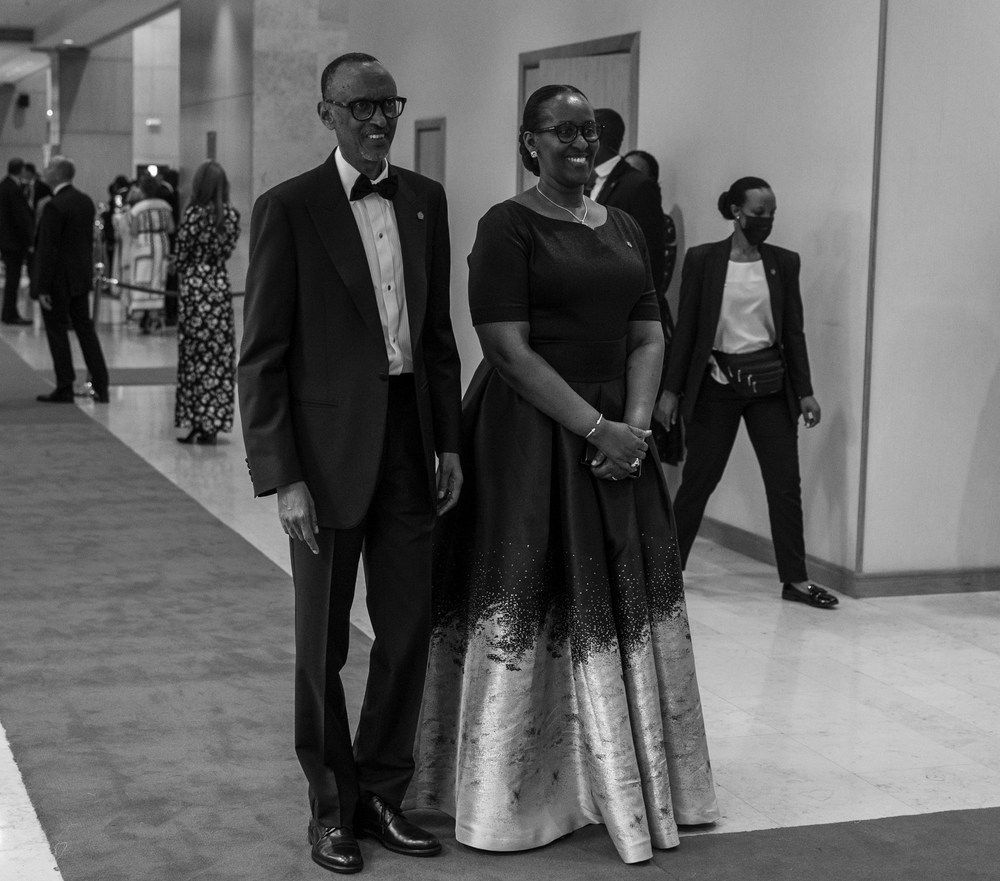
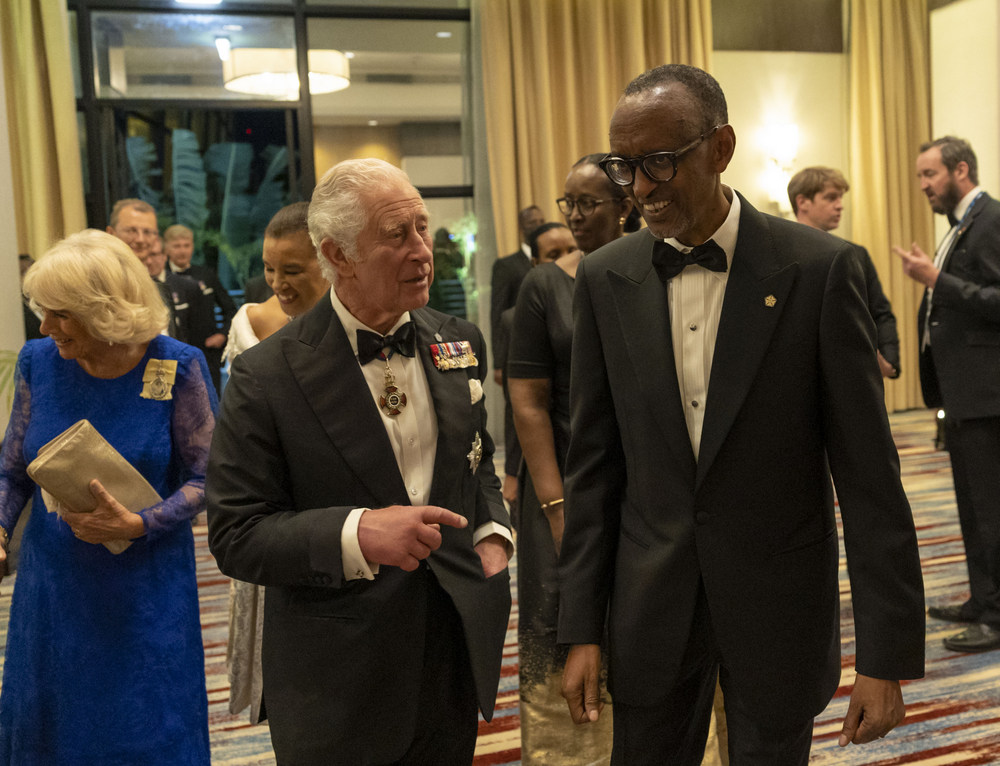
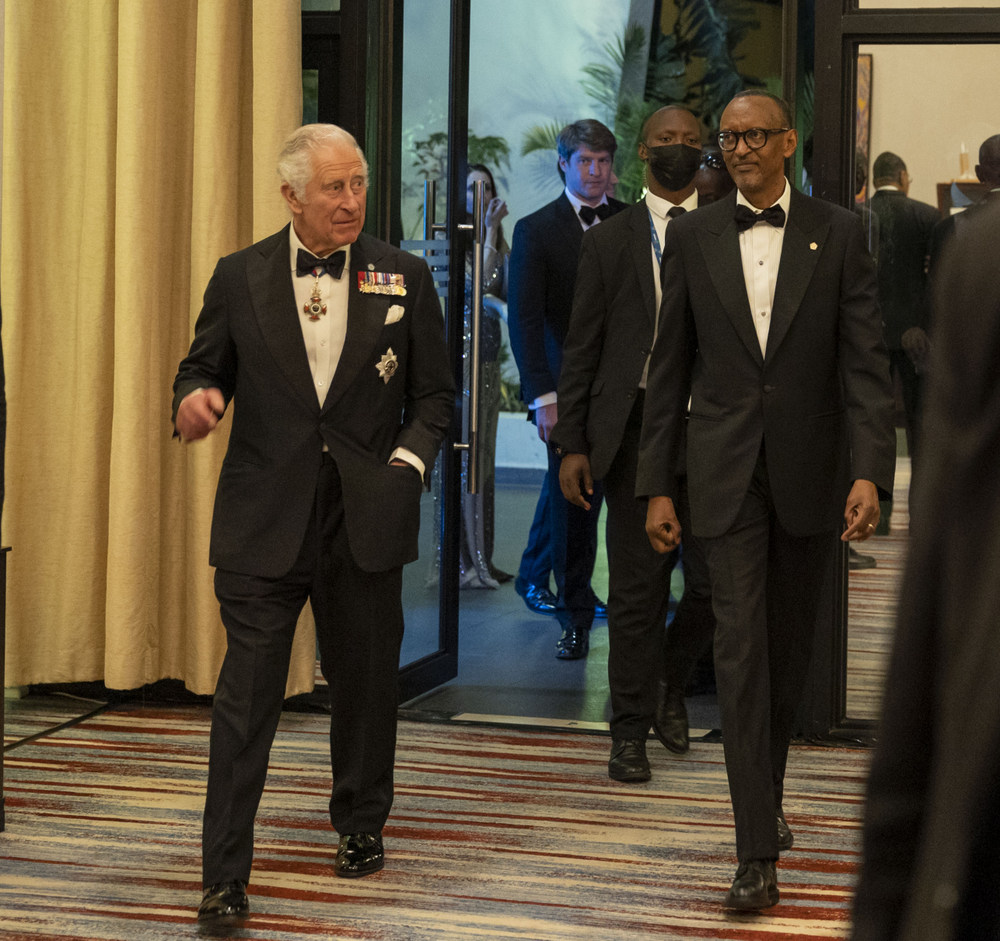
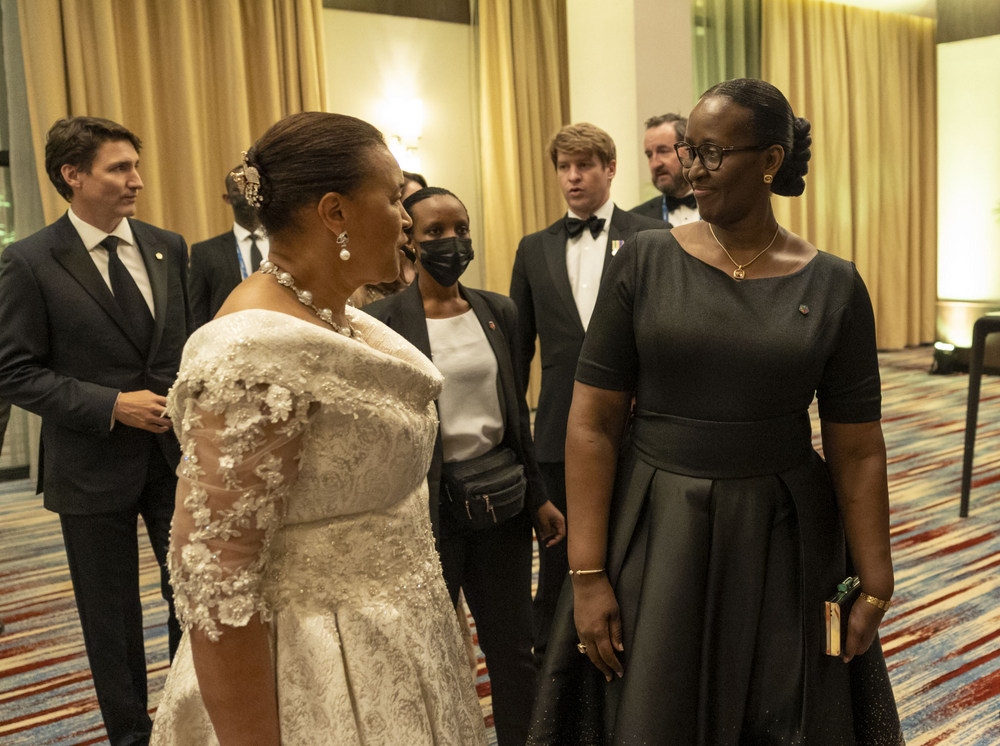
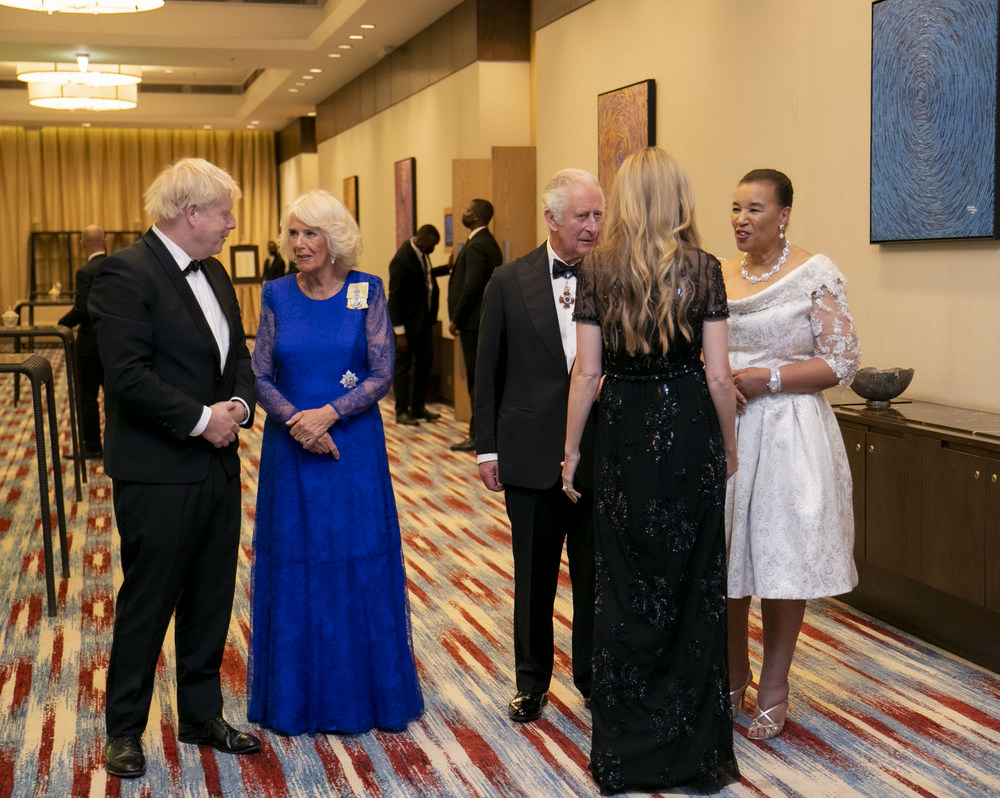
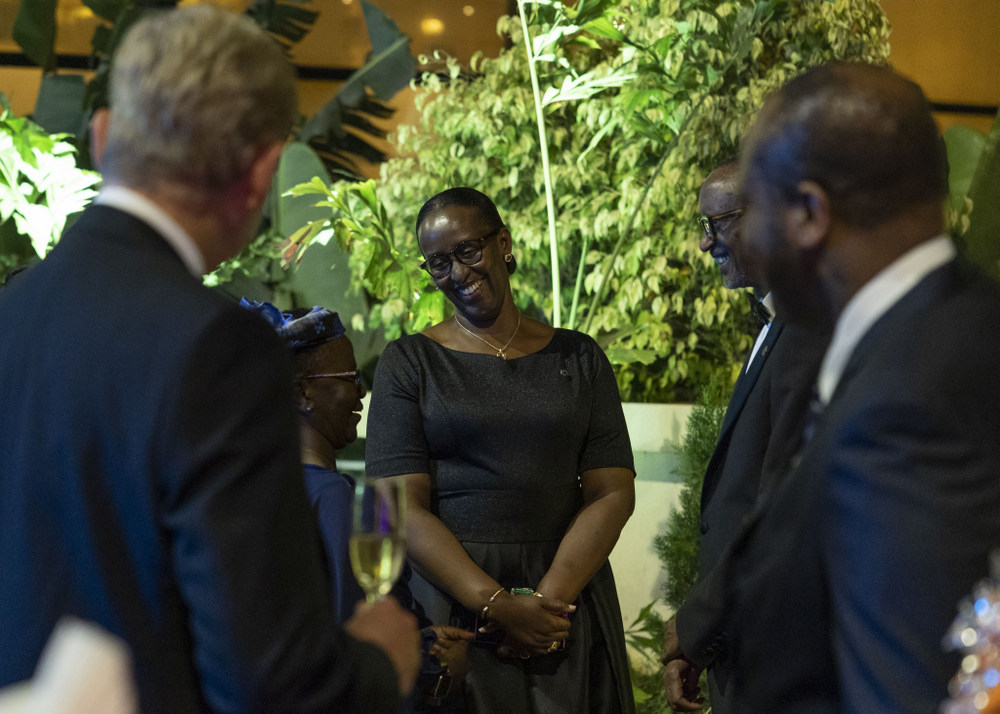
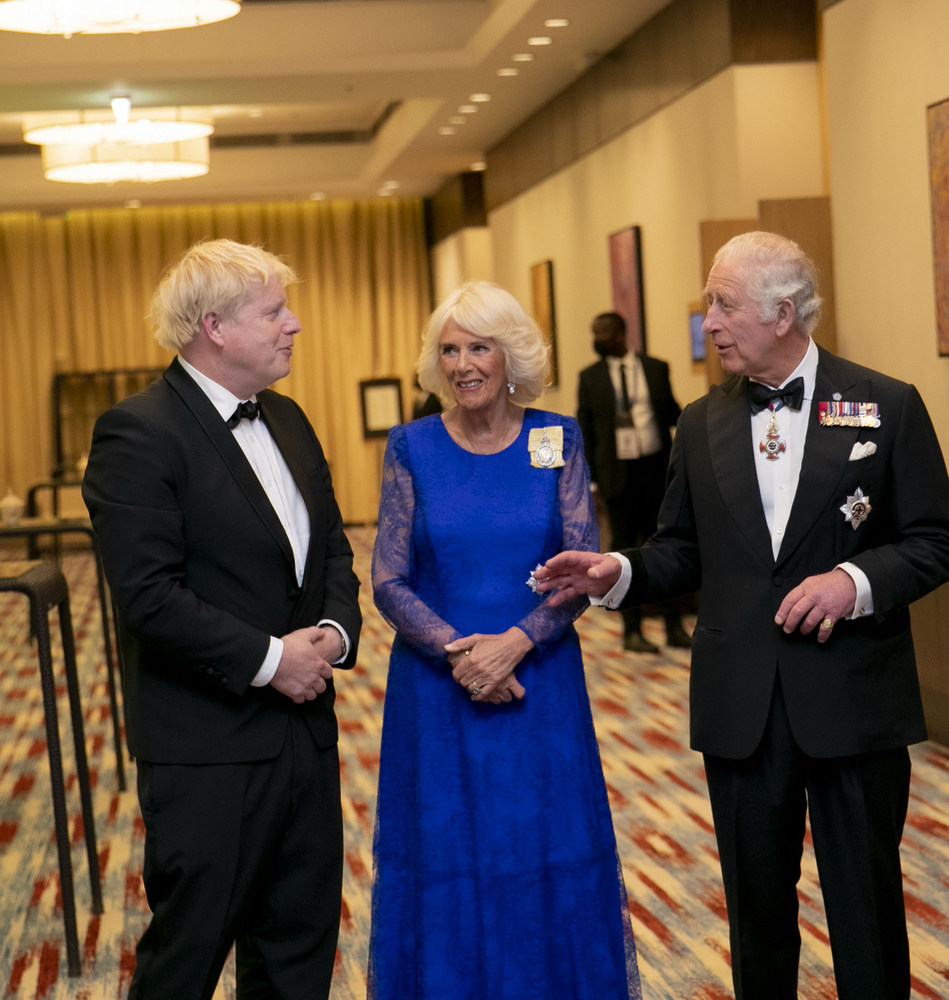
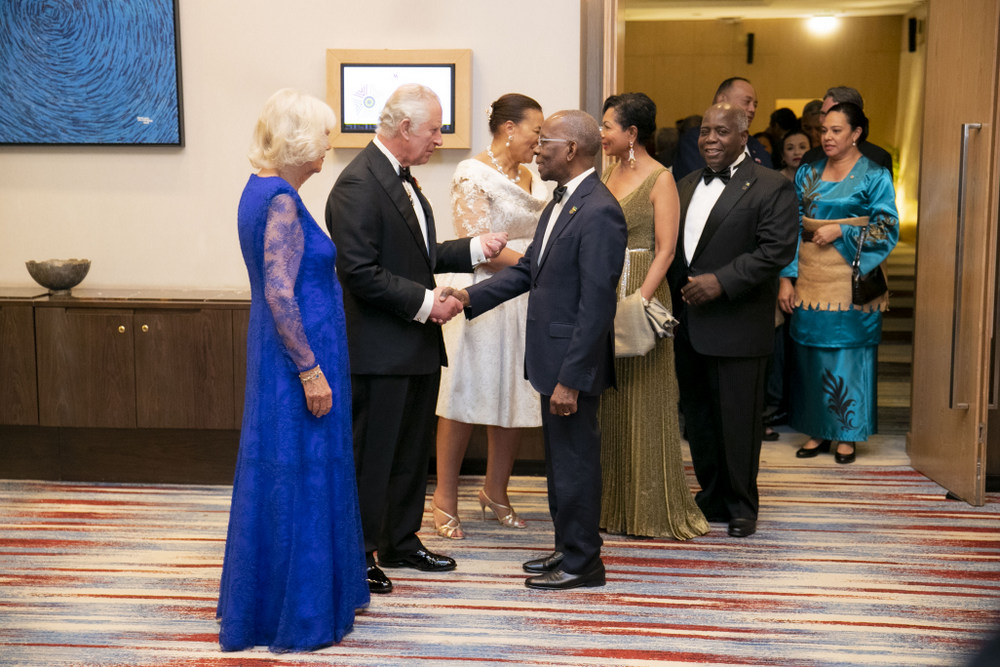
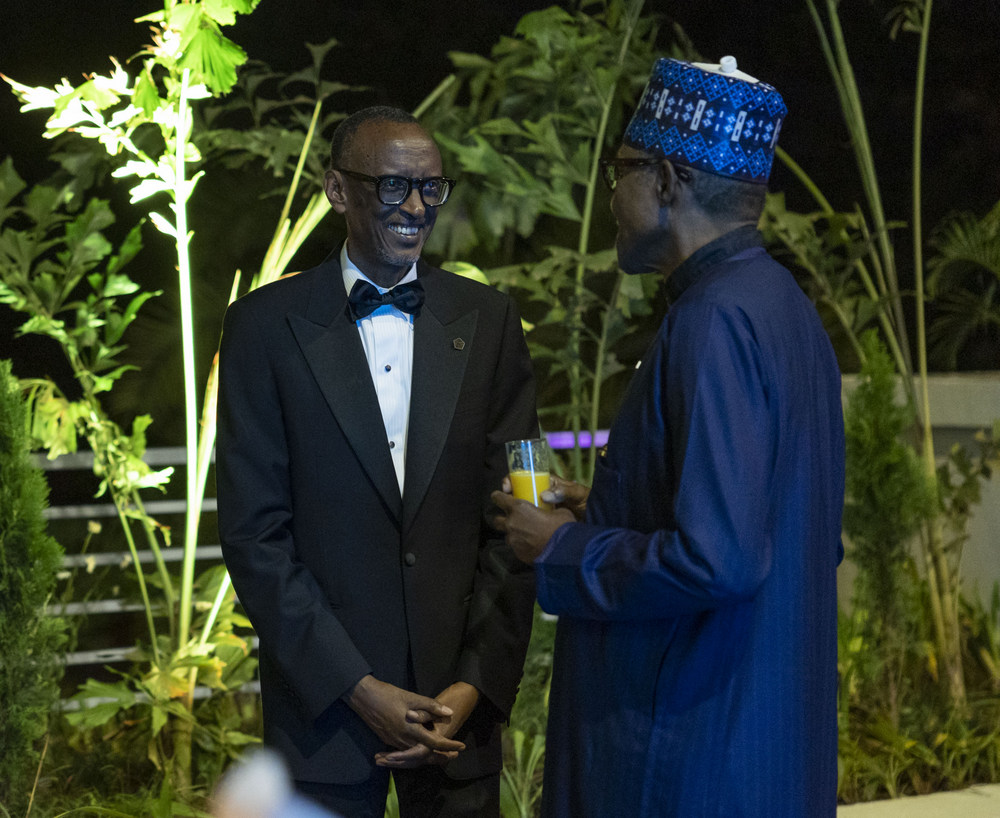
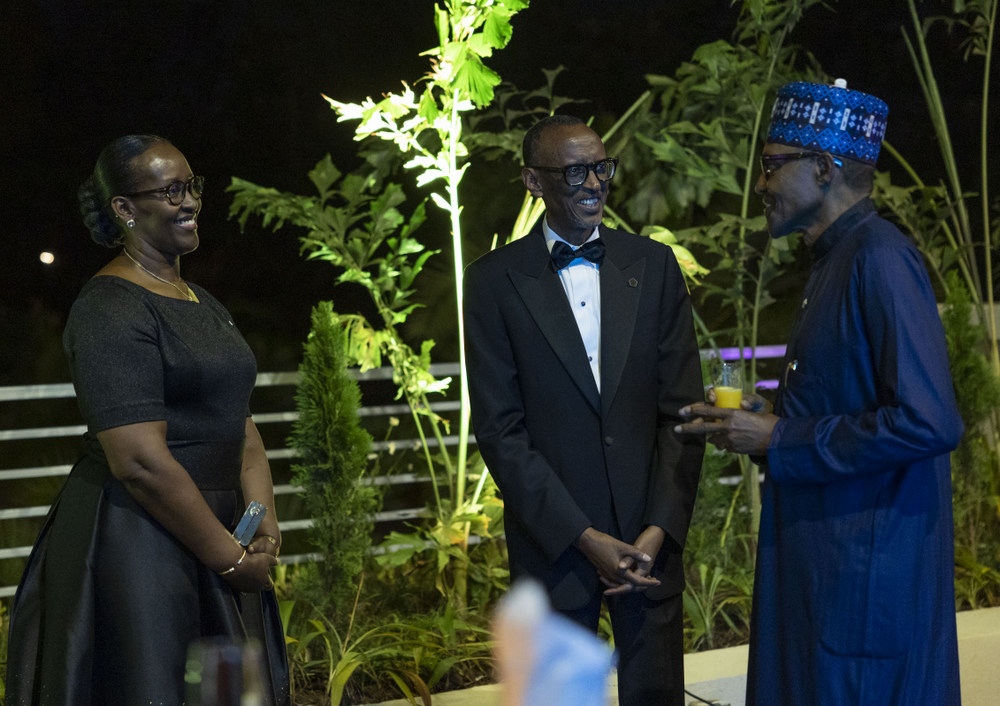
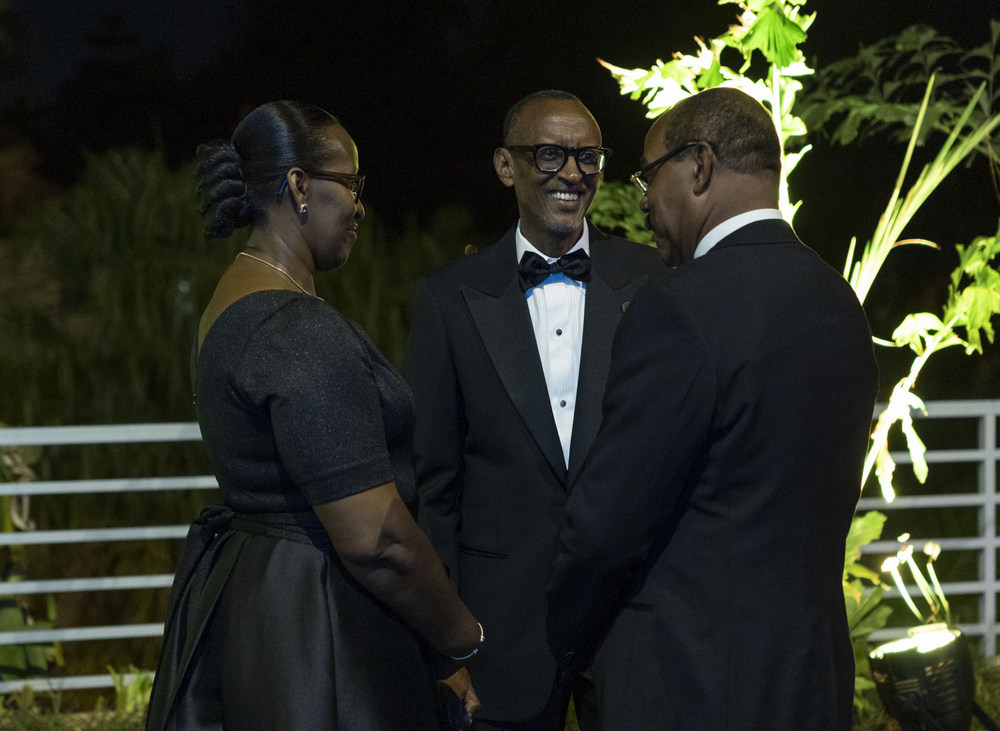
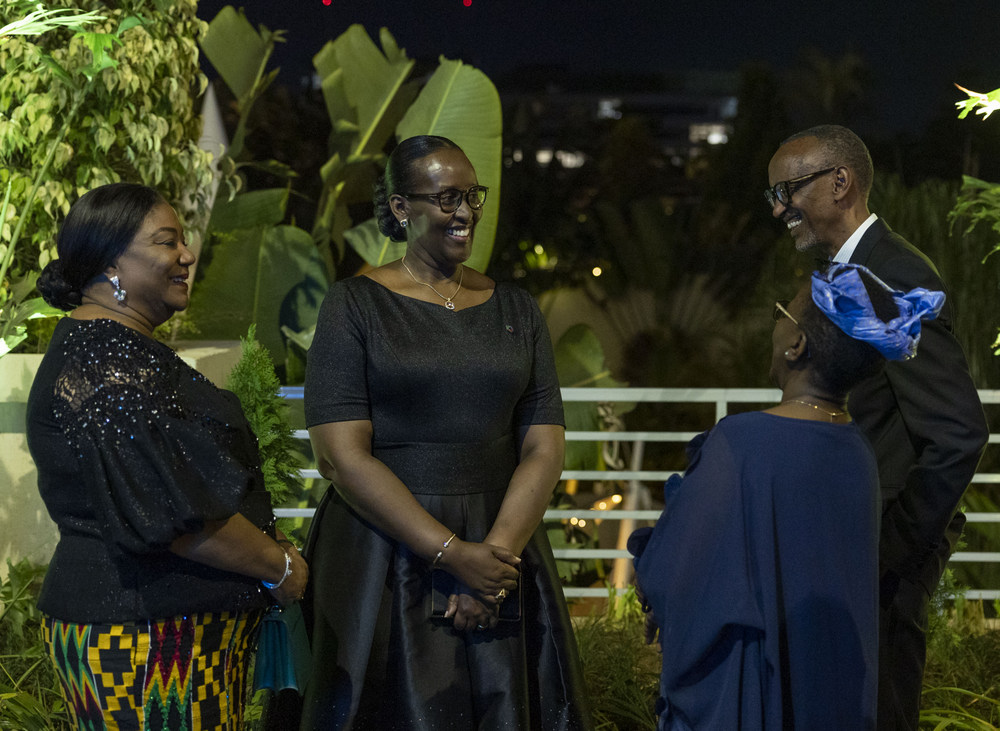
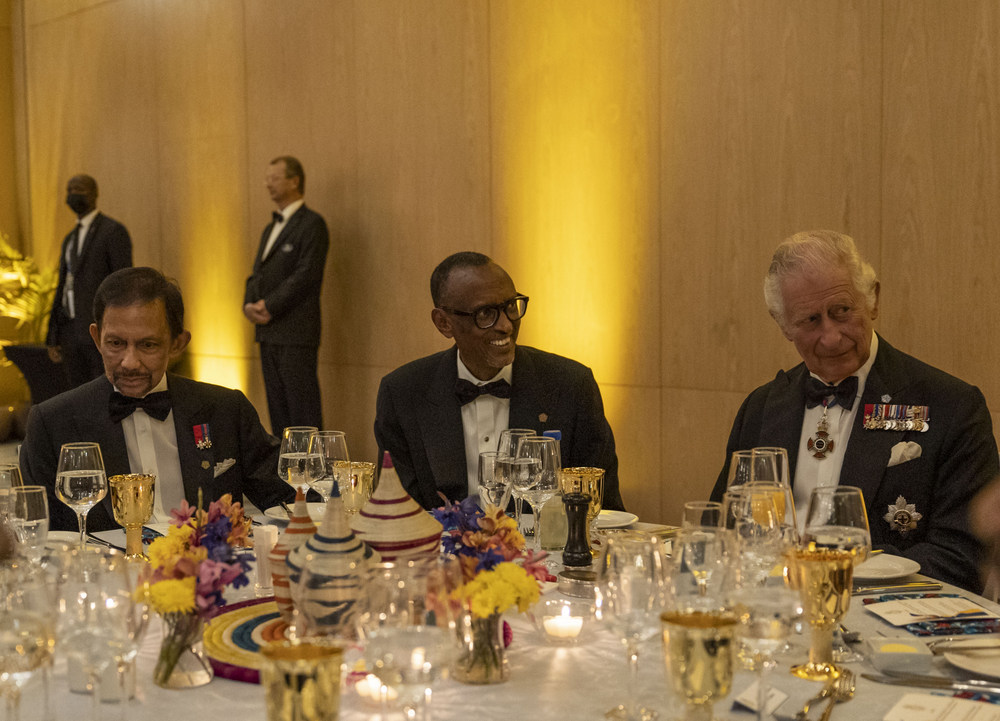
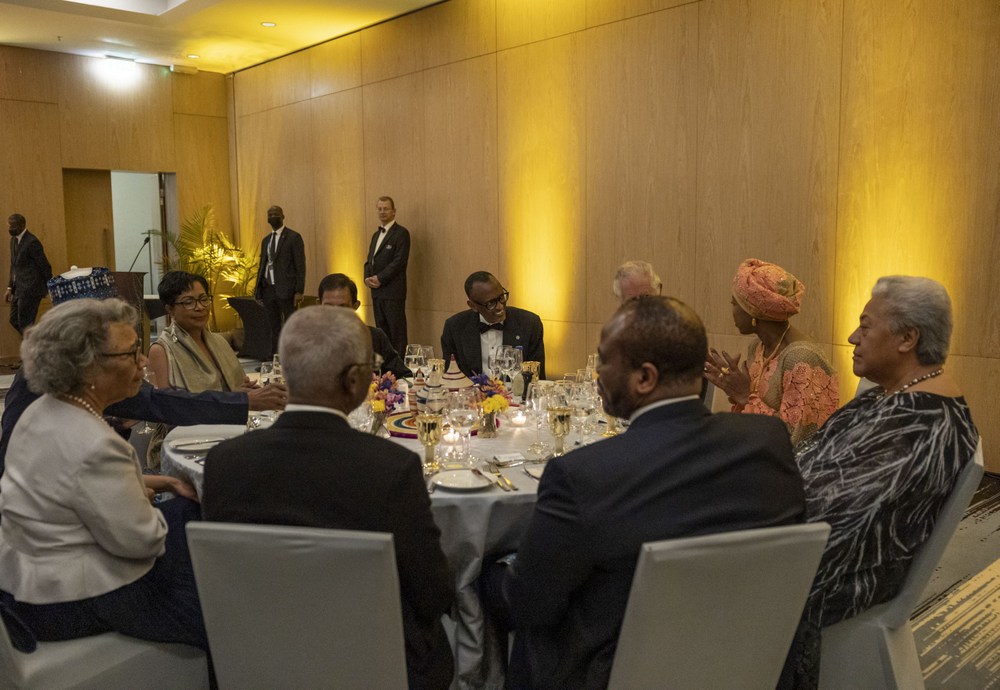
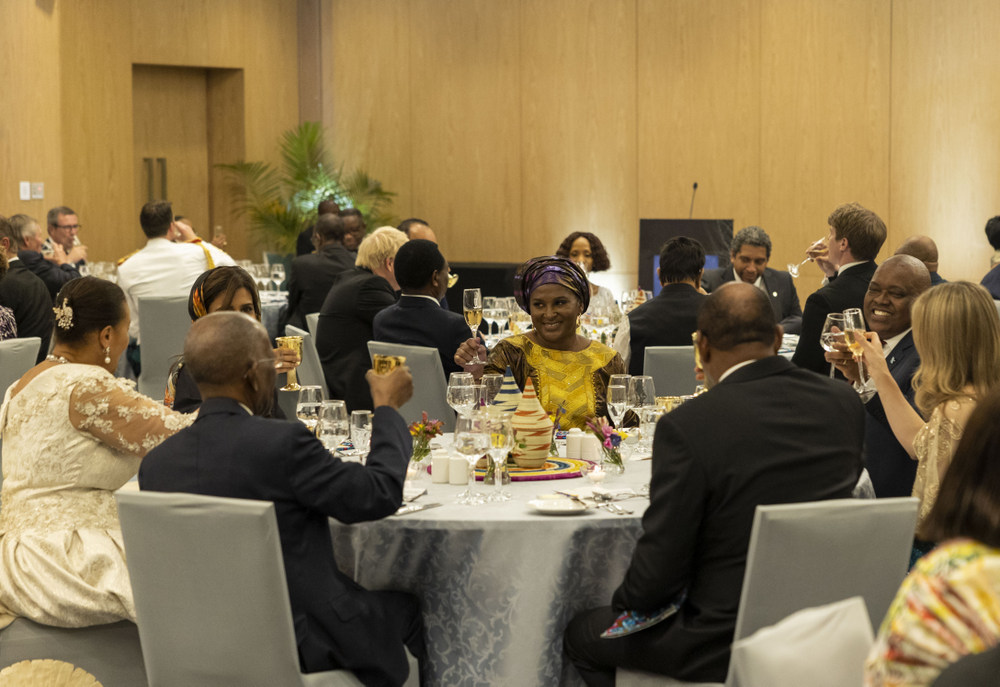
Prince Charles hosted the dinner on Friday evening following the official opening of CHOGM 2022.
The Government Dinner traditionally takes place on the opening day of the bi-annual Commonwealth Heads of Government Meeting.
The Prince and Duchess were the official hosts for the evening, greeting heads of government at Kigali Marriott Hotel on behalf of Queen Elizabeth II.
It was also hosted shortly after the outgoing Chair-in-Office of the Commonwealth, Prime Minister of the United Kingdom, Boris Johnson handed over duties to Kagame.
On another note, Patricia Scotland has been re-elected as the bloc’s Secretary-General for further two years to complete the balance of her period in office.
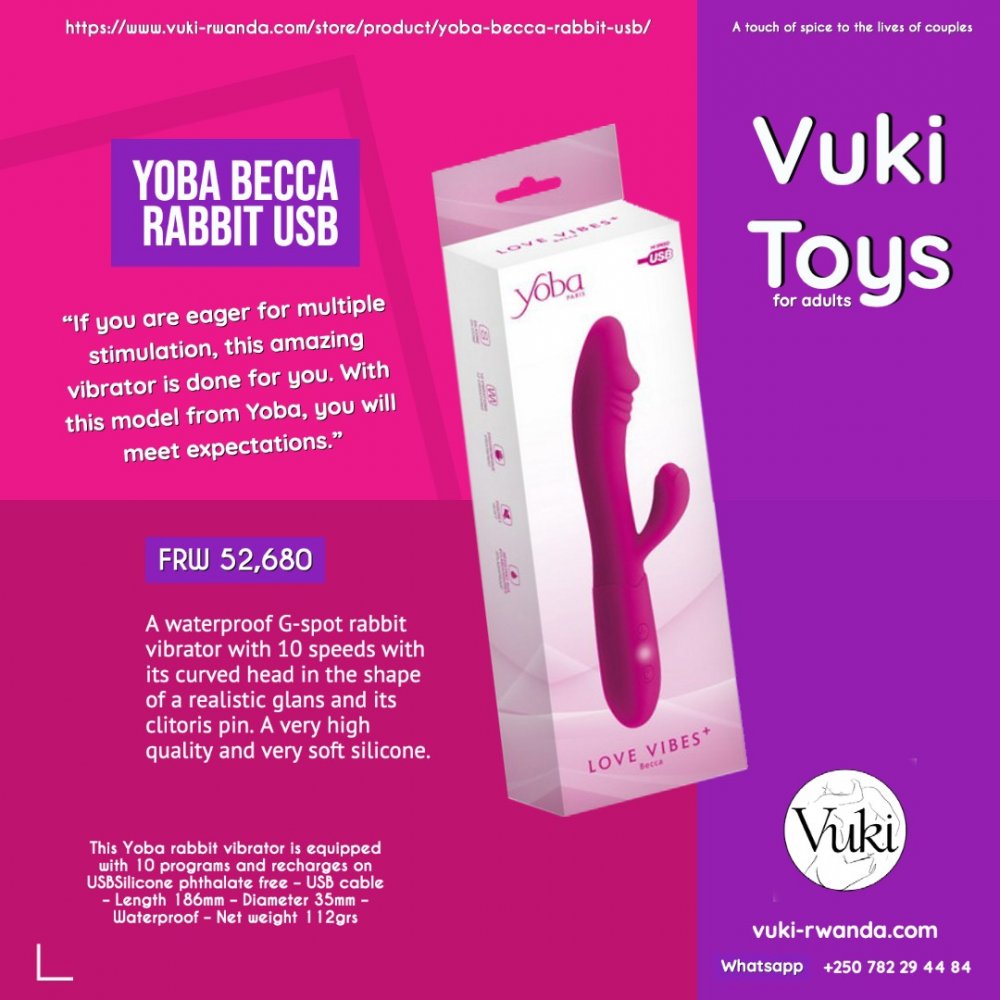
In an interview with IGIHE, one of managers of Vuki Ltd, who provided information on condition of anonymity has revealed the business has remarkably grown since February 2021.
“Since February 2021, the number of our products has skyrocketed. On one hand, the increase in demand is attributed to your article which brought our products to limelight but we also established clear strategies to create linkages with customers using social media and other platforms,” he said.
The shop has existed in Rwanda for two years running business online.
The shop does neither require customer’s identity, nor sell products to children under the age of 18.
Products displayed on the platform are classified into six categories: toys, lubricants, oil massage, aphrodisiac, wellness and lingerie.
As per product’s catalogue; Toys are the shop’s main market and the product’s category which is the more demanded by women and men while Lubricants are used mainly to solve frigidity and dryness problems.
Aphrodisiac is sold for the purpose of solving some problems of sexual desire ; Oil massage is meant to enhance foreplay preliminaries and bring intense arousal of the couple.
Wellness products are particularly dedicated to women, among other cups which are used as a permanent solution for periods. These include products enabling women to urinate with a standing position.
Lingerie is there to bring colour in a relationship and stimulate the desire both of men and women.
{{Rwandans’ demand}}
One of the managers of Vuki Ltd has said that they mull increasing such products to meet the increasing demand among Rwandans.
“We want to increase our products to meet clients’ demand because we are convinced that providing them with desired products and satisfying their needs is our responsibility,” he said.
“We are growing constantly. Customers can expect new products and new services we want to bring to the market,” he added.
He disclosed that Vuki Ltd plans to open a physical store where customers can access products.
“We are still running operations online but we want to launch a physical store. We are assessing the feasibility and gathering feedbacks from Rwandan market informing our decision,” he noted.
{{Targeting potential CHOGM customers}}
As Rwanda hosts the Commonwealth Heads of State and Government Meeting (CHOGM), the management has revealed that it is a good opportunity to extend services to interested guests and make their stay a memorable one.
It is against this backdrop that Vuki Ltd has slashed prices by 20% on sex toys.
One of managers of Vuki Ltd has said that such a reduction in prices is not by accident, as it is meant to join other service providers like airlines that have offered discounts to participants of the meeting.
“Offering the discount is not by accident. We knew that many people will not be moving a lot during this time and we have always seen a change in our business over the holidays. That is why we decided to offer a discount to our customers,” he revealed.
The rise in demand during holidays is not an exclusivity of Rwanda, especially during Covid-19 pandemic where the demand for sex toys has skyrocketed globally.
For instance, the value of sex toys global market was valued at over US$ 25 billion in 2018, increased to over US$ 26.6% billion in 2019 and over US$ 30$ billion in 2020. The market is estimated at US$ 48.2 billion in 2027.
In general, women continue to represent a higher proportion of sex toys’ global consumers at 60%. In an interview with Vuki last year, the management confirmed that Rwandan women make up 60% of their customers.
“Basically, the highest proportion of our customers are women. We estimate they represent 60% of our customers even if you don’t need to precise your gender when you want to order our products. A large part of our selling is gifts for anniversary or any other occasion. For example, Valentine’s Day goes with higher demand usually.”
{{Local businesses making huge profits }}
In a bid to adjust to the local market, Vuki Ltd which has been operating in Rwanda for almost four years, plans to continue expanding its partnership with domestic businesses.
“We are still working with the IsLo Collection for the underwear and we are looking at ways to partner with other businesses in Rwanda with the new products that we want to introduce to Rwandan market,” he said.
The management has said that it also trains interested individuals not familiar with sex toys because they have not yet become popular.
“We have a telephone line that our customers can call. They can also text us on WhatsApp when they have a problem or need more help. In addition, each product on our site has a detailed description [of how it is used],” the person said.
“We abide by norms of Rwanda’s market. We try to be as transparent as possible while working with the authorities on the nature of our business. Our products are imported from France are comply with international standards. Our products go through customs at MAGERWA where they are inspected and taxed. On top of that, we don’t sell them to children under the age of 18,” he added.
{{No rose without thorns!}}
Although Vuki’s business is flourishing, there are still a number of challenges that come with this type of business.
“The main challenge we face is that our customers or the general public do not understand that all accessories including lingerie, sex toys, oils and so on, can contribute to having a great time in bed. It is normal and should not be taken as a taboo.”
He went on to say that interested individuals should not feel ashamed to use them to increase sexual pleasure.
“There is no shame in using these products to increase sexual pleasure. It is totally normal to those who are sexually active and should be discussed comfortably among mature people.”
{{Do sex toys affect users?}}
Like many other products; excess use is not always good. The source from Vuki has said that using sex toys in excess in harmful.
“It is not only sex toys. Even normal sexual intercourse can have a detrimental effect on a person’s health if done in an excessive way. We may not be able to tell people when to use sex toys but that is one of the many reasons we will only sell them to adults. Almost all adults are aware of the amount of sex they need and the extent to which it can affect them.”
“A good example is that we all know that drinking too much or eating too much can have serious consequences. But when you are older, no one keeps a close eye on you when you are drinking or eating too much. They assume that you are mature enough to choose the right from wrong.”
The member of Vuki’s management has said that people who think using sex toys is shameful they should first educate themselves about the subject.
“I believe everyone has the will to make their own decision. We are not forcing people to use our products, especially those who think they are wrong. However, we encourage them to educate themselves on this topic and see if they can change their mindset. ”
The source added that some users have provided positive feedback commending Vuki’s sex toys.
“We have a lot of testimonials even though they are confidential. There are people who have had problems during erection due to a certain disease, injuries and other causes, but are pleasing their girlfriends using some of our sex toys.”
Vuki’s discount on sex toys is offered between 20th and 26th June 2022.
The Rwf4.6 trillion budget proposal presented on Thursday 23rd June 2022, represents Rwf217.8 billion increase compared to the 2021-22 revised budget.
The rise in spending will fuel the ongoing economic recovery efforts as well as finance medium term development objectives enshrined in the National Strategy for Transformation.
“This budget reflects successes made in confronting the COVID-19 pandemic through vaccination roll out and other measures as well as the economic recovery that started in 2021. It has also considered the crisis brought by the Russia-Ukraine war, which is affecting the recovery efforts by rising oil and food prices,” Minister Ndagijimana told Parliamentarians.
{{Key changes in the 2022-2023 Budget}}
The estimated total resources for the fiscal year 2022/23 will amount to Rwf4,658.4 billion. Government will fund the entirety of the budget to a tune of 80.5%. This includes Rwf2,372.4 billion in domestic revenues, Rwf282.6 billion in domestic financing and Rwf1096.7 billion in external loans. External grants will account for Rwf906.9 billion which is 19.5% of the total budget
Corresponding to the revenue, Government is expected to spend Rwf4,658.4 billion in the next fiscal year, which is Rwf217.8 billion higher than the revised FY 2021/22 budget. Recurrent spending is estimated at Rwf2,654,9 billion representing 57% whereas capital expenditure is made up of Rwf2,073.3 billion representing 44.6% of the total budget.
{{Key allocations in line with the National Strategy for Transformation}}
Prioritization in resource allocation to various sectors has been guided by critical considerations that enhance NST1 delivery, economic recovery plan interventions, prioritization of ongoing projects, emphasis on transformation and sustainability and resilience to humans and social economic infrastructure to shocks.
Government will allocate Rwf2.7 trillion (about 58.5%of the entire budget) to the Economic Transformation Pillar. These resources will scale-up agriculture productivity, create jobs, support private sector development and strengthen climate change mitigation measures. It will also increase access to electricity and clean water, support urbanization and settlement, improve the national road network, scale up adoption of ICT, automate Umurenge Sacco’s and implement agriculture de-risking and financing facility.
{{Social Transformation}}
Government will allocate about Rwf1.2 trillion (approximately 26.4% of the entire budget). The budget share will be spent on improving quality and access to health and education, eradicate extreme poverty through scaling up of social protection programs, improve nutrition through early detection, provision of fortified foods and scaling of early childhood development facilities.
The funds will also promote family and gender, sports and culture as well as disaster management through enhancing disaster preparedness, response and recovery.
{{Transformational Governance}}
Under the Transformational Governance Pillar, Government will spend Rwf707.1 billion (about 15.2%of the total budget). This allocation will focus on promotion of quality service delivery across public and private sectors, good governance and transformational leadership, strengthening public finance management, strengthening justice, law and order, maintaining peace and security and strengthening crime prevention as well as supporting international cooperation through strengthening economic diplomacy.
In the event of internal or external factors that may affect Rwanda’s operating economic environment, such as drought or decrease in global commodity prices that may affect the country’s export prices, Minister Ndagijimana assured.
Parliamentarians that Government will closely monitor such developments and take necessary measures to ensure full implementation of Rwanda’s economic program.