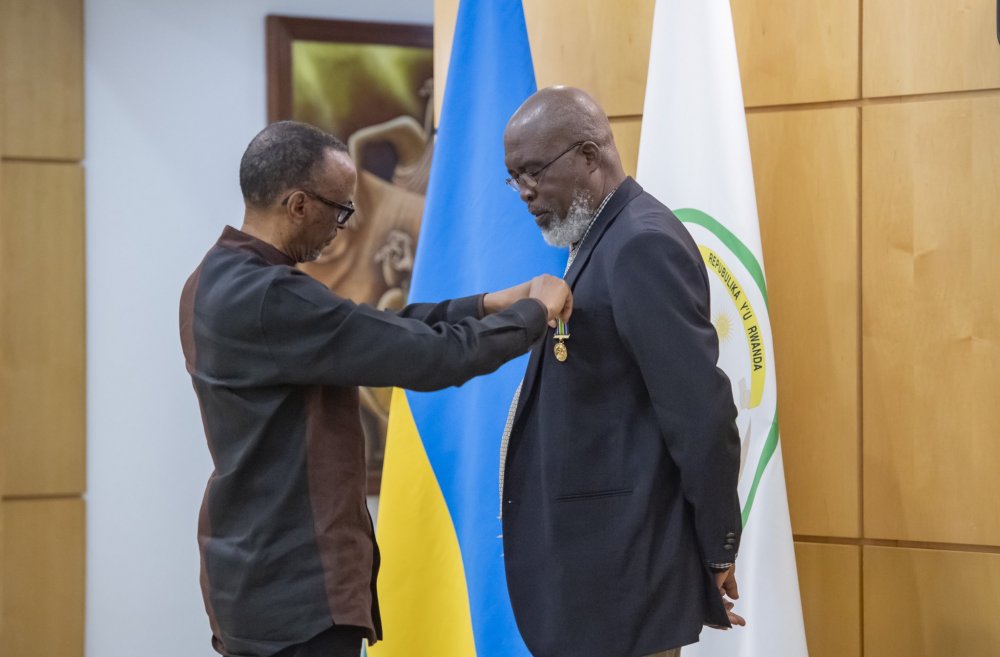
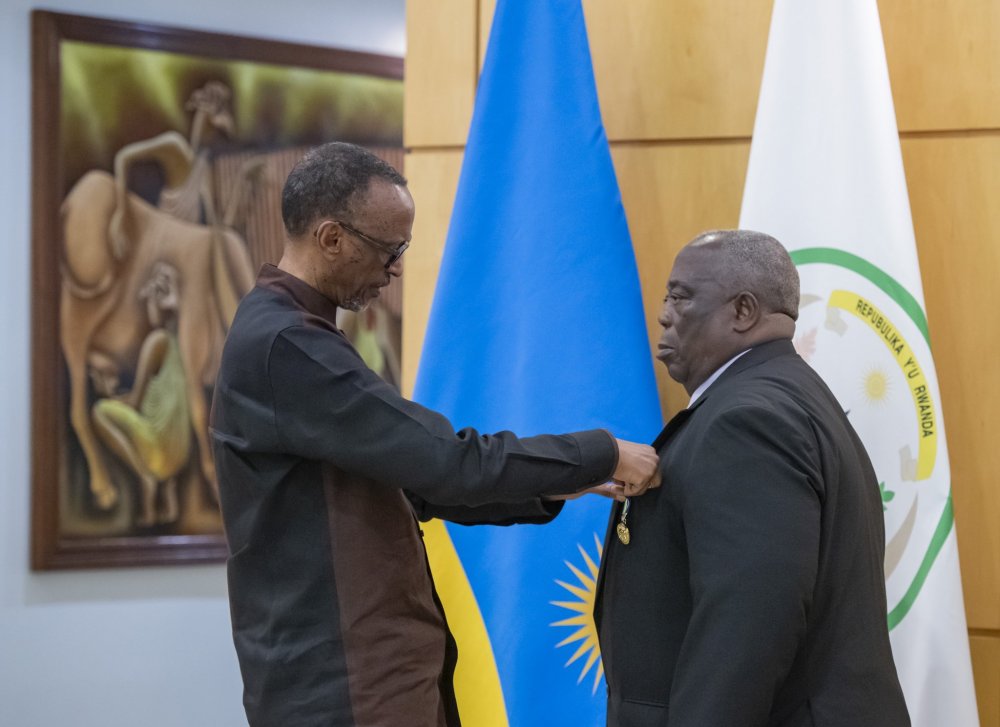
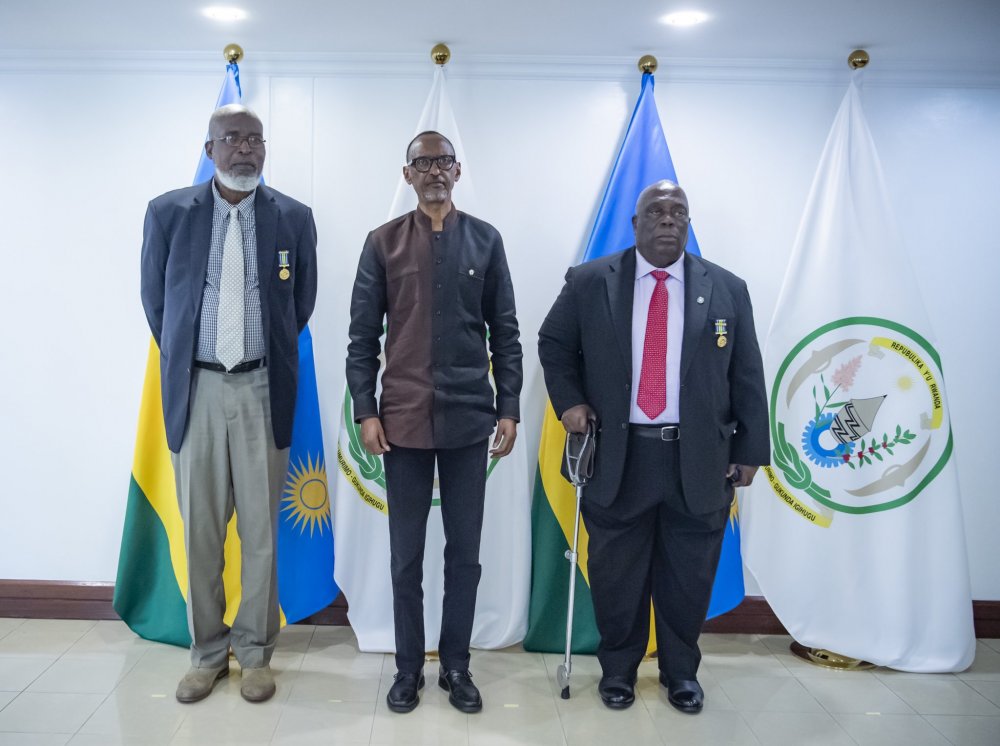
The duo include Henry Kwami Anyidoho and Joseph Narh Adinkra who held the rank of Major General as they served under the United Nations Assistance Mission for Rwanda (MINUAR) during Genocide against Tutsi which took lives of more than 1 million victims.
Gen Henry Kwami Anyidoho served as MINUAR Deputy Mission Commander and Commanded Ghanaian contingent under this mission while Gen Joseph Null Andinkra was a commanding officer of Ghanaian battalion.
The ceremony was held on Monday 4th July 2022 as Rwanda marked the 28th Liberation Day.
The National Order of Bravery (Indengabaganizi) is conferred to an individual or group of individuals who, in an exemplary way, demonstrated outstanding supreme acts of self-sacrifice in saving the life of one or many people.
Both Generals are commended for exemplary leadership and unfailing bravery where they ordered forces to continue protecting civilians who fled to them when other countries had withdrawn troops.
Maj Gen Anyidoho expressed delight to have received the medal as Rwanda celebrates the 28th Liberation Day and dedicated it to heroes who paid their ultimate price to liberate Rwanda as well as Ghanaians and Rwandans who lost their lives.
“At the time, the United Nations in new York was contemplating the decision to close down its mission in Rwanda in view of the deteriorating security situation. I said to myself as an African General who played a role in the mission, we cannot turn our backs on Rwanda.
I said, this is time that Rwandans need us the most. I therefore sought and obtained the approval from the Government of Ghana to retain a residual force to assist in addressing the deteriorating security situation in whichever way possible,” he said.
Gen Anyidoho also commended Rwanda’s remarkable progress for the past 28 years and Rwandans for leaving the past behind to move together along the development journey.
He said that the experiences of Rwandans also left lessons to the whole world which should prioritize peacekeeping as a pillar for development and advised African countries to always strive for peace irrespective of whatever differences.
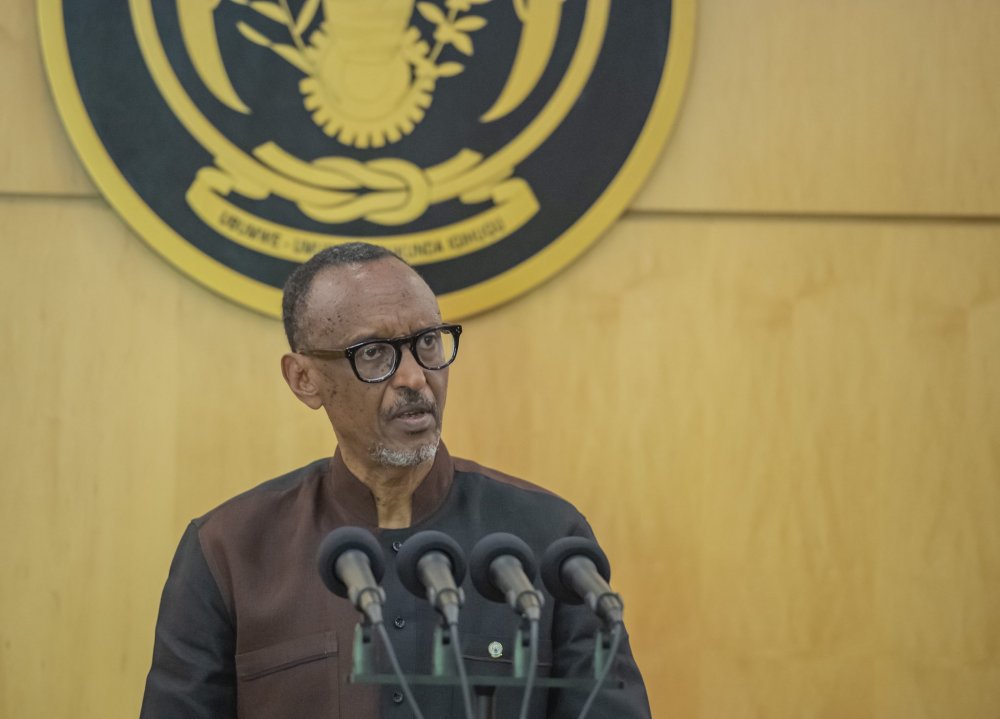
President Kagame hailed the courage of the retiring soldiers for having chosen to stay in Rwanda instead of abandoning civilians who fled to them.
He revealed that the award presented to them did not come by accident as it was planned for long.
“I congratulate you, and thank you for your dedication and commitment. Where others fled or were withdrawn by their governments, leaving Rwandans to their fate, these officers remained and continued to lead their men and women, and did what was right to do,” he said.
“Through you, I convey our deep appreciation to the Government and people of Ghana for this decision. The Ghanaian battalion saved countless lives, under the most difficult circumstances. And there is no soldier involved who does not carry invisible wounds in his heart, to this day. A genocide produces no heroes. Simply doing one’s duty required exceptional courage, like these Generals did. Most failed the test. These officers did not,” added Kagame.
Ghana has around 850 troops deployed under MINUAR during Genocide against Tutsi.
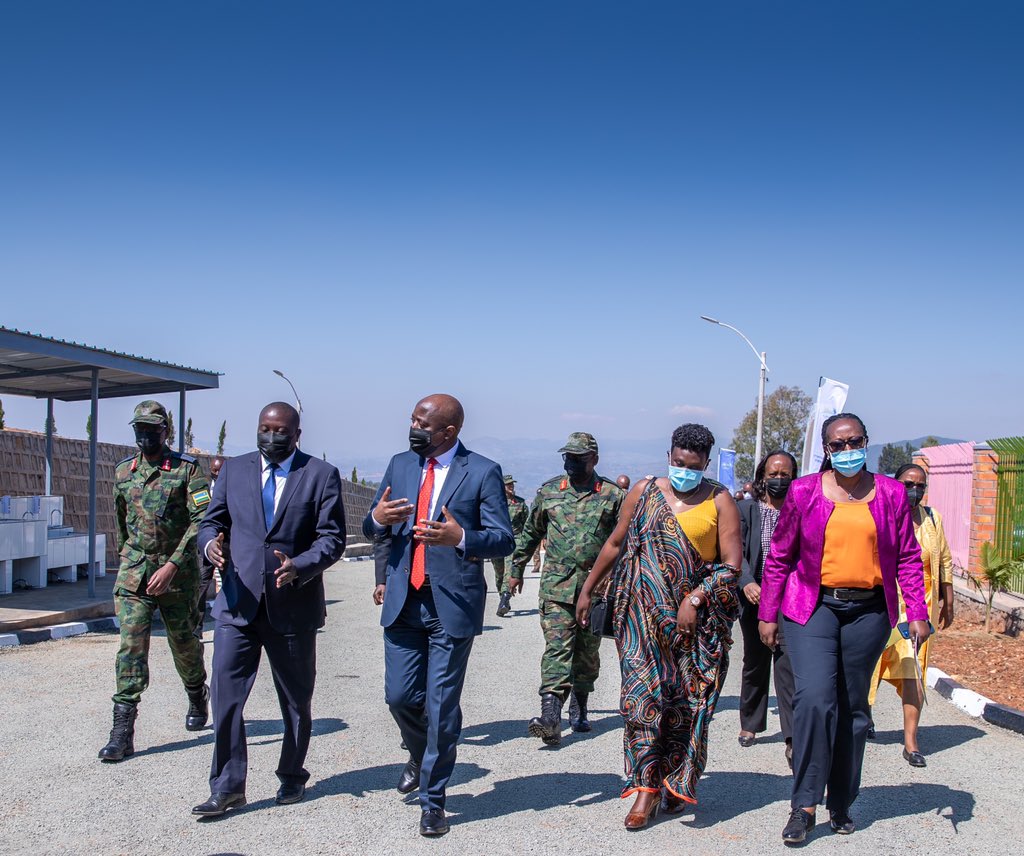
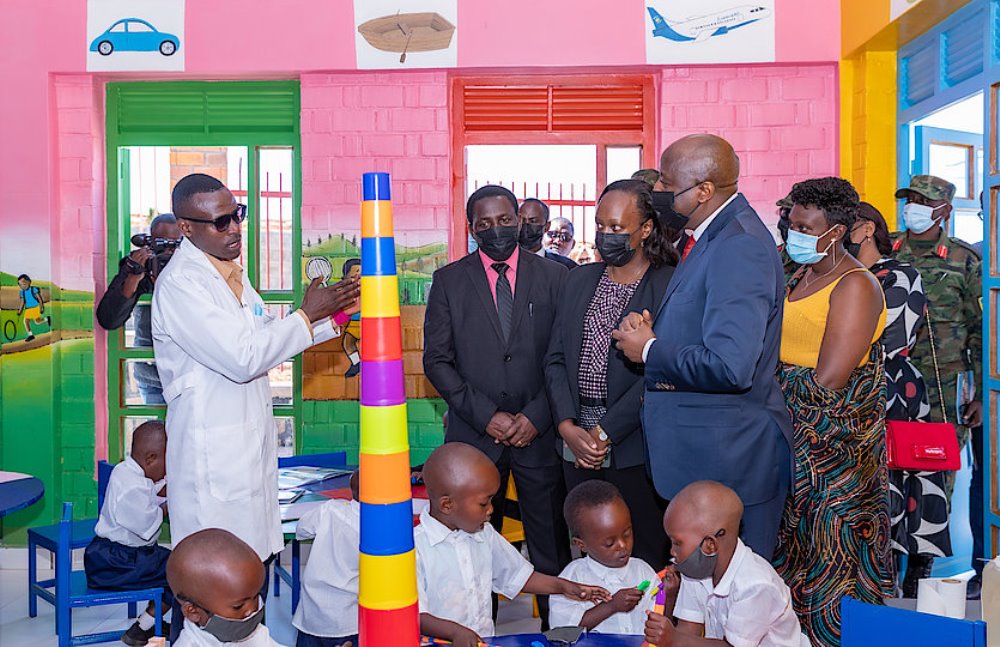
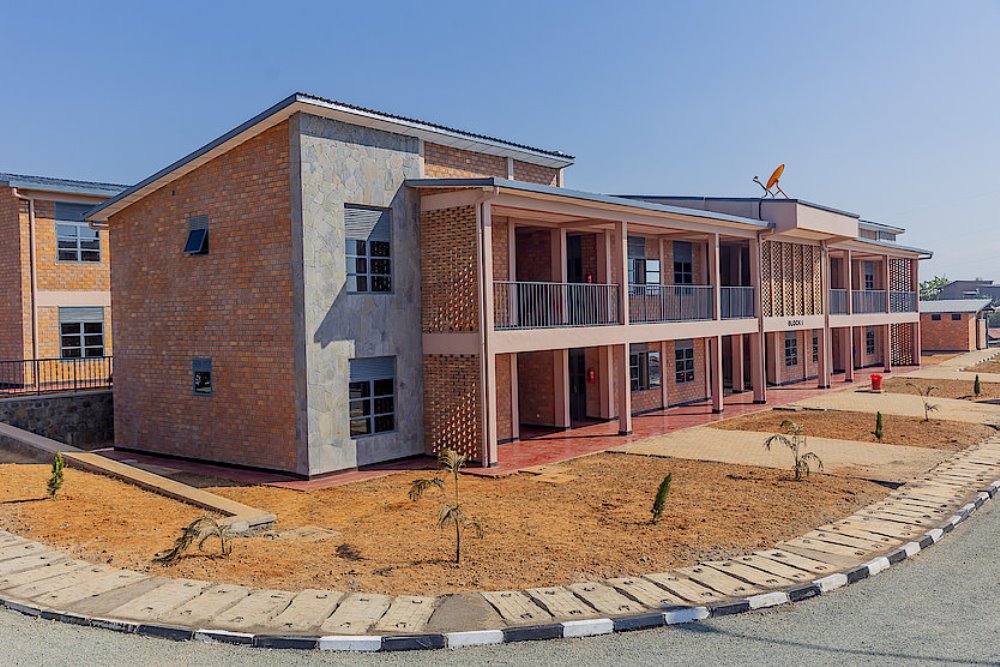
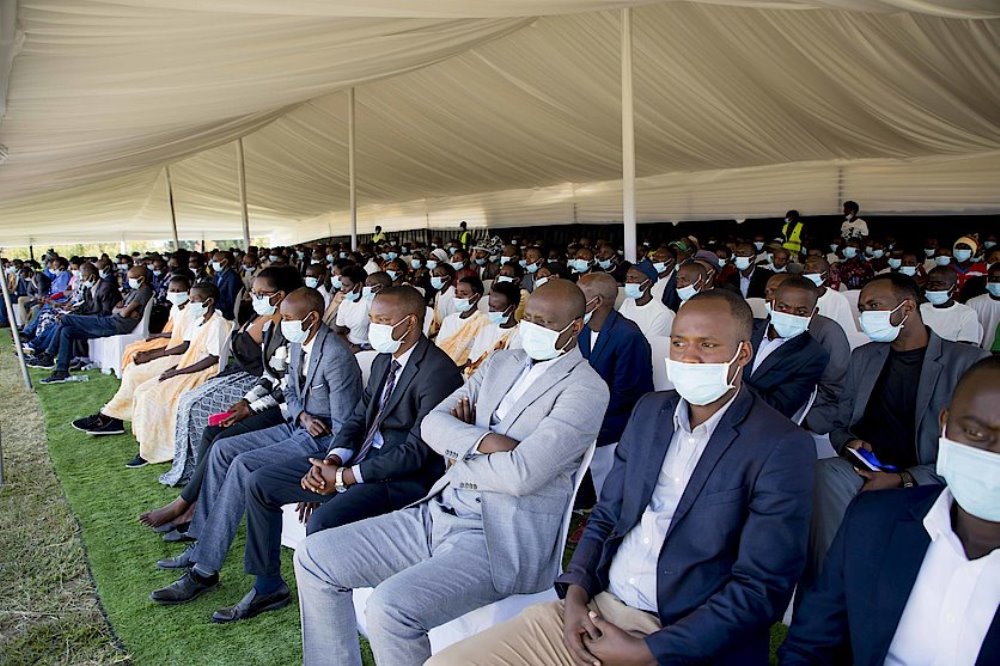
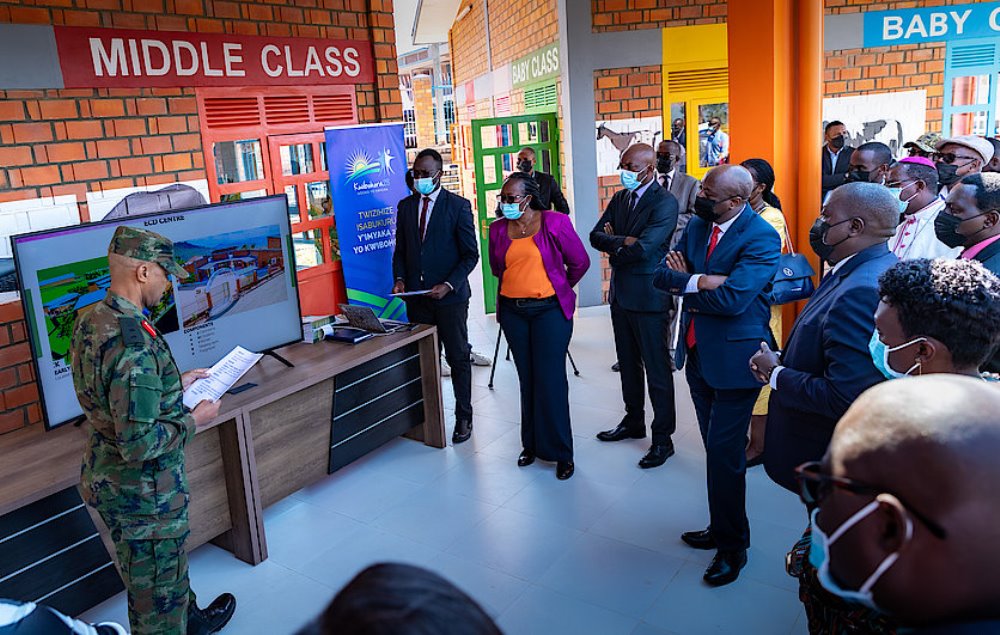
The Model village constructed by Rwanda Defence Force in partnership with other Government Institutions was handed over to 48 families on 4th July 2022 as Rwanda marked the 28th Liberation Day Celebration.
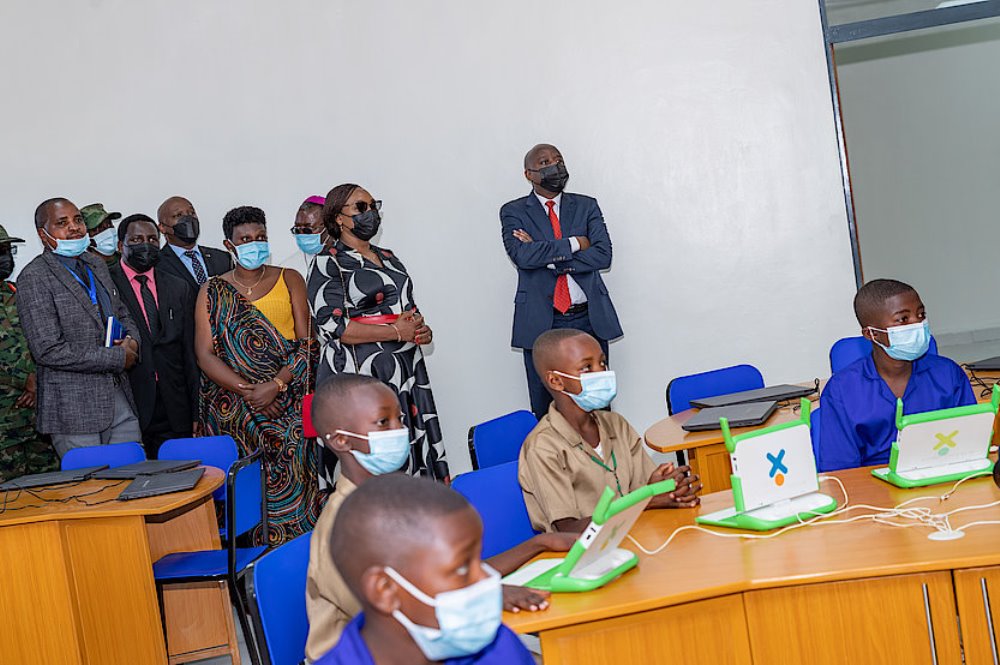
The Model Village consists of residential houses, Groupe Scolaire Munini that includes Primary and Secondary school as well as Early Childhood Development Center (ECD) and other welfare support facilities.
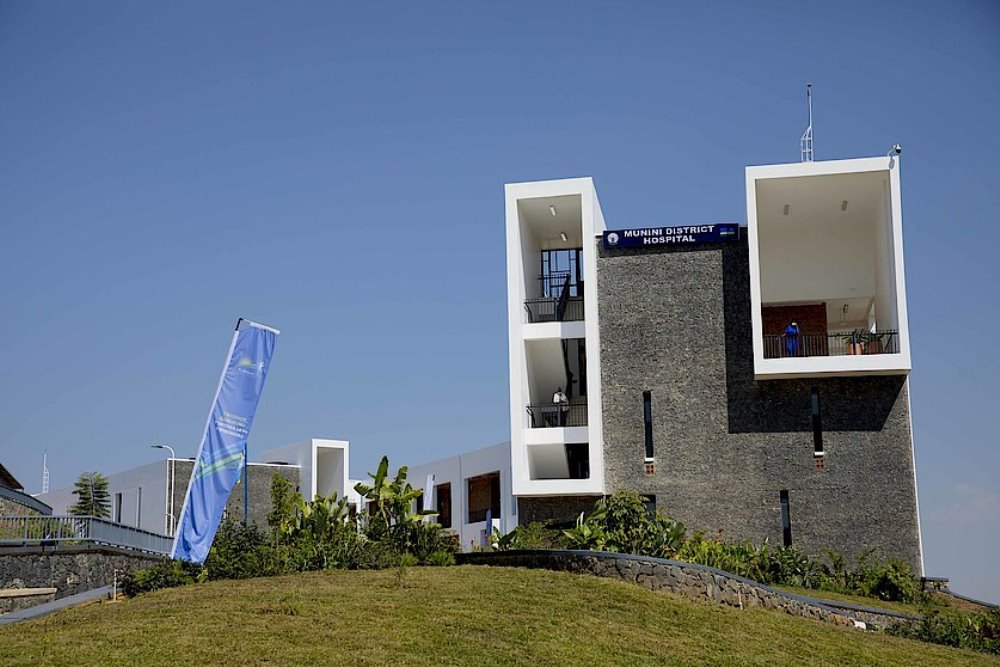
Prime Minister Ngirente also inaugurated Munini Hospital in Nyaruguru District as well as the newly constructed asphalt road Huye-Kibeho-Munini.
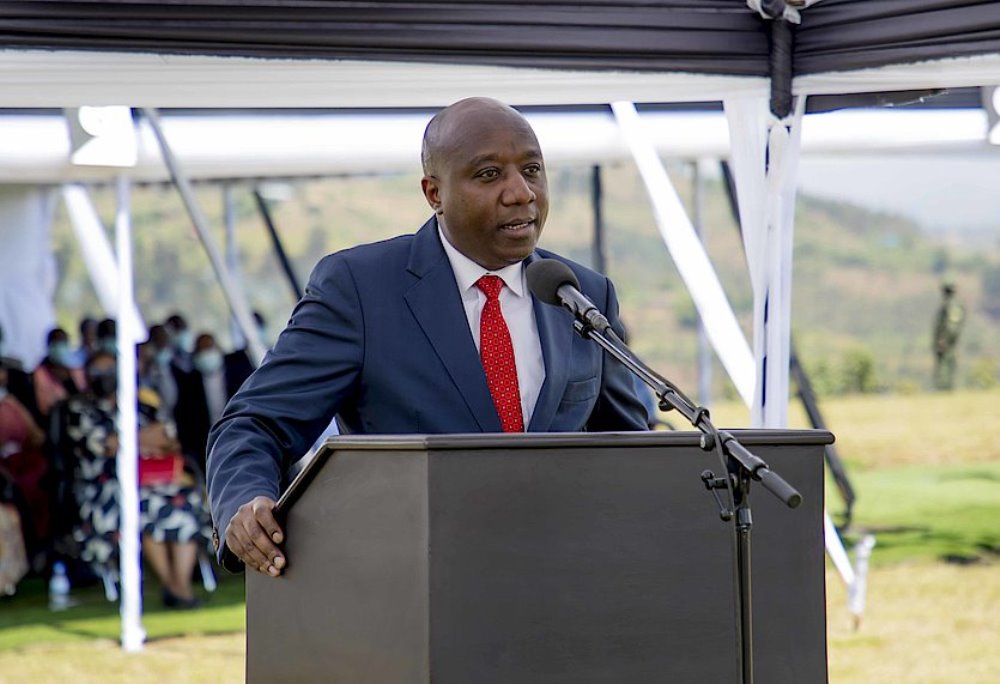
While addressing residents, Premier Ngirente said that Rwanda’s achievements in the last 28 years were visible in different sectors including socio-economic, unity, leadership and security; thanks to the great effort and collaboration between citizens and their leaders at different levels.
He underscored that the journey of liberation is a long way to go and urged the citizens to deploy efforts to achieve more.
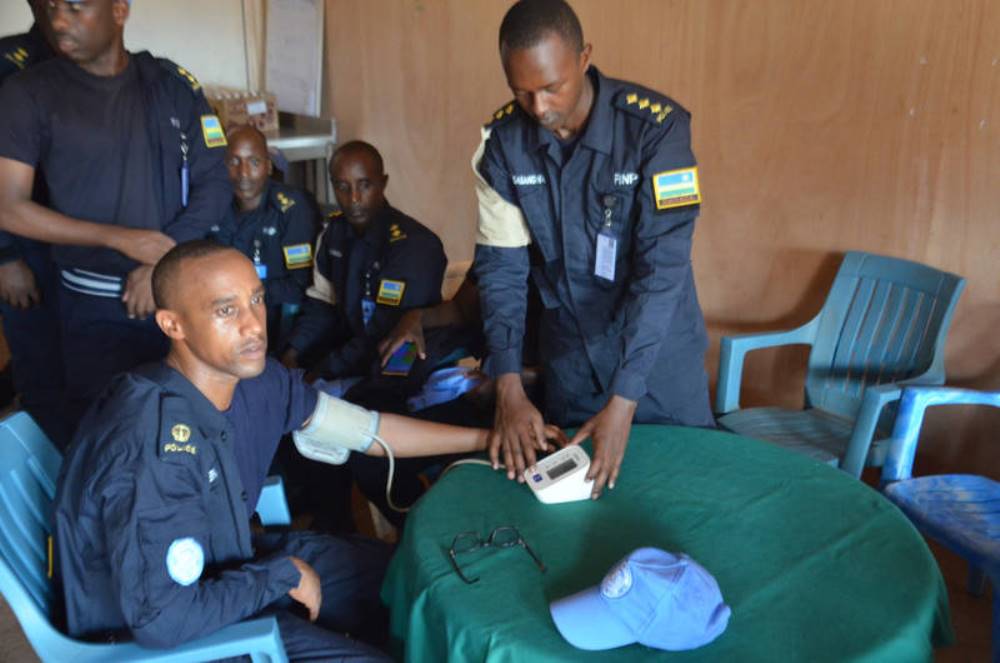
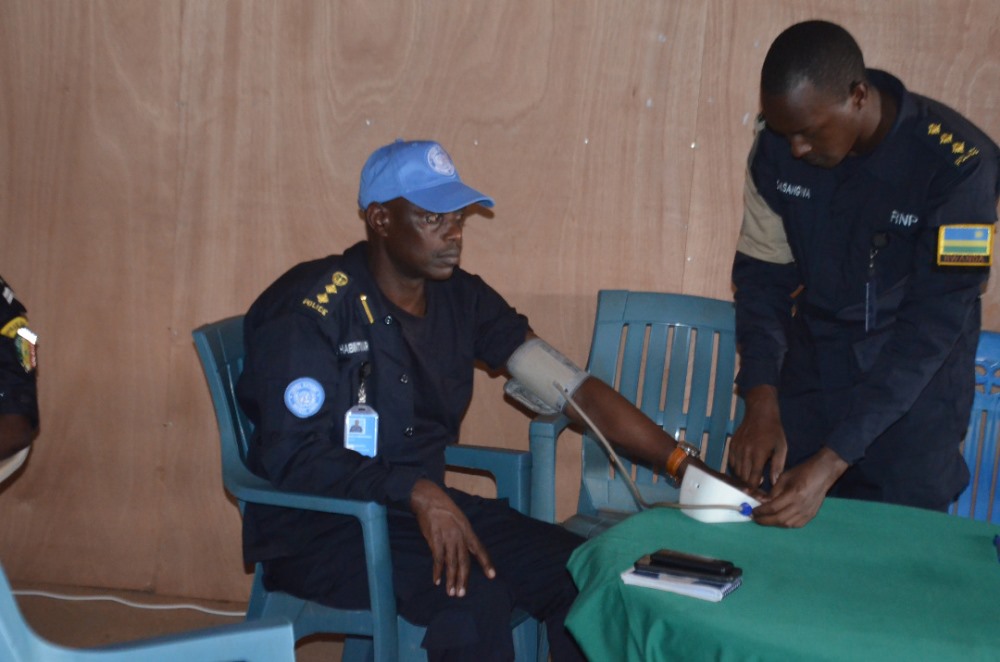
The voluntary and humanitarian act saw over 140 Rwandan Police peacekeepers of Formed Police Unit-One (FPU-1) and the Protection Support Unit (PSU) donate at least 450 millilitres of blood, each.
The life-saving act graced by MINUSCA Head of Police Component, Commissioner of Police (CP) Christophe Bizimungu, was part of the week-long blood donation exercise to mark the World Blood Donor Day, launched on June 28.
According to MINUSCA leadership, the blood donated by the peacekeepers will “contribute to helping accident victims, sickle cell patients and especially children suffering from anaemia and malaria.”
“This is a huge contribution and human security effort of saving lives,” CNTS leadership said.
Jean De la Croix Rukundo, 24, was arrested in Nyamata bus-park with a television screen, decoder and other accessories as well as money amounting to Rwf96,000, which he allegedly stole from his employer, Jean Damascene Rugumire of Gashora, where he was working as a house-help, since last year.
The Police spokesperson for the Eastern region, Superintendent of Police (SP) Hamdun Twizeyimana said the suspect was reported by suspicious people at the bus park in Nyamata town.
“People at the bus park got suspicious and called the Police when they saw Rukundo with a TV screen, decoder and other accessories, which they suspected to be stolen,” SP Twizeyimana said.
He added: “After his arrest, Rukundo revealed that he stole them from the home of one Jean Damascene Rugumire of Gashora, where he was working.
The victim was informed but he (Rugumire) also disclosed that the suspect had also stolen money amounting to Rwf96,000, which was also recovered from Rukundo.”
Rukundo was handed over to RIB at Nyamata station for further investigations.
SP Twizeyimana thanked the people, who provided information leading to the arrest of the suspect and recovery of stolen items.
“Quick sharing of information when a crime is committed or reporting anything suspicious helps in timely response and recovery of stolen items as well as arrest of suspects,” he advised.
Article 166 of law determining offences and penalties in general states that; any person convicted of theft is liable to imprisonment for a term of not less than one (1) year and not more than two (2) years and a fine of not less than Rwf1 million and not more than Rwf2 million, community service in a period of six (6) months or only one of these penalties.
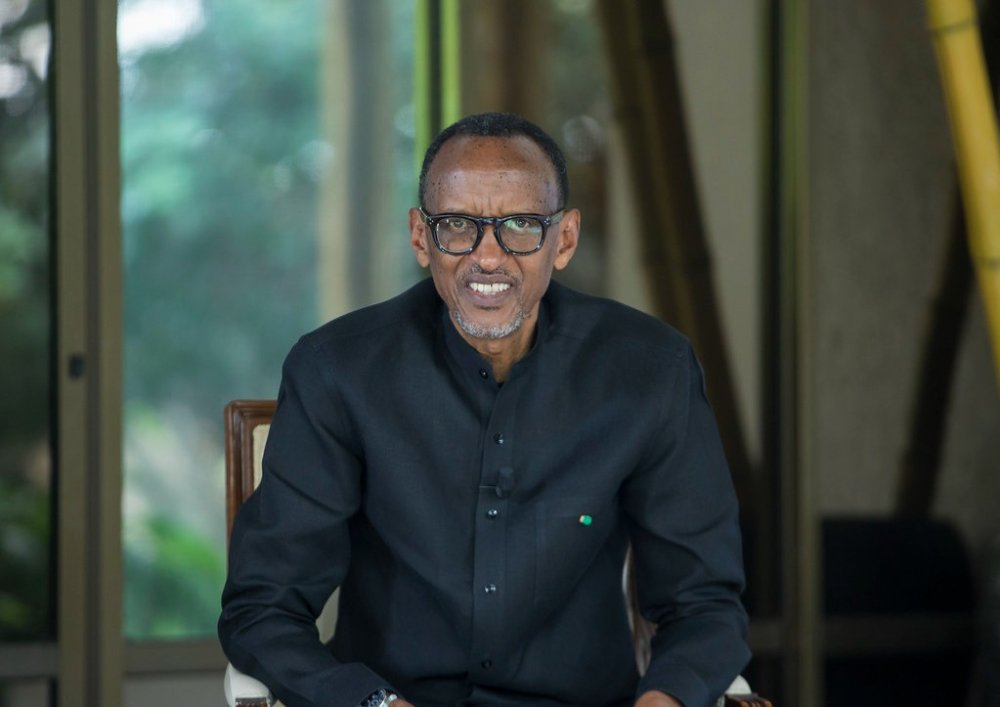
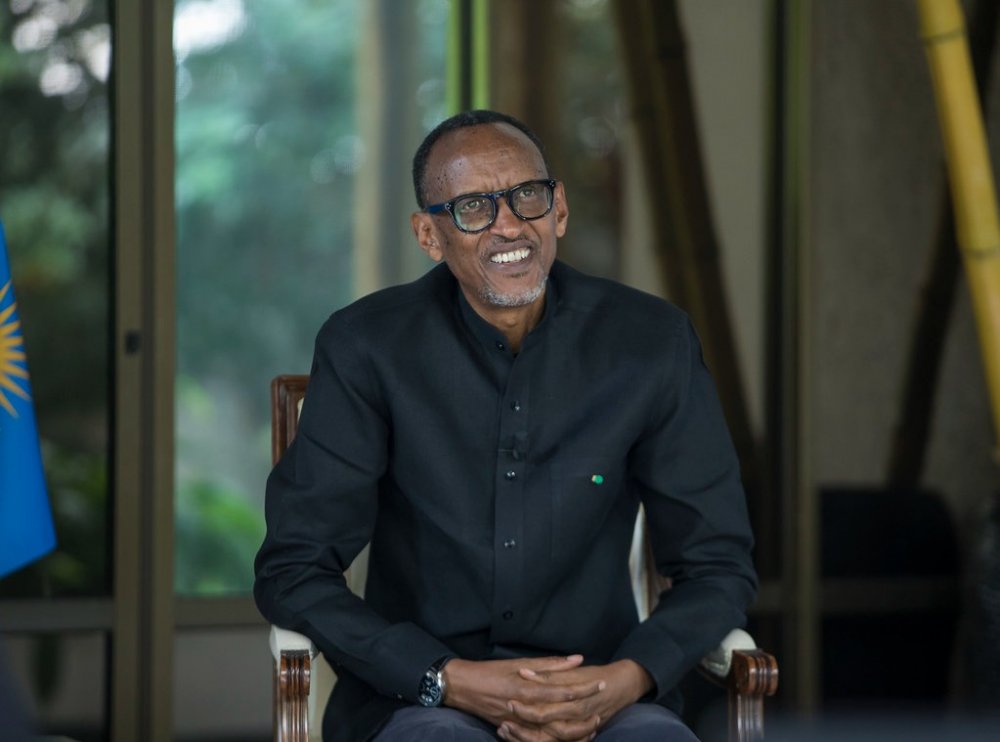
The Head of State made the disclosure during an interview with RBA on Monday 4th July 2022 as Rwanda celebrated the Liberation Day.
He revealed that the issue of Kinyarwanda-speaking citizens in the Democratic Republic of Congo (DRC) was ignored until they formed armed groups including M23 to stand for their rights.
Kagame stated that Rwanda shared views regarding the durable solution when M23 was attacked and defeated in 2013.
“There was a crisis in 2012. I think. And this crisis drew in all kinds of countries and regions including international institutions like the UN, big countries, powers that decide on many things. And they made one mistake which we pointed out at that time, that such matters are not resolved by force of arms, they don’t require more military solutions, they require more political solutions,” he said.
“They ignored what we were telling them. They just fought the so called M23 without even understanding why it was born and how it came to be, defeated it and the remnants fled to countries, mainly, one group went to Uganda and another group came to Rwanda,” added Kagame.
Despite the military defeat, the Head of State said that Rwanda kept reminding them that a political solution still needed to be applied to address their matters but nothing was done.
Kagame underscored that Kinyarwanda-speaking Congolese are citizens of the country where their presence in DRC should neither be blamed on Rwanda nor on Congo.
“How they became citizens of Congo cannot be blamed on Congo or cannot be blamed on Rwanda. […] How do you attain one point, just decide that you are going to declare people no longer citizens of their countries?” he wondered.
If their issues are not properly addressed, the Head of State observed that ‘the same people will always find ways of pushing back, fighting back and making sure that they belong to somewhere’.
“Saying that they belong to Rwanda is a big mistake because they have been in Congo all the years, and know Congo as their country,” he noted.
For the past few months, DRC has been accusing Rwanda of supporting M23 as the fighting between the rebel group and FARDC erupted.
However, a report released recently by UN experts on security issues in the Democratic Republic of Congo (DRC) seemed to contradict the country’s accusations that Rwanda supports M23.
The UN report indicates that sources from the Expanded Joint Verification Mechanism (EJVM) do not point out any involvement of foreign countries in the resurgence of M23.
The EJVM is a mechanism of the International Conference of the Great Lakes Region (ICGLR) composed of military officers from the 12 member countries that is charged with monitoring and verification of border violations between DRC and neighbouring countries.
During a recent interview with DW ; the Spokesperson of M23, Maj Willy Ngoma said that the rebel group M23 didn’t receive any support.
He disclosed that some of used weapons were kept in their hideouts after defeat in 2013 while others are bought from Congolese soldiers or seized during the ongoing fight.
The report indicated that ‘the resurgence of M23 was fuelled by failure to implement peace accords of 12th December 2013’.
It also reads that M23 held talks with DRC Government but were called off in September 2020.
The negotiations had prompted M23 to release a statement announcing that dialogues between the regime of President Tshisekedi were promising to yield good results.
It further reveals that M23 had not resumed fighting until November 2021 when it launched an attack on FARDC military position that saw the rebel group killing soldiers and stealing arms, military uniforms and telecommunication gadgets.
The experts went on explaining that M23 plotted more attacks on FARDC bases in Rutshuru one month later and January 2022. Since then, the report indicates that M23 attacked more regions including Tshanzu, Gisiza, Ndiza and Runyoni.
President Kagame has said that those accusing Rwanda of supporting the rebel group raise false allegations.
He however blamed the collaboration between MONUSCO and Congolese Army which teamed up with the Democratic Forces for the Liberation of Rwanda (FDLR) during clashes with M23.
FDLR is comprised of remnant masterminds of the 1994 Genocide against the Tutsi who have been plotting different hit and run attacks on Rwanda.
Kagame was appearing in RBA interview on monday 4th July 2022 as Rwanda celebrated the Liberation Day.
He made the revelation following concerns by the Democratic Republic of Congo (DRC) which claimed that Rwanda should not join regional troops to be deployed in the country to fight armed groups.
DRC has been accusing Rwanda of supporting M23 rebel group in clashes with Congolese Army (FARDC) but Rwanda repeatedly rejected the allegations and urged Congo to solve its internal problems without dragging it into the war.
Recently, the third conclave for regional heads of state was held in Kenya to find a lasting solution to security issues in eastern DRC.
The meeting also discussed resolutions of Regional Chiefs of Defence Forces held on the previous day on 19th June to agree on deployment of joint forces to DRC.
During the meeting, DR Congo Armed Forces (FARDC) Chief of General Staff, Gen Célestin Mbala Munsense told counterparts that Rwandans should not be part of joint regional forces ‘because the country supports M23’.
The deployment of joint forces is expected this July or August.
Delivering a speech as DRC celebrated Independence on 30th June this year; Congolese President Felix Tshisekedi said that troops to be sent to his country will come from countries having good relations with DRC.
Tshisekedi insisted that he successfully defended his decision of boycotting Rwandan troops from landing on DRC’s land.
During an interview with RBA today, President Kagame has revealed that the issue of M23 requires political solutions other than sticking to military forces.
He insisted that accusing Rwanda of supporting the rebel group is baseless and maintained that the country would be happy if the joint regional force is successful in eliminating elements posing security threat.
“[…] If this force gives guarantees to Rwanda that no more shelling from Congo by either Congolese or FDLR because they have eliminated them; why would I be opposed to that?” he wondered.
“In fact, I am very happy that this can be done without our involvement because getting involved is a cost to us. So, why would I incur the cost when somebody says I am ready to do it for you? I have no problem with that,” Kagame added.
His trial in substance set to begin on Tuesday 5th July 2022, will take place at the court based in Nyanza District.
Dr. Rutunga, 72, was deported in 2021 from the Netherlands where he spent more than ten years.
He is charged with crimes including complicity in committing Genocide and extermination as a crime against humanity.
During the previous hearing last year, the Prosecution accused Rutunga to have committed the crimes between April 26 and 30, 1994 in former Butare Prefecture currently in Huye district where he was working as the Regional Director of the Rwanda Agricultural Research Institute (ISAR-Rubona).
It is said that Dr. Rutunga invited Interahamwe militia to kill over 1000 Tutsi who fled to ISAR Rubona during the 1994 Genocide against Tutsi.
He later fled to foreign countries and was denied asylum status by the Netherlands in 2000.
He worked partially as a researcher at Wageningen University in The Netherlands prior to his arrest in 2019.
Dr. Rutunga was born in 1949 in the former Ruhengeri Prefecture, currently Gakenke district in the Northen Province.
During the 1994 Genocide against Tutsi, he lived in what is today Rubona village, Kiruhura cell, Ruhashya sector, Huye district in Southern Province.
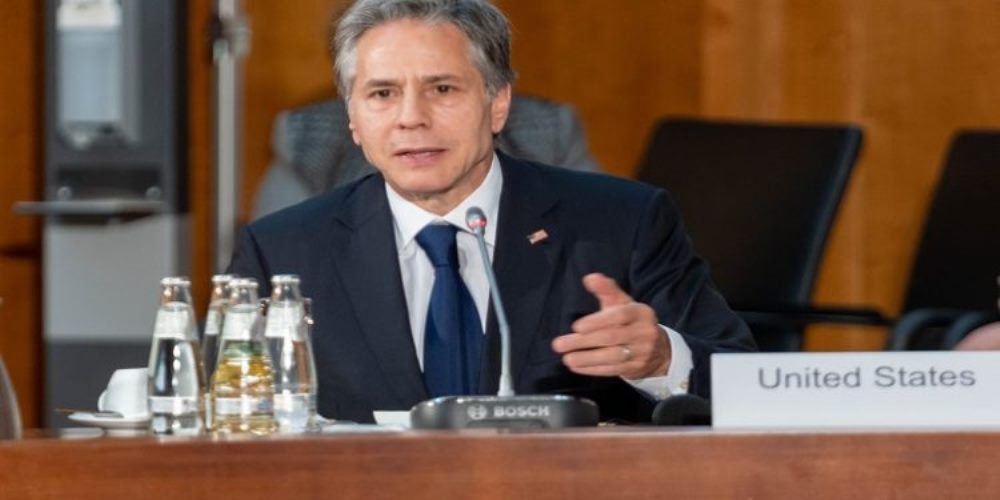
US Secretary of State Antony Blinken spoke with Kenyatta in a telephone call about Nairobi’s Initiative under the East African Community Conclave on DRC, as the best approach to end armed conflict in the troubled east of the country.
The Nairobi Initiative is one of President Kenyatta’s agenda in his role as Chairperson of the East African Community and has targeted to create a long-term solution for peace in eastern DRC.
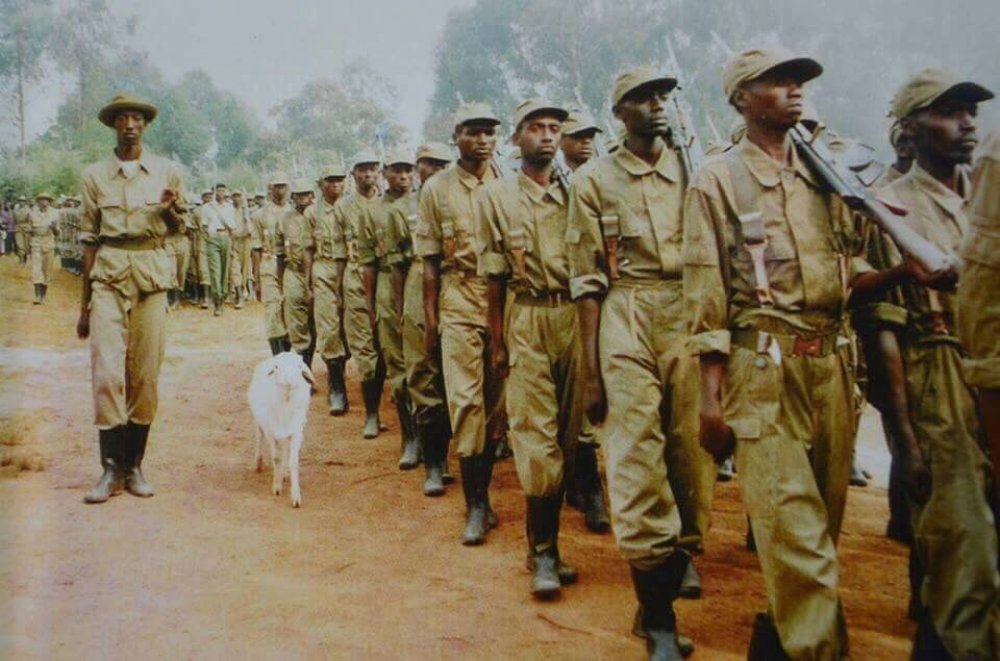
RPA soldiers launched the Liberation Struggle on 1st October 1990. The four-year journey ended with the capture of Kigali City where the then government which perpetrated Genocide against Tutsi fled to former Zaïre, in the current Democratic Republic of Congo (DRC).
As Rwanda celebrates the 28th Liberation Anniversary, we have listed below important dates that marked the journey to free the country from the regime characterized by ethnic divisionism and nepotism.
{{In 1990}}
{{On 1st October: }} On this date, RPA soldiers attacked Kagitumba border. The attack marked the beginning of the Liberation Struggle which lasted for four years after members of RPF Inkotanyi decided to free the country by means of war.
Initially, RPA soldiers were commanded by Maj Gen Fred Gisa Rwigema but attacks were foiled by soldiers of the then regime of Habyarima on the support of mercenaries.
Some of top commanders were killed in the first 14 days of the struggle which left gaps in the leadership of RPA and affected soldiers’ morale.
President Paul Kagame who was at the rank of major at the time took over the leadership and introduced new tactics during the remaining days of the struggle.
{{On 2nd October:}} The commander of RPA soldiers, Gen Maj Gisa Fred Rwigema was shot dead in Nyabwishongwezi.
{{On 4th October:}} 300 French soldiers came to protect its citizens living in Rwanda while RPA forces from the 9th battalion captures Nyagatare town.
In the night of 4th leading to 5th October, the government of Habyarimana lied that Inkotanyi raided Kigali City and arrested over 10,000 Tutsis and many politicians.
{{On 5th October: }} 535 Belgian soldiers and other from Zaire came to Rwanda to support Habyarimana.
{{On 6th and 7th October:}} The 4th Battalion of RPA soldiers captured Gabiro.
{{On 8th October:}} Following the exchange of fire with RPA soldiers; the then government forces (FAR) killed 1,000 Tutsis from Hima tribe in Mutara.
{{From 11th to 13th October:}} Nearly 400 Tutsis were killed in Commune Kibilira.
{{On 23rd October:}} Major Bunyenyezi and Major Bayingana died in an ambush laid in Ryabega.
{{On 13th November:}} Habyarimana allowed opposition parties to operate. He also declared that people’s ethnicity should no longer be mentioned on identity cards even though it never materialized.
{{On 6th December:}} Kangura journal published the 10 commandments of Hutus, including eight inciting Hutus to be violent against Tutsis.
{{In 1991}}
{{On 3rd January: }} RPA changed tactics and launched attacks in Gatuna and Kaniga to block the supply of equipment to FAR.
{{On 7th January:}} A number of Rwandans were handed death sentence accused of spying for Inkotanyi.
{{On 23rd January:}} RPA captures Ruhengeri town and released inmates from Ruhengeri Prison.
{{From the last days of January towards March:}} Between 500 and 1000 Tutsis from Abagogwe tribe were killed.
{{In 1992}}
{{In March:}} A group of Hutu extremists (CDR) that was at the centre of planning and execution of the 1994 Genocide against the Tutsi was created. Around 300 Tutsis were also killed in Bugesera.
{{In May:}} RPA attack in some communes left over 350,000 people displaced.
{{In August:}} A large number of Tutsis was killed in Kibuye.
{{In November:}} Leon Mugesera delivered a hate speech in Kabaya where he incited Hutus to exterminate Tutsis, insisting that they will be returned to ‘their place of origin’ in Ethiopia through River Nyabarongo.
{{In 1993}}
{{On 8th February: }} RPA captured the largest part of the country and withdrew to alert the international community that Tutsis were being killed of torture.
{{On 8th March:}} An international report indicated the role of the then Presidency Office in the killings of Abagogwe in Gisenyi and Ruhengeri Prefectures.
{{On 7th April:}} The then government received the report and rejected its findings.
{{In August:}} Spread of hate speeches and inciting Rwandans to kill Tutsis through Radio RTLM.
{{On 4th August:}} As RPA and the then regime were asked to implement resolutions of Arusha Peace Accords; the government continued to train Interahamwe, Impuzamigambi and other groups to kill Tutsis.
{{On 28th October:}} The 3rd Battalion of RPA soldiers arrived in CND in Kigali, aligning with efforts to establish the interim government as per Arusha Accords.
{{In 1994}}
{{On 6th April: }} A regional meeting took place in Dar-es-Salaam. The plane which carried the then President Habyarimana was shoot down on the same day around 8:30 p.m. as he returned to Kigali from the meeting.
{{7th April:}} Prime Minister Uwilingiyimana Agathe and 10 Belgian soldiers protecting her were killed. Other ministers and officials opposing the regime were killed.
Genocide began in Butare, Gitarama and Murambi in Byumba.
{{On 8th April:}} RPA soldiers decided to attack Kigali and stop Genocide against Tutsi.
{{On 14th Aril: }} Belgium ordered its troops to withdraw from Rwanda and UN troops deployed in the country. The last soldier left Rwanda not later than 20th April.
{{On 18th April: }} RPA shoot at RTLM over spreading hatred among Rwandans.
{{On 19th April:}} The interim President Sindikubwabo delivered a speech at his birthplace in Butare inciting Hutus to stand up and kill Tutsis. Since then, anyone opposing the plan was also hunted to be killed.
{{On 21st April:}} RPA captured Byumba.
{{On 21st and 22nd April:}} UN Security Council ordered the reduction of its troops in Rwanda and left only 270 soldiers.
{{On 30th April:}} RPA was controlling Rusumo border.
{{On 16th May:}} RPA blocked the road Gitarama-Kigali.
{{On 22nd May:}} RPA captured Kigali International Airport and Kanombe Military Camp.
{{On 29th May:}} RPA captured Nyanza town.
{{On 2nd June:}} RPA liberated Kabgayi.
{{On 13th June:}} RPA captured Gitarama town where the interim government had moved. It had fled to Gisenyi on 10th June.
{{On 21st June:}} As per the 929th resolution of UN, the first French troops arrived at borders between Rwanda and Zaire under “Operation Turquoise”.
{{On 28th June:}} UN released a report indicating that Genocide against Tutsi was happening in Rwanda.
{{On 4th July:}} RPA liberated Kigali City after Butare on the previous day. Since then, the former government fled to Zaire.
{{On 14th July:}} RPA captured Ruhengeri.
{{On 17th July:}} RPA liberated Gisenyi.
{{On 19th July:}} The Government of Rwanda’s Unity was installed, marking the stop of Genocide against Tutsi.
At least 26 computers were allegedly stolen when thieves broke into the school computer laboratory in the night of July 1.
The Police spokesperson for the Eastern region, Superintendent of Police (SP) Hamdun Twizeyimana said that two suspects were arrested with the 19 computers, on Saturday, July 2.
They are Kharim Murindabigwi, 18, a student at GS Sovu, and Hassan Omar Uwihanganye,18, who were apprehended in Kiruhura Village, Sovu Cell, Kigabiro Sector.
The burglary was reported by school management the following morning, SP Twizeyimana said.
“Police commenced the search for the suspected thieves and the stolen computers following the reported theft. At about 6pm, residents in Kiruhura Village reported a man, whom they saw with 11 laptops,” said SP Twizeyimana.
During the operation, the said man, who had the computers dropped them and fled.
“However, with the help of residents, Police managed to identify Murindabigwi as the owner of the bag. He was tracked and arrested together with Uwihanganye, in the same village, with other eight computers,” SP Twizeyimana explained.
Murindabigwi and Uwihanganye said that they got the computers from a man, whom they only identified as Veterinaire, who dropped the 11 computers and escaped.
“The search for other seven computers which are still missing, and other members of the burglary ring, is still underway. We commend the residents who facilitated the recovery of some of the stolen computers and the arrest of the suspected thieves.
We called upon anyone with information on other suspected thieves and the whereabouts of computers that are still missing to come forward.”
The suspects were handed over to RIB at Kigabiro station for further investigations.
Article 166 of law determining offences and penalties in general states that; any person convicted of theft is liable to imprisonment for a term of not less than one (1) year and not more than two (2) years and a fine of not less than Rwf1 million and not more than Rwf2 million, community service in a period of six (6) months or only one of these penalties.
In article 167, the penalty for theft doubles if the offender committed the crime through burglary, climbing or possession of keys other than the owner; the theft is carried out during the night or the theft is carried out by more than one (1) person.