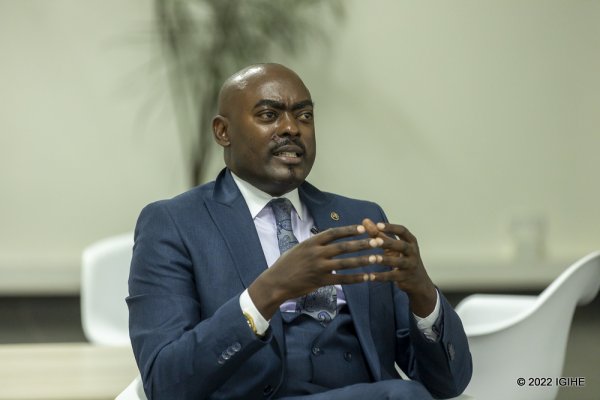
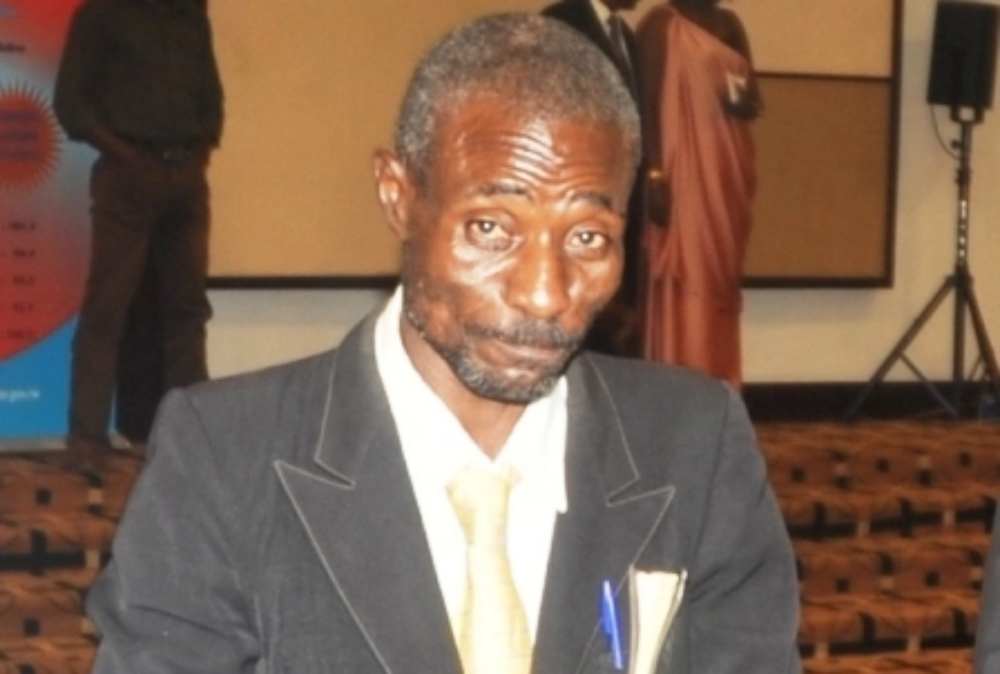
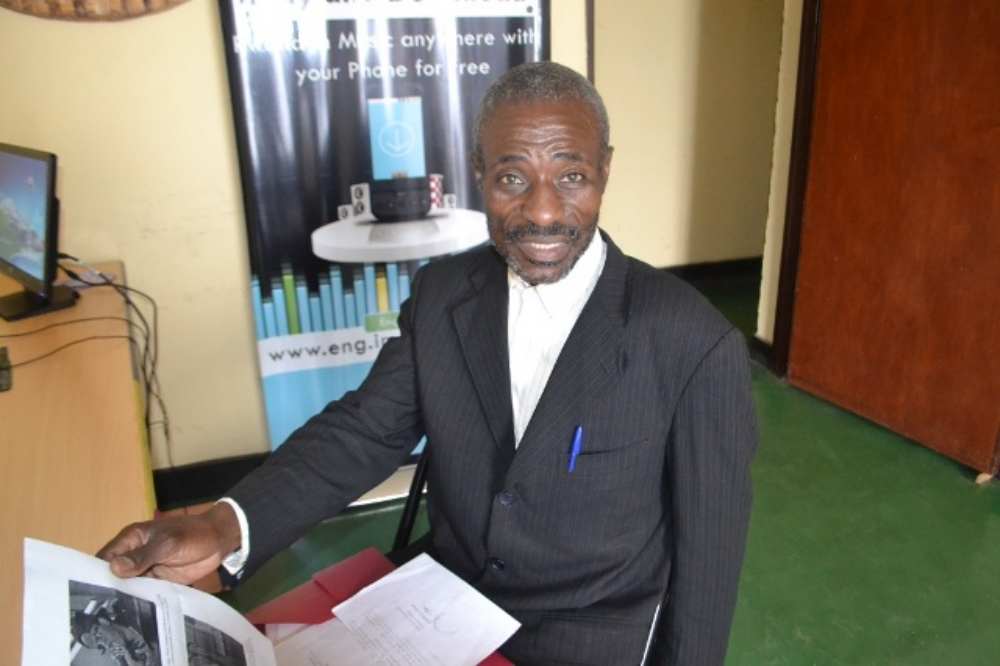
Speaking to IGIHE recently, the man who was in Kigali for Commonwealth Heads of Government Meeting (CHOGM) 2022, talked about relations between Uganda and Rwanda and disclosed how he was threatened over his criticisms among others.
As tensions between both countries escalated, the MP maintained that Uganda’s silence on allegations brought forth by Rwanda only served to exacerbate the situation.
Rwanda accused Uganda of harbouring dissidents with intention to threaten its security.
Uganda was also accused of harassing, abducting and torturing Rwandans crossing to Uganda for different reasons.
During an exclusive interview with IGIHE last year, Mbidde said that the closure of Gatuna border in 2019 was not the root cause of spoiled relations insisting that the decision was taken ‘to solve a problem’.
He explained that the arrest of Rwandans by Uganda’s security forces where some of them would spend a year enduring torture in detentions without consular access was a major reason that had to trigger the closure.
Apart from illegal detentions of Rwandans, Mbidde revealed that his country had started working with subversive groups intending to destabilize Rwanda.
He pointed out an example of Charlotte Mukankusi, a member of Rwanda National Congress (RNC) who received Ugandan passport and her colleagues who met with President Museveni.
Mbidde revealed that he was the first person who openly pointed out those issues in Uganda as the government remained silent.
Commenting on his country’s reactions to his criticisms, Mbidde recently told IGIHE that his colleagues isolated him an unpatriotic person.
“I got isolated because of those positions that I hold, by many sections of the people including my own colleagues in parliament. They really think I am not nationalistic enough, as to defend the wrong things that my country is doing,” he said.
Mbidde highlighted that pointing out where the government is wrong on an issue is of utmost importance to save it from danger.
“In my opinion, I did not even make those statements for anyone’s benefit but for mine. That this has to stop immediately. A lot of our people did not address the reasons for the border closure. They always addressed the closure. When you begin with that only, then you miss out the proper point for discussions,” he noted.
Due to his position on the issue between Rwanda and Uganda, Mbidde received threats but insisted that he is always comfortable to point out what is going wrong irrespective of whatever circumstances.
“Security forces also trailed me. I got a lot of threats, the president came out and openly called me Munyarwanda,” he disclosed.
The parliamentarian said that the situation did not scare him because Obote had also called Museveni a Munyarwanda.
“It is okay. Even if I would die, I would have died a very happy person if…I have raised somebody that can cry, stand up and strangle my killer without being paid. So, I do not regret what I did and I will partake of the circumstances that are continuous,” he noted.
Despite the setbacks, Rwanda and Uganda have embarked on a journey to restore relations that had deteriorated since 2017.
Both countries decided to turn a new page for relations following visits of Lt Gen Muhoozi Kainerugaba to Rwanda two times in 2022 where he met with President Paul Kagame leading to the reopening of Gatuna border.
Lt Gen Muhoozi is the first born son of Ugandan President Yoweri Museveni serving as the Senior Presidential Advisor on Special Operations and Commander of Land Forces of the Uganda People’s Defence Forces (UPDF).
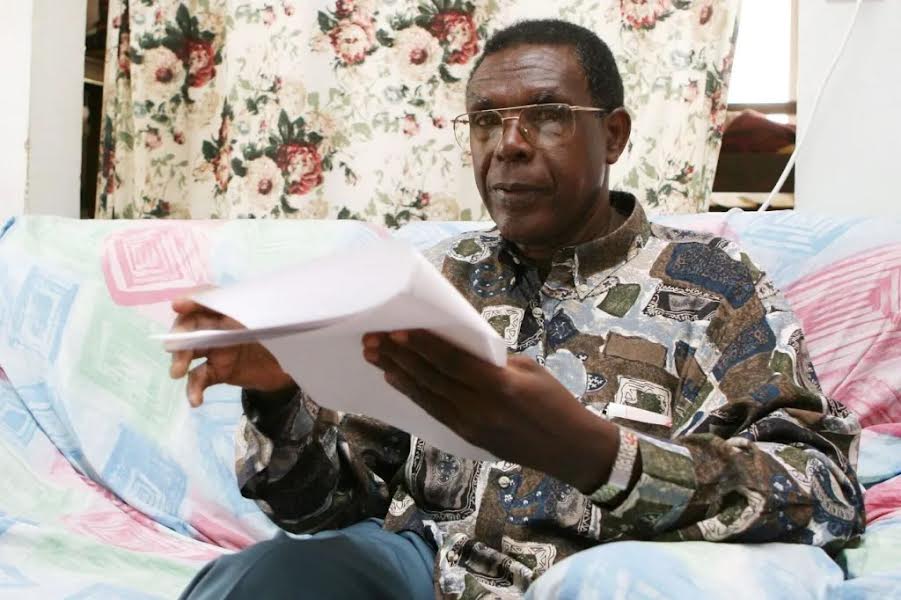
The court has also ordered immediate arrest of Bucyibaruta, 78, who has been under trial for two months over complicity in Genocide and crimes against humanity in Gikongoro prefecture which he headed during the 1994 Genocide against the Tutsi.
He was given ten days to have appealed against the verdict.
During trial proceedings, the Prosecution had requested the court to hand life sentence to Bucyibaruta.
At the heart of the case against the convict, were several “security” meetings, either ordered or attended by Bucyibaruta, which prosecutors had argued were actually planning sessions for the killings.
Specifically, Bucyibaruta was accused of having persuaded thousands of people to take refuge in the Murambi Technical School, by promising them food, water and protection.
Days later, in the early hours of April 21, tens of thousands of Tutsis were executed there.
The court also examined Bucyibaruta’s responsibility in the massacre of around 90 Tutsi pupils at the Marie Merci school in Kibeho on 7th May 1994 and in the execution of Tutsi prisoners including three priests in Gikongoro prison.
It is said that Bucyibaruta, who has been in France since 1997, has several health problems and was allowed to remain under house arrest during trial to receive treatments.
Richard Gisagara, a lawyer who followed up the case has welcomed the ruling.
“Let us reflect on victims in Kibeho, Murambi, Cyanika and Kaduha among others. I am grateful to those who entrusted me with heavy responsibilities to represent them,” he said.
Bucyibaruta was born in Musange in1944. He served as the prefect of Gikongoro Prefecture from 4th July 1992 to July 1994.
Initially, he fled to the Democratic Republic of Congo (DRC) and later went to France in 1997 where he lives up to date.
The sentence handed to Bucyibaruta is considered as a great step made by France which was for long blamed over sheltering masterminds of Genocide against the Tutsi roaming freely.
Following the visit of French President, Emmanuel Macron to Rwanda last year, the country pledged to work with Rwanda to bring to justice individuals suspected of role in the 1994 Genocide against the Tutsi.
Umbrella organizations of survivors of Genocide against the Tutsi and human rights activists had requested for trial of Bucyibaruta in 2000.
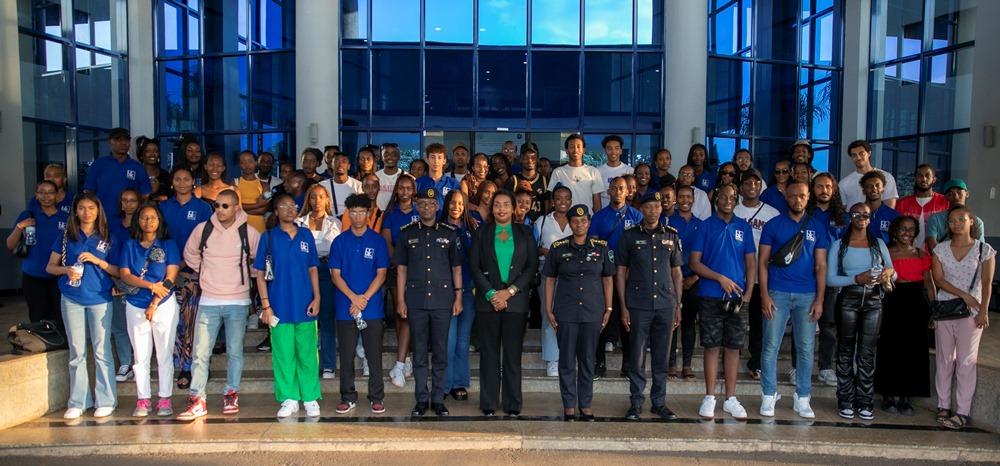
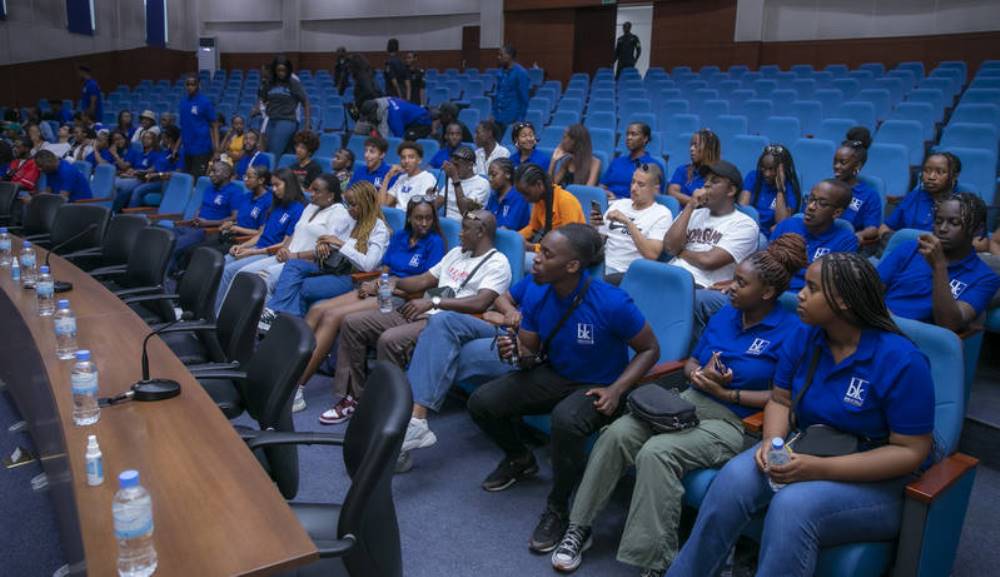
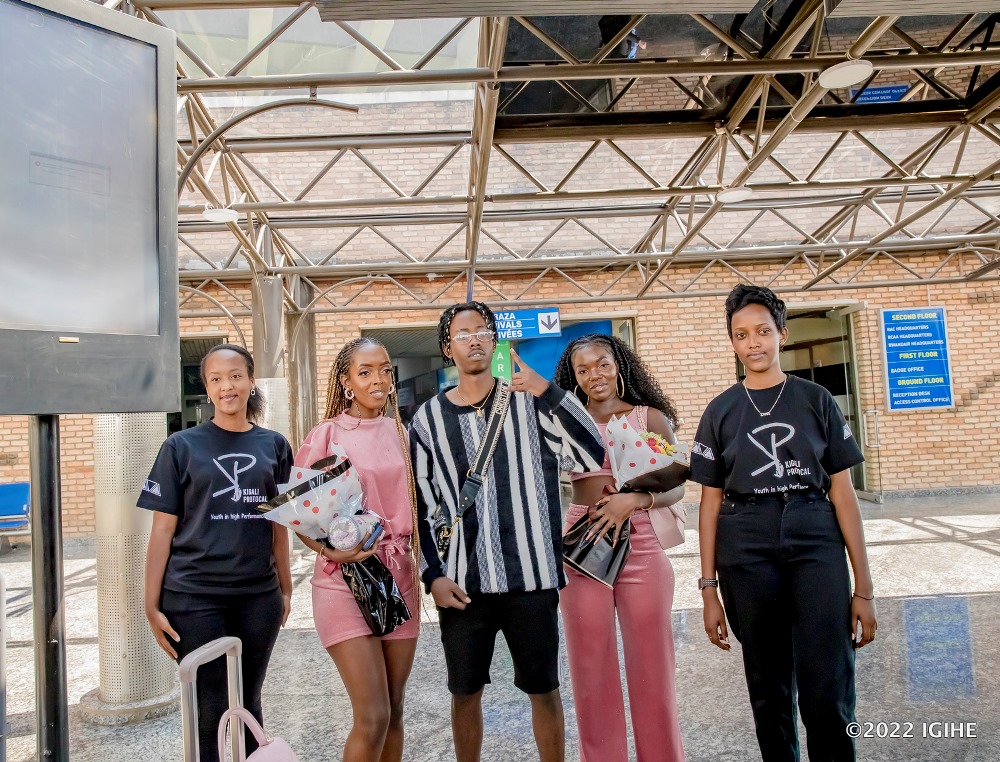
The young Rwandans, majority born after the Genocide against the Tutsi in 1994, include those, who are visiting Rwanda for the first time.
This is the second edition of their ‘Rwanda Youth Tour’ following their first one last year.
DIGP Ujeneza thanked them for visiting Rwanda National Police adding that the force strives to offer the best services to all residents of Rwanda.
“We encourage openness and accountability because we are here to serve the people. You are all Rwandan ambassadors… our ambassadors; when you are patriotic, you help to spread the right message, instill Rwandan values and culture in all aspects and contribute to your country’s security and development,” DIGP Ujeneza said.
She encouraged them to join Rwanda National Police and to support the national policing and security efforts.
The youth were taken through the history of RNP, its current structures and activities, community policing and human security activities and how it particularly works with and engages the young people in security and development activities.
Kennedy Bizimana, the head of the Rwandan youth group, said that the aim of the club that was formed in 2021, is mainly to help Rwandan youth born in other countries to learn and understand the history and culture of their homeland.
“We started this club last year in Belgium but it has grown to attract other Rwandan youth from 22 countries. They want to see, learn, understand, explore the available opportunities and to reconnect with their country,” Bizimana said.
Kataleya and Kandle is a sensational female singing duo comprised of Hadijah Namakula renowned by stage name as Kataleya and Rebecca Robins Nabatuusa alias Kandle.
The duo accompanied by a member of their management team arrived in Kigali on 12th July 2022 where they have been received by artiste Afrique and his team.
In an exclusive interview with IGIHE, Kataleya and Kandle expressed delight to have featured in the song along with Afrique noting that they look forward to promoting their song through media in Rwanda.
“The song has already become popular in Uganda and we wanted to make sure that it is brought to limelight here in Rwanda. We also need to expand our fanbase here in Kigali,” said Kataleya.
Published two days ago, the video of Kataleya and Kandle’s latest song “Nyash” is already among the most trending songs in Uganda and Kigali.
According to Kandle, “Nyash” is a common African slang for “Booty”. Nyash was produced by Ugandan Nessim.
Afrique, real name Josue Kayigire, is regarded by many as the biggest rising star in Kigali, behind the monster track “Agatunda”.
{{About Kataleya and Kandle}}
Kataleya and Kandle now have seven songs to their name, thanks to their management. These include ‘Nkunonya, Muzibe wa love, ‘Kyolina’, ‘’Tonafuya’, ‘Pain killer’ and their biggest song so far ‘Do me’.
Around 2017, the two realized that there was no female singing duo and decided to start a singing career together to fill this gap.
They started their career with no management but their passion for music and talent earned them a spot at Thereon Music where they are signed. Their single ‘Muzibe wa love’ is topping the charts which has given them hope for an even brighter future.
The duo is young gorgeous girls who describe themselves as ‘Best friends’ inspired by their love for music.
Despite having striking resemblances in physical features, Kataleya and Kandle say they have no blood relationship.
The ladies say Music was not something they wanted to seriously take on as Kataleya wanted to be a pilot and Kandle wanted to be an air hostess.
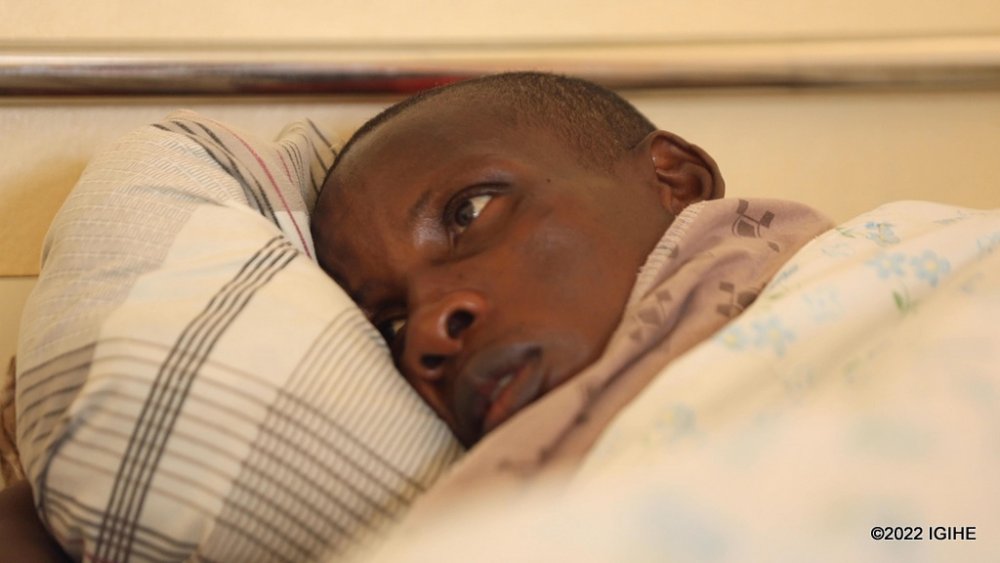
The man in question is Felicien Habanabakize, 43, hailing from Gisozi Sector of Gasabo District in Kigali City.
Hospitalized for 13 years at Kibagabaga Hospital, his legs are paralyzed, pleading for God’s mercy to save his life, as he spends all the times on his hospital bed.
Habanabakize was admitted at the hospital in January 2010, after falling from a house he was roofing in 2009. His back was seriously injured that it affected the backbone.
“I was taken to the University Teaching Hospital of Kigali [CHUK] following the accident. I spent two weeks there before I was transferred to the University Teaching Hospital of Butare [CHUB] for back surgery.
After spending six months awaiting surgery at the hospital, doctors told me that my situation would be much worse and result into death if they performed the procedure because I had an injury on the backbone below the neck,” he narrated.
Since then, CHUB transferred him to Kibagabaga Hospital in Gasabo District. His arms and legs are paralyzed that he is unable to move and spends all his days reclining in bed.
Because of leaning for several years, he has multiple wounds on his back, thigh and legs. He receives medication but they seem to be always fresh as the parts of his body are lean on his bed.
This has led to depression because of his deteriorating life.
“There are times when I wish to die, but cool down as I see others in similar conditions. I just stay in my bed and wait for God’s mercy because I can’t do anything about it,” he said.
Realizing that there is no hope for recovery, his family seems to have abandoned him and no longer visits him. Habanabakize depends on good Samaritans to survive.
Psychologists helping patients and families on daily basis have revealed that such circumstances affect mental health making it harder to accept such painful life.
Habanabakize is among other patients who have spent several years of sufferings in hospitals.
Emmanuel Nyandwi, 35, is in his fifth year at the hospital after falling off a bridge. His legs are also paralyzed. He last saw his relatives visiting him in 2018 and never came back.
Nyandwi also disclosed that family’s affection is much needed in such situation because it helps them overcome depression with a feeling that they are not alone.
Their burdens are not only limited to physical suffering but also endure emotional pain. The hospital bills bring a huge blow to their life as they have no sources of income. According to Nyandwi, the hospital charges him Rwf15, 000 every month and the money keeps increasing due to failure to pay.
His family initially catered for the bills but no longer do so due to lack of means.
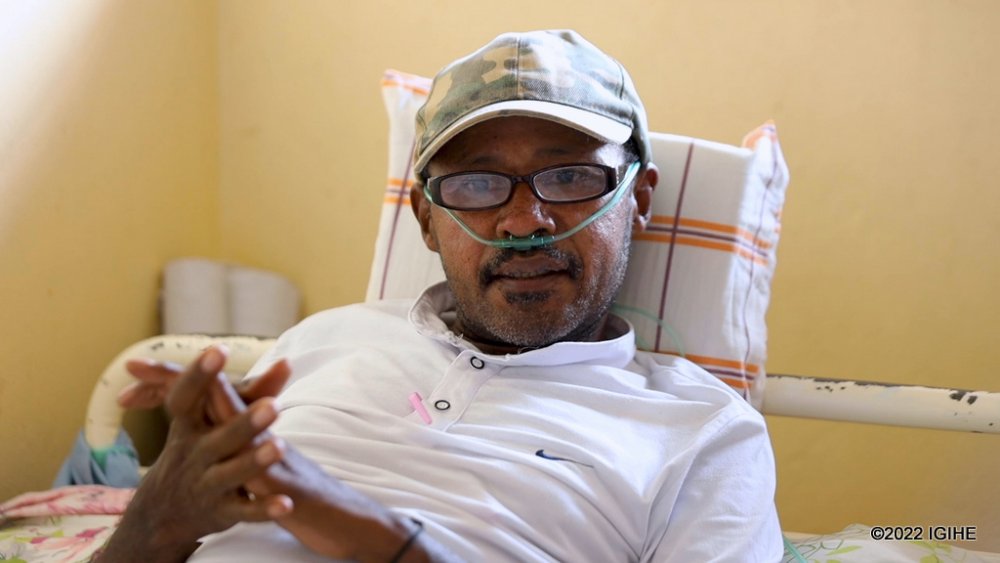
Jean Baptiste Muvunyi has been on ventilators helping him to breathe for the past four years.
It all started by swelling of the chest. He thought the condition would be easily treated but worsened overtime.
“Realizing that my health conditions were worsening, I went to a health center hoping to be treated and return home. However, I never returned because the situation was more severe than I thought,” he revealed.
He was immediately transferred to Kibagabaga Hospital where he was put on ventilator until today.
Muvunyi highlighted that patients spending long time at health facilities need special care from their families, nurses and doctors to move on with life.
Before the sickness, he was a mason. Muvunyi hopes to recover one day but worried about the cost of services.
He revealed that doctors recommended him a device that can help him to breathe but it would require Rwf6.5 million which he cannot afford.
As Muvunyi said, he was promised to be discharged once he gets means to buy the device. He is waiting patiently that good Samaritans would one day bring a smile to his life by helping him cater for the price.
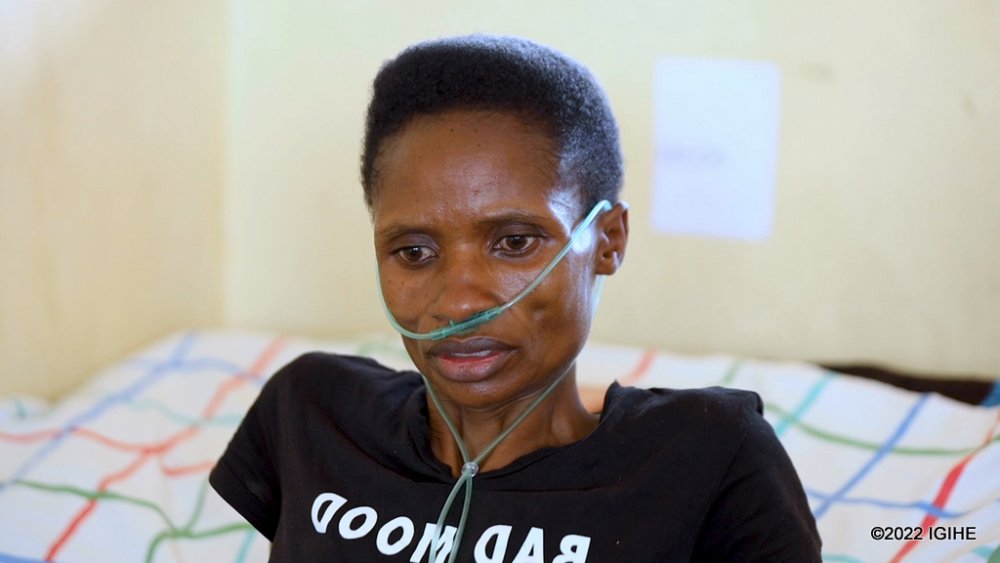
Muvunyi and Sephora Uwingeneye, a mother of three suffer from the same sickness. Uwingeneye is always worried about the education and wellbeing of her children.
{{Need for special support}}
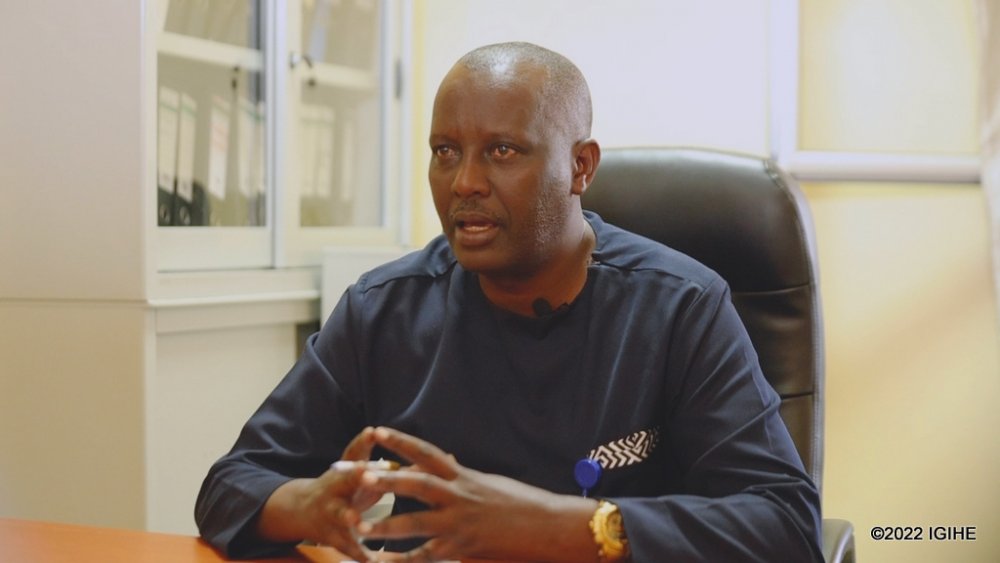
The Director General of Kibagabaga Hospital, Lt col Dr Ernest Munyemana has said that patients staying in hospital for a long time are likely to be abandoned by their families.
“Under such situation, patients feel desperate and depressed. If psychologists do not stay closer to them, their health conditions can be much worse and might end up catching new diseases,” he said.
This hospital mainly receives patients with serious illness who need special medical care.
In most cases, patients who spend long time in hospitals include those with serious injuries unable to perform any activities or cannot breathe without ventilators among others.
In some instances, relatives are irked over the prolonged stay in hospital and give up on their patients.
Dr. Munyemana pointed out an example of a patient who spent almost 10 years without any support from her family at the hospital. After passing on, Dr. Munyemana said, relatives came to pick the deceased for burial disguising themselves as neighbours.
“They were identified by hospital employees who once saw them looking after the patient and informed me. We approached them for discussions,” he said.
The hospital helps patients by linking them to people who pray for them.
The management also identifies patients without means to cater for hospital bills and link them to donors willing to support needy patients.
It also works with districts to identify avenues for possible support to lessen patients’ burdens.
Dr. Munyemana has encouraged people to subscribe for Mutuelle de Santé to access health services and families to make it a habit to visit patients lest they feel isolated.
“Some patients have no families to take care of them but we blame families which abandon patients and come to the hospital sometimes to confirm whether they are still alive or not. People need to be kind hearted and understand that people catching diseases need special attention especially when hospitalized,” he said.
The management of Kibagabaga Hospital says that the facility receives between 200 and 250 out patients every day and has the capacity of accommodating 200.
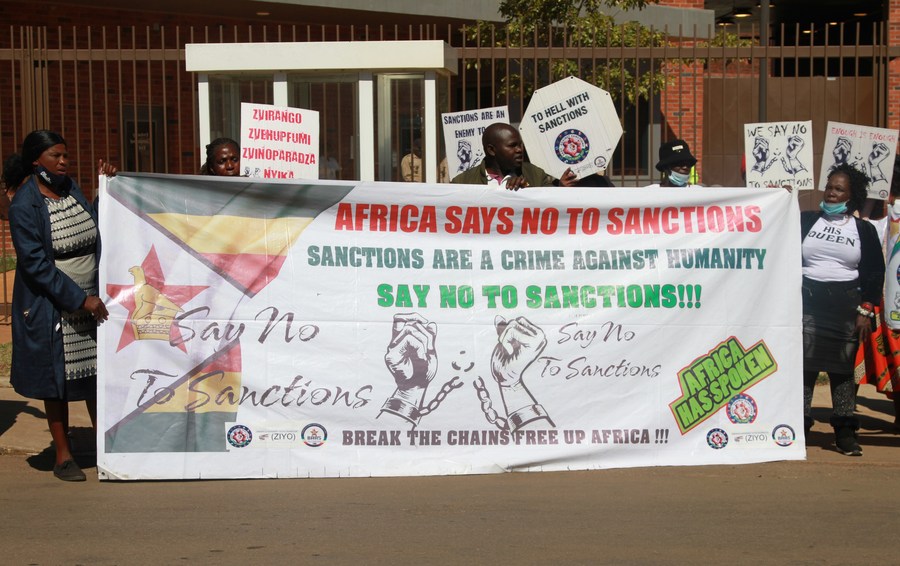
On July 4, the organizer of the camp — Broad Alliance Against Sanctions (BAAS), organized a demonstration outside the U.S. embassy compound while the Americans were observing their Independence Day.
“We’re demonstrating against the Americans for celebrating their Independence Day while we are suffering because of their sanctions,” said protestor Jesca Vhiyai, a BAAS member and mother of five.
The 48-year-old woman spoke out partly due to the agony afflicting millions of Zimbabweans from decades of sanctions imposed by the United States and its western allies. The anti-sanctions lobby BAAS said their camp set up on March 29, 2019, would only be removed when the sanctions are lifted.
{{Unremitting anti-sanction fight }}
The sanctions against Zimbabwe have been piled on since 2001, following a government decision to repossess land from minority white farmers for redistribution to landless indigenous Zimbabweans.
Though the Zimbabwean government said the land reform would promote democracy and the economy, Western countries launched repeated sanctions with little regard for the average person’s suffering.
Over the years, Zimbabweans have spoken out against the sanctions. BAAS is one of the staunchest. “So we are here to stay until they remove these illegal embargoes that they have enforced on our nation,” said BAAS spokesperson Sally Ngoni.
“We realized that most industries closed due to sanctions, meaning that sanctions are actually the major cause for all our other problems in Zimbabwe,” she said.
Ngoni said they would soon build an anti-sanctions village at the campsite, which will be molded along the traditional African huts in rural areas, adding that they want the Americans to “feel the pinch” by seeing firsthand how the sanctions have impacted the lives of the poor.
According to BAAS Chairperson Calvern Chitsunge, officials from the U.S. embassy have tried to bribe the group’s four leaders.
“They even offered us money,” Chitsunge said, noting the American staff have promised them each 100,000 U.S. dollars, a car and free accommodations at a location of their choosing.
“We said no. Paying us will not empower the 15 million Zimbabweans. Paying us will not change our industry,” he said. “We want our industry to function. We want our people to go to school. We want our people to seek medication which will be affordable.”
The U.S. embassy in Harare did not comment on the alleged bribe in its reply to Xinhua.
Linda Masarira, president of the Labour Economists and Afrikan Democrats (LEAD) political party, said sanctions have been used as a tool of economic warfare against Zimbabwe.
“It was an action that the United States of America decided to do on Zimbabwe to ensure that they make our economy scream, they make things hard for Zimbabweans and imply that black Zimbabweans, native Zimbabweans cannot do their own farming, or run their own economy,” she said.
{{Real pain for ordinary people}}
When asked about the impact of the sanctions, the U.S. Embassy in Zimbabwe directed Xinhua to a 2021 briefing by U.S. State Department spokesperson Ned Price in which he repeated that the sanctions target only 83 individuals and 37 entities, denying the Zimbabwean people as the targets.
However, the sanction-induced economic mire has inflicted a myriad of real challenges on Zimbabweans, especially amid an unprecedented global pandemic.
“The sanctions are slowing down our progress, inhibiting our economic recovery and punishing the poorest and most vulnerable in our society,” said Zimbabwean President Emmerson Mnangagwa.
Celia Rukato, founder of Chjaa Enterprises, a textile print and garment manufacturing company based in Harare, is one of the entrepreneurs suffering under sanctions.
Like many modern retailers, her brand promoting a Zimbabwean identity has utilized online platforms to reach a more extensive customer base in and outside Zimbabwe. However, payment options have been a problem due to Western sanctions.
“There are certain companies that are not allowed to interact or work with Zimbabwean-based companies,” she told Xinhua, citing U.S. firm PayPal.
“We have to make alternative plans that cause the customers to pay more for transaction costs or a middleman’s commission in a third country,” said Rukato, adding that these barriers have made Zimbabwe-based startups miss opportunities and funding.
In early June, The Herald newspaper reported that Andela, an international job placement network for software developers, had denied Zimbabwean national Michael Nyamande’s attempt to join the service because he resided in a country under U.S. sanctions.
“Sanctions are actually targeted at the ordinary men and women in the street, in the townships, in the rural areas,” said Obert Gutu, member of the National Peace and Reconciliation Commission and former deputy minister of justice and legal affairs.
Describing the sanctions as a weapon of mass destruction, Gutu said Zimbabwe has failed to build new roads, hospitals, clinics or even rehabilitate old infrastructure because it “has been denied access to affordable finance by international institutions.”
“Since 2002 when the sanctions were effected, this economy has never been the same again because the most deadly effect of sanctions on Zimbabwe was just to first and foremost paint Zimbabwe as a pariah state,” said Gutu.
Denford Mutashu, president of the Confederation of Zimbabwe Retailers, said the sanctions had a devastating impact on the Zimbabwean economy and the competitiveness of local businesses.
“The business operating environment changed for the worse, and foreign direct investment ceased to flow into the country,” he said.
“We will not allow the U.S. to continue lying to the people of Zimbabwe that the sanctions are targeted,” LEAD President Masarira said.
{{Outcries for lifting sanctions}}
On a public occasion in March 2022, Zimbabwean Finance Minister Mthuli Ncube said the country is reeling from the effects of sanctions. “Banks lost over 100 corresponding resources. We experienced massive loss of jobs, and we were unable to create jobs easily.”
The minister said foreign direct investment was 95 million dollars in the 1990s before plummeting to around 20 million yearly in the 2000s.
Given the distressing effect of the sanctions on the viability of businesses in Zimbabwe, there have been outcries against the economic punishment in and outside the country.
“You cannot do much when you are under a yoke,” said Mutashu, adding that some regard the sanctions as a new form of neo-colonialism.
“We should be seeing countries being able to determine and chart their own destiny according to their own traditional cultural, political, socio-political and socio-economic backgrounds,” Mutashu said, urging an immediate removal of the sanctions.
Led by President Mnangagwa, Zimbabweans embarked on a march to demand an end to foreign sanctions in 2019, which has gained support from various regional and international organizations.
In a statement released in October last year, Chairperson of the African Union (AU) Commission Moussa Faki Mahamat said the AU calls “for the immediate and unconditional removal of sanctions imposed against the Republic of Zimbabwe.”
The Southern African Development Community, a 16-country regional bloc, has designated Oct. 25th of each year as Anti-Sanctions Day since 2019 to show solidarity with Zimbabwe against illegal Western sanctions.
The United Nations special rapporteur on unilateral coercive measures, Alena Douhan, also called for the lifting of the sanctions after her 10-day visit to Zimbabwe to assess the impact of the sanctions in October last year.
“Over the last 20 years, sanctions and various forms of over-compliance with sanctions have had an insidious ripple effect on the economy of Zimbabwe and on the enjoyment of fundamental human rights, including access to health, food, safe drinking water and sanitation, education and employment,” Douhan said.
Despite minimal progress with several individuals and state entities removed from the sanctions list, mainly by the European Union, Zimbabwe and its anti-sanctions fighters have never given up.
“We have seen some institutions such as the Infrastructural Development Bank of Zimbabwe being removed from the sanctions list as well as some individuals,” said BAAS spokesperson Ngoni, who is confident that their efforts yielded some results.
“We can’t really say it was a direct result,” said Ngoni, “but it did contribute to the removal of those sanctions.”
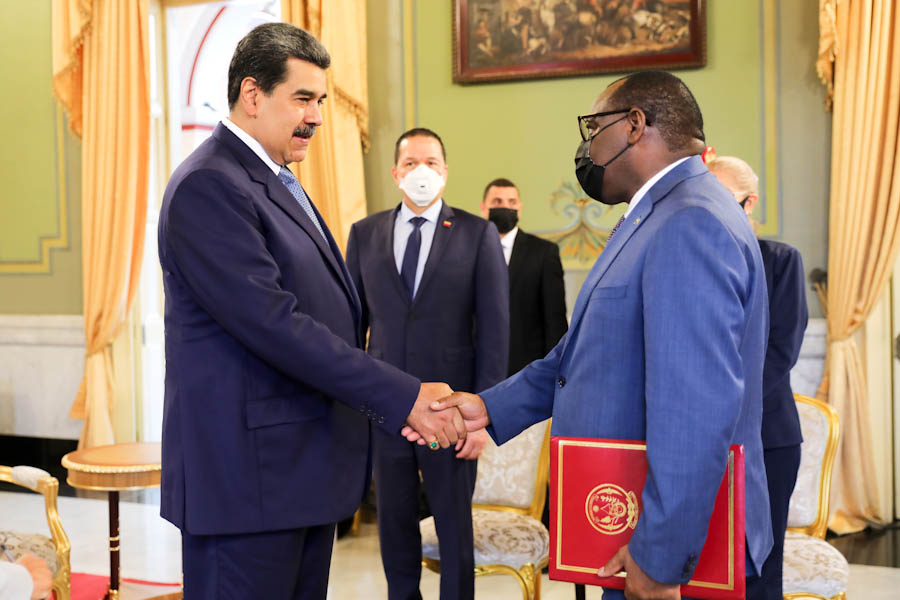
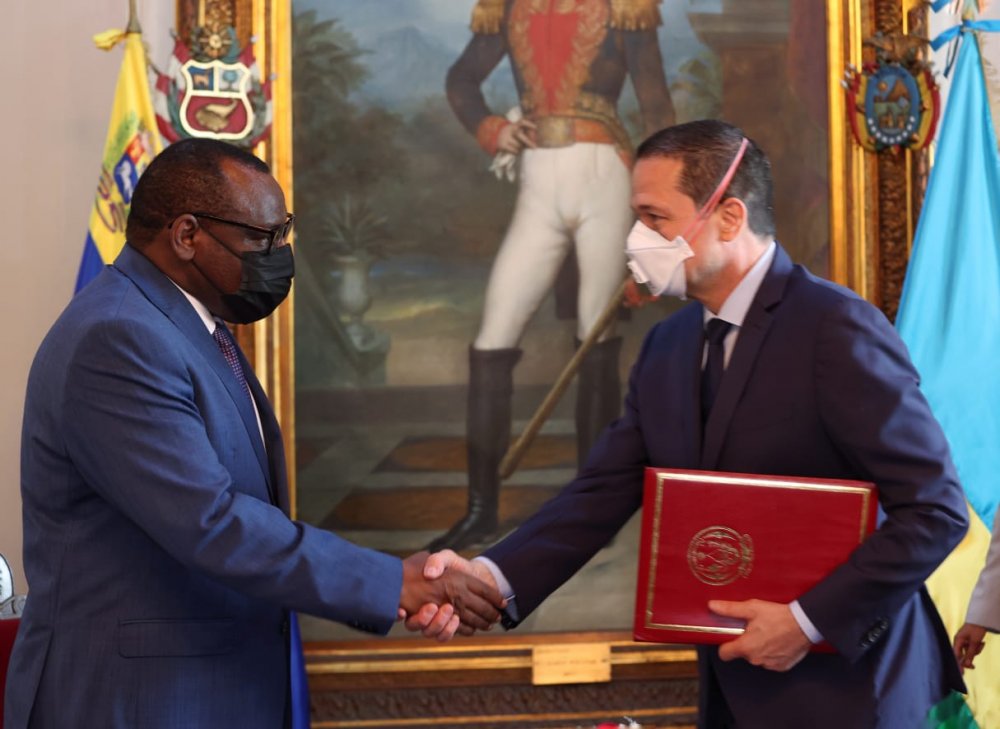
The ceremony took place at Miraflores, the country’s Presidential Palace.
Apart from presenting credentials, Amb. Gatete also held talks with Carlos Rafael Faría Tortosa, the country’s Minister of Foreign Affairs. Their discussions revolved around strengthening bilateral cooperation in areas of mutual interest.
Venezuela enjoys cordial relations with Rwanda. Its interests in Rwanda are overseen by Amb. Jesús Agustín Manzanilla Puppo with residence in Nairobi, the Capital of Kenya.
Amb. Puppo presented letters of credence to President Paul Kagame in June last year.
After presenting credentials, he expressed delight to be in the Country of Thousand Hills and commended Rwanda’s economic progress and efforts to promote access to healthcare.
Amb. Puppo revealed that presenting credentials to Kagame was the beginning of a fruitful journey to strengthen bilateral ties that existed for 40 years.
Venezuela is populated by 28 million. It has the largest oil reserves in the world.
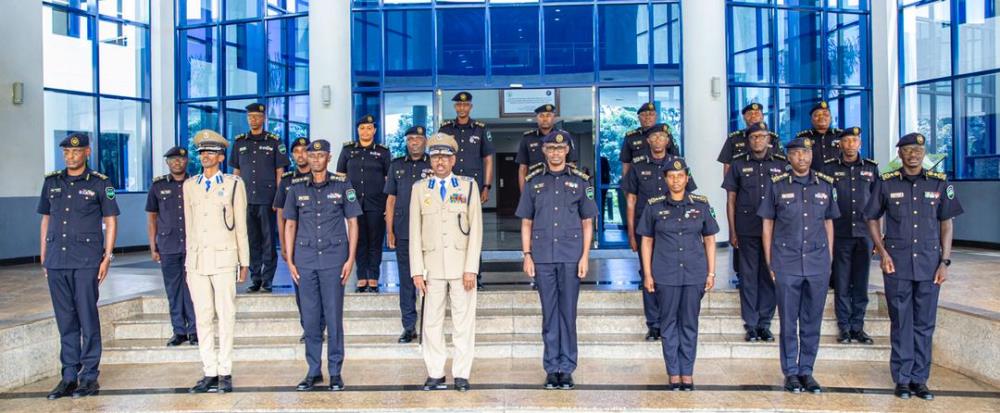
During the bilateral meeting, IGP Munyuza expressed RNP’s commitment to further improve cooperation between the two law enforcement institutions mainly through capacity building and exchange of experiences.
RNP signed a Memorandum of Understanding with Somali Police Force mainly in training, in 2011. Since then, 11 Somali Police officers have been trained in Rwanda, including six senior officers, who attended the Police Senior Command and Staff Course and five at the Intermediate command course.
“This is an opportunity for us to discuss as we endeavour to explore more areas of cooperation to include; sharing of information and intelligence in fighting international organized crime, and terrorism that continues to pose a threat to national, regional and international security,” IGP Munyuza said.
The visit, he added, paves way to establish more formal collaboration channels through which communication will be much easier especially while sharing information on matters of security.
“We are happy to share with you our policing experience. Rwanda National Police remains committed to cooperate with Somali Police Force for the mutual benefit of our countries’ safety and security,” IGP Munyuza reiterated.
On his part, the Police Commissioner for Somali Police Force (SPF), Maj Gen Abdi Hassan Mahamed, acknowledged the RNP’s “support in promoting security, peace-building and the rule of law.”
“Historically, the Somali Police Force was founded in 1943 but collapsed in 1991 as all other institutions of our country…but was re-established from scratch in the year 2000 after the reconciliation process that was done in Djibouti”.
Today, after a long struggle and the re-establishment, we can say that the Somali Police Force is functioning across the country to deliver Police services to protect citizens and their property,” Maj Gen Abdi said.
Over the last 15 years, Maj Gen Abdi said that the Somali Police Force has upgraded its capacity and has gained experience in dealing with terrorists and criminal networks.
He, however, added that although the new police force prides itself for its trustworthy service to the public, the threat of al-shabaab terrorists in the country and other transnational organized criminal networks continue to evolve.
Increasing the number of senior officers in Police Senior Command and Staff Course as well as tactical and junior officers, the Somali Police Chief said, will impact the future transformation of Somali Police Force.
“Somali Police Force is committed and needs extensive support from Rwanda National Police for its mandate and legal framework, which will lead to a safer and secure nation without fear, intimidation, abuse, violence or any other unlawful acts,” Maj Gen Abdi said.
During his week-long official visit to Rwanda, Maj Gen Abdi will tour various RNP facilities including departments and schools.
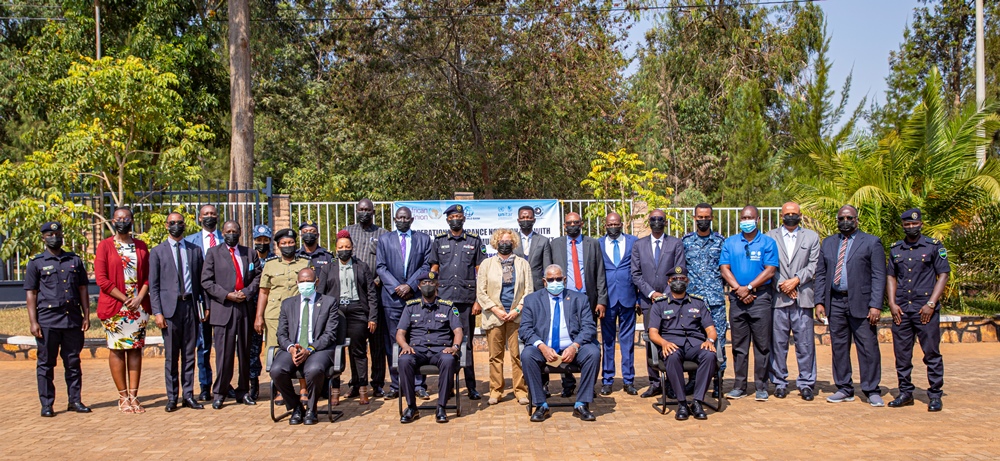
The training which kicked off on Monday 11th July 2022, brings together 18 participants from Burundi, Central African Republic (CAR), Democratic Republic of Congo (DRC), Ethiopia, South Sudan, Uganda and Rwanda.
It is organized in partnership with the Regional Centre on Small Arms (RECSA) and the United Nations Institute of Training and Research (UNITAR).
The Deputy Inspector General of Police (DIGP) in charge of Operations, Felix Namuhoranye, while officially opening the training, said that proliferation of small arms and light weapons fuel conflicts, undermines political stability, and has devastating impacts on human and state security.
“Sustainable development cannot be achieved in the absence of peace and security. One way of guarantying them is the control of the proliferation of small arms and light weapons, which have been found to sustain armed conflict, instability, terrorism, cattle-rustling and other serious crimes in the region,” DIGP Namuhoranye said.
To prevent proliferation of arms, RECSA undertook different strategies which include the training on Disarmament, Demobilization and Reintegration (DDR) and Arms Control.
To support these strategies, Rwanda National Police allocated a site at PTS Gishari for the construction of the specialized training centre on Small Arms and Light Weapons.
“We believe that this centre will help in enhancing capacity building of member states through regular training,” DIGP Namuhoranye observed.
Lt. Gen. Badreldin Elamin Abdelgadir, the Executive Secretary for RECSA said that RECSA has developed Best Practice Guidelines on Practical Disarmament to ensure that disarmament interventions are comprehensive, people sensitive and address the root causes of armament among communities.
“The tragedies caused by proliferation of small arms and light weapons in our countries continue to be a matter of concern. Armed violence cases dominate newspapers on a daily basis. Though the context and circumstances may vary, the lethal consequences have always been very devastating,” said Lt. Gen. Badrelardin.
The AU Commission Representative, Christophe Kayoshe noted that the training will illustrate how poor management of weapons have had a catastrophic impact on human rights and infrastructure.
He added that poor management of ammunitions contribute to the threat of proliferation.
This, Kayoshe added, requires to improve oversight in accountability and peace particularly after demobilisation, and how the weapons are controlled to prevent falling in the hands of non-state actors and terrorist groups.
“The issue of small arms and light weapons is a serious concern for conflicts on our continent where terrorist groups have accessed weapons in illegal means,” Kayoshe said.
He added: “We adopt mechanisms to assist member states that are facing operations and capacity challenges through the support of weapons and ammunitions management capabilities, and to ensure that member states have ownership of weapons and how they manage them.”
Kayoshe further called for coordinated efforts in the region and among law enforcement agencies to correctively leave no room for terrorists to access arms.