President Paul Kagame had requested for these teachers as he delivered remarks at Rwanda-Zimbabwe Trade Conference in September 2021.
At the time, he said that cooperation in infrastructure development including schools is of crucial significance noting that the priority should be given to human resource.
He highlighted that Rwanda is ready to hire whatever number of quality teachers available.
As he addressed both chambers of parliament on Monday 1st August 2022, Premier Ngirente said that the government will continue to implement agreements regarding the exchange of expert teachers signed with partner countries and international organizations with a view to promote languages’ education.
He disclosed that Rwanda has so far received 63 teachers from the Organisation Internationale de la Francophonie (OIF) to teach French language.
The second batch comprising 45 teachers was received in April this year through “mobility project” launched by OIF to enhance French language teaching among its member states.
The project which started with countries including Rwanda, Ghana and Guinea is expected to reach 10 countries.
“The government is collaborating with Zimbabwe where we are set to receive 477 teachers to support the education sector in enhancing English language teaching,” said Premier Ngirente.
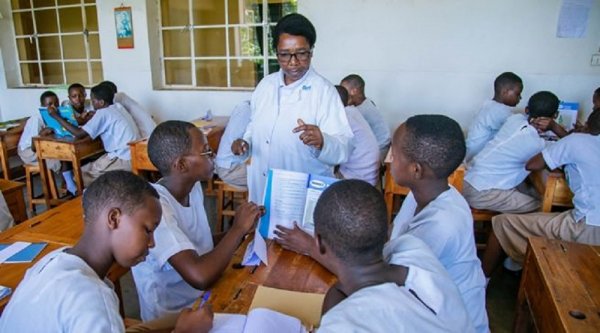
He did not shed light on timelines for their arrival but revealed that they will initially be sent to Teachers’ Training Colleges (TTCs), universities and the College of Education so that it can release competent English teachers.
Zimbabwe is among countries reputed for quality education since the colonial rule in the 1980s up to date.
The appointment was made following the resolution of BK Group Plc Board of Directors dated 1st 2022.
Habyarimana served as the Minister of Trade and Industry for one year and three months
Dr. Diane Karusisi who previously served as the CEO of the group has retained duties as CEO of Bank of Kigali Plc. Dr. Karusisi took over as the CEO of Bank of Kigali in 2016 replacing Dr. James Gatera.
Commenting on the appointment; the Chairman of the Board of Directors of BK Group Plc, Marc Holtzman expressed delight for the appointment of Béata Habyarimana.
“Her leadership and vast experience in the financial sector will be instrumental in driving BK Group strategy and future growth ambitions. Béata will work closely with the CEOs of our four subsidiaries: Dr. Diane Karusisi, CEO of Bank of BK Capital and Claude Munyangabo, CEO of BK TecHouse,” he said.
Habyarimana is an economist and financial advisor by profession with over 19 years of experience in the financial industry in domestic, as well as Pan-African and international institutions.
Previously, she served as the Minister of Trade and Industry from March 2021 to July 2022. Prior to that, Habyarimana was the Deputy Managing Director of Bank of Africa and Chief Executive Officer of Agaseke Bank.
She holds a Master of Business Administration majoring in Finance from Maastricht School of Management in The Netherlands and a Bachelor degree in Public Economics from University of Rwanda.
{{About BK Group Plc}}
BK Group Plc is a home-grown, award-winning Rwandan institution with deep roots in the African financial space since its inception in 1966.
Over the years, BK Group Plc has gradually transformed into a premier one-stop-shop, with a full range of financial services offered under a single roof.
Today, it stands as the largest commercial bank in Rwanda by total assets.
The Group’s activities range from retail and corporate banking to asset management and investment banking as well as a comprehensive range of nonlife insurance products and innovative enterprise solutions.
BK Group Plc is listed on both the Rwandan Stock Exchange, having floated its shares in 2011, and the Nairobi Stock Exchange (since 2018).
One Damascene Mukurizehe, 34, was arrested red-handed at his home in Rwebishorogoto village, Gasinga cell, Rwempasha sector with 40 litres of Kanyanga while 98 litres were seized from traffickers in Matimba and Karama sectors, who fled.
The Eastern region Police spokesperson, Superintendent of Police (SP) Hamdun Twizeyimana said that the suspects’ illegal business was reported by the residents in the area.
“They had sneaked kanyanga into Rwanda from Uganda through porous border points and Police has prior information in the routes they were using,” said SP Twizeyimana.
The illicit gin was packed in bottles and jerrycans.
Mukurizehe and exhibits were handed over to RIB at Rwimiyaga station for further investigations.
The Ministerial Order nº 001/MoH/2019 of 04/03/2019 establishing the list of narcotic drugs and their categorisation, lists Kanyanga among “simple drugs.”
Article 263 of law No 68/2018 of 30/08/2018 determining offenses and penalties in general, states that any person, who unlawfully produces, transforms, transports, stores, gives to another or who sells narcotic drugs and psychotropic substances, commits an offence.
Upon conviction for simple drugs, the offender faces between seven and ten years and a fine of not less than Rwf5 million but not more than Rwf10 million.
Rwanda National Police increased operations in Nyagatare and other districts where trafficking of kanyanga is still common.
Premier Ngirente has announced the development as he presented achievements of the government in the education sector under the National Strategy for Transformation (NST1) to both chambers of parliament.
The new plan will see the salary of primary school teachers holding A2 degrees increased by 88% while others with A0 and A1 degrees will receive 40% salary increment.
The salaries of head teachers, deputy head teachers and support staff working in public and government aided schools have been also revised upwards.
The decision will go into force effective from August 2022.
Premier Ngirente has also said that injected additional Rwf5 billion into the Teachers’ Savings and credit Cooperative (Umwalimu SACCO), in this fiscal year to increase its capacity to provide loans.
He expressed optimism that injected funds will further improve teachers’ welfare.
Normally, a newly recruited teacher paid on the basis on A2 degree received Rwf57,000 per month. A new teacher paid on the basis of A1 diploma used to receive Rwf137,000 while a recruited teacher paid on the basis of A0 degree would receive Rwf160,000 net salary.
As per new payment scheme, teachers with A2 degree will get a salary increment of Rwf50,849 while those paid on the basis of A1 and A0 degrees will have their salaries increased by Rwf54,916 and Rwf70,195 respectively.
Teachers to benefit from the pay rise include 68,207 holding A2 degree; 12,214 with A1 degrees and 17,547 teachers paid on the basis of A0.
At least 10,000 teachers would quit their jobs every year. Premier Ngirente has revealed that low salary was among reasons pushing them to give up on their jobs.
He expressed confidence that the salary increment will enable them to remain stable.
From November 2020 to August 2022, the Government of Rwanda recruited 28,512 new teachers in primary and 13,889 others in secondary schools.
Relations between Rwanda and Zimbabwe got a boost three years ago in October 2018 when President Paul Kagame appointed an ambassador to the country for the first time.
Since then, Rwanda’s interests in the country have been represented by Amb. James Musoni.
Prior to Musoni’s appointment, Rwanda’s interests were overseen by its ambassador to South Africa.
The decision was not reached by accident as President Kagame had expressed willingness to work with Zimbabwe as he attended the inauguration of Zimbabwean President Emmerson Mnangagwa who replaced Robert Mugabe.
The development came few days after Rwanda’s carrier, RwandAir started operating flights to Harare in Zimbabwe through Lusaka in Zambia.
As he received credentials from Amb. Musoni, President Mnangagwa appreciated the fact that RwandAir was flying to Harare, as well as Rwanda’s decision to open a resident embassy in Harare.
He highlighted that it will strengthen further the existing cordial bilateral relationship between the two countries.
In 2019, President Mnangagwa visited Rwanda Development Board (RDB) and commended Rwanda’s efforts to facilitate trade.
The visit was followed by the establishment of Rwanda- Zimbabwe Trade and Investment Conference.
During similar conference held in Kigali last year, both countries signed five cooperation agreements in the area of ICT and e-governance, environment and climate change, agriculture and livestock, tourism as well as a memorandum of understanding to organize business events between Rwanda’s Private Sector Federation (PSF) and the Confederation of Zimbabwe Industries.
This year, a delegation of Rwandans also visited Zimbabwe for a trade conference between both countries.
As he officiated the opening of the conference, President Mnangagwa stressed the need for investors to take advantage of friendly relations between the two countries.
“This timely visit demonstrates the focus, commitment and determination to the prime objectives we set for ourselves in broadening the trade and investment partnerships between our two countries. We have a collective responsibility to shift the historical trend which was characterized by low trade volumes between our two friendly countries despite the existence of huge potential between our two economies.”
On building on the partnerships between Rwanda Development Board (RDB) and the National Trade Development and Promotion Organization of the Republic of Zimbabwe (ZimTrade), Mnangagwa challenged both strategic bodies of each jurisdiction to deploy their capabilities and all-encompassing institutional capacities towards driving the sustainable socio-economic development of both countries.
Last week, both countries signed three more collaborative frameworks increasing the areas for partnership to 22 as the countries continue excellent working interchanges in many areas.
Rwanda plans to recruit 477 teachers from Zimbabwe under the professional memorandum of understanding signed last year that allows the two republics to exchange education personnel and expertise.
This year, Rwanda has started recruiting Zimbabweans to fill critical skill gaps in the education sector, exploiting the good bilateral relations that exist between the two countries.
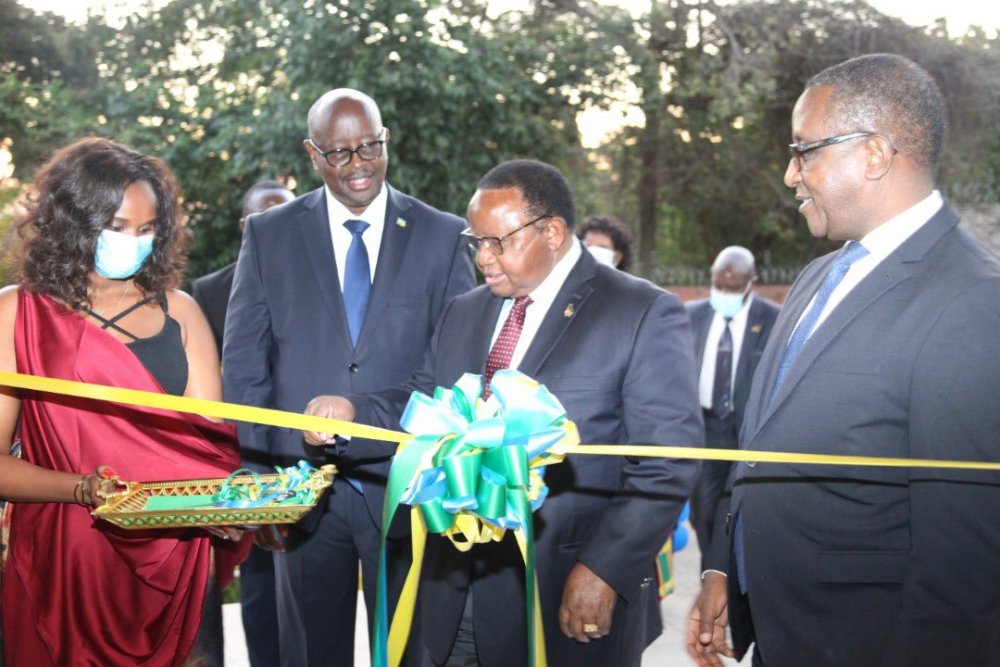
Speaking at the inauguration of Rwanda’s embassy on Sunday, Rwanda’s Minister of Foreign Affairs, Dr. Vincent Biruta said that Rwanda and Zimbawe have shared history of fighting inequalities and the culture of impunity.
The ceremony was also attended by Rwanda’s Ambassador in Zimbabwe and senior government officials from Zimbabwe.
Minister Biruta said that collaboration between African countries is paramount to address problems facing the continent.
He reiterated Rwanda’s commitment to strengthen bilateral ties with Zimbabwe for mutual benefits.
On Friday last week, Rwanda and Zimbawe signed three agreements including the extradition treaty, a memorandum of understanding on immigration cooperation and another memorandum on cooperation when investigating civil aircraft accidents and serious incidents.
Zimbabwe considers Rwanda as a gateway to larger regional markets like the Democratic Republic of Congo (DRC).
Zimbabwe can also serve as a passageway for Rwanda’s goods to southern Africa.
The CEO of ZimTrade, Allan Majuru has also underscored that his country’s cooperation with Rwanda will open doors to different markets in East Africa.
He revealed that Zimbabweans can tap into opportunities available in Rwanda in the areas of floriculture, tourism, construction and education.
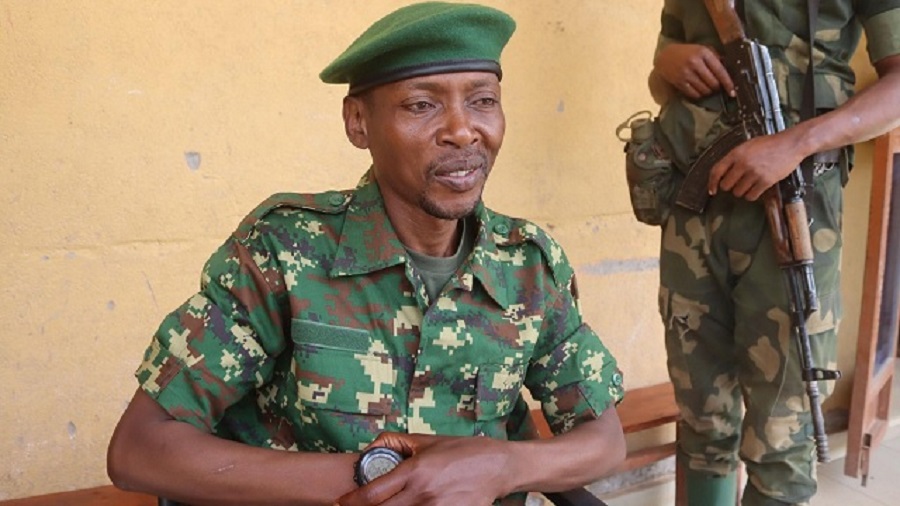
The new appointment was announced through a statement released by M23 rebel group on 31st July 2022.
“We have named Lawrence Kanyuka as M23 political spokesperson while Maj Willy Ngoma will continue to serve as the military spokesperson,” reads a statement signed by Bertrand Bisimwa, the President of M23.
It has been quite some time since the fighting between Congolese Army (FARDC) and M23 erupted. The rebel group accuses DRC of failure of implement peace accords.
Since the fighting erupted, M23 has captured different parts of eastern DRC including Bunagana town.
Recently, M23 appointed new leaders of Bunagana and issued rules for citizens living in the town.
Congolese Army (FARDC) has been accused of collaboration with armed groups including FDLR during its fight with M23 rebel group.
Meanwhile, MONUSCO which has been present in the country for over 20 years is blamed for complicity over standing by and watching the collaboration with the terrorist group continuing.
The peacekeeping troops have the mission of fighting armed groups which have cemented their presence in eastern DRC.
Despite their presence since 1999, the groups have been increasing where a large number of civilians continue to die in different attacks.
Congolese accuse MONUSCO of working in the interests of foreign countries instead of delivering on their mission.
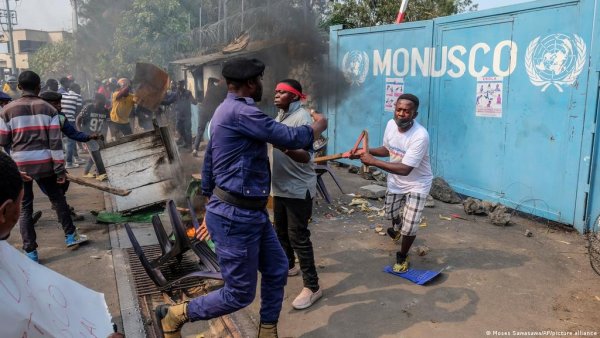
The accusations saw Congolese staging protests demanding the troops to depart from the country over failing to deliver on their mission.
Recent demonstrations which took place in towns including Goma and Butembo left 15 people killed. These include two police personnel and a military peacekeeper.
As he appeared in an interview aired on Radio Moto belonging to the Catholic Church in DRC, the Bishop of Butembo-Beni Diocese, Sikuli Paluku Melchisédech has criticized the UN troops over their failure to address security problems.
He pointed out an example of FDLR where a large number of combatants laid arms down and spent three years in Kanyabayonga camp protected by MONUSCO.
In 2018, the combatants were relocated to areas bordering with Goma but were not returned to Rwanda. At the time, Actualite.cd media house reported that at least 352 FDLR combatants were relocated.
Appearing in the interview, Bishop Sikuli said: “MONUSCO tells a lie by announcing that there are no Rwandans present in Congo because they did not address the issue of FDLR combatants who had been brought together in Kanyabayonga located in my diocese.”
“After a while, they are no longer talked about yet killings intensified. One sure thing is that they did not return to Rwanda,” he said.
Bishop Sikuli revealed that the combatants did not return home yet there are other FDLR combatants received in the same year, before and after.
“In brief, they resurged to conduct their activities in the diocese and its surroundings,” he noted.
Bishop Sikuli requested DRC to review its agreements with MONUSCO to determine whether it is still needed on its territory.
He however observed that MONUSCO needs to leave the country voluntarily lest the situation worsens further.
“They need to make the decision on their own. Why should they stay here after realizing that they do not have space? They need not wait until citizens’ anger escalates at such extent. It is something that can be done in accordance with agreements, and negotiations between the United Nations and our government,” said Bishop Sikuli.
He also reminisced on UN troops’ failure to protect civilians during their stay in Congo.
“Should we clap our hands without witnessing improvements? We thank them for what they did well but we have to reflect on inflicted pain in situations where they failed us, which is against their mission of protecting civilians. The killing of civilians continues,” said Bishop Sikuli.
Recently, Rwanda requested MONUSCO not to stand by and watch the collaboration between FARDC and FDLR continuing.
The funds have been allocated for the advancement of different sectors including technology, agriculture, health, investment, education and social protection initiatives.
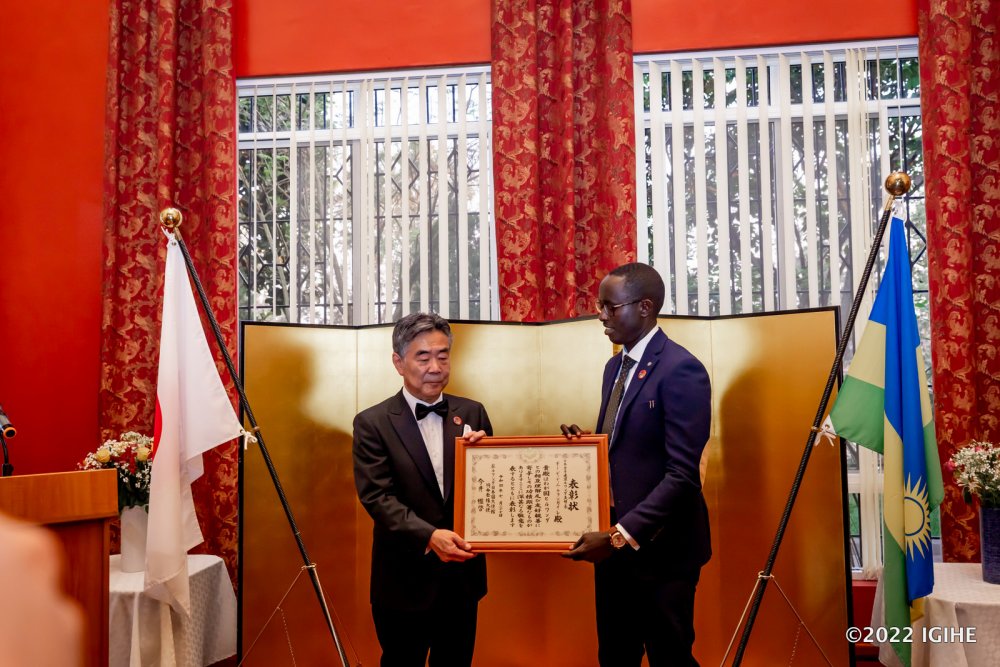
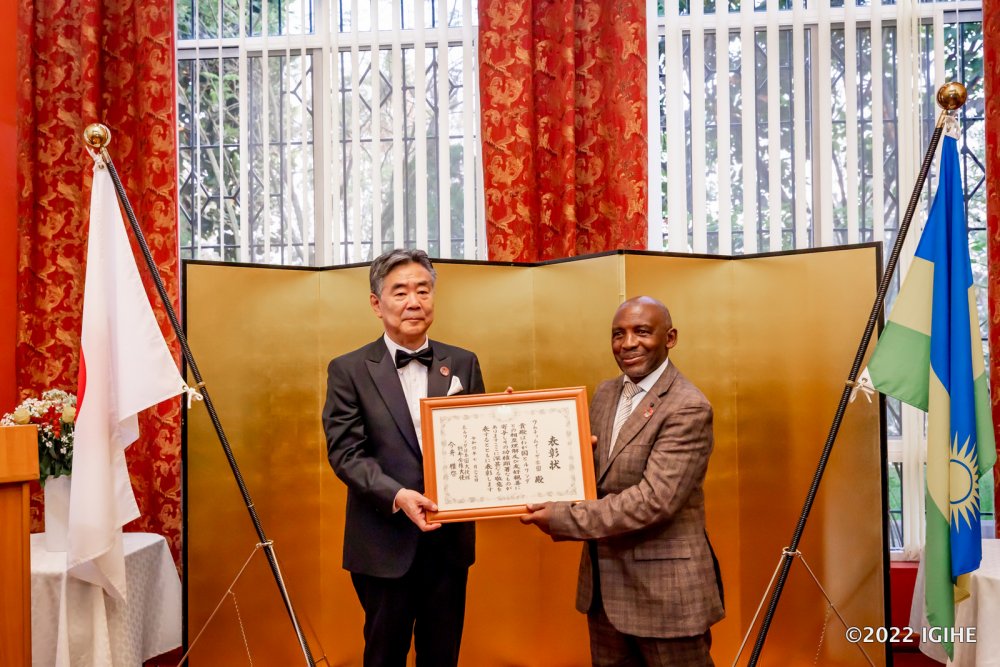
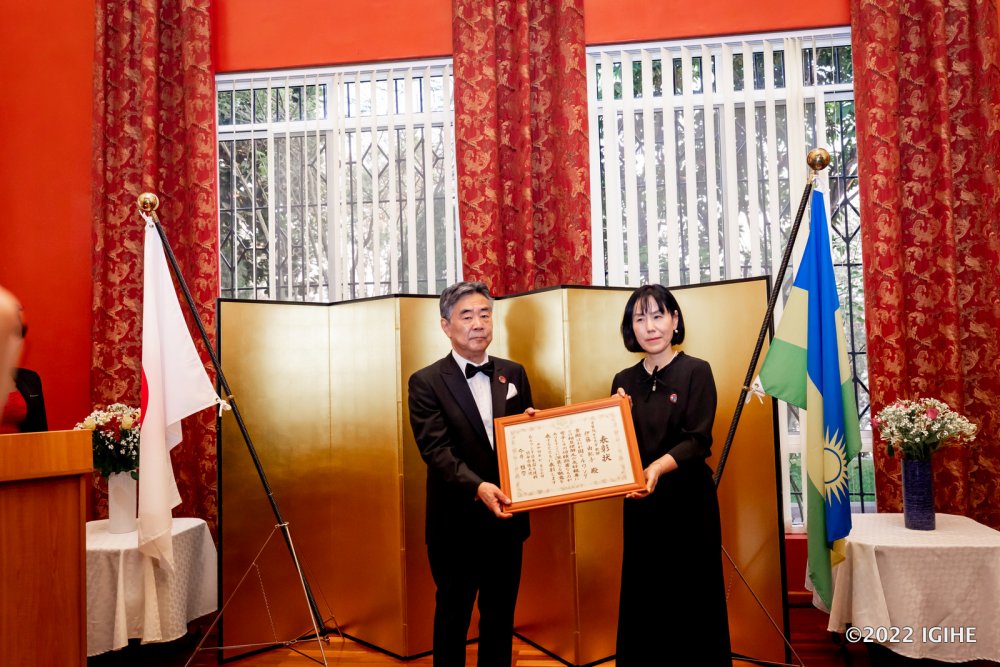
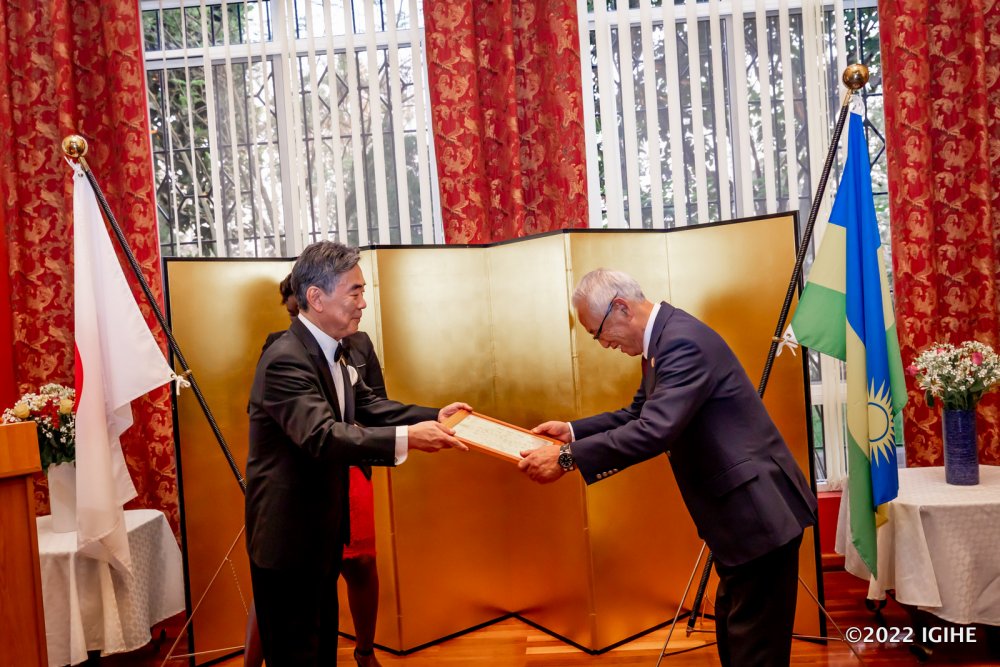
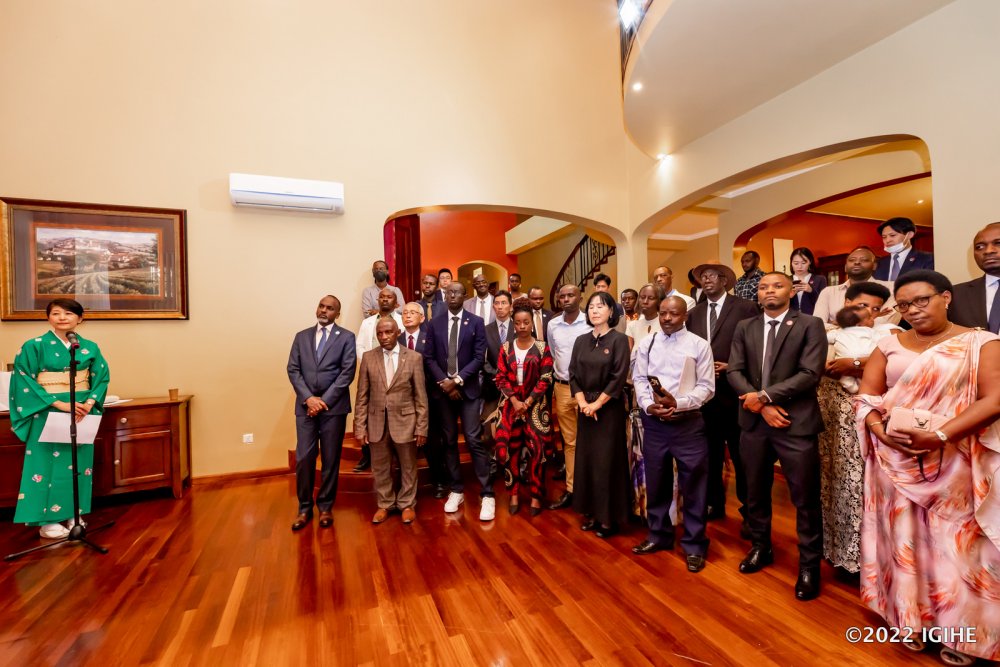
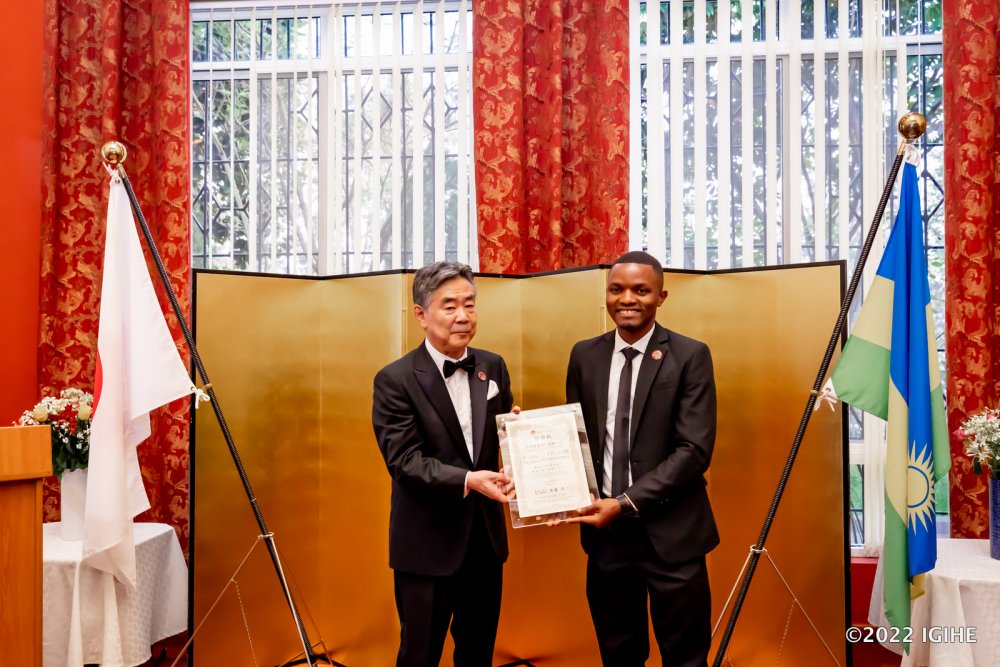
In light of celebrations of cordial relations dating back 60 years ago, the Embassy of Japan in Rwanda recently organized a ceremony to award some of Rwandans and Japans who played a big role in strengthening bilateral relations.
The individuals awarded on Wednesday 27th July 2022, include Guy Rurangayire who committed to promote martial arts through Japan Karate Association; Daniel Niyogushimwa who owns a local restaurant that prepares Japanese cuisine and Charles Mafigi Sinamenye representing Umuco Mwiza School, a Child Development Center (ECD).
Other awardees include a Japanese Yoshiyuki SATO, the CEO of Organic Solutions which helps the society in agriculture sector and in improving hygiene as well as Prof. Yukiko ITO who played a critical role in documenting Rwanda’s resilience journey.
{{Promoting agriculture}}
Agriculture is among areas of development that got boost throughout the 60 years of relations between Rwanda and Japan.
In 2008, Japan through Japan International Cooperation Agency (JICA) in collaboration with Alliance for a Green Revolution in Africa (AGRA) launched Coalition for African Rice Development (CARD).
Under this project, JICA brought experts from Japan to train farmers on best farming techniques for increased yields.
Japan has been also helping farmers in commercialization of their produce to be exported to the country.
Yoshiyuki SATO is among investors helping local farmers to export Macadamia in Japan and the United States of America (USA).
He also contributes to the exportation of gentian flower originating from Japan and grown in Rwanda.
Currently, Yoshiyuki is helping Rwandan farmers to access quality fertilizer.
He commended the existing cooperation and relationships between Rwanda and Japan.
{{Investment }}
Throughout the 60 years of relations, Japanese have massively invested in the Country of Thousand Hills.
To date, Rwanda registers a large number of companies from Japan in various areas such as construction and ICT.
For instance, Toyota car manufacturer from Japan has dealers in Rwanda and offers after-sales services in Kigali.
Japanese also established a restaurant dubbed Japanda which prepares Japanese cuisine. It is currently run by Daniel Niyogushimwa who was awarded as Japanese Cuisine Ambassador.
{{Education}}
Education is among pillars of national development. To contribute to the advancement of the education sector, Japan offers scholarships to Rwandans to pursue studies in different fields including agriculture, technology and health among others.
To date, over 800 Rwandans who studied in Japan have established an association helping them to concert efforts to contribute to national development.
Prof. Yukiko ITO from Japan has been conducting research in Rwanda for several years.
She observed that Rwanda’s transformations for the past 28 years after the 1994 Genocide against the Tutsi leaves lessons of resilience and good governance to his country.
{{Technology}}
Through JICA, Japan has been contributing to Rwanda’s efforts to promote technology by working with promising tech startups.
In this regard, JICA funded different projects including but not limited to 250 Starts-Up and Hanga pitch Fest, a competition for tech startups organized last year among others.
Japan has also contributed to the construction of innovation centers in secondary cities expected to foster the creation of innovation and jobs.
These centers have so far been constructed in the districts of Musanze, Rusizi and Rwamagana among others.
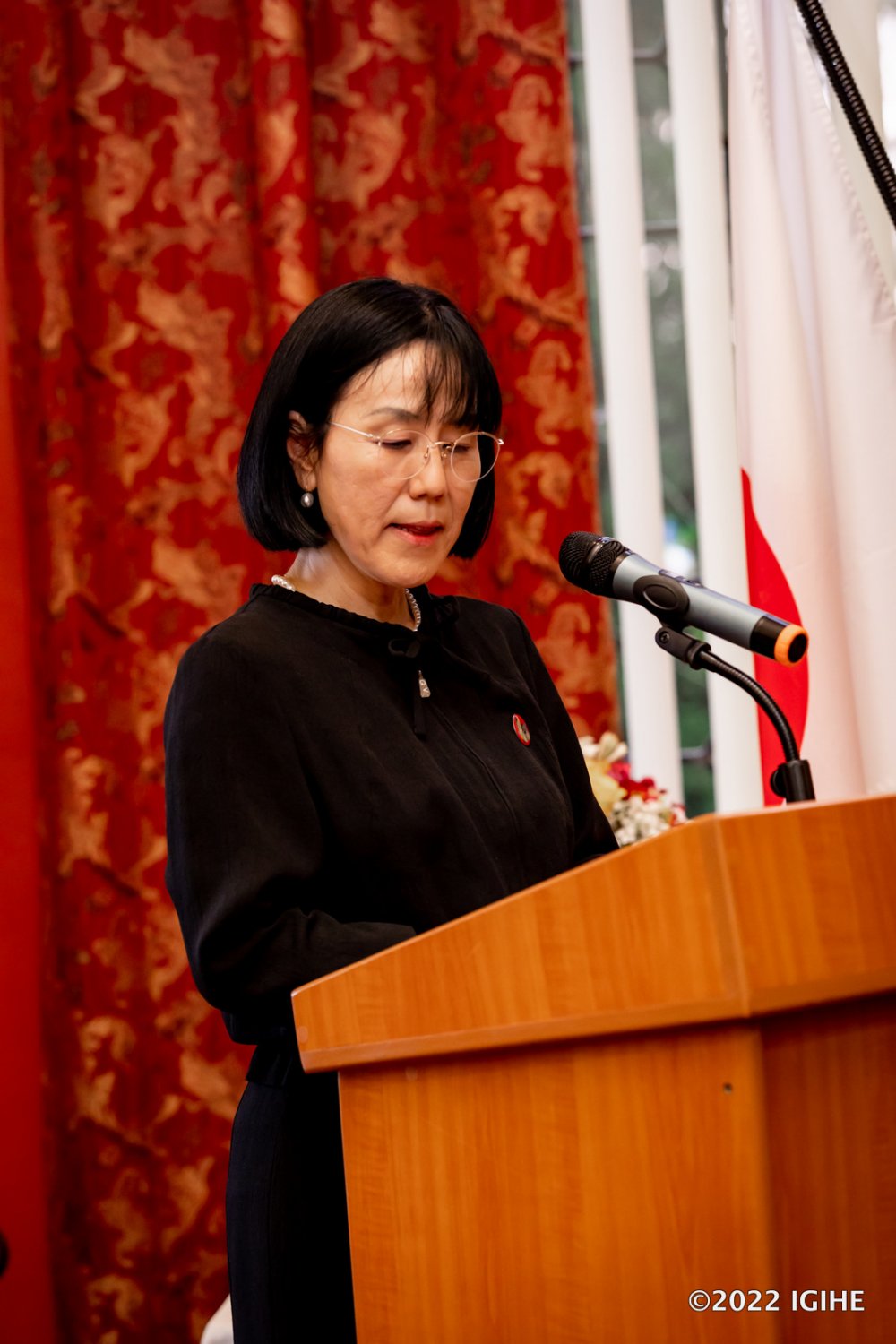
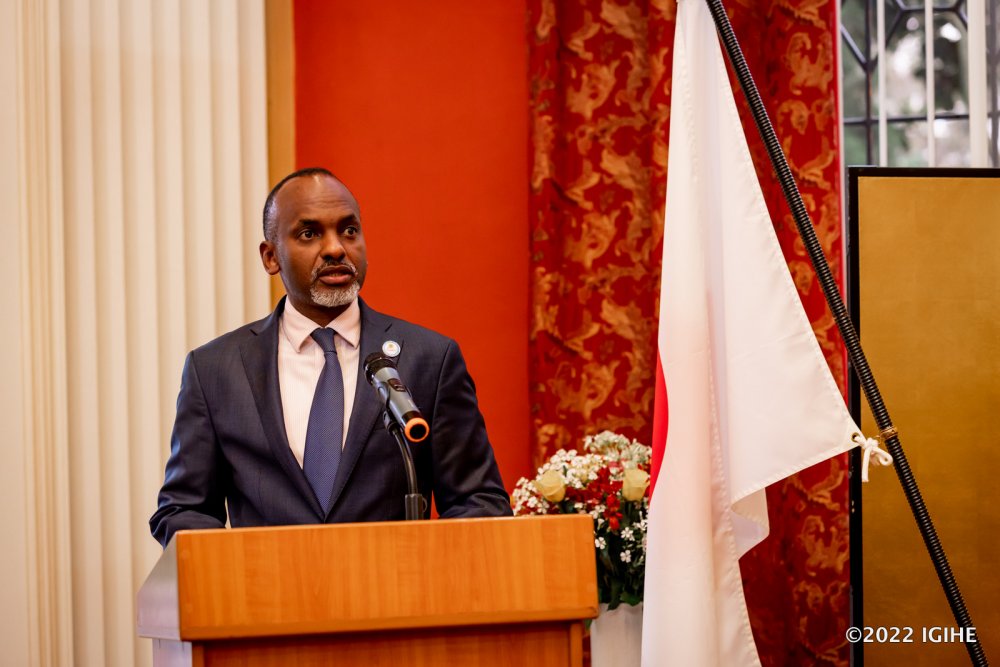
Speaking at the awarding ceremony, the Ambassador of Japan to Rwanda, Masahiro Imai said that the 60 years of relationships between both countries have been fruitful to their people and stressed the need to take existing cooperation to greater heights.
“It proves that vibrant relations are not limited to diplomatic engagements between ambassadors and ministers but should have roots from relations between citizens. We remain committed to deepen bilateral relations and increase investment opportunities between the two countries,” he noted.
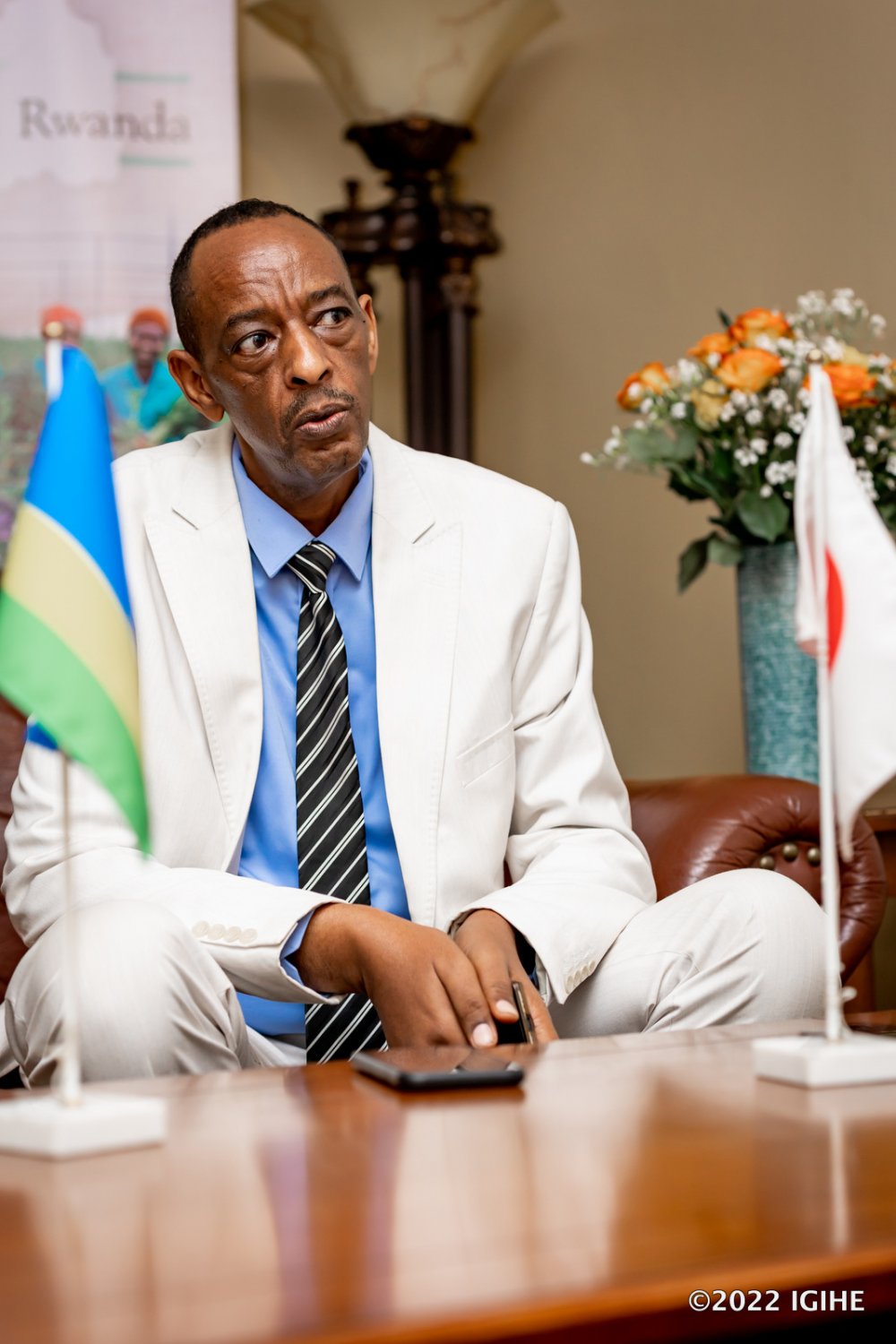
Phillip Karenzi, the Director General of Asia and Pacific Affairs at the Ministry of Foreign Affairs and International Cooperation thanked Japan for walking with Rwanda along the development journey and stressed the need to strengthen relations for the benefits of both countries’ people.
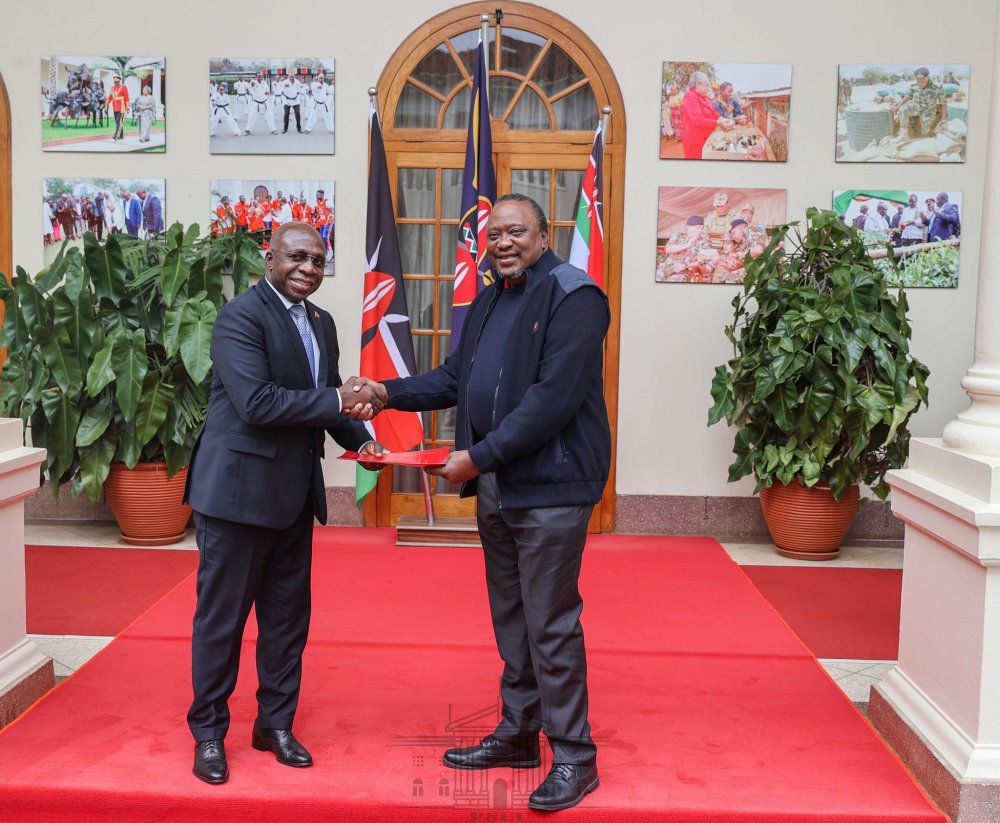
He made the appreciation on Saturday 30th July 2022 at State House as he received a special message from the Angolan President.
The message was delivered by President Lourenço’s special envoy, Amb. Téte António who is also the Minister of External Relations of Angola.
Discussions to mend relations between Rwanda and DRC began early last month.
DRC accuses Rwanda of supporting M23 rebel group in its fight with Congolese Army (FARDC) while Rwanda blames the neighbouring country for provocations and collaboration with the Democratic Forces for the Liberation of Rwanda (FDLR).
According to Kenya’s Presidency, Kenyatta noted that President Lourenço has displayed exemplary leadership and commitment in his role as a mediator following his appointment by the African Union to mediate talks between DR Congo and Rwanda.
Ambassador António briefed President Kenyatta on the recent mediation talks for DR Congo and Rwanda held under the chairmanship of the Angolan President in Luanda.
The Angolan special envoy pointed out that the two countries had agreed on a proposal for an independent verification team that will ensure both sides adhere to the proposed roadmap for the peaceful resolution of the issues affecting them.
President Kenyatta welcomed the progress, emphasizing the need for DR Congo and Rwanda to remain focused on the dialogue path to resolve their differences.
“This is a positive move. Hopefully, we are heading in the right direction. We need to make sure we are constantly moving together, briefing each other on the steps we are making,” Kenyatta said.
President Kenyatta added that the Nairobi process, which he initiated, is now under the East African Community, a step that was taken during the EAC summit held in Arusha, Tanzania recently.
The Head of State thanked the Angolan President for his efforts which have begun to bear fruits after they held talks in Lisbon, Portugal, on the sidelines of the second United Nations Ocean Conference.
“I thank my brother (President Lourenço) for what he has achieved on what we had agreed on in Lisbon. The most important thing is to establish that liaison office which will have representatives from both teams,” Kenyatta said.
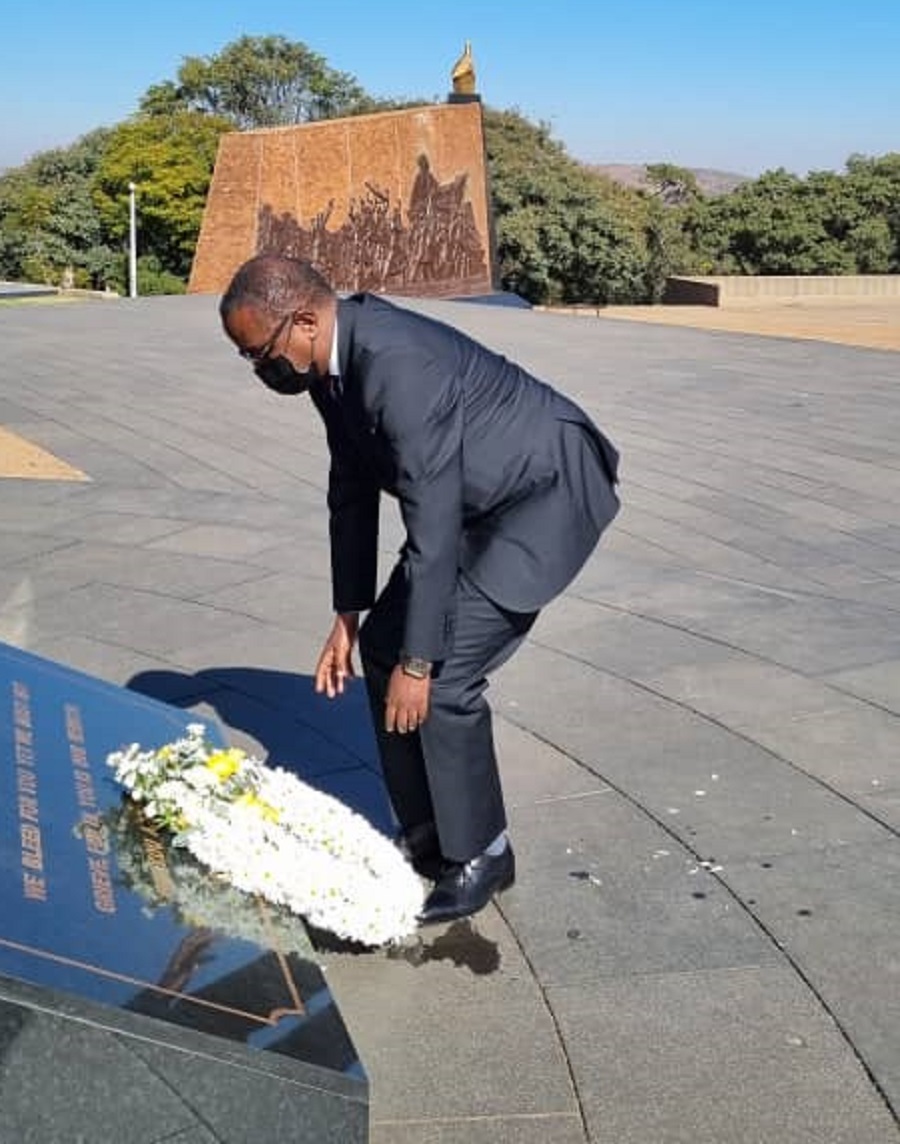
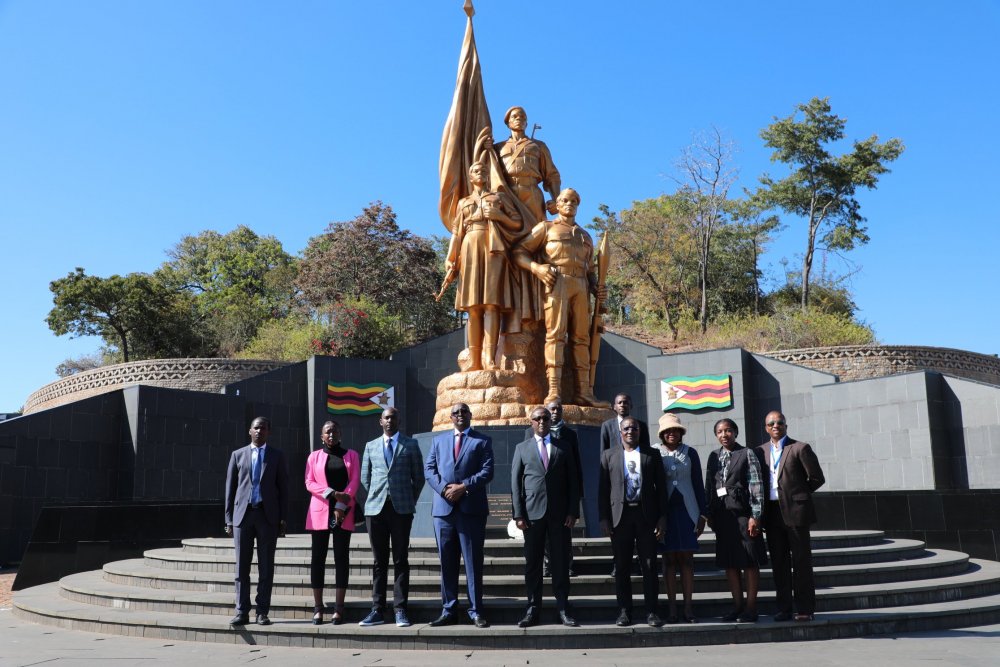
Zimbabwean Ministry of Foreign Affairs has revealed that Minister Biruta visited the country’s National Heroes Acre on Saturday 30th July 2022. The latter is located in the western part of Harare, the capital of Zimbabwe.
During the visit, Minister Biruta laid a wreath on the tomb of the unknown soldier at the National Shrine representing all soldiers who died in the war between 1966–1979 to liberate the country from white colonizers and obtain Independence.
He was accompanied by officials including Rwanda’s Ambassador to Zimbabwe, James Musoni.
The country’s heroes include Robert Mugabe who served as the first president Cephas Cele, Oliver Mtukudzi, Felix Ngwarati Muchemwa, Sabina Mugabe, Edgar Tekere, Samuel Mamutse and Dzingai Mutumbuka.
The National Heroes Acre was established in 1980.
The visit of Minister Biruta left both countries signing three cooperation agreements in the areas of transport and infrastructure development, extradition treaty and immigration cooperation.