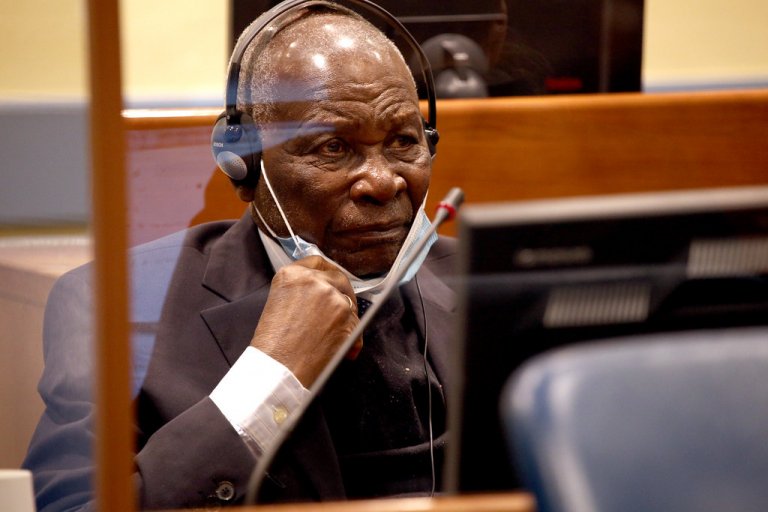
The hearing of opening statements began on Thursday 29th September 2022 but Kabuga boycotted the court as revealed by Iain Bonomy, the presiding judge at the UN tribunal.
Bonomy said that Kabuga is in good health but did neither accept to attend in-person nor virtually.
The MICT recently rejected the request of Lawyer Philippe Larochelle who requested the suspension of Kabuga’s trial awaiting the ruling on suggested replacement of defence lawyer.
On 5th September, Lawyer Larochelle appealed against the ruling dismissing the request to replace Emmanuel Altit as Kabuga’s defence lawyer.
He claimed that Kabuga was denied rights to choose a preferred defence lawyer which ‘would have a negative effect on court’s proceedings’.
On 20th September 2022, MICT validated the relevance for Kabuga’s defence plea but rejected the request to suspend the trial.
According to The New York Times, Kabuga refused to appear in court, saying in a note that it was in protest against a refusal to let him change lawyers, but judges ordered that the proceedings should go ahead and asked the prosecution to read its opening statement.
Kabuga is charged with several counts including five related to genocide; genocide, complicity in genocide, director and public incitement to commit genocide, attempt to commit genocide and conspiracy to commit genocide.
Other charges are persecution and extermination, both as crimes against humanity.
Arrested on 16th May 2020 in France, Kabuga was transferred to a UN tribunal in The Hague for stand trial. He is known as the Chief Financier of Genocide against Tutsi.
Kabuga was a wealthy businessman and core member of the Akazu (a small powerful circle of ideologues that masterminded the Genocide). He was also the founding president of the board of shareholders of hate radio RTLM, which incited killings.
Kabuga was originally scheduled to appear in court in Arusha, where the other arm of the MICT resides, but judges had ruled he would remain in The Hague “until otherwise decided.”
Josephine Lagu, minister of Agriculture and Food Security, said the South Sudan Emergency Food Production Program (SSEFPP) will focus on the production of sorghum, cowpea and rice in the states of Northern Bahr El Ghazal, Western Bahr El Ghazal, Western Equatoria, Eastern Equatoria and Upper Nile.
“The number of counties that are going to be supported I think is about nine or more and this will be spread across our country, it is not going just to be limited to one state, as you have seen we have people who have come from Western Bahr El Ghazal, Northern Bahr El Ghazal, Jonglei, and Western Equatoria and Eastern Equatoria state,” Lagu told journalists in Juba, the capital of South Sudan.
The 8.4 million U.S. dollar program is funded by AfDB through its Transition Support Facility and will be implemented by the South Sudan government and the Food Agriculture Organization (FAO) of the United Nations.
Country Representative of FAO Meschak Malo disclosed that this program aims to reduce South Sudan’s current annual food deficit standing at 545,000 metric tons by increasing production within the next two years to the target of 1.3 million metric tons needed to reduce prevailing food insecurity.
He noted that the current urbanization growth in the country as it recovers from years of conflict would lead to a huge demand for wheat, adding that the wheat component needs to also be supported under this program.
South Sudan imports wheat from neighboring Sudan which in turn imports from Ukraine.
Malo disclosed that the SSEFPP program includes the distribution of seeds to farmers in the counties.
AfDB Principal Country Economist Flavio A. Soares da Gama said the program will also strengthen the resilience of food systems and mitigate short-term risks due to the ongoing conflict between Russia and Ukraine.
“Our current strategy of AfDB that covers the period of 2022-2024 is a response to the government of South Sudan on pushing this development agenda on agriculture, and its focus on agriculture value-chain development for economic diversification and resilience,” said the economist.
The UN in its South Sudan Food Security Outlook, June 2022 to January 2023, said food security is expected to deteriorate between June and September, due to the impacts of conflict and flooding, as well as global economic supply chain disruptions, which will, in turn, drive high staple food prices and limit income-earning opportunities.
The dead included three Congolese soldiers, said the source, who spoke under customary anonymity, without offering further details.
On Tuesday, another helicopter belonging to the Uganda army crashed at the Kabarole border area between the two countries, during joint operations between the two armies to hunt down the Allied Democratic Forces (ADF), a rebel group.
According to the Congolese army’s media service, the helicopter hit a cluster of power lines. A Ugandan soldier and a Congolese soldier died in the crash that happened Tuesday, confirmed Mak Hazukayi, spokesperson for the joint Congolese-Ugandan military operations.
Since last year, the armies of the DRC and Uganda have launched joint military operations in the northeastern DRC to hunt down ADF rebels.
Five Chinese players hit double digits in scoring, led by Li Meng’s 23 points. Huang Sijing helped with 18.
The last time China reached the same stage was in 1994, when they finished runners-up at the formerly known FIBA World Championship for Women.
China has lost each of their previous three quarterfinal games at the quadrennial tournament, in 2002, 2014 and 2018, while showing its determination to shatter this unfriendly record from the start in Thursday’s game.
After athletic Gabby Williams helped France race to a 12-6 lead, China responded with an 18-3 surge to turn the tides, with Li Meng contributing 12 points down the stretch. France scored five late points, including Mamignan Toure’s buzzer-beating 3-pointer, to tie the first quarter at 25-25.
But China kept imposing pressure on opponents in the second quarter with six points in a row en route to a 50-39 halftime margin.
France rode on a 12-2 scoring run to trim the deficit to one point midway through the third quarter, but China steadied themselves through Han Xu’s three-point play and Li Yuan continued her scoring output after coming off the bench, helping China lead 66-58 heading into the final frame.
Han continued to be unstoppable in the paint in the last period, and China effectively sealed their victory as Huang buried a 3-pointer with 1:26 to play.
China will vie for a final berth on Friday against either hosts Australia or Belgium, who will go head-to-head later on Thursday.
It was hard to sustain his business given that social gatherings were prohibited.
Besides, visits to national parks and other touristic attractions were also suspended.
As the government eased COVID-19 restrictions to resume domestic tourism, Nzabonimpa mulled ways to encourage Rwandans to visit their country’s attractions.
The man owns a company dubbed Beyond the Gorillas Experience Ltd, which focuses on hiking, visits to historical and cultural vestiges among others.
Nzabonimpa had his eyes wide open and realized that Rwanda has a lot of attractions that locals and foreigners need to explore like lakes, hills, parks’ perimeters, cow-based tourism and king’s palace among others.
In collaboration with members of the Private Sector (PSF), Rwanda Development Board (RDB) seeks to promote such attractions beyond the experience of visiting national parks.
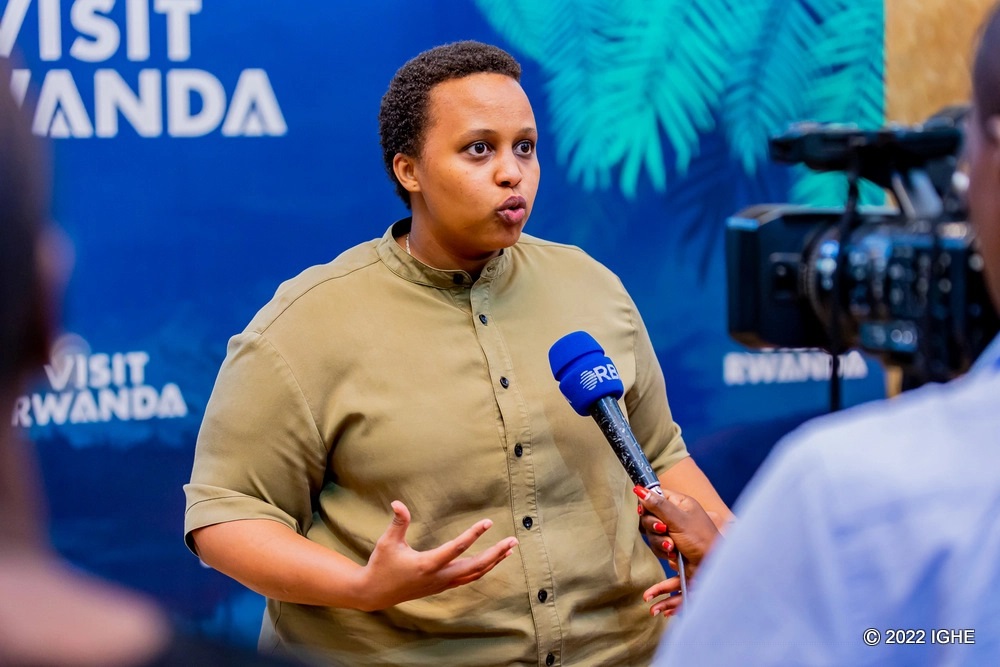
Speaking to IGIHE, the Head of Tourism and Conservation Department at RDB, Ariella Kageruka said that the country plans to increase touristic attractions.
“ It is evident and the demand analysis proves it. The latter continues to indicate that people around the world consider new ways of visiting countries where they can spend long time in one country instead of touring different countries for one trip,” she said.
“These are great opportunities for members of the private sector, and other sectors because many of them have a link to tourism, be it agriculture and transport among others,” added Kageruka.
Among the attractions to be given attention, she pointed out hiking, visits to national museums, tourism on Rwandans’ lifestyle among others that can make tourists’ stay a memorable one.
Nzabonimpa has explained that they have explored more attractions since they began exploring other touristic attractions outside national parks and encouraged Rwandans as well as foreigners to take their time to visit such features.
“There are lakes, hills, agritourism, watching how local banana brew is made and cow-based tourism among others. In Rubavu, there is a scenic view of hills along the road to Rusizi and Lake Kivu. In this area, we trek through the hills where we spend ten days from Rubavu to Rusizi. It offers an amazing experience as we camp in different places and experience diverse attractions,” he said.
Rwanda also has plans to promote sports tourism, entertainment events and international conferences among others.
“During COVID-19, Rwanda continued to host international conferences, concerts and sports events. This is an exciting milestone because the country has been expending much effort in infrastructure development. Besides, partners were reinforced to make improvements luring international events organizers to think of Rwanda as their destination,” said Kageruka.
She also hinted at major events the country is set to host including the Basketball Africa League (BAL) tournament to be held in Rwanda for the third time, the Veterans World Cup and UCI Road World Championships in 2025 among others noting that it is a positive development proving how more great things are on the way.
{{Speedy recovery from COVID-19 effects }}
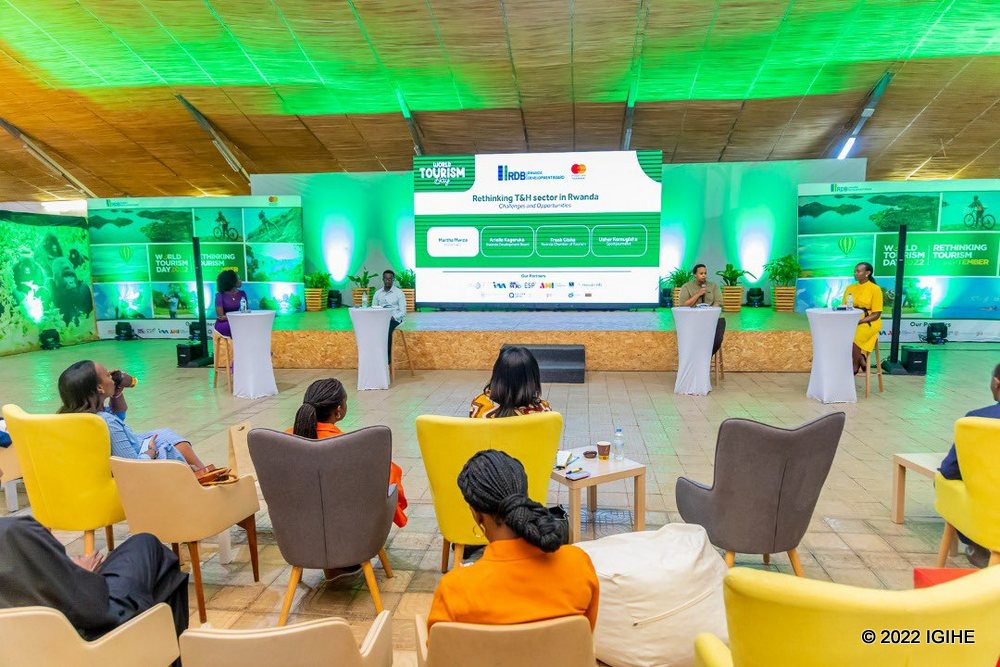
On 27th September 2022, Rwanda joined the rest of the world to celebrate the annual World Tourism Day. This time’s celebration focused on rethinking the impact of tourism on sustainable development.
The celebration held on Wednesday 27th September brought together officials from RDB, and partners including MasterCard Foundation, members of the private sector and investors in the tourism sector. The event also coincided with tourism exhibition.
The day was observed at a time when Rwanda continues to make commendable steps towards recovering the tourism sector that had been shaken by COVID-19 over the past two years.
Figures show that revenues from Rwanda’s tourism sector have been increasing steadily following the drop by 70% owing to effects of COVID-19 pandemic.
Last year, Rwanda registered an increase by 25% in tourism revenues reaching US$164 million up from US$131 million of 2020.
In 2019, the country generated US$498 million from tourism.
Kageruka has expressed optimism for Rwanda’s tourism to recover quickly from effects of COVID-19 and hailed Rwandans’ increased interest in exploring touristic attractions.
“As you know, tourism is rebounding, slightly over 80%. This evidences how people continue to promote tourism. RDB has also been introducing programs helping tourists to explore the country’s attractions. For instance, we have reduced gorilla trekking permit from US$1500 to US$200 for Rwandans and East African nationals and US$500 for foreign residents,” she noted.
The Director General of the Rwanda Chamber of Tourism at the Private Sector Federation, Frank Gisha Mugisha said that the country’s efforts to contain the spread of COVID-19 have played a pivotal role for the sector’s speedy recovery and expressed optimism that it will remain a major contributor to national development.
Sources indicate that the accident involved a truck with Tanzania’s number plate which hit and severely damaged a public transport vehicle.
The driver identified as Silamu Majyambere died on spot. The accident also injured 15 people of whom four survived with serious wounds.
Senior Superintendent of Police (SSP) René Irere, the spokesperson for Traffic and Road Safety department told IGIHE, by press time, that investigation was underway to establish the cause of the accident.
“Police officers arrived on the ground and gathered information as part of ongoing investigation pending transfer of the dossier to the Prosecution,” he said.
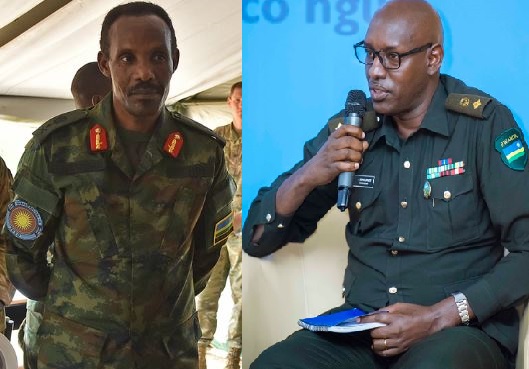
These include Lt Col Emmanuel Ruzindana, the Director of Operations promoted to Colonel and appointed Defence Attaché in Uganda.
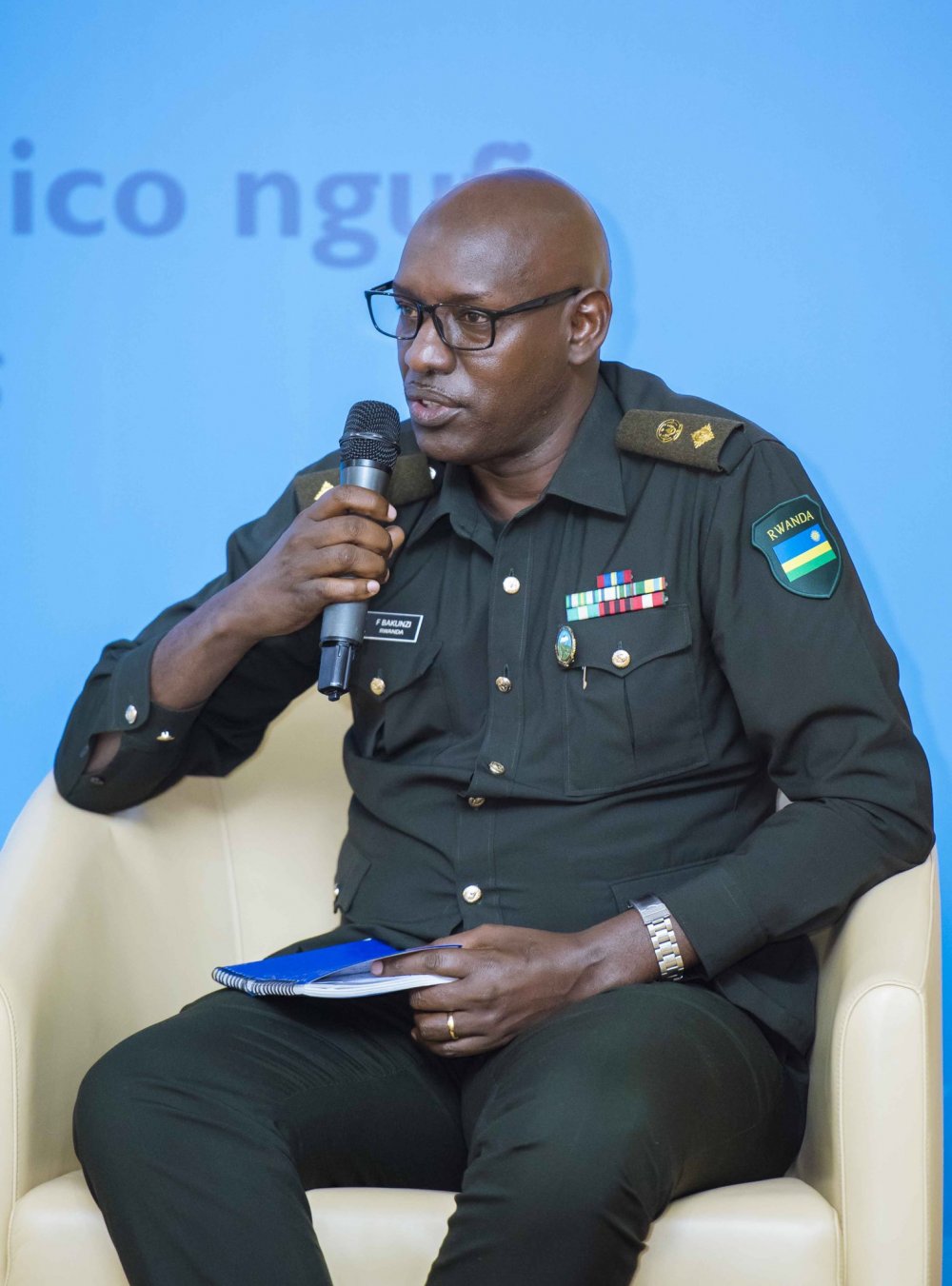
Lt Col Frank Bakunzi, the Directing Staff of Rwanda Defence Force Command and Staff College (RDFCSC) in Nyakinama has been also promoted to Colonel and appointed Defence Attaché in Egypt.
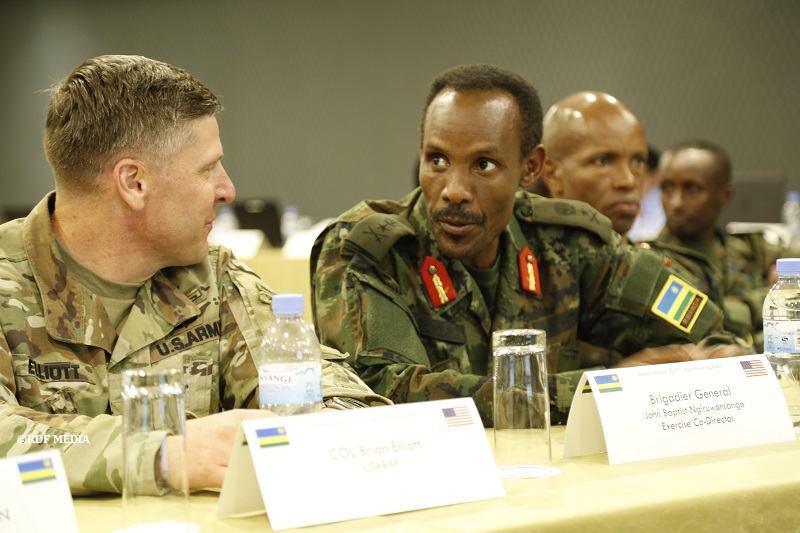
Among others; the Head of State has appointed Brig Gen John Baptist Ngiruwonsanga as the Head Peace Support Operations (PSO) in RDF, Lt Col Claudien Bizimungu has been named Deputy Commander of Engineer Command; Lt Col Innocent Kayisire is named the Managing Director of Horizon Logistics; Lt Col Jean Paul Munana has been appointed as the Commander of Combat Engineer Brigade while Lt Col Faustin Mafura is appointed the Deputy Commander of Combat Engineer Brigade.
The statement released by RDF reads that the promotions and appointments take immediate effect.
Rulindo is one of the districts in Rwanda that are rich in minerals and where related illegal practices are conducted.
Through partnership with the local communities in Rulindo, Police has continued to make headways against these unlawful activities and illegal have been dealers arrested.
In an operation conducted on Tuesday, September 27, four people were arrested in Masoro Sector, Kivugiza Cell in Musega Village where they were destroying people’s gardens searching for minerals.
Those arrested are Asuman Musitafa, 19, Jules Nsengimana, 32, Jean Claude Tuyisenge, 44, and Innocent Hategekimana, 19. They were handed over to RIB for Murambi station.
Police also seized from the suspects, tools including hoes, spades and pick mattock which they were using.
Superintendent of Police (SP) Alex Ndayisenga, the Northern Region Political and Civic Education Officer (RPCEO) reiterated the role of the public in fighting illegal mining activities.
“These illegal mining practices were reported by the affected residents, whose farms were being destroyed. Mining is done in authorized areas by licensed people or companies, and so is mineral trade.
Those conducting mineral exploration illegal will be arrested, and we urge the public to continue reporting such people,” SP Ndayisenga warned.
He further warned residents against entering in closed concessions, which is dangerous and life-threatening.
Article 54 of the law N° 58/2018 of 13/08/2018 on mining and quarry operations, states that; any person, who undertakes mineral or quarry exploration, exploitation, processing or trading without a licence, commits an offence.
Upon conviction, the offender is liable to imprisonment for a term of between two and six months and a fine of not less than Rwf1 million and not more than Rwf5 million or only one of these penalties.
The court also orders confiscation of any seized minerals or quarry in storage, trading or processing without a license.
In Rumangabo, a town of the North Kivu province, currently the epicenter of violent armed conflicts between the government army and rebels of the March 23 Mouvement (M23), around 4,000 displaced people are scattered across different schools, making classrooms and resources more scarce than before.
Marie Simire and her six children, who fled the city of Bunagana which was taken control by the rebels, now live in a small makeshift house in a school. Her husband was killed by a stray bullet on his way home while he was working the fields when the government army and the M23 crossed fires.
Like most of her fellows in the village, she and her children fled for days on foot and finally settled down in the school during the summer vacation. As the new school year started on Sept. 5, life has become more harsh and difficult.
“I arrived here with my children for a few months without taking anything from our abandoned house in Bunagana. Now the studies have resumed but I do not have the capacity to send my children to class due to the lack of means and difficult conditions in which we currently live at this site,” she explained.
Jean-Baptiste Habyarimana, the head of the Rumangabo center primary school, pointed out the cruel fact that the school is at capacity and the massive displacement have become a huge conundrum for both the displaced refugees and the school kids.
“The schools are almost totally occupied by displaced people from villages far from this city. A situation that makes it difficult for us to function as a school,” said Habyarimana.
Schools are jam-packed with people seeking refuge, some displaced children spend their day chopping wood and selling it at the makeshift market as the only way to survive.
“The majority of the children at this site do not go to school. This is how they prefer to resort to these jobs of cutting just to survive. We deplore this situation, which risks affecting the future of these children in the long term,” insisted Katitima Justin, head of a make-shift refugee site in Rumangabo.
Asked by Xinhua about the current school situation in areas troubled by clashes between the army and the M23 rebels, the military governor of North Kivu Constant Ndima acknowledged that about 70 percent of the schools are being affected.
“This situation which has affected the school sector since the start of the school year is more than dramatic and it goes beyond our jurisdiction at the provincial level,” said Constant Ndima, promising “quick solutions” for the affected children.
For the military authorities of North Kivu, the effective solution remains that of restoring peace in this part of the country as soon as possible in order to allow the displaced population to return to their homes.
For Simire, however, going home seems like a sheer delusion as her hometown is still in the hands of the rebels who are deemed as “terrorists” by the Congolese government.
Since the end of March 2022, the M23 has been on the offensive in DRC’s northeastern province of North Kivu, where several townships fell into the hands of the rebels for months.
Ruto, who retained one serving cabinet secretary, appointed former deputy prime minister Musalia Mudavadi as the prime cabinet secretary, a newly created position.
He also appointed the former Central Bank of Kenya (CBK) Governor Njuguna Ndung’u to be the cabinet secretary for the National Treasury.
Ruto, who nominated current and former lawmakers to the Cabinet, said the prime cabinet secretary’s office is the most senior after that of the President and deputy president’s office.
Ruto told a televised news conference in Nairobi, the Kenyan capital, that the prime cabinet secretary will assist the deputy president and the president in liaison with the interior ministry.
“He will oversee the government projects. He will coordinate the national legislative agenda,” Ruto said.
The president also appointed former Machakos County Governor Alfred Mutua to be the cabinet secretary for Foreign Affairs and Kithure Kindiki, former Senate deputy speaker, as the cabinet secretary for Interior.
According to the Constitution, Kenya’s Cabinet should contain no fewer than 14 but no more than 22 cabinet secretaries.
Ruto also appointed former National Assembly Speaker Justin Muturi as the Attorney General, Mercy Wanjau as secretary to the Cabinet, and Monica Juma, who was the serving cabinet secretary for Energy in the previous government, as National Security adviser.
The nominees will be subjected to vetting by the National Assembly.
The president also announced the resignation of Inspector-General of Police Hilary Mutyambai who he said has proceeded on terminal leave and the resignation of the head of the Directorate of Criminal Investigations George Kinoti.
“After discussing with Mutyambai, I have accepted his terminal leave,” Ruto said.
Ruto said Kinoti has formally resigned, having served as the country’s top detective under former President Uhuru Kenyatta.
The president said he will pick someone to act in the place of Kinoti as his replacement awaits.