On Thursday, Agence France-Presse (AFP), a leading global news agency reported that it got the wind of a report of the United Nations (UN) experts on security problems in DRC confirming that Rwanda supported M23 rebel group in a fighting with Congolese Army (FARDC).
The report was questioned as to how it is leaked to the media before publication. Similar circumstances happened in July this year.
Rwanda has repeatedly denied the accusations of supporting the rebel group highlighting that the issue is a concern of DRC which failed to implement signed peace accords.
The Spokesperson of the Government of Rwanda, Yolande Makolo has via Twitter said that putting DRC’s problems to the shoulders of Rwanda won’t provide any solution.
“The policy of blaming Rwanda as a means to deflect blame and evade accountability for persistent governance failure in the DRC comes at a huge cost to citizens on both sides of our shared border,” she said.
The Deputy Spokesperson of the Government of Rwanda, Alain Mukuralinda on Thursday told TV5 Monde that Rwandan troops never cross the border but safeguard security of the country’s territory.
“Rwandan soldiers do not cross the border. They safeguard security of the country’s territory. Rwanda does not need to cross the border unless it is agreed with the Congolese government,” he said.
Mukuralinda said that Rwanda cannot comment on unpublished allegations.
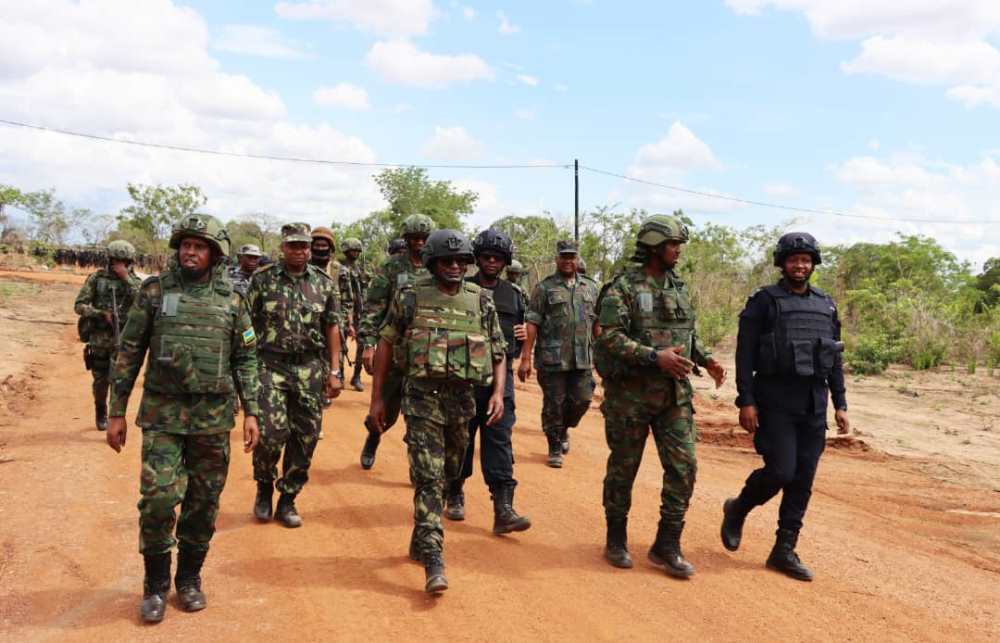
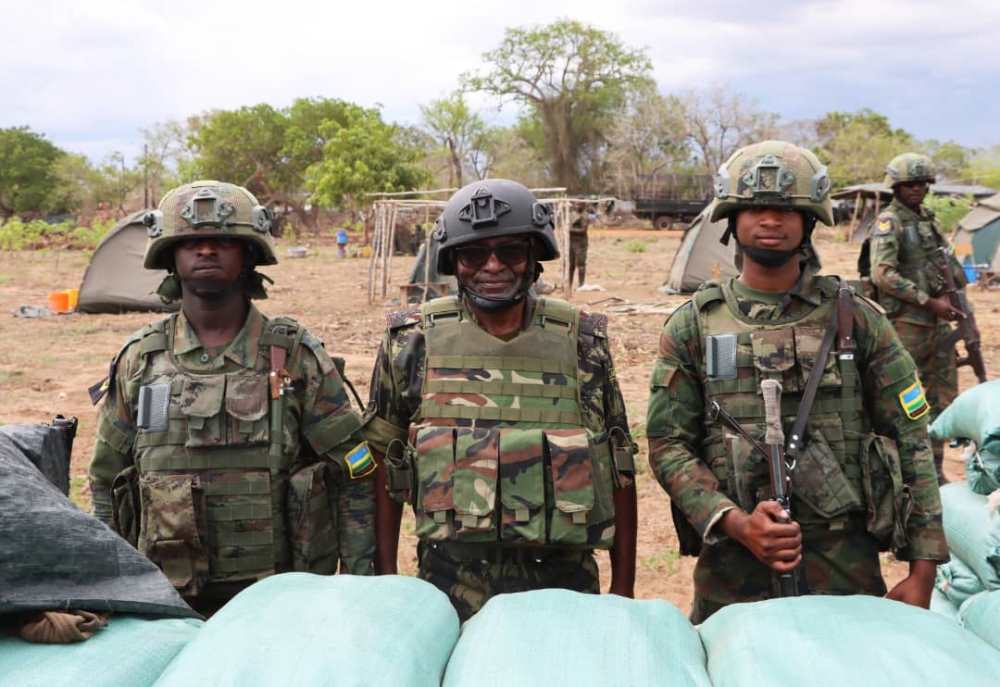
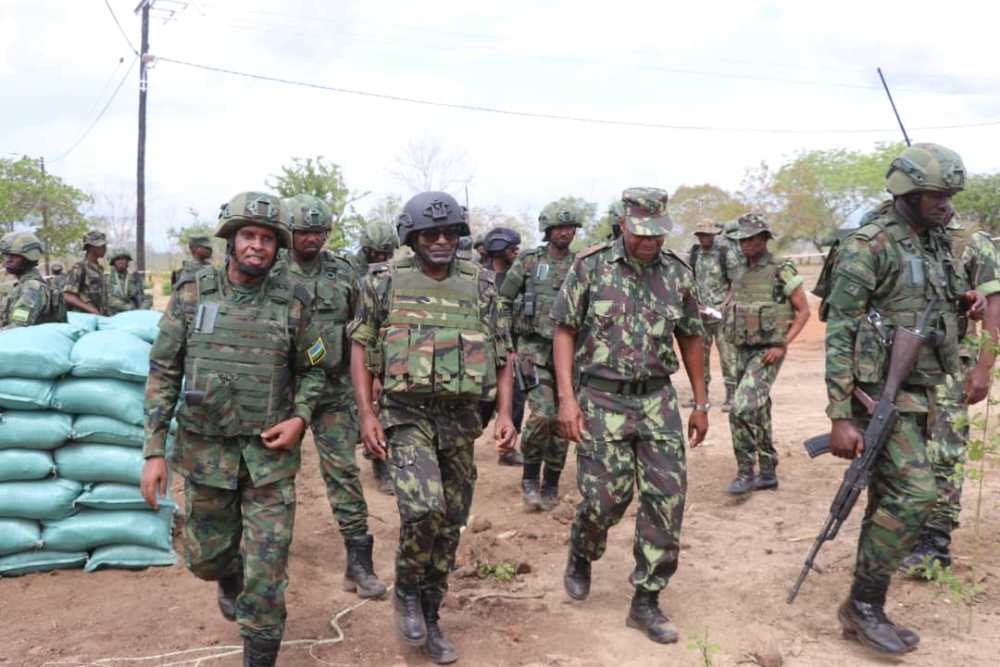
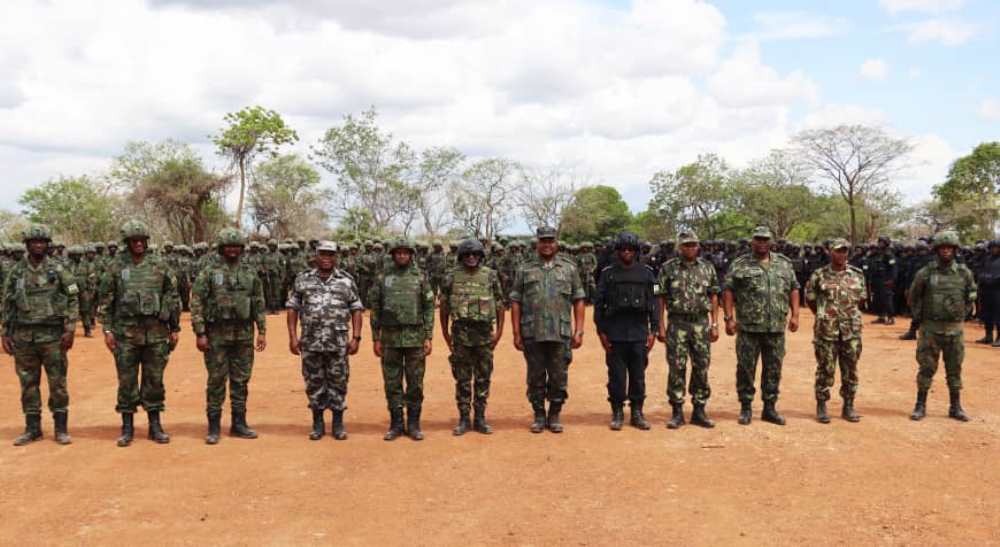
The Chief of General Staff who was received by the RSF Joint Task Force commander Maj Gen Eugene Nkubito commended the RSFs contribution to the current security situation.
The new joint security deployment is a highlevel leadership decision to pursue terrorists that fled to southern parts of Cabo Delgado province. This deployment is meant to help dislodge new terrorist hideouts.
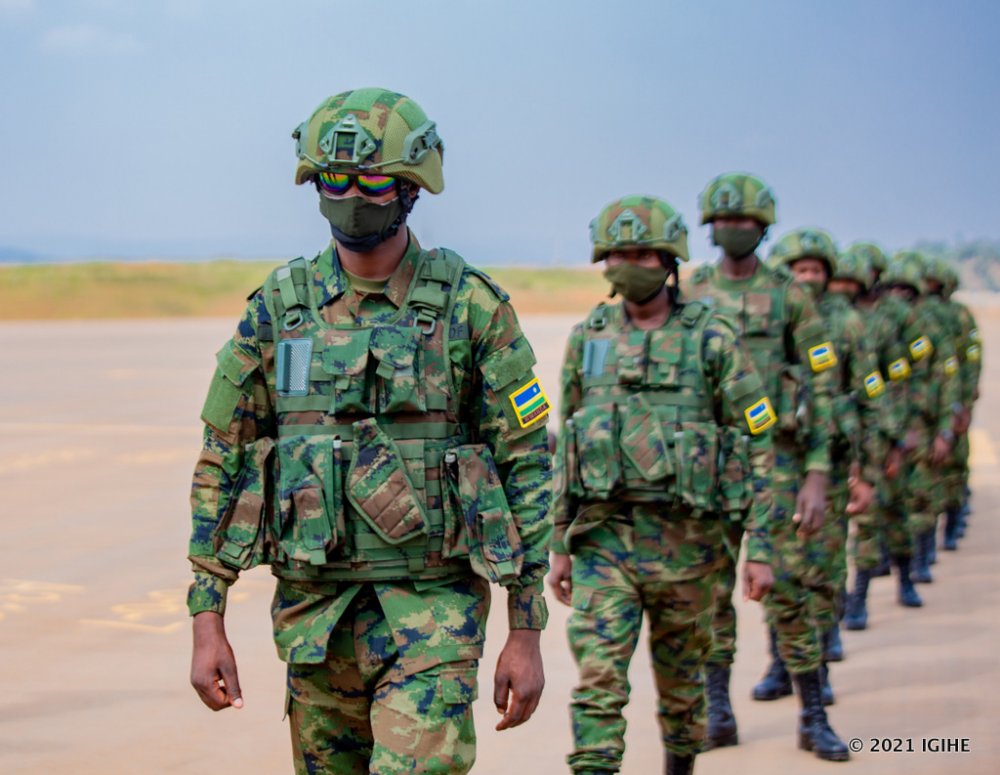
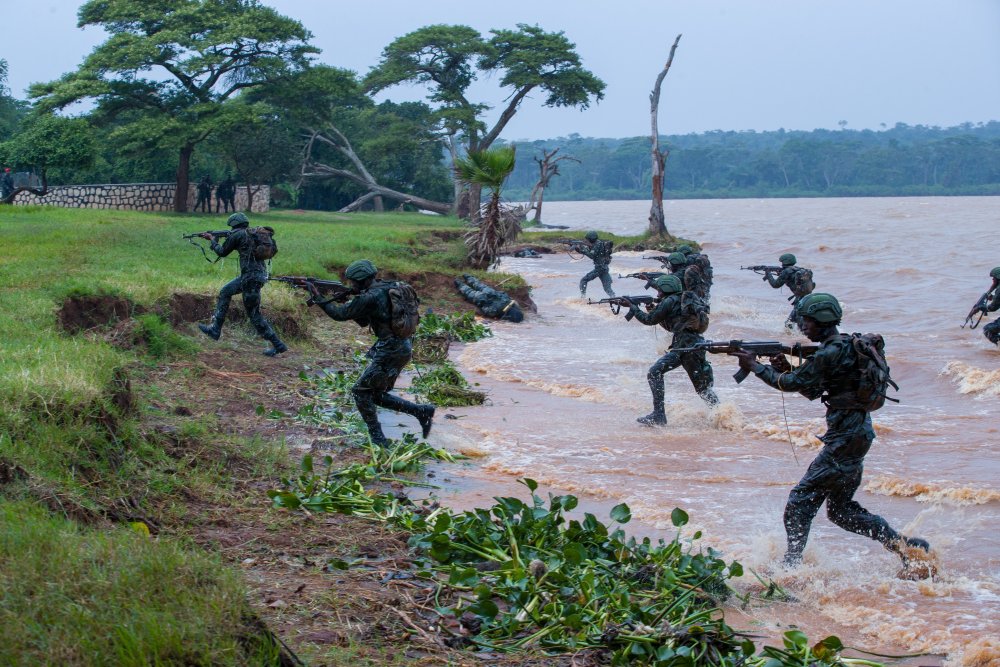
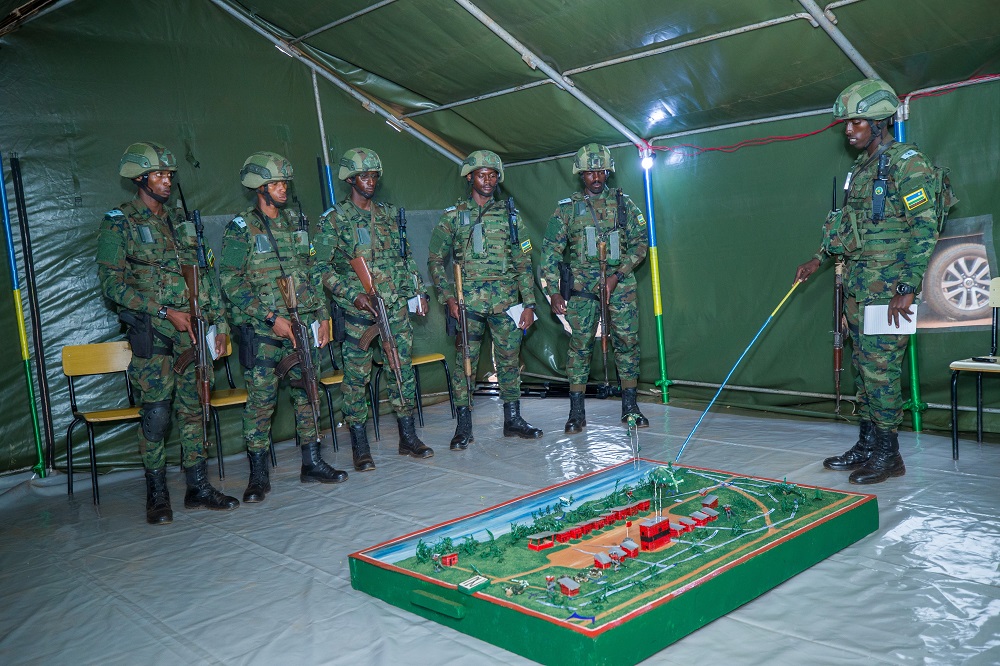
The newly trained soldiers demonstrated different skills in special operations tactics.
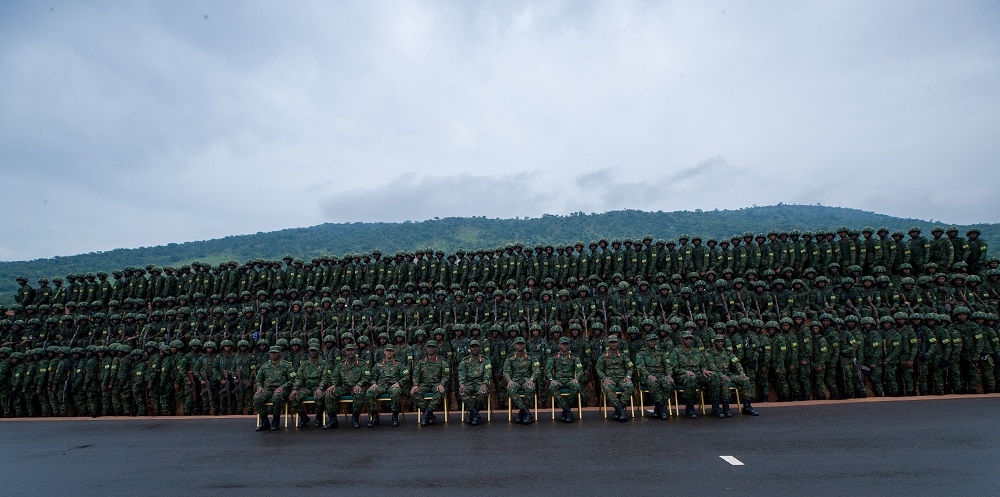
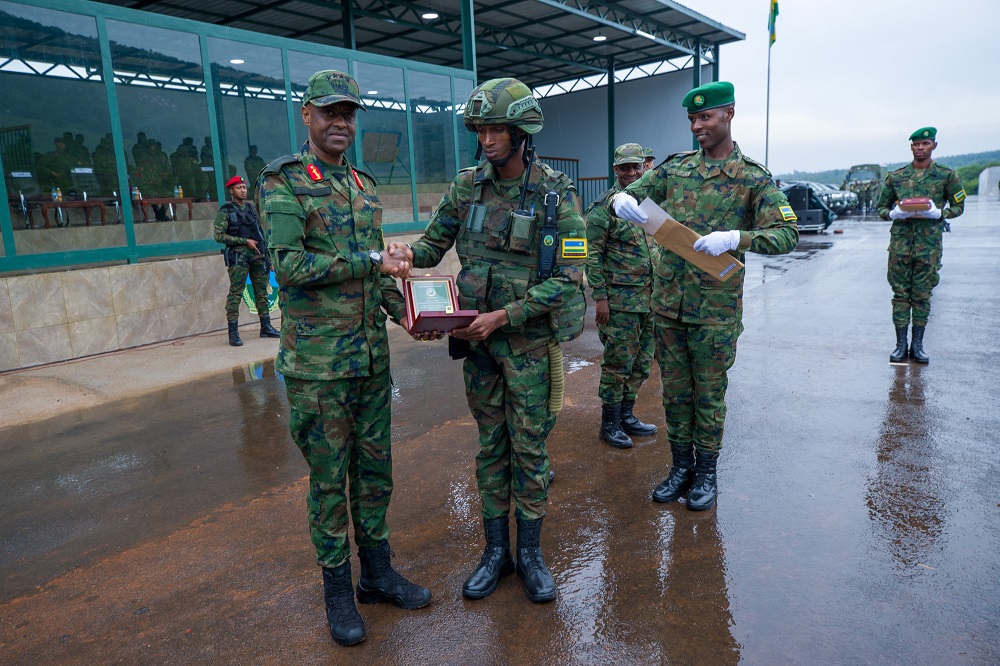
While officiating at the ceremony the RDF Chief of Defence Staff (CDS) Gen Jean Bosco Kazura congratulated the newly trained officers and other ranks for their milestone achievement, commitment and discipline during the training.
The CDS urged the graduates to use the special skills acquired to protect the sovereignty of Rwanda and its people.
During the ceremony different awards were presented to recognise the best students.
2Lt Emmanuel Kanyamugenge was awarded the overall best student award followed by 2Lt Emmanuel Kwizera Nkangura who was second overall best student.
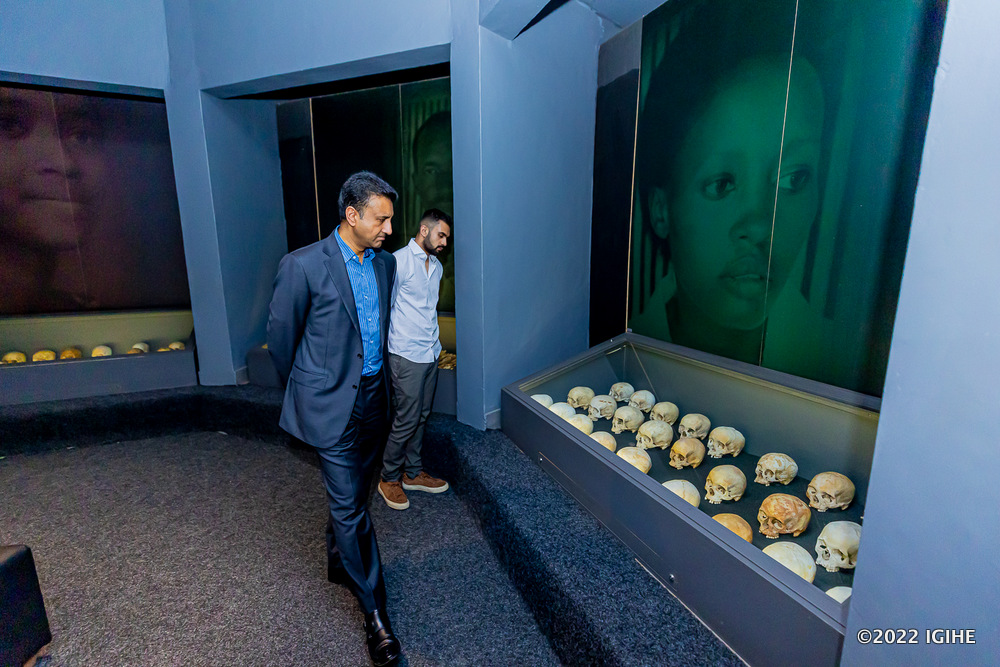
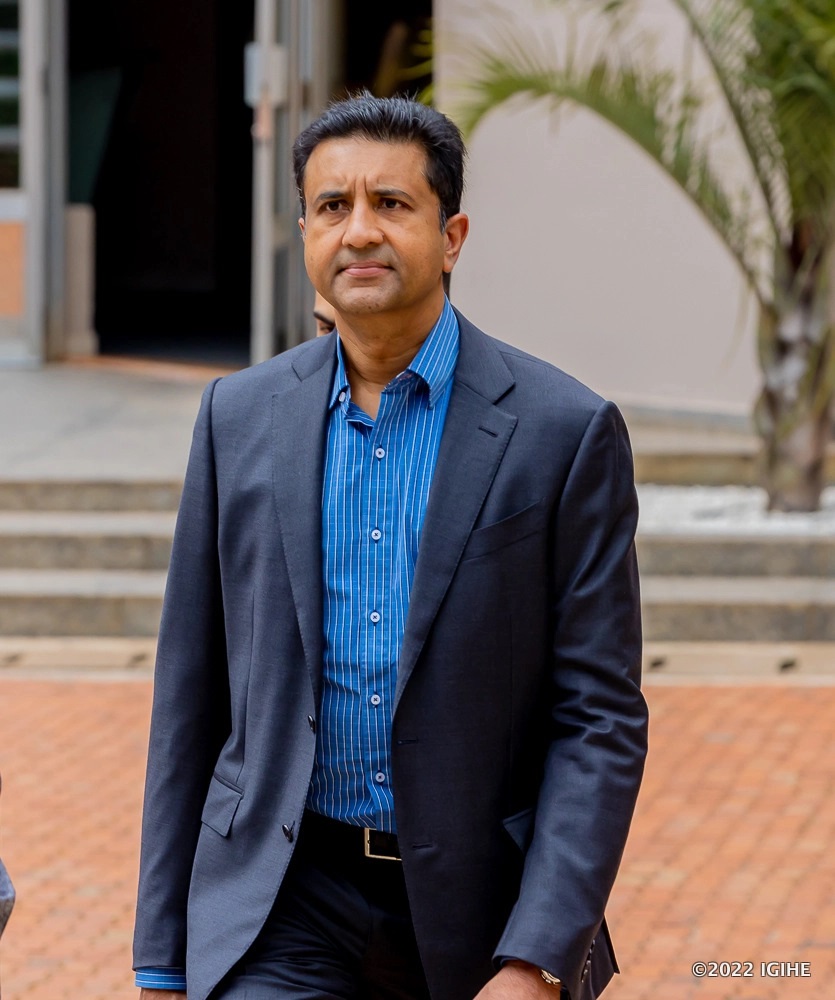
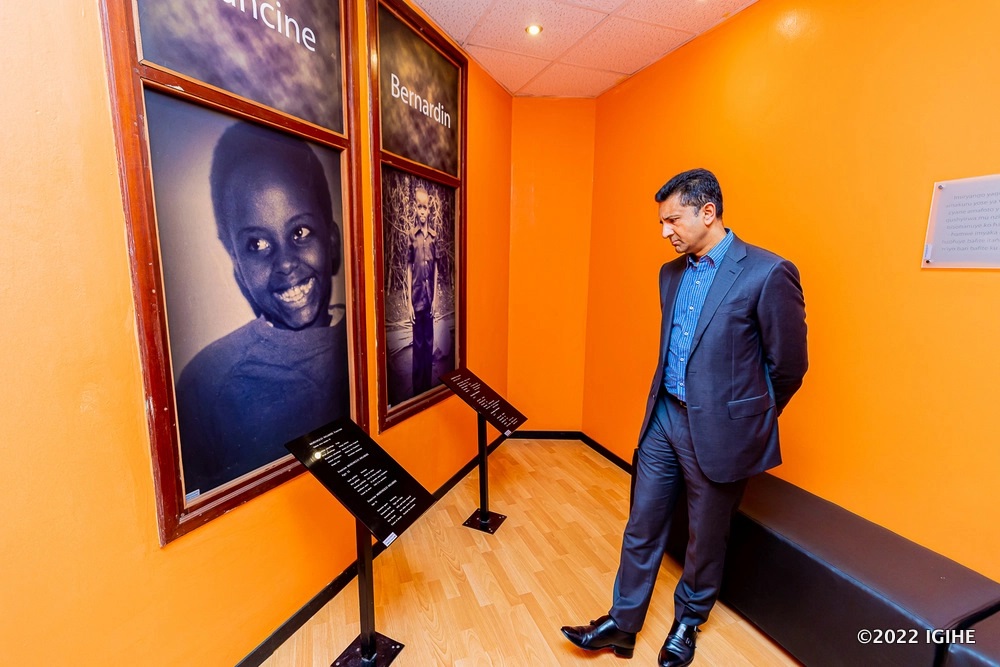
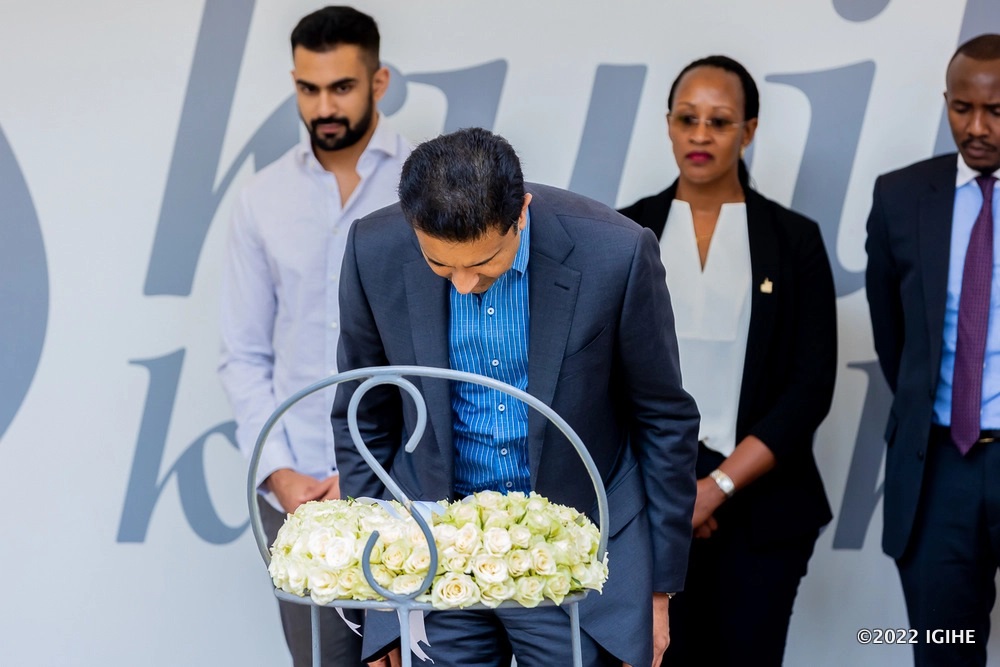
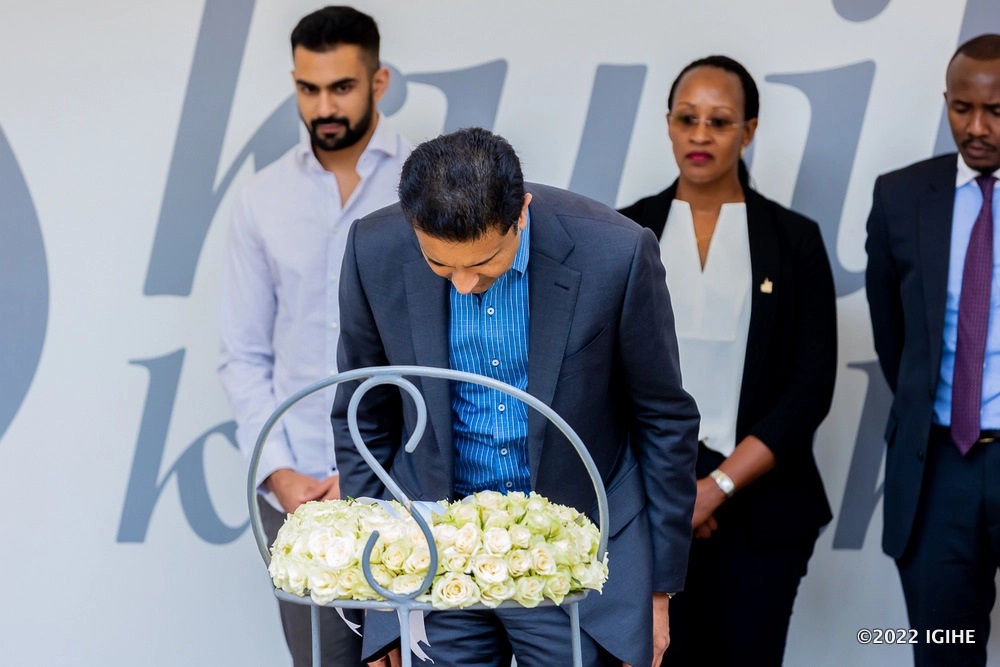
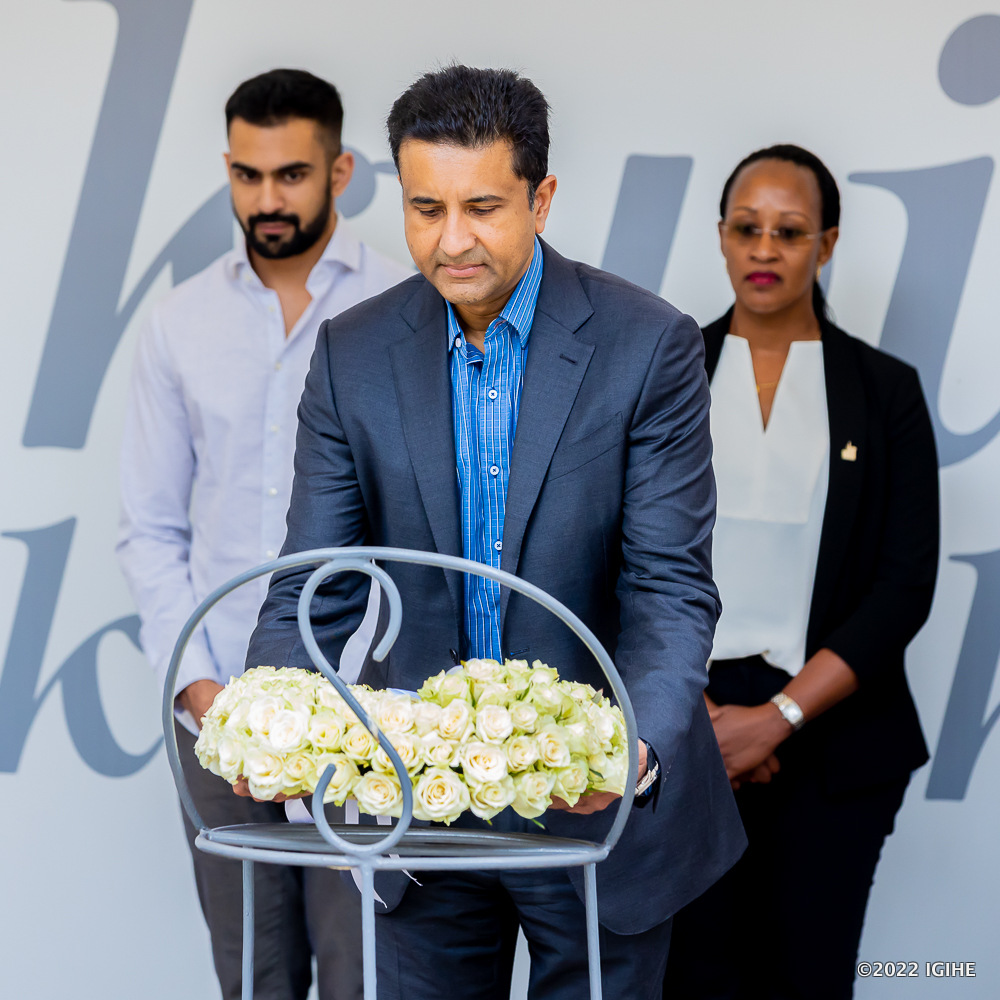
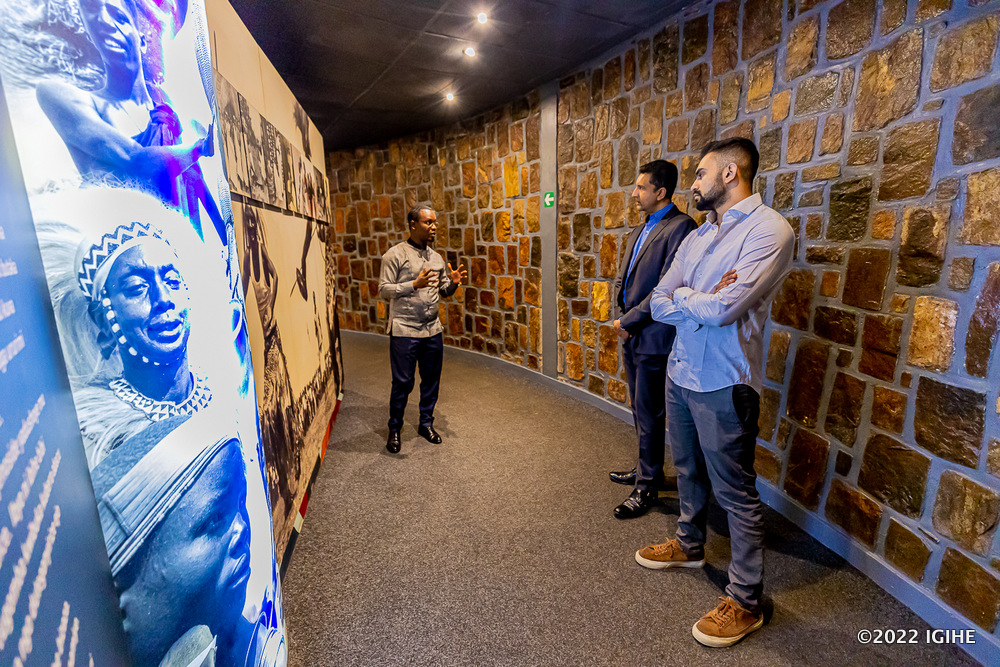
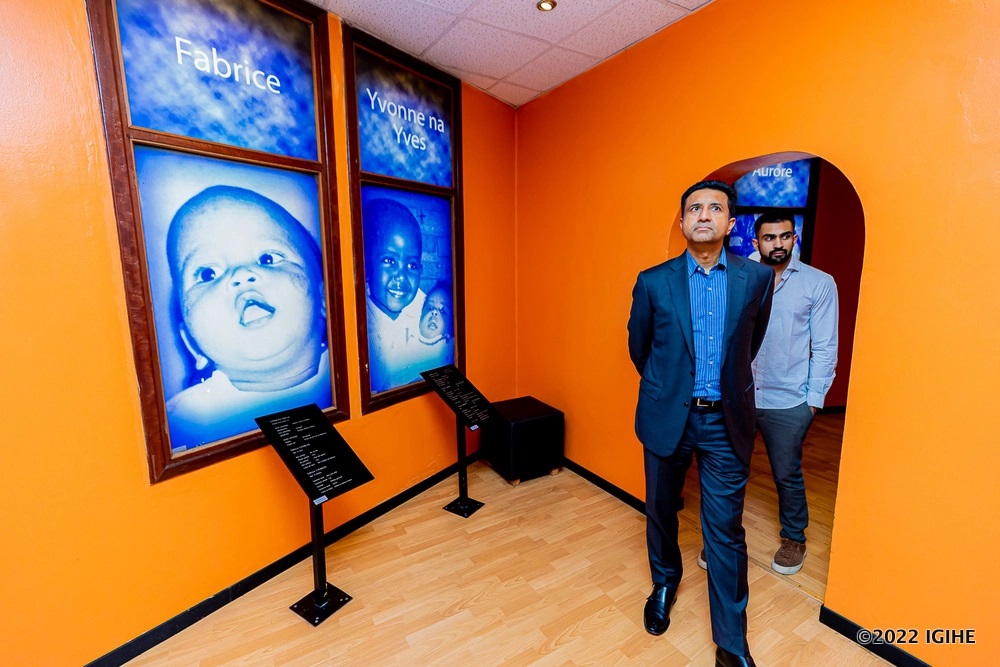
He delivered the message after visiting Kigali Genocide Memorial in Gisozi during his visit to Rwanda.
I&M Bank works with AEGIS Trust, a Non-Governmental Organization (NGO) which manages Kigali Genocide Memorial.
Sarit said that visiting the memorial is of great significance as it helped him to learn from the Rwanda’s bitter history that saw over 1 million Tutsis killed on the basis of their identity.
He highlighted that I&M Bank joins Kigali Genocide Memorial located in Gisozi to honour fallen victims and empathize with survivors of Genocide against the Tutsi and assured the lender’s continued support.
Among others, Sarit disclosed that he learnt a lot from Rwanda’s dark history during his visit to the memorial, most importantly, striving for harmony in the society.
As history shows, Sarit said, Rwandans lived in harmony before colonizers divided them which led to the atrocities. He underscored that the reoccurrence of Rwanda’s tragic history can only be avoided if people strive for a peaceful coexistence.
Incorporated in 1963, I&M Bank (Rwanda) Plc is the oldest Bank in Rwanda. It is today one of the leading players in the industry with a strong footprint across the country.
The Bank is also a subsidiary of I&M Group PLC, a leading regional financial services group in Eastern Africa with a presence in Rwanda, Kenya, Tanzania and Uganda as well as a joint venture in Mauritius.
I&M Group has a long history in banking and has established a wide network of correspondent banks across the globe and enjoys a strong relationship with leading international Development Financial Institutions.
Ivan Nkusi also known as Yivani started using social media in 2016 for the same reasons everyone else was; posting pictures, interacting with friends and simply scrolling through the explore page.
Until 2019 when he decided to get serious about his artistry and started posting and sharing his music on his socials, and started getting feedback from people all around the world.
“I was getting texts from people in Ghana, Nigeria and Tahiti who loved my music,” said Nkusi.
As he explained, this made him see social media in a positive light, particularly when it came to his music because it had given him exposure.
He continues to say that through social media, he would get booked to do gigs.
“Social media has ups and downs, one day your post gets a lot of likes and people are sharing it all over and other days you feel invisible. This rollercoaster ended in me deleting my accounts and now I’m starting from scratch,” said Nkusi.
Social media have become a tool for different people in different careers to reach a wide range of people from all over the world allowing them to develop and grow as people and professionals.
People’s influence on others earns them success, money and fame but once the likes and followers stop, their social media world slowly crumbles.
On different social media platforms, people, particularly young people are building their profiles and careers and earning money.
Rising artistes are releasing their work on different platforms and making it big, doctors are sharing their expertise.
The birth of dating apps connecting people from all over the world for romantic relationships, online dating and long distance relationships were made possible.
Young girls and boys are getting paid for creating content and advertising for different brands.
But like what happened to Nkusi, it is possible that as you watch your success hit its peak, you can also watch it drop and hit the ground hard.
It is not easy to see what you built for so long get destroyed so easily but this is the con of social media.
Today, you are the talk of the town, tomorrow you are only yesterday’s news. There is a pressure to create something new, to be the first at something not the best but the very first.
Depression for not getting enough likes, stressing over the verified tick on your social media, allowing yourself to only be validated by people who most likely don’t know you or even care for you.
The pressure to stay in character once the camera starts rolling or live a life that they cannot afford. Children are now being raised on social platforms and being exposed to different situations before they are mature.
A lot of people have forgotten how to make emotional connections, emojis have been made a new language, people are openly hurtful to each other.
Yes, social media is a good weapon but the knife is also dangerous depending on where it is facing.
A person on the other end of a screen going through their comments and gaining body issues and another who is getting body positivity messages will see social media differently.
Having a space to freely advocate for changes we wish to see in our environment, starting with our planet on climate change and teaching or learning about different things in the world from the comfort of your couch at home, is what social media should be about.
Among other reforms, this financing will support the roll out of a new dynamic social registry which will ensure that critical social sector programs are targeted to those most in need and can be responsive to losses of livelihood or income when households face a range of crises. This foundational reform is also expected to improve efficiency in the spending of public resources and contribute to poverty reduction.
“This policy and institutional reform program has been the anchor of our support to the Government of Rwanda on human capital development, which has already yielded robust results on a large scale in health care, education, nutrition, and social protection,” said Rolande Pryce, World Bank Country Manager for Rwanda.
“Collaborating with the Government of Rwanda and working in step with other partners to bring about these reforms will lay a solid foundation for human capital being a key driver of Rwanda’s socioeconomic transformation and will help ensure no one is left behind,” she added.
The series has registered strong results despite the disruptions of the COVID-19 pandemic. For example, coverage of critical gender, child, and nutrition sensitive safety net schemes benefiting poor and vulnerable households under the Vision 2020 Umurenge Program has increased from 19 percent in March 2020 to 46 percent in September 2022. The proportion of young children now receiving a minimum package of integrated early childhood development services in accordance with national standards has expanded from 17 percent in 2020 to 62 percent in 2022.
Health sector financing reforms have ensured that over 86 percent of the target population has been covered by community-based health insurance as of May 2022, up from 69 percent in 2020. Teachers are being recruited more efficiently because of an increase in transparency of teacher management and recruitment policies, leading to better quality of teaching and teacher wellbeing.
The series has also been responsive to the COVID-19 pandemic. As of September 2022, 135,081 households, largely reliant on informal work, received emergency cash support to help tide over losses of income during the pandemic. About 59 percent of these recipients are women. With reforms in education, the sector prepared itself for more resilient service delivery, and managed to return about 99 percent of students to school after prolonged COVID-19-related closure.
“We expect that this series of development policy operations will have lasting benefits in Rwanda, including through the new social registry, a financially sustainable community-based health insurance scheme, and strengthened workforce management in both health facilities and schools,” said Kavita Watsa, World Bank Senior Human Development Operations Officer and Task Team Leader for this operation. “Going forward, Rwanda can also respond more flexibly to crises that affect poor and vulnerable households.”
The financing approved on 22nd December 2022, is part of broader ongoing support by the World Bank for health, education, and social protection in Rwanda.
The World Bank’s International Development Association (IDA), established in 1960, helps the world’s poorest countries by providing grants and low to zero-interest loans for projects and programs that boost economic growth, reduce poverty, and improve poor people’s lives.
IDA is one of the largest sources of assistance for the world’s 76 poorest countries, 39 of which are in Africa. Resources from IDA bring positive change to the 1.6 billion people who live in IDA countries. Since 1960, IDA has supported development work in 113 countries. Annual commitments have averaged about $21 billion over the last three years, with about 61 percent going to Africa.
The event was held to raise awareness of human rights and peace among citizens to prevent the recurrence of tragedy and maintain peace in line with the current situation in Rwanda, where various efforts have been made for inter-ethnic reconciliation and national development since the 1994 Genocide against the Tutsi.
Under the theme of national development through institutionalization of peace, HWPL proposed three concepts: “Right to Peace,” peace as a permanent condition from violence or threat, “Peace and development” as the correlation between conflict and economic performance, and “the need to institutionalize peace” through regular peace activities.
As an example of Rwanda’s institutionalization to overcome ethnic divisions, Albert Rutikanga, the founder and executive director of PeaceEdu Initiative Rwanda explained “The Goals of the Gacaca court and Effect” as a case of a traditional community court system that aims at restoring the social structure.
Dr. Eric Ndushabandi, director of the Institute of Research and Dialogue for Peace (IRDP), added, “We should ensure that we adopt an inclusive governance system that allows all social categories to participate in public matters. National identity consciousness must not be taught as an ideology, it must respond to concrete issues of human, inclusiveness at the point where citizens feel more secure by being identified as Rwandans and not recognized by their ethnicity, Hutu or Tutsi.”
Starting with the Human Rights Webinar, HWPL will carry out peace activities to promote peace in Rwanda. In this year, HWPL will propose an education project for schools with the handbook of the Declaration of Peace and Cessation of War (DPCW) which is proclaimed to achieve global peace with cessation of war. And will receive signatures for supporting DPCW from political and legal workers to make it an institutionalization of peace.
Most times it is the person that is viewed as the happiest outside that is the angriest behind closed doors.
Sometimes the only people who know your ins and outs are indeed families.
If you are dealing with an angry family member, these tips could be helpful:
– Acknowledge the anger, don’t try to downplay it or make excuses.
Parents excuse their children’s angry outbursts over the smallest things, either because they didn’t get the toy they wanted or because they cooked a meal they did not like.
This allows the child to grow up thinking that their anger is always excused, making them feel zero accountability for their actions.
Acknowledging these little angry tantrums will allow you to teach your child how to manage their issues.
– Trying to understand where the anger is coming from, is there a particular trigger?
Not all outbursts are for nothing, and that is where most of us go wrong in trying to correct children.
Anger is still a natural emotion but also a response mirroring others’ actions in different situations.
A person will mirror how others behave, typically these are people with whom we spend most of our time.
Parents, guardians, teachers, and others should be careful with how they express their anger around young people because that is most likely how they will handle familiar situations.
-Avoid getting into an argument, this only makes the situation worse.
Getting angry over someone else’s bad temper is not a new concept, and yes you are allowed to be however this does not make the other person less angry, it just results in a yelling match.
Try to be patient, take some time to yourself to calm down, go for a walk and try a relaxing activity or even a hardcore exercise to distract your mind.
Offer to help ease the situation and introduce them to prayer because there is just something about believing in a greater power that allows you to let go of your feelings and believe in the greater good.
The holidays can be challenging for anyone struggling with anger issues, their family, and friends, but remember to stay positive and patient, take time for yourself when needed, and above all, remember that you are not alone.
There are plenty of people who understand what you’re going through, and they want to help.
Keep in mind that learning to deal with your anger issues does not mean letting go of your beliefs or allowing others to step on you.
If they are unaware of how they make you feel they won’t change, and yes, some will get worse if you express how you feel but at least you did your part.
Expressing your emotions means finding a calm moment when the person you are going to talk to has eaten because hunger makes an angry person, and calmly but firmly expressing yourself with no shouting involved.
Share with them various alternatives to help them deal better with anger during the season
One way to reduce stress during the holiday season is to set realistic expectations for yourself.
This means not overbooking yourself with holiday parties or events and trying to do too much in a short amount of time.
It’s also important to plan as much as possible and delegate tasks so you’re not left feeling overwhelmed.
Another way to reduce tension is to take some time to yourself each day, even for just a few minutes doing something you enjoy, such as reading, listening to music, or taking a relaxing bath.
It’s also important to exercise regularly and eat a healthy diet, as this can help improve your mood and energy levels.
A piece of chocolate is okay once in a while as it allows the brain to feel happiness, bungee eats chocolate and your anger will be directed at your toothache.
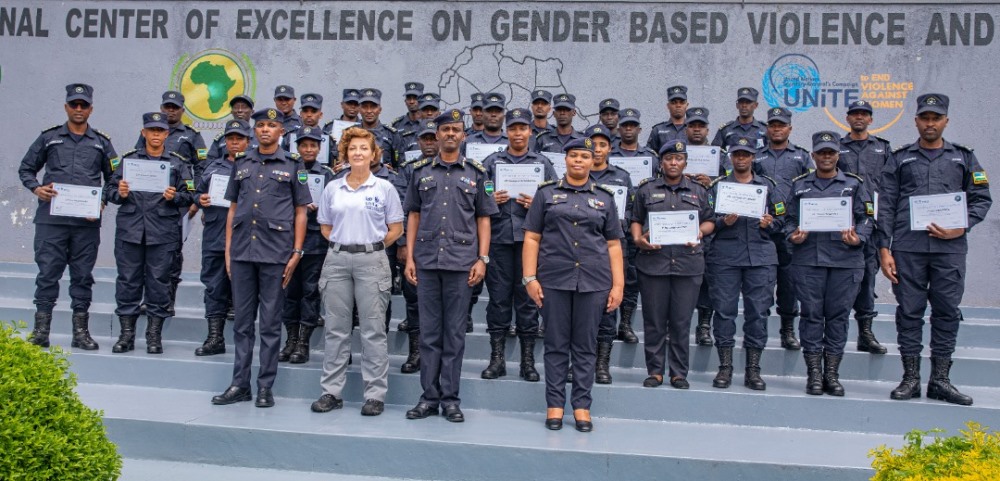
The course held at the Rwanda National Police (RNP) General Headquarters at Kacyiru, was conducted in partnership with the United Nations Institute for Training and Research (UNITAR).
The Commissioner for Training at the RNP, Assistant Commissioner of Police (ACP) Berthélemy Rugwizangoga thanked the UNITAR for the partnership to develop the capacity of the RNP officers.
This year, in partnership with UNITAR, officers have been trained in different areas such as Training of Trainers (TOT), Women Commanders Training, Protection of Civilians and Individual Police Officers (IPO) course.
ACP Rugwizangoga reminded the trainees of the tasks ahead.
“The acquired knowledge and experience should help you to accomplish the mandated tasks to protect the vulnerable people in armed conflict or under any threats,” ACP Rugwizangoga told the officers.
He added: “This was a package for you to understand the international principles on the protection of civilians and to enhance your operating capacity in protecting vulnerable people affected by armed violence and conflict. Share the knowledge and skills with your fellow peacekeepers, who did not participate in this training.”
ACP Rugwizangoga said that training and capacity building is among the key priorities of the RNP to ensure that police officers continue to be well prepared for any law enforcement duties.
The PoC course looked at the international principles on the protection of civilians in war-torn zones, including special consideration for conflict-related sexual violence and child protection.