{BEIJING, March 19 (Xinhua) — Chinese President Xi Jinping will pay a state visit to Russia from March 20 to 22 at the invitation of his Russian counterpart, Vladimir Putin.}
Over the years, the sustained, sound and steady development of China-Russia relations have brought benefits to both sides and injected stability into a turbulent world. And their comprehensive strategic partnership of coordination for a new era is mature, resilient and rock-solid.
Such a mature and tenacious relationship cannot do without top-level design or strategic guidance. Exchanges between the two heads of state are the compass and anchor of China-Russia relations.
Guided by the two leaders, China and Russia have blazed a path of major-country relations featuring strategic trust and good neighborliness, setting a new paradigm for international relations.
Through mutual visits, bilateral meetings on important multilateral occasions, video conferences, phone talks and exchange of messages, the two heads of state have over the past years conducted frequent interactions and exchanged governance experience in an in-depth and candid manner. They have also made plans to advance bilateral relations and practical cooperation in various fields, such as economy, trade, investment, energy, science and technology, people-to-people and cultural exchanges as well as local-level interactions.
Amity between the people holds the key to good relations between states. Since the two sides established diplomatic ties 74 years ago, their people have worked together to create a better future and share the dividends of development. A synergy between the Belt and Road Initiative and the Eurasian Economic Union is a good case in point.
The Heihe-Blagoveshchensk cross-border highway bridge, the Tongjiang-Nizhneleninskoye cross-border railway bridge and other boundary river bridges have been opened to traffic one after another, and cross-border logistics and transport channels have been further expanded.
In 2022, bilateral trade reached a record high. China has remained Russia’s largest trading partner for 13 years in a row. And in the first two months of this year, bilateral trade sustained strong growth momentum, reaching 33.69 billion dollars, up 25.9 percent year on year.
Meanwhile, the two countries have witnessed deepening people-to-people exchanges and amity, with increasingly solid public support. Events such as the year of tourism, the year of the media exchange, and the year of sports exchange, have brought the people of the two countries even closer.
In the face of rapid changes rarely seen in a century, major countries are trying to figure out what they want with each other — to build exclusive blocs, or to foster a friendship that is open and sincere.
China and Russia have provided their answer. Their relationship is built on the basis of non-alliance, non-confrontation and non-targeting of third countries. It tolerates no third party interference or coercion.
Such a choice serves the respective and common interests of the two countries and answers the common call for peace and development of our times.
In an interview with Chinese media in February, Russian Ambassador to China Igor Morgulov said, “I believe that anyone who has bad intentions and may try to break our friendship will not succeed.”
This resilient relationship has brought more stability, certainty and positive energy to a world undergoing transformations amid chaos and disorder.
As some countries are trying to rekindle the Cold War mentality and create the pseudo-proposition of “democracy vs autocracy,” China and Russia, together with other countries, staunchly oppose hegemony and a new Cold War, and are firmly committed to promoting a multi-polar world and more democratic international relations.
China and Russia, as permanent members of the UN Security Council, have maintained close coordination and cooperation on international affairs, firmly safeguard the UN-centered international system and the international order underpinned by international law, and upheld true multilateralism.
The two countries have increased mutual support on issues concerning each other’s core interests. They have carried out coordination and cooperation within multilateral frameworks including the Shanghai Cooperation Organization, the Conference on Interaction and Confidence Building Measures in Asia and the BRICS, and safeguarded regional security interests as well as the common interests of developing countries and emerging markets.
Under the strategic guidance of the two heads of state, the China-Russia comprehensive strategic partnership of coordination for a new era will surely advance at a higher level.
A mature and resilient China-Russia relationship will promote the solidarity, development and prosperity of the Eurasian continent, pool forces to uphold the norms governing international relations, strengthen mutually beneficial cooperation, and steer the world in the right direction.
The visit, scheduled for March 20-22, is set to map out the blueprint for the development of the China-Russia comprehensive strategic partnership of coordination for a new era. It will also push ahead with the practical cooperation between the two countries, and inject strong impetus into the endeavor to maintain peace and prosperity so as to jointly build a community with a shared future for mankind.
{{MODEL FOR MAJOR-COUNTRY RELATIONSHIP}}
Earlier this month, footage of Chinese panda named Ruyi went viral online, which showed him playing and gorging himself on fresh bamboos in Moscow Zoo. Ruyi and his buddy Dingding officially moved to their new home in Moscow during a grand ceremony attended by Xi and his Russian counterpart, Vladimir Putin, in June 2019.
During that visit, the two leaders signed and issued a joint statement raising bilateral ties to the comprehensive strategic partnership of coordination for a new era, opening up a new chapter in China-Russia relations featuring higher level and greater development.
Now Xi is about to set foot on Russian soil for the ninth time as Chinese president. Over the past decade, the two heads of state have met with each other on some 40 occasions. Their frequent and high-quality exchanges have always been guiding the development of China-Russia relations.
The past years have witnessed the steady growth of China-Russia ties with the inking of a host of important documents such as a joint statement on win-win cooperation and deepening their comprehensive strategic partnership of coordination in 2013, the China-Russia Joint Statement on a New Stage of Comprehensive Strategic Partnership in 2014, a 2015 joint statement on deepening comprehensive strategic partnership of coordination and advocating win-win cooperation, and the China-Russia Joint Statement on Further Deepening the China-Russia Comprehensive Strategic Partnership in 2017.
In 2021, the two presidents commemorated the 20th anniversary of the Treaty of Good-Neighborliness and Friendly Cooperation Between China and Russia and made the decision to extend the pact.
As the world is facing profound changes unseen in a century and the unprecedented pandemic, Xi and Putin have maintained close contact through various means, including a meeting during the Beijing 2022 Winter Olympics, traditional year-end online talks, calls and messages, and participating via video link in the ground-breaking ceremony of a bilateral nuclear energy cooperation project and other major events held in their respective countries.
Under the joint leadership of the two heads of state, the bilateral partnership has grown more mature and resilient.
As an ancient Chinese saying goes, “True partnership defies geographical distance.” China and Russia have blazed a trail in the growth of major-country relations featuring strategic trust and good neighborliness, setting a good example for a new type of international relations.
Meanwhile, China-Russia ties are based on non-alignment, non-confrontation and non-targeting of any third party. The relations pose no threat to any other country in the world, nor are they subject to interference or provocation by any third party.
Russia and China have set an example for relationship between major countries, said Vasily Kashin, director of the Center for Comprehensive European and International Studies of Russia’s National Research University-Higher School of Economics.
“Russia-China relations, which are efficient, responsible and future-oriented, have played a stabilizing role in international affairs,” he said.
NEW CHAPTER IN COOPERATION, FRIENDSHIP
In June last year, the Heihe-Blagoveshchensk cross-border highway bridge over Heilongjiang River opened to traffic. The new channel, a milestone in infrastructure connectivity, has connected China’s northeast and Russia’s far east amid booming economic and trade cooperation between the neighbors.
Two-way trade has been growing over the past decade, surging from less than 90 billion U.S. dollars in 2013 to more than 190 billion dollars last year and approaching the target of 200 billion dollars set by the two heads of state.
Exports of automobiles and spare parts from China to Russia have increased rapidly in recent years. By the end of last year, the number of automobile dealers of Chinese brands in Russia had climbed to 1,041.
Meanwhile, chocolates, honey, flour, and alcohol — quality Russian products as such have become more widely available for Chinese customers. The Russian Export Center, the country’s state institution for export support, has announced an increase in the number of online shops in a bid to let Chinese customers have easier access to quality Russian products.
While the all-round bilateral practical cooperation is flourishing, people-to-people and cultural exchanges between the two countries are also thriving, which have built up popular support for China-Russia friendship.
Currently, the two peoples are marking the 2022-2023 years of sports exchanges after the youth friendly exchange year, media exchange year, subnational cooperation and exchange year, and scientific and technological innovation year.
Russia and China have carried out cooperation actively under the guidance of the two heads of state in the past 10 years, said Yuri Tavrovsky, a professor of the Russian University of Peoples’ Friendship, who expects that the leaders of the two countries will open up more new areas for bilateral cooperation in the future.
{{FOR EQUITY AND JUSTICE}}
Back in 2013, Xi chose Russia as the destination of his first overseas trip after becoming president. In his speech at the Moscow State Institute of International Relations during that visit, Xi called for building a new type of international relations with win-win cooperation at the core, stressing the mankind “has increasingly emerged as a community of shared future in which everyone has in himself a little bit of others.”
The vision of building a community with a shared future for mankind not only reflects the common voice of all peoples and gathers the broad consensus of the international community, but also leads the trend of the times and the way forward for mankind. Since it was proposed, the notion has been enshrined repeatedly in important documents of the United Nations, the Shanghai Cooperation Organization (SCO) and other multilateral mechanisms.
“Ten years have passed, and we understand that the notion’s relevance has not decreased but is becoming more and more important,” said Anatoly Torkunov, president of the Moscow State Institute of International Relations, who applauded Xi’s speech at the scene in 2013.
The world has now come to another historical crossroads.
To revert to a Cold War mentality, provoke division and antagonism, and stoke confrontation between blocs, or to act out of the common good of humanity to promote equality, mutual respect and win-win cooperation — the tug of war between these two trends is testing the wisdom of statesmen in major countries as well as the reason of the entire humanity. Facts have repeatedly proven that containment and suppression is unpopular, and sanction and interference is doomed to fail.
At the critical moment in human history, Xi has made the important judgment that “the world today is undergoing profound changes unseen in a century,” while Putin has also made similar assessment at the Valdai Discussion Club.
The more turbulent the world is, the more steadily China-Russia relations should forge ahead.
As the founding countries of the SCO, both sides have pushed forward multilateral cooperation, and extended the organization’s focus from security to politics, economy as well as people-to-people and cultural exchanges. They have made joint contributions to a better world order, global and regional development, as well as the security of the SCO members.
Under the BRICS mechanism, Beijing and Moscow, together with other members, have played an active role in advancing the reforms of the global economic governance, and jointly created a stronger voice on major international and regional issues. Those efforts have enabled the emerging economies and developing nations to have more of a say on the world stage. And the developing economies, represented by the BRICS countries, have become the new engine of economic globalization in today’s world afflicted by rising populism and protectionism.
China and Russia, as permanent members of the UN Security Council as well as important parties of the Group of 20, APEC and other key global and regional groups, have also worked closely on issues related to the situation in the Korean Peninsula, Afghanistan, as well as the Iran nuclear issue. They have played a leading role in promoting multipolarity and greater democracy in international relations and safeguarding global strategic balance and stability.
Ten years on, China will continue to work together with Russia to follow the trend of the times, drive global unity and cooperation and contain division and confrontation so as to make new and greater contribution to peace and development of humanity.
Following is an English version of the full text of the article:
{{Forging Ahead to Open a New Chapter of China-Russia Friendship, Cooperation and Common Development}}
{ {{Xi Jinping, President of the People’s Republic of China}} }
At the invitation of President Vladimir Putin, I will soon pay a state visit to the Russian Federation. Russia was the first country I visited after I was elected President 10 years ago. Over the past decade, I have made eight visits to Russia. I came each time with high expectations and returned with fruitful results, opening a new chapter for China-Russia relations together with President Putin.
China and Russia are each other’s biggest neighbor and comprehensive strategic partner of coordination. We are both major countries in the world and permanent members of the UN Security Council. Both countries uphold an independent foreign policy and see our relationship as a high priority in our diplomacy.
There is a clear historical logic and strong internal driving force for the growth of China-Russia relations. Over the past 10 years, we have come a long way in our wide-ranging cooperation and made significant strides into the new era.
— High-level interactions have played a key strategic role in leading China-Russia relations. We have established a whole set of mechanisms for high-level interactions and multi-faceted cooperation which provide important systemic and institutional safeguards for the growth of the bilateral ties. Over the years, I have maintained a close working relationship with President Putin. We have met 40 times on bilateral and international occasions. Together we have drawn the blueprint for the bilateral relations and cooperation in various fields, and have had timely communication on major international and regional issues of mutual interest, providing firm stewardship for the sustained, sound and stable growth of China-Russia relations.
— Our two sides have cemented political mutual trust and fostered a new model of major-country relations. Guided by a vision of lasting friendship and win-win cooperation, China and Russia are committed to no-alliance, no-confrontation and not targeting any third party in developing our ties. We firmly support each other in following a development path suited to our respective national realities and support each other’s development and rejuvenation. The bilateral relationship has grown more mature and resilient. It is brimming with new dynamism and vitality, setting a fine example for developing a new model of major-country relations featuring mutual respect, peaceful coexistence and win-win cooperation.
— Our two sides have put in place an all-round and multi-tiered cooperation framework. Thanks to the joint efforts of both sides, China-Russia trade exceeded 190 billion U.S. dollars last year, up by 116 percent from ten years ago. China has been Russia’s largest trading partner for 13 years running. We have seen steady increase in our two-way investment. Our cooperation on major projects in such fields as energy, aviation, space and connectivity is moving forward steadily. Our collaboration in scientific and technological innovation, cross-border e-commerce and other emerging areas is showing a strong momentum. Our cooperation at the sub-national level is also booming. All this has brought tangible benefits to both the Chinese and the Russian peoples and provided unceasing driving force for our respective development and rejuvenation.
— Our two sides have acted on the vision of lasting friendship and steadily strengthened our traditional friendship. On the occasion of commemorating the 20th anniversary of the China-Russia Treaty of Good-Neighborliness and Friendly Cooperation, President Putin and I announced the extension of the Treaty and added new dimensions to it. Our two sides have held eight “theme years” at the national level and continued to write new chapters for China-Russia friendship and cooperation. Our two peoples have stood by and rooted for each other in the fight against COVID, which once again proves that “a friend in need is a friend indeed.”
— Our two sides have had close coordination on the international stage and fulfilled our responsibilities as major countries. China and Russia are firmly committed to safeguarding the UN-centered international system, the international order underpinned by international law, and the basic norms of international relations based on the purposes and principles of the UN Charter. We have stayed in close communication and coordination in the UN, the Shanghai Cooperation Organization, BRICS, the G20 and other multilateral mechanisms, and worked together for a multi-polar world and greater democracy in international relations. We have been active in practicing true multilateralism, promoting the common values of humanity, and championing the building of a new type of international relations and a community with a shared future for mankind.
Looking back on the extraordinary journey of China-Russia relations over the past 70 years and more, we feel strongly that our relationship has not reached easily where it is today, and that our friendship is growing steadily and must be cherished by us all. China and Russia have found a right path of state-to-state interactions. This is essential for the relationship to stand the test of changing international circumstances, a lesson borne out by both history and reality.
My upcoming visit to Russia will be a journey of friendship, cooperation and peace. I look forward to working with President Putin to jointly adopt a new vision, a new blueprint and new measures for the growth of China-Russia comprehensive strategic partnership of coordination in the years to come.
To this end, our two sides need to enhance coordination and planning. As we focus on our respective cause of development and rejuvenation, we should get creative in our thinking, create new opportunities and inject new impetus. It is important that we increase mutual trust and bring out the potential of bilateral cooperation to keep China-Russia relations at a high level.
Our two sides need to raise both the quality and quantity of investment and economic cooperation and step up policy coordination to create favorable conditions for the high-quality development of our investment cooperation. We need to boost two-way trade, foster more convergence of interests and areas of cooperation, and promote the complementary and synchronized development of traditional trade and emerging areas of cooperation. We need to make sustained efforts to synergize the Belt and Road Initiative and the Eurasian Economic Union, so as to provide more institutional support for bilateral and regional cooperation.
Our two sides need to step up people-to-people and cultural exchanges and ensure the success of China-Russia Years of Sports Exchange. We should make good use of the sub-national cooperation mechanisms to facilitate more interactions between sister provinces/states and cities. We should encourage personnel exchanges and push for the resumption of tourism cooperation. We should make available better summer camps, jointly-run schools and other programs to steadily enhance the mutual understanding and friendship between our peoples, especially between the youth.
The world today is going through profound changes unseen in a century. The historical trend of peace, development and win-win cooperation is unstoppable. The prevailing trends of world multi-polarity, economic globalization and greater democracy in international relations are irreversible. On the other hand, our world is confronted with complex and intertwined traditional and non-traditional security challenges, damaging acts of hegemony, domination and bullying, and long and tortuous global economic recovery. Countries around the world are deeply concerned and eager to find a cooperative way out of the crisis.
In March 2013, when speaking at the Moscow State Institute of International Relations, I observed that countries are linked with and dependent on one another at a level never seen before, and that mankind, living in the same global village, have increasingly emerged as a community with a shared future in which everyone’s interests are closely entwined. Since then, I have proposed the Belt and Road Initiative, the Global Development Initiative, the Global Security Initiative, and the Global Civilization Initiative on different occasions. All these have enriched our vision for a community with a shared future for mankind and provided practical pathways toward it. They are part of China’s response to the changes of the world, of our times, and of the historic trajectory.
Through these ten years, the common values of humanity — peace, development, equity, justice, democracy and freedom — have taken deeper roots in the heart of the people. An open, inclusive, clean and beautiful world with lasting peace, universal security and common prosperity has become the shared aspiration of more and more countries. The international community has recognized that no country is superior to others, no model of governance is universal, and no single country should dictate the international order. The common interest of all humankind is in a world that is united and peaceful, rather than divided and volatile.
Since last year, there has been an all-round escalation of the Ukraine crisis. China has all along upheld an objective and impartial position based on the merits of the issue, and actively promoted peace talks. I have put forth several proposals, i.e., observing the purposes and principles of the UN Charter, respect of the legitimate security concerns of all countries, supporting all efforts conducive to the peaceful settlement of the crisis, and ensuring the stability of global industrial and supply chains. They have become China’s fundamental principles for addressing the Ukraine crisis.
Not long ago, we released China’s Position on the Political Settlement of the Ukraine Crisis, which takes into account the legitimate concerns of all parties and reflects the broadest common understanding of the international community on the crisis. It has been constructive in mitigating the spillovers of the crisis and facilitating its political settlement. There is no simple solution to a complex issue. We believe that as long as all parties embrace the vision of common, comprehensive, cooperative and sustainable security, and pursue equal-footed, rational and results-oriented dialogue and consultation, they will find a reasonable way to resolve the crisis as well as a broad path toward a world of lasting peace and common security.
To run the world’s affairs well, one must first and foremost run its own affairs well. The Chinese people, under the leadership of the Communist Party of China, are striving in unity to advance the rejuvenation of the Chinese nation on all fronts through the Chinese path to modernization. Chinese modernization is characterized by the following features: it is the modernization of a huge population, the modernization of common prosperity for all, the modernization of material and cultural-ethical advancement, the modernization of harmony between humanity and nature, and the modernization of peaceful development. These distinctive Chinese features are the crystallization of our practices and explorations over the years, and reflect our profound understanding of international experience. Going forward, we will steadfastly advance the cause of Chinese modernization, strive to realize high-quality development, and expand high-standard opening up. I believe that this will bring new development opportunities to Russia and all countries in the world.
Just as every new year starts with spring, every success starts with actions. We have every reason to expect that China and Russia, as fellow travelers on the journey of development and rejuvenation, will make new and greater contributions to human advancement.
The first championship scheduled for September 2024, is expected to bring 150 football legends from around the world and will be hosted at Amahoro Stadium, currently under renovation.
Visit Rwanda branding will be visible in the stadium and on marketing collateral such as the jerseys and tickets. The games will also be broadcast on live television to global audiences.
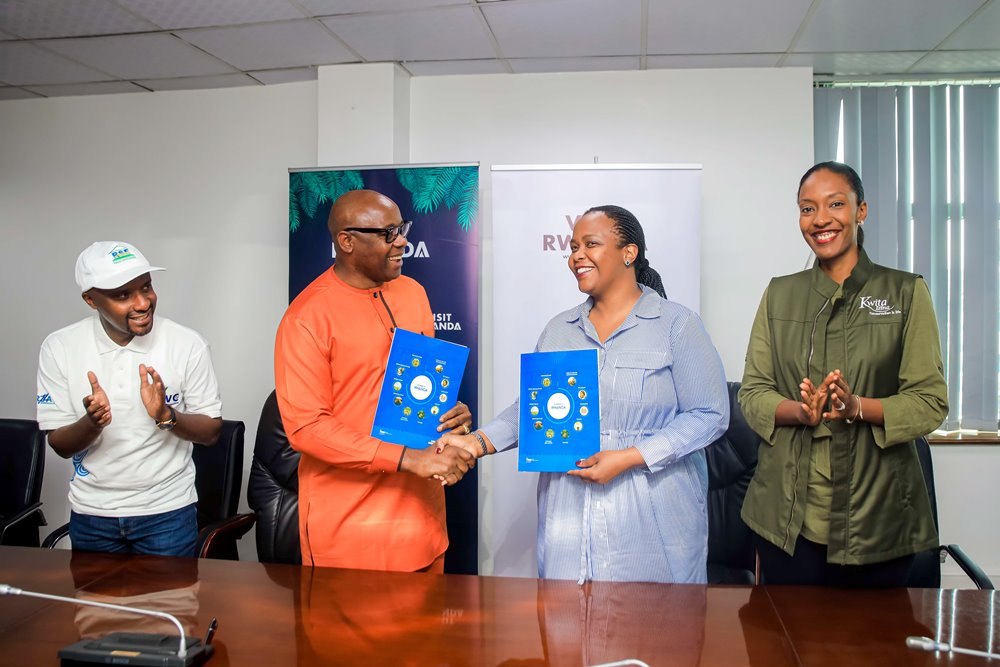
Speaking after signing the agreement, Clare Akamanzi, Chief Executive Officer, Rwanda Development Board said: “Hosting this event puts Rwanda on the world map as a fast-growing sports tourism destination. This is a championship that is expected to attract thousands of not only global football spectators but also leading brands and partners looking to create impact through sports.
We are excited at the income and job opportunities the tournament will create for Rwandans and encourage more people to come and host their sporting events in Rwanda.”
On his part, Fred Siewe, Chairman of Veteran Clubs World Championship said: “We want the world to come to Rwanda not only to enjoy the tournament but to also visit its wonderful attractions and establish businesses and invest.”
Following the signing, a Leading Legends Gala Dinner was organised to announce the team captains of the 8 competing regions. They are:
● North America team: Captain is Charmaine Hooper from Canada
● South America team: Captain is Maicon Douglas from Brazil
● North Africa & Middle East team: Captain is Wael Gomaa from Egypt
● West & Central Africa team: Captain is Patrick Mboma from Cameroon
● East & South Africa: Captain is Jimmy Gatete from Rwanda
● North & West Europe team: Captain is Robert Pires from France
● East & South Europe team: Captain is Gaizka Mendieta from Spain
● Asia team: Captain is Tzuneyasu Miyamoto from Japan
In the lead up to the championships, roadshows will be conducted around the world encouraging people to visit, meet and invest in Rwanda.
In addition to the roadshows, five high-level forums on peace, education, investment and business, health and tourism will be organised during the tournament to address social, economic, cultural and environmental opportunities.
A special drone show was held after the Leading Legends Gala Dinner welcoming the legends who will participate in the championship with a Visit Rwanda, home of legends message.
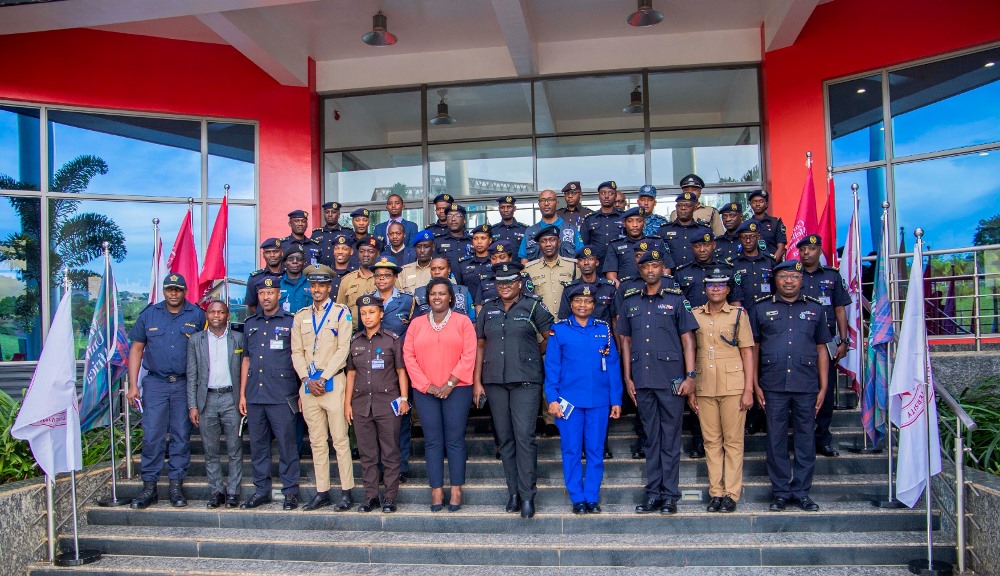
The study tour for 35 law enforcement officers of the 11th PSCSC intake, from seven African countries, links the theory class-work with field practical experiences.
It is conducted under the theme: Understanding the contribution of socio-economic development, good governance and justice to sustainable peace and security in Rwanda.
The Police students are from Ethiopia, Kenya, Malawi, Namibia, Lesotho, Nigeria, Somalia, South Sudan, Tanzania and Rwanda.
The tour started in City of Kigali where they will visit different institutions and get insight into complex aspects of socio-economic development, good governance and justice; before visiting other public and private entities, including factories, in other parts of the country.
In Kigali, they will visit the Rwanda National Police (RNP) General Headquarters at Kacyiru and some of its operational units; Rwanda Development Board (RDB), Ministry of National Unity and Civic Engagement, Rwanda Governance Board (RGB), Kigali Genocide Memorial and the Campaign Against Genocide Museum.
They will also visit Rwamagana solar power station, Zipline in Kayonza District, King’s Palace Museum in Nyanza, Ethnographic Museum of Rwanda in Huye District, Gisakura Tea factory, CIMERWA, Bralirwa and Kinigi IDP model village.
The NPC Commandant, Commissioner of Police (CP) Rafiki Mujiji said that the study is part of the academic programme to acquaint the Police students with the Rwandan realities on socio-economic development, governance and justice.
“The study tour will give the students an insight on how governance, fair justice and socio-economic development contribute to national security; they will get deep understanding on the challenges and benefits of inter-agency cooperation in contemporary policing and create an opportunity for them to link the theories and practices to draw lessons that will help them in their future policing duties,” CP Mujiji said.
At the end of the tour, he added, the students are expected to conduct research in the four key disciplines; national security, socio-economic development, governance and justice.
“They will produce a report at the end of their tour, on what they learnt and how these lessons add value to their previous experiences and knowledge in policing.”
The one year PSCSC has five main components; a Master’s in Peace Studies and Conflict Transformation, operational and routine staff work, strategic leadership and management, international computer driving license, and peace support operations.
With the foundation of “Declaration of Peace and Cessation of War (DPCW)” as a tool for comprehensive global peacebuilding cooperation, 7,000 people in the fields of politics, legal profession and religion, education, media, women and youth, will join the event where the participants share the cases of conflict prevention, mediation, and resolution to institutionalize peace as a universal culture and norm.
“This declaration, comprised of 10 articles and 38 clauses, aims to restore the spirit that served as the basis for the establishment of the United Nations and to achieve sustainable peace by promoting the universal values of the global community. The DPCW contains the message of no war, peace between nations and societies, friendly relations, prosperity, happiness, this is a simple message and everyone can relate to this message,” said Prof. Dr. Md Nazrul Islam, Chairman of International Law, University of Dhaka who drafted the DPCW, in the event on March 14th.
In his progress report presentation, Pravin Parekh, President of the Confederation of Indian Bar, presented major activities of overcoming disconnection and distrust and the progress for realizing the introduction of the DPCW to the United Nations. “HWPL has been strengthening trust and communication with youth, women, and civil society around the world in solidarity through activities such as Legislate Peace Project, WARP Office, and Peace Education,” he said.
Emphasizing the need for dialogues among religious leaders to facilitate tolerance and understanding, Ven. Myeong An, Vice President of Yeorae Order of Korean Buddhism, said, “Currently, many conflicts, persecutions, and conflicts among religions are taking place in the global village. It’s because of intolerance and a lack of communication. However, what if many religious people come to discuss with scriptures? It will only be a matter of time before a world of peace comes.”
In the event, action plans to advocate peace in Ukraine were prepared. Participants from over 100 countries write “Peace Letters” to denounce Russian invasion of Ukraine as a violation of international law and demand Russian President Putin a total withdrawal from the Ukraine territory.
“Future generations of Russians will remember you and this war as an indelible and shameful history, and you will be left in history as the one responsible for sacrificing countless innocent lives,” the letter stated. These letters will be collected and sent to Ukraine, where a peace monument will be erected.
During the speech, Chairman Lee Man-hee of HWPL emphasized, “Peace cannot be achieved alone. If everyone can live together as one, there will be no wars or conflicts. As the saying goes, love your neighbor as yourself, war will disappear only when there is love for each other. Current international law cannot prevent war.
Russia, a permanent member of the United Nations, waged a war. The DPCW was introduced to renew the inoperative international law to eliminate war. Now is the time to achieve peace. Just as people learn when they have to create (something), peace must be taught at home and at school to create peace. If people’s hearts change, a better world will be created. Let everyone in the global village become messengers of peace.”
“The agenda offered by the Indian hosts fully reflects the aspirations of all states to overcome the persisting crisis, ensure sustainable growth, remove artificial barriers, guarantee fair competition in trade, enhance the multilateral character of the global system, support the UN’s central role and help developing nations have more of a say in international decision-making. All these issues are reflected in the document that our representatives and experts discussed for several days. Agreement was reached on all issues of the G20 agenda, including the need to ensure genuine multilaterism and bolster the positions of developing nations.
It was agreed that from now on the African Union will be a full-fledged member of the G20, just as the EU that has been working in this capacity for several years now. The document concerns the need to ensure food and energy security and reform the WTO. These are useful and correct agreements.
Unfortunately, the G20 declaration was not approved on behalf of all G20 foreign ministers. As a year ago (under Indonesia’s Presidency), our Western partners were going all-out to highlight the situation around Ukraine, which they were presenting as “Russian aggression” in numerous rhetorical statements. No good came of it. The remarks by Western delegations, primarily the G7 countries, became too emotional, disrupting the normal discussion of the issues on the G20 agenda. As a result, the final document on behalf of all ministers was not adopted. The West insisted on reproducing the text on the situation around Ukraine, which was coordinated at the G20 Summit in Bali in 2022, fully ignoring our arguments that much had happened since then, such as the sincere admissions by former German Chancellor Angela Merkel, former President of France Francois Hollande, former President of Ukraine Petr Poroshenko and President Vladimir Zelensky himself to the effect that none of them were going to fulfil the Minsk agreements. In terms of Western interests, they were signed to gain time to pump Ukraine full of weapons and prepare for war against Russia. Our Western partners categorically refused to mention this well-known fact that no normal person would dispute. Likewise, they also refused to accept another fact – the act of terror against the Nord Stream gas pipelines. Our Western partners categorically rejected our appeal to reflect the need for an unbiased and honest investigation in the final declaration. Their position blocked adoption of the final declaration. Results of the discussion will be set forth in a summary to be made by the Indian Presidency. I hope they will objectively reflect the exchange of views we had.
We pointed out that UN Security Council reform is long overdue in the context of the developing countries playing a greater role in global governance. We reaffirmed Russia’s position on the importance of this by expanding the representation of the developing countries of Asia, Africa and Latin America and have re-emphasised our position where there’s no need to provide additional seats to the West or its allies because the West is “overrepresented” in this main UN body as it is. No one claiming a seat as a permanent UNSC member will add any value to this body. Our position on this is well known. Today, we reiterated it.
The Indian Presidency continues. I hope the discussion of the items on the G20 agenda will result in corresponding draft recommendations for the G20 Summit to be held in Goa in September.”
“All multilateral institutions are being tested for compliance with the new geopolitical realities. Given the new circumstances, the associations (this includes the UN and the G20 alike) which act as platforms to find a balance of interests rather than to present their approaches or to make claims to justify their alleged entitlement to hegemony, will remain in high demand.”
“To what extent does the West realise that its line is leading to a blind alley? They are declaring the need to inflict a “strategic defeat” on Russia, that this is an “existential problem for the West.” I am referring to their bid to preserve their hegemony in the world arena (which they don’t conceal). The developing nations understand this perfectly well. It’s another matter that some of them, feeling unprecedented pressure from below-the-belt tactics, are compelled to mention this issue in their remarks, emphasising in different forms their commitment to the principles of the UN Charter, especially to territorial integrity and respect for sovereignty. We are all for that. I would like to merely recall that like any document adopted by the entire international community, the UN Charter cannot be fulfilled selectively. It is not a menu to choose from.
In addition to what I’ve said, the UN Charter lays more emphasis on the principle of the right of nations to self-determination. Since the very start of the UN, its member countries have noted the need to have a common understanding of the principle of sovereignty and territorial integrity on the one hand and the right of nations to self-determination, on the other. A process launched with the participation of all UN members culminated in the adoption of the Declaration on Principles of International Law in 1970. Nobody has rejected or disputed this document since then. It interprets the link between these two principles in the following way: every state must observe the sovereignty and territorial integrity of any other state whose government respects the principle of self-determination and represents the whole nation living in said country. There is no need to prove that since 2014, after the bloody coup in Ukraine organised and supported by the West, the radicals that came power do not reflect the interests of either Crimeans or the people of eastern Ukraine. Everyone is well aware of this.”
“The issues at stake were the exercise of inalienable human rights, including the right of the Russian-speakers in Ukraine to speak their native tongue and educate their children in it. These rights were not just trampled underfoot but banned by laws adopted by Parliament and signed by the President of Ukraine on education in Russian, Russian language media, Russian literature and culture in general, and many other things.
I drew the attention of my Western colleagues to this fact during conversations on the sidelines. They looked at me but could say nothing in response. They have only one explanation of why Russia opted for “invasion.” Everyone stresses that it was unprovoked. The “invasion” is a reaction to the war that the West was preparing for many years and for which it was arming the Ukrainian regime that came to power as a result of the coup.”
“If we talk about history, the prototype of the “golden billion” is the colonial powers that conquered territories on different continents and established systems there in such a way as to exploit their natural and human resources and essentially enjoy life at their expense. More than half a century has passed since the decolonisation process ended. Although it is not completely over. There is a UN General Assembly decision on the remaining colonies of France and Great Britain in violation of the relevant UN resolutions. We also continue to work on these issues. We will seek implementation of the United Nations decisions.
Unfortunately, the West has not lost its neo-colonial habits and aspirations. Everything that is being done to subjugate the world economy to the interests of the West is nothing but neo-colonial instincts and practices. This includes sanctions, which many G20 members from developing countries spoke of today as being detrimental to the world economy, especially to food and energy security. It also includes attempts to manipulate prices on the world market. The declaration by Western countries of a price cap on oil is nothing short of theft of other countries’ natural resources. That is if we look at the root of the problem. Manipulation of global trade rules, including WTO standards, and more.
The West continues to advance its interests by other means and methods in the new environment without taking into account the opinion of the vast majority of the world community. Developing countries see it all perfectly well. I have already touched on this issue. Under tremendous, unseemly and immoral pressure, some of them speak or vote in such a way as to ease the pressure from the United States and its allies. But not a single developing country (maybe except for a couple of states that have made some decisions) has joined the sanctions against the Russian Federation. They understand very well what it is all about, what game the West has unleashed, and that it is not about Ukraine at all, but that our Western colleagues want to prove to everyone that they will still “solve” any issues.
The threats made against the People’s Republic of China raise doubts as to the adequacy of those who utter them. In principle, no one should be threatened. But when threats are made against China in the current circumstances, it is beyond comprehension. Our Western colleagues have badly deteriorated manners. They cast diplomacy aside long ago and only engage in blackmail and threats.”
“With regard to assistance in overcoming the crisis, we have repeatedly stated publicly that we never turn down serious proposals that sincerely seek to find a political solution. While calls are being made for Russia to sit down for talks, I can’t remember anyone from among our colleagues in the Western and several other states call on Ukraine to do the same. There must be something to it, because Ukraine is being encouraged to continue the war. In late March 2022, it was ready to talk and proposed a number of settlement principles. We supported them and were ready to sign an agreement based on these principles. But then it got a slap on the wrist. Everyone knows this for a fact. The United States, Great Britain and a number of figures from the EU countries told Kiev that if the Russians were willing to conclude a settlement agreement, Kiev should bide its time, wear them down some more and achieve (as was openly stated later) victory over Russia “on the battlefield” and inflict a “strategic defeat” on it.
See what German Foreign Minister Annalena Baerbock or head of European diplomacy Josep Borrell had to say the other day: no talks until Ukraine secures an advantage on the battlefield. Reaching out to Russia with serious proposals to hold talks, which we never refused, would be an incorrect approach. No serious offers have been made since March 2022. Military rhetoric and bellicose NATO decisions is all we hear.
Everyone keeps forgetting it. Journalists in the West and a number of developing countries never talk about the fact that head of the Kiev regime Zelensky signed an order banning all talks with the Russian Government in September 2022. We make this clear several times a day as we take questions of that kind. But our foreign media colleagues seem not to hear that and keep asking why Russia doesn’t agree to hold talks.”
“As I have said, the developing countries have not demonstrated any misunderstanding of our position since the beginning of the acute phase of the Russia-West confrontation over Ukraine and in the context of the United States and its satellites’ global geopolitical aspirations for domination.
By and large, I can explain this by the fact that we did not announce our decision, which we were forced to take, a day before it all began. We have been explaining our position for years, ever since the 2014 state coup in Ukraine, and after the Minsk agreements were signed in February 2015. We told our Western colleagues that it is impossible to keep lying. And they were not just ordinary lies but pledges not to infringe on our interests. This is how it was with the non-expansion of NATO, which moved ever close to our borders five times, and the promise not to station “substantial combat forces” in the territory of new bloc members. They have openly admitted that they did the same with regard to the Minsk agreements. For years since the Kiev regime came to power as a result of a coup, they have been consistently destroying everything Russian, from education to the media and culture. I have already spoken about this. Nobody responded to our calls to the West to bring those people to their senses, to force them to honour at least their own Constitution, which guarantees, in black and white, the rights of the Russian and other national minorities, and to make them implement the numerous conventions that set out these rights on the global level.
It is even possible that many of our Western colleagues incited the Kiev regime to destroy everything Russian. President Vladimir Putin said that Ukraine was being turned into an anti-Russia, which is a concise explanation. There is no doubt that this plan was put into effect long ago.
It has already been said that the foreign ministers have not coordinated a final declaration. In my statement, I reminded our colleagues that the first G20 meetings were held in 1999 at the level of finance ministers and central bank governors. It was decided to take them to the level of heads of state and government in 2008. Since 1999, the West has implemented a number of illegal and illegitimate operations in Yugoslavia, Iraq, Libya and Syria.
Libya and Iraq are still trying to regain their statehood. Hundreds of thousands of people, including civilians, women and children, have been killed there. Entire cities have been razed to the ground, like Mosul in Iraq or Raqqa in Syria. The threat of terrorism has increased many times over, in particular after they ruined Libya. The threats created by terrorists in Africa, above all in the Sahel-Sahara region, is to a huge degree the result of the Libyan gamble.
Moreover, the Americans planned all these actions on the assumption that they have a right to address any problem anywhere in the world. None of the situations I have mentioned created a threat to the United States. On the contrary, they developed tens of thousands of miles from the American coast. Nevertheless, they made the decision at night, Colin Powell showed a vial with a white substance at the UN Security Council next morning, and the day after they were bombing Iraq. Several years later, former UK Prime Minister Tony Blair admitted that they were wrong and there were no weapons of mass destruction in Iraq. There were no such weapons, yet the country was bombed out of existence. Our Iraqi friends are still trying hard to rebuild their national unity.
In our case, we have been warning for years: do not turn Ukraine into a threat to the Russian Federation. It is not located somewhere across the ocean but right here, on our border, in the territory where Russians have lived and nurtured their culture for centuries. Their culture has been cancelled by the neo-Nazi government that seized power in Ukraine.
We will continue fighting for justice for the Ukrainian people, protect the interests of ethnic Russians in Ukraine, and ensure the interests of the Ukrainian republics and regions that spoke out at the referendum in favour of reuniting with the Russian Federation.”
“The United States, senior officials from NATO and the EU keep travelling around the world demanding that everyone condemn Russia. What kind of a democracy is that? Is this what respecting the right of every country to make independent choices mean? The UN Charter stipulates that the Organisation is based on the sovereign equality of states. The West has never respected this principle and keeps up its illegitimate pressure, if I may say so, on everyone. It is also worth examining how it makes its case. I heard from many of my friends in developing countries what the Americans have been promising them when asking to condemn Russia. They say that they will not be punished then. And nothing more. An even trade, isn’t it? You comply with my ultimatum, otherwise you will be punished. This is not the way we operate. But this is the way our Western colleagues work, regretful as it is.
As for the references to the G20 meeting in Bali and the fact that this or that country condemned us, I have already said that the G20 has been working since 1999. Since then, the West embarked on all these reckless ventures in Yugoslavia, Iraq, Libya, Syria and Afghanistan, and they all continued for many years. Their consequences are felt to this day, including rampant terrorism, drug trafficking, including in Afghanistan where NATO failed abysmally after 20 years in the country, as well as in terms of disrupting supply chains, global markets, etc. However, this was not mentioned at any of the G20 meetings since its founding in 1999. Not a single country mentioned any of these crises or conflicts, as if nobody cared. The G20 focused on its immediate mandate as long as hundreds of thousands of Africans, Arabs or Afghans were dying. But now that the Western countries failed to deliver on their ventures the way they planned, the West wants to force everyone to talk about it. This is dirty politics, of course.”
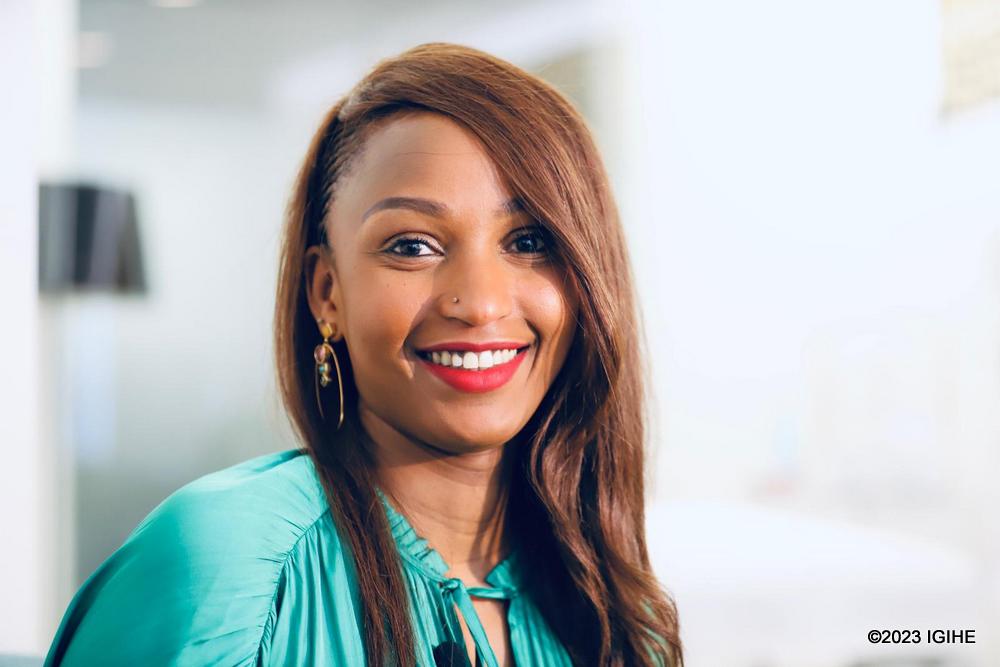
Uwamahoro,42, a naturopath and nutritionist therapist born in Gitega Sector of Kigali City, is a mother to Ange Mukunde aged 23.
Speaking with IGIHE recently, Uwamahoro said that she went to Belgium in 1999 after surviving Genocide against the Tutsi. Arriving there, she considered erasing her history to turn a new page of life. At the time, Uwamahoro would refrain from talking about her history lest it revives her wounds.
“I used to do it thinking it would help me to rebuild but I later realized that I was wrong because one cannot progress without reconnecting to roots,” she said.
Uwamahoro went on to explain that she stood chance to hear from the resilience journey of other survivors with whom they share the same history which inspired her to create an impact to the society.
“That is why I find it necessary to support people. It is my time to spread love as a person who benefited from acts of generosity,” she noted.
As he arrived in Belgium, Uwamahoro pursued nursing and later immersed her knowledge in herbal medicine.
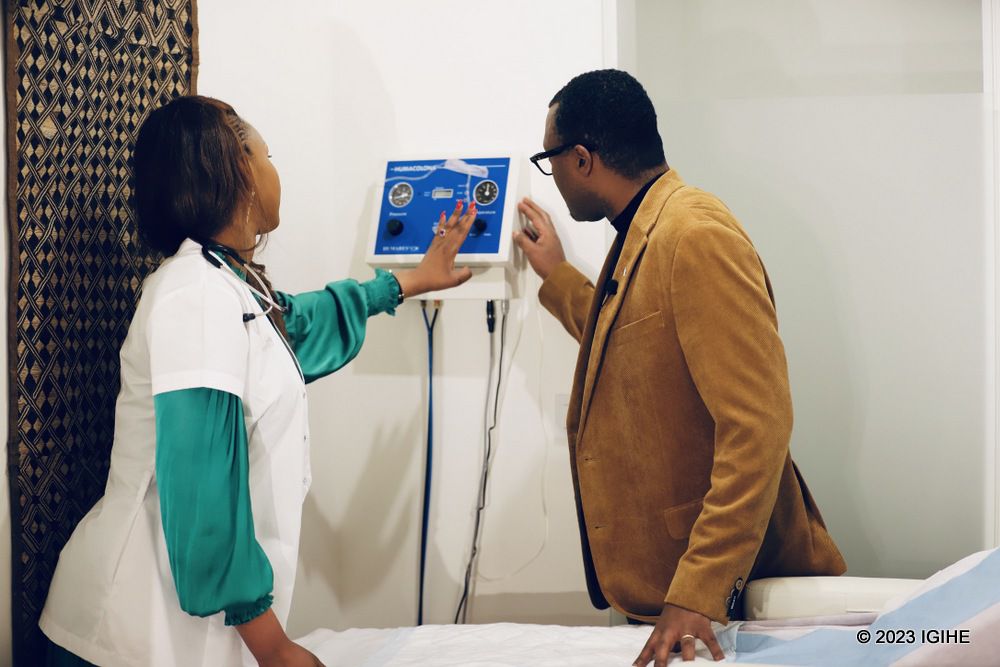
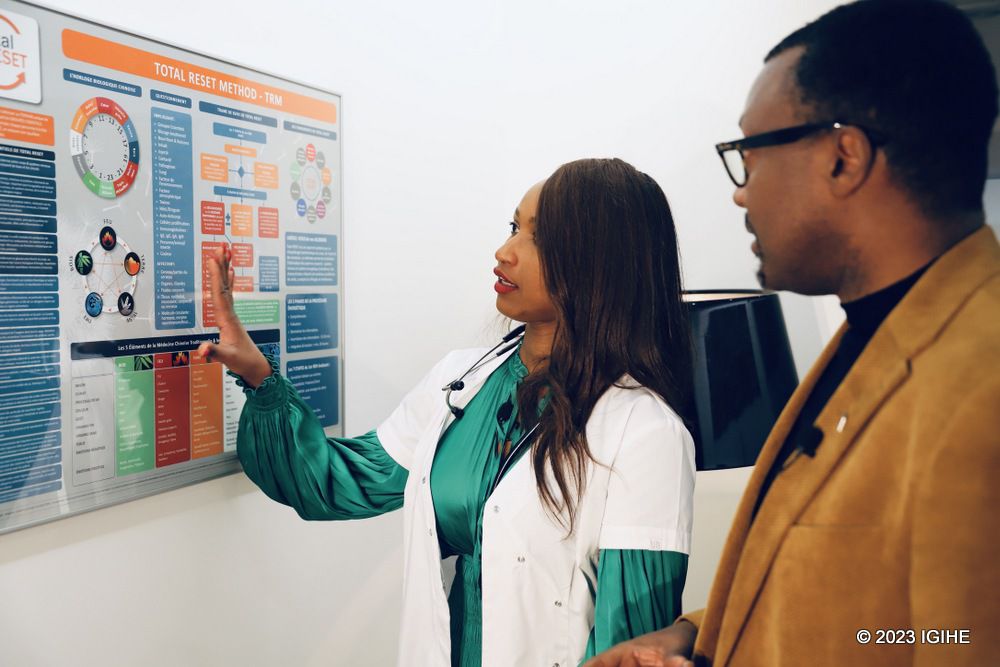
“I considered this to combine conventional medicine with herbal medicine using food supplements and techniques to heal the body, headaches and deal with emotions. I chose this because it helped me along the journey to heal from bitter history and related wounds,” she revealed.
Uwamahoro explained that conventional medicine is very helpful but emphasizes that it complements with herbal medicine or naturopathic medicine (a system that uses natural remedies to help the body heal itself).
“The foods we eat can serve as medicine to strengthen the body’s immunity when used appropriately,” she said.
Uwamahoro affirms that drugs are essential but sometimes come with side effects due to contained chemicals. This pushed her to develop a solution to strengthen body’s immunity.
“We help individuals to remain healthy through tips on appropriate consumption of foods or how conventional medicines can be used along with nutraceuticals to avoid side effects, stress and maintain sound health,” she revealed.
As Uwamahoro says, records on medical history and dietary habits among other considerations are taken into account while attending to patients to ensure they receive needed support.
When a patient has bellyaches, Uwamahoro said, the clinic uses various herbal medicines for treatment, provides relevant vitamins or advise on appropriate dietary intake.
“I usually tell patients that being aware of a disease is an opportunity to develop routines helping you to prevent it,” she asserted.
Uwamahoro believes that developing healthy habits and appropriate dietary routines contribute cancer prevention in no smaller part.
She disclosed that her clinic helps people from different age brackets to maintain sound health and protect vital human organs.
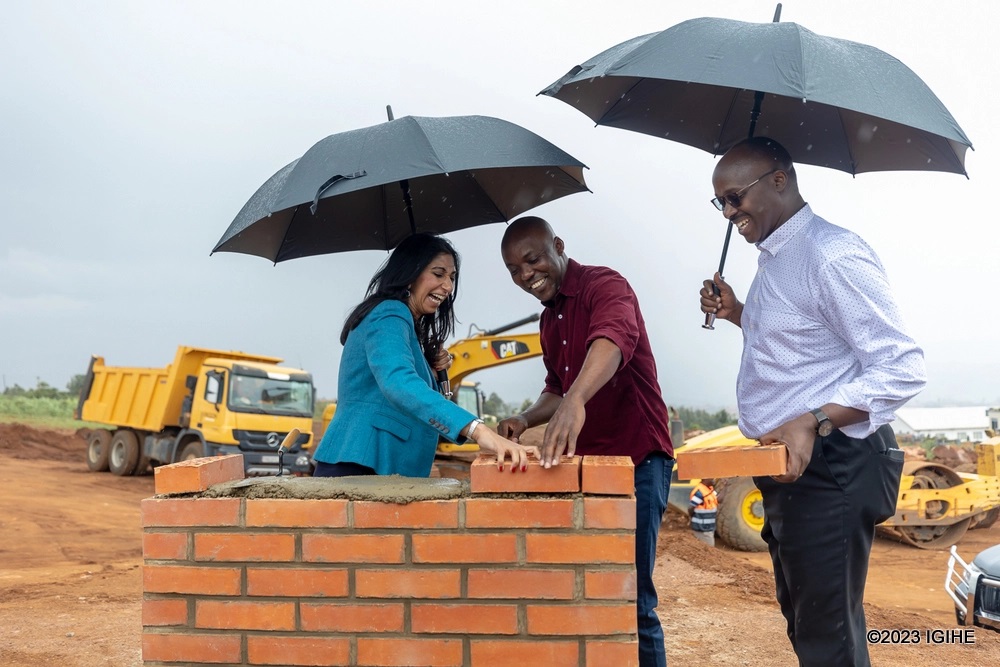
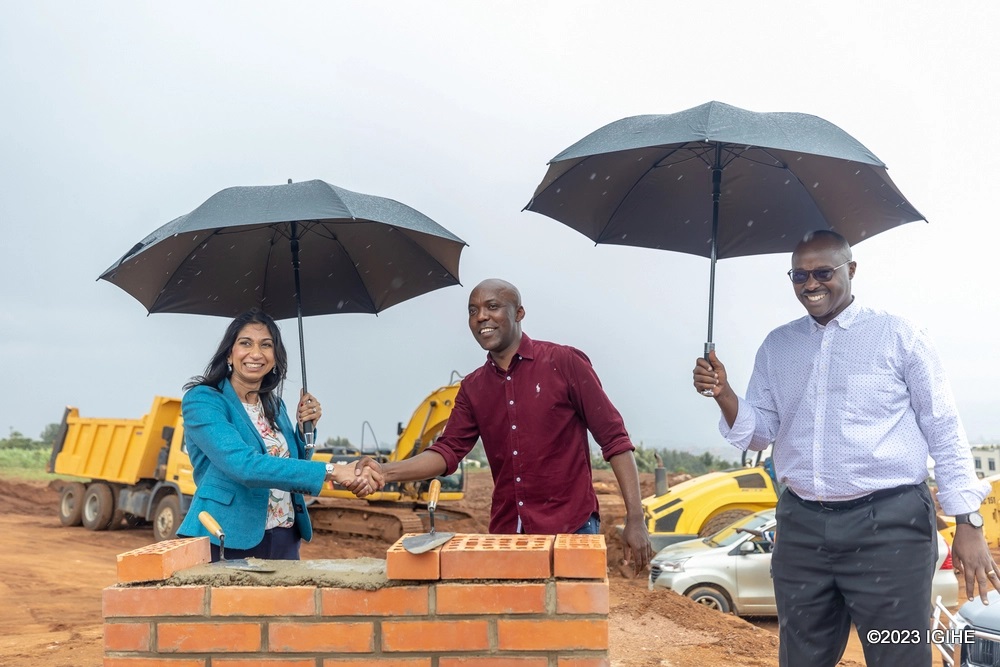
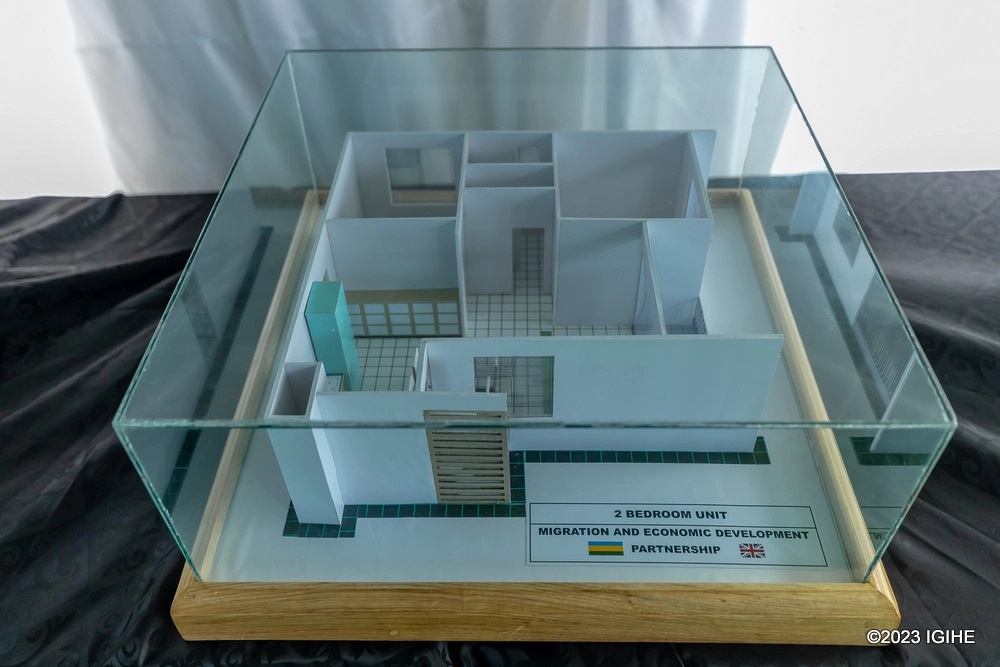
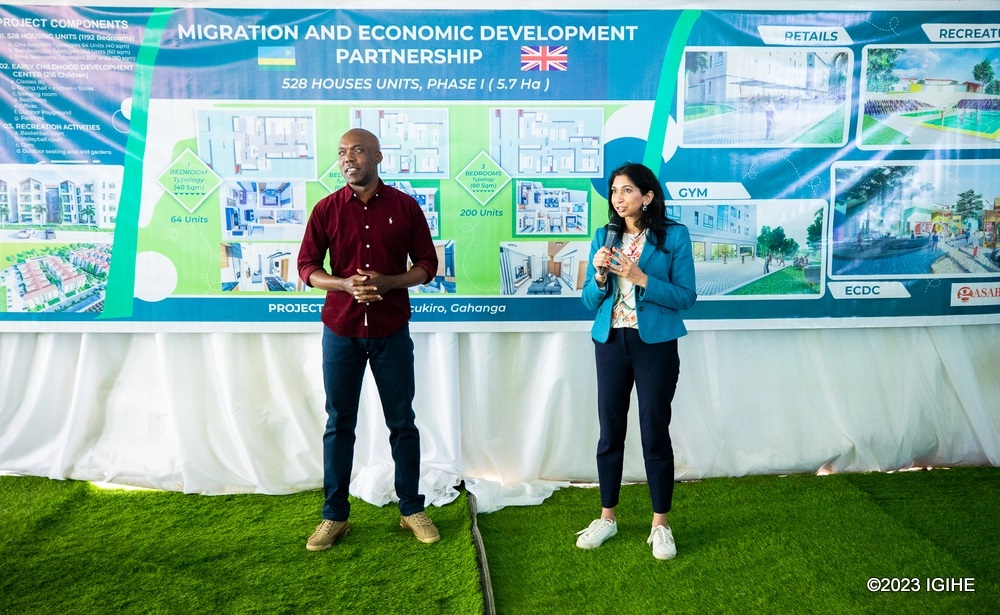
The 528 housing units to be constructed under UK-Rwanda Migration Partnership in Gahanga, Kicukiro District will be completed in six months at a tune of Rwf60 billion.
The deal signed in April last year paves the way for deportation to Rwanda of migrants and asylum seekers staying in the UK illegally.
Through the agreement, the latter will provide an upfront investment of £120 million to fund invaluable opportunities for Rwandans and migrants including secondary qualifications, vocational and skills training, language lessons and higher education.
These asylum seekers from African countries and others outside the continent will be treated decently like Rwandans. It is expected that those willing to return to their mother lands will be helped to do so.
Braverman said that her country is awaiting the ruling of the Court of Appeal before moving forward with the implementation of signed deal.
The Minister of Infrastructure, Dr. Nsabimana said that a total of 1500 housing units will be constructed under this project beginning with 538 in the first phase.
As he said, these homes will be developed on 12 hectares in different phases.
The project includes recreational facilities, an early childhood development center and market among others.
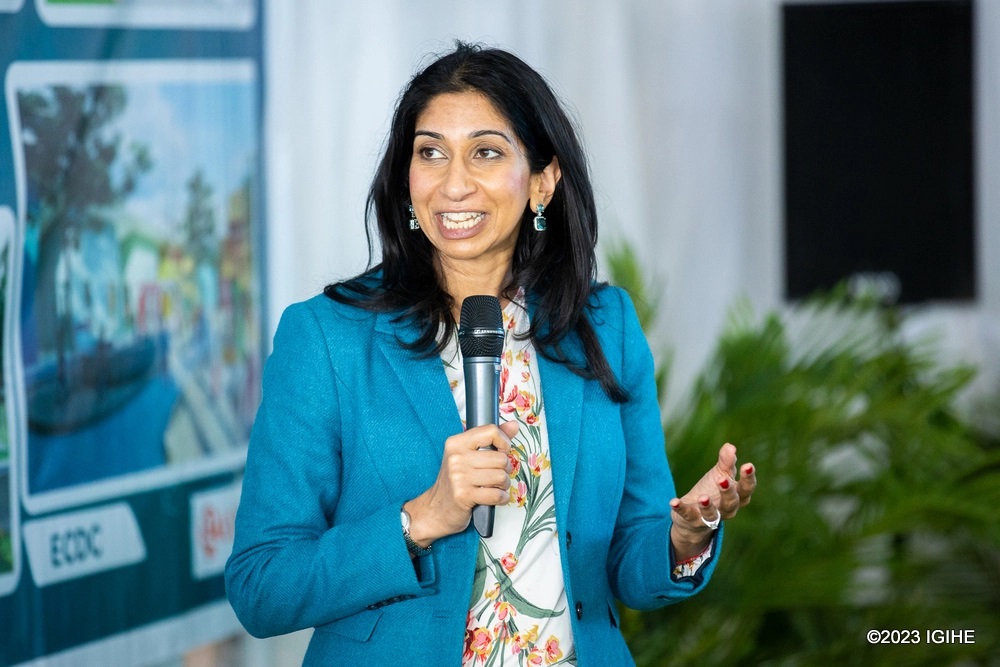
Braverman commended Rwanda’s leadership for outstanding efforts to develop the country and address migration crisis.
“This is a big step forward in Rwanda increasing its existing capacity to accommodate refugees and provide humanitarian support to thousands of people around the country,” she said.
Apart from officiating the groundbreaking event, Braverman also toured Car Free Zone, Cricket Stadium and Kepler College among other projects.
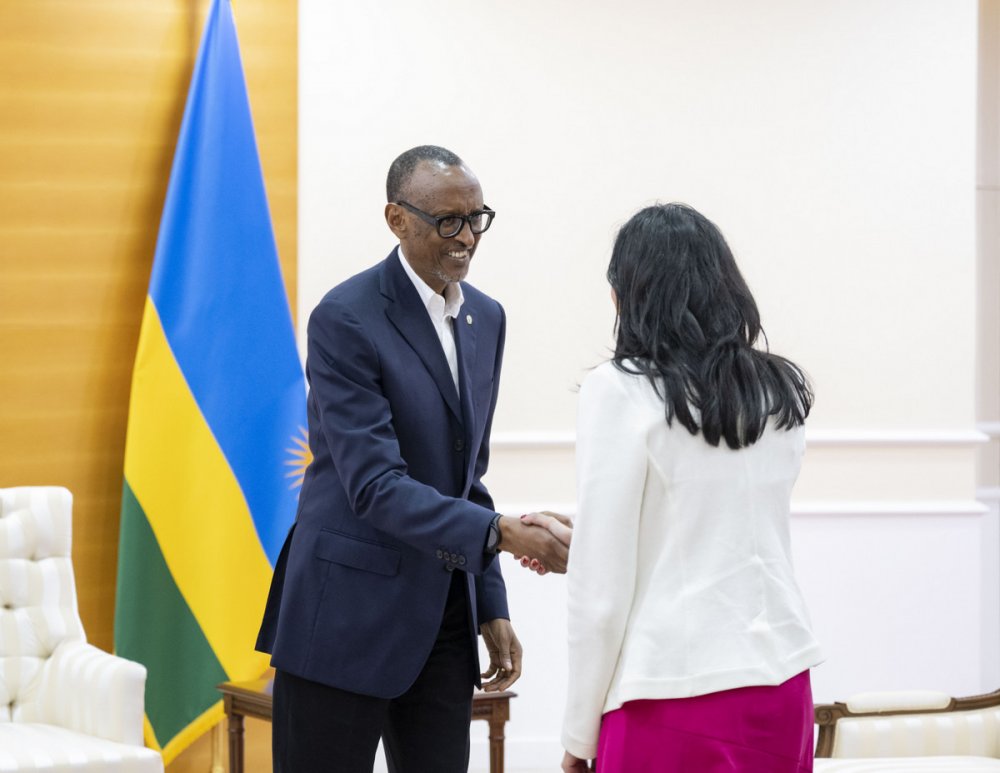
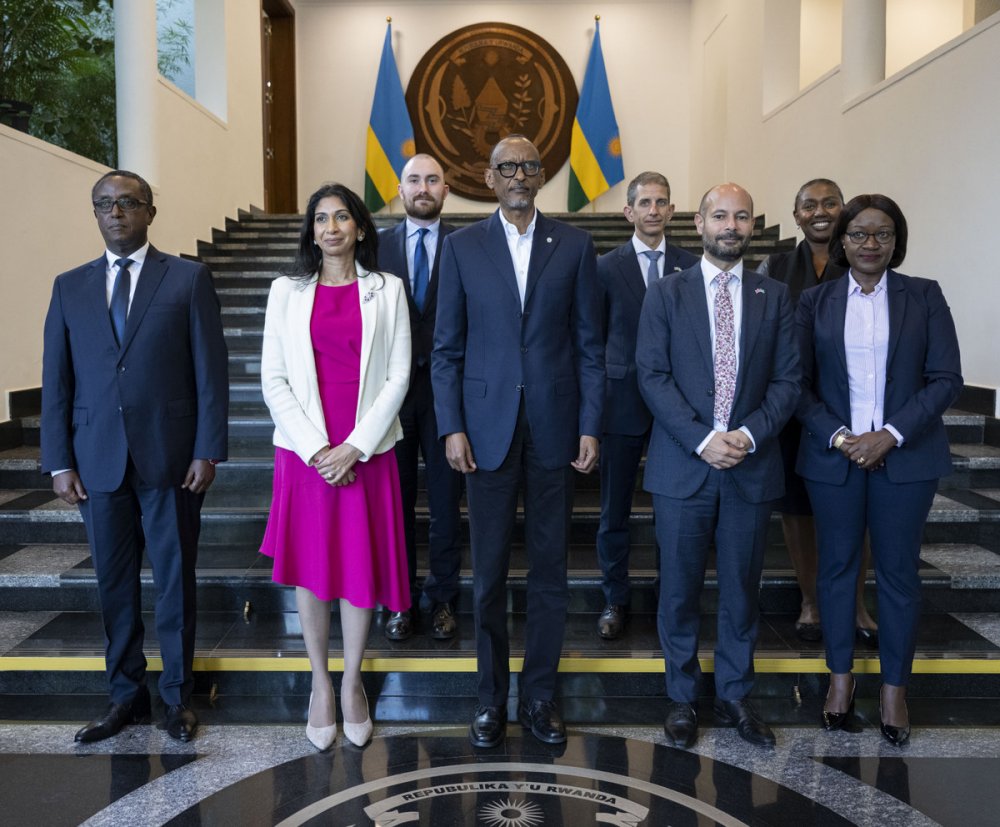
During her two-day visit to Rwanda, she visited Kigali Genocide Memorial, Bwiza Riverside Homes, addressed a press conference along with Rwanda’s Minister of Foreign Affairs, Dr. Vincent Biruta and met with President Paul Kagame with whom they discussed migration crisis.
Braverman’s visit to Rwanda was aimed at underlining her government’s commitment to the deportation deal signed last year.
Figures from the UK show that 45,756 migrants crossed to the country in 2022 through the English Channel, a higher number compared to 28,526 registered in 2021. This number represents an increase by 17,000.
These illegal migrants come from various countries in Africa, Asia and Europe.
The UK spends at least 5.5 million pounds a year on migrants where they stay in hotels while their claims are being processed.
Rwanda’s Presidency has revealed that Kagame hosted Braverman on Sunday 19th March 2023.
The deal signed in 2022 paves the way for deportation to Rwanda of migrants and asylum seekers staying in the UK illegally.
The UK made the decision to discourage people crossing to the country illegally and reduce the budget spent on them every year.
Discussions between President Kagame and Braverman were attended by the Minister of Foreign Affairs, Dr. Vincent Biruta and British High Commissioner to Rwanda, Omar Daair.
Also present were the Government Spokesperson, Yolande Maloko and Monique Mukaruliza, Strategic Advisor in the Ministry of Foreign Affairs.
Braverman has been in Rwanda for two-day visit.
During her stay, she visited Kigali Genocide Memorial, toured different projects and addressed members of the press.
Braverman disclosed that Rwanda and UK signed additional agreement aimed at expanding the provision of support for migrants to be deported to Rwanda.
The UK believes that agreements signed with Rwanda will pave the way for a solution for increasing illegal migrants to the country.
Rwanda’s Minister of Foreign Affairs, Dr. Biruta who also participated in the press conference indicated that the country is ready to work with partners to address migration crisis.
On Sunday 19th March 2023, Braverman also officiated a ground-breaking ceremony marking the beginning of the construction for a housing project of 528 units in Gahanga.
The housing units to be built under UK-Rwanda Migration Partnership will host the migrants to be sent to Rwanda. They will be completed in six months at a tune of Rwf60 billion.
Through the deal signed between Rwanda and UK in April last year, the latter will provide an upfront investment of £120 million to fund invaluable opportunities for Rwandans and migrants including secondary qualifications, vocational and skills training, language lessons and higher education.
These asylum seekers from African countries and others outside the continent will be treated decently like Rwandans upon arrival. It is expected that those willing to return to their mother lands will be helped to do so.