“The armed forces announce their commitment to the agreement and hope the RSF will abide by what it says,” the Sudanese army spokesman said in a statement.
“The duration of the short-term cease-fire is seven days and will enter into force on Monday at 9:45 p.m. local time (1945 GMT),” the statement said.
On Saturday night, the Sudanese Army and the RSF signed the cease-fire deal under Saudi-U.S. patronage.
Under the deal, each party shall implement the agreement in full and ensure that all forces under their command and control observe it at all times and in full.
According to the deal, the parties shall guarantee the freedom of movement of civilians throughout the country and protect civilians from violence, harassment, recruitment, or other abuse, as well as refrain from any violations of international human rights law.
The parties shall also provide security guarantees for safe, unhindered access by humanitarian agencies.
The agreement does not touch on the discussion of political situation, according to the statement.
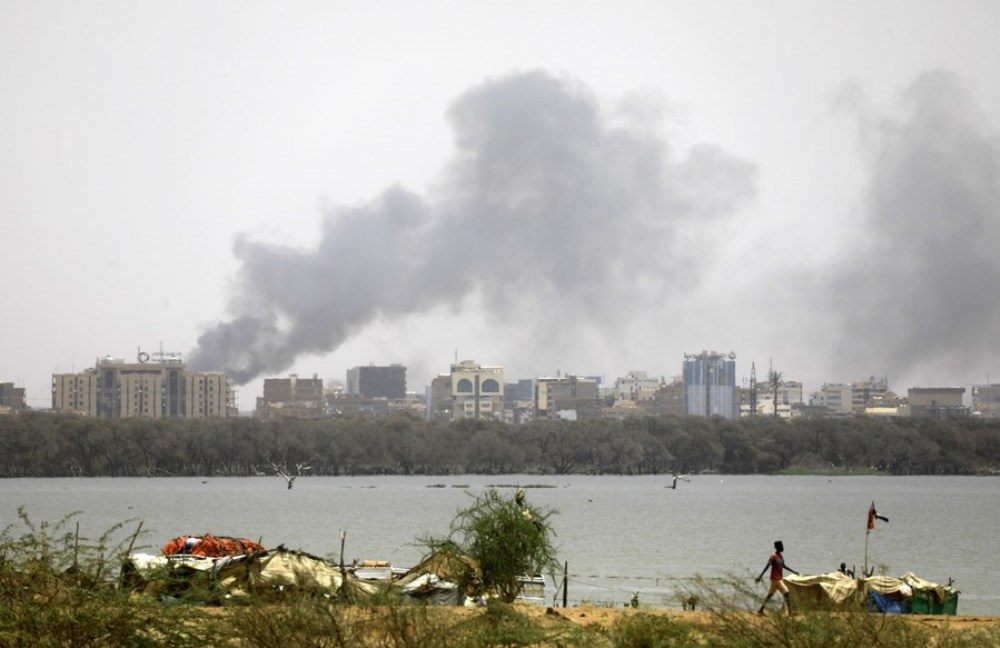
Sudan has been witnessing deadly armed clashes between the Sudanese Army and the RSF in the capital Khartoum and other areas since April 15.
The RWAPSU-7 contingent commander, Chief Superintendent of Police (CSP) Vincent B. Habintwari guided his officers safely back home.
They were replaced earlier in the morning by RWAPSU-8 commanded by Senior Superintendent of Police (SSP) Gilbert Safari.
Commissioner of Police (CP) Costa Habyara oversaw the rotation at Kigali International Airport (KIA), on behalf of the Rwanda National Police (RNP) leadership.
The Rwanda Protection Support Unit deployed in CAR’s capital Bangui, is largely charged with ensuring protection for high profile government and UN officials, including the Prime Minister, President of National Assembly, Minister of State in charge of Justice, and MINUSCA Head of Police component.
It is one of the four Rwandan Police contingents deployed under MINUSCA.
The Rwanda Formed Police Unit One (RWAFPU-1) also of 140 officers, operates in Bangui.
Rwanda FPU-2 is deployed in Kaga Bandoro, more than 300kms from Bangui, while Rwanda FPU-3 of 180 officers operates in Bangassou, about 725kms South East of the capital.
The Basketball Africa League is Africa’s top-tier basketball league, and is a joint effort between the National Basketball Association (NBA) and the International Basketball Federation (FIBA). The third edition saw Dakar, Senegal host the Sahara conference, Cairo, Egypt hosting the Nile conference.
Now eight teams from both conferences gear up to compete for the title in this highly anticipated league from 20-27 May, 2023 at the BK Arena in Kigali.
“We had an incredible journey starting in March where the eight teams qualified for the third consecutive BAL finals in BK Arena. We are super excited today about the matchups and tip off for the BAL in Kigali. I encourage fans to buy tickets for the games at www.bal.nba.com and for those who can’t access the BK Arena, the games are broadcasted in over 200 countries. We look forward to an exciting competition,” says Amadou Gallo Fallo, President of the Basketball Africa League.
“To my fellow Rwandans, the Basketball Africa League is back. Let’s warmly welcome our guests, cheer up REG BBC and all teams competing in this third season of BAL playoffs and finals and enjoy to the fullest the beauty of sport and the good ambiance around the BAL,” says Hon. Aurore Mimosa Munyangaju, Rwanda’s Minister of Sports.
As part of The BAL Season 3 playoffs and finals, Visit Rwanda and partners will unveil a range of initiatives and hold side events that will shape the future of basketball in Rwanda. These include the unveiling of the Kimironko Basketball Court, Jr. NBA coaching clinics, a Special Olympics Unified Game, the Innovation Summit and more.
Rwanda will be represented in the tournament by Rwanda Energy Group (REG) Basketball Club which is keen to make the country proud.
Information on how to buy tickets, game schedules, ticket giveaways, and more fan engagement events during The BAL week can be found on the Visit Rwanda website. The general public, including basketball fans and friends of Rwanda, are encouraged to support their teams and follow @visitrwanda_now and @thebal for instant updates, ticket give-aways and news of The BAL Season 3.
With teams coming from different corners of the continent and fans from around the world, Visit Rwanda looks forward to creating the best tourism experience for all. Rwanda offers a diversity of natural wonders such as gorilla treks at the Volcanoes National Park, mesmerizing canopy walk and trails in Nyungwe National Park, and breathtaking landscapes and the Big Five in Akagera National Park. To access more information on Rwanda’s top tourist destinations and tour packages check out the Visit Rwanda website.
Visit Rwanda and BAL are excited to welcome all to Kigali to experience the thrill and energy of the Basketball Africa League.
{{About Visit Rwanda}}
Visit Rwanda is the tourism arm of the Rwanda Development Board (RDB), which promotes private sector growth to accelerate the country’s economic development. They collaborate with local partners to create tourism products that benefit tourists, communities, and the environment.
{{About the BAL}}
The BAL is a partnership between FIBA and the NBA, featuring 12 club teams from Africa. Headquartered in Dakar, Senegal, it expands FIBA’s regional club competitions and represents the NBA’s first league outside of North America.
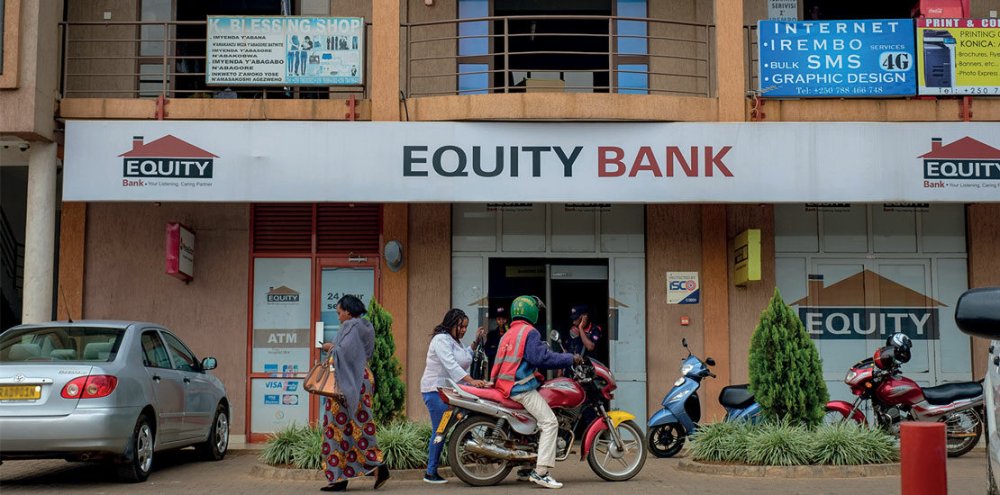
As of December 31, 2022, the combined pre-tax profit of regional subsidiaries of Kenyan banks reached Sh32.51 billion, marking an 88.65 percent increase from Sh.17.23 billion reported on December 31, 2021.
The CBK highlighted that Rwanda contributed the most to these earnings, with profits amounting to Sh.10.16 billion. This figure represents 31.26 percent of the total profits. Meanwhile, subsidiaries operating in the Democratic Republic of Congo (DRC) and Uganda contributed 30.10 percent and 16.11 percent of the total profits, respectively. Subsidiaries in South Sudan also played a significant role, contributing 14.28 percent of the total profits.
In recent years, numerous Kenyan banks, including KCB Group, Diamond Trust Bank, NCBA, Guaranty Trust Bank Kenya Limited, Equity Group, I&M Holdings Plc, African Banking Corporation Limited, and the Co-operative Bank of Kenya, have expanded their operations within the East African Community (EAC) partner states. They have also ventured into markets such as Mauritius, Malawi, and Mozambique.
Some Kenyan lenders, like I&M and Prime Bank Limited, have even expanded beyond the EAC jurisdiction. For example, I&M holds a 50 percent share in Bank One Limited in Mauritius, while Prime Bank has a 10.6 percent share in First Capital Bank Malawi, a 6.62 percent share in First Capital Bank of Botswana, and a 5.0 percent share in First Capital Bank SA, Mozambique.
The CBK report revealed that Kenyan bank subsidiaries operating in Mauritius, Tanzania, and Burundi were the least profitable, contributing 4.50 percent, 2.82 percent, and 0.93 percent of the total profits, respectively. Furthermore, three subsidiaries experienced a combined loss of Sh2.4 billion, with two operating in Tanzania and one in Uganda, according to the regulator.
As of December 31, 2022, the total assets of Kenyan bank subsidiaries abroad amounted to Sh1.61 trillion, compared to Sh1.21 trillion the previous year. Equity Group Plc’s subsidiary in the DRC, Banque Commerciale Du Congo (BCDC), played a significant role in the asset base, with total assets of Sh442 billion. KCB Group Plc’s subsidiary in the DRC, Trust Merchant Bank, also made a substantial contribution, with total assets of Sh212 billion.
Regarding deposits, Kenyan bank subsidiaries accounted for a combined deposit base of Sh1.28 trillion in December 2022, compared to Sh940 billion in December 2021. The primary contributors to these deposits were Equity’s subsidiary in the DRC, Banque Commerciale Du Congo (BCDC), which accounted for Sh365 billion or 28 percent of the total deposits in host countries, and KCB Group’s subsidiary in the DR Congo, Trust Merchant Bank, which accounted for Sh180 billion or 14 percent of the total deposits in host countries.
As of December 31, 2022, the combined gross loans for subsidiaries in host countries reached Sh725.8 billion, reflecting a 42.2 percent increase from Sh510.3 billion in the previous year. Among the subsidiaries, those operating in the DRC recorded the highest level of gross loans, amounting to Sh.244.5 billion, which accounted for 33.69 percent of the gross loans in all subsidiaries outside Kenya. Subsidiaries in Tanzania accounted for 20.
A statement by the Directorate of Presidential Communications released late Thursday said the plane crashed at 11:30 a.m., local time, at Matambwe airstrip shortly after taking off.
Another statement by the Ministry of Natural Resources and Tourism said the plane owned by the Frankfurt Zoological Society (FZS) crashed shortly before it started its routine patrol in the national park. The killed persons included a retired pilot with the Ministry of Natural Resources and Tourism, who was now working for FZS, another employee of FZS and a conservation official, said the statement.
The statement said the fourth passenger on the Cessna 192 5H-FZS plane, a game ranger with the Tanzania National Parks (TANAPA), was in critical condition.
The seminar, held in Addis Ababa, the Ethiopian capital, gathered AU Commission (AUC) officials, African diplomats, diplomats from the Chinese Mission to the AU, academia and experts, among others.
Mohammed Belhocine, AU commissioner for Education, Science, Technology and Innovation, said during the occasion that China has played an important and growing role in executing joint cooperation with AUC and its member states, notably under the Forum on China-Africa Cooperation (FOCAC) framework.
“There is no doubt that this intensified cooperation in various sectors, especially in capacity building, has contributed and will continue to contribute to promoting human capital and a higher economic growth in the continent,” he said.
The AU commissioner expressed his hope that “this dynamic cooperation will keep going in different areas.”
Belhocine’s comments were also echoed by Hu Changchun, head of the Chinese Mission to the AU, as he asserted the AU’s important role in realizing Africa’s common socioeconomic and political aspirations.
Hu underscored that strengthening solidarity and cooperation with African countries is the priority of China’s diplomacy.
During the seminar, African and Chinese experts and academia delivered presentations on key topics on past experiences, current opportunities and future prospects with regard to China-Africa cooperation.
Among the topics discussed include China’s governance experience and Chinese path to modernization, promoting China-Africa economic and trade cooperation, contributing to lasting peace and security in Africa, as well as enhancing China-Africa health cooperation.
He was speaking on May 18, while opening a two-day dialogue on road safety communication and reporting, at the RNP General Headquarters in Kacyiru.
The dialogue with media practitioners organized in partnership with Healthy People Rwanda (HPR) and Rwanda Media Commission (RMC); was organized in the framework of the 7th UN Global Road Safety Week, which started on May 15.
The biennial event is held under the theme, “Sustainable Transport: Rethink Mobility.”
“The role of the Police and that of the media is to build safer and developing societies for sustainable livelihood. This is another step together in effective communication, best practices in road safety reporting and advocating for safer roads for all,” DIGP Sano said.
He observed that journalists have wide platforms at their disposal to highlight the causes and consequences of road crashes, provide information on road safety measures, and report on best practices to improve road safety.
The World Health Organization (WHO) shows that more than 1.35 million people die globally in road accidents every year, making it the eighth leading cause of death.
It is, however, the first cause of death in children. In developing countries, road crashes constitute the third leading cause of death.
Despite the reduction in accidents, in Rwanda, more than 9400 accidents were registered across the country, last year, claiming lives of over 700 and 4000 injuries.
From January to April 2023, road accidents claimed lives of 250 people.
Of these, 72 were seriously injured while 1550 survivors with minor injuries.
Speeding, distracted driving, driving under influence of drugs or alcohol, wrong maneuvers were highlighted as among the major causes of accidents in Rwanda.
“Road safety is a key component for sustainable security and development of our country. It facilitates business, health, education and all aspects of development.
Such productive engagements provide a platform for the media and the Police to have the same voice to further improve the state of road security,” DIGP Sano said.
The majority road accidents, he added, are preventable. “It’s about mindset change to make road safety a choice and culture.”
The Chief Executive Officer (CEO) for HPR, Dr. Innocent Nzeyimana said that road carnage is a serious health concern.
“The word accident suggests that something was unavoidable and beyond control, yet the majority road crashes are preventable. Let us all support and advocate to rethink mobility streets for life and healthy lives,” Dr. Nzeyimana said.
During the two days, the interactive sessions will look at traffic rules and regulations, road safety measures (traffic signs, laws and penalties), sustainable mobility, and road safety reporting.
Against the biggest market correction in recent years, Africa continues to march onwards to empower and unify a continent on the cusp of transformative ICT growth, with the GITEX Africa Digital Summit the new focal point steering a pursuit of a unified digital vision.
The influential summit will spearhead an inspiring conference programme at the inaugural GITEX Africa 2023 – the largest tech and start-up show in the African continent, taking place from 31 May-2 June – unifying 500-plus policy makers, government heads, investors and academics to explore how technology and connectivity are redrawing the boundaries of sustainable social-economic development for African government, business and society.
Lacina Koné, the Director General and CEO of Smart Africa – the pan-African organisation driving the continent’s digital transformation agenda – is a headline speaker. Koné said digital technologies offer new avenues for economic growth in Africa by accelerating job creation and talent development, supporting access to public services and increasing productivity and innovation. However, challenges remain.
“The lack of connectivity in remote and rural regions along with insufficient data protection and high cost of African connectivity have brought new challenges to businesses, governments, and people,” said Koné, who oversees the process of defining Africa’s digital agenda in addition to advancing key continental initiatives. “Intra-governmental cooperation is the key enabler of digital services adoption and acceleration, while mitigating these associated challenges across the African continent.”
Koné will be part of a panel at the GITEX Africa Digital Summit titled: ‘Uniting Towards One African Market’. He will share how Africa’s leaders are building a secure, resilient and sustainable digital future. “Agile enabling regulations are needed to quickly respond to market developments, facilitating entry of new competitors for the benefit of consumers in a united African continent,” he said.
The GITEX Africa Digital Summit will arrive amid a remarkable period of African ICT and broadband growth, with statistics showing the continent has the world’s fastest-growing internet population, up by 20 percent in just one year. Africa’s digital economy has become one of the main drivers of cross-continental progress, coupled with strong talent development and a spike in public private sector investments.
Jérôme Hénique, CEO for the Middle East & Africa at Orange, France; Tonny Bao, Vice President of Huawei, China; and Saad Toma, General Manager of IBM MENA, are among the foremost private sector leaders speaking about the critical pathways advancing the continent’s digital transformation missions, from building a more digital and inclusive Africa to exploring the social and economic impacts of 5G, or how AI can drive business transformation and sustainability.
Other headliners at Africa’s most impactful leadership conference programme include Syed Amin Ul Haque, Minister of Information Technology and Communications in Pakistan; and Babajide Sanwo-Olu the Governor of Lagos Nigeria, who will deliver a keynote address on what is accelerating Africa to become the next Silicon Valley.
The state of play in Africa’s digital economy will be another key discussion point, addressed by Belete Molla, the Minister of Innovation and Technology in Ethiopia; and Cina Lawson Minister of Digital Economy and Transformation in Togo.
“I am honoured to be part of the GITEX Africa hosted by Morocco,” said Molla. “It creates opportunities to governments, innovators and leading experts from around the world to discover new ideas, build new partnerships, and connect with inspiring mentors and investors. It would help Ethiopia to get connected to the global tech space and leading players.”
{{Accelerating the epic race for African AI dominance}}
The next wave of digital transformation accelerated by the power of generative AI along with AI’s impact on African societies will meanwhile stimulate curious discussions at a dedicated AI track on day three of GITEX Africa, where the brightest minds and most innovative thinkers share their insights on AI’s ability to revolutionise industries, from agriculture to finance.
Dr. Adel Alsharji, Chief Operating Officer at UAE-headquartered Presight, the Middle East’s leading international big data analytics company powered by AI, will deliver the keynote address on the Societal Impact of Artificial Intelligence.
“The societal impact of AI is multifaceted and far-reaching globally, and it is already reshaping sectors, such as healthcare, finance, agriculture, education, and manufacturing and therefore the way we live,” said Dr. Alsharji.
“The African continent is showing a speedy AI adoption rate and a readiness to explore and harness the potential of AI for driving economic growth and addressing local challenges, ultimately benefiting the greater good of people.
“As AI advances, we can anticipate further innovation and positive applications. It is crucial, however, to embrace AI responsibly, ensuring ethical considerations are in place as we navigate this transformative landscape.”
Mustapha Zaouini, the Chairman of AI in Africa, will speak on a panel on Responsible Generative AI. He said while Africa has unique challenges such as disparity in internet access, the continent is steadily embracing AI.
“Africa is exploring AI to solve pressing issues like poverty, unemployment, and inequality,” said Zaouini. “However, readiness varies across countries, and there’s a need to invest in infrastructure, education, and policy-making to fully harness this fast-evolving technology.
“Access to AI technologies can level the playing field so it is essential not to be left aside. Ensuring equitable access to technology and bridging the digital divide are crucial steps to prepare for AI’s impact in Africa.”
Digital cities evolution and plotting the path to a net zero future
With the global push towards a net zero economy, technology’s role in advancing sustainability is more important than ever.
A panel at GITEX Africa’s Digital Cities conference track will explore how technology can advance an African-centric Net Zero agenda, addressed by Dr. Shaoshan Liu, Founder and CEO of PerceptIn in the USA; Mohammed Essaidi, MEA Chairman of the Global Cities Alliance, IEEE in Morocco; Laurent Roussel, President of Francophone Africa & Islands at Schneider Electric; and Gilles Babinet, French Government Representative of Digital Champions Group (EU) in France.
Other preeminent speakers at GITEX Africa include Emmanuel Gadret, CEO of Francophone Africa at Deloitte, who will share his insights into charting Africa’s path to prosperity by unlocking economic and data sovereignty; and Dr. Ray Johnson, CEO of the Technology Innovation Institute in the UAE, who will dive into generative AI’s ubiquitous role in fuelling economic growth.
{{A historic launch in the world’s next biggest digital economy}}
The inaugural GITEX Africa will make its historic debut from 31 May-2 June 2023, welcoming more than 900 exhibitors, start-ups, and visiting delegations from 80 countries for three days of intensive outcome-focused public-private sector collaborations in the world’s next biggest digital economy.
More than 250 hosted investors from 34 countries with US$200 billion worth of assets under management will also seek breakthrough technologies and potential African tech scale-up co-investment opportunities. As the ultimate start-up incubator and magnet for flourishing VC funds, GITEX Africa will deliver an unmatched scouting platform for these investors, of which 70 percent are coming from outside of Africa.
GITEX Africa is held under the High Patronage of King Mohammed VI, and hosted by the Digital Development Agency (ADD), the public entity leading the Moroccan government’s digital transformation agenda under the authority of the Moroccan Ministry of Digital Transition and Administration Reform.
KAOUN International will lead the partnership for this much awaited business endeavour, urging the global tech community to go to Africa, leveraging the power of the trusted GITEX Global brand in Dubai, the world’s largest tech event.
With tech-friendly policies in a continent that is now far more accessible, African investment is rocketing. Analysts predict the tech market is on track to scale from $115 billion to $712 billion by 2050, while according to Briter Bridges, African start-ups raised a total of US$5.4 billion across 900+ deals in 2022.
Meanwhile, a youthful populace coupled with Africa’s rapid urbanisation is accelerating digital economic growth, with 70 percent of the Sub-Saharan African population under 30 years of age and 45 percent of Africans set to live in cities by 2025.