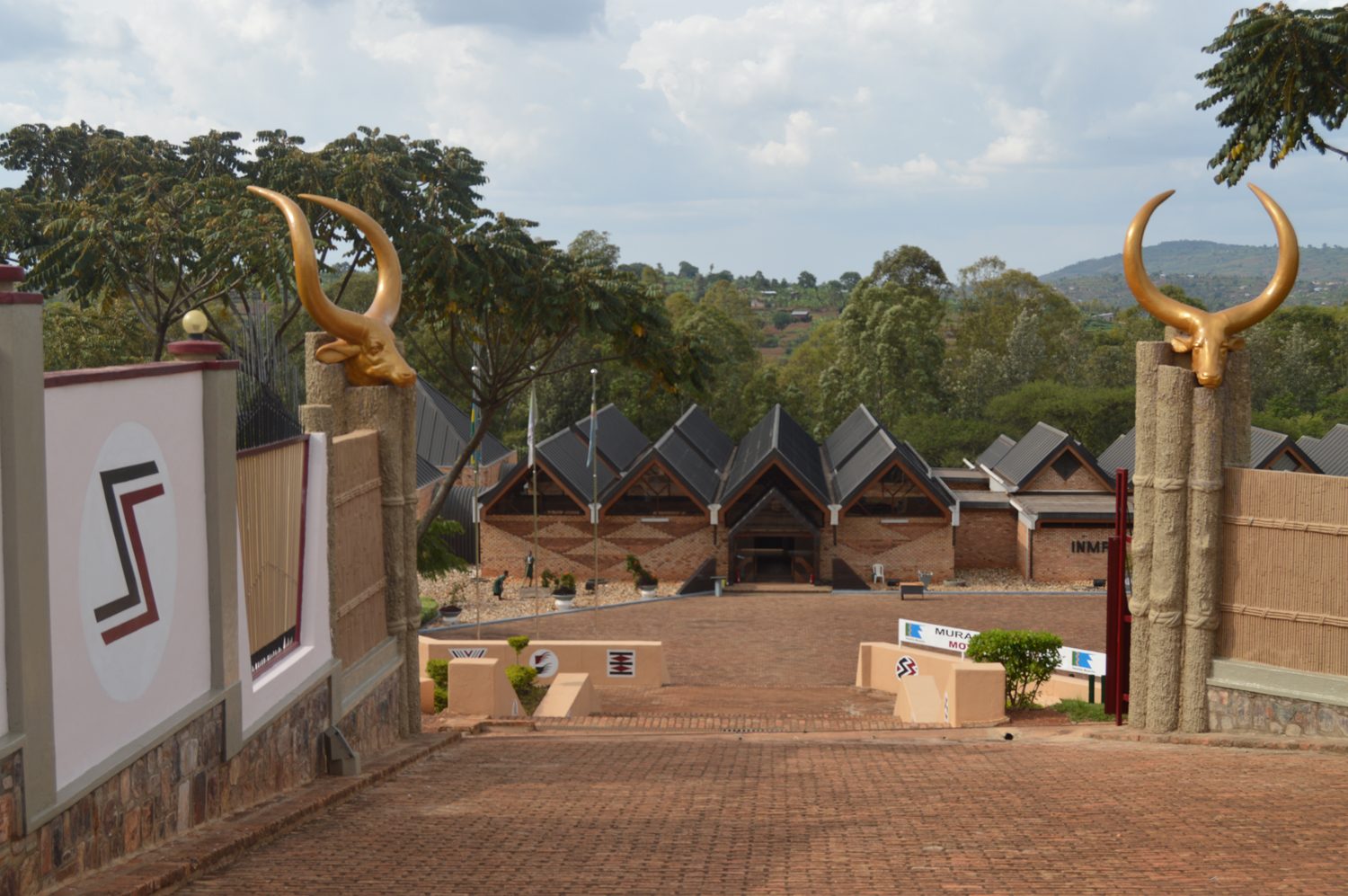
Located in Huye’s academic heartland, the museum doesn’t overwhelm; it gently guides. A gift from Belgium’s King Baudouin in the late 1980s, it has grown into one of Africa’s finest ethnographic collections and remains a cornerstone of the Institute of National Museums of Rwanda.
Inside, Rwanda unfolds not through dates and timelines, but through the textures of daily life. The journey begins with the land itself, geology and geography that shaped how communities lived and thrived.
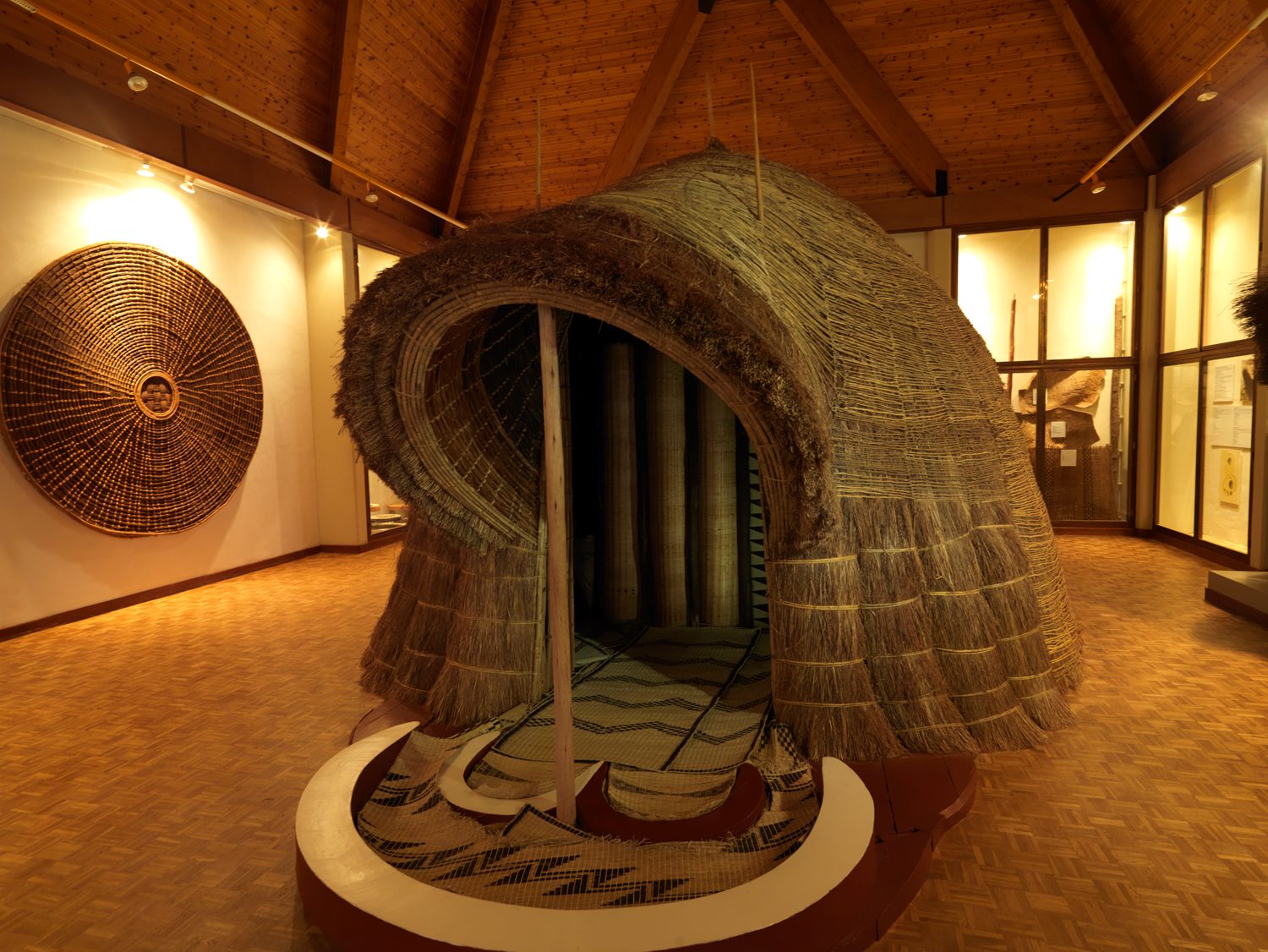
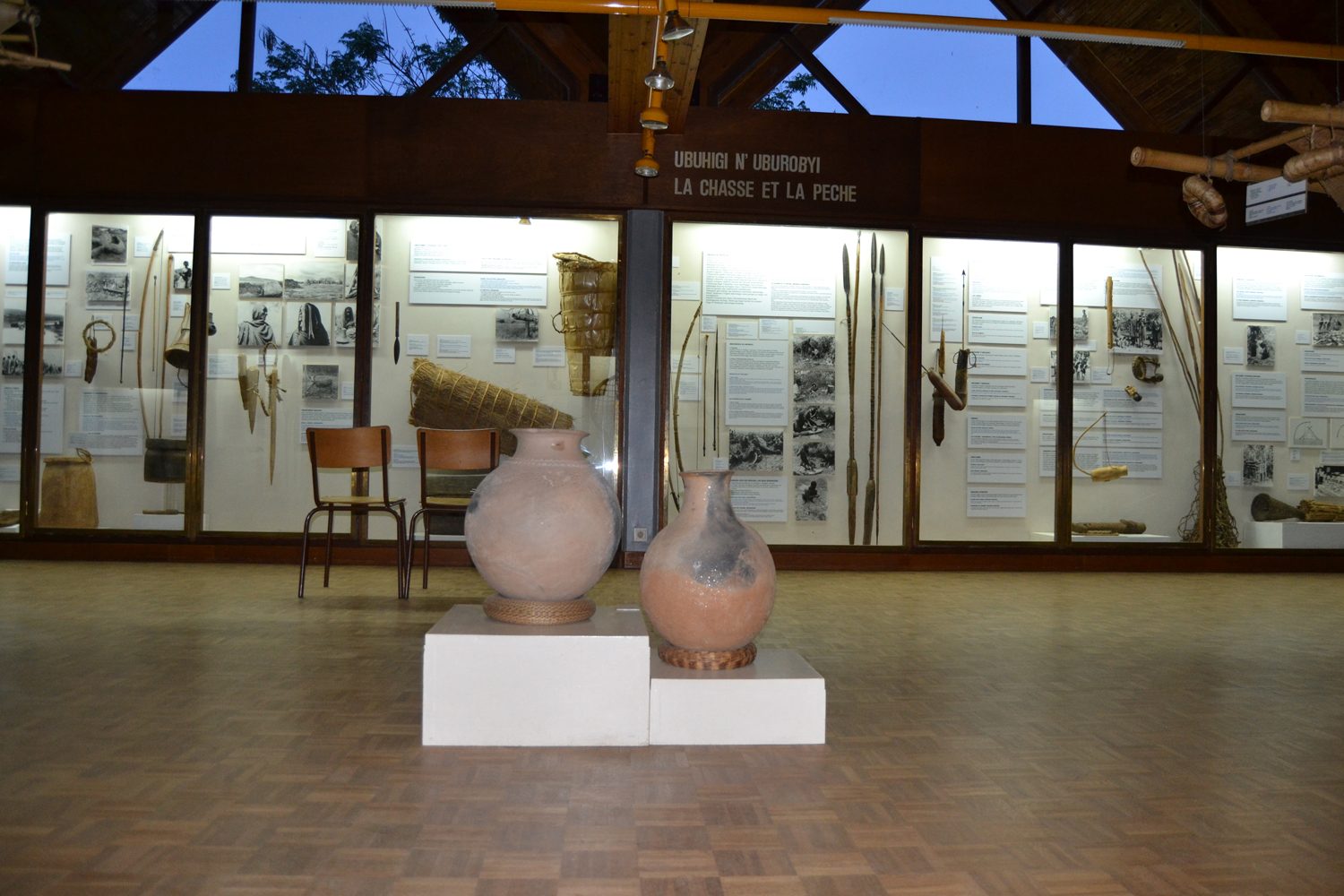
From there, visitors move through galleries filled with objects that once defined survival and creativity: farming tools worn smooth by use, finely woven baskets, elegant pottery, and woodwork that balances function with artistry.
There is a quiet poetry in the details. Traditional clothing reveals social identity; architectural models show how communities built harmony with their environment. One gallery explores the deep cultural significance of cattle, symbols of prosperity, social ties, and heritage that still resonate today. That living tradition continues nearby at the King’s Palace Museum, where descendants of the royal herd remain a powerful cultural link.
The final spaces shift from objects to meaning. Here, visitors encounter oral traditions, poetry, belief systems, and cosmology; the unseen threads that bind generations. It feels less like a museum room and more like listening to elders recount the foundations of a nation.
Outside, a vibrant craft centre brings continuity to the experience, showcasing artisans who carry tradition forward with contemporary expression.
For travelers exploring Rwanda beyond scenery, the Ethnographic Museum offers something deeper: context. It reveals how beauty, resilience, and identity are woven together, not only in landscapes, but in memory, craftsmanship, and living culture.
Leave a Reply