Category: Sports

  • Celestin Nsanzuwera represents Rwanda at Duddingston Classic, Scotland

    Celestin Nsanzuwera represents Rwanda at Duddingston Classic, Scotland

    The event, renowned for attracting top emerging professional golfers from across the UK, provided Nsanzuwera an opportunity to test his skills on one of Scotland’s most historic and challenging courses.

    According to the official Tartan Pro Tour leaderboard, he appeared on the entry list, completed all rounds, and made the cut to play in the final round, demonstrating both skill and consistency against a highly competitive field. Preliminary results indicate he finished approximately three under par (-3).

    In addition to his tournament play, Nsanzuwera had the unique opportunity to train and practice at the Golf Academy at St Andrews Driving Bays, one of the world’s premier golf training facilities.

    This experience allowed him to refine his technique, interact with international professionals, and immerse himself in the rich golfing culture of Scotland, often celebrated as the “Home of Golf.”

    “Celestin’s dedication and recent successes continue to bring pride not only to Kigali Golf Resort & Villas but also to the entire Rwandan golf community,” said a spokesperson from the Communications Office. “His participation at Duddingston and training at St Andrews exemplify the growing international presence of Rwandan golfers.”

    Celestin Nsanzuwera’s appearance at the Duddingston Classic follows a remarkable 2025 season, including victories at the Rwanda Golf Open, the Sunshine Development Tour (East Africa Swing), and the Johnnie Walker Uganda Professional Open, reinforcing his position as Rwanda’s most prominent professional golfer.

    Based at Kigali Golf Resort & Villas, Celestin Nsanzuwera is a professional golfer recognized for his precision, composure under pressure, and dedication to representing Rwanda on international golf circuits.

    Celestin Nsanzuwera, Rwanda’s leading professional golfer, successfully competed in the Duddingston Classic, part of the Tartan Pro Tour, held at Duddingston Golf Club in Edinburgh from October 6–8, 2025.
    According to the official Tartan Pro Tour leaderboard, Nsanzuwera appeared on the entry list, completed all  rounds, and made the cut to play in the final round, demonstrating both skill and consistency against a  highly competitive field.
    Nsanzuwera had the unique opportunity to train and practice at the Golf Academy at St Andrews Driving Bays, one of the world’s premier golf training facilities.
    Celestin Nsanzuwera’s appearance at the Duddingston Classic follows a remarkable 2025 season,  including victories at the Rwanda Golf Open, the Sunshine Development Tour (East Africa Swing),  and the Johnnie Walker Uganda Professional Open.
  • The Los Angeles Rams: Everything you need to know about new Visit Rwanda partner

    The Los Angeles Rams: Everything you need to know about new Visit Rwanda partner

    The latest partnership, which also includes the NBA’s LA Clippers, marks the first time an African tourism brand has partnered with an NFL franchise, underlining Rwanda’s ambition to use sport as a global bridge to attract tourism, investment and visibility.

    As part of the multi-year agreement, Visit Rwanda will serve as an official international tourism sponsor of the Rams, SoFi Stadium and Hollywood Park, the vast entertainment complex that has transformed Inglewood into one of America’s premier sports and leisure destinations.

    The team was founded in 1936 as the Cleveland Rams before relocating to Los Angeles in 1946, becoming the first professional football team to establish itself on the American West Coast.

    The partnership provides Rwanda with significant visibility inside SoFi Stadium, including digital advertising on the venue’s massive Infinity Screen and throughout its LED and IPTV displays.

    The Visit Rwanda brand will also feature in two of the stadium’s most exclusive spaces, the West Owners Club on Level Two and the North Canyon Basin on Level Three, where Rwanda’s natural beauty and tourism highlights will be showcased through innovative design features.

    {{A club with a storied journey
    }}

    For those less familiar with the Rams, they are one of the most storied franchises in the National Football League, with a history stretching back nearly nine decades. The team was founded in 1936 as the Cleveland Rams before relocating to Los Angeles in 1946, becoming the first professional football team to establish itself on the American West Coast.

    In 1995, the Rams moved again, this time to St. Louis, where they enjoyed a golden era, capturing their first Super Bowl in 1999 with an explosive, high-scoring offence that earned the nickname “The Greatest Show on Turf.” In 2016, the franchise returned to Los Angeles, reaffirming its deep roots in the city.

    The Rams have won championships in three different cities – Cleveland, Los Angeles and St. Louis – a unique distinction in the NFL. They are two-time Super Bowl champions, most recently lifting the trophy in 2022 after a 23-20 victory over the Cincinnati Bengals.

    The Rams have won championships in three different cities – Cleveland, Los Angeles and St. Louis – a unique distinction in the NFL.

    Their earlier triumph came in 2000, when they defeated the Tennessee Titans to cap off a memorable season. Beyond those modern victories, the Rams also claimed two NFL titles in the pre-Super Bowl era, in 1945 and 1951.

    {{Modern stars and leadership
    }}

    The modern Rams are led by head coach Sean McVay, one of the youngest and most innovative tacticians in the league. McVay masterminded the team’s most recent Super Bowl win, cementing his reputation as one of football’s brightest minds.

    The modern Rams are led by head coach Sean McVay, one of the youngest and most innovative tacticians in the league.

    On the field, the Rams boast a blend of established veterans and rising stars. Quarterback Matthew Stafford, the experienced leader of the offence, guided the team to its 2021 title. Wide receiver Cooper Kupp, the hero of their 2021 title run who captured the ‘triple crown’ and Super Bowl MVP, remains an iconic figure in franchise history, though he left the team in the 2025 offseason to join NFC West rivals, the Seattle Seahawks.

    Younger talents such as Puka Nacua, who shattered rookie receiving records, and running back Kyren Williams, who has brought fresh dynamism to the attack, represent the future of the franchise.

    {{SoFi stadium
    }}

    Central to the Rams’ modern identity is SoFi Stadium, their state-of-the-art home, which opened in 2020. Costing nearly five billion US dollars to build, the venue is widely regarded as the most advanced stadium in the world, with a seating capacity of 70,000 and the ability to expand to 100,000 for major events.

    Costing nearly five billion US dollars to build, the venue is widely regarded as the most advanced stadium in the world.

    Beyond football, it has already hosted the Super Bowl, will stage matches during the 2026 FIFA World Cup, and is scheduled to play a central role in the 2028 Los Angeles Olympic Games.

    The surrounding Hollywood Park development, spearheaded by Rams owner Stan Kroenke, includes retail, office space, residences and leisure facilities, making it a global destination in its own right.

    SoFi Stadium has a seating capacity of 70,000 and the ability to expand to 100,000 for major events.

    {{More than a game
    }}

    Off the field, the Rams have carved a strong identity in their community. Based in Inglewood, the team has invested heavily in programmes that focus on education, health, equality and youth development.

    Initiatives such as “Rams pLAymakers,” which honours community leaders driving social change, and “RISE with the Rams,” which promotes racial equality among young athletes, reflect the organisation’s commitment to using sport as a force for good.

    {{Why this partnership matters
    }}

    The partnership with Visit Rwanda places the country at the centre of this global spotlight. With millions of viewers tuning in to Rams games across the United States and beyond, Rwanda gains a powerful platform to showcase its gorilla trekking adventures, lush national parks, cultural heritage and status as a rising tourism destination.

    The collaboration echoes Rwanda’s other high-profile sponsorships with Arsenal, Paris Saint-Germain and Atlético de Madrid, but stands out as the first venture into American football – a sport with a massive domestic following and growing international appeal.

    The new deal that puts Rwanda at the heart of one of the most powerful sporting brands in the United States.

    For Rwanda, the agreement is more than a marketing exercise. It is a statement of intent, an effort to connect with the U.S., already its largest source of tourism revenue, and to reach global audiences who associate the NFL with spectacle, scale and excellence.

    For the Rams, it offers a new connection to Africa, a continent with a rapidly growing youth population that is increasingly engaged with global sport.

    In combining the Rams’ reputation as a powerhouse of American football with Rwanda’s image as a premier African travel destination, this partnership represents a meeting of ambition and vision.

    As the Rams continue their pursuit of further championships and Rwanda builds towards its tourism targets, both brands stand to gain from this unique and timely collaboration.

  • LA Clippers’ rise and their historic Visit Rwanda partnership

    LA Clippers’ rise and their historic Visit Rwanda partnership

    The deal marks the first time an African tourism board has secured a major NBA jersey sponsorship. The “Visit Rwanda” logo will appear on all Clippers game and practice jerseys, and the brand is also the official coffee sponsor of the team’s new Intuit Dome.

    Beyond global visibility, the partnership is a strategic move for Rwanda, helping to promote tourism, showcase its culture and natural beauty to a worldwide audience, and strengthen the country’s presence in international sports.

    The basketball club LA Clippers was founded in 1970 as the Buffalo Braves.

    Here’s what you need to know about the Clippers:

    {{A rocky start to an NBA journey
    }}

    Founded in 1970 as the Buffalo Braves, the franchise faced early struggles despite Hall of Famer Bob McAdoo leading the way. In 1978, the team moved to San Diego, becoming the Clippers, a nod to the city’s historic clipper ships.

    By 1984, the franchise relocated to Los Angeles but spent decades in the shadow of the Lakers, making only occasional playoff appearances and struggling to establish a consistent winning culture.

    The “Visit Rwanda” logo will appear on all Clippers game and practice jerseys.

    {{The rise of “Lob City”
    }}

    The Clippers’ fortunes changed in the 2010s. The acquisition of Blake Griffin, DeAndre Jordan, and superstar Chris Paul in 2011 launched the “Lob City” era, famous for highlight-reel dunks and fast-paced offence.

    During this period, the team won its first Pacific Division titles in 2013 and 2014, becoming consistent playoff contenders, though Conference Finals success remained elusive.

    {{A new era under Steve Ballmer
    }}

    In 2014, former Microsoft CEO Steve Ballmer purchased the team, bringing financial muscle and a bold vision. The 2019 acquisitions of two-time NBA champion Kawhi Leonard and superstar Paul George positioned the Clippers as legitimate title contenders. Their milestone came in 2021 when the team reached the Western Conference Finals for the first time in franchise history.

    The team has also posted 14 consecutive winning seasons, the longest active streak in the NBA, reflecting sustained success and resilience at the top of the league.

    The team has also posted 14 consecutive winning seasons, the longest active streak in the NBA, reflecting sustained success and resilience at the top of the league.

    {{Recent achievements
    }}

    The Clippers have captured three Pacific Division titles in 2013, 2014, and 2024. Their most notable playoff achievement came in 2021, when the team reached the Western Conference Finals for the first time.

    Despite these successes, the franchise is still chasing its first NBA championship—a milestone that continues to fuel the team’s ambition and identity as resilient competitors in the league.

    Former Microsoft CEO Steve Ballmer purchased the team in 2014.

    {{The Visit Rwanda partnership
    }}

    The newly signed multi-year partnership with Visit Rwanda provides both global visibility and community impact.

    The “Visit Rwanda” logo will feature on all Clippers jerseys, reaching an estimated 1.4 billion NBA viewers worldwide.

    Beyond branding, the partnership includes refurbishing basketball courts in Rwanda, hosting Rwandan youth coaches in Los Angeles for training sessions, and sending Clippers coaches to Rwanda for clinics and virtual coaching sessions.

    Visit Rwanda is also the official coffee sponsor of the Intuit Dome, introducing premium Rwandan coffee to a global sports audience. The collaboration supports the NBA’s Basketball Africa League, which has held games at Rwanda’s BK Arena, providing young African athletes with development pathways and exposure to professional basketball standards.

  • Visit Rwanda expands global sports reach with Clippers and Rams deal

    Visit Rwanda expands global sports reach with Clippers and Rams deal

    This marks the first time an African tourism brand has secured sponsorships across both the NBA and NFL, further expanding Visit Rwanda’s global sports footprint.

    The new partnerships add to Visit Rwanda’s growing portfolio of sports sponsorships, which already includes collaborations with Arsenal, Paris Saint-Germain (PSG), Atlético de Madrid, and an academy partnership with FC Bayern Munich.

    “Sport connects people, uniting communities through shared values of excellence and aspiration. Through sponsorships with the LA Clippers and LA Rams, Rwanda and Los Angeles unite to promote the spirit of the game,” said Jean-Guy Afrika, Rwanda Development Board CEO.

    “This engagement enables us to export Rwanda’s unrivalled natural beauty and extraordinary biodiversity to the people of Los Angeles as well as NBA and NFL fans everywhere.”

    Under the agreement, Visit Rwanda will become the exclusive jersey patch sponsor of the Clippers and the official coffee sponsor of Intuit Dome. The sponsorship will include Visit Rwanda branding on all game and practice jerseys, both at home and on the road.

    The multi-year deal will also feature community initiatives in Los Angeles and Rwanda, such as court refurbishments and coaching clinics.

    The NBA has long prioritised international growth, including the creation of the Basketball Africa League (BAL), a partnership with FIBA featuring 12 African club teams. Since its launch in 2021, the BAL has hosted games across the continent, including at Rwanda’s BK Arena, providing young athletes opportunities to develop their skills and experience the values of teamwork and community.

    “The energy and passion for basketball across Africa, including in Rwanda, makes this sponsorship a natural fit,” said Gillian Zucker, CEO of Halo Sports and Entertainment. “It’s focused on growing the game and creating meaningful opportunities for young people.”

    As part of the engagement, the Clippers will refurbish a basketball court in Rwanda. The team’s G League affiliate, the San Diego Clippers, will host Rwandan youth coaches for annual training sessions and provide virtual coaching support to help elevate local talent.

    Visit Rwanda will also become an official international tourism sponsor of the Los Angeles Rams, SoFi Stadium, and Hollywood Park, the largest urban mixed-use development currently under construction in the western United States. The sponsorship includes naming rights for two premium spaces within SoFi Stadium and digital advertising across the venue.

    “This sponsorship not only builds on Visit Rwanda’s long-standing relationship with Arsenal but also gives us a unique opportunity to strengthen our presence in Africa,” said Kevin Demoff, President of the Los Angeles Rams.

    With these agreements, Visit Rwanda continues to leverage sport as a platform to promote tourism, youth development, and Rwanda’s global brand, connecting fans in Los Angeles and around the world to the nation’s natural beauty and vibrant culture.

    Visit Rwanda, the official tourism brand of the Rwanda Development Board (RDB), has announced long-term partnerships with two of Los Angeles’ premier professional sports teams, the NBA’s LA Clippers and the NFL’s Los Angeles Rams.
    This marks the first time an African tourism brand has secured sponsorships across both the NBA and NFL, further expanding Visit Rwanda’s global sports footprint.
  • Medal standings and most decorated stars of the UCI World Championships in Rwanda

    Medal standings and most decorated stars of the UCI World Championships in Rwanda

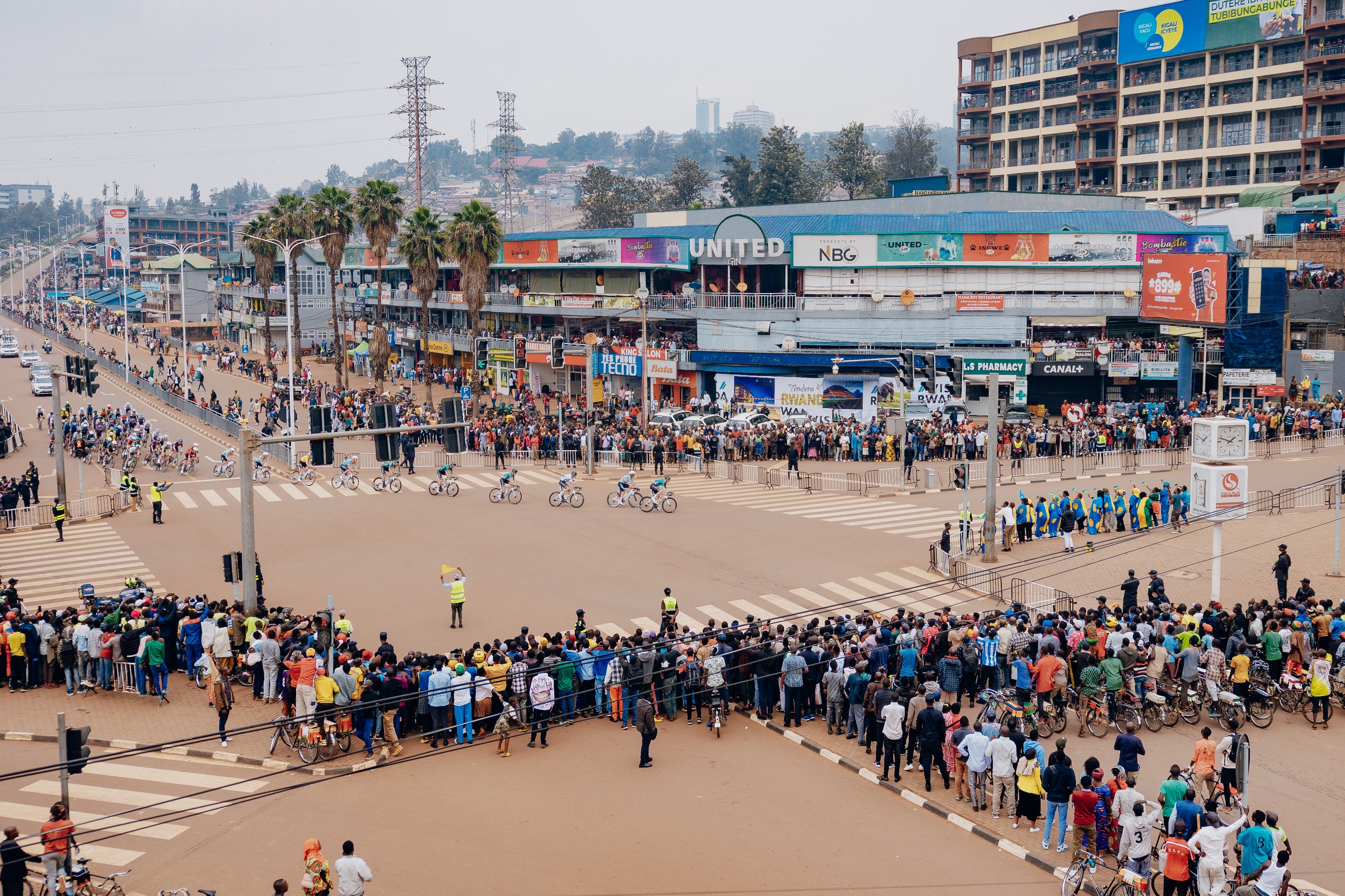
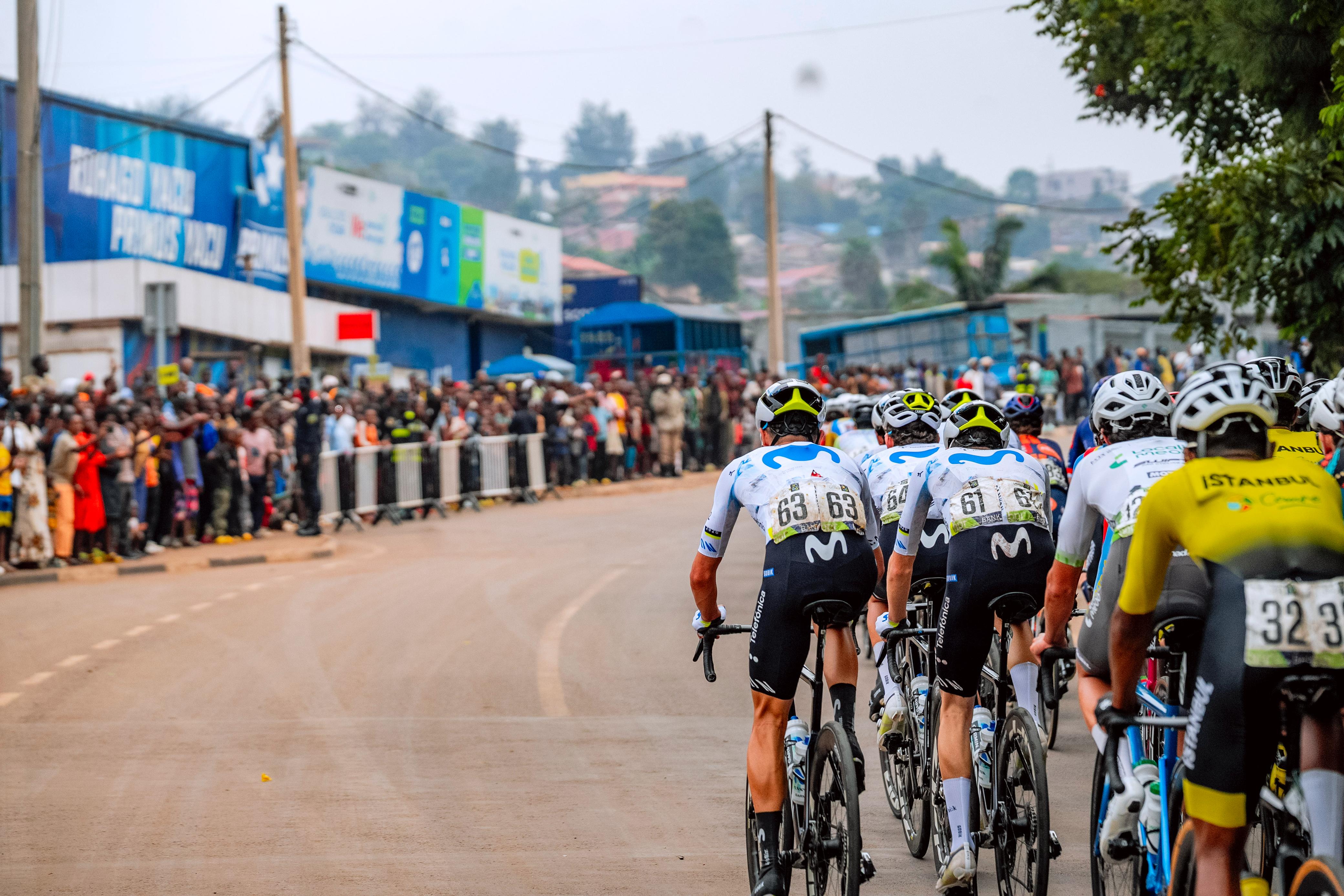
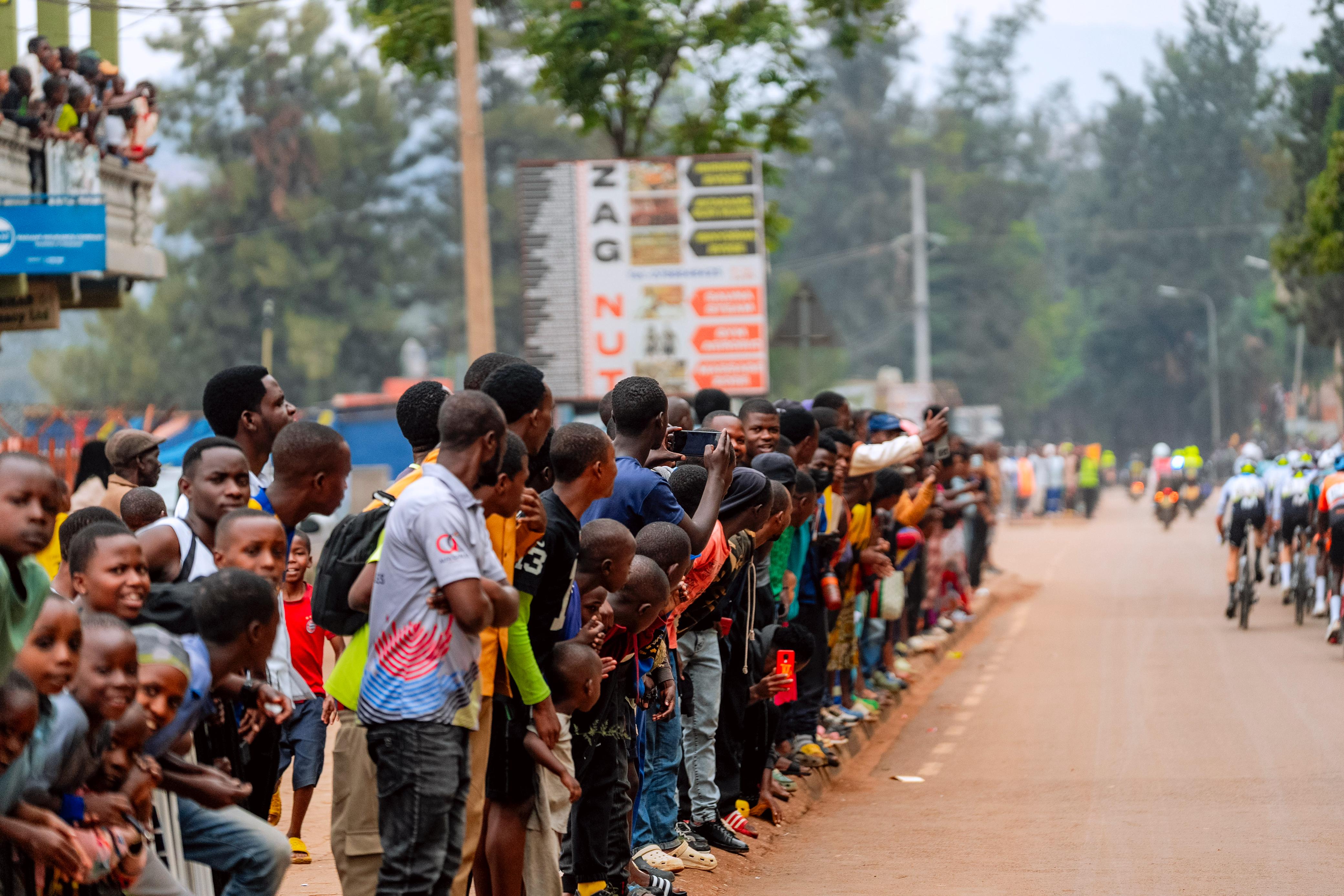
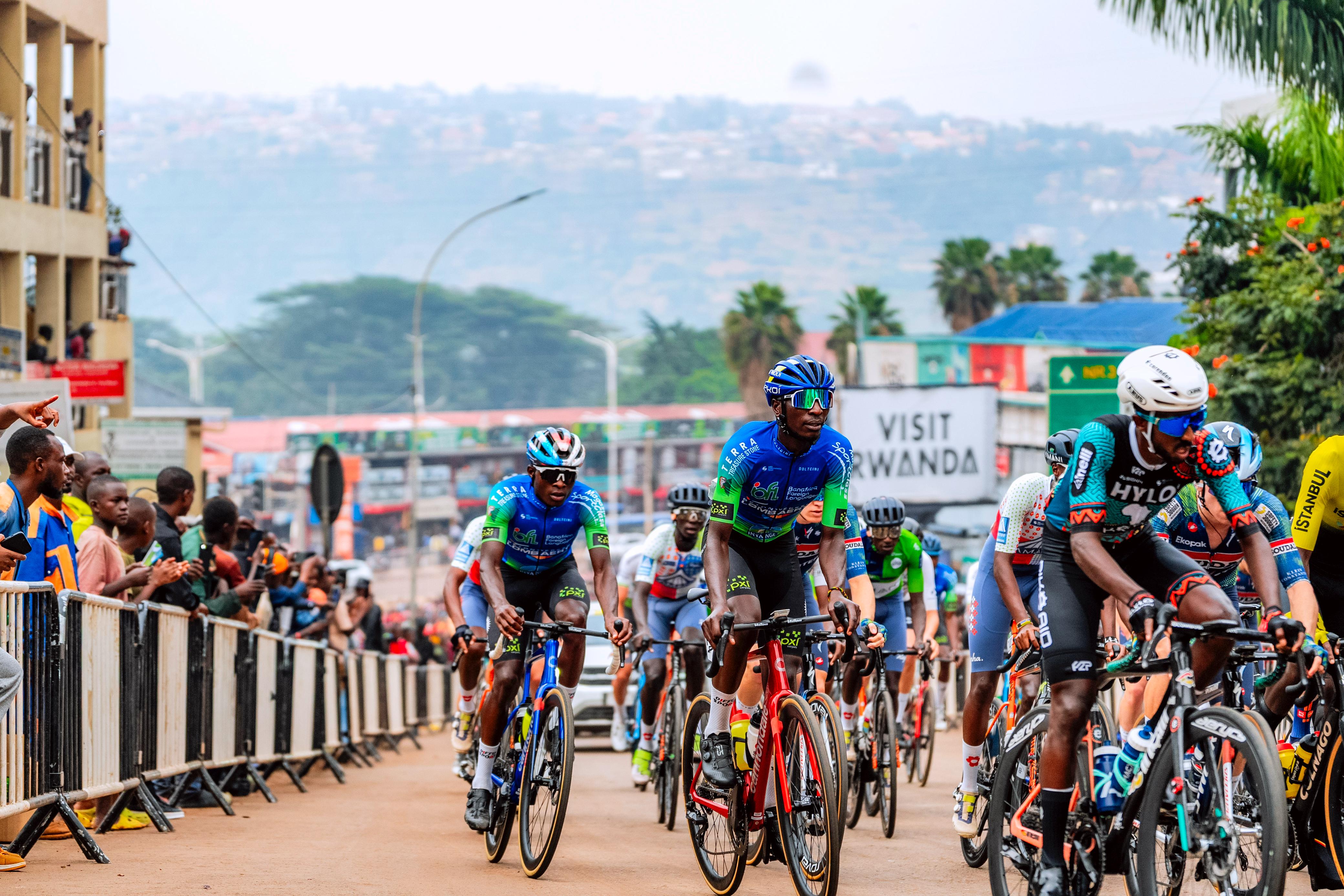
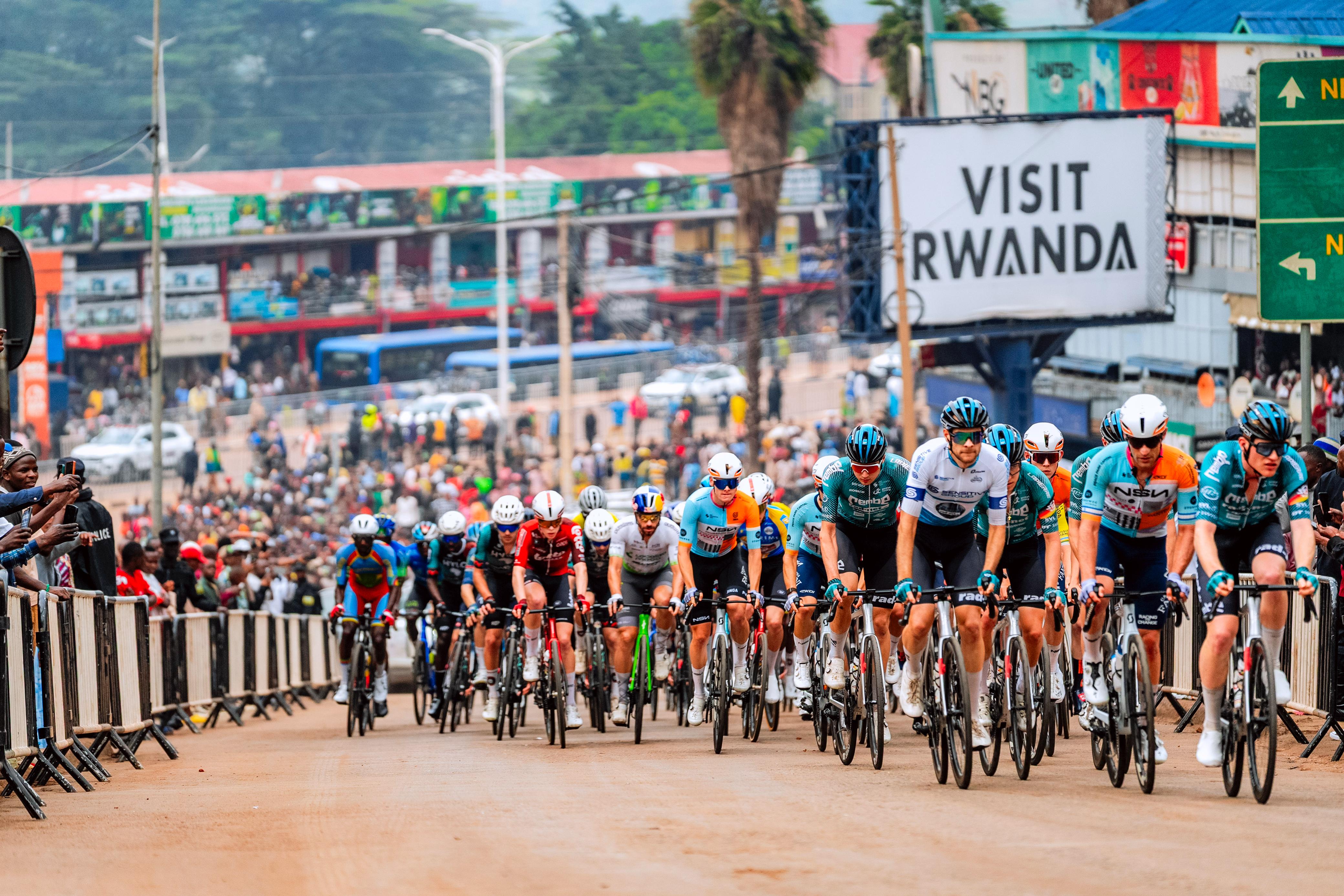
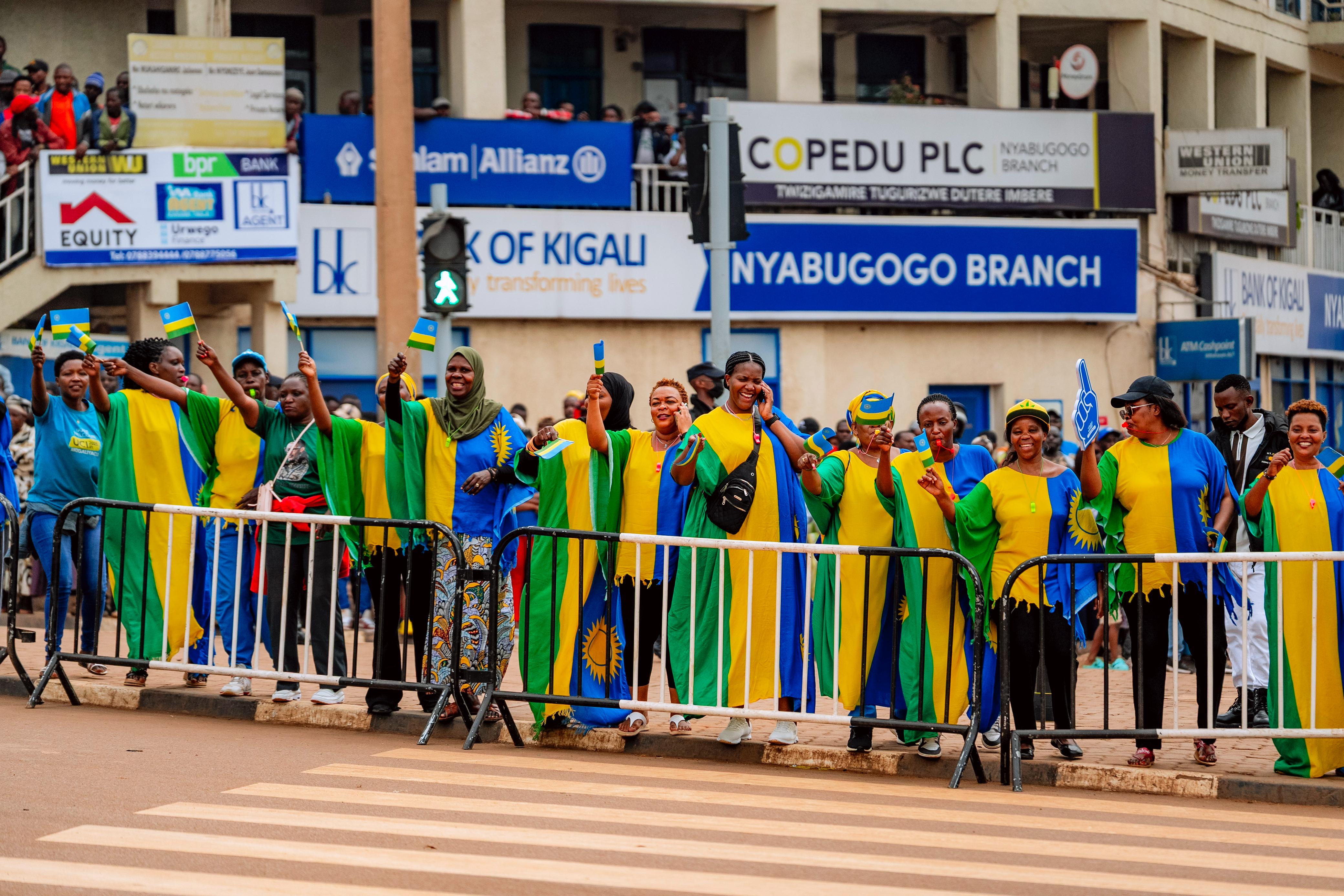
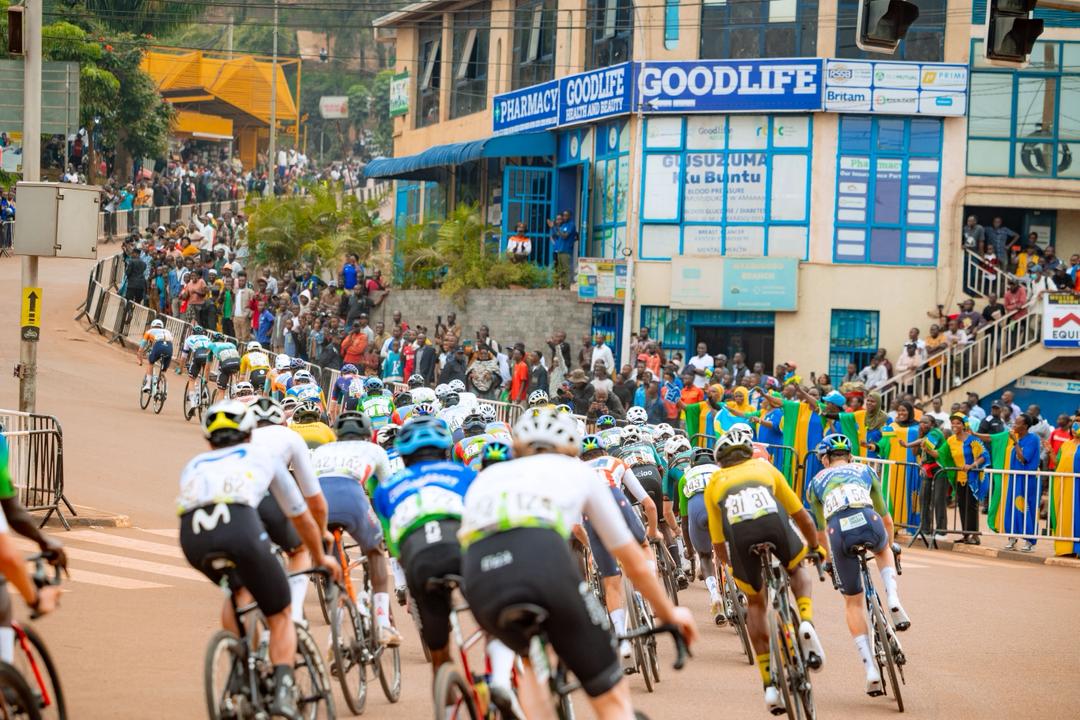
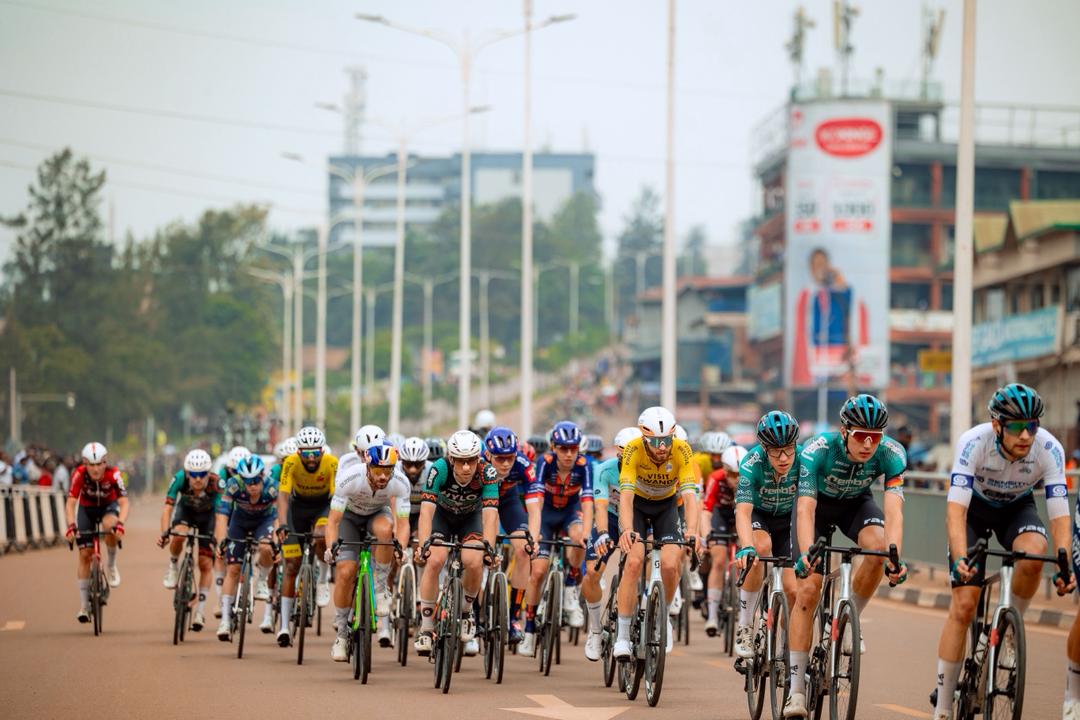
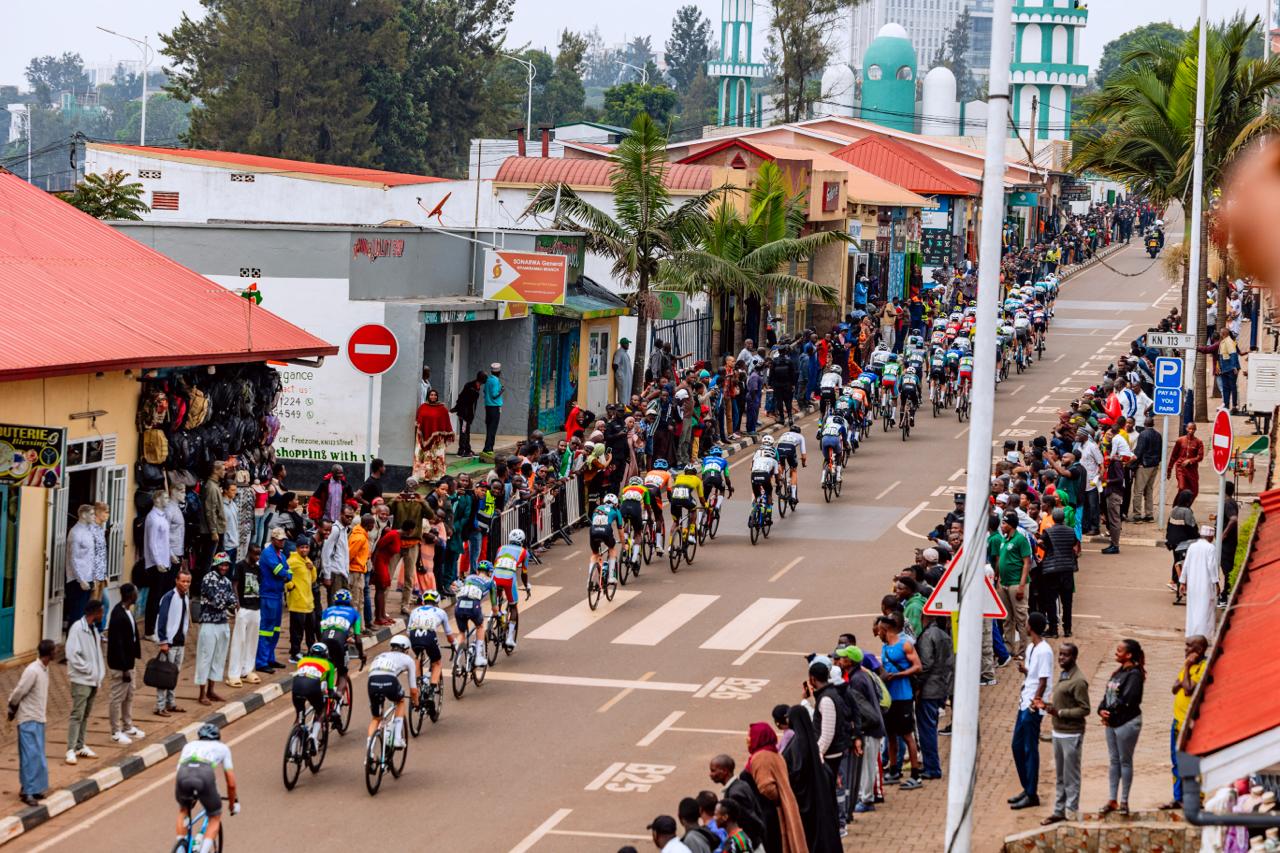
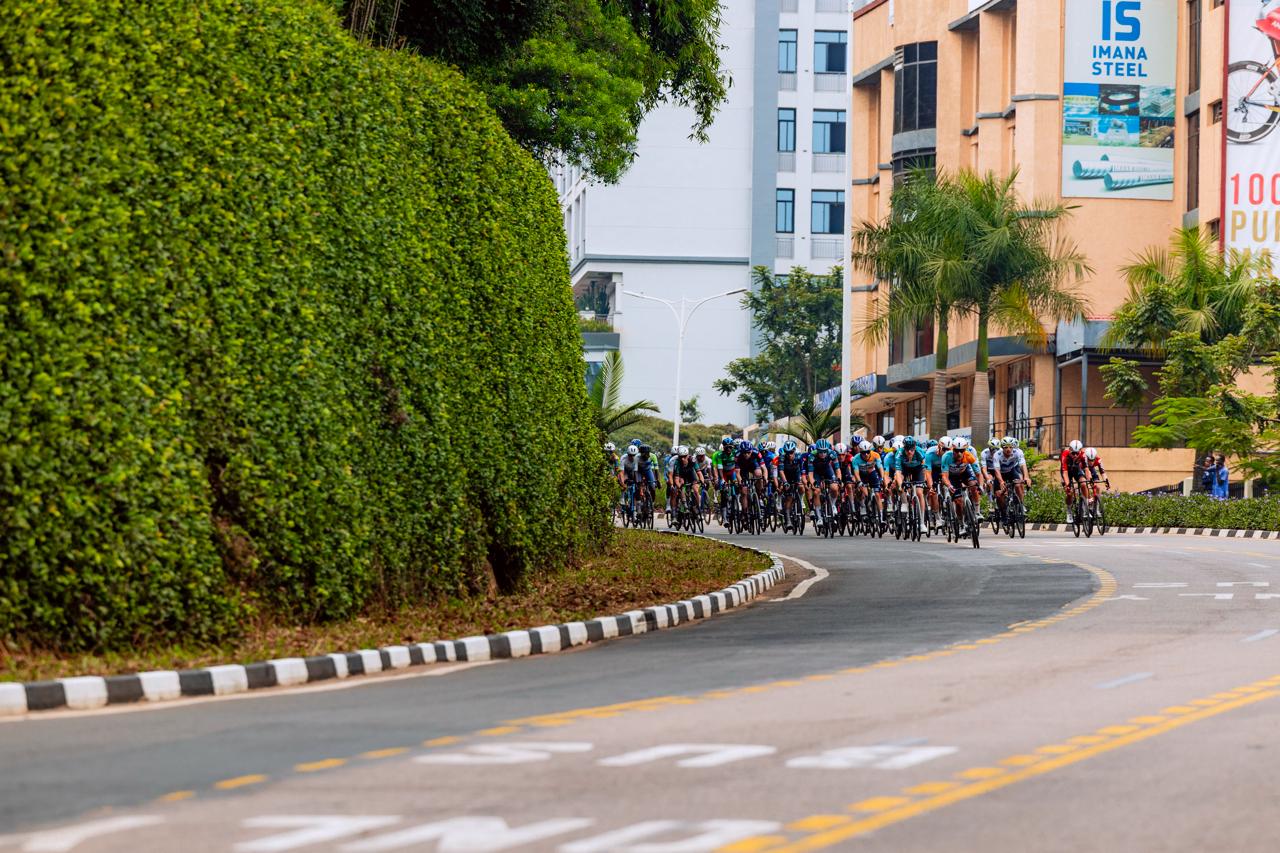
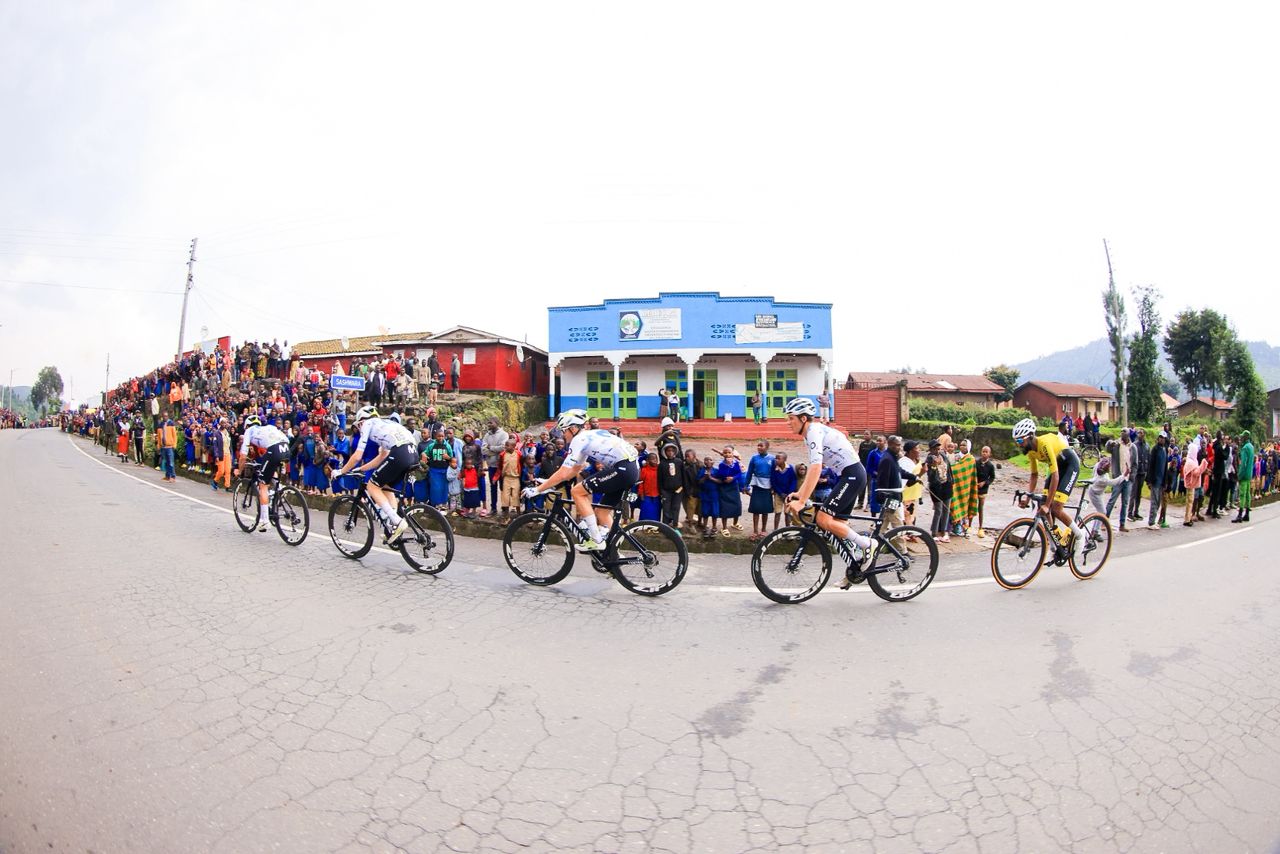
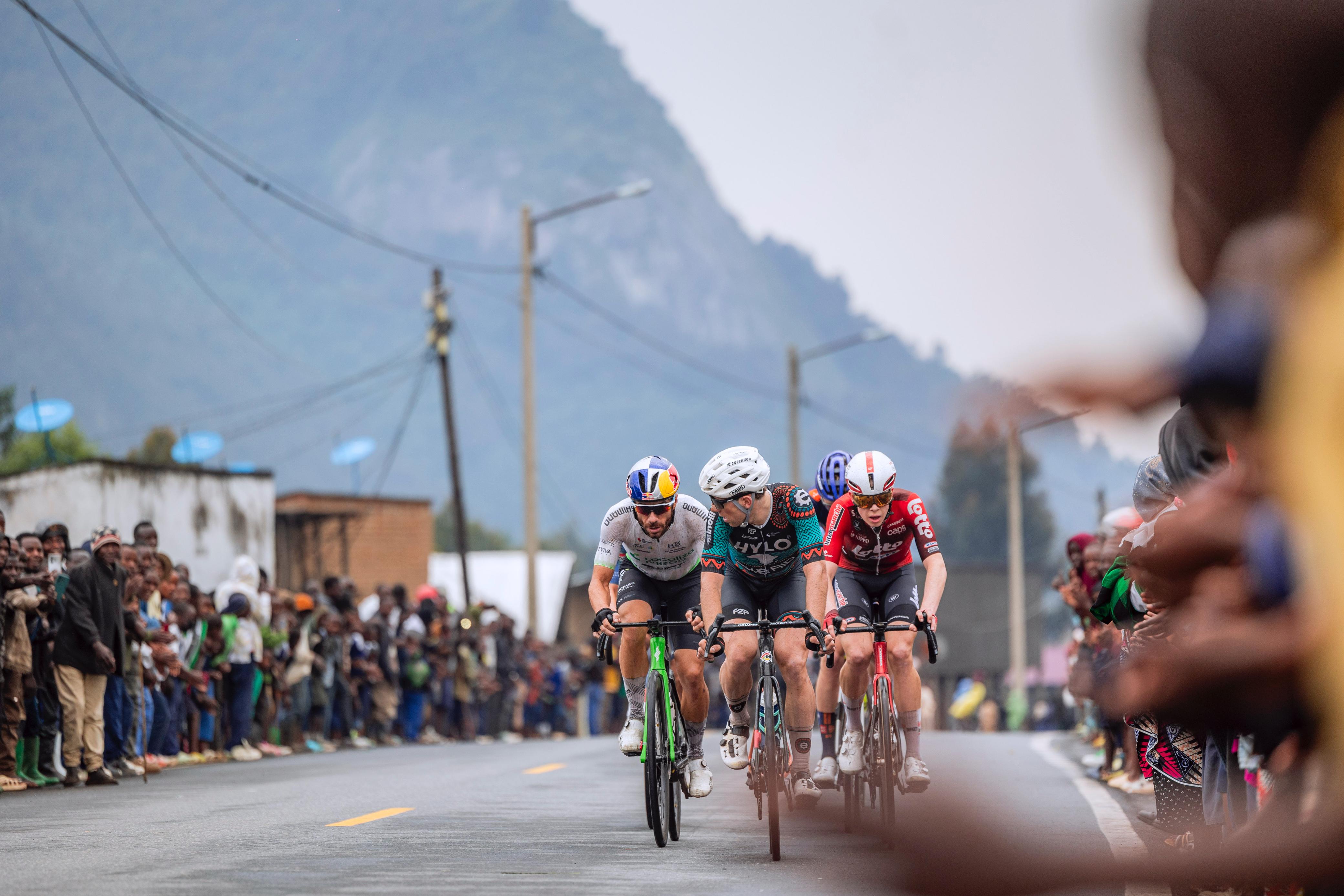
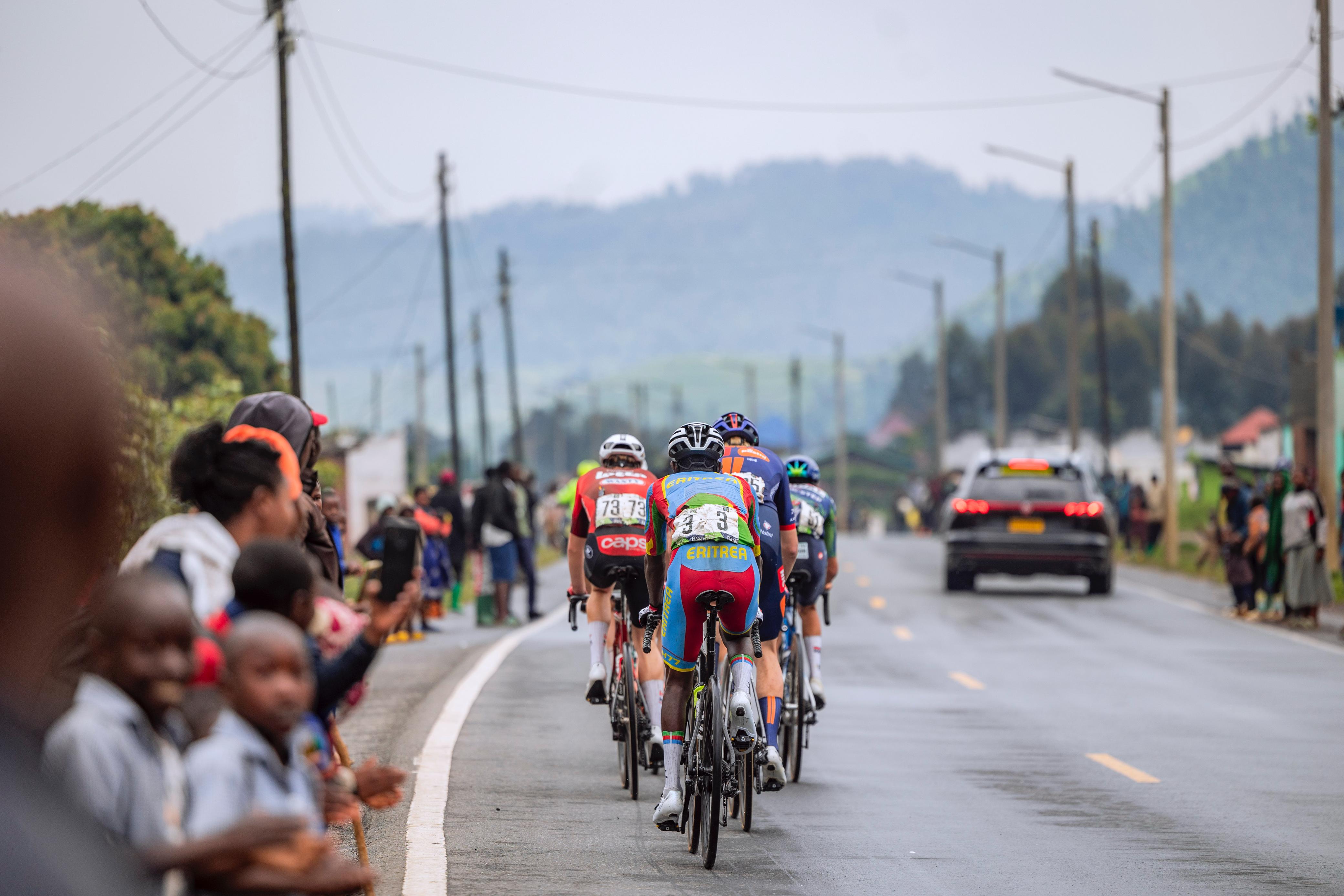
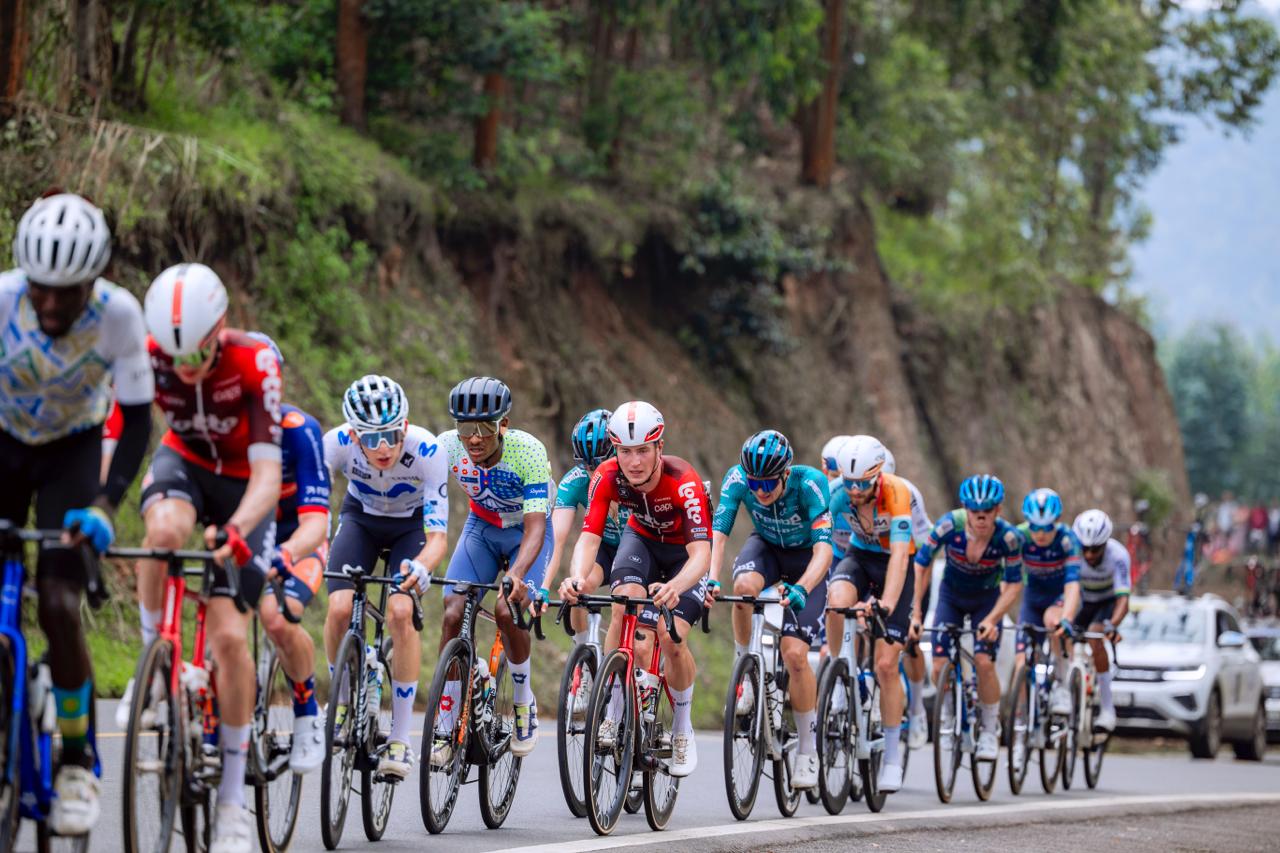
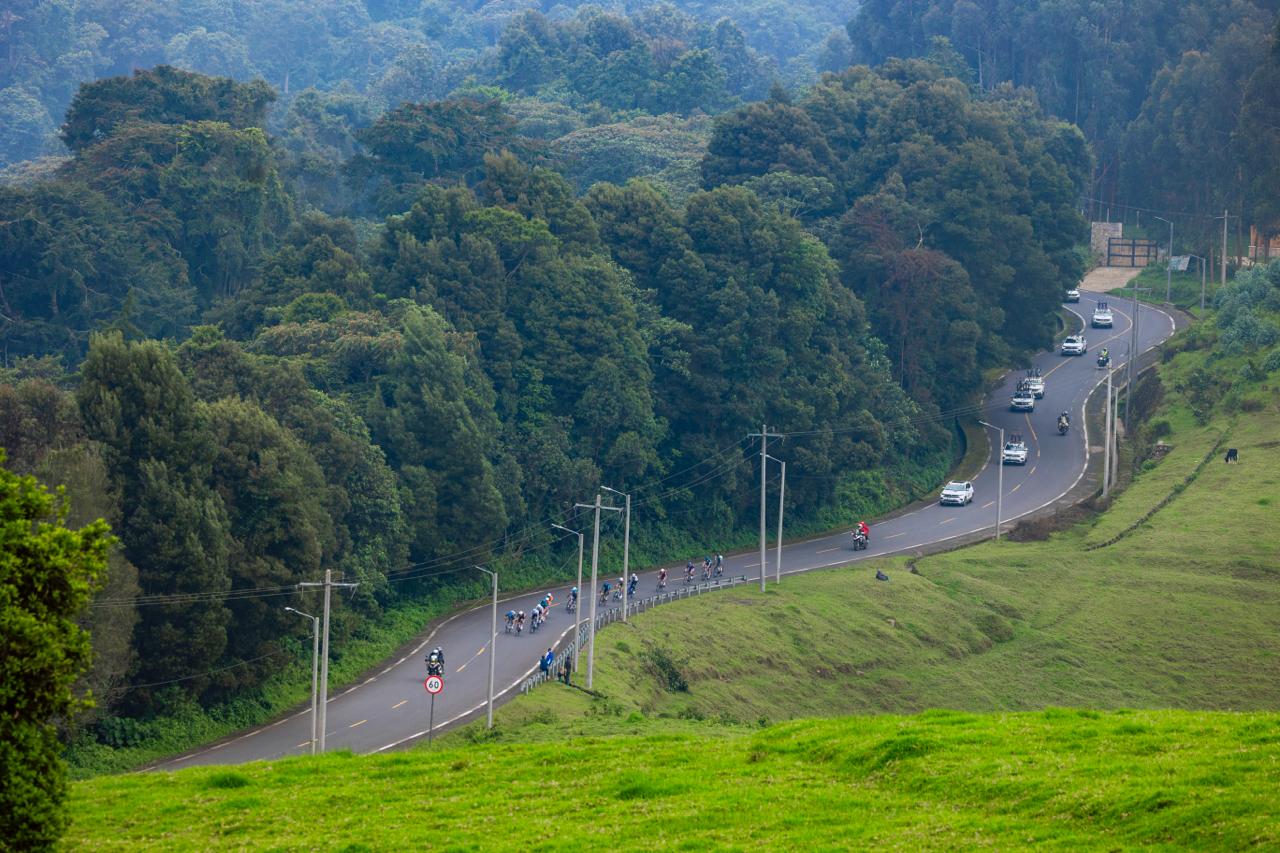
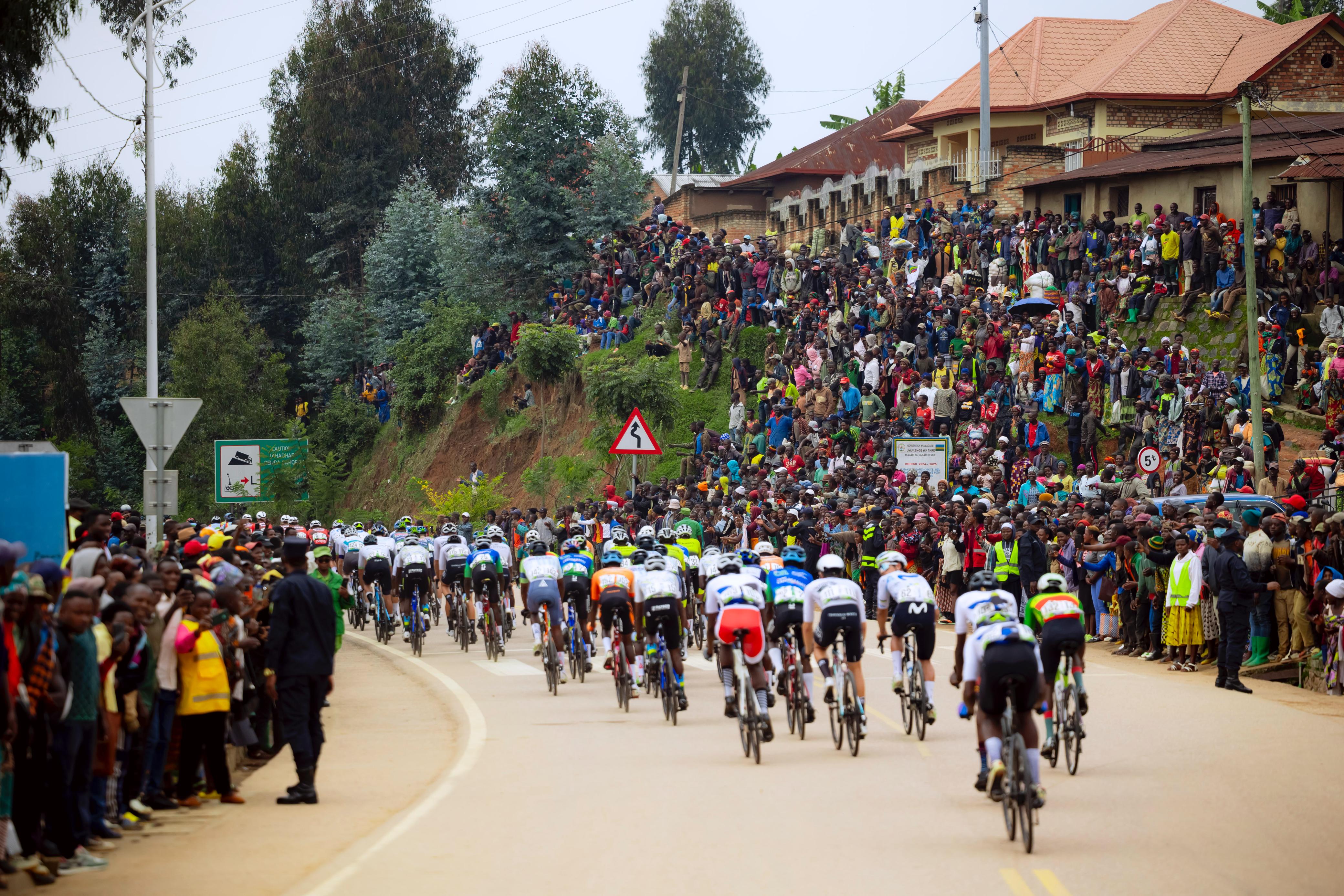
    For the first time since the competition began 125 years ago, the world’s best cyclists battled for rainbow jerseys on African soil, and they did so before record crowds.

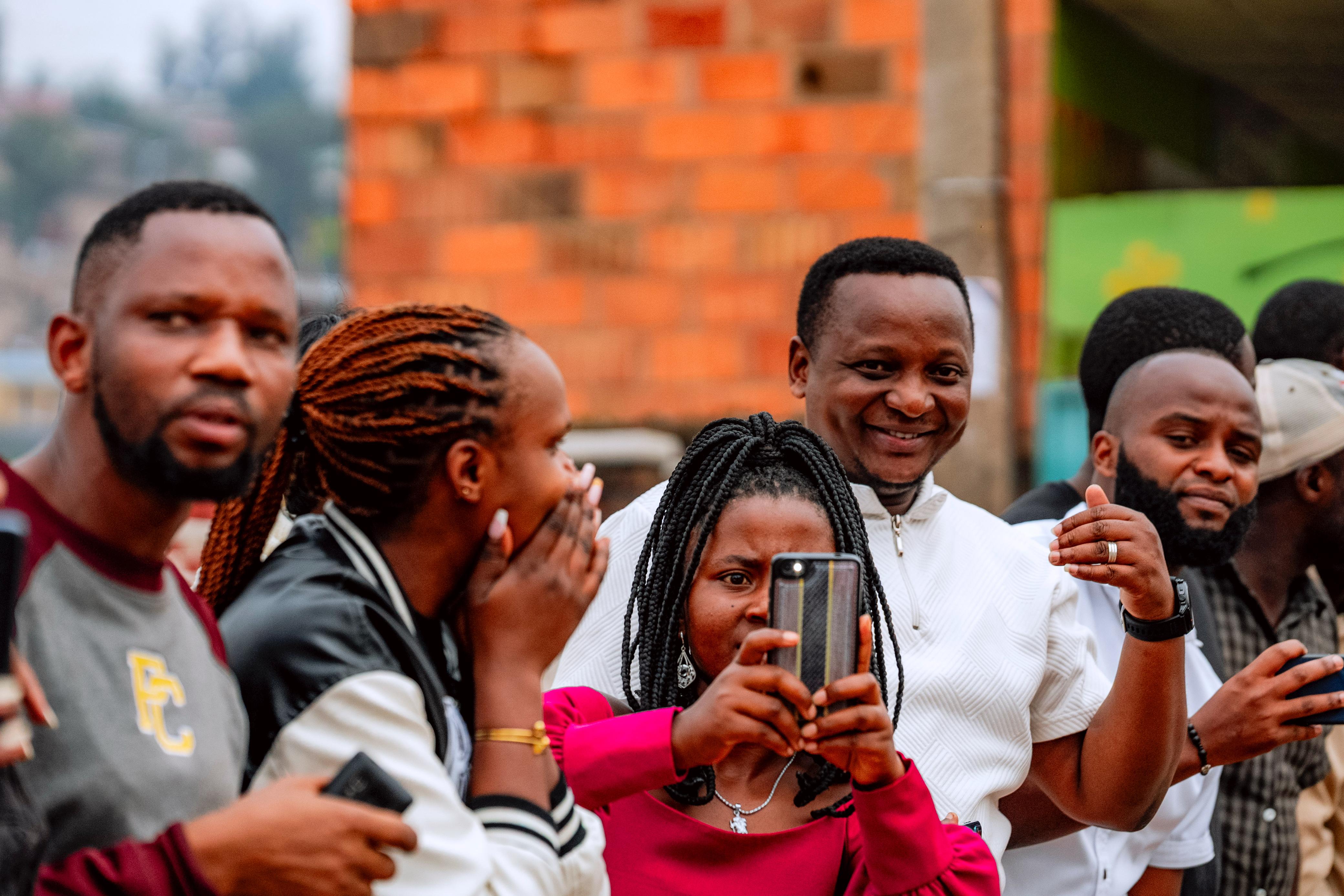
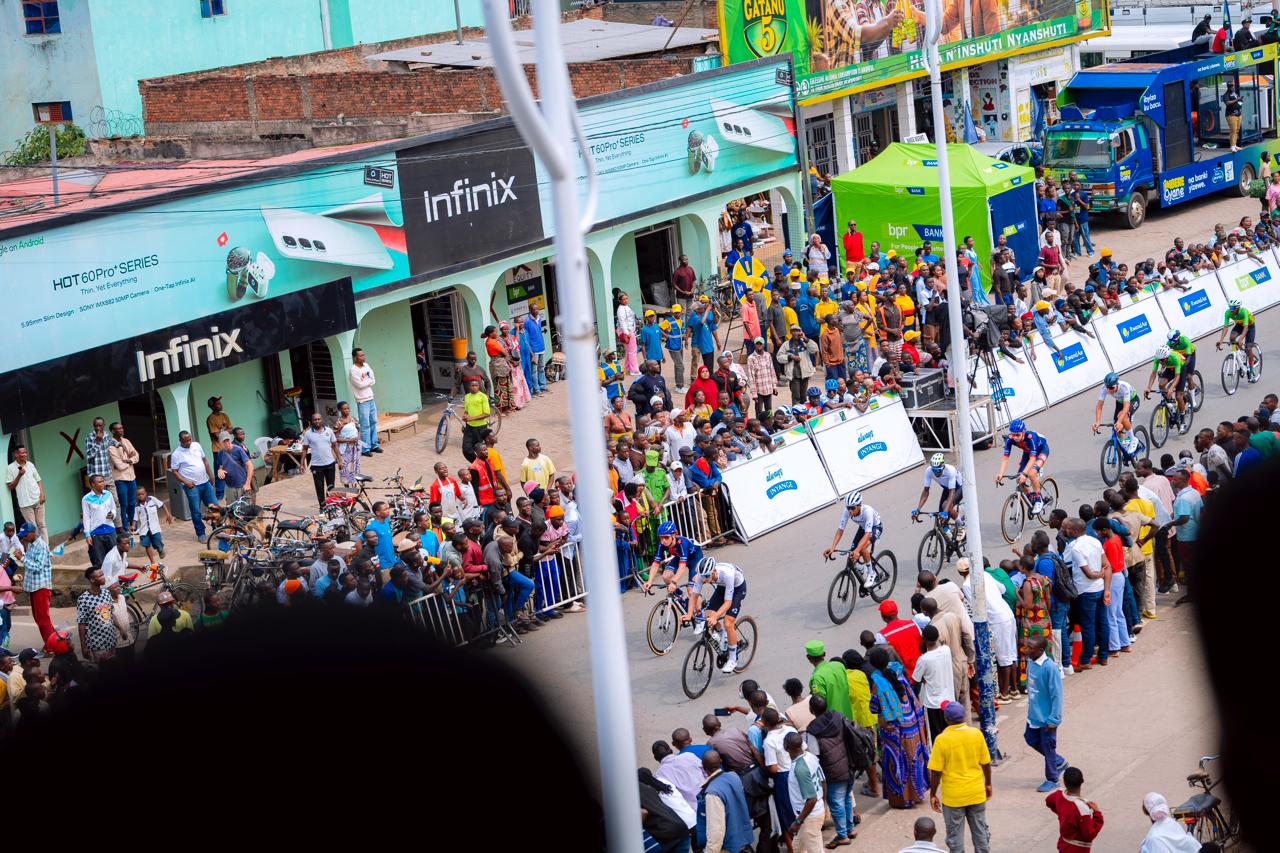
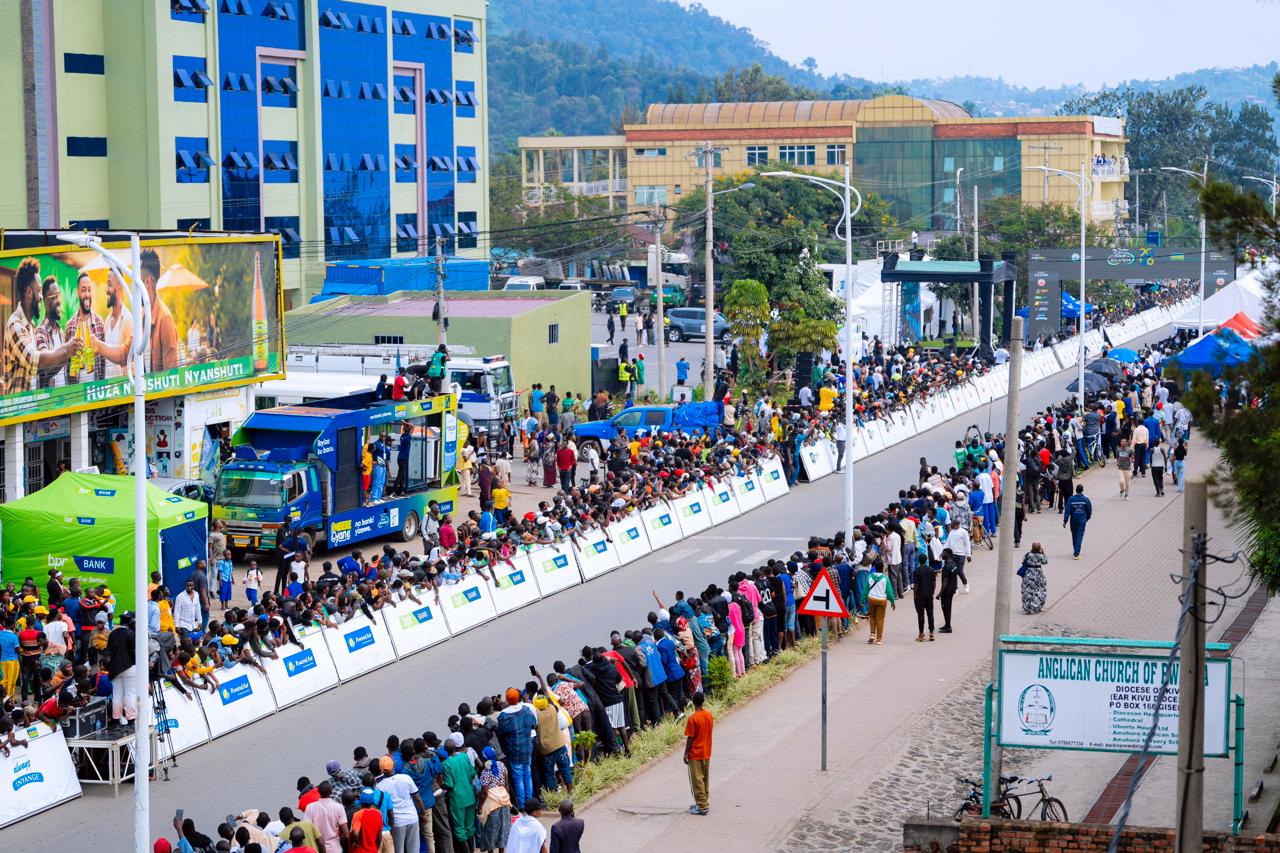
    The UCI President called the event “probably the most beautiful World Championships ever, here in Africa,” saluting the passion of over one million spectators who lined the routes.

    “What amazing races we witnessed this week… There were one million people along the roads today. Thank you very much,” the UCI President said, praising Rwanda’s organisation and President Paul Kagame for delivering an unforgettable debut.

    The UCI President called the event “probably the most beautiful World Championships ever, here in Africa,” saluting the passion of over one million spectators who lined the routes.

    {{Battle for the podium
    }}

    More than 100 nations sent riders, but only 18 countries managed to convert their efforts into medals across the 13 races, a proof of just how intense and unpredictable the championship was.

    At the top of the medal standings, the Netherlands emerged as the most successful nation, claiming two golds, one silver, and one bronze (4 total medals). Great Britain took a close second, powered by two crucial golds but no additional podium spots. France rounded out the top three with a balanced haul of one gold, two silver, and one bronze (4 total medals).

    Not far behind, Belgium, Spain, and Switzerland produced a rare four-way deadlock for fourth, each earning one gold, one silver, and two bronze medals.

    {{Medal scoreboard
    }}

    | Rank | Country | Gold | Silver | Bronze | Total |
    | 1 | Netherlands | 2 | 1 | 1 | 4 |
    | 2 | Great Britain | 2 | 0 | 0 | 2 |
    | 3 | France | 1 | 2 | 1 | 4 |
    | 4 | Belgium | 1 | 1 | 2 | 4 |
    | 4 | Spain | 1 | 1 | 2 | 4 |
    | 4 | Switzerland | 1 | 1 | 2 | 4 |
    | 7 | Italy | 1 | 1 | 1 | 3 |
    | 8 | Australia | 1 | 1 | 0 | 2 |
    | 9 | Canada | 1 | 0 | 0 | 1 |
    | 9 | Slovenia | 1 | 0 | 0 | 1 |
    | 9 | Sweden | 1 | 0 | 0 | 1 |
    | 12 | Slovakia | 0 | 2 | 0 | 2 |
    | 13 | New Zealand | 0 | 2 | 0 | 2 |
    | 14 | United States | 0 | 1 | 0 | 1 |
    | 15 | Austria | 0 | 0 | 1 | 1 |
    | 15 | Ireland | 0 | 0 | 1 | 1 |
    | 15 | Norway | 0 | 0 | 1 | 1 |
    | 15 | Poland | 0 | 0 | 1 | 1 |

    {{Most decorated riders who lit up Kigali
    }}

    Several riders delivered career-defining performances at the championship. Remco Evenepoel of Belgium once again proved his class, winning the Men’s Elite Individual Time Trial and battling through two bike changes to claim silver in the road race, finishing just behind Tadej Pogačar, who lit up Kigali’s climbs with a trademark long-range attack to secure a second consecutive men’s road race world title on Sunday.

    Remco Evenepoel of Belgium when he won the Men’s Elite Individual Time Trial.

    Jay Vine of Australia delivered versatility and power, pairing a silver in the men’s time trial with a pivotal ride in the gold-winning Team Time Trial Mixed Relay.

    Jay Vine won the silver medal in the individual time trial at the UCI World Championships.

    Swiss time trial specialist Marlen Reusser celebrated a long-awaited breakthrough by capturing the Women’s Elite ITT gold and contributing to Switzerland’s bronze in the mixed relay.

    Switzerland’s Marlen Reusser claimed her first-ever rainbow jersey with victory in the Women’s Elite Individual Time Trial in Kigali.

    Spain’s young phenom Paula Ostiz Taco made headlines with a stunning victory in the Women’s Junior Road Race — the first ever for her nation — and added a silver from the junior time trial.

    Spain struck gold in Kigali as 18-year-old Paula Ostiz Taco delivered a perfectly timed sprint to capture the UCI Women’s Junior Road Race world title.

    Meanwhile, rising Slovakian talent Viktória Chladoňová impressed with double silver in the inaugural Women’s Under-23 standalone events.

    Slovakia’s Viktória Chladoňová impressed at the UCI World Championships in Kigali.

    {{What comes next?
    }}

    The peloton’s next rainbow dream will unfold in Montreal, Canada, host of the 2026 UCI Road World Championships, with Kigali’s edition setting a new benchmark for sporting excellence as well as inclusivity and global reach, proving that the world’s biggest cycling stage can thrive far beyond its European origins.

    For the first time since the competition began 125 years ago, the world’s best cyclists battled for rainbow jerseys on African soil, and they did so before record crowds.
    President Paul Kagame awarded a gold medal and rainbow jersey to Tadej Pogačar, who lit up Kigali's climbs with a trademark long-range attack to secure a second consecutive men’s road race world title on Sunday.
    UCI President praised Rwanda’s organisation and President Paul Kagame for delivering an unforgettable debut.
  • Back-to-back glory as Pogačar wins gold at UCI World Championships in Kigali

    Back-to-back glory as Pogačar wins gold at UCI World Championships in Kigali

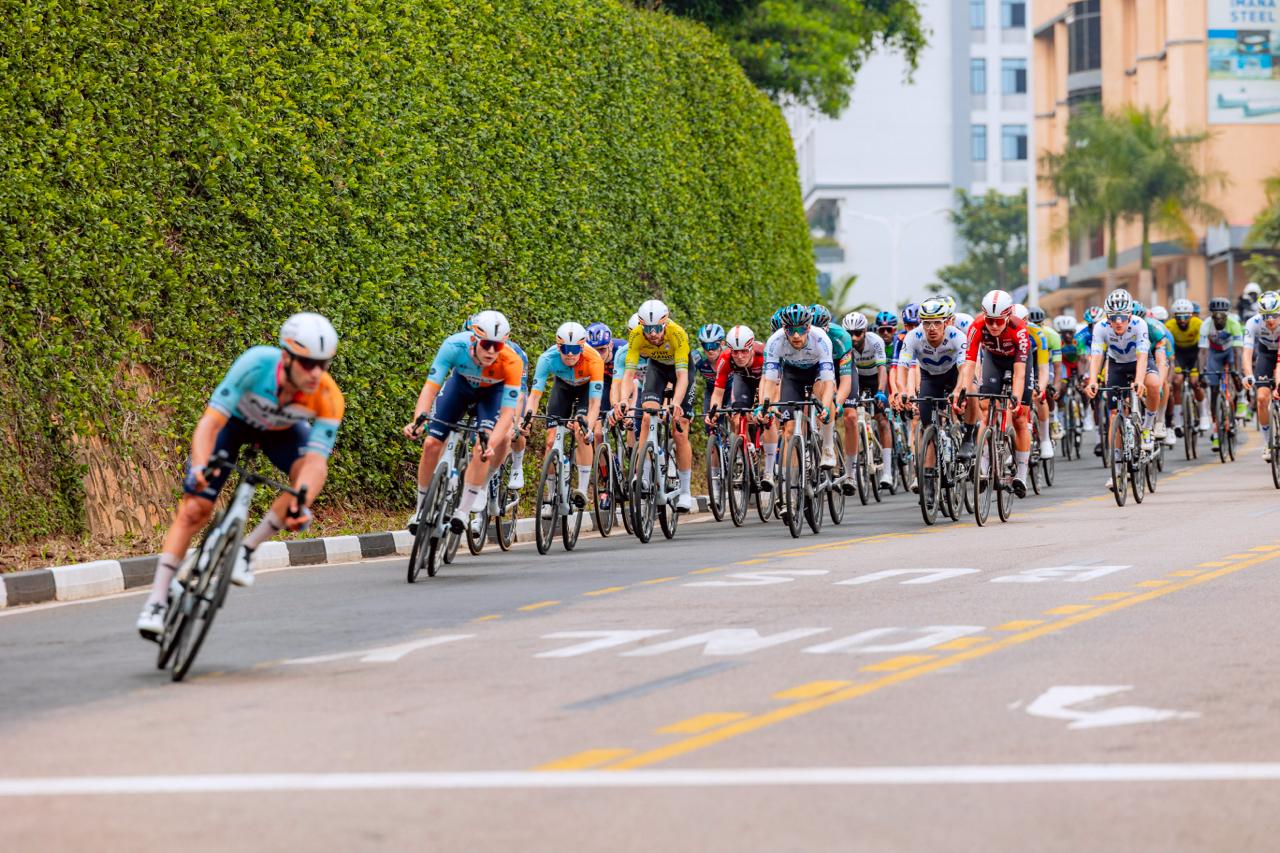
    Tadej Pogačar etched his name even deeper into cycling history on Sunday, delivering a breathtaking performance to secure back-to-back world road race titles at the UCI World Championships in Rwanda’s capital.

    The Slovenian superstar rode with daring and dominance, launching a decisive attack on Mount Kigali more than 100km from the finish and holding off every chase to claim the rainbow jersey for a second year running.

    {{Fast and furious from the gun
    }}

    The 267.5km men’s elite road race, with almost 6,000m of climbing, wasted no time erupting into action. Grenada’s Red Walters sparked early excitement, but his breakaway quickly dissolved as Germany’s Marius Mayrhofer, Denmark’s Anders Foldanger, the Netherlands’ Menno Huising, Portugal’s Ivo Oliveira and Switzerland’s Fabio Christen formed a new lead group.

    France, sensing danger, turned up the heat with Julian Alaphilippe attacking and Julien Bernard bridging across. Spain’s Raúl García Pierna soon joined them, but behind, Slovenia and Belgium, home to favourites Pogačar and Remco Evenepoel, kept the peloton measured and steady.

    {{Crashes disrupt the chase
    }}

    The furious early pace began to take a toll on the peloton. Britain’s Bjorn Koerdt, Spain’s Marc Soler and Belgium’s Ilan Van Wilder, a crucial helper for Evenepoel, were all forced to abandon after crashes, disrupting the chase and momentarily slowing the bunch. Belgium and Slovenia quickly regrouped, trimming the break’s lead back to 2:30 as the race approached its pivotal phase.

    By the time riders swung onto a new 42.5km loop featuring the towering Mount Kigali and the fearsome cobbled Mur de Kigali, the gap had shrunk to 1:35, and the tension was building.

    {{Pogačar lights up Mount Kigali
    }}

    The day’s defining moment came on the steep ramps of Mount Kigali. Julien Bernard crested alone, but just behind, Pogačar surged with trademark power, catching Bernard and taking Spain’s Juan Ayuso and Mexico’s Isaac Del Toro with him.

    On the bone-rattling Mur de Kigali, Ayuso cracked and slid back, leaving Pogačar and Del Toro as the last men standing up front. With 90km remaining, they held just 44 seconds over a disorganised peloton struggling to find rhythm.

    {{Evenepoel’s troubles, Pogačar’s freedom
    }}

    Belgium’s hopes wavered when Evenepoel was forced into two costly bike changes, visibly frustrated as precious seconds ticked away. At the head of the race, Del Toro began to fade, and once back on the city circuit, Pogačar struck out alone.
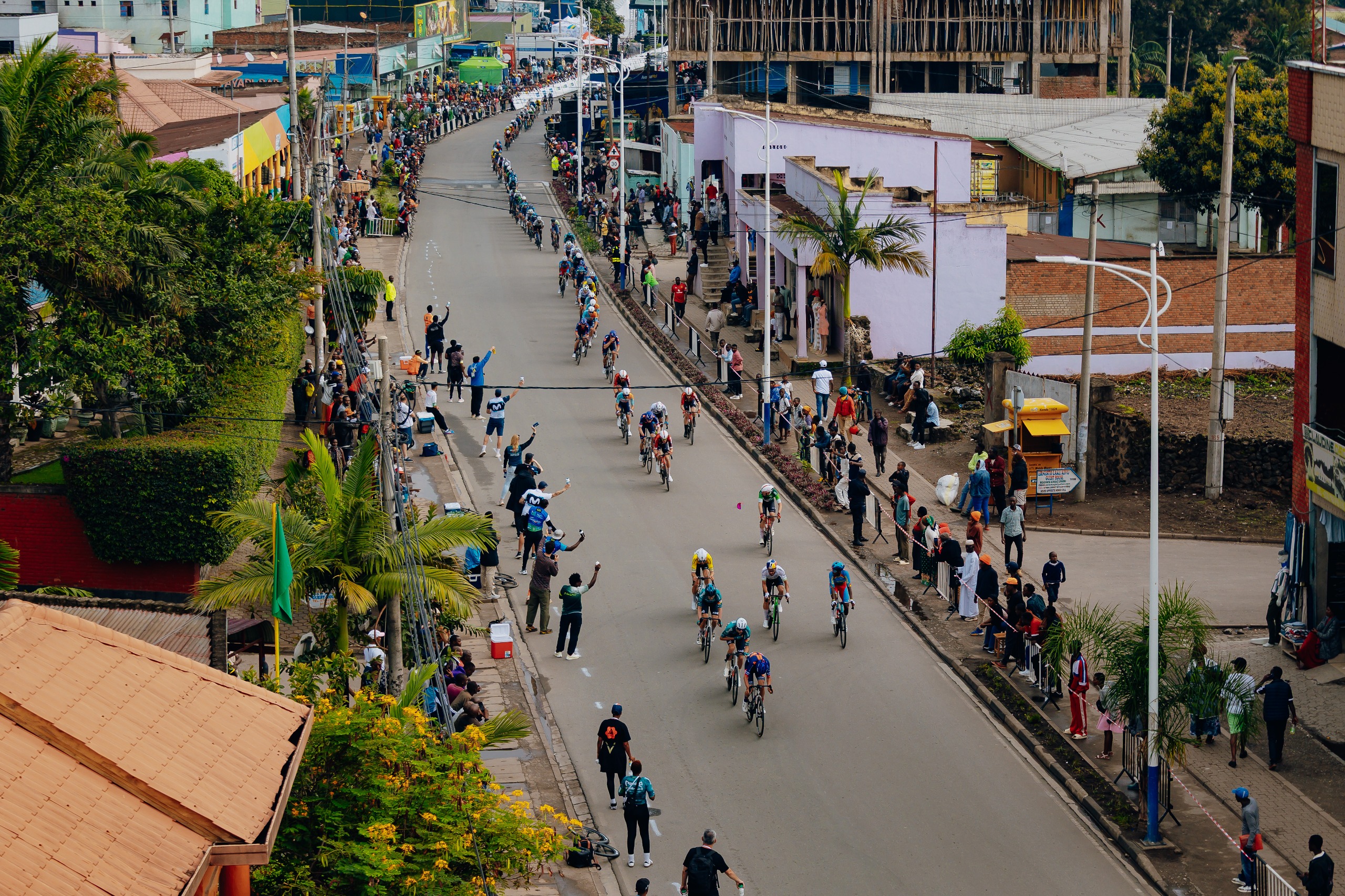
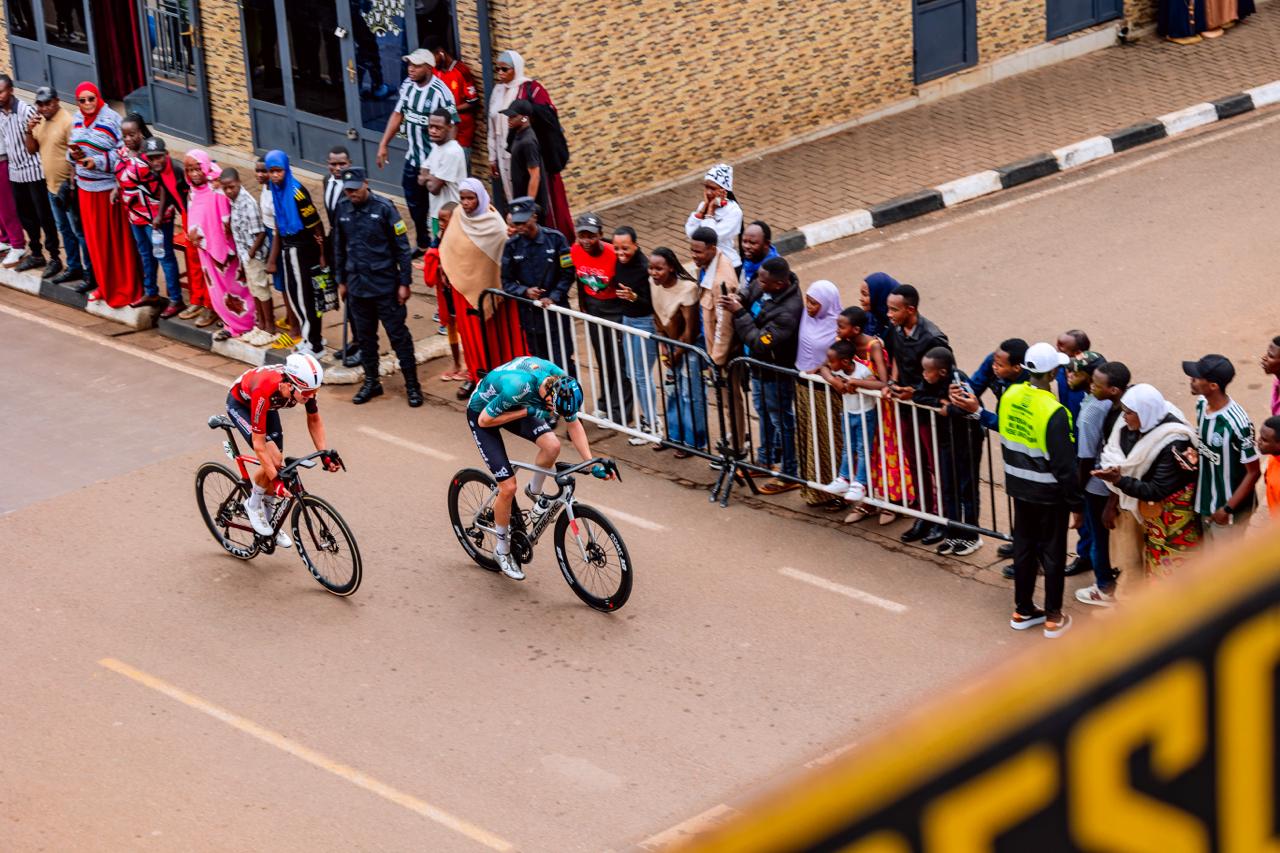
    A spirited chase tried to form, Ireland’s Ben Healey linking with Denmark’s Mikkel Honoré and France’s Pavel Sivakov, and briefly cut the gap to 35 seconds. But the Slovenian’s tempo proved unmatchable. Their move died, the peloton splintered, and Pogačar’s lead stretched past a minute.
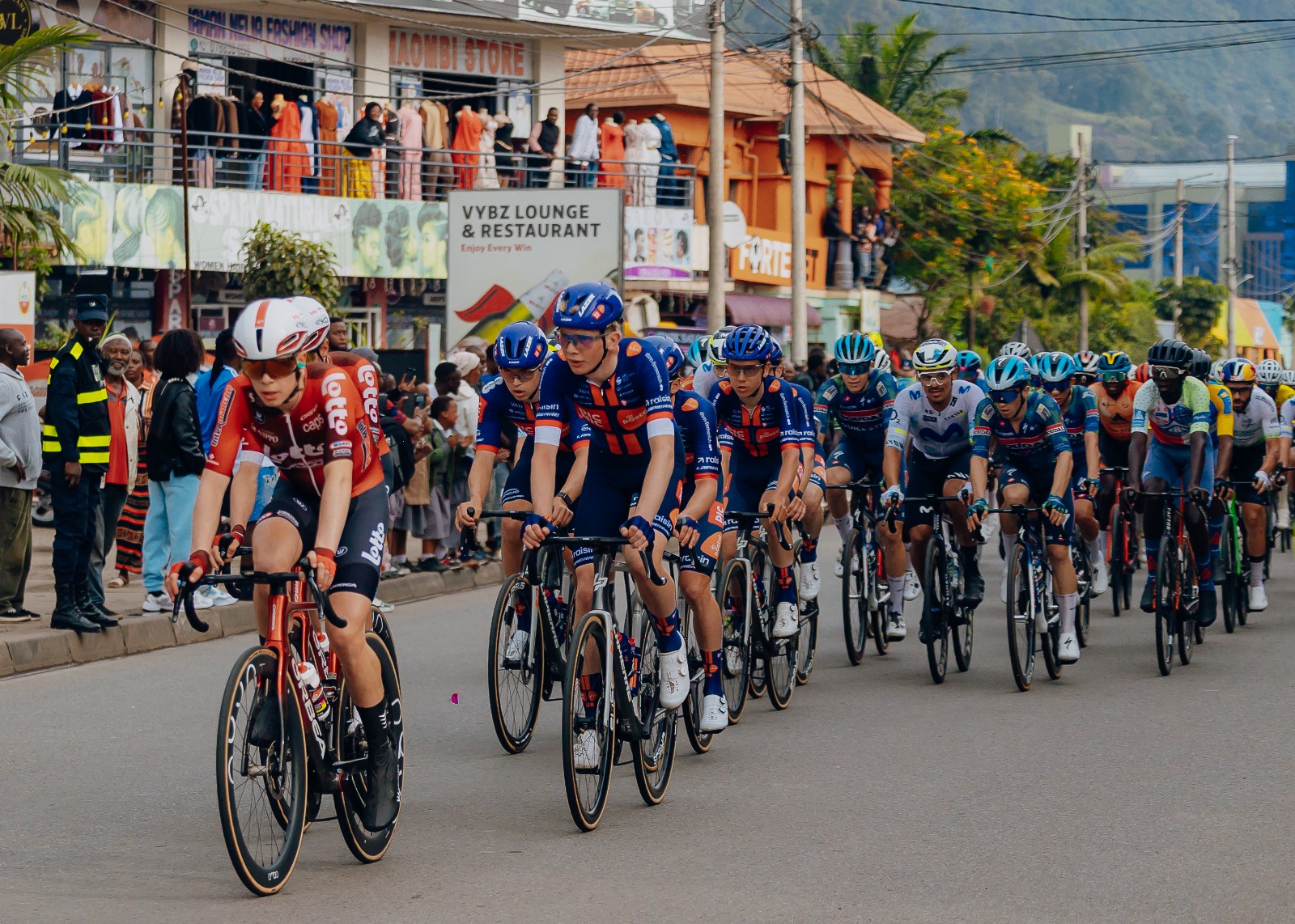
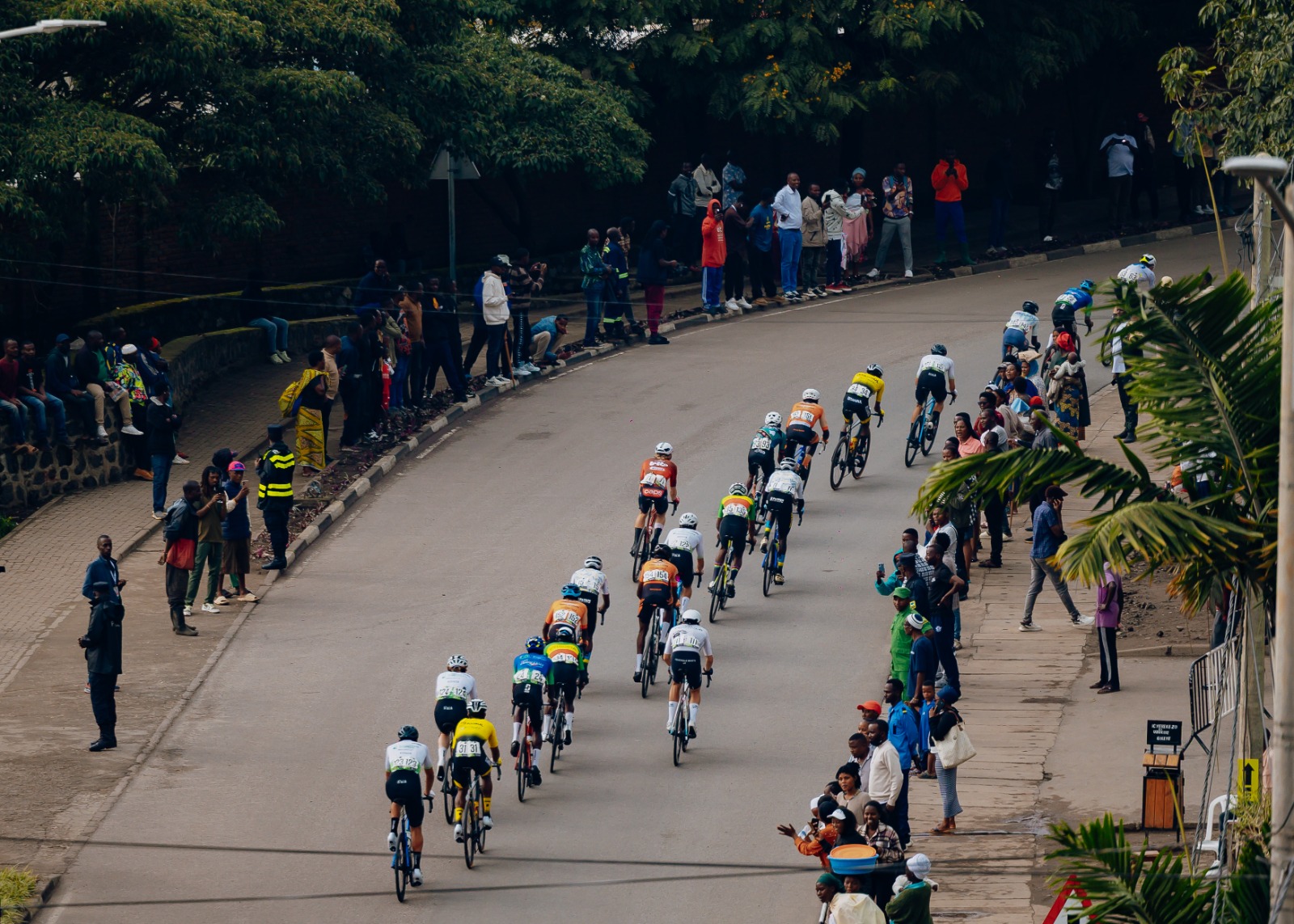
    Evenepoel, refusing to surrender, attacked late to salvage silver, but the victory was long gone.

    After 6 hours, 21 minutes, and 20 seconds of racing, Pogačar crossed the line alone, arms wide in triumph, as Kigali’s fans roared in celebration. Evenepoel took second at +1:28, and Ben Healy powered to Ireland’s first men’s elite road race medal in years, finishing +2:16 behind.

    “I was chasing this for the whole year… I am so happy to retain this beautiful jersey. It’s been an amazing last few days, an incredible experience, I am super happy and super proud of this week,” said Tadej Pogačar, proud to defend his crown in Kigali.

    Pogačar’s victory cements him as the first rider ever to win the Tour de France and world road race title in consecutive years, confirming his place among cycling’s all-time greats.

    {{Rwanda’s brave but painful day
    }}

    For the home nation, it was a race of pride and heartbreak. Rwanda fielded six riders — Nsengiyumva Shemu, Manizabayo Eric, Muhoza Eric, Masengesho Vainqueur, Byukusenge Patrick, and Nkundabera Eric — each cheered passionately on the punishing climbs. One by one, though, they slipped out of contention, victims of the unrelenting gradients and brutal race tempo.

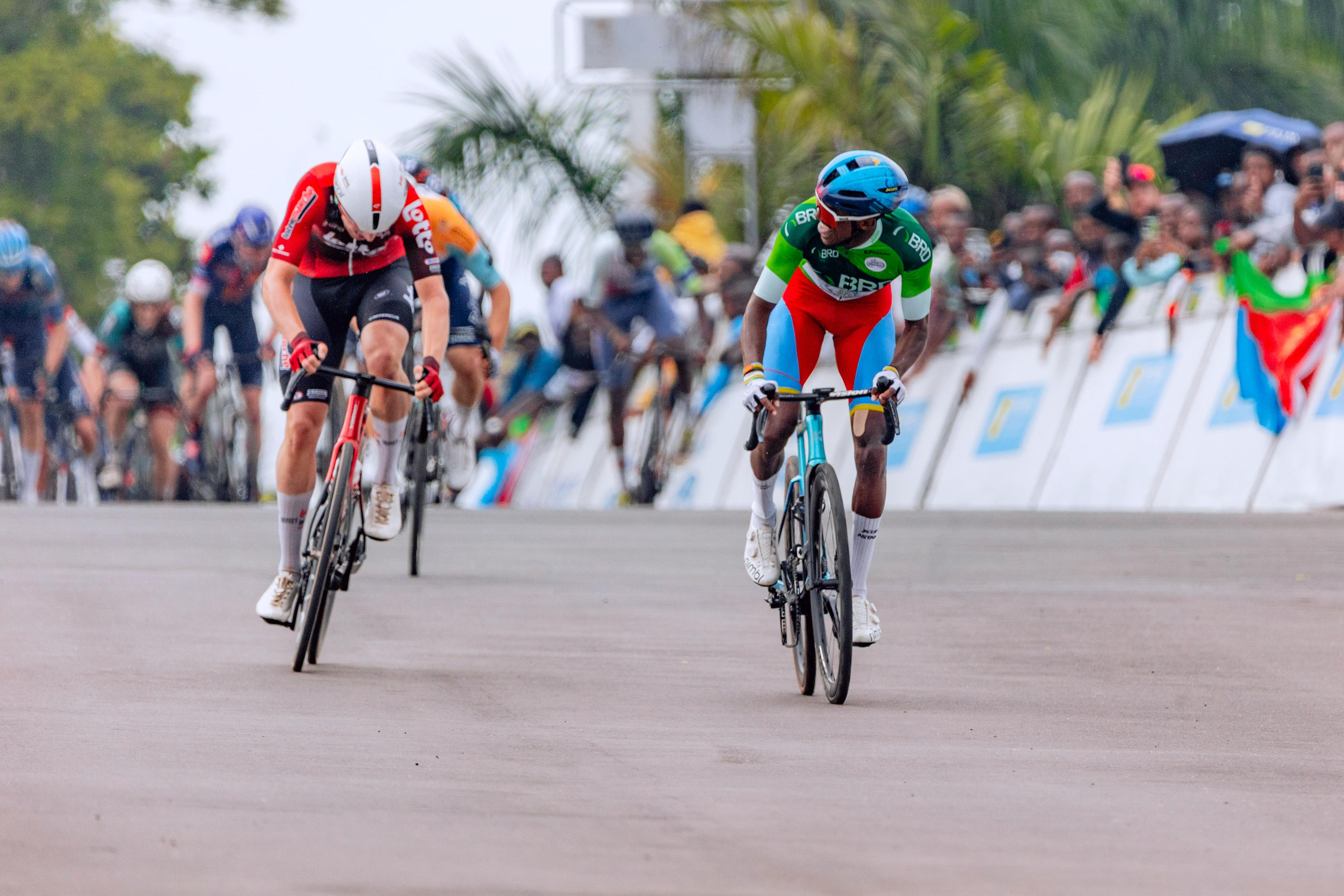
    Of the 165 starters, just 30 made it to the finish. Eritrea’s Amanuel Ghebreigzabhier was the final man across the line and the sole African to survive to the end.

    Sunday’s race marked a thrilling conclusion to the weeklong UCI World Championships in Kigali, the first ever held in Africa. The event drew global attention and showcased Rwanda’s growing reputation as a premier cycling destination.

    The closing ceremony was attended by President Paul Kagame, His Serene Highness Prince Albert II of Monaco, and UCI President David Lappartient, who presented medals to the finalists.

    {{Men’s Elite Road Race: Top 10 Results
    }}

    Tadej Pogačar (SLO) — 6:21:20

    Remco Evenepoel (BEL): + 1:28

    Ben Healy (IRL): + 2:16

    Mattias Skjelmose (DEN): + 2:53

    Toms Skujiņš (LAT): + 6:41

    Giulio Ciccone (ITA): + 6:47

    Isaac Del Toro Romero (MEX): + 6:47

    Juan Ayuso Pesquera (ESP): + 6:47

    Afonso Eulalio (POR): + 7:06

    Thomas Pidcock (GBR): + 9:05

    Slovenia’s cycling superstar Tadej Pogačar defended his world title in style, powering to victory in the Men’s Elite Road Race at the UCI World Championships in Kigali.
    Belgium’s Remco Evenepoel had to overcome mechanical problems and multiple bike changes but still battled his way to the silver medal.
    Ireland’s Ben Healy delivered a strong performance to take bronze, crossing the line 2 minutes and 16 seconds back.
    Belgium’s Remco Evenepoel had to overcome mechanical problems and multiple bike changes but still battled his way to the silver medal, finishing 1 minute and 28 seconds behind. Ireland’s Ben Healy delivered a strong performance to take bronze, crossing the line 2 minutes and 16 seconds back.
    The closing ceremony was attended by President Paul Kagame, His Serene Highness Prince Albert II of Monaco, and UCI President David Lappartient, who presented medals to the finalists.
  • Vallieres’ daring move seals Canada’s first women’s world championship in Kigali

    Vallieres’ daring move seals Canada’s first women’s world championship in Kigali

    The 164.6-kilometre battle on Kigali’s demanding circuit, comprising 11 laps lined with punishing gradients and bone-rattling cobbles, tested the world’s best. With altitude, heat and 3,350 metres of climbing, the race promised attrition and delivered it in spades. One hundred and four riders from 44 nations rolled out; only the strongest would survive.

    {{A day of early ambition and constant upheaval
    }}

    Austria’s lone entrant, Carina Schrempf, set the early tone with an audacious solo move before the second ascent of the Côte de Kigali Golf. She built a gap beyond three minutes, her boldness briefly stirring memories of Austria’s Olympic shock gold in Tokyo. Behind, the peloton watched and waited, Italy and the Netherlands quietly policing the pace.

    But patience turned to action mid-race. Spain’s Usoa Ostolaza attacked, Hungary’s Blanka Vas countered, Belgium’s Julie Van de Velde chased, and the Dutch rolled through moves with Yara Kastelijn, Femke de Vries and Shirin van Anrooij. Van Anrooij eventually forged a solo lead of more than 30 seconds before being reeled back with 55 kilometres to ride.

    Then Switzerland’s Noemi Rüegg and Spain’s Mireia Benito surged clear and prised out a half-minute, Australia steadying the chase as numbers in the bunch dwindled. Amanda Spratt’s sharp acceleration on the approach to the final laps tore the race apart and forced the favourites to commit.

    By 30 kilometres to go, defending champion Anna van der Breggen was gone, her Dutch squad still clinging to Riejanne Markus as their hope.

    {{The front group sharpens and a moment to strike
    }}

    With the peloton two minutes behind, a decisive move formed: Vallieres, Fisher-Black, García, Markus, Antonia Niedermaier and others worked to consolidate the lead. From behind, time trial world champion Marlen Reusser surged with Silvia Malcotti, later joined by Swiss teammate Elise Chabbey, briefly threatening to bring the front back.

    Then came the first true warning shot. On the penultimate ascent of the Côte de Kigali Golf, Spain’s García exploded from the group. Vallieres and New Zealand’s Fisher-Black matched the move, forming a trio of clear favourites. Niedermaier clawed back, Markus hovered but could not fully latch on. Behind, Chabbey jumped in pursuit but could not close the gap.

    {{A fearless final attack
    }}

    Inside two kilometres to go, on the cobbles of Kimihurura, Vallieres made the move of her life. Knowing Fisher-Black’s sprint would be lethal, she surged as soon as she sensed fatigue in the Kiwi’s pedal stroke. The cobbles amplified her advantage; in seconds she was alone, powering clear while the chasers hesitated.

    Fisher-Black and García could only watch the Canadian disappear into the deafening cheers of the Rwandan crowd. Behind them, the chasers splintered; Chabbey’s brave pursuit ran out of road.

    {{A breakthrough win and emotional finish
    }}

    Vallieres hit the final steep ramp alone and unstoppable, punching the air as she crossed the line for Canada’s first rainbow jersey in the elite women’s road race.

    Fisher-Black took silver 23 seconds back, García bronze at 27 seconds. Chabbey arrived fourth at 41 seconds, Markus fifth at 57, while Demi Vollering, tipped as the top favourite, led the remnants of the big names 1:34 down in seventh.

    “The girls believed in me, so I believed in myself,” Vallieres said after the finish. “I told myself I didn’t want to have regrets. I knew I probably wouldn’t beat Niamh in a sprint, so when I saw her fade, I went all in. It was my dream to win it, and now it’s real. It’s crazy.”

    Great Britain was absent altogether despite having six allocated spots. Former champion Lotte Kopecky skipped the race after an injury-disrupted season, and Denmark’s Cecilie Uttrup Ludwig also withdrew earlier in the week. But the quality of the field and the savagery of the Kigali circuit still produced a thriller that crowned a new, fearless champion.

    {{Rwanda fights but falters on home roads
    }}

    For the host nation, the day was one of grit but heartbreak. Rwanda fielded four riders, including Nirere Xaveline, Ingabire Diane, Irakoze Neza Violette and Nzayisenga Valentine, cheered by passionate crowds on every climb. Yet the brutal pace and unrelenting terrain proved unforgiving; one by one, the local riders slipped back and were pulled from the race.

    {{Women’s Elite Road Race: Top 10 Results
    }}

    1. Magdeleine Vallieres Mill (CAN) — 4:34:48
    2. Niamh Fisher-Black (NZL): + 23 seconds
    3. Margarita García Canellas (ESP): + 27 seconds
    4. Elise Chabbey (SUI): + 41 seconds
    5. Riejanne Markus (NED): + 57 seconds
    6. Antonia Niedermaier (GER): + 1:17
    7. Demi Vollering (NED): + 1:34
    8. Kim Le Court de Billot (MRI): + 1:34
    9. Marlen Reusser (SUI): + 1:34
    10. Katarzyna Niewiadoma-Phinney (POL): + 1:34

    Canada’s Magdeleine Vallieres Mill stunned the favourites to claim a landmark victory at the 2025 UCI Women’s Elite Road Race, becoming the country’s first-ever world champion in the event.
    New Zealand's Niamh Fisher-Black delivered an incredible performance in the Women’s Elite Road Race to take silver.
    Spain’s Mavi García won historic bronze in the Women’s Elite Road Race.
  • Paula Ostiz Taco storms to historic junior rainbow jersey for Spain in Kigali

    Paula Ostiz Taco storms to historic junior rainbow jersey for Spain in Kigali

    {{Spain takes control early
    }}

    The 74-kilometre showdown kicked off at 8:20 am, with fans packing the climbs and roundabouts to cheer every move. Spain wasted no time showing intent. Leyre Almena Requena lit up the opening hour, going solo and stringing out the peloton. Her attack forced the rest of the field to burn matches early.

    Crashes and mechanicals shaped the race long before the finale. Italy’s Giada Silo slid out on a slick corner but clawed back, while Dutch world time trial champ Megan Arens never looked at ease on the ascents and eventually faded to 20th.

    Africa roared when Tsige Kiros of Ethiopia chased back after a costly mechanical on the cobbles. Determined and fearless, she rejoined the front group, stirring the Kigali crowds.

    But it was Switzerland’s Anja Grossmann who dictated the pace, marking every dangerous move and keeping the peloton under control. Britain’s Arabella Blackburn tested the field, the Australians stayed watchful, and Spain quietly shielded Ostiz, saving her legs for the finale.

    {{The final lap explodes
    }}

    With two laps to go, 37 riders were still in the hunt. Czech rider Antonie Cermanova and Dutch Roos Muller launched daring attacks, only for Grossmann to snuff them out. Greece’s Stampori had a go too, but Spain reeled her in.

    By the bell lap, just 24 remained. The heat was biting, and bottles were tossed. Then came the race’s make-or-break feature: the jagged Côte de Kimihurura.

    Grossmann hit the gas on the final cobbled climb, shredding the group. Kiros finally cracked, joined by Australia’s Tuffy S and Britain’s Erin Boothman, whose bad luck with mechanical issues resurfaced and ended her day.

    {{The rainbow sprint
    }}

    Five riders crested the climb together — Grossmann, Italy’s Chantal Pegolo, and a perfectly poised Ostiz among them. With 200 meters to go, the Spaniard unleashed her sprint. Calm all day, she rocketed past her rivals in an unstoppable burst.

    All three podium finishers clocked 2:09:19, but Ostiz’s raw speed gave her clear daylight at the line. Pegolo and Grossmann settled for silver and bronze.

    “It’s a dream come true,” Ostiz said, fighting back tears as she celebrated Spain’s breakthrough. “My family is watching me now, and I can only thank God. I knew I had to save my strength until the end because the climbs were tough. I trusted my sprint, and it worked when it mattered most.”

    {{Pride for the hosts
    }}

    The home crowd had reason to cheer, too. Rwanda’s Yvonne Masengesho and Liliane Uwiringiyimana toughed out the savage course to finish 48th and 49th from a 73-rider start. They were loudly applauded as they completed each lap.

    {{Women’s Junior Road Race — Top 10
    }}

    1. Paula Ostiz Taco (ESP) — 2:09:19
    2. Chantal Pegolo (ITA) — 2:09:19 (+0)
    3. Anja Grossmann (SUI) — 2:09:19 (+0)
    4. Sidney Swierenga (CAN) — 2:09:19 (+0)
    5. Giada Silo (ITA) — 2:09:22 (+3)
    6. Thais Poirier (FRA) — 2:09:22 (+3)
    7. Tsige Kiros (ETH) — 2:09:22 (+3)
    8. Neve Parslow (AUS) — 2:09:22 (+3)
    9. Maria Okrucinska (POL) — 2:09:22 (+3)
    10. Alyssa Sarkisov (USA) — 2:09:22 (+3)

    Spain struck gold in Kigali as 18-year-old Paula Ostiz Taco delivered a perfectly timed sprint to capture the UCI Women’s Junior Road Race world title.
    All three podium finishers clocked 2:09:19, but Ostiz’s raw speed gave her clear daylight at the line. Pegolo and Grossmann settled for silver and bronze.
    Switzerland’s Anja Grossmann  settled for bronze.
  • Italian Lorenzo Finn storms to U23 World Championship glory with solo win in Kigali

    Italian Lorenzo Finn storms to U23 World Championship glory with solo win in Kigali

    A year after claiming the junior rainbow jersey in Zurich, Finn delivered a masterclass of tactics and strength, sealing his second world title in as many years with a decisive late solo move.

    The race started with high tempo, and before the first lap was even completed, an early three-man breakaway, including Michal Pomorski (Poland), Danylo Kozoriz (Ukraine), and Ramazan Yilmaz (Turkey), surged ahead, building a 24-second gap. But the peloton, strong and controlled, hunted them down methodically, with Kozoriz the last of the three to be reeled back in after 142 km.

    Finn delivered a masterclass of tactics and strength, sealing his second world title in as many years with a decisive late solo move.

    Kigali’s searing heat and relentless climbs soon began to take their toll. Riders from the UAE, Thailand, Turkey, Seychelles, and Slovakia were among the first to drop out, and by the fourth lap, only 77 of the initial 121 starters remained in contention.

    As the race moved into its middle stages, Belgium took the reins, ramping up the pace to force further splits. Riders like Germany’s Mauro Brenner struggled to keep up, while early attacks from Italy’s Pietro Mattio and Belgium’s Jasper Schoofs were neutralised by the chasing pack. The peloton grew thinner as the pressure mounted.

    {{Spain’s Héctor Álvarez ignites the race
    }}

    With 62 km remaining, Spain’s Héctor Álvarez launched a bold solo attack that shook up the race. His move created immediate gaps, and although Belgium’s Jarno Widar tried to bridge the gap, Álvarez’s sustained effort shattered the group, and a select chase formed behind him. By 45 km to go, Álvarez had a small lead, joined by Finn and four others, but the pace continued to ramp up as the final laps loomed.

    {{Finn makes his move
    }}

    As the lead group hit the Côte de Kimihurura climb, just 30 km from the finish, the race reached its tipping point. With perfect timing, Finn attacked, surging away from the others with precision and power. Only Switzerland’s Jan Huber could match him, and together they built a 47-second gap as they entered the final lap, while the chasers struggled to keep up.

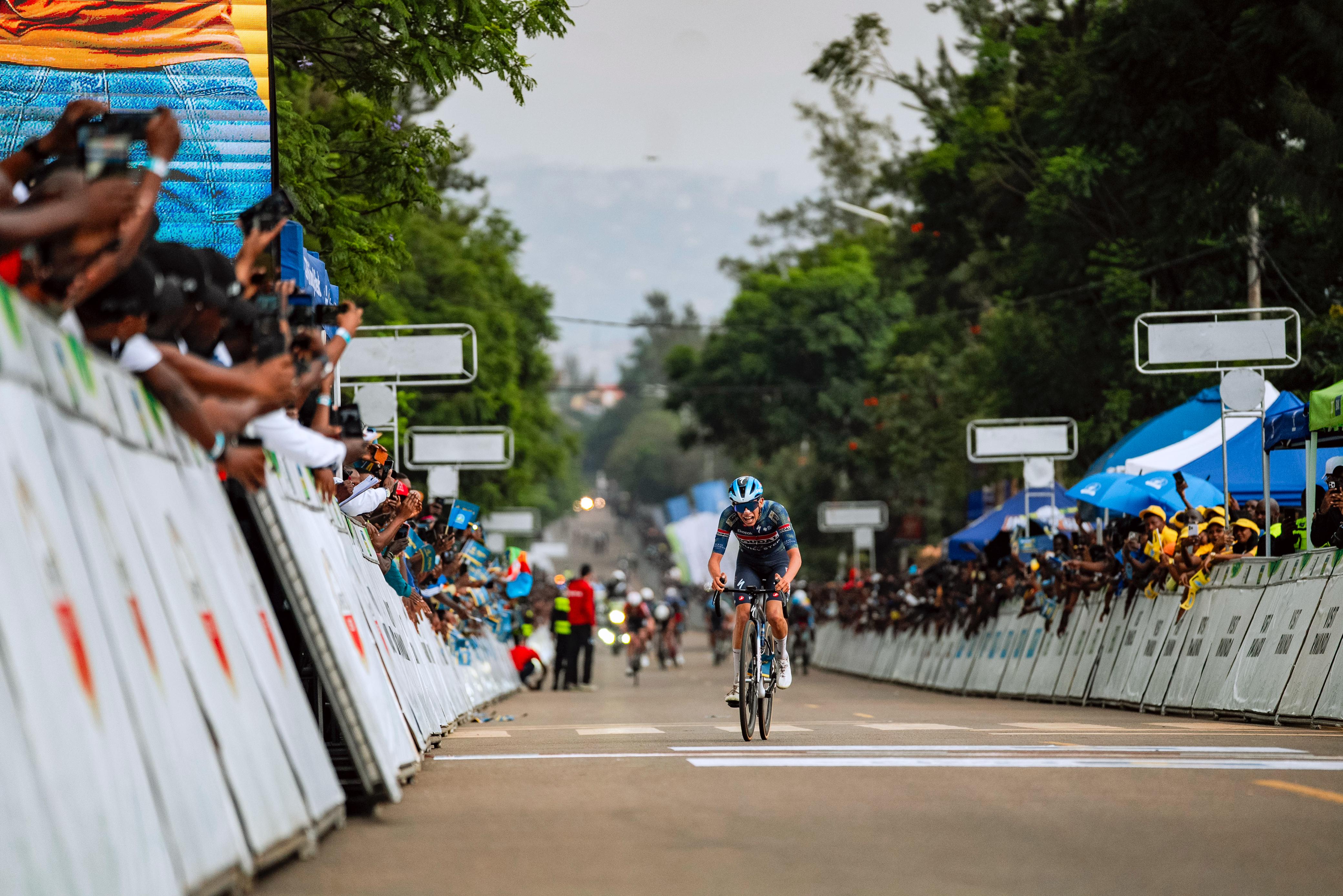
    Inside the last 10 km, however, the partnership between Finn and Huber began to unravel. With just 6.5 km to go, Finn attacked once again, leaving Huber behind and riding solo to victory.

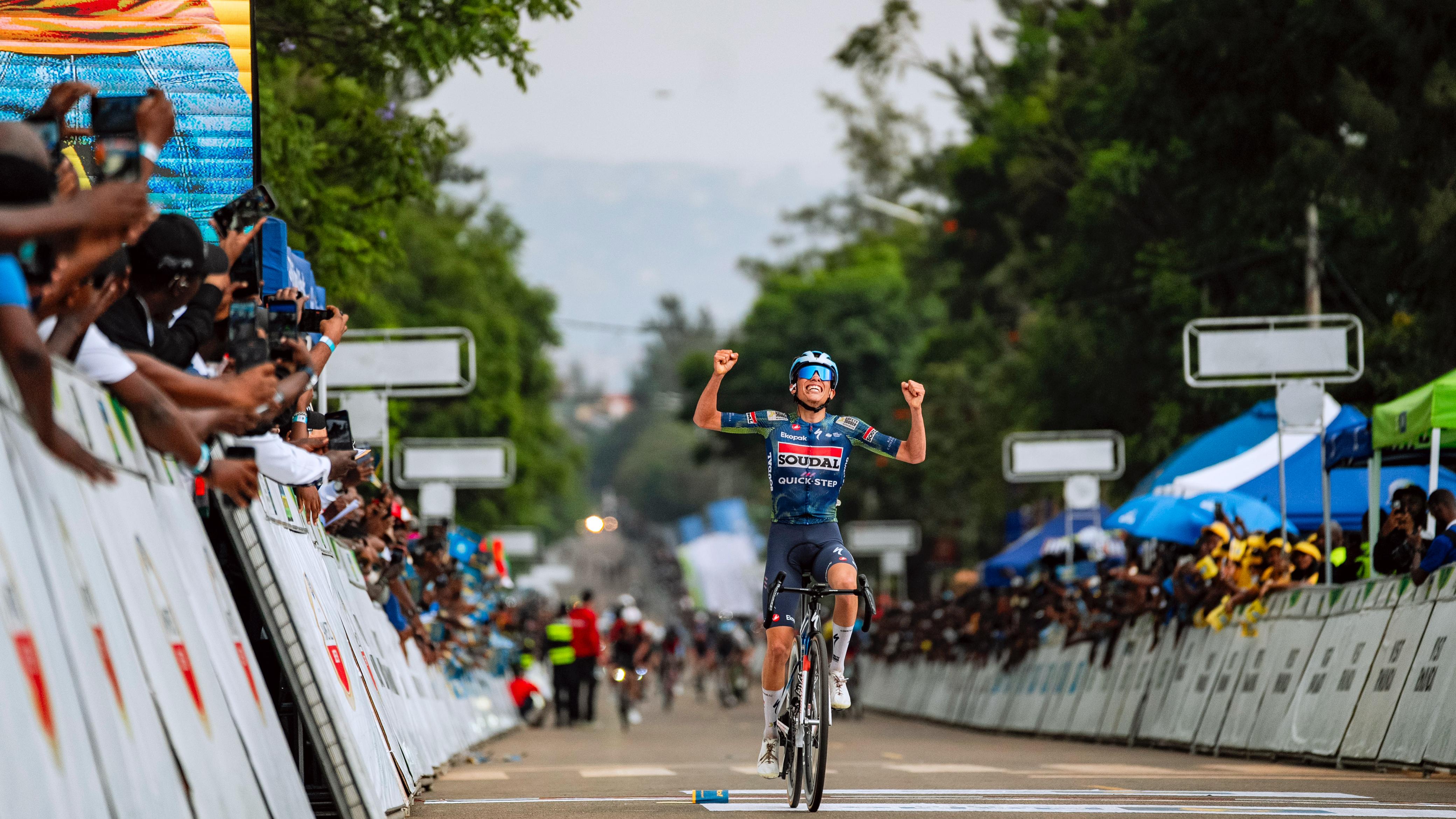
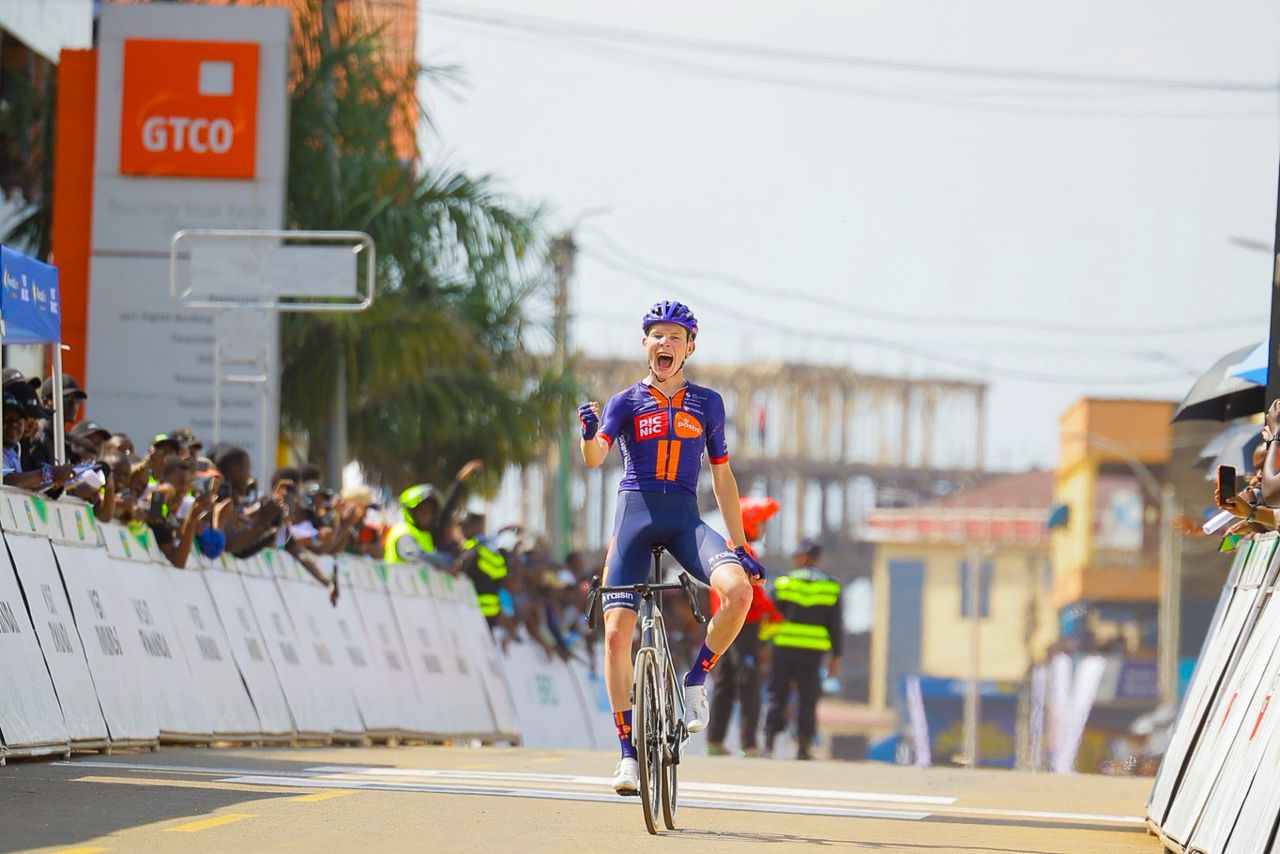
    The Italian crossed the line with a time of 3:57:27, arms raised in triumph, as the streets of Kigali erupted in celebration. Behind him, Huber held on for silver at +31 seconds, while Austria’s Marco Schrettl took bronze at +1:13.

    Lorenzo Finn crossed the line with a time of 3:57:27, arms raised in triumph.

    {{A triumph for the ages
    }}

    Finn’s victory places him in rarefied company, joining the ranks of cycling legends like Greg LeMond, Remco Evenepoel, Mathieu van der Poel, and Matej Mohorič, who have won world titles across multiple age categories.

    “It’s exactly one year, ’26. It’s like last year, it’s just unreal,” Finn remarked.

    {{Kigali’s unforgettable roar
    }}

    Reflecting on the electric atmosphere at the finish, Finn said: “The last 500 meters, my ears were hurting from how loud the crowd was. People from different nations were cheering me on! The people here in Kigali are fantastic. It’s been a wonderful week, and I’ll remember it for the rest of my life.”

    When it came to race tactics, Finn acknowledged the uncertainty of how things would play out: “We wanted to see what Belgium wanted to do at the start of the race. They kept it pretty controlled for the first half, so we tried to save some energy. Then it was just like all hell broke loose—just attacks everywhere. Luckily, I had some good legs. I thought I was suffering, but then I asked my teammates too. They were suffering, so it was a hard second part of the race.”

    At just 18, the youngest in the decisive front group, Finn is already a two-time world champion. Looking ahead, he now has his sights set on joining the WorldTour in 2026 while continuing his development.

    “When you’ve got this jersey, you’ve got to show it,” Finn said, already thinking of his next big challenge.

    {{Rwanda’s riders put up a brave fight
    }}

    For the host nation, the race was a monumental challenge, but also a proud moment. Four Rwandan riders, Niyonkuru Samuel, Tuyizere Etienne, Ufitimana Shadrack, and Ruhumuriza Aime, took on the world’s best in front of a home crowd. However, the tough course proved too much for most. Only Niyonkuru Samuel finished the race, marking a hard-fought but ultimately proud showing for the Rwandan team.

    Only Rwanda's Niyonkuru Samuel finished the race, marking a hard-fought but ultimately proud showing for the Rwandan team.

    {{Men’s Under 23 Road Race: Top 10 Results
    }}

    1. Lorenzo Mark Finn (ITA) — 3:57:27
    2. Jan Huber (SUI) — 3:57:58 (+0:31)
    3. Marco Schrettl (AUT) — 3:58:40 (+1:13)
    4. Héctor Álvarez Martínez (ESP) — 3:59:05 (+1:38)
    5. Mateusz Gajdulewicz (POL) — 3:59:09 (+1:42)
    6. Pau Martí Soriano (ESP) — 3:59:49 (+2:22)
    7. Victor Loulergue (FRA) — 3:59:49 (+2:22)
    8. Robin Donzé (SUI) — 3:59:51 (+2:24)
    9. Adria Pericas Capdevila (ESP) — 3:59:51 (+2:24)
    10. Mateo Pablo Ramírez Torres (ECU) — 3:59:51 (+2:24)

    18-year-old Italian prodigy Lorenzo Finn cemented his place in cycling history on a blistering Friday afternoon, dominating the streets of Kigali to win the men’s U23 road race at the 2025 UCI Road World Championships.
  • Tour de France winner Kasia Niewiadoma touched by Rwandans’ warmth

    Tour de France winner Kasia Niewiadoma touched by Rwandans’ warmth

    Initially, Niewiadoma admitted she arrived with doubts, worried about health risks and focused only on making it safely to race day. But once she began exploring Kigali and its surroundings, her perspective shifted. She described it as a “heart-opening moment” that helped her discover compassion and connection with people she had never met.

    She said the joy of children running alongside the roads especially moved her. “Seeing all the kids splits my heart in half. I feel for them, but at the same time I see joy and happiness in their eyes.”

    At one point, Niewiadoma and her compatriot Marta Lach were captured on video handing out candies to schoolchildren who cheered them during training. Reflecting on the moment, she remarked, “The more we open up to people, the more smiles.”

    Niewiadoma added that while outsiders may believe children in Rwanda need help, the opposite can also be true. “Probably they are actually helping us, softening our hearts,” she reflected.

    The Polish star concluded that her experience in Rwanda reminded her of the deeper lessons of sport and travel. “Travelling teaches you life, kindness, love and understanding for others, and I’m so grateful for that.”

    Niewiadoma, who rides for Canyon–SRAM, won the Tour de France in 2024 after securing the climber’s jersey in the same race a year earlier. She will line up for Poland in the women’s road race on Saturday, September 27.

    Polish rider Kasia Niewiadoma, winner of the 2024 Women’s Tour de France.
    Initially, Niewiadoma admitted she arrived with doubts, worried about health risks and focused only on making it safely to race day. But once she began exploring Kigali and its surroundings, her perspective shifted.