In a statement released by the Office of the Government Spokesperson on Sunday, Kigali expressed support for these developments, calling them steps towards fostering regional stability.
Rwanda reaffirmed its commitment to working with all parties to ensure adherence to peace agreements, particularly within the framework of the Joint East African Community (EAC) and Southern African Development Community (SADC) Summit process.
“Rwanda is committed to working with all parties to ensure adherence to commitments, particularly in the context of the Joint EAC-SADC Summit process and other initiatives which pave the way towards a lasting political and security settlement for the region,” the statement reads.
The AFC/M23, which is part of the AFC rebel alliance, announced on Saturday that it would withdraw its forces, with spokesperson Lawrence Kanyuka describing the move as a strategic decision aimed at creating a favourable environment for political dialogue.
M23 had captured the strategic town on March 19, along with the Kigoma airstrip, following its takeover of nearby areas, including Ngora, Kisima, and Mubanda.
Kanyuka urged local authorities and residents to ensure security in the aftermath of the group’s departure but warned that if Congolese forces resumed attacks on civilians or M23 positions, the group would reconsider its decision and retake the city.
The latest de-escalation efforts come amid diplomatic mediation led by Qatar. On March 18 the Emir of Qatar, Sheikh Tamim bin Hamad Al Thani, hosted Rwanda’s President Paul Kagame and DRC’s President Félix Tshisekedi for a high-level meeting aimed at resolving tensions in eastern DRC.
A joint statement released by Qatar’s Ministry of Foreign Affairs noted that the talks acknowledged progress made in the Luanda and Nairobi peace processes, as well as commitments outlined during the EAC-SADC Summit in Dar es Salaam on February 8.
The statement stressed the leaders’ agreement on the necessity of ceasing hostilities without further delay and their commitment to continued discussions to build a foundation for lasting peace.
AFC/M23 asserts that it is fighting against poor governance and decades of ethnic persecution targeting Congolese Tutsis and other Kinyarwanda-speaking communities in the east.
Its latest offensive has led to the capture of Goma and Bukavu in recent months, prompting global calls for a political solution to the conflict in the eastern region, following heavy losses suffered by the Congolese army and its coalition forces, including SADC troops, the Burundian army, FDLR, and Wazalendo militia groups.
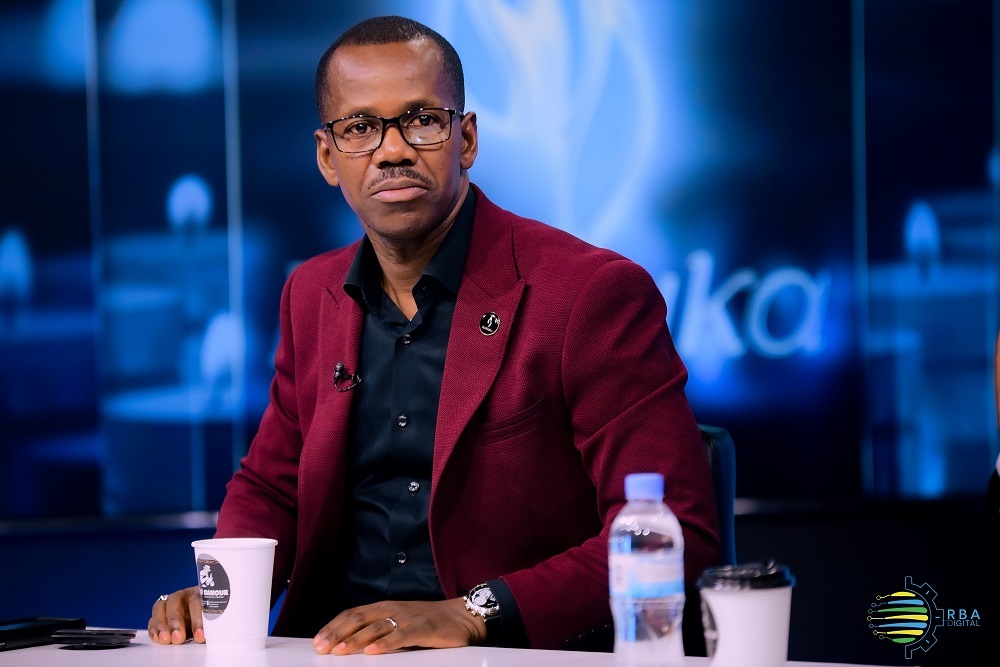
Speaking in an exclusive interview with IGIHE, Dr. Destexhe, who has been closely engaged with Rwanda and the Great Lakes region for decades since serving as Secretary General of Médecins Sans Frontières (Doctors Without Borders), described the situation in eastern DRC as a fight for survival rather than a matter of territorial integrity.
“The issue in the Kivus isn’t about Congo’s territorial integrity or sovereignty; it’s about the threat to the lives of minorities, especially the Tutsis, who are the primary targets of Kinshasa and the regime,” he said.
“These people have the right to live in peace where they’ve always lived before being forced out.”
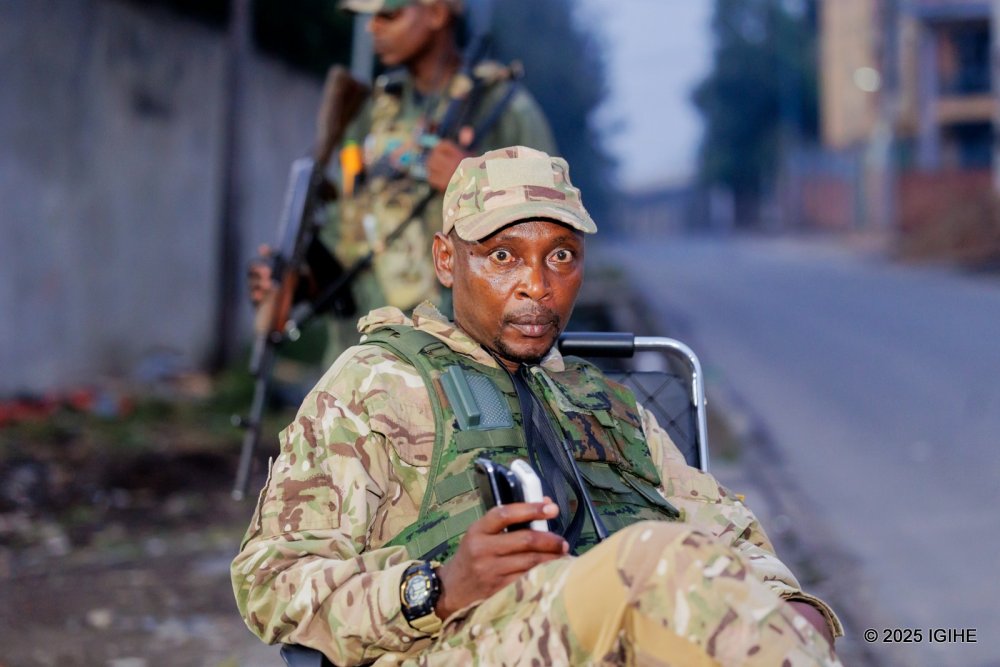
During recent visits to Goma, the former lawmaker engaged with local communities and M23 leadership, including military chief Sultani Makenga, amid the rebel group’s recent advances in the east. He observed that the city was not the war zone portrayed in international media but rather a place where some sense of order had returned under M23 control.
“I was surprised at how quiet and orderly it was. Life in Goma felt normal: people were out in the streets, shops were open—except the banks, which were closed by the Kinshasa authorities,” he noted.
He contrasted this with the chaos under the Congolese armed forces (FARDC), whom he accused of extortion and misconduct. According to him, many people in the region saw M23’s governance as an improvement over Kinshasa’s neglect.
{{Western double standards
}}
Dr Destexhe was particularly critical of the international community’s selective response to the crisis, highlighting what he described as a “double standard” in the way Western nations handle the DRC conflict.
“When it comes to Rwanda or M23, there’s a stance followed by sanctions. With the DRC, they might say hate speech is bad, but there are no consequences,” he stated, referring to claims of Congolese leadership spreading hate speech against certain communities and accusations that Rwanda backs M23 rebels.
He also pointed to the influence of the FDLR, a group linked to the perpetrators of the 1994 Genocide against the Tutsi in Rwanda, within the Congolese army, which Rwanda insists continues to pose a threat to Rwanda’s security.
“The FDLR has infiltrated the Congolese army’s key units, advising them and spreading their ideology—hatred of Tutsis and the genocide mindset.”
MONUSCO, the UN peacekeeping mission in DRC, also came under fire from the veteran doctor, who dismissed it as a costly failure.
“They’ve been there 20 years—costing at least $1 billion a year and how many civilians have they protected? Very few, I’d guess,” he said.
“MONUSCO has a vested interest in staying, but it’s not in the Congolese people’s interest.”
With tensions escalating following the capture of the cities of Goma and Bukavu, the former lawmaker warned that the situation could spiral out of control unless a political solution is found. He suggested that M23’s increasing strength—bolstered by defectors from the FARDC—could shift the balance of power further.
“Kinshasa can’t retake Goma and Bukavu… M23 might have the capacity to push to Kisangani or Lubumbashi,” he warned.
“Tshisekedi needs a political solution, or the situation on the ground could spiral—I don’t know how,” he added.
He called for security for all Kivu residents, regardless of ethnicity, and development of the region’s rich agricultural and mineral resources.
To Rwanda and Belgium, where [ diplomatic ties recently frayed->https://en.igihe.com/news/article/rwanda-severs-ties-with-belgium-orders-diplomats-to-leave-within-48-hours] over accusations of Belgium pushing for sanctions against Rwanda, the seasoned lawmaker insisted that “Sanctions are wrong and unfair… The Kivu issue is about survival for its people, not Congo’s sovereignty.”
As a medical doctor, he urged Western nations to reassess their approach to avoid the misdiagnosis that has persisted for decades.
“I’m a doctor—when treating a patient, you first diagnose the illness correctly. If the diagnosis is wrong, you can’t treat them. The international community needs a proper diagnosis of the Kivu problem, then a solution. Right now, they’re giving the patient the wrong medicine.”
Dr. Jackson and his delegation were welcomed by President Kagame, who was flanked by Minister of Defense Juvenal Marizamunda, the Secretary General of the National Intelligence and Security Service (NISS) Emmanuel Havugiyaremye, and Government Spokesperson Yolande Makolo.
The visit took place amidst growing security concerns in the region, particularly in eastern Democratic Republic of Congo (DRC), where the DRC government has accused Rwanda of supporting M23 rebels in their conflict with the Congolese army.
Rwanda has denied these accusations, instead pointing to DRC’s alleged collaboration with the FDLR terrorist group, which Rwanda claims aims to destabilize its security.
Rwanda also argues that the allegations are part of attempts to mislead the international community and distract from the root causes of the region’s instability, including long-standing governance challenges in the DRC.
DRC has called on the United States and other nations to impose sanctions on Rwanda. However, Rwanda has stated that if sanctions were a viable solution to the regional instability, the situation would have improved by now.
While DRC officials continue to engage with the U.S. to push for sanctions in an effort to secure mining agreements, Rwanda remains focused on continuing diplomatic dialogues with various international partners.
Leaders from the East African Community (EAC) and Southern African Development Community (SADC) held a joint summit in Tanzania on February 8, 2025, emphasizing the importance of political dialogue between the conflicting parties for achieving long-term peace and stability in the region.
The DRC possesses mineral wealth valued at an estimated $24 trillion, making it the richest country in the world in terms of untapped resources. However, despite this vast wealth, the Congolese people continue to struggle with extreme poverty.
A 2024 World Bank report revealed that 73.5% of the Congolese population survives on less than $2.15 per day.
While Tshisekedi struggles to improve the lives of his citizens, the armed group M23 continues to seize territories from the Congolese army in North and South Kivu provinces.
Tshisekedi accuses Rwanda of supporting M23, using this claim to push for sanctions against Rwanda and the rebel group from countries like the U.S. Rwanda refutes the claim, and blames Congo for collaboration with FDLR rettorist group.
He has now tied this request to potential business deals, promising lucrative mining contracts to American companies in exchange for action against Rwanda and M23.
In an interview with Fox News on 19 March 2025, Tshisekedi emphasised his desire to deepen cooperation with the U.S., citing its global influence.
“We believe that the United States, given its global standing and role, is a key partner we should work with. We are also pleased to see that under Trump’s administration, things are moving swiftly for both sides,” he said.
The DRC holds a significant share of the world’s mineral reserves, including 70% of the global cobalt supply—essential for electric vehicle batteries—along with 60% of coltan, tin, gold, and diamonds.
Tshisekedi stated that he wants to collaborate with a country that can both enhance DRC’s security and help process its minerals locally instead of exporting raw materials.
He believes that the agreements with the U.S. will help reduce poverty in DRC by creating jobs.
“We want to mine these minerals but also process them here to create more jobs. We seek partnerships that will bring lasting peace and security to our country,” he added.
When asked how these agreements would contribute to DRC’s security, Tshisekedi explained that strengthening the country’s military capabilities is a priority and that the U.S. could use its influence to pressure armed groups operating in the region.
“We must build the capacity of our security forces. I believe the U.S. has the power to exert pressure and impose sanctions to control the armed groups destabilising our country,” he said.
When asked what the U.S. stands to gain from these agreements, Tshisekedi pointed out that American tech companies would benefit from a steady supply of high-quality minerals for their advanced manufacturing processes.
China is currently the dominant player in DRC’s mining sector, controlling several mining sites across the country. Beijing has also supplied Tshisekedi’s government with military equipment, including CH-4 drones, to combat M23 rebels.
Tshisekedi recalled that in the 1970s and 1980s, the U.S. played a significant role in DRC’s mining industry. He expressed his willingness to return to those arrangements.
“They say ‘a vacuum will always be filled.’ It’s not that China has increased its presence in Africa, but rather that the U.S. has withdrawn. We would be delighted to see our American friends back, as they were more involved here than the Chinese in the 1970s and 1980s,” he remarked.
While Tshisekedi continues to push for sanctions against Rwanda, the DRC government has maintained its cooperation with the FDLR, an armed group considered a terrorist organisation.
The FDLR was founded by individuals responsible for the 1994 Genocide against the Tutsi. The DRC government has reportedly pledged to support the group in its objective of overthrowing the Rwandan government.
Attempting to deflect criticism of his support for the FDLR, Tshisekedi claimed that the international community had asked DRC to host “Rwandan refugees” after the genocide, which, according to him, led to ongoing instability in the country.
He now uses this argument to justify his appeal for sanctions against Rwanda.
The phone call came one day after Trump and Russian President Vladimir Putin agreed on Tuesday in their phone talks that the peace in Ukraine “will begin with an energy and infrastructure ceasefire” in Ukraine.
U.S. and Ukraine’s “technical teams will meet in Saudi Arabia in the coming days to discuss broadening the ceasefire to the Black Sea on the way to a full ceasefire” in Ukraine, said a statement signed by U.S. Secretary of State Marco Rubio and National Security Advisor Mike Waltz.
Trump and Zelensky discussed the situation in Kursk and “agreed to share information closely between their defense staffs as the battlefield situation evolved,” said the statement.
During the phone conversation, Zelensky asked for additional air defense systems, particularly Patriot missile systems, and “President Trump agreed to work with him to find what was available particularly in Europe,” said the statement.
Trump also discussed Ukraine’s electrical supply and nuclear power plants with Zelensky and told the latter: “The United States could be very helpful in running those plants. American ownership of those plants would be the best protection for that infrastructure and support for Ukrainian energy infrastructure.”
Zelensky wrote on X after speaking to Trump, “One of the first steps toward fully ending the war could be ending strikes on energy and other civilian infrastructure. I supported this step, and Ukraine confirmed that we are ready to implement it.”
However, the White House statement on Wednesday did not mention that the partial ceasefire would apply to civilian infrastructure as Zelensky suggested.
White House press secretary Karoline Leavitt confirmed at a press briefing later on Wednesday that all intelligence sharing between the United States and Ukraine will continue.
In a post shared on X, Destexhe expressed regret over the diplomatic rupture, which on Monday, March 17, 2025, saw Rwanda sever ties with Belgium in protest against the former colonial power’s acts of aggression, particularly regarding the conflict in the eastern Democratic Republic of Congo (DRC).
He accused Belgian Foreign Minister Maxime Prévot of leading an “aggressive campaign” to influence the European Union and international organizations against Rwanda. According to Destexhe, Belgium has not adopted such an “offensive stance” on any issue since 1994.
“I regret the breakdown of diplomatic relations between Rwanda and Belgium, while fully understanding the Rwandan position,” Destexhe stated.
The former lawmaker argued that Belgium should have maintained neutrality in regional conflicts, warning that the current government’s actions risk reopening historical wounds in Rwanda.
The politician, who also doubles up as a researcher, highlighted Belgium’s extremist colonial history in Rwanda, including the introduction of ethnic classifications that fueled divisions and the 1959 ethnic violence that forced thousands of Tutsis into exile.
Furthermore, he criticized Belgium’s role during the 1994 Genocide against the Tutsi, including the country’s push for the withdrawal of UN peacekeepers.
“That the current government ignores or pretends to ignore these facts is not only incomprehensible but profoundly irresponsible,” Destexhe added.
He also condemned the Belgian Parliament’s recent resolution calling for the suspension of economic agreements with Rwanda over alleged support for M23 rebel group in eastern Congo, describing it as “factually incorrect” and a reflection of a “glaring lack of understanding” of the regional situation.
In the conflict in eastern Congo, Rwanda has repeatedly denied supporting the M23 rebels. The Rwandan government insists that its main concern in the region is the FDLR militia group. According to Rwanda, the group—linked to the 1994 Genocide against the Tutsi—is collaborating with the Congolese government and poses a security threat to Rwanda.
{{Rwanda kicks out Belgian diplomats
}}
The diplomatic tension between Rwanda and Belgium escalated on Monday when Rwanda severed ties with Belgium and ordered all Belgian diplomats to leave the country within 48 hours.
Rwanda’s Ministry of Foreign Affairs accused Belgium of undermining its interests and taking a biased stance on the conflict in the DRC. The Rwandan government said that Belgium has been “mobilizing against Rwanda” and allowing its territory to be used by groups propagating genocide denial.
In response, Belgian Foreign Minister Maxime Prévot described Rwanda’s decision as “disproportionate” and announced that Belgium would take reciprocal measures.
A day before Rwanda took the new measures, President Paul Kagame had condemned Belgium’s actions, accusing the former colonial power of ongoing interference and attempts to destabilize Rwanda. He dismissed Belgium’s push for sanctions as futile, emphasizing Rwanda’s resilience.
Despite the escalating tensions, Destexhe expressed hope that the diplomatic crisis would not harm the longstanding bonds between the people of Rwanda and Belgium, particularly those with dual citizenship.
Speaking candidly on The Long Form podcast about the ethnic violence that shaped his youth and the resilience that propelled him forward, Dr. Biruta offered a rare glimpse into the experiences that forged his commitment to a unified and stable Rwanda.
Born in 1958 in Rulindo District, Dr. Biruta was just a year old when the 1959 violence against the Tutsi ethnic community erupted, setting the stage for decades of sectarian strife.
Reflecting on his childhood, the former Minister of Foreign Affairs recalled, “As a young child, I heard my parents and visitors talk about violent events: destroyed properties, relatives in exile. It made me aware that I was growing up in an unstable, unsafe environment. You understood you were a target for violence.”
This early awareness planted the seeds of a political consciousness that would later define his career.
The turning point came in 1973 when, at age 15, Dr. Biruta was expelled from Kabgayi Seminary, where he was attending secondary school, during the ethnic purges.
“We were expelled on April 15, I believe,” he recounted. “I went home, planning to go into exile in Zaire on July 6. But on July 5, the borders closed due to a curfew, so I couldn’t leave.”
The thwarted escape—narrowly averted by chance—kept him in Rwanda, where he later returned to school despite the odds.
“I was fortunate to be accepted back, though I had to repeat a year. Not everyone was so lucky,” he added, underscoring the precariousness of those times.
His pursuit of education faced steep hurdles due to Rwanda’s discriminatory policies against Tutsis. “Discrimination limited Tutsi access to public schools,” he explained.
At Kabgayi Seminary, the Catholic Church provided an alternative.
“I didn’t necessarily want to be a priest—it was my only chance at secondary education. I took exams for both public schools and seminaries to maximize my chances.”
The Church sought bright students, and Dr. Biruta qualified: “If you met academic and Christian criteria, you could get in. I was fortunate to be accepted.”
After surviving the 1973 expulsion, he graduated from secondary school in 1978 and applied to the National University of Rwanda’s Faculty of Medicine.
“Medical school wasn’t the most popular choice—it was tough, six years with four terms annually, unlike law or economics, which were shorter and led to better-paying jobs,” he said.
“But they selected the best science students from secondary schools. I was lucky to be accepted.”
His motivation was both practical and idealistic: “I’d wanted to be a doctor since I was young… by a desire to serve the community and work independently, not reliant on government goodwill. The 1973 events also lingered; I thought medicine would help me integrate if I went into exile.”
Dr. Biruta graduated in September 1984, but even then, discrimination persisted. “The best graduates were typically selected as assistants at the university hospital, with opportunities for specialization. Despite qualifying, I and other Tutsi colleagues were sidelined and sent elsewhere,” he recounted.
Assigned to Byumba Hospital, he began his career as a doctor, later rising to director of Ruhengeri District Hospital in 1988.
The 1994 Genocide against the Tutsi once again put his survival instincts to the test. Living in Kigali’s Kimihurura neighbourhood near the parliament, Dr. Biruta narrowly escaped death and was ultimately rescued by the Rwandan Patriotic Front (RPF), which ended the genocide and liberated the country from the genocidal government.
“I was rescued on April 8 by RPF soldiers,” he said. “They came to our houses—I recognized them and opened the gate.” The rescue came amid chaos, just days after the genocide began.
“They weren’t looking only for me; they were saving people in that area,” he clarified.
“We stayed at parliament, later moving to Byumba at the war’s end.”
Reflecting on his survival, he remarked, “I was not arrested in 1990, I managed to relocate from Ruhengeri on February 6, 1993, two days before an RPF attack, and I was at home when the plane of President Habyarimana went down. It’s just fortune.”
His family, too, was spared, though he kept his fears private: “You don’t show your children you’re anxious… but I’d tell my wife, ‘X, Y, Z have been arrested. If I’m taken, know where the money and food are, and move.’”
After the liberation of the country, he played a pivotal role in rebuilding Rwanda’s health system and the PSD, eventually rising to its presidency in 2001.
“We identified surviving members uninvolved in the genocide, formed a political bureau, and rebuilt,” he noted, highlighting the painstaking effort to restore both party and nation.
Today, as a cabinet minister and party leader, Dr. Biruta balances immense responsibilities with a quiet pragmatism.
“You have to find time for all these aspects, prioritizing what the country has entrusted you with,” he said of his dual roles.
Defending Rwanda’s consensus-driven governance model against critics who call it a one-party state, he argued, “Our constitution… reflects our history and culture—not the U.S. or Norway. Results—like development—prove it works.”
Looking ahead, Dr. Biruta remains optimistic yet vigilant. “I’m excited by Rwanda’s development path—achieving more, faster,” he said, though he cautioned, “I worry about our region—conflicts and leadership challenges could slow us.”
His story, from a child marked by violence to a leader shaping Rwanda’s future, embodies resilience and purpose—a narrative he hopes will inspire the nation’s youth.
Watch the full interview on The Long Form Podcast below:
This follows the Southern African Development Community (SADC) decision to terminate its military mission in the conflict-ridden eastern DRC and commence a phased withdrawal.
The decision to pull the plug on the mission was reached during a virtual Extraordinary Summit of Heads of State and Government, chaired by Zimbabwean President Emmerson Mnangagwa, on March 13, 2025.
The summit focused on the deteriorating security situation in eastern DRC, where SADC troops had been deployed since December 2023 to support the Congolese army in its battle against the M23 rebel group.
The Joint Standing Committee on Defence, co-chaired by Malusi Gigaba and Phiroane Phala, welcomed the withdrawal decision, particularly in light of the loss of 14 SANDF soldiers in the mission.
However, they emphasised the need for clarity on the logistical aspects of the withdrawal, the security implications for troops remaining under the United Nations Organization Stabilization Mission in the DRC (MONUSCO), and measures to ensure the safe return of military equipment.
“We will schedule an urgent meeting to obtain the envisioned phased plan of action for implementing the withdrawal,” a statement issued by the Parliament Communications Services on behalf of the co-chairs of the Joint Standing Committee on Defence, Malusi Gigaba and Phiroane Phala, reads in part.
“This meeting must also address the implications for soldiers remaining part of MONUSCO and assess the security risks involved.”
The committee termed the termination of the mission as a constructive step toward addressing the conflict in eastern Congo through diplomatic and political solutions.
The co-chairs affirm that SADC’s commitment to supporting alternative interventions, in coordination with the East African Community (EAC), demonstrates the bloc’s dedication to lasting peace in the region.
“The recommitment by SADC Heads of State to merge the Luanda and Nairobi peace processes reaffirms our belief that dialogue should be at the centre of efforts to resolve the DRC conflict,” the statement added.
“Achieving peace and stability in eastern DRC is a precondition for economic growth and development, not only for the DRC but for the entire region.”
Since SAMIDRC’s deployment, the mission has faced operational hurdles, including battlefield casualties.
Apart from the 14 South African soldiers killed, two Malawian and two Tanzanian soldiers also lost their lives during clashes that led to the capture of Goma in January. Many others sustained injuries, raising questions about the mission’s sustainability.
The decision to withdraw the troops coincides with peace talks between the DRC government and M23 rebels, set to begin in Angola on March 18, in what is seen as a crucial step toward resolving the long-running conflict.
The M23 and AFC rebel alliance accuse the Congolese government of poor governance and decades of persecution of the minority Kinyarwanda-speaking communities.
An internal memo seen by several outlets outlines the proposed restrictions, categorizing affected nations into three tiers: “red,” “orange,” and “yellow.”
{{Countries Facing Full Travel Suspension (Red List)
}}
Citizens from 11 countries in the “red” category would face a complete ban on entry into the United States. These countries are:
-* Afghanistan
-* Bhutan
-* Cuba
-* Iran
-* Libya
-* North Korea
-* Somalia
-* Sudan
-* Syria
-* Venezuela
-* Yemen
If approved, these nations would face indefinite travel restrictions under the executive order signed by Trump on January 20, aimed at preventing entry by individuals perceived to pose security risks.
{{Countries Facing Partial Visa Restrictions (Orange List)
}}
A second group of countries, under the “orange” category, would be subject to partial visa suspensions affecting immigrant, tourist, and student visas, with some exceptions. The ten countries on this list include:
A third category, the “yellow” list, includes 22 countries that would be given 60 days to address security and information-sharing concerns raised by Washington.
Failure to comply could result in movement to the more restrictive “red” or “orange” categories. These countries are:
-* Angola
-* Antigua and Barbuda
-* Benin
-* Burkina Faso
-* Cabo Verde
-* Cambodia
-* Cameroon
-* Chad
-* Democratic Republic of the Congo
-* Dominica
-* Equatorial Guinea
-* Gambia
-* Guinea
-* Liberia
-* Malawi
-* Mali
-* Mauritania
-* Republic of the Congo
-* Saint Kitts and Nevis
-* Sao Tome and Principe
-* Vanuatu
-* Zimbabwe
The proposed travel ban marks a return to one of Trump’s most controversial policies during his first term in office.
In January 2017, shortly after taking office, Trump signed the “Protecting the Nation From Foreign Terrorist Entry Into the United States” order. This initial travel ban temporarily barred entry for citizens from seven Muslim-majority countries and led to widespread protests and legal challenges.
The US Supreme Court eventually upheld a revised version of the ban in 2018, which continued to restrict travel from several nations, including Iran, Libya, North Korea, Somalia, Syria, Venezuela, and Yemen. President Joe Biden repealed the ban in 2021, describing it as “a stain on our national conscience.”
During his 2024 presidential campaign, Trump vowed to reinstate and expand the travel ban to protect the US from perceived threats.
The new proposal remains under review and could face legal challenges similar to those following the 2017 ban.
Rwanda’s Minister of Foreign Affairs and Cooperation, Ambassador Olivier Nduhungirehe, confirmed that the ministerial talks will take place in Harare, Zimbabwe, on March 17, 2025.
During the summit, the ministers will review a report prepared by the chiefs of defence staff from EAC and SADC, who met in Dar es Salaam on February 24, regarding the cessation of hostilities in eastern DRC and ongoing humanitarian operations.
Additionally, the meeting will focus on preparing a framework for political talks between the DRC government and its adversaries.
The EAC and SADC ministers’ meeting follows decisions made by the heads of state of the two organisations during their extraordinary summit in Dar es Salaam, Tanzania, on February 8, 2025.
The meeting comes amid plans for the phased withdrawal of SADC troops from eastern Congo.
On March 13, 2025, an extraordinary summit of SADC heads of state reaffirmed that political dialogue is key to ending the conflict in eastern DRC, ahead of proposed talks between the Congolese government and M23 in Angola, scheduled for March 18.
The heads of state decided to withdraw SADC troops from DRC after nearly a year and four months of deployment. The troops include soldiers from South Africa, Tanzania, and Malawi.