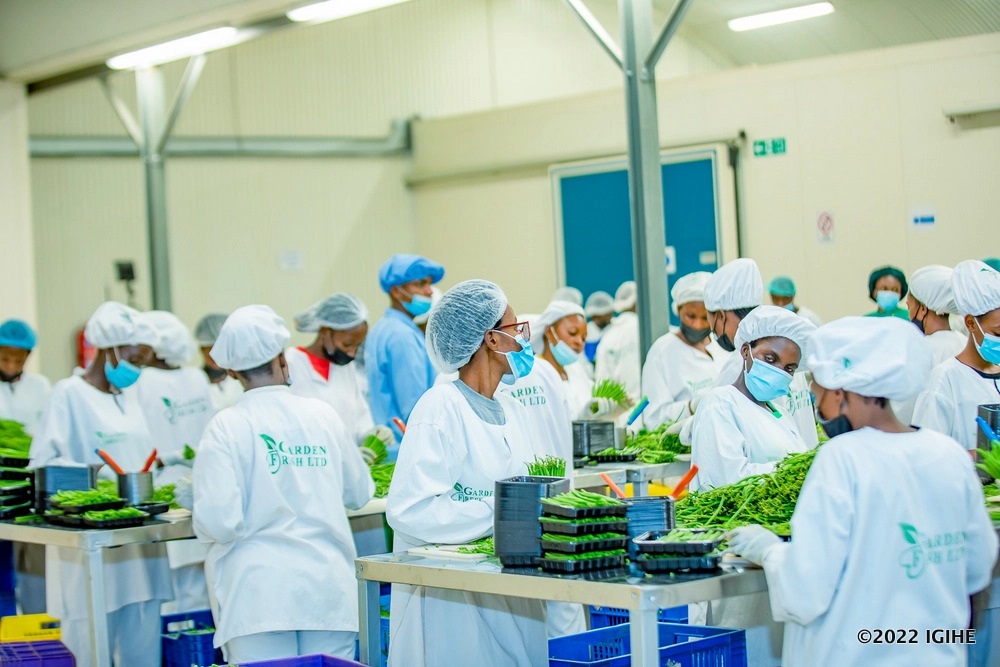
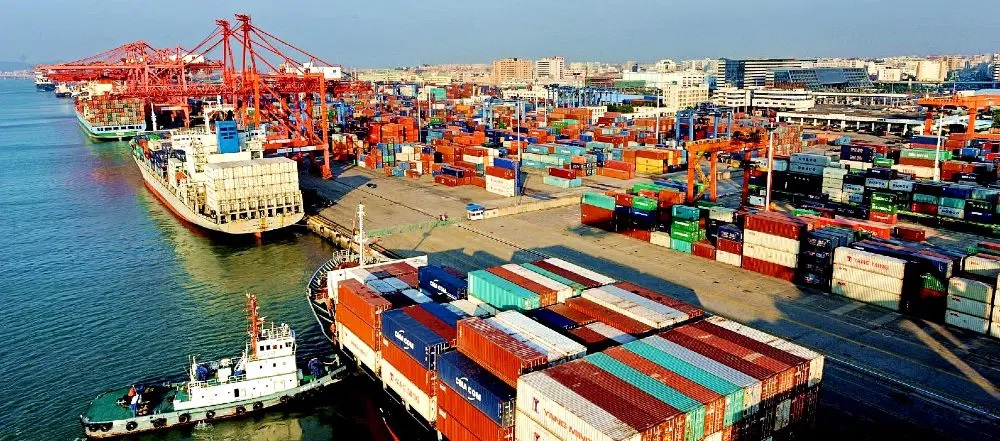
Before the war, traders, who spoke to the Rwanda Broadcasting Agency, reported that exports to the Middle East were thriving, with large volumes of fruits and vegetables being shipped abroad. However, the onset of the conflict has disrupted trade, particularly to Dubai, one of the region’s main markets.
Marie Ange Claudine Ingabire, a leading exporter, said, “Most of our fruits were destined for Dubai, while vegetables were primarily sent to European markets. With flights now suspended, markets for avocados, bananas, and other fruits have collapsed, creating unprecedented challenges for exporters.”
Ingabire added that she currently has 40 tons of avocados awaiting shipment to Dubai. “We had hoped the market would reopen quickly, but now these products are no longer suitable for export, even if transport routes become available,” she said.
Similarly, Zainabu Abdul, another fruit exporter, reported losing Rwf 15 million.
“The war began just as we were harvesting. We intended to pack the produce and send it immediately to the airport, but with flights halted, we incurred unexpected losses. Now our produce continues to deteriorate in cold storage,” Zainabu explained.
Traders say the current situation highlights the importance of diversifying export markets rather than relying on a single destination.
Rwanda’s Minister of Trade and Industry, Sebahizi Prudence, said the government is assessing the conflict’s impact on national trade to identify alternative markets.
“We have multiple markets for our products, including some in countries affected by conflict. We need to evaluate the potential effects and explore other export destinations,” he said.
The Rwanda Agriculture and Animal Resources Development Board (NAEB) confirmed that the conflict has already cost vegetable and fruit exporters more than Rwf 100 million.
The war in Iran, which began on February 28, 2026, is expected to have broader economic implications if prolonged. Experts warn that disruptions in the Middle East, a key hub for global trade, particularly oil, could significantly affect international markets.
The Rwanda Agriculture and Animal Resources Development Board (NAEB) confirmed that the conflict has already cost vegetable and fruit exporters more than Rwf 100 million.
In a statement released on March 13, the global credit rating agency said the outlook revision reflects reduced uncertainty over Rwanda’s access to external funding and growing confidence that public debt levels will stabilise in the coming years.
Fitch noted that strong donor support has helped ease near-term fiscal and external financing risks. External disbursements from multilateral and bilateral partners reached about $1 billion, equivalent to 6.1% of GDP, in the fiscal year ending June 2025. The agency expects official external loan commitments to remain close to $1 billion annually between 2026 and 2027, supporting government financing needs.
The agency also pointed to recent diplomatic engagement and de-escalation of conflict in eastern Democratic Republic of the Congo as helping reduce uncertainty over Rwanda’s access to concessional financing, although it cautioned that the regional security environment remains fragile.
Rwanda’s public debt is expected to rise in the short term as the government continues to finance major infrastructure and development projects. According to Fitch, government debt could reach around 79% of GDP by 2027, up from 75% in 2025, before gradually stabilising as growth and fiscal adjustments take effect.
The increase in borrowing is partly linked to large-scale investments, including the construction of Bugesera International Airport and the expansion of the national carrier RwandAir. However, Fitch noted that most of Rwanda’s external debt remains highly concessional, helping maintain manageable debt servicing costs.
Economic growth remains a key strength supporting the rating. Fitch estimates that Rwanda’s real GDP growth reached 8% in 2025 and expects it to remain above 7% through 2027, significantly higher than the median growth rate for countries with similar credit ratings.
Recent data from the National Institute of Statistics of Rwanda also showed strong economic momentum, with the economy expanding 11.8% in the third quarter of 2025, driven largely by the services and industrial sectors.
As Rwanda continues investing in major infrastructure projects, Fitch projects the current account deficit to widen to around 15% of GDP in 2026, reflecting strong import demand linked to ongoing economic development.
Fitch said improvements in export performance, stronger foreign reserve levels and sustained fiscal consolidation could support a future upgrade of Rwanda’s credit rating.
Fitch Ratings is an American-British credit rating agency. It is one of the three nationally recognised statistical rating organisations designated by the U.S. Securities and Exchange Commission and is considered as being one of the “Big Three credit rating agencies”, along with Moody’s and S&P Global Ratings.
Fitch Ratings is an American-British credit rating agency and one of the “Big Three” global rating agencies alongside Moody’s and S&P Global Ratings.
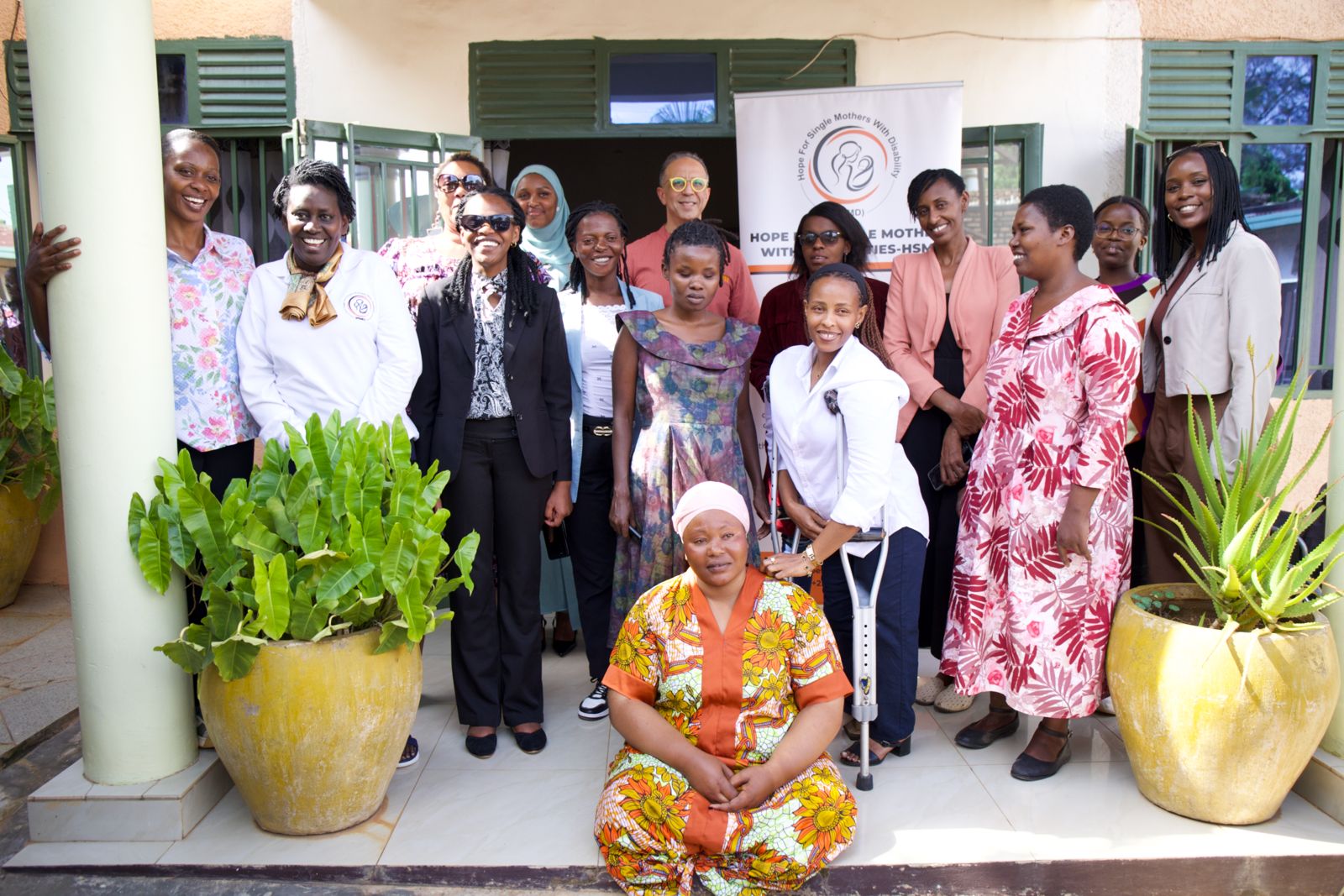
The visit centred on two of HSMD’s most pressing needs: economic empowerment and access to menstrual hygiene. In response, Zaria Court Hotel donated a two-year supply of reusable sanitary pads for 100 girls, each recipient receiving a complete pack sufficient to cover their full monthly cycle.
The choice of reusable pads was intentional and thoughtful: a sustainable, dignified solution that addresses a recurring need without placing an ongoing financial burden on women who already face significant economic hardship.
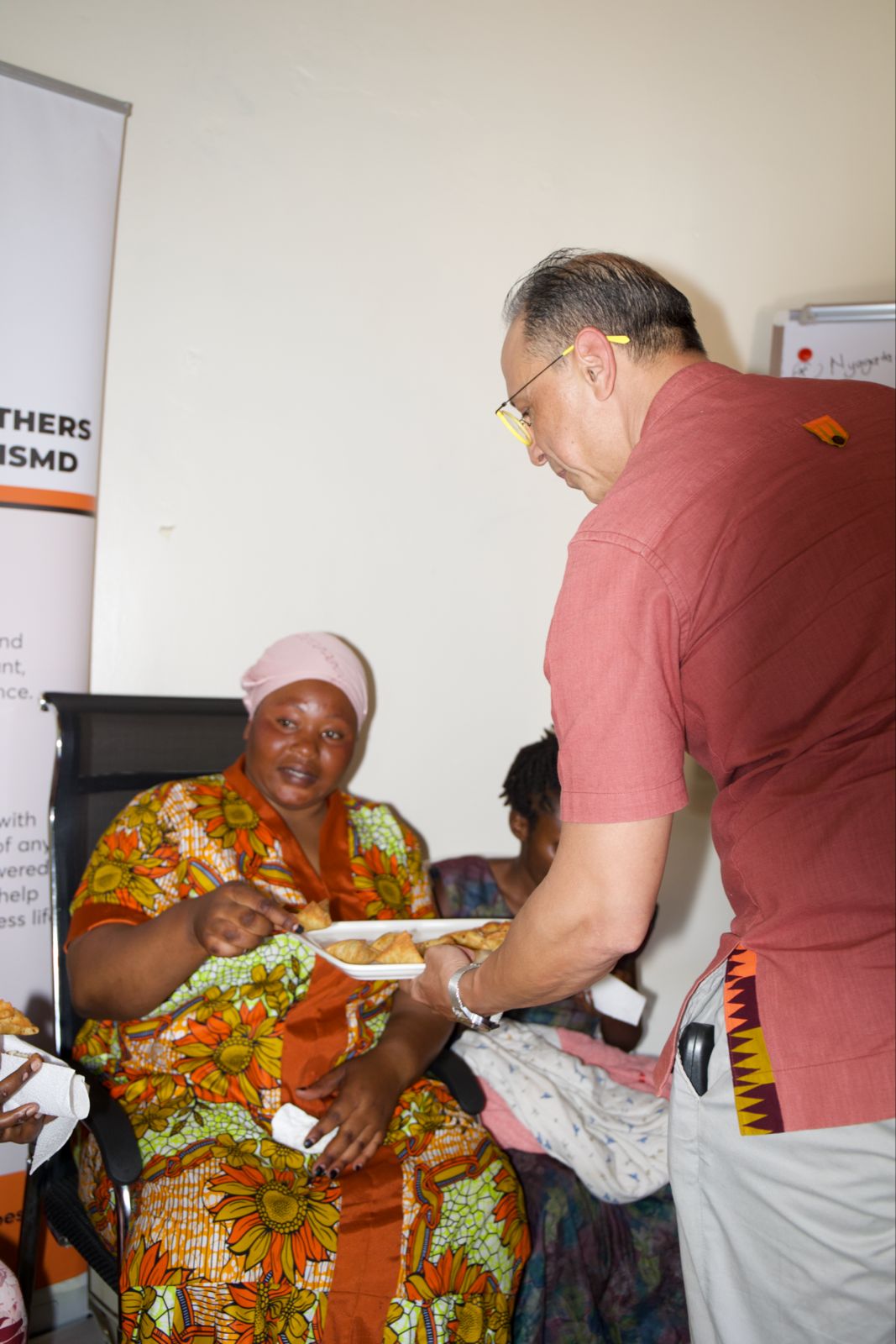
“There is a special kind of warmth you feel when you witness pure determination and hope, and we experienced that today at HSMD. Stepping away from the day to day of Zaria Court Hotel to spend time with these mothers and their children was a grounding experience.
“Their courage in the face of daily challenges is a lesson in humanity , and we are proud to stand beside them, not just as a hotel, but as neighbours and advocates,” said Walid Choubana, General Manager, Zaria Court Hotel, Tapestry Collection by Hilton.
Beyond the material donation, Zaria Court Hotel presented HSMD with a Certificate of Recognition, a formal acknowledgment of the organisation’s tireless work in championing the rights and wellbeing of single mothers and girls with disabilities in Rwanda. HSMD’s vision of “a society where single mothers and girls with disabilities are self-reliant, live a dignified life free from violence” resonates deeply with Zaria Court Hotel’s own belief that prosperity in a community cannot be selective.
“We appreciate Zaria Court Hotel from our hearts for choosing to come and celebrate Women’s Month with us. You have seen our mothers and heard their testimonies . Now go and be our ambassadors. Advocate for the rights of single mothers with disabilities, be their voice, and help carry their stories far enough to change their lives,” said Ms. Tumwine Winnie, Executive Director, Hope for Single Mothers with Disabilities.
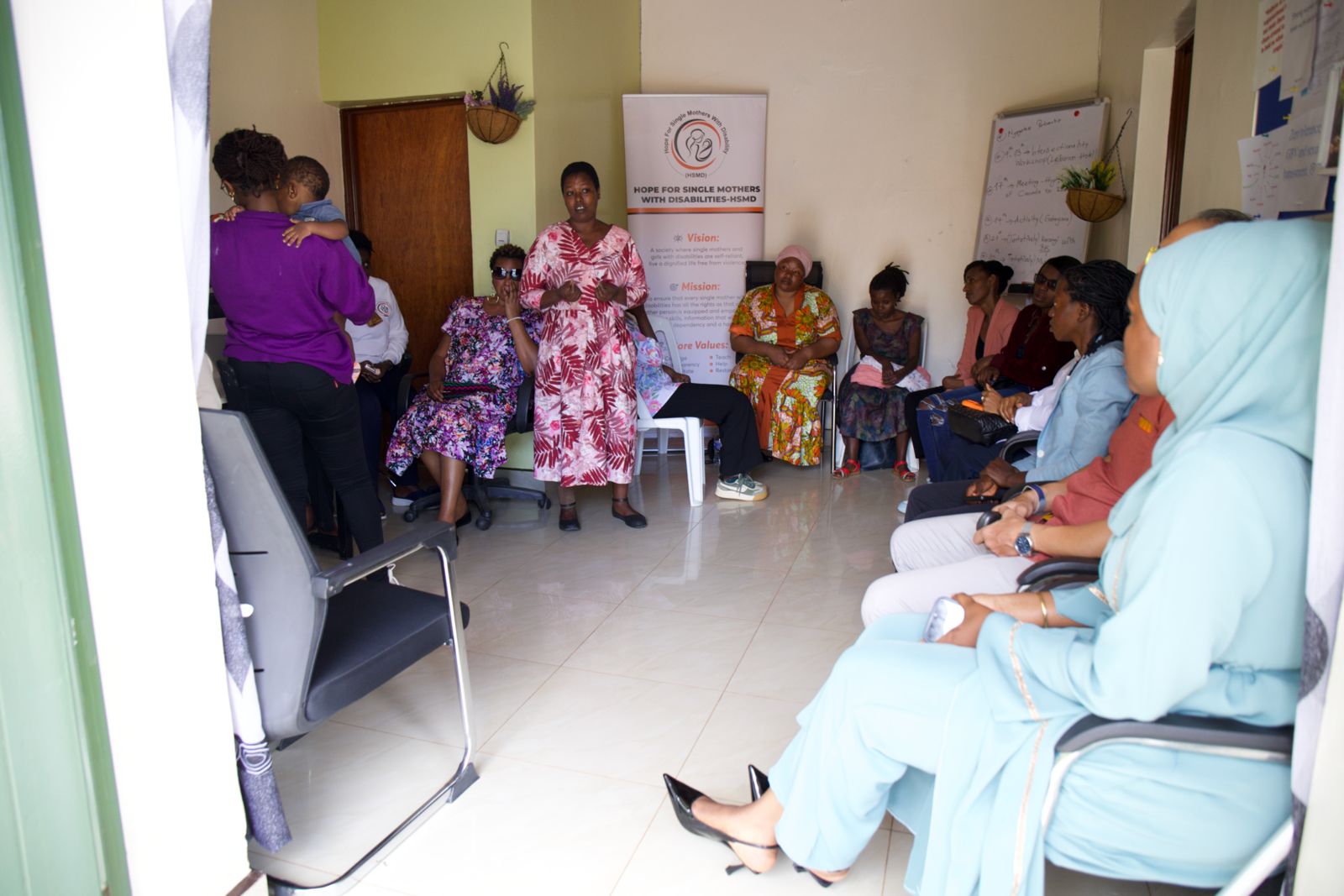
Perhaps the most quietly powerful moment of the visit was when the hotel’s team sat down to listen- Truly listen, to the stories shared by HSMD beneficiaries. Women who have navigated poverty, disability, social exclusion, and gender-based violence while raising children alone and willing to share their journeys with openness and grace. It was a moment that, as the Zaria team described it, “truly reinforced the importance of why we want to contribute impact into the community around us.”
“Living with visual impairment while raising a child alone is a challenge the world rarely stops to acknowledge. Too often, we are invisible. When Zaria Court Hotel walked through our doors, they brought more than gifts , they brought dignity. They sat with us, they listened, and they made us feel that our lives and our struggles matter. That kind of recognition gives you the strength to keep going. It reminded us that we are not alone,” noted Chantal Juru, Member, Hope for Single Mothers with Disabilities.
HSMD has been operational in Rwanda since 2018. The organisation works through an intersectional approach, recognising that single mothers and girls with disabilities face compounded barriers rooted in gender, disability, poverty, and geography.
Its programs span economic empowerment through skills training and microfinance support, protection from gender-based violence, access to sexual and reproductive health rights (SRHR), legal literacy, mental health services, and feminist leadership development. At its core, HSMD advocates for a Rwanda where no woman’s potential is capped by her circumstances.
“We came here to be with you today, to be part of this community and to show you that there are people out there who think of you every day. We promise to treat people with equality, regardless of their disabilities, including when it comes to employment,” stated Walid Choubana, General Manager, Zaria Court Hotel, Tapestry Collection by Hilton.
Zaria Court Hotel’s CSR initiative this Women’s Month reflects a growing conviction within the hospitality industry that businesses are not islands. As part of the Hilton family and one of Kigali’s premier establishments, Zaria Court Hotel recognises that the communities in which it operates are not just contexts, they are responsibilities. This visit to HSMD was not a one-time campaign; as it is the beginning of a conscious, ongoing relationship with the women and organisations shaping a more equitable Rwanda.
Zaria Court Hotel has celebrated Women’s Month with single mothers with disabilitiesThe visit centred on two of HSMD’s most pressing needs. The delegation also listened to the stories shared by HSMD beneficiaries. A delegation from the hotel visited Hope for Single Mothers with Disabilities on March 11, 2026. Beyond the material donation, Zaria Court Hotel presented HSMD with a Certificate of Recognition, a formal acknowledgment of the organisation’s tireless work in championing the rights and wellbeing of single mothers and girls with disabilities in Rwanda.
The evaluation, conducted from March 2–9, 2026, reviewed 19 key areas, including the country’s long-term nuclear energy plans, measures to protect people and the environment, financial frameworks for building and maintaining facilities, skilled personnel, and relevant legislation. The experts concluded that Rwanda is well-prepared in many of these areas.
Dr. Fidele Ndahayo, CEO of the Rwanda Atomic Energy Board (RAEB), said six priority areas require continued focus.
“We have made progress across all areas assessed, but there is still work to be done. The priority areas include preparing comprehensive documentation of what has been achieved and what remains, ensuring national leadership is fully informed, and reviewing all legislation to remove potential obstacles to the nuclear power plant project,” he said.
Rwanda plans to develop small nuclear power plants, which are expected to increase the country’s electricity capacity from 447 megawatts.
President Paul Kagame, speaking at the Nuclear Energy Summit in Paris, France, on Tuesday, said Rwanda’s long-term ambition to become a high-income country by 2050 requires a reliable and abundant electricity supply. He noted that nuclear energy will play a central role in diversifying the country’s energy mix and providing the stability needed for sustained economic transformation.
According to the Head of State, nuclear power offers Rwanda a dependable source of electricity that can support industrial expansion while helping reduce carbon emissions.
“We have decided to make nuclear central to our strategy,” Kagame said. “It will diversify our energy mix while providing the stability required for industrial growth and long-term transformation.”
The government estimates that $5 billion will be needed to establish nuclear power generation in the country.
Rwanda began collaborating with Russia in 2018 to establish a nuclear research center, paving the way for a future power plant. In August 2024, the country signed a partnership with U.S.-based Nano Nuclear Energy Inc. to develop new technology for generating electricity from nuclear energy.
RAEB projects that by 2028, the 234 skilled personnel required for the nuclear program will be in place, enabling the nuclear power plant to start supplying electricity by 2030.
In late 2025, the University of Rwanda introduced a new academic programme in nuclear science to build local expertise. Dr. Ndahayo also highlighted the need to support local industries to actively participate in building and operating nuclear-powered facilities.
As of early 2026, over 85% of Rwandan households have access to electricity, with residential and industrial sectors accounting for the highest demand.
Rwanda plans to develop small nuclear power plants, which are expected to increase the country’s electricity capacity from 447 megawatts.
The company hosted a business solutions event at the Kigali Marriott Hotel, bringing together representatives from government institutions, banks, insurance firms, and private companies to explore technologies designed to improve document management and workplace efficiency.
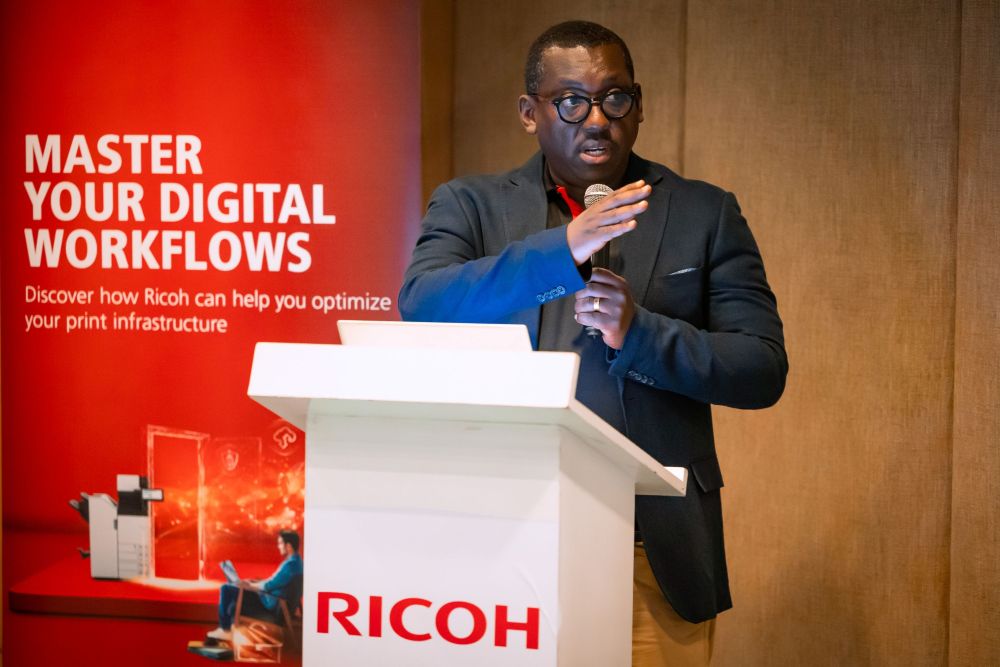
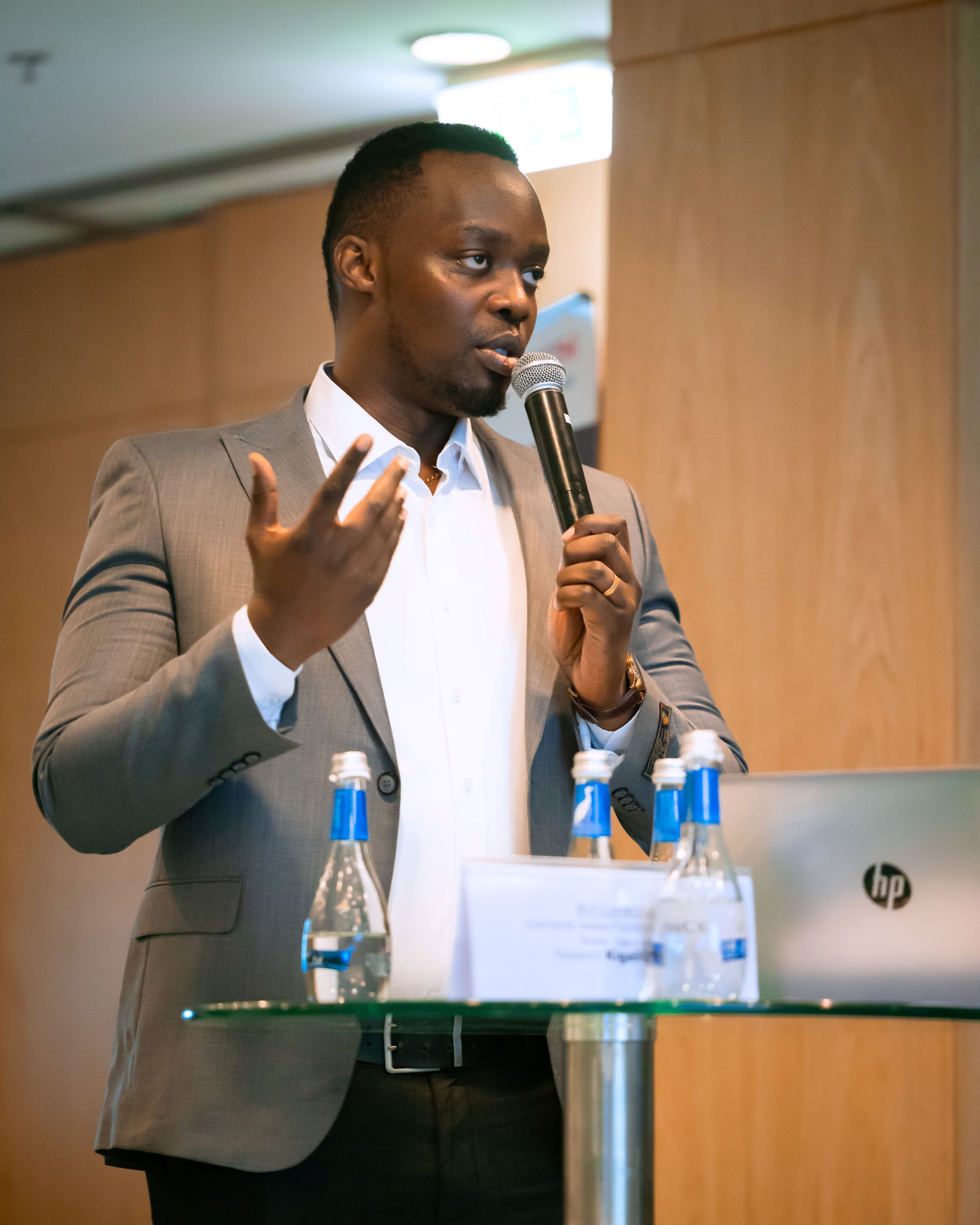
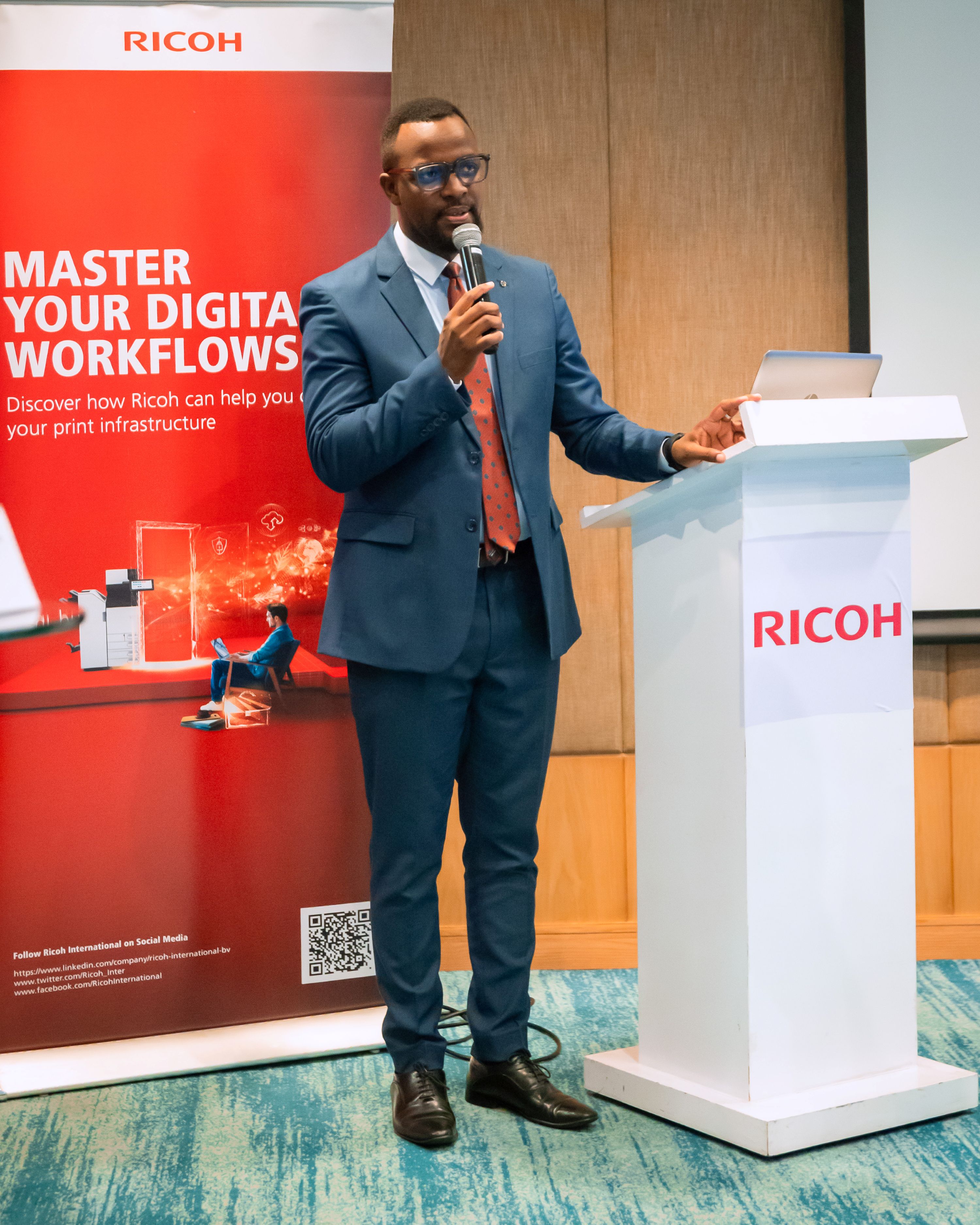
Speaking at the event, RD Tech CEO Jules Munyempeta said the gathering aimed to demonstrate how organisations can adopt practical solutions to support their digital transformation journey.
“We organised this event to showcase the kind of solutions we provide,” he said. “There is a clear trend toward digital transformation, but people also need to understand what it really means and what solutions address it.”
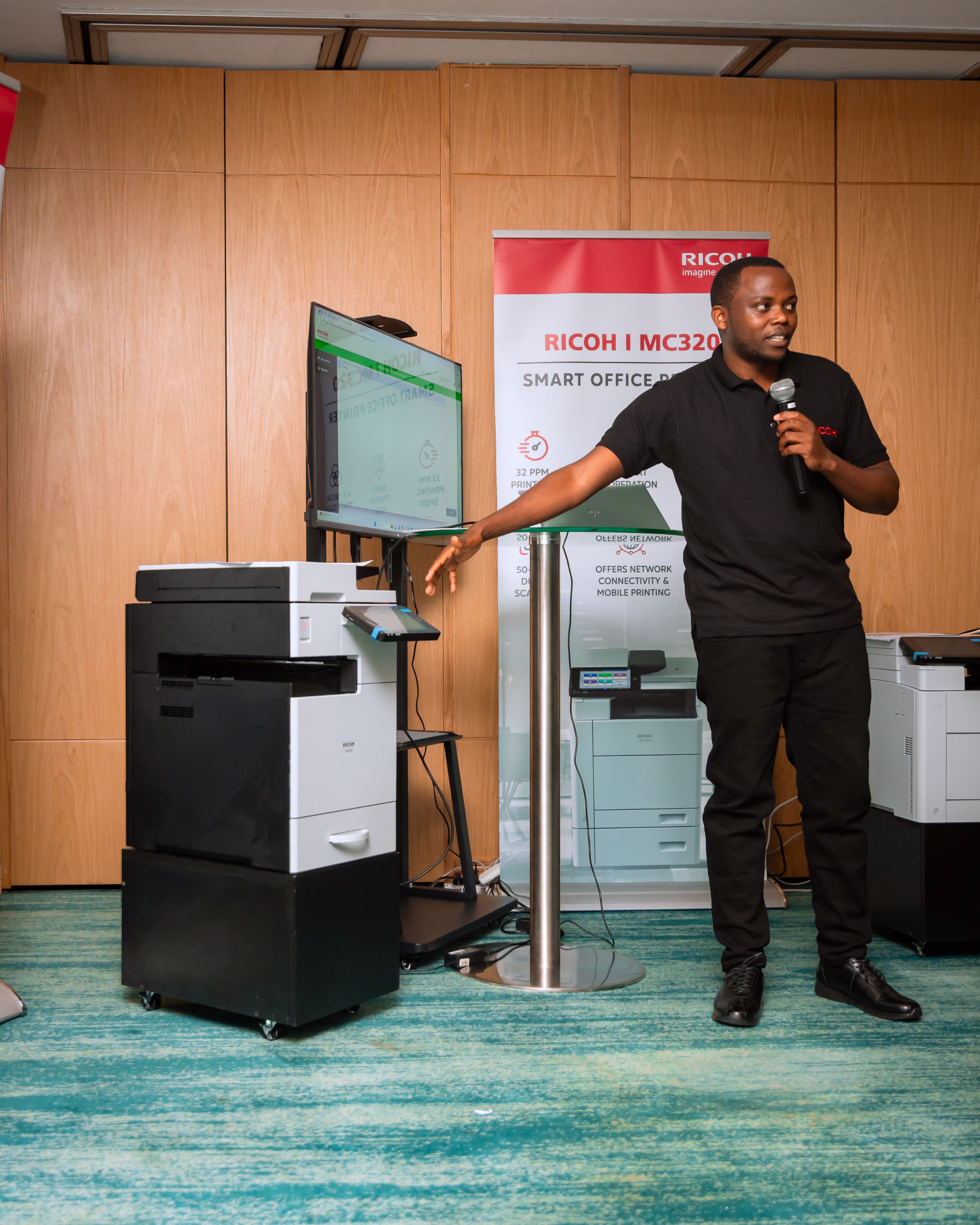
RD Tech CEO Jules Munyempeta showcased a range of digital workplace innovations powered by Ricoh.
The event also marked a milestone for RD Tech, which is celebrating two decades of delivering technology solutions to organisations across Rwanda.
“For us, it is a very important milestone that we do not take for granted,” Munyempeta said. “We would not have reached 20 years without the support and trust of our customers.”
Partnership driving digital solutions
RD Tech has been working with Ricoh for the past three years, a partnership the company says has expanded its ability to offer advanced digital workplace technologies.
From photocopiers to digital innovation, Ricoh is transforming how businesses operate.
Munyempeta noted that Ricoh, historically known for photocopiers and printers, has evolved into a provider of broader digital solutions as organisations increasingly move toward paperless operations.
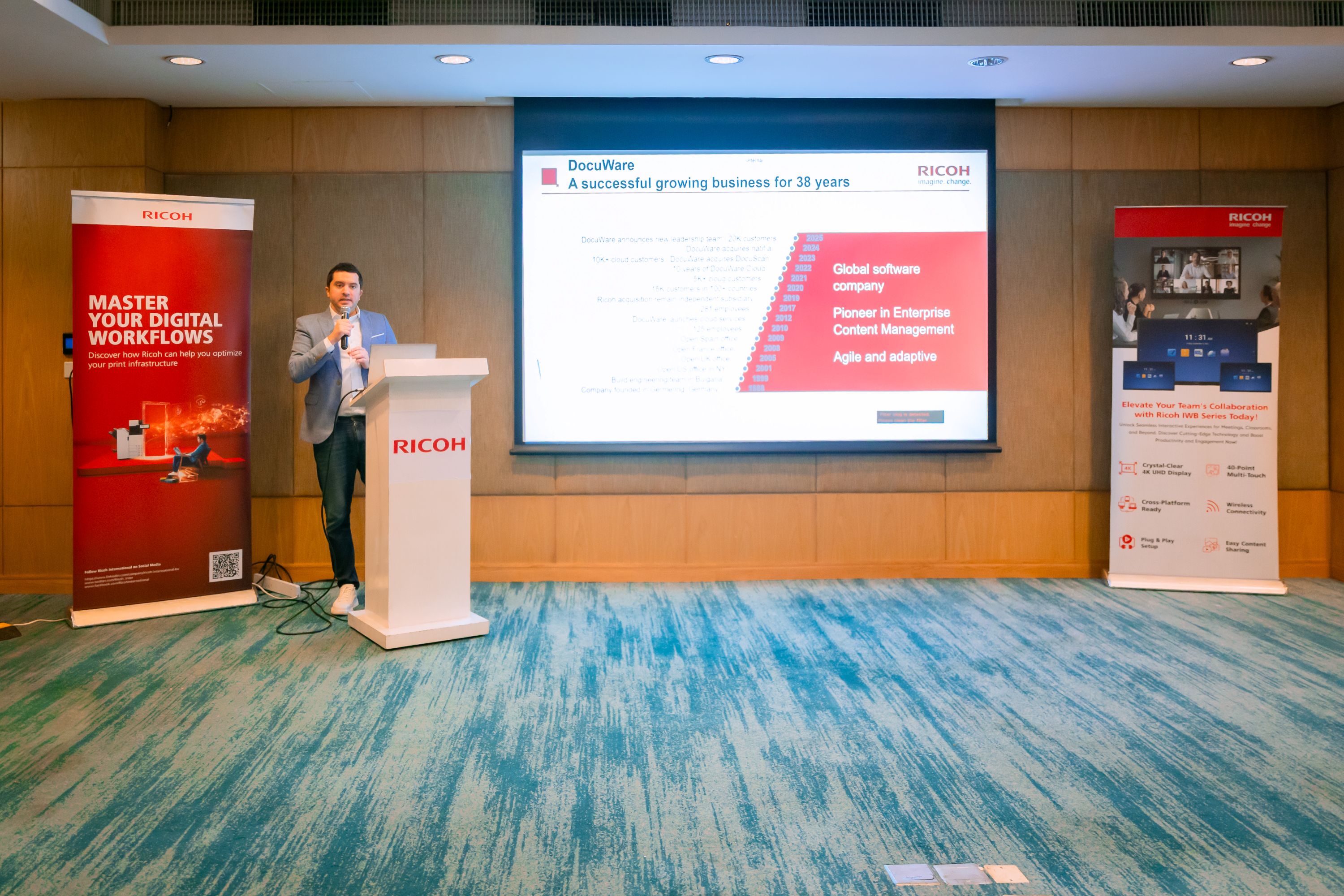
“They have expanded their business into solutions,” he said. “Ricoh also acquired one of the world’s most experienced document management companies, DocuWare, which allows us to provide a wide range of technologies that support our customers’ digital transformation.”
During the event, RD Tech demonstrated several technologies aimed at helping organisations digitise workflows, manage information more efficiently, and improve data security.
From printing to intelligent workplaces
Participants were introduced to Ricoh’s intelligent multifunction printers, which function not only as printing devices but also as digital hubs capable of scanning, cloud integration, and connectivity with enterprise systems.
DocuWare platform allows organisations to securely archive files, automate document workflows, and retrieve information quickly through digital repositories.
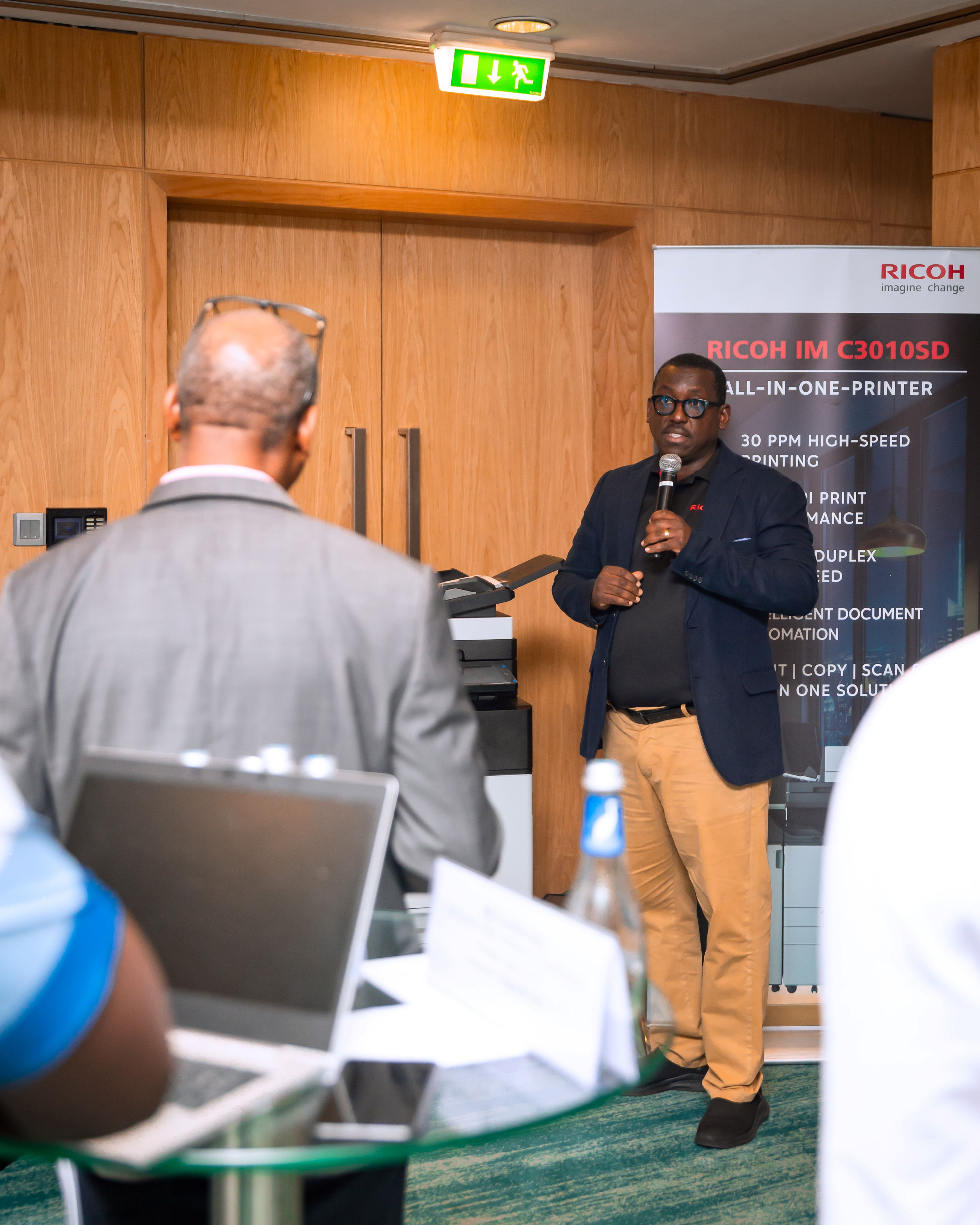
Among the technologies showcased was the Ricoh IM C3010SD multifunction printer, which integrates document automation, high-speed duplex scanning, and cloud-based workflow integration.
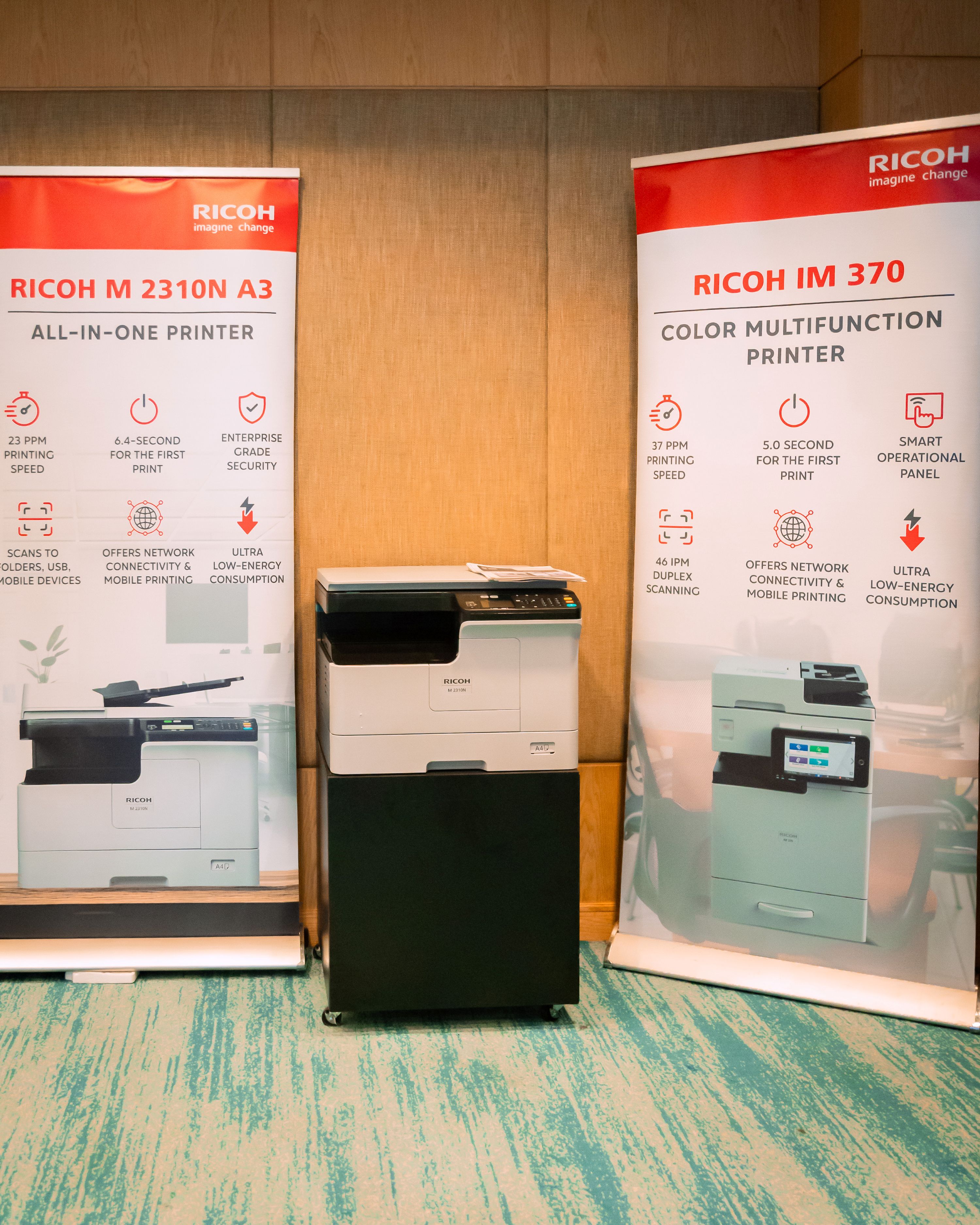
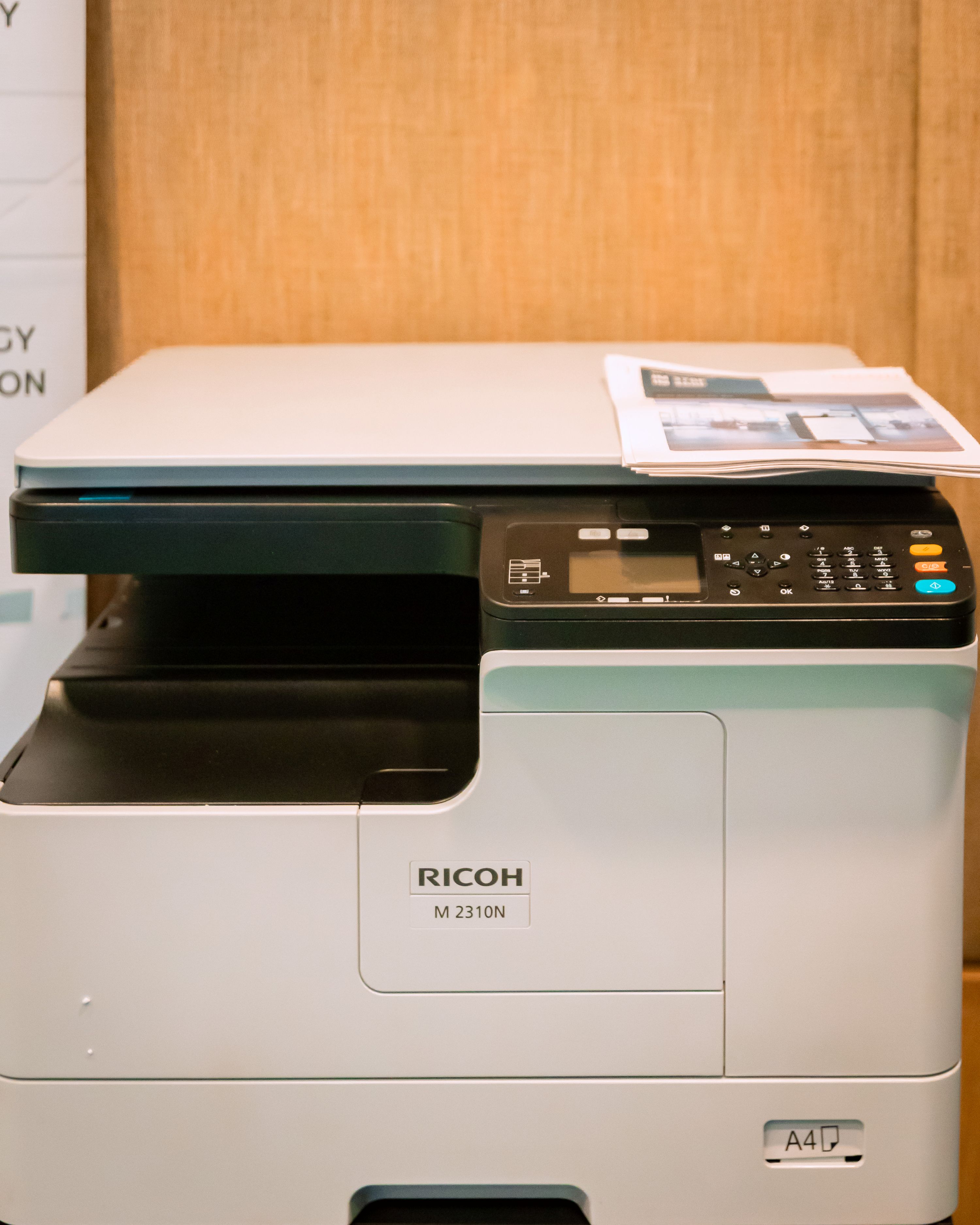
Other devices on display included the Ricoh IMC320, Ricoh IM 370, and Ricoh M 2310N printers, designed to support office productivity while reducing energy consumption and operational costs.
The company also demonstrated Ricoh’s managed print services (MPS), a model that allows organisations to lease and centrally manage their printing infrastructure.
Some of the smart printers the two partners have brought to the Rwandan market.
Through this system, companies can track printing usage, optimise device deployment, and reduce overall printing costs while maintaining secure document workflows.
Digitising document management
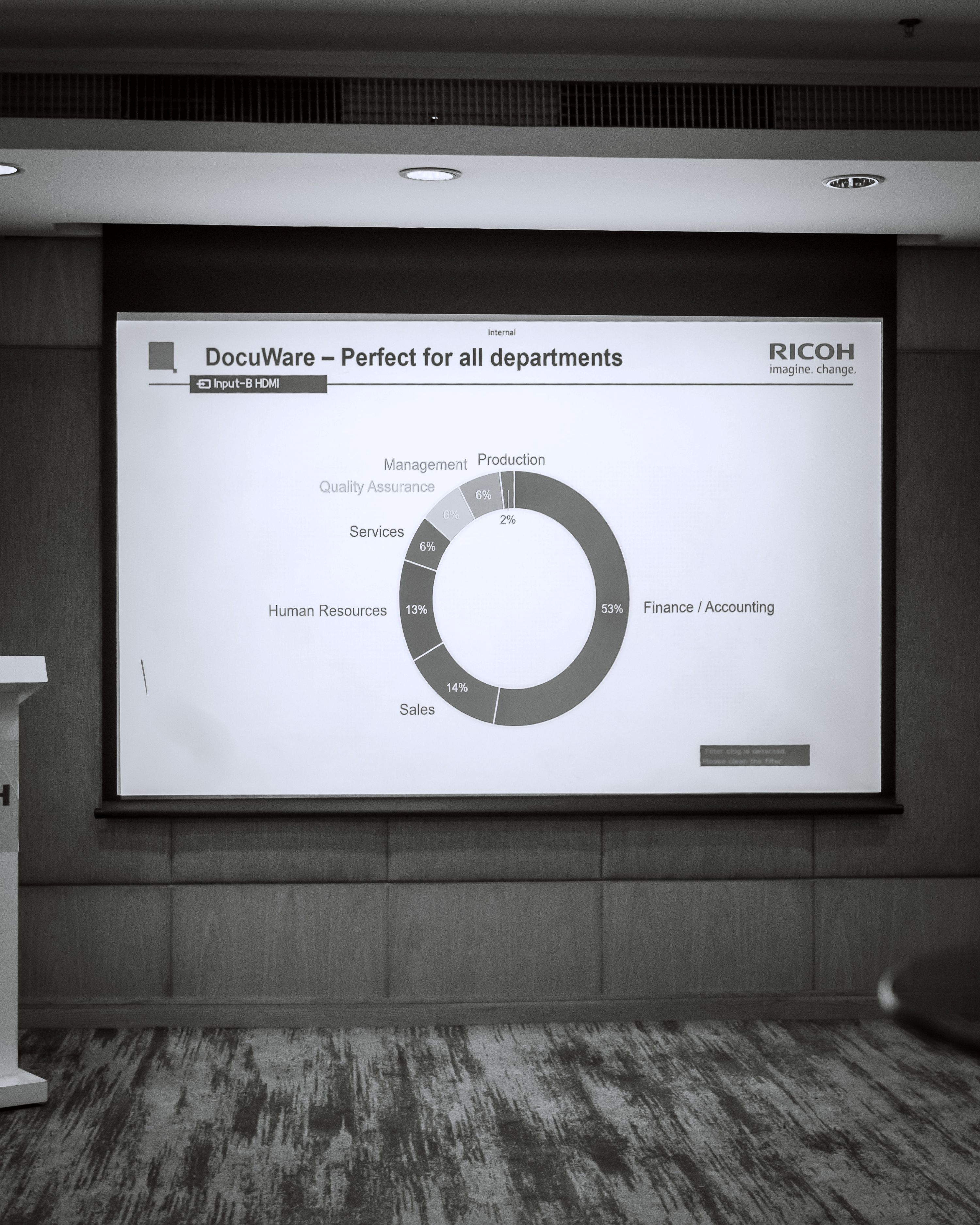
Another major focus of the event was document digitisation through the DocuWare platform, which allows organisations to securely archive files, automate document workflows, and retrieve information quickly through digital repositories.
The platform helps companies reduce paper dependency while improving compliance and operational efficiency.
According to RD Tech, these solutions enable businesses to automate approvals, centralise document storage, and access files remotely through secure online systems.
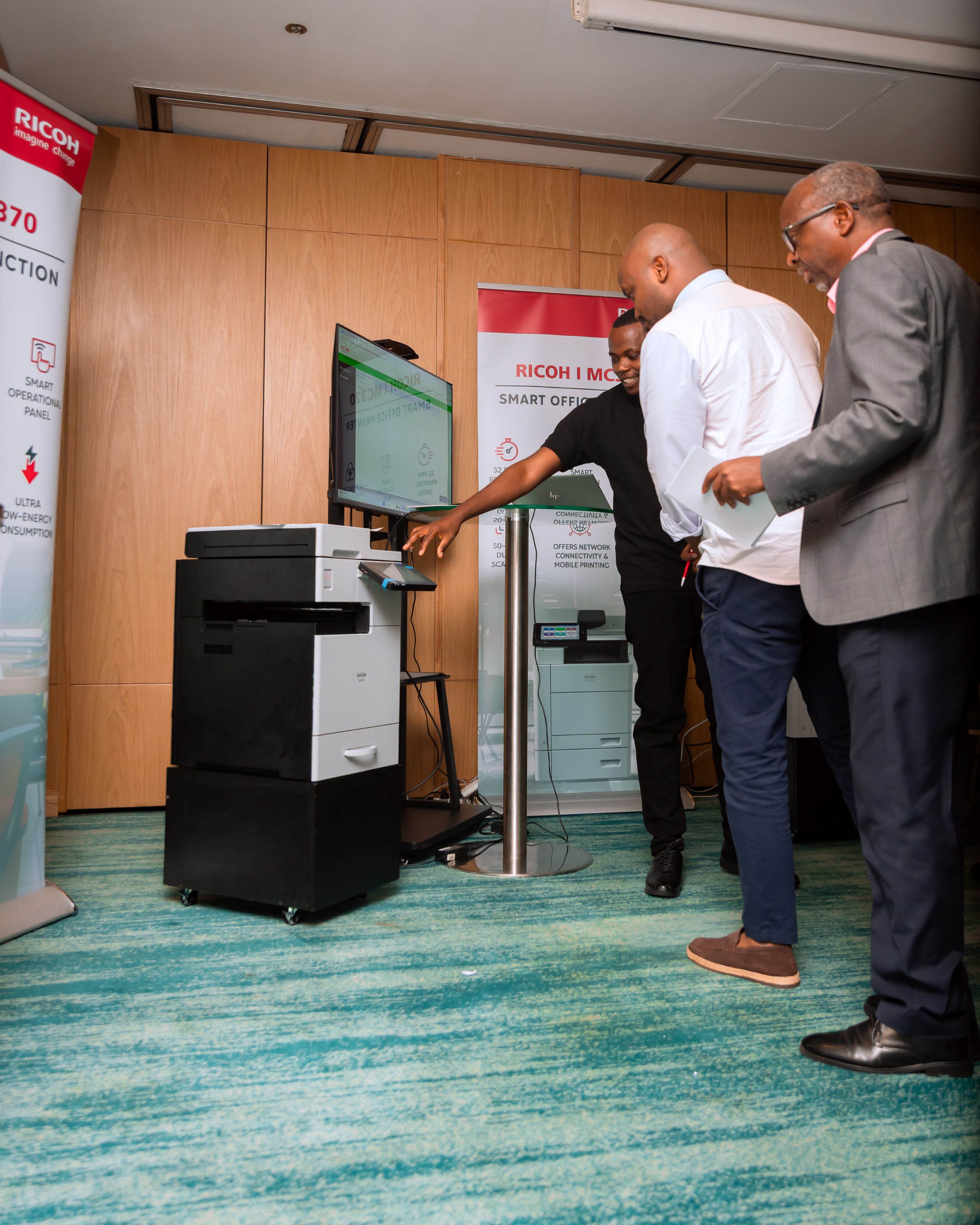
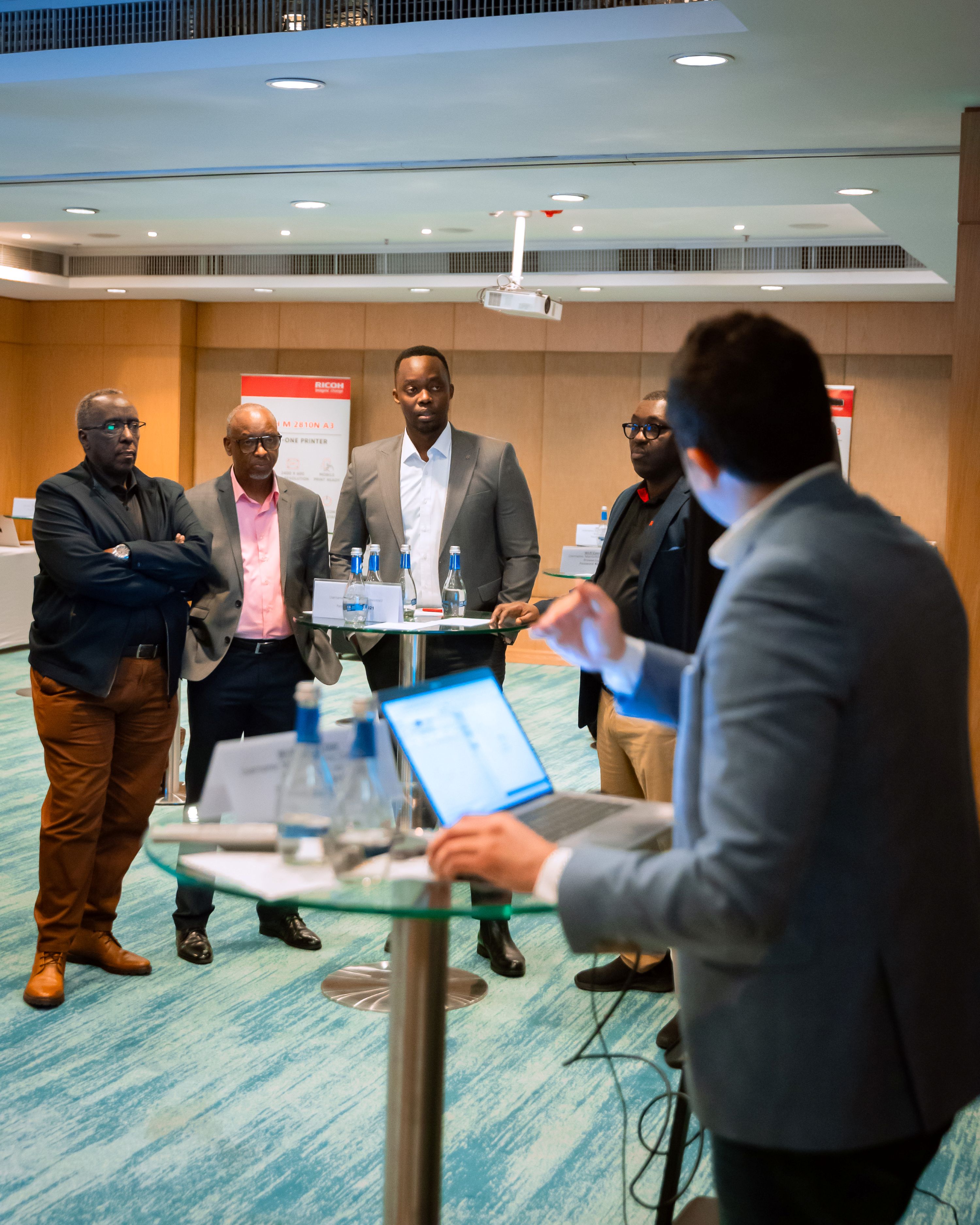
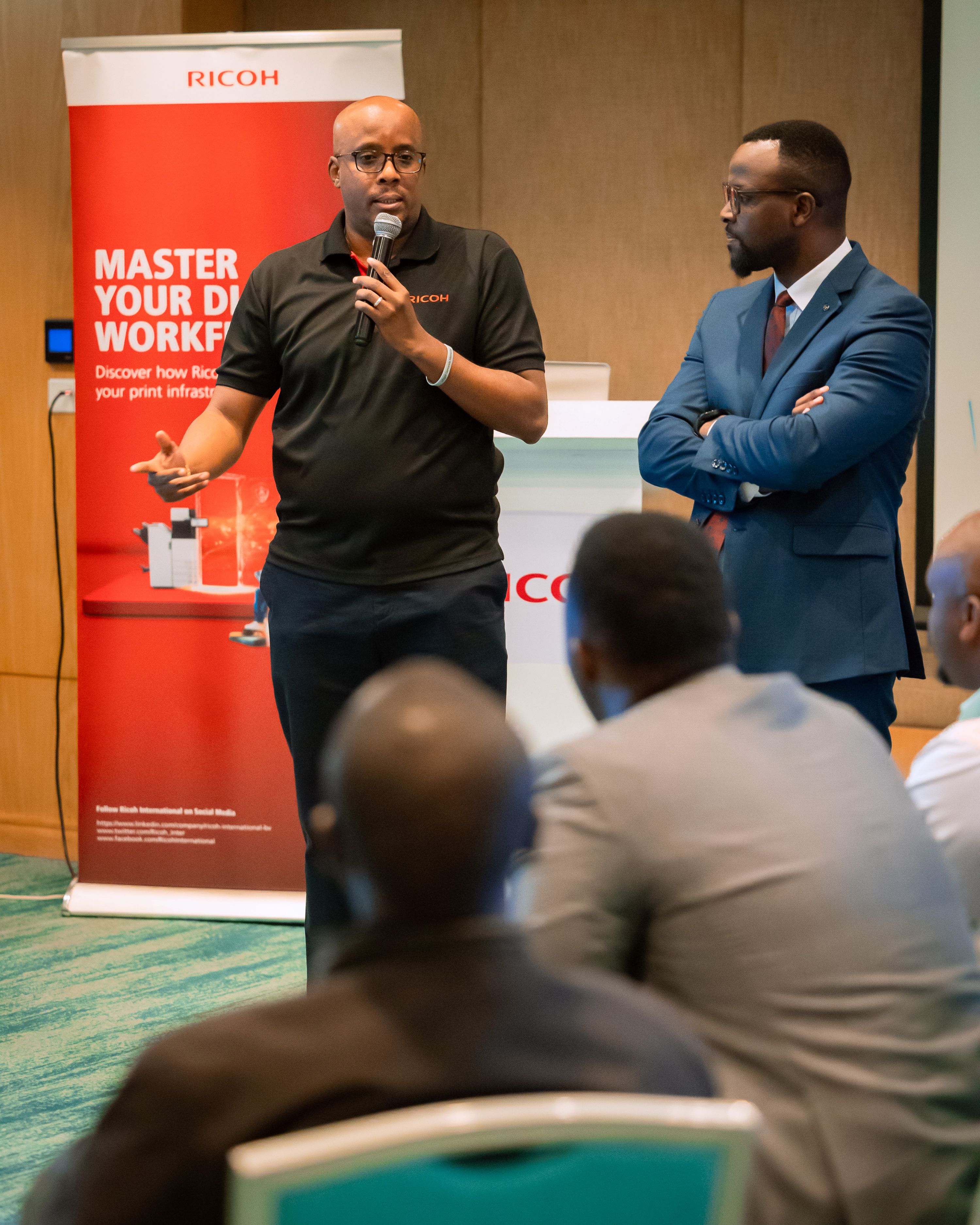
Ricoh and RD Tech led an engaging, hands-on session to help representatives from various sectors understand how the modern and intelligent printers work.
The event was designed to be interactive, with demonstration stands allowing attendees to experience the solutions firsthand.
“We designed today’s event to be interactive and hands-on, so attendees could experience firsthand how RD tech and Ricoh solutions can transform their workplaces,” said Benjamin Cyusa, RD Tech Event Organiser.
Businesses see practical benefits
Participants who spoke to IGIHE said the technologies could significantly improve internal processes and reduce operational inefficiencies.
Rene Sebera, Managing Director of Sky Global Events Management, said the document management systems demonstrated during the event could help organisations avoid duplication of work and improve record management.
“This system helps you save files in a way that makes them easy to retrieve even years later,” he said. “It can also prevent issues like paying the same invoice twice because the system can track previously processed documents.”
Rene Sebera of Sky Global Events noted that the document management systems can boost efficiency and improve record management.
Similarly, Serge Kajabo, HR and Procurement Manager at Ngali Holdings, said digital document systems could solve several challenges related to printing and file management.
“If we can index documents and manage them digitally instead of printing everything, it will make things much easier,” he said. “AI can help retrieve documents instantly, which saves time and reduces costs.”
Looking ahead, CEO Munyempeta said businesses must embrace emerging technologies such as automation and artificial intelligence to remain competitive.
“Everyone is moving toward digital transformation,” he said. “The faster organisations adapt, the better they will be able to serve their customers.”
He added that companies should adopt solutions that can evolve alongside their digital transformation journey.
As RD Tech marks 20 years in the technology sector, the company says it will continue investing in innovation, skills development, and partnerships that help organisations build smarter and more secure digital workplaces.
The event was designed to be interactive, with demonstration stands allowing attendees to experience the solutions firsthand.Teams showcased how modern printers can reduce costs and boost efficiency.Printers such as the Ricoh M 2310N are designed to support office productivity while reducing energy consumption and operational costs.Participants engaged experts and documented insights on how the digital solutions enhance workflows.Experts demonstrated how various technologies work.Benjamin Cyusa, RD Tech Event Organiser, said the interactive event let attendees experience solutions firsthand.According to Serge Kajabo of Ngali Holdings, digital document systems help tackle issues with printing and records management.The highly interactive event was held at the Marriott Hotel.
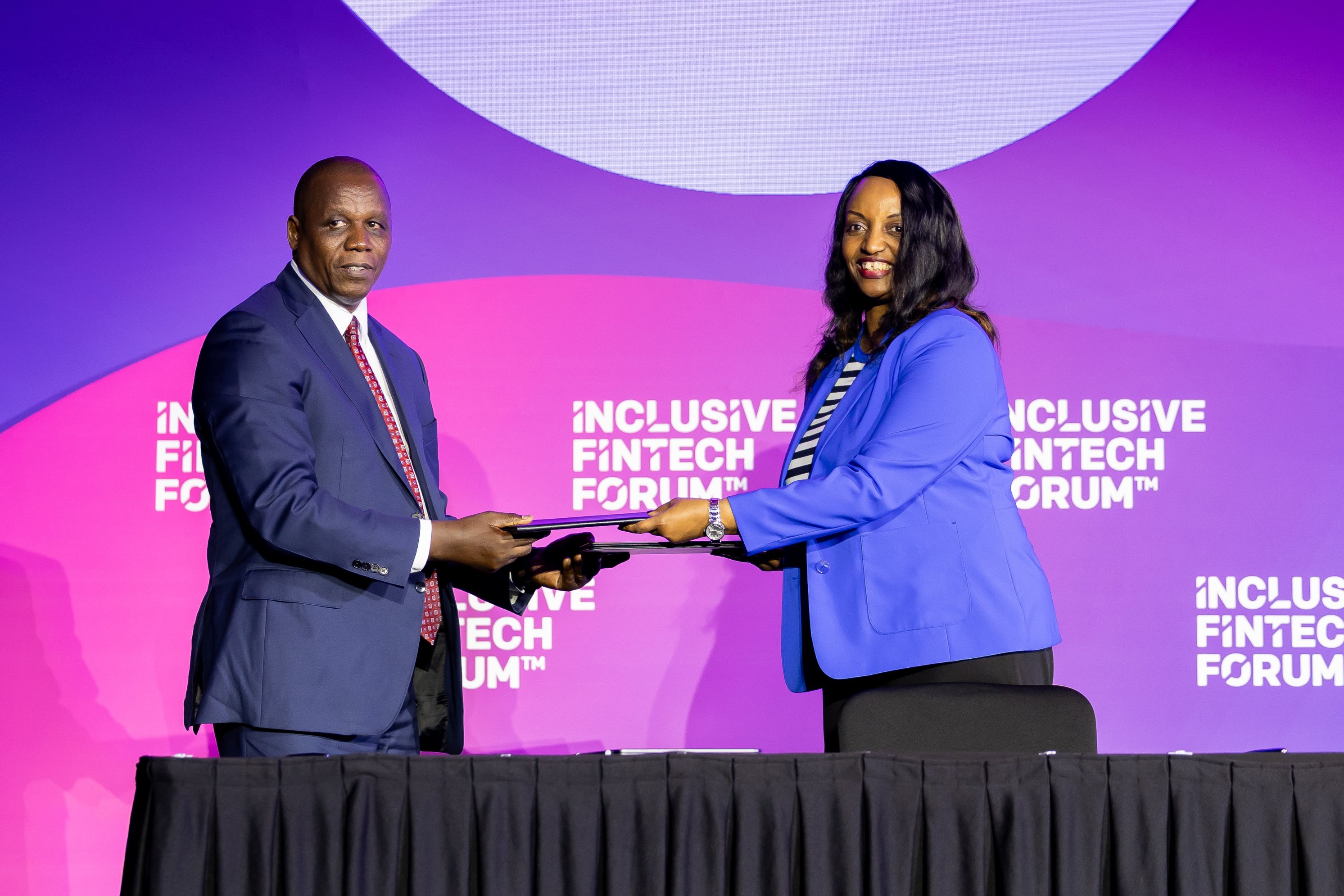
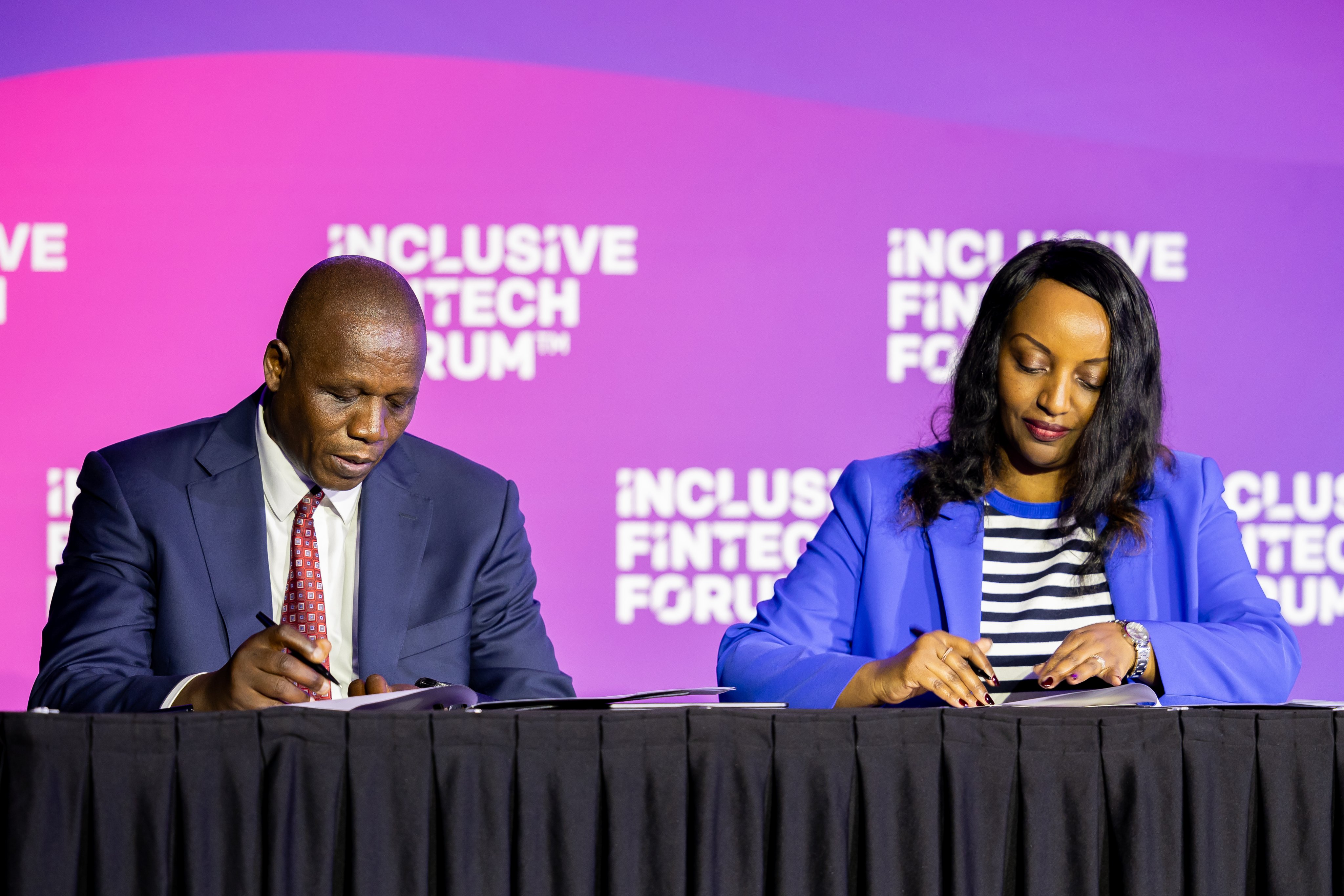
Signed on the sidelines of the Inclusive FinTech Forum 2026 in Kigali on Wednesday, the new framework aims to reduce duplicative regulatory processes while maintaining strong oversight, allowing licensed PSPs to operate seamlessly in both Kenya and Rwanda.
By promoting mutual recognition of licensing regimes, the initiative is expected to foster competition, encourage innovation, and accelerate the delivery of digital financial services across borders.
The MoU, the partners said, aligns with the East Africa Community Cross-Border Payment System Masterplan (EAC Masterplan), which envisions a more integrated, efficient, and inclusive regional payments ecosystem.
One of the Masterplan’s key priorities is to create a mutual recognition system for PSP licensing across partner states, addressing the regulatory fragmentation that has historically limited cross-border payment expansion.
Rwanda’s central bank termed the new agreement a “major step toward stronger competition, greater innovation, and faster cross-border digital financial services under robust regulatory oversight.
The Central Bank of Kenya reaffirmed its commitment to strengthening regional collaboration and ensuring that national payment infrastructures meet the evolving needs of the economy.
The agreement is expected to pave the way for a more connected East African payments landscape, benefiting businesses and consumers alike by facilitating faster, safer, and more accessible digital financial services.
Signed on the sidelines of the Inclusive FinTech Forum 2026 in Kigali on Wednesday, the new framework aims to reduce duplicative regulatory processes while maintaining strong oversight, allowing licensed PSPs to operate seamlessly in both Kenya and Rwanda.
The one-day gathering, held under the theme “Turning Vision into Velocity: Building Africa’s Trade Ecosystem for Real-World Impact,” brought together policymakers, development institutions, business leaders and investors to discuss ways to accelerate Africa’s participation in global trade while expanding commerce within the continent.
African Development Bank Director General for Southern Africa Kennedy Mbekeani said that global developments in recent years had highlighted the need for Africa to strengthen regional integration.
He added that risk perception was often discouraging investment on the continent. “That perception is sometimes intentional,” he said. “They will continue to tell us that Africa is risky so that they can yield as much as they can from us.”
During a panel discussion, Botswanan Minister of Trade and Entrepreneurship Tiroeaone Ntsima said African countries could benefit from opening borders and jointly financing cross-border projects.
He highlighted the need for stronger coordination between neighboring countries, saying that trade routes and cross-border facilities needed to be simplified to make it easier for businesses and people to move goods.
Ghana’s Minister for Trade, Agribusiness and Industry Elizabeth Ofosu-Adjare said fragmentation remained a key obstacle to trade, both between and within countries.
She stressed the need for data to be shared seamlessly between regions and agencies to reduce trade bottlenecks.
Zambian Minister of Commerce, Trade and Industry Chipoka Mulenga said that African economies should support each other through stronger investment and trade ties.
Regional Economic Communities (RECs) were intended to eliminate trade barriers among member states but were often undermined by restrictions imposed by countries themselves, the minister noted.
“The RECs are not performing the way they’re supposed to perform because we are coming up with non-tariff barriers deliberately to choke each other’s trade,” he said.
The minister urged governments and businesses to strengthen cross-border investment and cooperation across the continent.
“We need to encourage inter-country investment and business into business … never compete against each other but complement each other,” he added.
Africa Trade Conference has urged stronger regional integration to boost intra-African trade
Globally, over 4.6 million robots are currently in use across industries, illustrating how automation is increasingly shaping productivity. In many cases, a robot can perform tasks up to ten times more efficiently than a human worker.
China, for instance, has long recognized the potential of these machines. By 2024, it had deployed around 300,000 robots, and today more than two million are in active use across industries. Nearly 90% of Chinese companies view artificial intelligence (AI) and robotics as key drivers of business transformation. The global robotics market was valued at $20.8 billion in 2025 and is expected to grow sevenfold by 2032.
From autonomous vehicles and service robots to surgical-assisting machines and agricultural automation for planting, pruning, and harvesting, robotics technology is increasingly integrated into daily life. Notable examples include the Spot robot, widely used in military operations for surveillance and explosive detection, Apis Cor’s Russian-built robot that can construct a house in under 24 hours, and Israel’s ReWalk, which assists people with spinal injuries to walk.
Rwanda embraces robotics
Rwanda has not been left behind. Following the Cabinet’s approval of the five-year National AI Policy in April 2023, a study identified a need for $76.5 million in investment to scale AI across sectors and boost its contribution to the national economy.
The country continues to promote AI and robotics projects expected to add $589 million (about 6%) to Rwanda’s GDP. Efforts are supported by investments in internet infrastructure, including high-speed networks like 5G, which are essential for operating these advanced machines.
During the COVID-19 pandemic, robots helped monitor temperatures and reduce human contact, demonstrating their potential in public health and service delivery. Rwanda is now extending these innovations to sectors such as hospitality, where robots are still relatively rare compared to developed countries.
Robots serve customers at One Love Café
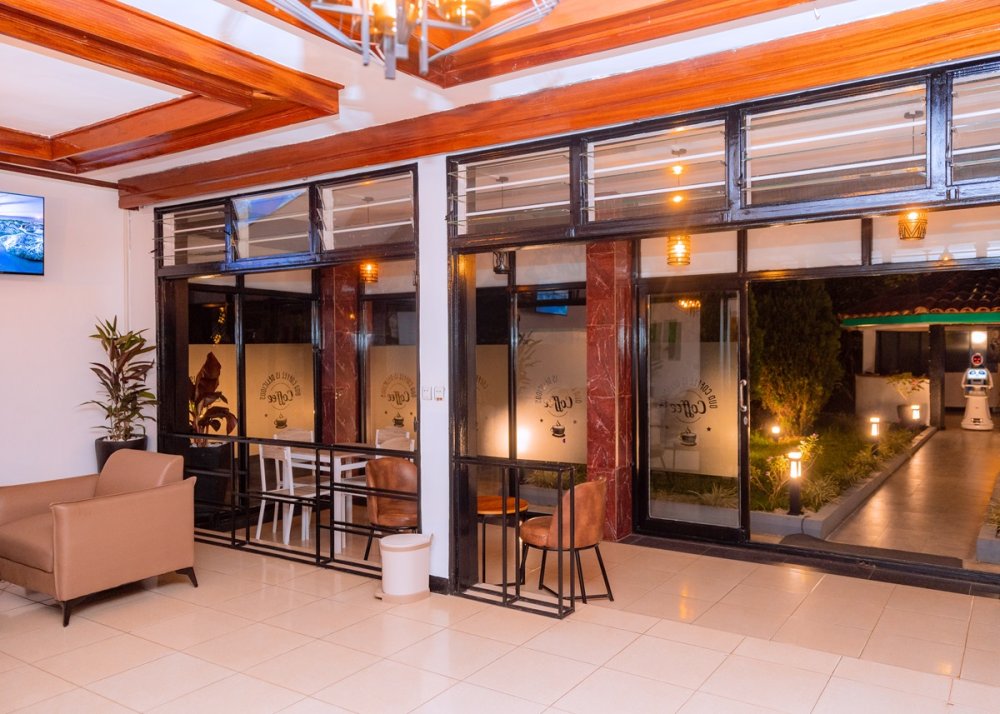
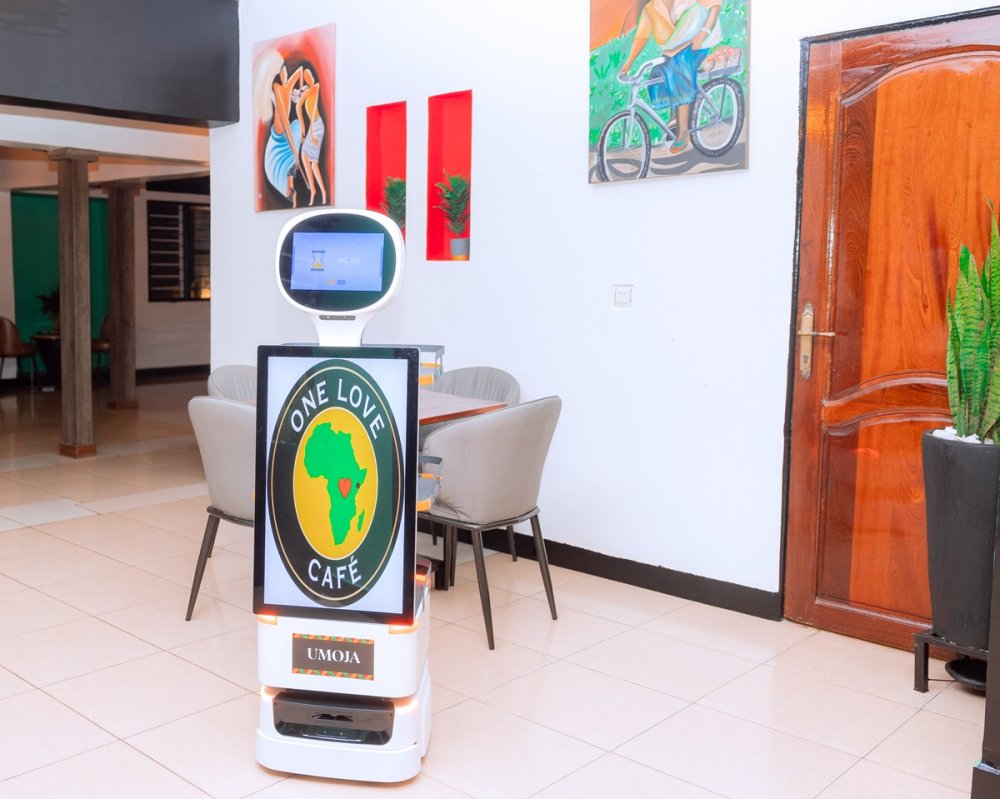
One Love Café, located in Kimihurura, Gasabo District, has introduced robots into its operations. Two of these robots, named Amahoro and Umoja (meaning “peace” and “unity”), greet and serve customers, delivering orders directly to tables and notifying customers when their meals arrive.
The robots also feature interactive capabilities, such as promoting tourism in Rwanda, highlighting Kigali’s cleanliness, singing birthday songs, and performing other entertainment tasks.
Umutoni Cynthia, manager at One Love Café, explained the decision to integrate robots: “We decided to introduce robots from the start, just as you would plan for any new project. Our goal was to align the restaurant with technological advancement and offer customers a modern experience.”
While some worry that robotics may reduce employment opportunities, technology experts stress that AI and robotics create new types of work. For instance, jobs emerge in robot maintenance, regulation, and operation, rather than simply replacing human labor. One Love Café, for example, still employs 20 staff members alongside the robots.
Engineer Misgun Abraha Berne, owner of One Love Café, emphasized that the goal is not to eliminate jobs but to enhance service delivery, attract customers, and introduce innovation in Rwanda’s hospitality sector: “Kigali is one of Africa’s fastest-growing tourist cities. We wanted to add something unique to our service offering and create a modern, enjoyable experience for visitors.”
The robots used at One Love Café are high-end and come at a significant cost. Engineer Misgun explained that, depending on the model, the robots’ prices range from 10 million to 50 million Rwandan francs, including shipping, taxes, and other fees.
He added: “If these robots prove popular and improve customer service, we plan to bring in more in the future.”
Innovation and economic impact
Technological innovation, particularly in services, plays a crucial role in Rwanda’s economic growth. In the third quarter of 2025, Rwanda’s GDP reached 5.525 trillion Rwandan francs, an 11.8% increase compared to the same period in the previous year. Services contributed 57% of this growth, agriculture 15%, and industry 22%.
Robots can deliver meals and entertain customers with songs, including birthday celebrations.Service robots at the restaurant assist staff in streamlining operations without replacing human workers.Amahoro delivers meals directly to customers’ tables, ensuring efficient service.Umoja greets guests and notifies them when their orders are ready.
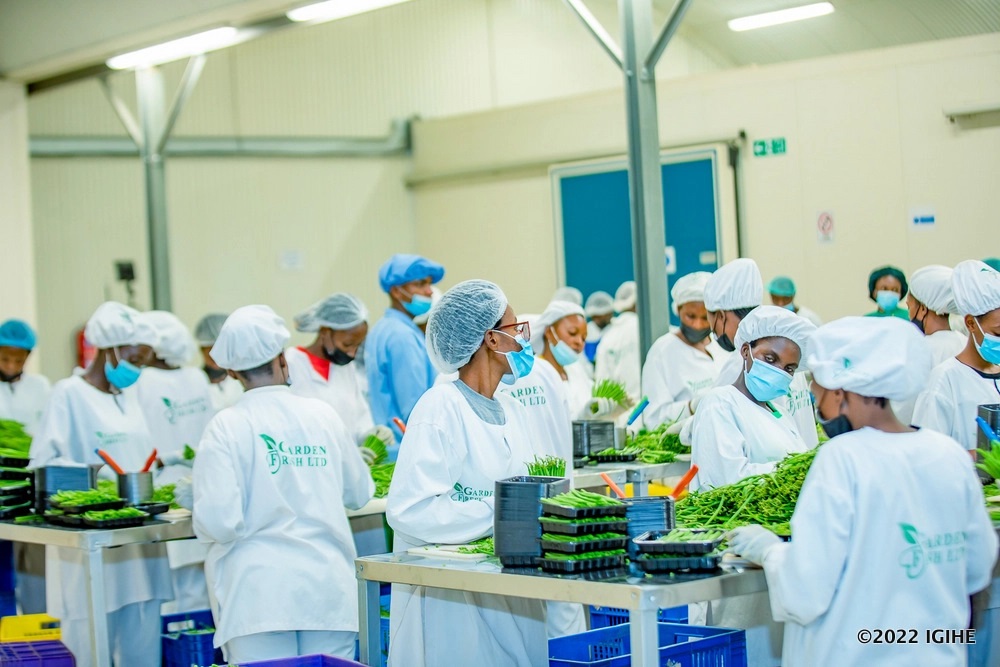
During these five days, the country shipped a variety of products including coffee, tea, vegetables, fruits, flowers, livestock products, and more.
Coffee exports totaled 508 tonnes, earning over $2.7 million, while 846 tonnes of tea brought in more than $2.3 million. Vegetables, shipped at 440 tonnes, generated approximately $479,450. Fruit exports reached 462 tonnes, earning over $311,000, and 42 tonnes of flowers brought in more than $282,000.
The main destinations for these exports included the United Kingdom, the Netherlands, the United Arab Emirates, France, Germany, and other African countries.
Other agricultural products totaling 7,078 tonnes earned over $3.7 million, while 273 tonnes of livestock products generated more than $437,000. These were primarily exported to Oman, Nigeria, and other African countries.
Rwanda earned over Rwf14 billion from agricultural exports in five days.
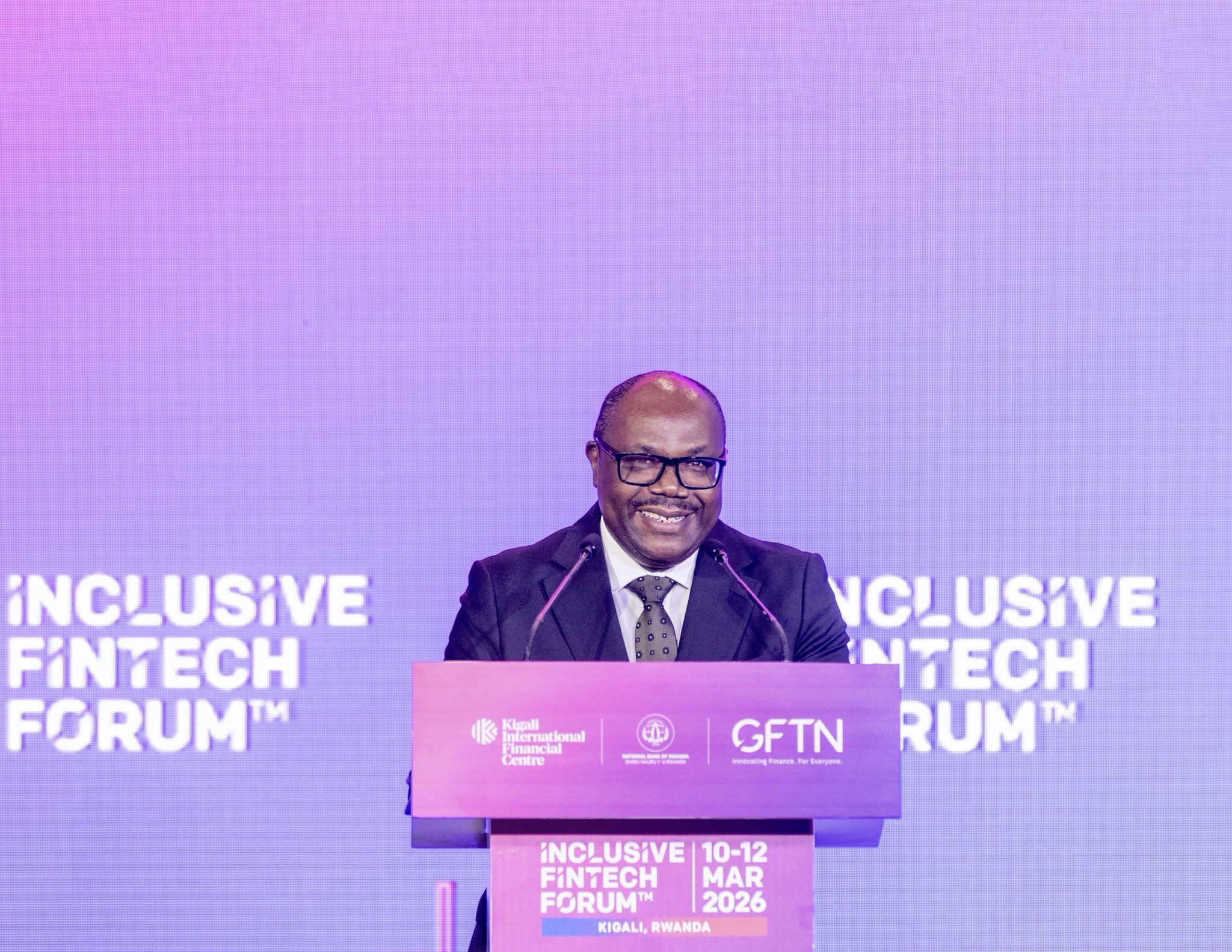
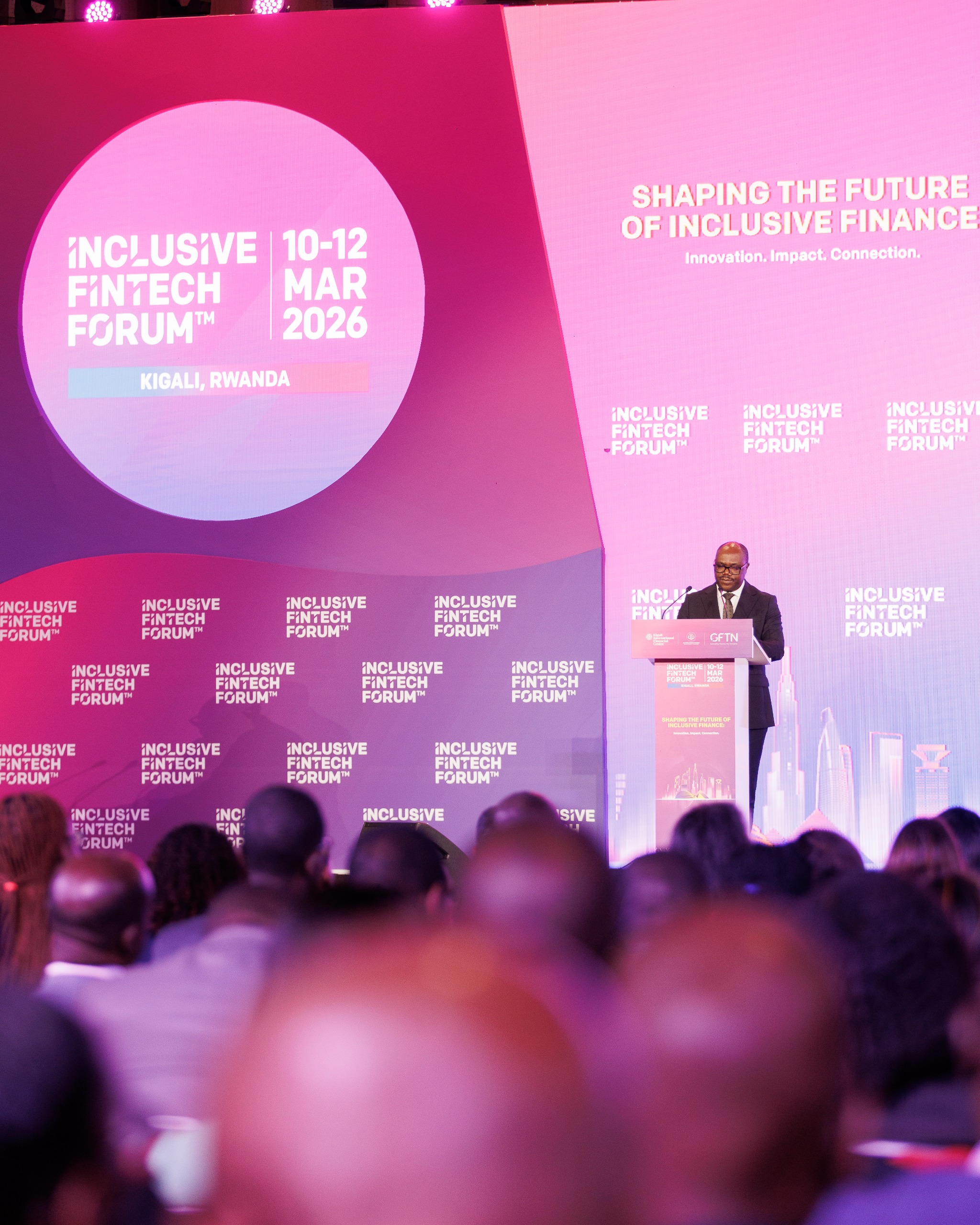
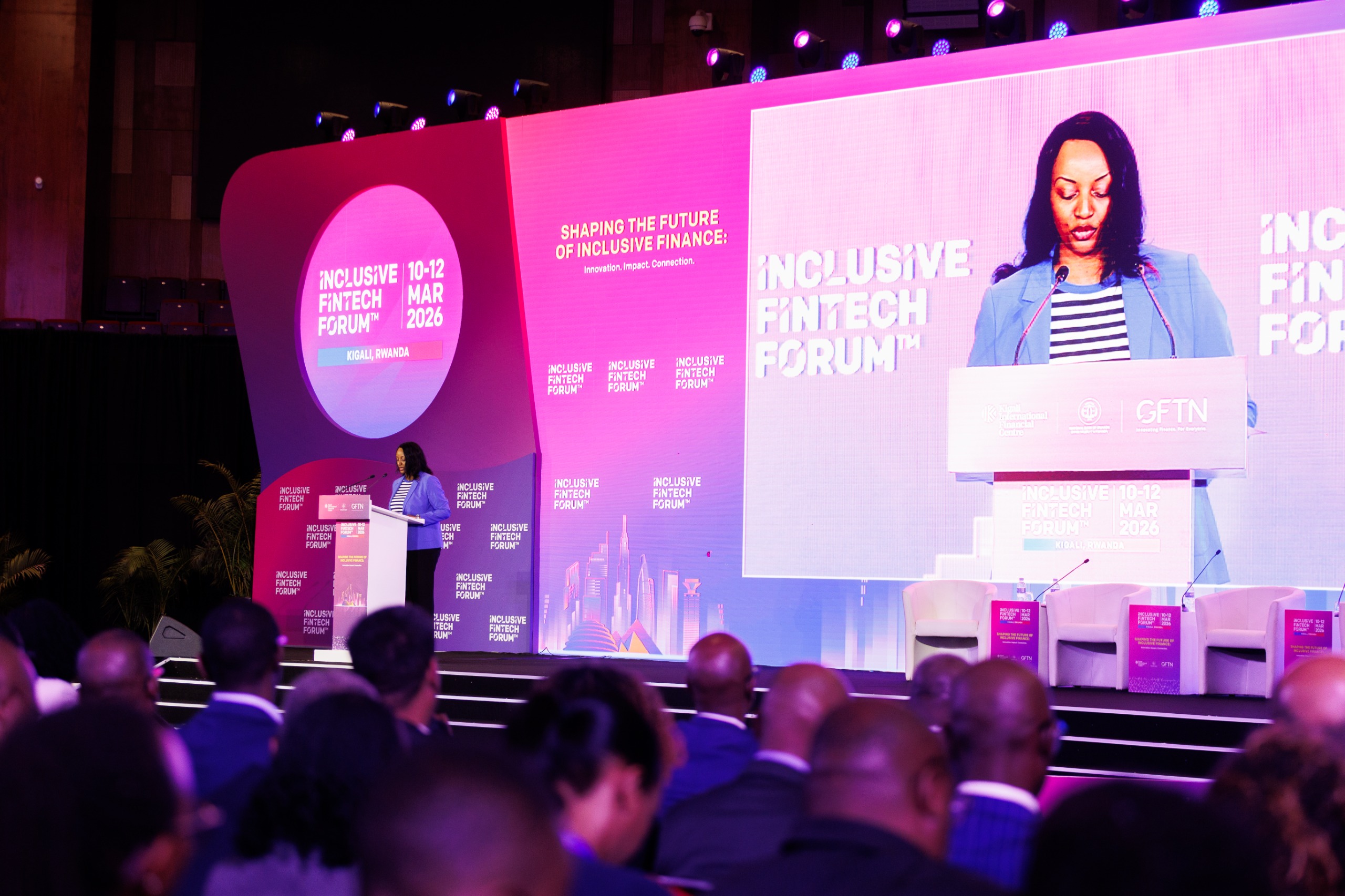
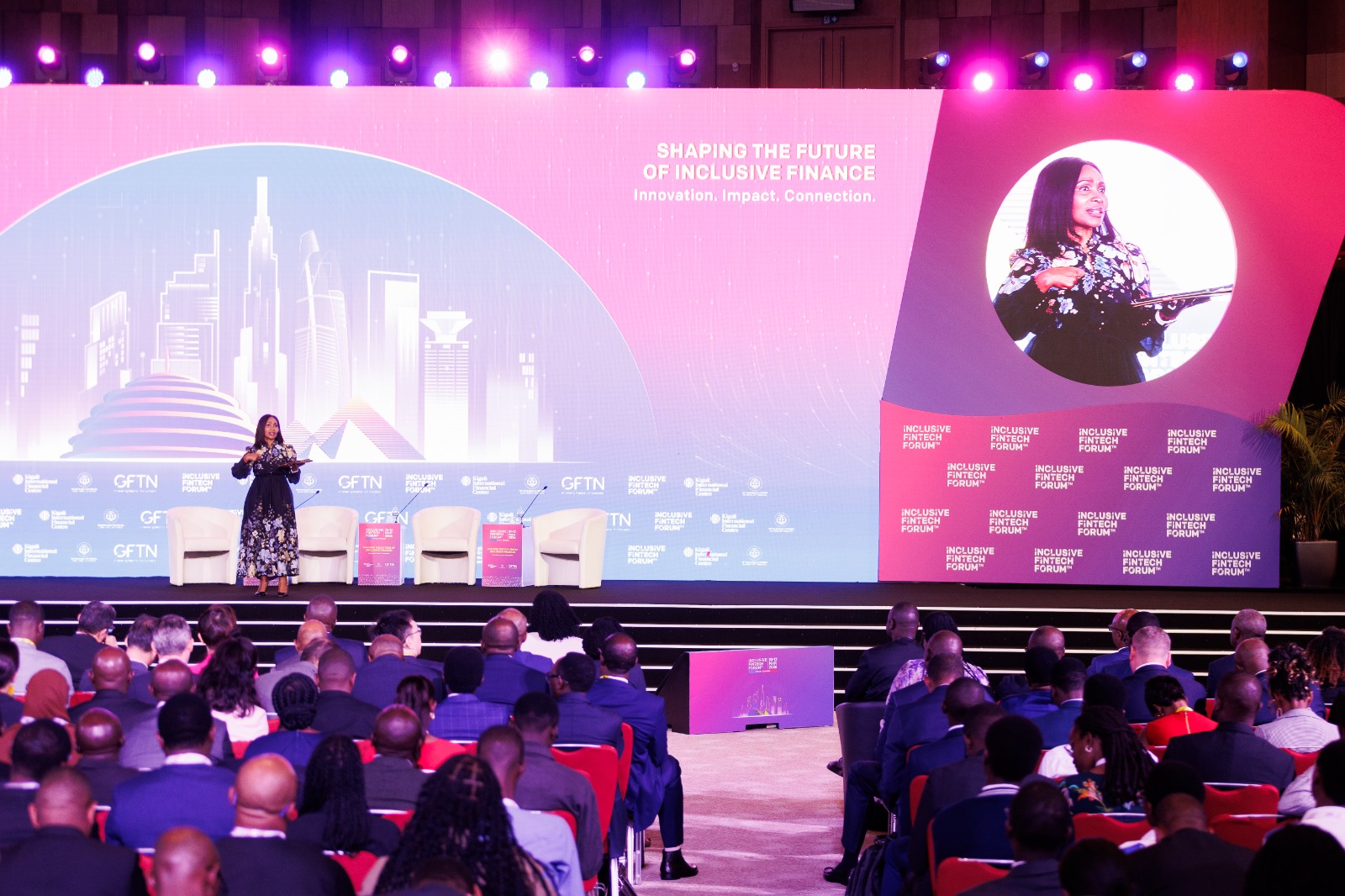
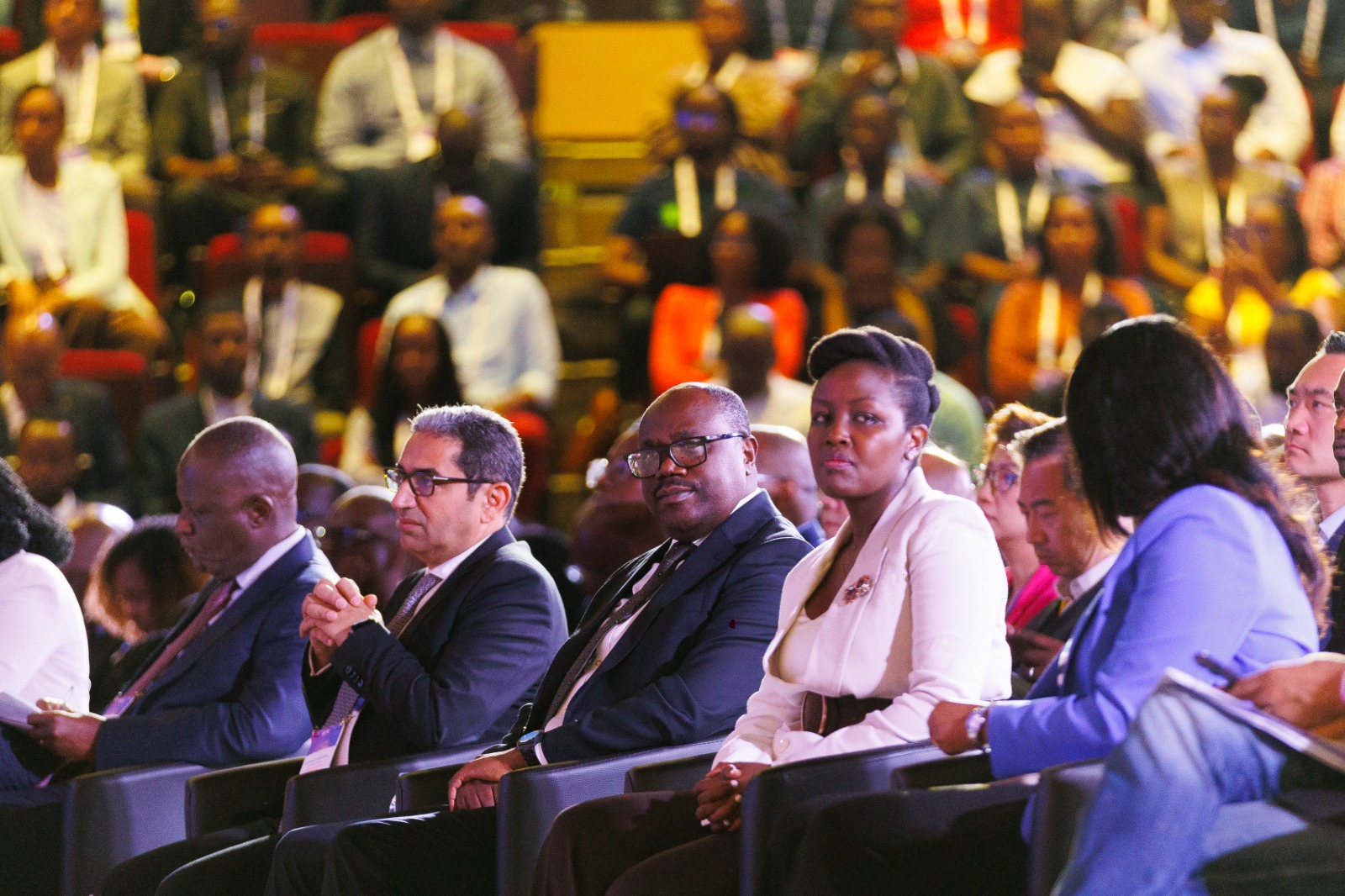
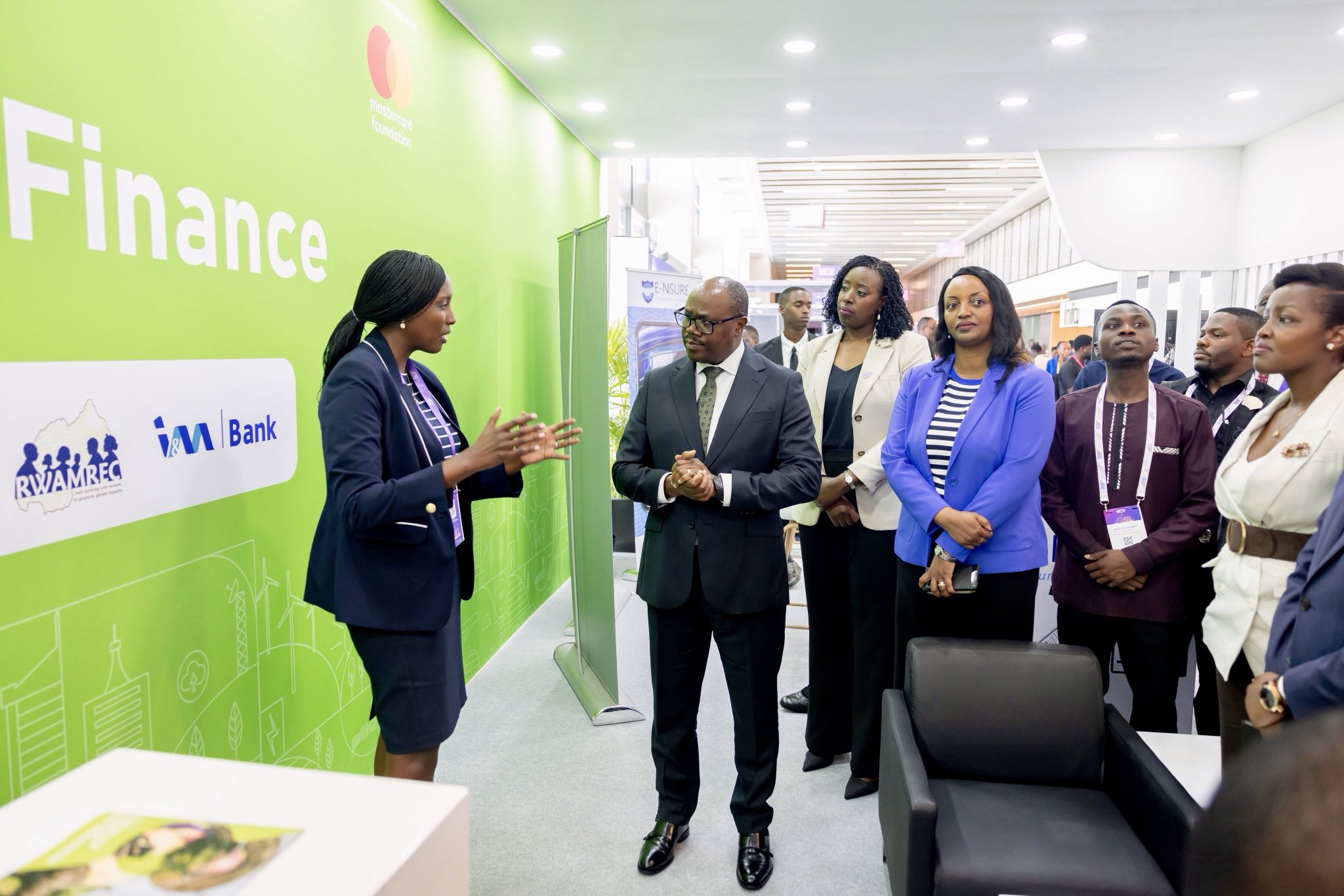
Held from March 10 to 12 at the Kigali Convention Centre, the forum brings together participants from the finance, technology and investment sectors to explore how innovation can accelerate financial inclusion and unlock capital for Africa’s growing digital economy.
Opening the forum, Prime Minister Justin Nsengiyumva said the global financial system is undergoing profound changes that present both risks and opportunities for the continent.
“We are honoured to host you in Kigali to advance an important global mission: building a financial system that leaves no one behind,” he said.
Nsengiyumva noted that Africa has historically operated on the margins of global finance, often facing limited access to capital and high risk premiums. However, rapid advances in digital technologies are allowing African entrepreneurs to bypass traditional infrastructure constraints, particularly in the fast-growing fintech sector.
“The opportunity for Africa to become a cradle of global business and innovation is real,” he said, adding that inclusive financial systems will be essential to mobilise investment for key sectors including energy, digital infrastructure, manufacturing and human capital.
Nsengiyumva said Rwanda is ready to work with global investors, innovators and policymakers to help unlock these opportunities and accelerate the continent’s digital financial transformation.
“To the investors and innovators gathered here today, allow me to reaffirm that Rwanda stands ready to partner with you to unlock the extraordinary opportunities before us,” he said, adding that the country aims to build a dynamic, secure and inclusive financial ecosystem capable of supporting Africa’s next phase of growth.
Rwanda has spent the past two decades investing heavily in digital infrastructure as part of its long-term economic transformation strategy. The country now has near-universal 4G population coverage and has digitised many public services through platforms such as Irembo, improving access to government services and enabling electronic transactions across the economy.
Today, about 92 percent of adults in Rwanda have access to financial services through bank accounts or mobile money wallets.
The Governor of the National Bank of Rwanda, Soraya Hakuziyaremye, said the country’s progress shows how the right policy environment can accelerate financial inclusion.
“In Rwanda, we have made remarkable strides in financial inclusion, from just 21 percent in 2008 to 92 percent of adults today having access to a bank account or mobile money wallet,” she said.
Across Sub-Saharan Africa, the region remains the global leader in mobile money adoption, with more than 600 million registered accounts, while digital payments continue to grow at double-digit rates.
“These are not just statistics,” Hakuziyaremye said. “They represent farmers, traders, women and youth whose financial wellbeing has improved. But more needs to be done to ensure financial resilience for households and enterprises.”
To deepen access to digital financial services, Rwanda has launched a new national financial inclusion roadmap for 2026–2030 aimed at expanding digital payments, strengthening financial resilience and supporting innovation in emerging technologies such as artificial intelligence and digital assets.
Regulators are also focusing on improving cross-border payments and enhancing regulatory cooperation across African markets, which experts say will be critical for scaling digital finance across the continent.
Industry leaders at the forum warned that Africa still faces structural barriers that limit trade and financial integration.
Haytham ElMaayergi, Executive Vice President for Global Trade Bank at African Export-Import Bank (Afreximbank), said Africa’s digital gap risks becoming a competitiveness gap if infrastructure and integration challenges are not addressed.
“Globally, about 25 percent of trade is conducted through digital processes, but in Africa that figure is only around five percent,” he said.
Fragmented financial systems mean cross-border payments in Africa can cost up to three times the global average, while small and medium-sized enterprises face a trade finance gap estimated at $120 billion.
However, initiatives such as the African Continental Free Trade Area are creating new opportunities to integrate African markets by connecting 1.3 billion people into a $3.4 trillion economic bloc.
Afreximbank is supporting that transformation through digital platforms such as the Africa Trade Gateway, which helps African businesses identify partners, access trade intelligence and secure financing.
The bank is also backing the Pan-African Payment and Settlement System, which enables cross-border trade to be settled in local currencies, helping reduce transaction costs and reliance on foreign exchange.
ElMaayergi also praised Rwanda’s progress in building a fintech ecosystem capable of serving as a continental innovation hub.
“Afreximbank is committed to supporting Africa’s and Rwanda’s digital transformation and innovation agenda as the country advances its knowledge-based economy and growing fintech, AI and startup ecosystem,” he said.
He added that Kigali has already demonstrated the conditions needed to scale financial innovation across Africa.
“Through the Kigali International Financial Centre, the city has created a proof of concept for Africa. You have the regulatory clarity, political will and infrastructure to serve as the control tower of African fintech,” he said.
ElMaayergi stressed that digital infrastructure must now be treated as a strategic economic priority.
“Digital payment rails are as essential as paved roads,” he said. “Without them, trade stands still. The time for pilot projects is over , we must scale now.”
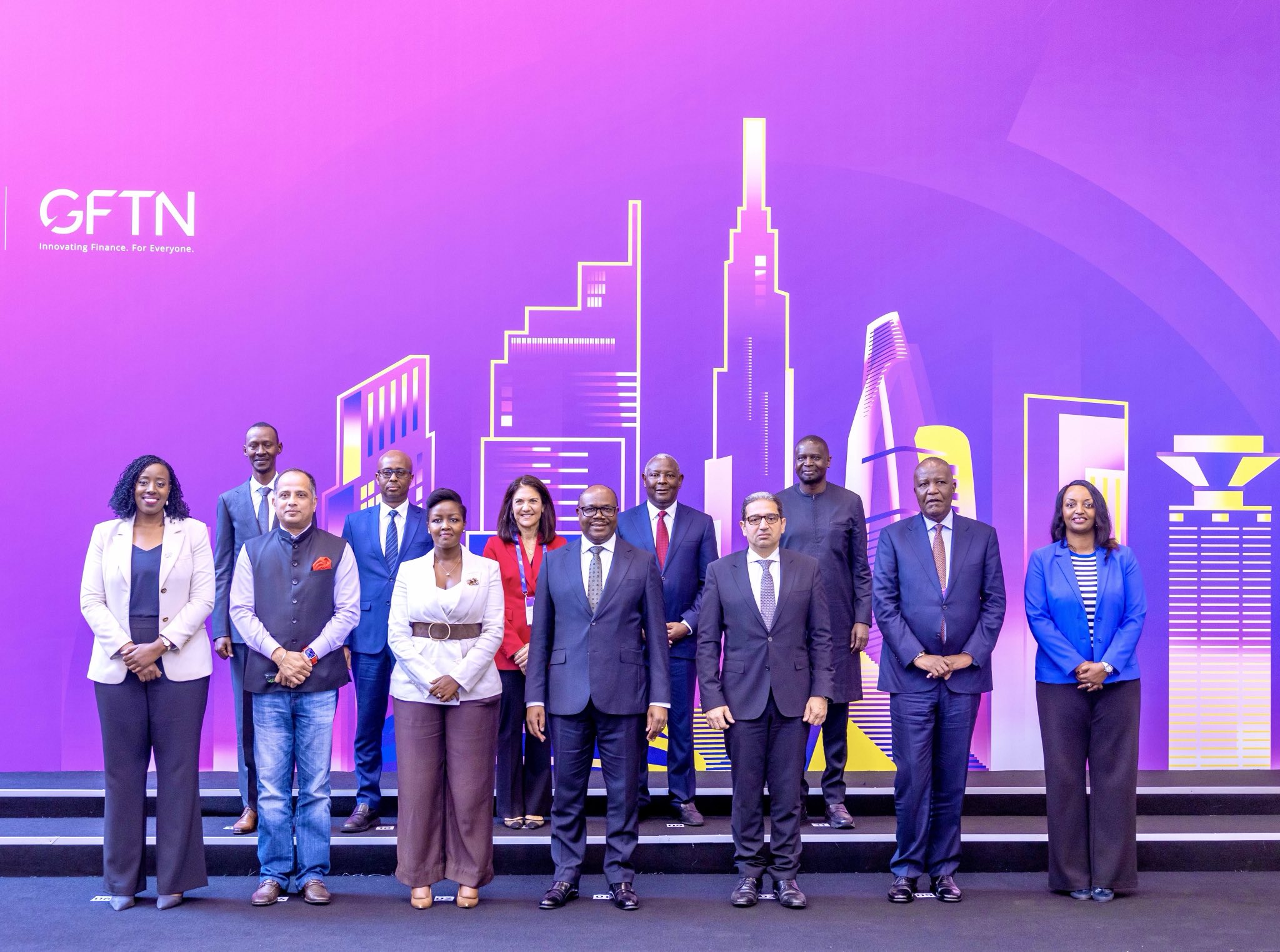
Organised by the Kigali International Financial Centre, the National Bank of Rwanda and the Global Finance & Technology Network, the Inclusive FinTech Forum has emerged as a leading global platform for advancing financial innovation in emerging markets.
This year’s discussions focus on topics such as artificial intelligence-driven financial services, digital currency corridors, open finance ecosystems and climate-focused fintech solutions.
For Rwanda, the event reflects a broader strategy to position Kigali as a gateway for financial innovation and investment in Africa’s rapidly evolving digital economy.
Opening the forum, Prime Minister Justin Nsengiyumva said the global financial system is undergoing profound changes that present both risks and opportunities for the continent.The Governor of the National Bank of Rwanda, Soraya Hakuziyaremye, said the country’s progress shows how the right policy environment can accelerate financial inclusion.Held from March 10 to 12 at the Kigali Convention Centre, the forum brings together participants from the finance, technology and investment sectors to explore how innovation can accelerate financial inclusion and unlock capital for Africa’s growing digital economy.