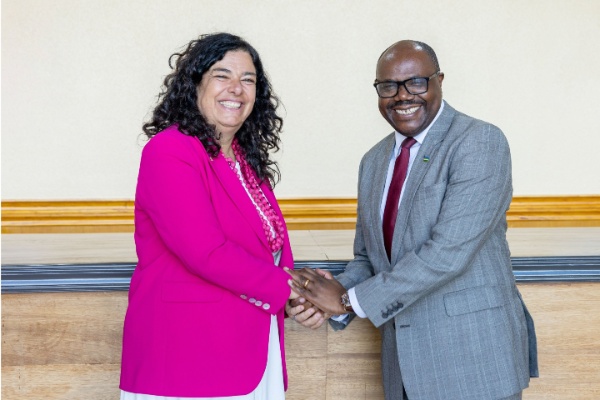
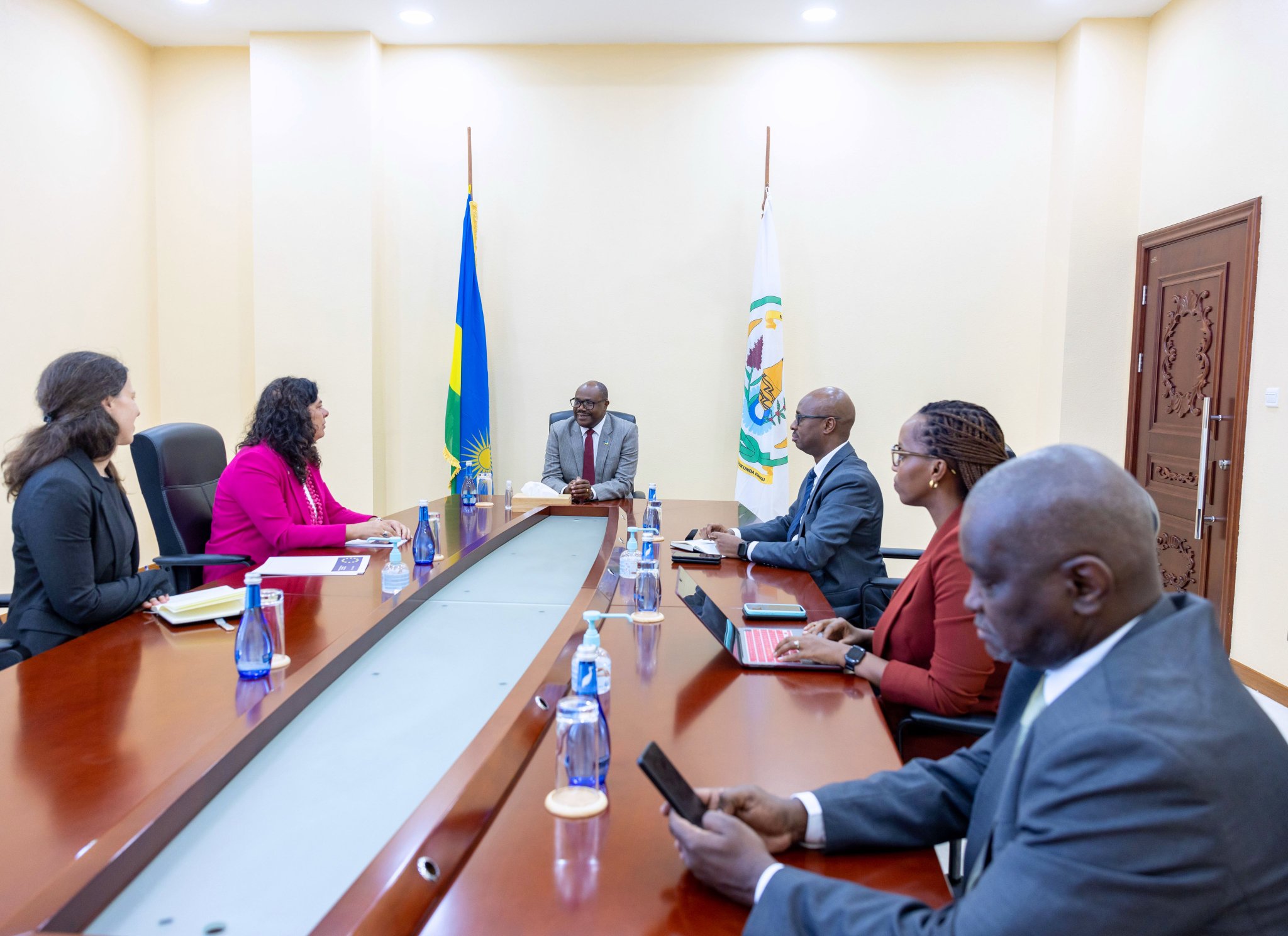
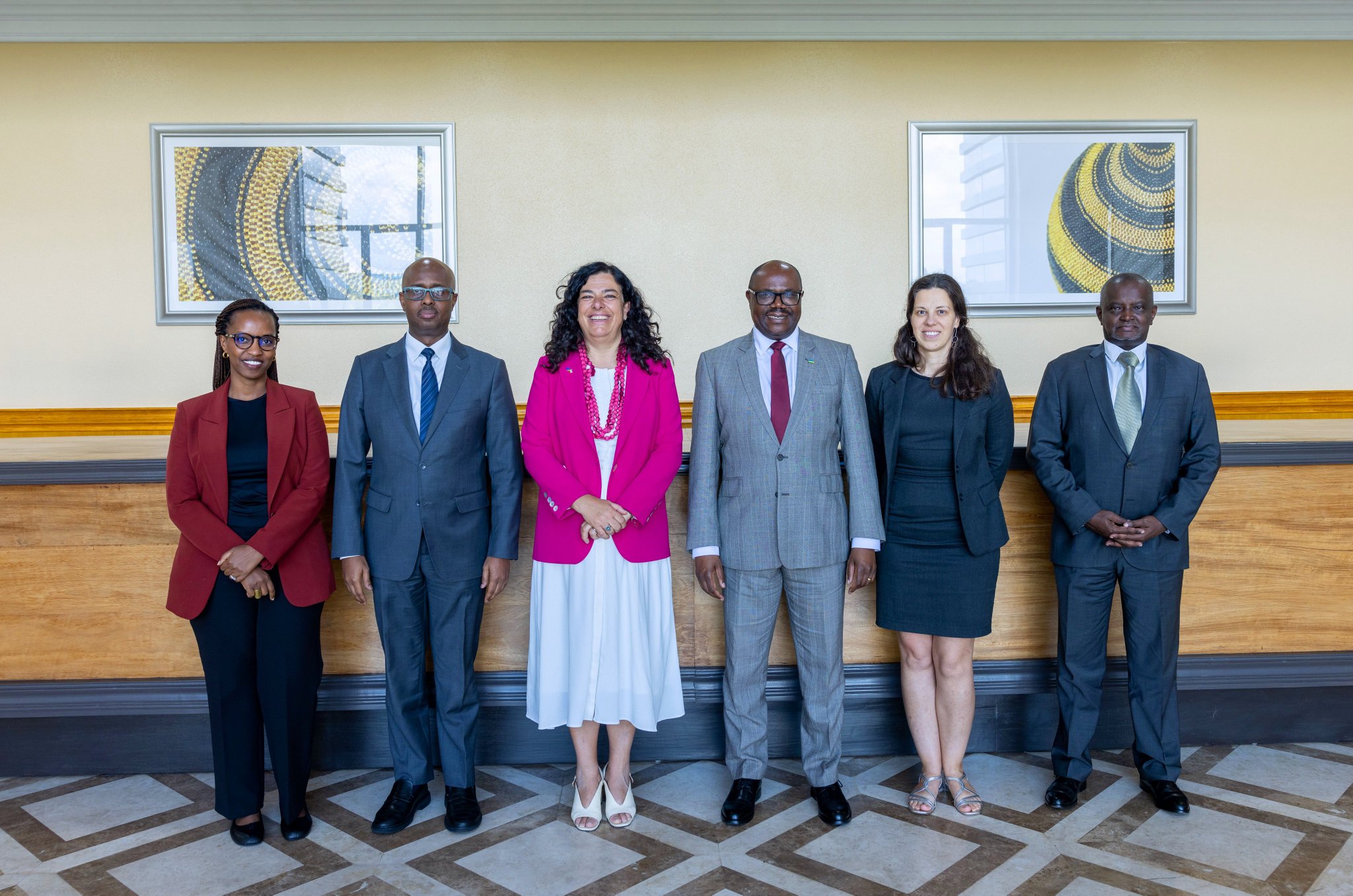
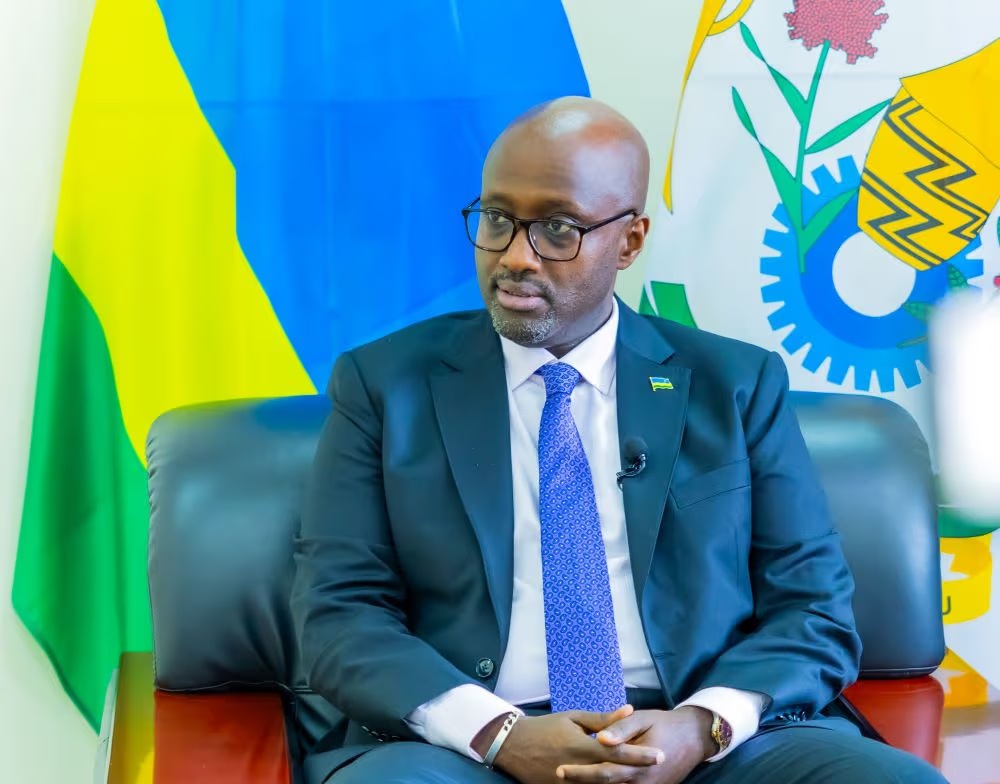
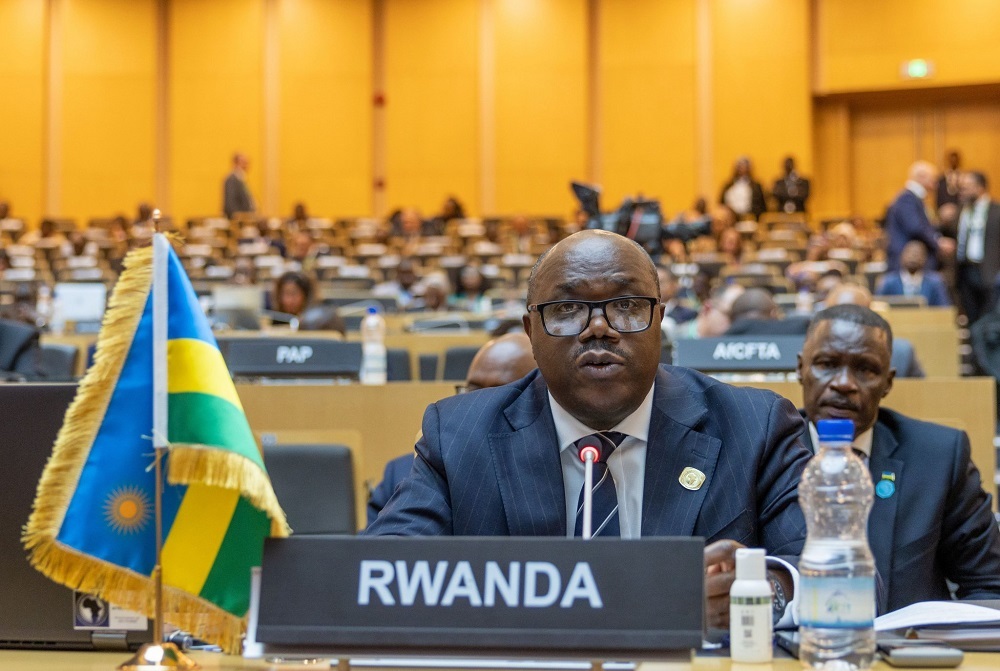
The talks come at a time when Rwanda–EU relations are undergoing a notable shift from traditional development assistance toward strategic, high-value economic cooperation. This transformation is largely driven by the EU’s Global Gateway strategy, a multi-billion-euro initiative aimed at building sustainable partnerships through investments in digital, energy, transport and health infrastructure.
Under the current multiannual financial framework, the EU allocated €260 million in grant funding to Rwanda for the 2021–2024 period, including €49 million in EFSD+ provisioning. For 2025–2027, an additional €134 million has been earmarked, alongside Rwanda’s participation in several multi-country EU programmes.
Through the “Team Europe” approach in Rwanda, the EU works alongside the European Investment Bank and member states including France, Germany, Belgium, Luxembourg, the Netherlands, Lithuania, Greece, Sweden, Austria and Denmark.
A key highlight of the evolving partnership has been support for Rwanda’s ambition to become a regional biotechnology and pharmaceutical hub. In October last year, during bilateral talks in Brussels between President Paul Kagame and Ursula von der Leyen, the EU announced €95 million in new funding to strengthen vaccine manufacturing in Rwanda.
The financing builds on earlier EU support of more than €93 million toward BioNTech’s Kigali facility, inaugurated in 2023 as the company’s first mRNA manufacturing site in Africa. The project is seen as a major step toward ensuring equitable access to vaccines and strengthening Africa’s capacity to respond to future health emergencies.
Rwanda’s development ambitions are guided by the National Strategy for Transformation and Vision 2050, which aim to achieve upper-middle-income status by 2035. The EU has positioned its cooperation framework to align with these goals, supporting economic transformation, green transition efforts and inclusive growth.
The discussions focused on further strengthening the longstanding partnership between Rwanda and the EU.
The clarification followed remarks by Jeune Afrique journalist Romain Gras, who appeared to question why President Kagame did not attend the summit, noting that he had been in the United States over the weekend attending the NBA All-Star Game.
Responding to the comments, Nduhungirehe emphasized that many African leaders were also absent and that Rwanda had official representation at the highest level.
“President Paul Kagame did not personally attend the 39th Session of the African Union Assembly, just like nearly half of the African Heads of State. In Addis Ababa, he was duly represented by Prime Minister Justin Nsengiyumva. So, there is nothing new under the sun!” the minister said.
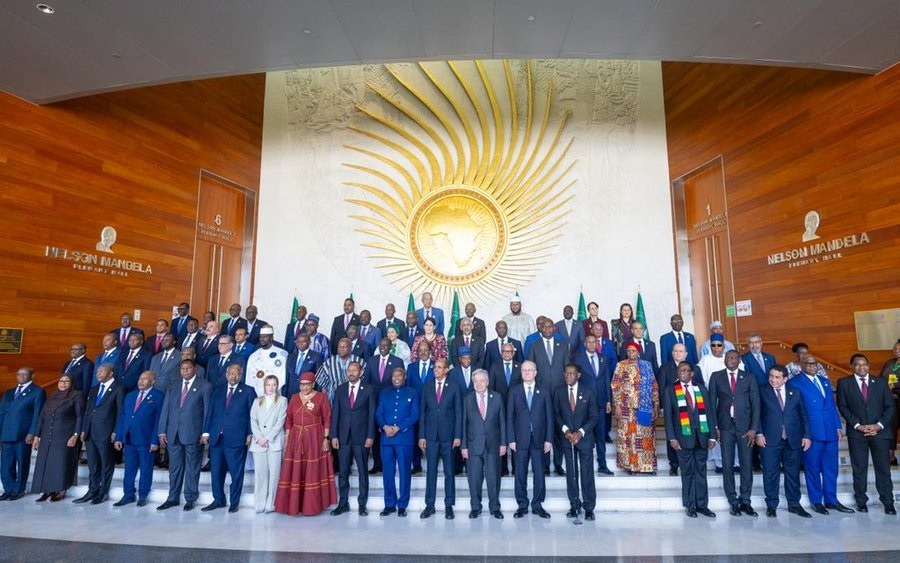
The AU summit was held in Addis Ababa, Ethiopia, on February 14 and 15, 2026. Rwanda was represented by Prime Minister Justin Nsengiyumva, who addressed key continental priorities, including health and security, in line with the AU’s Agenda 2063 framework.
On regional security, Nsengiyumva told fellow African leaders that the government of the Democratic Republic of the Congo continues to violate the Washington peace agreements and the Doha principles. He stressed that all parties concerned must honour their commitments to create conditions for sustainable peace.
The Prime Minister further argued that actors directly involved in the conflict in eastern DRC should not participate in mediation efforts led by the AU, warning that such involvement undermines trust and raises concerns over impartiality.
Meanwhile, President Kagame was in Los Angeles on a working visit. He met with Adam Silver, Commissioner of the National Basketball Association, and Deputy Commissioner Mark Tatum, to discuss ongoing cooperation between the league and Rwanda in developing basketball talent.
He also held talks with Steve Ballmer, owner of the Los Angeles Clippers, whose franchise promotes Rwanda’s tourism brand through the “Visit Rwanda” partnership launched in September 2025.
The NBA All-Star Game took place at the Intuit Dome, the Clippers’ 18,000-seat arena in Los Angeles, where Visit Rwanda branding has been displayed since last year.
Nduhungirehe emphasized that many African leaders were also absent and that Rwanda had official representation at the highest level.President Paul Kagame was represented by Prime Minister Justin Nsengiyumva.
The summit, taking place from February 14–15, 2026, is being held under the theme: “Assuring Sustainable Water Availability and Safe Sanitation Systems to Achieve the Goals of Agenda 2063.” It marks the pinnacle of the AU Summit and brings together African leaders to deliberate on key political, security and development priorities.
Upon arrival at Bole International Airport, the Prime Minister was received by Ethiopia’s Minister of Peace, Mohamed Edris, and State Minister for Foreign Affairs, Ambassador Berhanu Tsegaye.
This year’s theme places water security at the center of Africa’s transformation agenda. With more than 400 million Africans lacking access to clean water, leaders are expected to discuss sustainable water management and sanitation systems as essential pillars for public health, climate resilience and conflict prevention. The discussions align with Agenda 2063, the AU’s long-term blueprint for inclusive growth and prosperity.
Beyond the thematic focus, the Assembly is expected to address high-stakes political and security issues. Leaders will review the situation in Sudan and South Sudan, deliberate on developments in the Sahel region, and appoint 10 new members to the Peace and Security Council, the AU organ responsible for decisions on peace operations and sanctions.
The summit also marks a leadership transition within the Union, as Angola hands over the rotating AU Chairpersonship for 2026 to Burundi.
On the margins of the summit, Prime Minister Nsengiyumva will attend the second Italy–Africa Summit on February 13, which will assess progress under Italy’s Mattei Plan aimed at strengthening political and economic partnerships with African countries.
On February 15, he is scheduled to participate in the AU High-Level Ad Hoc Committee on South Sudan, where regional leaders are expected to review the evolving security situation, assess progress in the implementation of the peace agreement, and deliberate on coordinated efforts to prevent further escalation of tensions.
The concert will take place at BK Arena on March 17, before the tour continues to SunBet Arena in Pretoria, South Africa, on March 20.
Move Afrika blends world-class live music with social impact programs, aiming to create jobs, support youth entrepreneurship, and provide skills training across Africa. The initiative also engages local artists, production crews, and vendors, boosting capacity in host cities while delivering a world-class entertainment experience.
The first Move Afrika in Rwanda, held in December 2023, featured Kendrick Lamar and employed over 1,000 Rwandans, with 75% of the production crew sourced locally. The event showcased African talent including Zuchu, Bruce Melodie, DJ TOXXYK, Sherrie Silver, Ariel Wayz, Kivumbi King, and Bruce The 1st.
The 2025 edition saw EGOT-winning John Legend take the stage at BK Arena, performing hits such as “All of Me” and “Ordinary People” in outfits designed by Rwandan fashion brands Moshions and Tanga. That edition employed 90% local production staff and extended the tour to Lagos, Nigeria.
Move Afrika 2026 promises to continue this tradition, with Doja Cat delivering an electrifying performance while supporting local entrepreneurship and skill development. Tickets for Kigali and Pretoria are [already on sale->https://www.moveafrika.org/tour], with fans encouraged to secure their spots early for one of Africa’s most high-profile music events of the year.
{{Who is Doja Cat?
}}
Born Amala Ratna Zandile Dlamini, Doja Cat is an American rapper, singer, songwriter, and producer who has become one of the most prominent figures in modern pop and hip-hop. Known for her “chameleon” ability to switch between hard-hitting rap and melodic pop, she combines eccentric, internet-savvy personality with bold artistic vision.
The 30-year-old first gained massive attention in 2018 with the viral novelty track “Mooo!”, a DIY music video that showcased her talent for creating viral content. Her 2019 album Hot Pink featured the global hit “Say So”, which topped the Billboard Hot 100 after a remix with Nicki Minaj.
The 2021 album Planet Her solidified her superstar status with hits such as “Kiss Me More” (feat. SZA), “Need to Know”, and “Woman”, earning her a Grammy for Best Pop Duo/Group Performance. In 2023, she pivoted to a darker, rap-focused sound with Scarlet, led by the #1 hit “Paint the Town Red”, and her 2025 album Vie returned to her pop-leaning roots while maintaining her experimental edge.
Doja Cat is also known for her visual artistry, treating fashion and music videos as performance art, and her digital-native approach, often interacting directly with fans on social media. A self-taught musician, she learned to sing, rap, and produce after dropping out of high school at 16, using GarageBand to hone her craft.
With Move Afrika 2026, Kigali audiences will get a front-row experience of one of today’s most innovative and genre-defying artists, combining global stardom with a uniquely African stage experience.
Launched on the sidelines of the 39th AU Summit in Addis Ababa on Thursday, February 12, the platforms, BiasharaLink and Deal House, seek to close what officials described as Africa’s long-standing “execution gap,” where trade opportunities are identified but rarely converted into completed transactions.
The initiative, spearheaded by Kenya’s Ministry of Foreign and Diaspora Affairs in partnership with Real Sources Africa and Equity Group Holdings, positions diplomatic missions as structured commercial pipelines rather than traditional liaison offices.
{{Turning diplomacy into delivery
}}
Speaking at the launch, Kenya’s Prime Cabinet Secretary and Foreign Affairs Minister, Musalia Mudavadi, said the platforms introduce a new model of economic diplomacy anchored in systems, accountability and measurable outcomes.
“BiasharaLink and Deal House represent a new model of economic diplomacy; one that is results-oriented,” Mudavadi said. “It provides a common platform for capturing and organising opportunity. It connects opportunity to execution. Together, the platforms turn diplomacy into delivery.”
Mudavadi noted that while Africa has made significant progress in negotiating trade frameworks, including the AfCFTA, traders and investors still face stalled transactions, fragmented information and weak follow-through.
“This is not a question of political will or commitment,” he said. “It is a failure of systems.”
The new platforms aim to institutionalise how embassies capture, track and convert trade and investment leads, ensuring continuity beyond individual diplomatic postings and creating a structured pipeline from inquiry to execution.
{{Closing the trade execution gap
}}
According to Real Sources Africa founder and CEO, Felix Chege, Kenyan embassies collect an average of 3,500 trade inquiries per month, yet fewer than one percent historically translate into closed deals.
“Our embassies are centres of trust,” Chege said. “But they lacked the infrastructure to transmit inquiries to the right businesses and execute them efficiently.”
BiasharaLink functions as the intake and structuring layer, enabling diplomatic missions, exporters and investors to digitally capture, validate and monitor trade leads. It distinguishes between exploratory inquiries and transaction-ready buyers, supported by due diligence processes and “deal stewards” trained to guide transactions.
Deal House serves as the execution engine, where validated opportunities are matched with counterparties, supported with documentation, and connected to payment and financing solutions. The system integrates escrow mechanisms and trade finance tools to reduce risk for both buyers and sellers.
Chege described the model as “capture, validate and close,” adding that the goal is to build a continental infrastructure leveraging embassy credibility to drive trade, investment and financing.
{{Finance as the lubrication layer
}}
James Mwangi, Group CEO of Equity Group Holdings, framed the initiative as a bridge between policy ambition and commercial reality.
“For years, Africa has had policy frameworks without flow of goods and services,” Mwangi said. “What we are witnessing is a partnership between government and private sector to create an infrastructure that enables people to walk, ride and drive on a trade superhighway.”
He described the platform as “visa-free,” compressing time and distance by connecting buyers and sellers digitally, while reducing reliance on costly physical travel and fragmented networks.
Equity will provide the financing layer, including trade finance, guarantees and payment solutions, to ensure that structured deals become bankable transactions.
“It’s not enough to have a pipeline,” Mwangi said. “You must lubricate the platform by having finance accessible.”
He added that the platform creates equal access for SMEs, women and youth entrepreneurs, reducing gatekeeping and embedding trust through government-backed verification via diplomatic missions.
{{AfCFTA enters implementation phase
}}
The launch comes as the AfCFTA Secretariat prepares for the adoption of remaining legal instruments under the trade pact.
AfCFTA Secretary-General Wamkele Mene said the agreement now provides the regulatory certainty needed to unlock intra-African trade, but warned that execution remains the central challenge.
“In a world moving toward fragmentation and protectionism, Africa is moving in the opposite direction,” Mene said. “We have no alternative but to succeed; we have to build a very strong domestic market.”
He highlighted the AfCFTA’s protocols on digital trade and on women and youth in trade as forward-looking instruments that align with Kenya’s digital approach.
With a market of 1.4 billion people and a combined GDP of $3.4 trillion, Mene said the opportunity is unprecedented, but only if SMEs and young entrepreneurs can access structured trade systems.
The initiative has also received backing from development partners supporting AfCFTA implementation. Mathias Kamp, Regional Director of Konrad-Adenauer-Stiftung, said the launch marks a critical step toward unlocking the bloc’s trade potential.
“The AfCFTA needs to move to the next level. Five years on, the potential remains untapped. I’m convinced that what we are launching today will be a significant step forward in unlocking trade,” he said.
{{From diplomatic hubs to economic hubs
}}
Kenya’s government says the initiative forms part of a broader shift in its foreign policy, which now prioritises commercial diplomacy and diaspora investment.
Mudavadi noted that Kenya recently secured parliamentary endorsement of its updated foreign policy framework, reinforcing predictability and credibility in its external engagements.
“Our diplomatic missions are among Africa’s most valuable assets. They are trusted institutions that already facilitate trade and investment, but today’s economy requires structured pipelines, reliable data, verified partners, and access to finance,” he said.
Officials stressed that while the system begins with Kenya’s 70 diplomatic missions, its ambition is continental, with an invitation extended to other African countries to adopt or integrate into the model.
“The success of this initiative,” Mudavadi said, “will be measured in completed deals, jobs created and enterprises grown. Africa’s next chapter must be written in performance, not promises.”
President William Ruto made the announcement during a visit to the northeastern town of Mandera, saying the decision follows years of security assessments and preparations aimed at ensuring the safety of citizens.
The border was closed after a wave of deadly cross-border attacks carried out by al-Shabaab, which said it was retaliating against Kenya’s military presence in Somalia as part of international peacekeeping efforts.
Among the most devastating incidents was the 2013 assault on the Westgate shopping mall in Nairobi, where 67 people were killed. Two years later, gunmen attacked Garissa University College, leaving at least 148 people dead.
Other major attacks included the killing of 28 bus passengers in Mandera County in 2014 and a 2019 hotel siege in Nairobi that left at least 21 people dead.
Kenya subsequently closed the 680-kilometre border with Somalia as a precautionary measure amid threats of further violence. In 2015, the government began constructing a perimeter security barrier along the frontier. However, the project stalled after nearly three years, with only about 10 kilometres of fencing completed at a cost of $35 million.
A previous attempt to reopen the border in 2023 was shelved following renewed militant activity. President Ruto said the renewed plan will see two crossing points reopened under heavy security deployment to prevent infiltration and curb the smuggling of illicit goods, including weapons.
“It is unacceptable that fellow Kenyans in Mandera remain cut off from their kin and neighbours in Somalia due to the prolonged closure of the Mandera Border Post,” Ruto said in a post on X.
He expressed optimism that reopening the crossings would stimulate formal cross-border trade and unlock economic opportunities for communities on both sides of the frontier.
Mandera, which has a predominantly ethnic Somali population, has been one of the areas most affected by insecurity linked to al-Shabaab. Addressing residents, Ruto urged them to support government efforts to combat extremism.
“These al-Shabaab are useless. I want to assure that Kenya will work together with you, just help us combat these criminals and terrorists,” he said.
The reopening marks a significant policy shift and signals Nairobi’s confidence in strengthened security measures along the frontier, even as authorities remain cautious about the persistent threat posed by militant networks operating in the region.
The Minister of Finance and Economic Planning, Yusuf Murangwa, told Parliament on February 12, 2026, that the overall cost of financing the new airport has decreased after the government shifted from more expensive commercial borrowing options to concessional funding arrangements.
He made the remarks while presenting a draft amendment to Law No. 018/2025 of June 30, 2025, which sets out the national budget for the 2025/2026 fiscal year.
Bugesera International Airport is one of Rwanda’s flagship infrastructure projects and is expected to play a central role in boosting economic growth and positioning the country as a regional and continental aviation hub.
According to Minister Murangwa, initial financing plans included borrowing nearly $400 million, primarily through commercial financial institutions, which typically charge higher interest rates. However, continued engagement with development partners, particularly the World Bank, resulted in a 95% guarantee on funds allocated for the airport’s construction.
The guarantee has enabled Rwanda to secure significantly lower interest rates and more flexible borrowing terms.
“This arrangement allows us to draw funds when needed,” Murangwa said. “Construction activities are ongoing and will not be interrupted. The key difference is that financing will now be cheaper, and we will access funds based on actual requirements.”
He added that while financing costs for the airport have declined, allocations for other government projects have increased by nearly Rwf 250 billion.
{{Construction progress
}}
In May 2025, Jules Ndenga, Chief Executive of Rwanda’s aviation company, told IGIHE that major works, including the runway, drainage systems, and other critical infrastructure, were completed at the end of 2024. Construction has since continued on terminal buildings and related facilities.
The airport is being built by a consortium comprising Mota-Engil of Portugal, which initiated the project, UCC Holding of Qatar, and Consolidated Contractors Company of Greece. The three firms formed a joint venture known as UMC, which holds the construction contract with the government.
The first phase of the project has created approximately 2,000 jobs, with total employment expected to reach 6,000 once the airport is fully completed.
Beyond direct employment, the project has stimulated local economic activity in Bugesera District. New businesses, including restaurants in areas such as Nyabagendwa and Nyamata that cater to construction workers, have emerged, creating additional jobs and income opportunities for residents.
The airport is scheduled for completion in 2027. Upon conclusion of the first phase, it will have the capacity to handle seven million passengers annually. A second phase, planned for completion in 2032, is expected to expand capacity to 14 million passengers per year.
Middle Eastern carrier Qatar Airways holds a 60% stake in the airport project, which is estimated to cost around $2 billion.
The budget cut follows the government’s securing of cheaper concessional and domestic financing for major projects, including Kigali’s new international airport, reducing the funding requirement by Rwf 168.2 billion.
Minister Murangwa said external financing is expected to increase by Rwf 250.5 billion, mainly from grants and concessional loans, while projected tax and other domestic revenues have been revised upward by Rwf 41 billion, signalling confidence in Rwanda’s growing economy.
The recurrent budget has been revised downward by Rwf 198 billion to Rwf 4,114.9 billion. This adjustment, the minister said, reflects changes in public debt servicing, subsidies, and expenditures on goods and services.
At the same time, investment in capital and development projects has been increased by Rwf 253.2 billion, reaching Rwf 2,115.8 billion.
The revised budget has been submitted to Parliament, which approved it for detailed review by the Finance Committee before final adoption.
The 25-year-old is the engine of the national team, a floor general who has traded the skyscrapers of Queens for the thousand hills of Rwanda, becoming the face of a new era for the sport in East Africa.
In a candid and heartfelt sit-down with IGIHE, Philoxy opened up about the remarkable transition from her American upbringing to her role as the captain of Rwanda’s national women’s basketball team.
Since joining the squad in 2023, she has undergone a profound transformation, balancing her identity as a professional athlete with a newfound “cultural awakening” that has redefined her sense of purpose.
{{The call that changed everything
}}
Philoxy’s story begins in the United States, where she established herself as a legend at the University of Massachusetts (UMass). She left the program as its all-time leader in assists and games played, a “pure” point guard with a high basketball IQ. Despite her mother hailing from Rwanda, Philoxy admitted, “I was just an American in my eyes.”
That changed just two weeks after her college graduation in 2023. An unexpected call invited her to represent her mother’s homeland. The prospect was as terrifying as it was thrilling. “I was scared,” she admits, recalling her first solo trip to Africa. “Everything was like a whole new part of the world.”
However, that initial fear quickly evaporated. In her debut at the 2023 Women’s AfroBasket, she didn’t just fit in; she dominated, leading the tournament in several categories and guiding Rwanda to a historic fourth-place finish.
Her leadership isn’t just a title; it’s backed by a resume of domestic dominance. Before taking the reins of the national team, Philoxy proved she could win on Rwandan soil. She was instrumental in leading REG (Rwanda Energy Group) to a national championship and famously set a record by scoring 41 points in a single game during the Africa Women’s Basketball League.
Now representing APR Women Basketball Club, Philoxy continues to bridge the gap between international experience and local talent.
“I feel like I was always a captain without the title,” she explains, noting that her teammates voted her into the role because of the genuine connections she builds off the court.
Philoxy is optimistic but realistic about the trajectory of Rwandan basketball. “It’s not expanding fast, but slow motion is better than no motion,” she notes. She points to the construction of world-class training facilities and the growing fan base as catalysts for change.
Reflecting on recent international performances, she identifies communication as the hurdle the team must clear to reach the next level. “If everyone’s not understanding each other, everything falls apart,” she says, emphasising that heart and talent must be matched by tactical cohesion.
{{Unique, selfless, and beautiful
}}
Outside the courts, Philoxy has embraced the Rwandan way of life, which she describes in three words: unique, selfless, and beautiful. She enjoys the country’s fresh, healthy food and has adopted local staples into her diet. Her favourite meal? Chicken legs with white rice and red sauce, steamed greens, and chapati. ‘I love chapati,’ she adds with a laugh.
Her journey is also etched into her skin. She sports a tattoo of Romans 8:18: “What we suffer now is nothing compared to the glory he will reveal to us later.” It is a mantra that has carried her through professional stints in Greece and Mexico, and now anchors her as she mentors the next generation of Rwandan stars like Ramla Umunezero.
{{Dreams beyond the court
}}
In her mid-20s, Philoxy’s ambitions remain global. Within five years, she hopes to test her skills in the elite leagues of Japan or China, following the path of the world’s top WNBA stars. But regardless of where her career takes her, her bond with Rwanda, symbolised by her cherished dreadlocks and her mother’s name tattooed on her arm, is permanent.
Her message to young girls who aspire to take on basketball on the global stage is: “Keep pushing. No matter what people tell you… It’s only possible if you believe it’s possible.”
The 14th edition of Africa’s premier conservation prize will recognise individuals and ranger teams whose work protects wildlife, landscapes, and community livelihoods.
Held in partnership with global investment firm Ninety One, the Awards provide both international recognition and funding to help winners scale proven conservation solutions across the continent. This year, prize money of £225,000 will be awarded across three categories: the Prince William Award (£100,000), the Tusk Award (£75,000), and the Tusk Wildlife Ranger Award (£50,000).
In a statement on Thursday, the organisers said the Tusk Wildlife Ranger Award has been expanded to recognise ranger teams alongside individual rangers, reflecting the collaborative nature of modern conservation efforts in Africa’s protected areas.
“The Awards shine a light on the remarkable courage and commitment of individuals working tirelessly to safeguard Africa’s natural heritage, often in challenging and dangerous conditions,” said Nick Bubb, CEO of Tusk.
“We encourage anyone who knows an individual or ranger team who has made a significant impact on wildlife conservation to nominate them for this once-in-a-lifetime opportunity to have their achievements recognised on a global stage.”
Rwandan ranger Claver Ntoyinkima has previously made a mark at the Tusk Awards. In 2024, the Senior Ranger Guide and Trainer at Nyungwe National Park was honoured with the Tusk Wildlife Ranger Award for his exceptional work in primate and bird conservation. Born near the forest he now protects, Ntoyinkima has played a key role in primate habituation, anti-poaching patrols, scientific research, and youth conservation education initiatives.
“I am truly grateful to be a finalist for the 2024 Tusk Conservation Awards; there are no words to describe how proud I am to win this award,” Ntoyinkima said. “The acknowledgement of my dedication and efforts to give back to the community is truly inspiring.”
Since its launch in 2013, the Tusk Conservation Awards have recognised 61 winners from 23 African countries, helping expand ranger patrols, secure critical habitats, build community conservancies, and create sustainable livelihoods linked to conservation. Past winners have protected gorillas in eastern Congo, turtles in Sierra Leone, and restored forests in Madagascar, among other achievements.
Nominations for the 2026 Awards are open until April 26, 2026 and can be submitted online at [www.tuskawards.com/nominations->www.tuskawards.com/nominations]. Nominees must be entered by someone familiar with their work, such as a colleague, mentor, partner, lecturer, supervisor, or collaborator.
The Tusk Conservation Awards are held in partnership with Ninety One and supported by the Nick Maughan Family Foundation and other generous donors.