Author: Wycliffe Nyamasege

  • President Kagame hosts Senegalese minister Yassine Fall

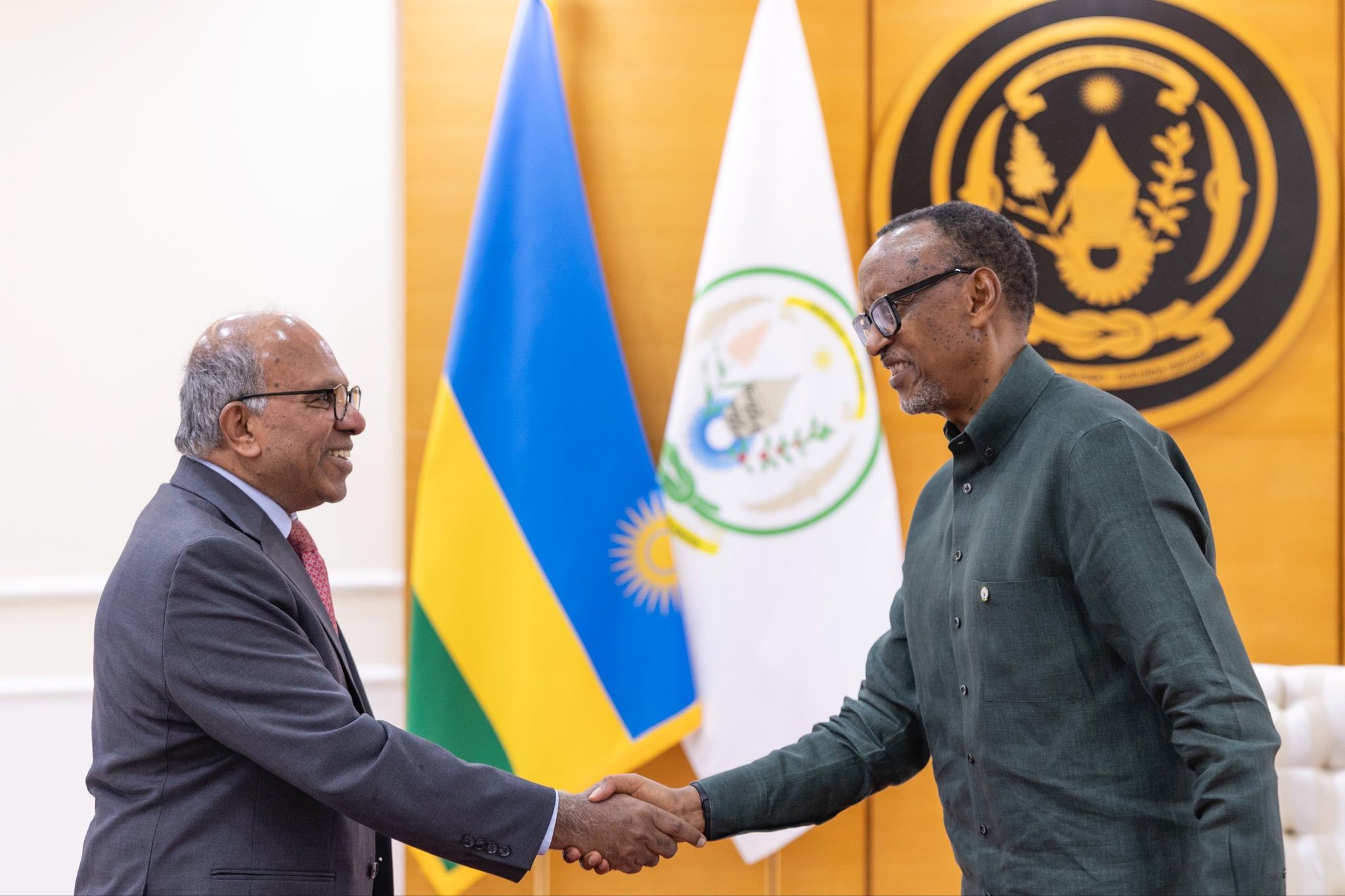
    During the meeting with Minister Fall, President Kagame was accompanied by the Minister of Finance and Economic Planning, Yusuf Murangwa.

    The meeting comes two weeks after President Kagame held a telephone conversation with his Senegalese counterpart regarding the progress in advancing peace in the region through the East African Community (EAC)–Southern African Development Community (SADC) process.

    President Kagame described the talks as productive. The EAC and SADC are jointly involved in efforts to address the security situation in eastern Democratic Republic of Congo, where government forces and the AFC/M23 rebels have been fighting.

    During a joint EAC-SADC Heads of State Summit held on March 24, regional leaders appointed a five-member panel comprising former heads of state to facilitate the talks. Former Kenyan President Uhuru Kenyatta and his Nigerian counterpart Olusegun Obasanjo are co-chairing the panel.

    Meanwhile, during their phone call last month, Presidents Kagame and Faye also discussed the strong and mutually beneficial cooperation between the people of Rwanda and Senegal.

    Rwanda and Senegal have maintained strong bilateral relations for many years, reinforced by reciprocal visits by their leaders to Dakar and Kigali, as well as through various cooperation agreements.

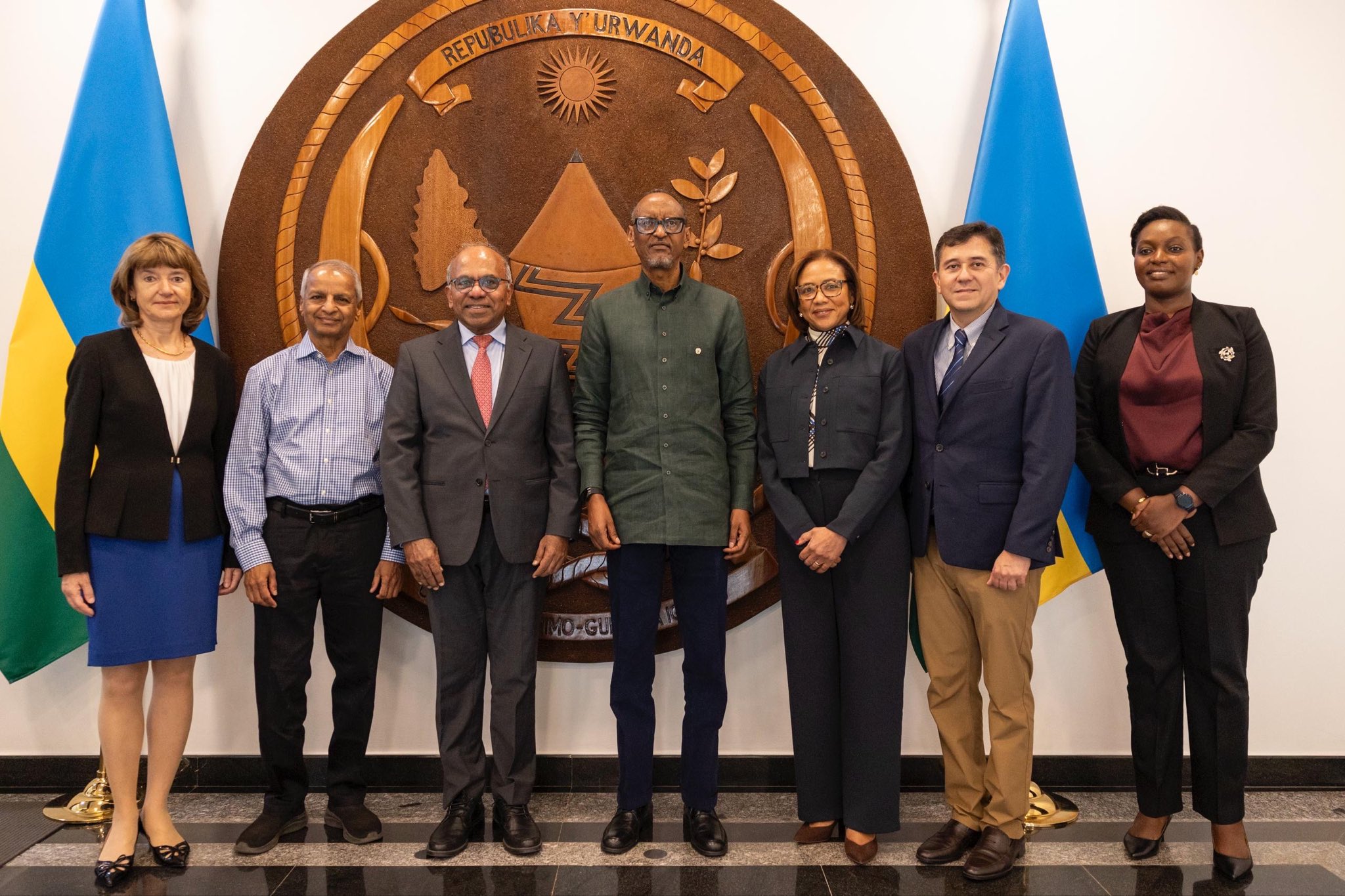
    Senegal’s Minister of African Integration and Foreign Affairs, Yassine Fall (second from left), delivered a special message from President Bassirou Diomaye Faye to President Paul Kagame at Urugwiro Village on Tuesday, April 15, 2025.

  • The purpose of remembrance: A personal reflection on Kwibuka

    The day began like any other, and the program followed the familiar structure of Kwibuka events: a time to remember our loved ones. When we arrived at the memorial, we followed the Path of Remembrance, tracing Rwanda’s history—from the peaceful era before colonialism, to the introduction and spread of hatred against the Tutsi, to the massacres that occurred over the years leading to the horror of 1994. We saw how the divisive colonial ideology was planted into Rwandan hearts, and how it culminated in the tragedy that befell our people.

    One aspect of the remembrance path that feels heartwarming, if such a thing can exist in these difficult times, was the video shown at the start. It told the story of two genocide survivors who fell in love through shared grief, married in their pain, and built a new life together. At the end of the path, they appeared again on screen, telling how they healed each other, raised children, and found joy again. That story gave us hope. It gave meaning to the quote, “They tried to bury us, they didn’t know we were seeds.”

    We visited the mass graves and observed a minute of silence to honour everyone who was murdered simply for being Tutsi—especially those laid to rest there. It was a deeply emotional and heartbreaking moment.

    Afterwards, we gathered to hear a survivor’s testimony and reflect on the lessons from this year’s Kwibuka. Fidele, the survivor, spoke in vivid detail. He described how he and his entire family were hunted like animals across valleys and hills. He recounted meeting other families also on the run—sleeping outdoors in the heavy rains, hiding, clinging to hope. Some Rwandans, not targeted themselves, risked their lives to shelter or feed them, though often only temporarily, before fear drove them away again. Fidele watched loved ones being murdered in front of him. Eventually, when all hope seemed lost, he and a few family members were saved by the RPF Inkotanyi.

    Throughout the program, I was strong. I kept myself together. But I was beyond sad. I couldn’t stop wondering how such things could ever happen. I was carrying the pain—not only Fidele’s, but that of all survivors who had endured the unimaginable. Still, I didn’t let my emotions break through. Not yet.

    Then, the head of our institution spoke. He reminded us why we remember: to ensure that such horrors are never repeated. He encouraged us to be kind to one another, to work together in mutual respect—as human beings.

    The guest speaker, Dr. Antoine Rutayisire, spoke to us about Agaciro ko Kwibuka—the purpose of remembrance. I whispered to my friend beside me how inspiring Dr. Antoine always is. This time, he spoke about the peaceful Rwandan society that existed before colonialism, before the Germans and later the Belgians arrived. He explained how Rwandans once prioritised Ubunyarwanda (Rwandanness), Ubwami (the Kingdom), Meritocracy, and Itorero—a concept close to civic education but rooted deeply in patriotism, unity, and community engagement.

    He elaborated on how colonisation disrupted our social fabric. The Belgians, upon finding an organised society with a king who ruled all Rwandans without discrimination, chose to sow division and hatred. With examples from his own life, Dr. Rutayisire traced how that propaganda led to the killings of Tutsi in 1959, 1963, 1973, and ultimately to the 1994 Genocide.

    As he described the persecutions of 1973, including how he and other Tutsi students were hunted down, I couldn’t help but think of my late father, Munyankindi, who fled to Burundi during that time. He too suffered—reduced from a university professor to a high school teacher—until he was finally saved by the RPF in 1994.

    Then came a break, during which Nyiranyamibwa Suzanne was invited to sing. That’s when I lost it. Her voice made me cry instantly. I’ve always been moved by her song “Ese Mbaze Nde?” (“Whom Shall I Ask?”), but this time, after spending over four hours immersed in the pain and memory of the genocide, it hit differently.

    Maybe it was because every time I hear that song, I’m brought back to August 1994, when we returned home from exile in Burundi. I remember the journey through Kirundo into Bugesera, where we saw unspeakable things. I remember adults stopping the car to gently move bodies from the road so we could pass. I remember resting in Nyamata, entering Ntarama Catholic Church and nearby houses looking for survivors… and running out after seeing what no 13-year-old should ever see. My five younger siblings were even smaller. Our young hearts shattered that day.

    We had been told about the beauty of the “Land of a Thousand Hills,” a place of milk and honey. But what we saw… we were not prepared. We arrived in Kigali and stayed with one of our father’s friends in Remera. We were relieved to be surrounded by the Inkotanyi. We felt safe again. But that safety came too late—we had already lost our innocence. We had witnessed the aftermath of one of history’s worst genocides.

    When Nyiranyamibwa sings that line, “Mpingutse i Rwanda, nyoberwa aho ndi…” (“I arrived in Rwanda, and didn’t know where I was”), it breaks me. She sings of roads overgrown with grass, of deserted hills where children used to play, now overtaken by crows. Of churches filled with bodies. Of mothers and fathers, children and babies, all slaughtered. Of machetes used when bullets were too expensive. Of unanswered prayers and swallowed tears.

    Each time I hear her sing, I remember. I think of the scenes from Kirundo to Kigali. I think of the unanswered questions. I think of my little brother, my grandparents, my aunts and uncles I never got to know, the cousins I will never meet. Most were killed in Kibuye—in churches, stadiums, or their homes. Few survived. Only two aunts from Kigali, and one cousin who survived the Kibuye massacres as a child.

    This question “Whom shall I ask?” haunts us. It lingers in my mother’s heart. It lingers in all of ours. If we ever want to know what our loved ones were like, what they loved, what they dreamed of, what made them laugh—we can’t ask. Even the few old photographs that survived don’t fill the void.

    Every year during Kwibuka, I remember them all—even those I never knew existed. My family and I grieve. Our friends grieve. We cry for them. We live for them.

    We also remember the pain of survivors. Those who watched it all, lived it all, and somehow survived. Their trauma cannot be measured. We must grieve with them, honour them, and pray that their lives thrive in spite of the pain.

    As Dr. Rutayisire said, the purpose of Kwibuka is not to live in the past. It is to give thanks for the blessings we now enjoy. To thank the RPF Inkotanyi, and our leader, Paul Kagame, for rescuing survivors and giving us back our dignity. But most of all, we remember to restore the respect that was stolen from our loved ones. We remember to lay them to rest, and to give back their humanity.

    We remember so that when our children ask us why we love our country so deeply, why we cherish our President beyond politics, as one would love a parent, why we revere our Inkotanyi family, why we carry such fierce patriotism and unity despite the divisions our forefathers suffered, we can answer proudly. We remember so that such distortion, hatred, and horror will never ever happen again in our country.

    Francine Umutesi, the author of the article, is a Biomedical Engineer, working as a public servant in the Rwanda health sector, and a Published Author of 'Forgiveness the Rwandan Way'.

  • East African bloc launches 2025 edition of regional quality awards

    The 2025 edition of the awards, unveiled at the EAC headquarters in Tanzania’s northern city of Arusha on Monday night, is expected to build upon the success of the inaugural 2024 edition, which took place in Uganda and drew widespread participation and enthusiasm.

    According to the statement, the primary objective of the EAC Regional Quality Awards is to foster a culture of quality within the region by encouraging the adoption of standards and quality management practices by EAC enterprises.

    The awards seek to stimulate interest in quality management practices and excellence among EAC enterprises and encourage sustainable competitiveness by recognizing organizations that excel in adopting international standards, the statement said.

    Speaking during the launch, EAC Secretary General Veronica Nduva said the awards have grown into one of the most consistent and impactful regional initiatives.

    “I am pleased to note that over 40 enterprises, small, medium, and large, from across diverse sectors, including services, have benefited from this competition,” said Nduva.

    The statement also said the winners will be honored at a formal ceremony in December in Nairobi, Kenya’s capital.

    The EAC is a regional intergovernmental organization of eight member states, namely Burundi, the Democratic Republic of the Congo, Kenya, Rwanda, Somalia, South Sudan, Tanzania, and Uganda, with a mission to promote economic, political, and social integration in East Africa.

    The 2025 edition of the awards, unveiled at the EAC headquarters in Tanzania’s northern city of Arusha on Monday night, is expected to build upon the success of the inaugural 2024 edition, which took place in Uganda and drew widespread participation and enthusiasm.

  • “No humanitarian crisis in Goma” – veteran German diplomat says after visit to DRC

    “I drove through most parts of the city and could not see any signs of a humanitarian crisis,” Fahrenholtz revealed in a post on X on Tuesday, April 15, 2025.

    “The streets are bustling with people and they seem very relaxed and feeling safe. The shops are full with foodstuff, imported goods, etc. The University reopened, electricity and water are supplied by the municipality 24 hours per day. There is even street lighting during the night.”

    Fahrenholtz, who previously served as Germany’s ambassador to Rwanda and Bangladesh, praised the efforts to restore order in Goma, noting that law enforcement appeared effective and visible improvements in public services were evident.

    “Almost no garbage to be seen in the streets. Police officers are doing their job, crime and corruption seem to be clearly less. Rule of law is beginning to be established,” he added.

    During his visit, Fahrenholtz observed that the border crossing between Goma and Gisenyi, Rwanda, is fully operational, with UN World Food Programme trucks and NGO vehicles crossing smoothly to address humanitarian needs that may still exist in districts outside the city.

    “I saw women walking across into Goma at 9 p.m.,” he noted.

    In his visit, Fahrenholtz met with the Governor of North Kivu, Manzi Willy, who spoke of the ongoing genocidal acts targeting the Tutsi population in eastern DRC—atrocities also flagged by the UN Special Advisor on Genocide Prevention.

    The governor stressed that the M23 movement aims to end these acts, protect civilians’ human rights, and work toward peace and stability in the region.

    Describing M23 as an “inclusive and diverse Congolese movement” with members from various ethnic backgrounds, including Hutu, Fahrenholtz echoed concerns about the persecution and displacement of Tutsi communities over decades.

    The former ambassador has previously criticized international responses to the conflict, particularly those of the European Union. He challenged comments made by EU High Representative Kaja Kallas, who in March accused Rwanda of backing the M23 rebellion. Rwanda has repeatedly denied involvement in the conflict, insisting that its primary concern is the continued presence in the DRC of the FDLR militia, which is linked to the 1994 Genocide against the Tutsi in Rwanda.

    “Are M23 not DR Congo citizens? Were there not European mercenaries fighting against them in DR Congo? Who will protect ethnic minorities in eastern DR Congo?” Fahrenholtz questioned.

    He further criticized the Congolese government’s failure to resolve the root causes of the rebellion, including ethnic divisionism and genocidal ideology.

    Fahrenholtz’s remarks add a diplomatic voice to the growing scrutiny of the conflict in eastern Congo since the takeover of Goma by the rebels in January, urging the international community to reevaluate its stance and prioritize protection of minority communities.

    Former German ambassador to Rwanda Peter Fahrenholtz (right), North Kivu Deputy Governor Willy Manzi (centre) and AFC/M23 spokesperson Lawrence Kanyuka pose for a photo in Goma.

  • Over 70 people dead as floods wreak havoc in Kinshasa

    According to the latest data, 11 health zones in Kinshasa have been impacted, with more than 5,000 people displaced. At least 72 people have died, and 170 others have been injured due to torrential rains and resulting floods.

    Tanganyika and South Kivu provinces, in the eastern part of the country, have also reported significant damage, with local authorities working to assess the full extent of the humanitarian needs.

    Emergency shelters and care centers have been established in Kinshasa’s stadiums. However, with the Stade des Martyrs, the country’s biggest sports stadium, already hosting over 4,500 people, authorities have initiated a decongestion plan to transfer displaced residents to other venues.

    The health ministry reaffirmed its commitment to strengthening multi-sectoral coordination and ensuring swift, targeted, and coordinated responses to both health and humanitarian emergencies.

    Continued heavy rainfall has been forecast for the coming days, raising fears of further destruction in the city of 17 million, already vulnerable due to rapid and unregulated urban expansion.

    The DRC’s rainy season typically runs from November through May.
    Continued heavy rainfall has been forecast for the coming days, raising fears of further destruction in the city of 17 million, already vulnerable due to rapid and unregulated urban expansion.

  • Ethiopia’s defence chief in Rwanda to deepen military cooperation

    Field Marshal Jula was received by General MK Mubarakh, Chief of Defence Staff of the Rwanda Defence Force (RDF), at RDF Headquarters in Kimihurura during a series of engagements on Monday. He also paid a courtesy call on Rwanda’s Minister of Defence, Juvenal Marizamunda.

    In a statement, the Ministry of Defence described the visit as a key opportunity to deepen the longstanding bilateral cooperation between Rwanda and Ethiopia.

    Discussions between the military leaders are focused on expanding collaboration in defence and related sectors, reaffirming both nations’ commitment to strengthening strategic partnerships and advancing regional peace and security.

    Field Marshal Jula’s visit follows a recent trip by General Mubarakh to Ethiopia on March 13 2025, during which the two defence chiefs signed a Memorandum of Understanding on Defence Cooperation.

    As part of his itinerary, the Ethiopian military chief is also scheduled to visit the Kigali Genocide Memorial and the Campaign Against Genocide Museum to pay tribute to the victims of the 1994 Genocide against the Tutsi, as Rwanda marks the 31st commemoration of the tragedy.

    Rwanda and Ethiopia ties

    Rwanda and Ethiopia have enjoyed over 20 years of military cooperation, initially focused on joint military training. The partnership has since expanded to include collaboration between the police forces of both countries.

    Beyond defense and police cooperation, Rwanda and Ethiopia share strong bilateral ties in sectors such as agriculture, trade, education, and more.

    Over the past seven years, the two nations have also signed agreements in air travel services, allowing for seamless cooperation between their airlines, RwandAir and Ethiopian Airlines.

    Ethiopia’s Chief of the General Staff of the National Defence Force, Field Marshal Birhanu Jula, when he arrived in Rwanda for a four-day working visit aimed at strengthening military ties and advancing regional security cooperation.Field Marshal Jula was received by General MK Mubarakh, Chief of Defence Staff of the Rwanda Defence Force (RDF), at RDF Headquarters in Kimihurura. He also paid a courtesy call on Rwanda’s Minister of Defence, Juvenal Marizamunda.Discussions between the military leaders are focused on expanding collaboration in defence and related sectors, reaffirming both nations’ commitment to strengthening strategic partnerships and advancing regional peace and security.gof2hlzwsaad4sl.jpg

  • UAE, DRC top Rwanda’s export markets as revenues reach $4.2 billion

    The rise was driven by strong performances in both goods and services exports, with the United Arab Emirates (UAE) and the Democratic Republic of Congo (DRC) emerging as the country’s top export destinations.

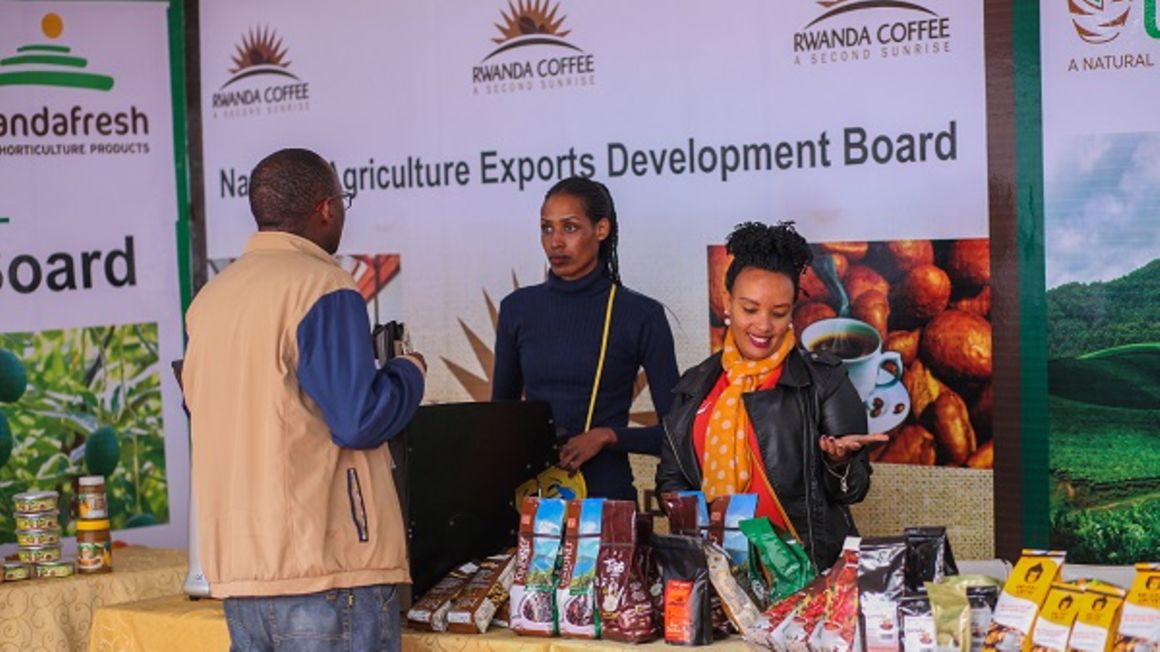
    Rwanda’s top exports include minerals such as gold, coltan, and wolfram, as well as agricultural products like coffee and tea.

    The UAE led Rwanda’s export market with a 63.9% increase, reaching over $1.5 billion in value. The DRC followed with a 32.3% rise to approximately $229.5 million.

    Exports to Luxembourg surged by an astonishing 243.8%, reaching $55.4 million. Other top markets include China ($83.6 million) and the United Kingdom ($36.1 million).

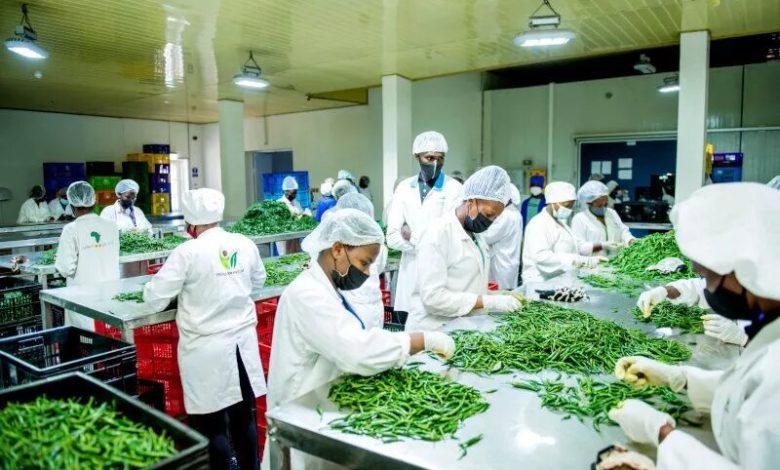
    According to the report, Rwanda’s export growth has been underpinned by targeted interventions from RDB. In 2024, 243 companies across key sectors—including manufacturing, agro-processing, horticulture, services, and handicrafts—were facilitated to access both regional and international markets, generating $164.1 million in export revenues.

    To enhance the competitiveness of local businesses and boost Rwanda’s participation in international trade, the Rwanda Development Board rolled out a range of targeted support programs in 2024.

    A total of 152 companies received hands-on coaching focused on international trade standards, pricing strategies, product packaging, and compliance with the African Continental Free Trade Area (AfCFTA) requirements.

    At the same time, 155 businesses enrolled in the E-Commerce Readiness Program, with 15 completing advanced training to expand their digital sales channels. In addition, 124 small and medium-sized enterprises (SMEs) benefited from business development services that included access to affordable financing, grant opportunities, and tailored advisory support.

    To help firms meet global quality requirements, 52 SMEs were supported in obtaining internationally recognized certifications.

    Furthermore, 112 SMEs took part in trade fairs and expos held in Senegal, South Sudan, and Rwanda, providing them with platforms to showcase their products, generate immediate sales, and forge new business contracts.

    A RwandAir cargo flight. Rwanda's top exports include minerals such as gold, coltan, and wolfram, along with agricultural products like coffee and tea.

  • Rwanda’s tourism revenue hit $647 million in 2024

    A new report published by the Rwanda Development Board (RDB) indicates that the growth was driven by resilient performance across various segments, including conservation, Meetings, Incentives, Conferences, and Exhibitions (MICE), and domestic tourism.

    According to the report, gorilla tourism led the surge, with revenues rising by 27% to exceed $200 million, fortifying Rwanda’s position as a leader in sustainable tourism.

    The country welcomed over 1.36 million visitors, with new tourism segments like education and visiting friends and relatives (VFR) also showing growth at 16% and 5% respectively. RwandAir’s non-resident ticket sales jumped by 11%, further signaling international demand.

    In total, Rwanda welcomed more than 1.36 million visitors in 2024. The East African Community (EAC) remained the largest source market, contributing over 1.09 million travellers, while steady flows from Europe (83,076 visitors), North America (52,805), and Asia (36,256) highlighted Rwanda’s reputation as a premier global destination.

    Rwanda also continued to strengthen its MICE sector, hosting 115 high-profile events and welcoming 52,315 delegates. Notably, the country became the first in Africa to host the FIA Annual General Assemblies & Prize Giving Ceremony, showcasing its world-class hospitality and event infrastructure.

    The impact of tourism extended beyond conferences. Rwanda’s national parks experienced a 10.7% increase in visitors and 8.5% growth in revenue, reaching 138,000 visitors and $38.8 million in park-generated income. Nyungwe National Park led the growth with a 20% increase in visitors, followed by Volcanoes and Akagera National Parks.

    Local engagement also played a key role, with 54,800 domestic visits and steady domestic park revenues of $793,000, reflecting strong local interest in the country’s natural heritage.

    Highlighting Rwanda’s forward-looking agenda, RDB Chairman Itzhak Fisher remarked: “The coming years present an exciting chapter of transformation, where strategic collaboration and bold ambition will drive Rwanda toward even greater economic success.”

    In 2025, RDB aims to surpass $700 million in tourism revenue, bolstered by continued investment in conservation, tourism infrastructure, and global events.

    “We aim to generate tourism revenues exceeding USD 700 million by showcasing Rwanda as a leading global destination for leisure, wildlife conservation, and international events,” said Jean-Guy Afrika, CEO of RDB.

    A new report published by the Rwanda Development Board (RDB) shows that gorilla tourism led the surge, with revenues rising by 27% to exceed 0 million, fortifying Rwanda’s position as a leader in sustainable tourism.

  • Rwanda attracted $3.2 billion investment in 2024

    According to an annual report recently published by the Rwanda Development Board (RDB), a total of 612 investment projects were registered throughout the year, reflecting growing investor confidence in the country’s business climate and economic trajectory.

    The manufacturing sector led the way, attracting $1.35 billion. This was followed by the financial and insurance sector, which drew in $811.2 million, and real estate activities, which secured $377.7 million. Together, the three sectors accounted for nearly 78% of all registered investments.

    Notably, Rwanda’s industrial base continues to expand, with manufacturing also generating the highest number of expected jobs. Of the 51,635 jobs projected from 2024’s investments, 22,500 are expected to come from the manufacturing sector alone.

    Among the largest investment projects registered were Bio Usawa Biotechnology Ltd, National Cement Holding Ltd, Parklane Group Ltd, and TTEC CX Solutions Rwanda Ltd, reflecting diversity across biotech, construction, technology, and clean energy. International giants such as Rio Tinto Exploration also featured prominently.

    In terms of foreign direct investment, China and India emerged as top contributors, accounting for $460 million and $445.1 million, respectively. Other key investors came from the USA ($442.3 million), Nigeria ($313 million), the UK ($144.6 million) and the Netherlands ($103.9 million).

    Despite strong foreign participation, Rwandan-origin investments, including joint ventures, represented the largest share by number, accounting for 24.4% of all registrations—highlighting a growing local entrepreneurial ecosystem.

    Beyond manufacturing and finance, notable investment flows were directed toward information and communication technologies, agriculture, accommodation and food services, and mining. While manufacturing topped job creation, the real estate sector also stood out with 6,600 projected jobs, reflecting growing demand for urban infrastructure.

    The financial sector, in particular, recorded rapid expansion, signaling increased investor interest in Rwanda’s fintech landscape and a strong push for financial inclusion and digital finance.

    Broader economic performance

    Rwanda’s broader economic performance in 2024 underpinned the strong investment momentum.

    According to RDB, tourism revenues reached $647 million, with over 1.36 million visitors. The country’s Meetings, Incentives, Conferences, and Exhibitions (MICE) industry generated $84.8 million, welcoming 52,315 delegates across 115 events. Gorilla tourism alone saw a 27% revenue boost.

    Exports rose to $4.2 billion, a 22% increase from 2023, driven by high demand in markets such as the UAE and Luxembourg, along with a 33% increase in cargo exports.

    More than 240 companies were supported to access international markets, generating $164.1 million in export earnings.

    Rwanda’s reform-driven economic agenda earned the country a top ranking in the World Bank’s B-READY Report, placing 1st in Africa and among the top 10 globally for ease of doing business. The recognition underscores Rwanda’s growing reputation as a competitive and innovation-friendly investment destination.

    Looking ahead, RDB is targeting over $3 billion in new investments and $700 million in tourism revenue in 2025.

    Key initiatives will focus on expanding Special Economic Zones, digitizing government services, and promoting innovation, conservation, and entrepreneurship.

    Rwanda is also set to host major international events, including the 20th Kwita Izina ceremony and the UCI Road World Championships. The UCI event, scheduled for September, will be held in Africa for the first time.

    According to an annual report recently published by the Rwanda Development Board (RDB), a total of 612 investment projects were registered throughout the year, reflecting growing investor confidence in the country’s business climate and economic trajectory.

  • Nduhungirehe slams BBC for undermining Genocide against the Tutsi

    On Saturday, April 12, 2025, during its Imvo n’Imvano program, BBC Gahuza aired a story about a Rwandan named Joseph Semafara, a survivor of the Genocide against the Tutsi. Semafara has since overcome that traumatic history and now runs a successful company, Solvit Africa, valued at $10 million.

    However, instead of stating that Semafara survived the Genocide against the Tutsi, the BBC’s Kinyarwanda and Kirundi service referred to him as having survived “the genocide that took place in Rwanda in 1994”—a phrase the broadcaster has often used and which is widely criticized for distorting the facts about the genocide.

    Among those who condemned the phrasing was Minister Nduhungirehe.

    Taking to his official X account, the minister wrote: “I wish to remind @bbcgahuza that Semafara didn’t survive ‘the genocide committed in Rwanda in 1994’, but survived the 1994 Genocide perpetrated against the Tutsi in Rwanda.”

    He went on to denounce what he described as the UK’s long-standing failure to bring genocide fugitives to justice, and criticized the BBC for continuing to distort the narrative of a crime recognized by both the UN General Assembly and an international tribunal.

    “For over 31 years, the UK has refused to extradite or prosecute even a single genocide suspect living on its territory,” he said.

    “And the BBC remains the only major international broadcaster that continues to downplay a genocide confirmed by a UN court. At the very least, they should remain silent during these 100 days of commemoration.”

    Minister Nduhungirehe’s remarks come at a time when Rwanda is observing the annual 100-day period of mourning and remembrance for the victims of the 1994 Genocide against the Tutsi.

    The BBC has faced repeated criticism in the past for using language perceived as minimizing or denying the Genocide against the Tutsi, which claimed a million lives.

    Rwanda’s Minister of Foreign Affairs and International Cooperation, Amb. Olivier Nduhungirehe, has criticized the BBC for once again using language that downplays the 1994 Genocide against the Tutsi in its reporting.