The report suggests that the Trump administration has, at least for the time being, shifted away from diplomatic efforts while continuing military actions against Iran.
Witkoff has not spoken with Iranian Foreign Minister Seyed Abbas Araghchi in the days “since this thing went kinetic,” the report quoted a senior Trump administration official as saying.
Earlier in the day, U.S. President Donald Trump wrote on social media that it’s too late for U.S.-Iran negotiations, arguing that the United States held the military advantage.
In another post, the U.S. president boasted “unlimited supply” of weapons, dismissing a Wall Street Journal report that highlighted the rapid depletion of air-defense interceptors and other munitions in strikes against Iran, which is reportedly “straining its stockpiles.”
Meanwhile, Trump said Reza Pahlavi, the exiled crown prince of Iran’s last shah, is not someone that the White House has considered for new Iranian leadership, noting he still preferred “someone from within” to take charge.
Trump also admitted there was no evacuation plan for U.S. citizens across the Middle East region before launching the massive military campaign against Iran.
“Because it did happen all very quickly,” Trump told reporters.
The U.S. State Department said Tuesday it is “actively securing” military and charter aircraft to fly Americans from the Middle East to safety as the war has deeply disrupted commercial air travel.
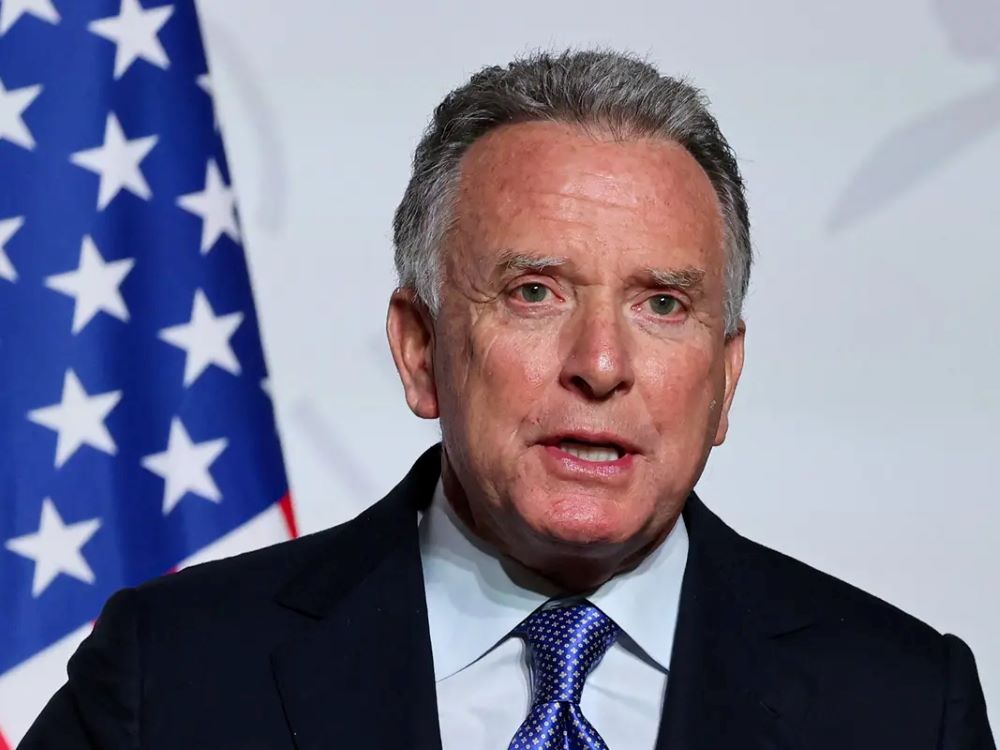
US Special Envoy Steve Witkoff delivers a press conference upon the signing of the declaration on deploying post-ceasefire force in Ukraine, during the ‘Coalition of the Willing’ summit, at the Elysee Palace in Paris, France, January 6, 2026. (Reuters)
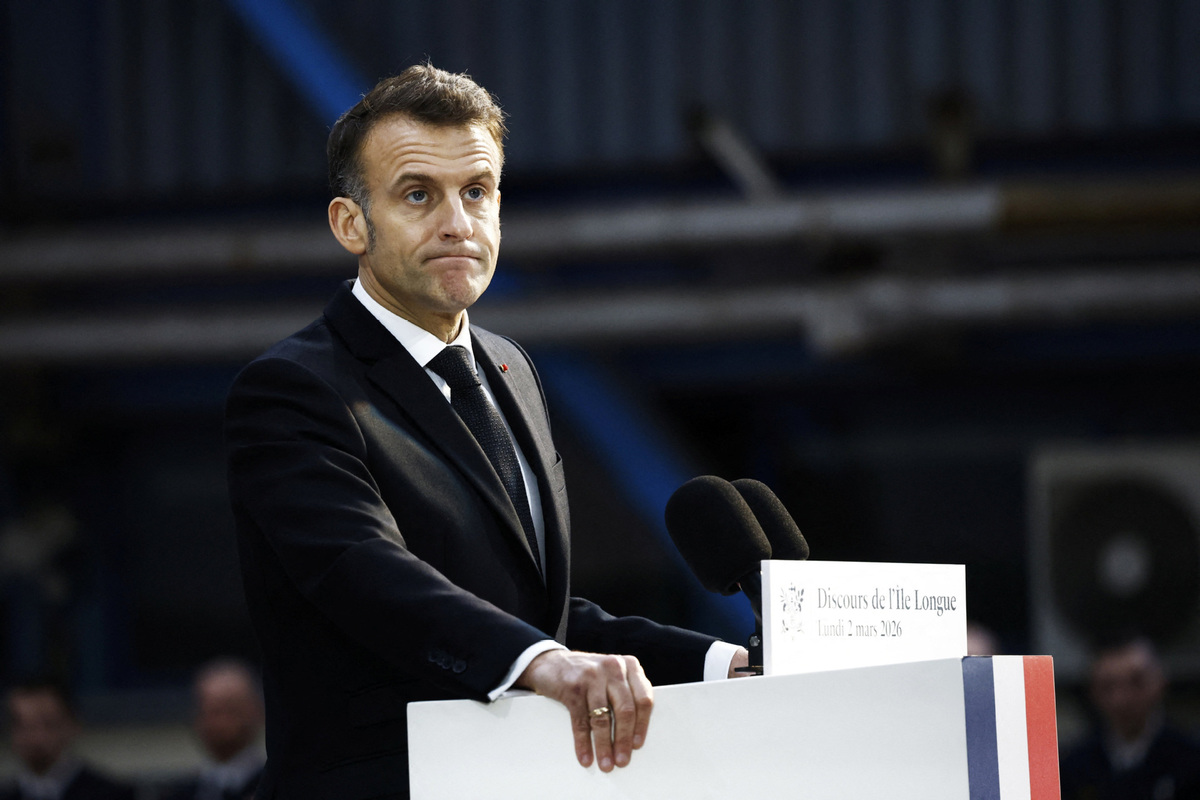
In a televised address on the situation in Iran and the Middle East, Macron said the conflict triggered by the strikes carried out by the United States and Israel was now spreading across the region, posing serious consequences for peace and security.
Macron confirmed that the French aircraft carrier Charles de Gaulle is being dispatched to the Mediterranean Sea in response to the deteriorating situation in the region. The vessel had been in Sweden for military exercises.
He said the frigate Languedoc and additional air defense assets are also being deployed to Cyprus. The British air base at Akrotiri on the southern coast of Cyprus was hit by a drone early Monday.
The French president added that France had responded immediately, shooting down drones “in legitimate defense” from the “very first hours of the conflict” involving Israel, the United States and Iran.
On Sunday, French Minister of the Armed Forces Catherine Vautrin said on social media that a hangar at France’s naval base, located adjacent to an Emirati base, was struck in a drone attack targeting the port of Abu Dhabi. The damage was limited to material losses, and no injuries were reported.
Macron also announced that the first two flights repatriating French nationals from the war-affected Middle East would arrive in Paris on Tuesday evening.
French President Emmanuel Macron confirmed that the French aircraft carrier Charles de Gaulle is being dispatched to the Mediterranean Sea in response to the deteriorating situation in the region.
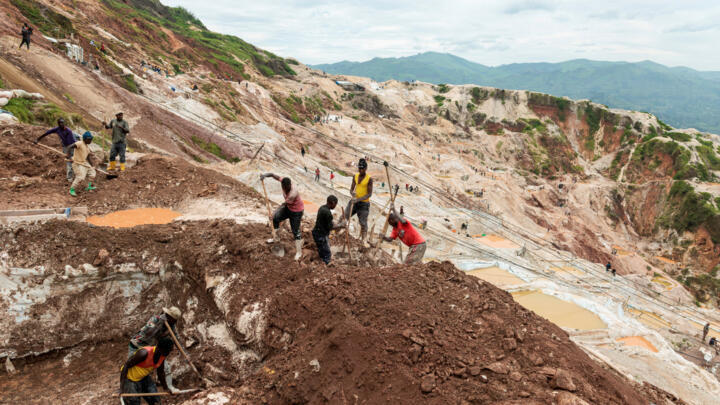
“There was indeed a landslide following heavy rainfall on the mountain known as Kasasa. The earth swallowed many people. We are awaiting the official death toll,” David Kasereka, an artisanal miner and resident of Rubaya, told Xinhua.
The Rubaya mines in North Kivu Province are a crucial global source of coltan and have been controlled by the March 23 Movement (M23) rebel group since 2024.
The M23 has yet to comment on the tragedy.
In January 2026, at least 200 miners were killed after several shafts collapsed at coltan mining sites in Rubaya. Local media reported that the death toll may have exceeded 400, excluding those still missing.
Coltan, or columbite-tantalite, is the main source of tantalum, a rare metal used in the production of advanced electronic devices. The United Nations estimated that the Rubaya mines alone account for about 15 percent of the global tantalum supply.
The initiative aims to accelerate connectivity for up to 500,000 schools and other facilities delivering essential services to children.
The first phase runs a public Request for Expression of Interest (REoI), designed to identify and prequalify providers capable of delivering turnkey connectivity solutions — terrestrial, wireless, satellite or hybrid — at scale. A competitive Request for Proposals (RFP) is planned for Q2 2026.
For children, internet access underpins the rights to education, information, participation and protection. Yet 2.6 billion people globally remain offline, with children in rural and low-income African communities disproportionately excluded. Without structural reform, connectivity gaps risk deepening inequalities in education, health and economic opportunity.
In many countries, artificial intelligence and digital technologies are transforming classrooms, labour markets and public services. For other countries, however, the absence of basic internet access leaves millions of children unable to participate in that transformation. As digital tools become central to how societies learn and work, connectivity is no longer optional infrastructure, it is foundational.
This launch marks a shift from fragmented, country-by-country connectivity procurement efforts toward a coordinated market approach.
By aggregating government demand and standardising service expectations, UNICEF is building a procurement vehicle capable of operating at continental scale, while providing suppliers with greater predictability and clearer demand signals.
Rather than issuing isolated tenders, UNICEF is working with governments to pool demand across national programmes. The model combines defined service-level standards focused on uptime and performance, data-driven monitoring to ensure accountability, and longer-term contracting pathways intended to reduce uncertainty for both governments and providers.
“This REoI, and the upcoming RFP, are designed to bring greater structure and predictability to school connectivity markets,” said Kaan Çentintürk, Chief Information Officer at UNICEF. “By defining service expectations upfront and aligning demand across countries, we can move from fragmented procurement toward managed connectivity that is reliable, measurable and sustainable.”
UNICEF will act as a procurement agent for participating governments and will work closely with financing institutions such as the World Bank, as well as partners including Smart Africa and the UN Economic Commission for Africa (UNECA), to align funding and implementation support.
UNICEF brings procurement experience from other sectors, including vaccines, worth a total US$5.2 billion each year across 162 countries.
UNICEF’s established systems and market credibility also support large-scale delivery.
The current REoI does not request binding pricing or bids. Instead, it seeks information on providers’ operational capacity, geographic reach and ability to deliver managed connectivity services with accountability.
Participation in this phase will determine eligibility for invitation to the competitive RFP process.
UNICEF welcomes providers able to operate legally in-country and deliver at scale, including solutions that ensure power continuity and incorporate child-appropriate cybersecurity and safeguarding measures.
The Request for Expression of Interest is open until 27 March 2026. Interested providers can access the full REoI and submission details at: https://giga.global/connectivity-reoi/.
Located near Rusizi’s main commercial area, the new branch is strategically positioned to serve small and medium enterprises, cross-border traders, farmers, hospitality operators, and growing households.
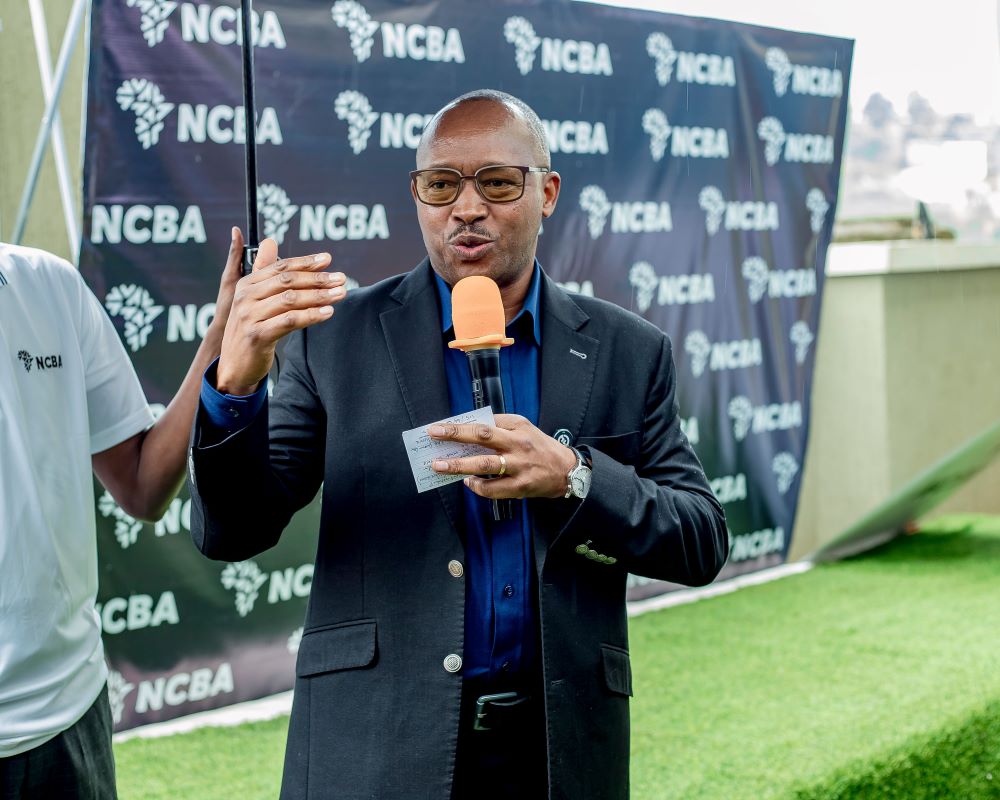
Speaking at the opening ceremony, NCBA Bank Rwanda Managing Director Maurice Toroitich thanked the community for the warm reception and described the move as a long-term partnership rather than a transactional expansion.
“We come here as a capable partner in the transformation of Rusizi — ready to listen, ready to support, and ready to grow alongside the businesses and people who work hard every day to develop themselves, their families, this district, and the country at large,” he said.
Rusizi’s strategic location as a gateway to Bukavu in the eastern Democratic Republic of Congo positions it as a dynamic commercial hub. However, bank officials emphasized that their support will extend beyond trade flows to the sectors shaping the district’s broader economic transformation.
The bank has already made commitments and attracted commercial farmers investing in the district’s fertile agricultural land, hoteliers expanding the hospitality sector along Lake Kivu, and developers responding to growing demand for residential and commercial real estate.
NCBA indicated it will continue focusing on enabling agribusiness growth, property development, and SME expansion across key value chains.
Head of Business at NCBA Bank Rwanda, Samuel Nkubito, said the branch was deliberately located close to the market to remain accessible to everyday entrepreneurs.
“Smal and medium enterprises are the backbone of Rwanda’s economy. From shop owners and boutique operators to agro-processors and service providers, these businesses create livelihoods for the majority. Our presence here is about giving them the financial tools to scale sustainably.”
The opening of the Rusizi branch also strengthens NCBA’s national and regional integration strategy.
As part of a banking group operating in five African countries; Kenya, Uganda, Tanzania, Rwanda, and Côte d’Ivoire, with over 115 branches and more than 60 million customers, NCBA connects clients to a wider East African financial network.
“When a client in Rusizi grows beyond one market, we are able to support that journey,” Toroitich added.
In addition to its physical expansion, NCBA highlighted its digital reach through MoKash, the mobile savings and lending platform operated in partnership with MTN Rwanda.
Through MoKash, the bank serves nearly six million customers nationwide, positioning it as Rwanda’s largest retail digital bank by customer numbers.
The Rusizi branch is expected to deepen that relationship by combining digital convenience with on-the-ground advisory and financing capabilities.
Local business leaders welcomed the bank’s arrival, noting that improved access to structured credit and responsive banking services will support enterprise growth across the district.
With existing branches in Kigali, Musanze, Nyagatare, Kayonza, and Rubavu, the addition of Rusizi signals NCBA’s continued expansion into high-potential and regionally connected markets.
Similar branch expansions have been executed by the bank in the various markets where it operates. The bank reaffirmed that its investment in Rusizi reflects confidence in the district’s future and a commitment to building lasting relationships with the community.
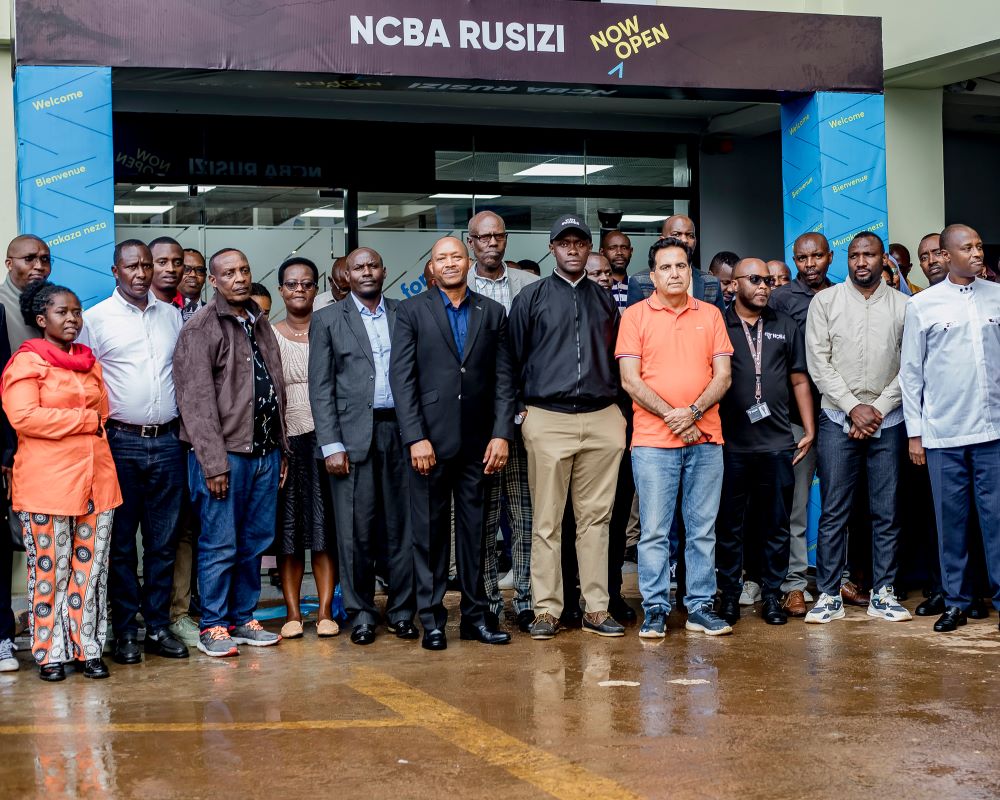
NCBA Bank Rwanda has expanded its footprint in Rwanda’s Western Province with the official opening of its Rusizi branch,. Speaking at the opening ceremony, NCBA Bank Rwanda Managing Director Maurice Toroitich described the move as a long-term partnership rather than a transactional expansion. Head of Business at NCBA Bank Rwanda, Samuel Nkubito speaking at the inauguration.
Since the announcement of the sanctions on the evening of March 2 2026, officials in the DRC government have reacted with extreme delight, thanking the United States for acting on a request they have reportedly pursued for years.
DRC’s Foreign Minister, Thérèse Kayikwamba Wagner, said the U.S. decision demonstrates that no party should ignore agreements, adding that DRC officials remain steadfast in their position.
Makolo responded to Kayikwamba, saying that despite the propaganda and all efforts by the DRC government, the DRC’s support to the FDLR terrorist group is evident.
“The Government of the DRC remains the #1 backer of FDLR, which is an existential threat to Rwanda. No matter how many lies and resources are invested into propaganda to distract from DRC state sponsorship of the FDLR, this problem is not going away,” she said.
She emphasised that the U.S. sanctions on the RDF and some of its senior officials are biased and will likely push the DRC to rely even more on military solutions, thereby prolonging the conflict.
Makolo added: “One-sided sanctions unfortunately only serve to embolden the Government of the DRC in its insistence on a military solution. The result is what we see now: prolongation of the conflict, escalation of violence, lost opportunities and importantly, lost lives.”
Both the DRC and the U.S. accuse Rwanda of supporting the M23/AFC, an alliance was formed to counter politically motivated persecution against Congolese, backed by DRC policies and genocidal ideologies.
DRC’s collaboration with FDLR, left Rwandan territory shelled at different times, prompting Rwanda to strengthen its defensive measures along the border.
In a statement shared on X, Makolo also warned that inflammatory remarks against Tutsis, such as those made by former DRC army spokesperson Gen. Maj. Sylvain Ekenge on state television, risk spreading ethnic violence across the region.
Makolo concluded that addressing these issues requires the consideration of existing facts, not distortion, in the search for a solution to the eastern DRC crisis.
“The way forward to lasting peace and progress is already laid out in agreements reached in the past year, including the comprehensive Washington Accords, but the DRC appears more interested in continued war than in implementing its obligations in the peace processes,” she noted.
Reports from UN experts indicate the DRC continued aiding the FDLR even after the agreement, yet the U.S. has taken no action.
Yolande Makolo is the Spokesperson of the Government of Rwanda.
The analysis found that more than 40% of adults with chronic headache conditions experience symptoms of depression or anxiety.
Chronic headaches were defined as occurring on more than 15 days per month or lasting longer than three months.
Across 48 eligible studies, researchers reported that 43.1% of adults with chronic headaches had clinical symptoms of anxiety, while 45.9% showed symptoms of depression.
Compared with people without headaches, those with chronic headaches were nearly five times more likely to experience depression and more than seven times more likely to experience anxiety.
They were also more than twice as likely to report both conditions compared with individuals who suffer from episodic headaches.
The findings highlight the urgent need for improved mental health screening and treatment among people with chronic headache disorders.
Previous research has shown similar social and health patterns. The 2010 American Migraine Prevalence and Prevention study found that individuals with chronic migraine had lower household incomes, were less likely to work full time, and were more likely to experience occupational disability than those with episodic migraine.
They were also more likely to report respiratory illnesses such as asthma and bronchitis, as well as cardiovascular risk factors including hypertension, diabetes, high cholesterol and obesity.
Researchers note that chronic pain conditions show comparable mental health trends, reinforcing the need for targeted psychological support, particularly for women and younger patients.
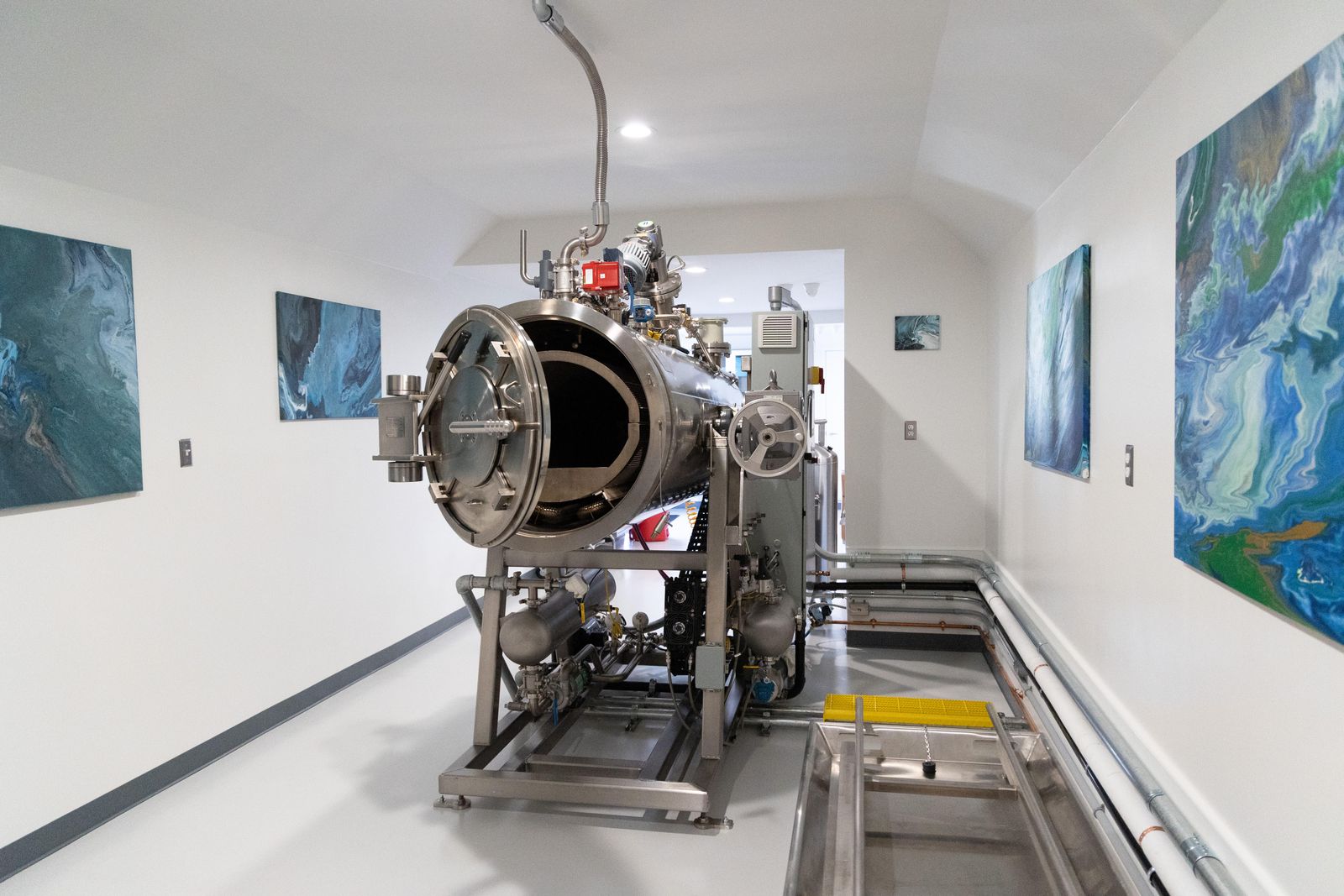
Hydrolysis mirrors the natural decomposition process but accelerates it. The body is placed in a pressurised metal chamber filled with water and about 5% alkaline solution, such as potassium hydroxide, and heated to around 150°C for three to four hours.
The process dissolves soft tissue, leaving only bones, which are dried and reduced to a fine white powder. Families may keep, scatter or bury the remains, as they would with conventional ashes.
Scotland’s public health minister, Jenni Minto, described the change as a response to growing public demand for greater choice. She said decisions about funeral arrangements are deeply personal and stressed that hydrolysis would be subject to the same regulatory standards as existing methods.
Kindly Earth, the company holding exclusive UK rights to manufacture hydrolysis equipment, said Scotland’s first facility could take up to nine months to become operational, pending planning and water authority approvals. The firm called the move a historic moment for the funeral sector.
Already legal in parts of the United States, Canada, Ireland, South Africa, Australia and New Zealand, hydrolysis is seen as producing no direct toxic air emissions and potentially reducing the need for single-use coffins.
Supporters say interest in sustainable funeral options continues to grow across the UK.
Cremations account for almost 80% of UK funerals, according to the Cremation Society.
Elsewhere in the UK, the Law Commission in England and Wales is considering a regulatory framework for new funerary methods, including hydrolysis and human composting.
The water cremation process dissolves soft tissue, leaving only bones, which are dried and reduced to a fine white powder.
The reptile was first spotted around midday on Saturday in Ironbark Creek at Federal Park in Wallsend, about 100km north of Sydney, by a group of teenagers.
Stephanie Kirsop, whose son was among those who saw the animal, initially dismissed the sighting.
“This is a trick … it looks like a crocodile but that’s probably a log,” she told The Guardian.
After visiting the creek herself, she realised it was indeed “this little crocodile swimming around in the water.”
The discovery, near a public pool and primary school, prompted calls to wildlife rescue group Wires, the Australian Reptile Park and New South Wales police.
Once a Police officer confirmed the sighting, crocodile handlers led by Billy Collett from the Australian Reptile Park were deployed.
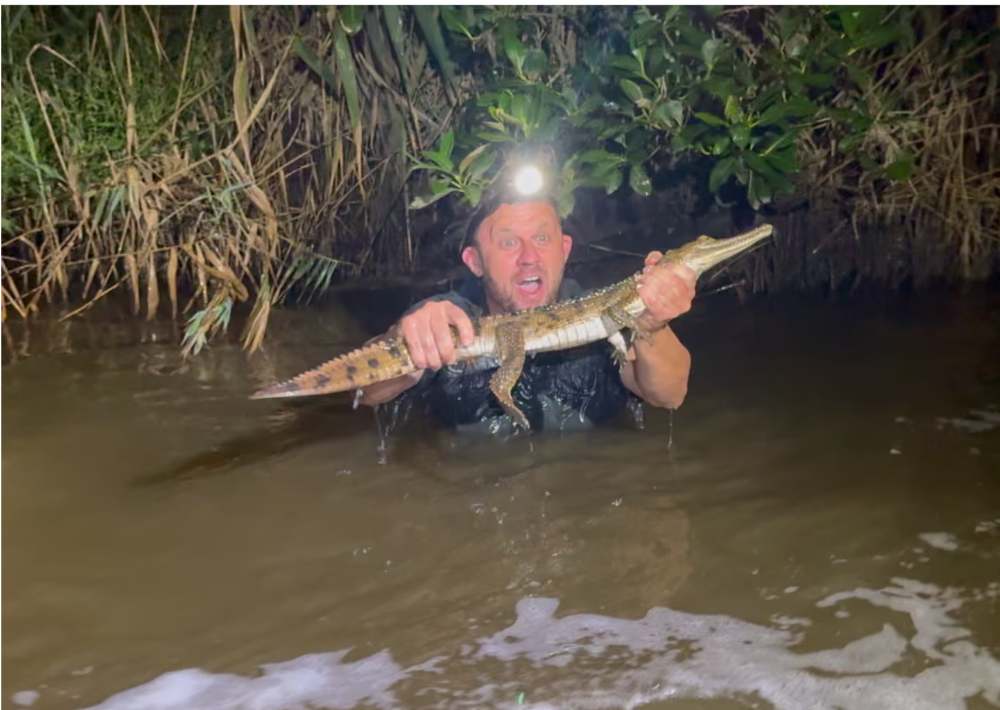
After unsuccessful attempts on Saturday, the team returned Sunday with a motorised boat and captured the reptile about 3km downstream.
Collett said their main concern was the animal’s welfare, noting they were about 2,500km away from the species’ natural range in northern Australia.
The freshwater crocodile (Crocodylus johnstoni) is native to northern Queensland, the Northern Territory and Western Australia.
Authorities suspect it may have been an escaped pet. The animal has since been taken to the Australian Reptile Park on the NSW Central Coast for veterinary checks. Police said it remains unclear how it ended up in the creek.
Billy Collett (pictured) and his team found the crocodile near wetlands approximately 3km downstream from where it was first spotted. Photograph: Australian Reptile Park
The work, Vision of Zacharias in the Temple (1633), disappeared from public view after being sold to a private collector in 1961. It had previously been excluded from a catalogue of Rembrandt’s works in 1960.
The painting resurfaced when its current owners submitted it for testing at the Rijksmuseum, which conducted a two-year analysis.
Experts confirmed that the signature is genuine, the wooden panel dates from the correct period, and the materials and painting techniques match those of Rembrandt’s early works.
“When I saw it in our studio during restoration, I was immediately struck by the incredible power it has,” Rijksmuseum director Taco Dibbits told BBC. “It’s very high quality. You really feel that he dedicated his soul to it.”
The painting depicts the biblical moment when priest Zacharias is told by the Archangel Gabriel that he and his wife will have a son, John the Baptist. Rembrandt innovatively suggests Gabriel’s presence without showing him visibly, capturing the decisive moment before the archangel reveals his identity.
At the time, Rembrandt primarily painted portraits, making this one of the few history paintings from his early career. The Rijksmuseum plans to put the work on public display starting Wednesday.
While its market value is unknown, other Rembrandt works have sold for millions, including a record £20 million in 2009.
Rembrandt was 27 when he painted the high priest Zacharias, father of John the Baptist