Imagine expecting a hot dry season, only for heavy rains to suddenly fall and destroy homes, crops, and infrastructure. Then, when people have planted and are expecting rainfall, prolonged sunshine and drought take over instead.
These unpredictable weather patterns are among the causes of natural disasters that continue to affect communities.
Many Rwandans still remember the devastating rains of May 2023, which triggered disasters that claimed 135 lives.
More than 2,100 houses were damaged, while another 2,763 were completely destroyed. Roads and other public infrastructure were also badly affected, and the impact is still visible today.
According to a report by the Ministry in Charge of Emergency Management(MINEMA), natural disasters are among the most expensive challenges facing Rwanda, costing the country around $300 million (more than Rwf 400 billion) every year.
To respond to these challenges and strengthen environmental resilience, the Government of Rwanda, through the Rwanda Water Resources Board (RWB) and other development partners, is implementing five major projects worth more than Rwf 735 billion.
These projects are aimed at helping Rwanda tackle climate change, reduce flooding, improve water resource management, generate electricity through sustainable resources, boost food security, and improve the livelihoods of communities living near the project areas.
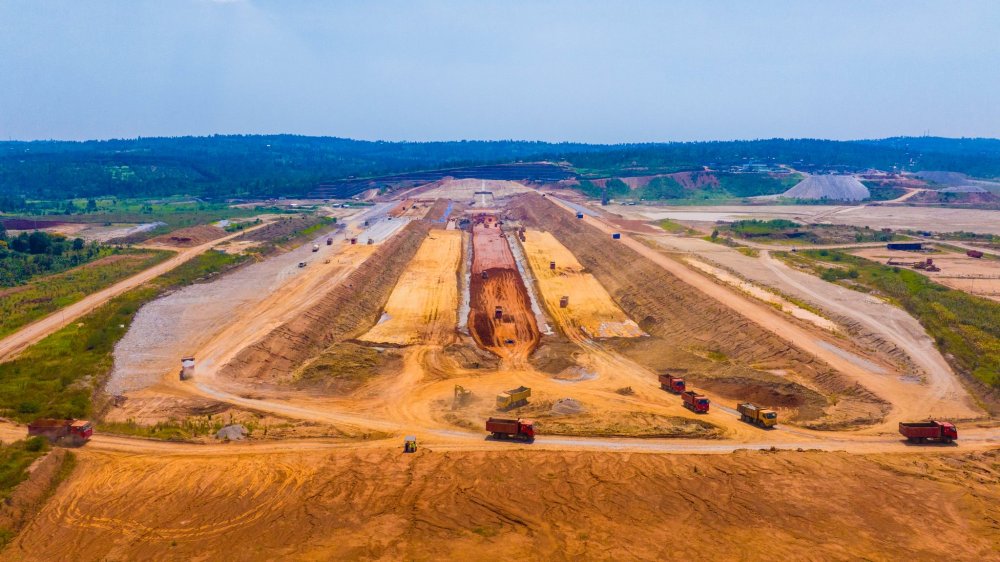
One of the flagship initiatives is the construction of the Muvumba Multi-Purpose Dam in Nyagatare District. The project is expected to be completed in March 2027, and construction has currently reached 46 percent.
The dam is being built on 400 hectares of land across Karama and Rukomo sectors, and it will also extend into Gatunda Sector in Nyagatare District.
Once completed, the dam will stand 39 meters high, with a crest stretching one kilometer and 160 meters in length.
It will have the capacity to store nearly 55 million cubic meters of water. This water will be used to provide clean drinking water to residents, irrigate farmland, supply livestock, and generate one megawatt of electricity.
The African Development Bank (AfDB) will provide €121.5 million (about Rwf 207 billion), covering 97.2 percent of the total project cost, while Rwanda will contribute 2.8 percent, equivalent to €2.688 million (more than Rwf 4.5 billion).
The dam will supply 50,000 cubic meters of clean water per day. It will also generate one megawatt of electricity and support irrigation on 10,000 hectares of farmland in the sectors of Tabagwe, Gatunda, Karama, Rukomo, Nyagatare, Rwempasha, Musheri, and Rwimiyaga.
Rwanda is also implementing another major initiative known as the Volcanoes Community Resilience Project (VCRP), which is funded by the World Bank. The project is being carried out jointly by the Rwanda Water Resources Board (RWB), the Rwanda Environment Management Authority (REMA), and Meteo Rwanda.
Scheduled to run from 2024 to 2028, the project is valued at $300 million (more than Rwf 438 billion). It focuses on reducing flooding, improving livelihoods, and implementing water management measures in volcanic areas.
The project targets communities living in the volcanic region and the Vunga Corridor. It is expected to strengthen flood control, improve water drainage systems, and uplift livelihoods in the districts of Musanze, Nyabihu, Rubavu, Gakenke, Burera, Rutsiro, Ngororero, and Muhanga.
Since implementation began, terraces covering nearly 400 hectares have been constructed, along with 332 anti-erosion structures and other interventions in the districts of Musanze, Nyabihu, and Rubavu.
More than 450,000 tree and crop seedlings have been prepared and planted on 1,184 hectares of land. In additio n, 357 water tanks have been distributed, while 167 cows have been provided to vulnerable families.
Another key environmental conservation initiative currently receiving strong support is the project aimed at protecting biodiversity in the Congo-Nile Divide.
Over the next three years, a biodiversity conservation project covering districts located along the Congo-Nile Ridge is expected to be completed.
This project is being implemented in 10 districts, namely Musanze, Nyabihu, Rubavu, Ngororero, Rutsiro, Karongi, Nyamasheke, Rusizi, Nyamagabe, and Nyaruguru.
It is valued at $50 million (more than Rwf 73 billion) and is being implemented by the Rwanda Water Resources Board (RWB) in partnership with stakeholders, including the Rwanda Forestry Authority (RFA).
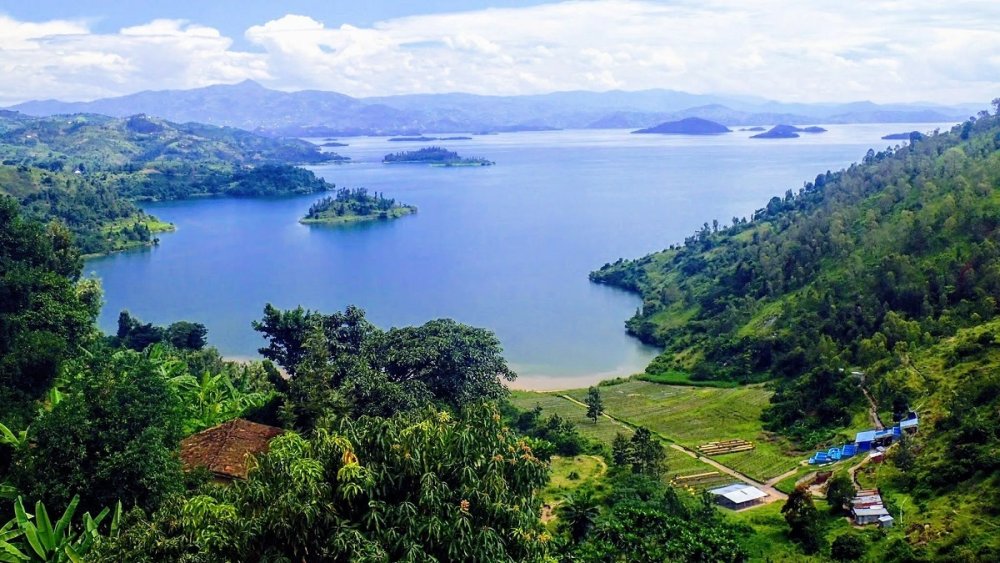
This project, titled “Building Resilience of Vulnerable Communities to Climate Variability in Rwanda’s Congo Nile Divide through Forest and Landscape Restoration,” will focus on conserving natural resources in the Albertine Rift section of the Congo-Nile Divide, which covers 444,600 hectares.
The initiative is expected to restore 5,000 hectares within Nyungwe National Park and Gishwati Forest, while 3,346 hectares will be planted with agroforestry trees. Terraces will be developed on 1,600 hectares of land, 8,500 households will receive clean and environmentally friendly energy solutions, and forests covering 2,500 hectares will be protected.
The project is also expected to create around 24,000 job opportunities.
In the districts of Karongi and Rutsiro, the Rwanda Water Resources Board (RWB) will focus on land restoration activities, including the construction of terraces on 1,673 hectares.
The works will also include rehabilitating 39 kilometers of water channels damaged by heavy rainfall, as well as restoring 300 hectares of land near rivers. These activities are expected to create employment for 3,500 people.
Environmental protection efforts also include another project aimed at combating floods and helping residents in western Rwanda build resilience against disasters.
This project is valued at $9 million (more than Rwf 13 billion). It will focus on addressing recurring floods, soil erosion, and land degradation.
To achieve these goals, water retention dams will be constructed and reinforced with grass cover, damaged drainage channels in Rusizi and Karongi will be rehabilitated, terraces will be built, and agroforestry trees will be planted. These interventions are expected to benefit more than 600,000 residents.
The project will also support the construction of six modern monitoring stations designed to provide early flood warnings, alongside the introduction of digital disaster alert systems.
These measures are expected to benefit 1.2 million people, while training programs on disaster preparedness and response will also be provided.
Leave a Reply