The country has consistently prioritised attracting investment as a means of improving livelihoods and expanding its industrial base. As a result, manufacturing sectors spanning metals, food processing, textiles, and other consumer goods continue to grow steadily, supported by ongoing construction of new industrial facilities.
Speaking on the initiative, Minister of Trade and Industry Prudence Sebahizi highlighted that Rwanda is exploring mechanisms to add value to textile inputs by processing African cotton into yarn, which will then be transformed into fabrics for local use. This approach is expected to significantly reduce dependence on imported textiles.
Sebahizi noted that nearly 40 percent of Africa’s cotton production is concentrated in just two countries, a factor that underscores the importance of leveraging regional resources.
He revealed that an investor is set to establish operations in the Bugesera Special Economic Zone, where cotton sourced from across Africa will be processed into yarn and subsequently into fabric, which will then be used in garment manufacturing within Rwanda.
“This will reduce reliance on imported fabrics, including those from countries such as China,” Sebahizi said.
Beyond textiles, Rwanda is also placing strong emphasis on value addition across its agricultural sector. Authorities are encouraging the transformation of raw agricultural products into a diverse range of processed foods before they reach the market.
This model, widely adopted in developed economies, enables a single crop such as rice or cassava to generate multiple food products, thereby increasing economic returns and market resilience.
The government is further investing in expanding domestic manufacturing capacity in other sectors. In the construction industry, efforts are underway to boost tile production using locally available minerals, with companies like Mountain Ceramic Company Ltd in Muhanga District contributing to increased local output.
Similarly, Rwanda’s metals sector is gaining momentum. A1 Iron and Steel, located in Musanze District, is producing steel from processed mineral resources, while a glass manufacturing plant in Kicukiro District has commenced operations using melted sand. Although the plant currently supplements production with imported materials, plans are in progress to fully localize the technology and raw material sourcing in the future.
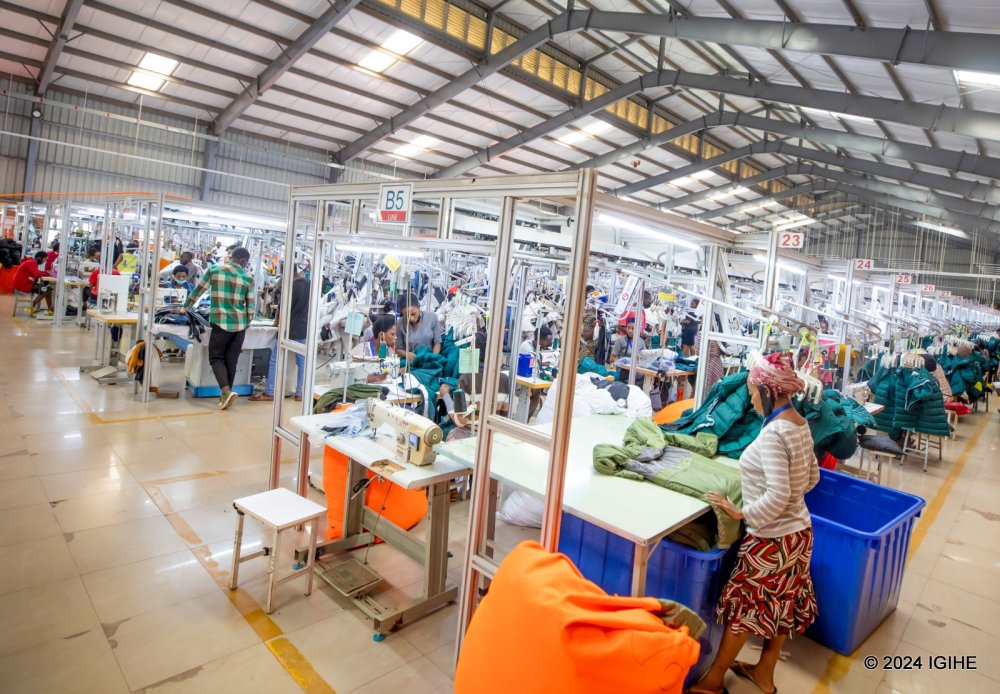
In 2025, the Government of Rwanda reaffirmed its commitment to strengthening the domestic garment industry, setting an ambitious target of increasing access to locally produced clothing from just 5 percent of the population to full national coverage.
With more than 1,300 manufacturing industries currently operating across the country, Rwanda’s industrialisation drive continues to gain momentum, positioning the nation for greater economic self-reliance and sustainable growth.
Leave a Reply