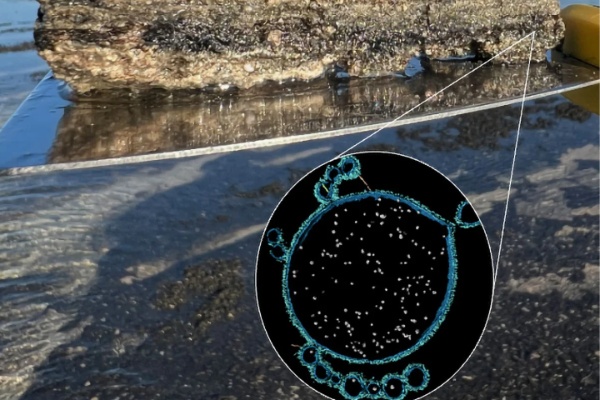
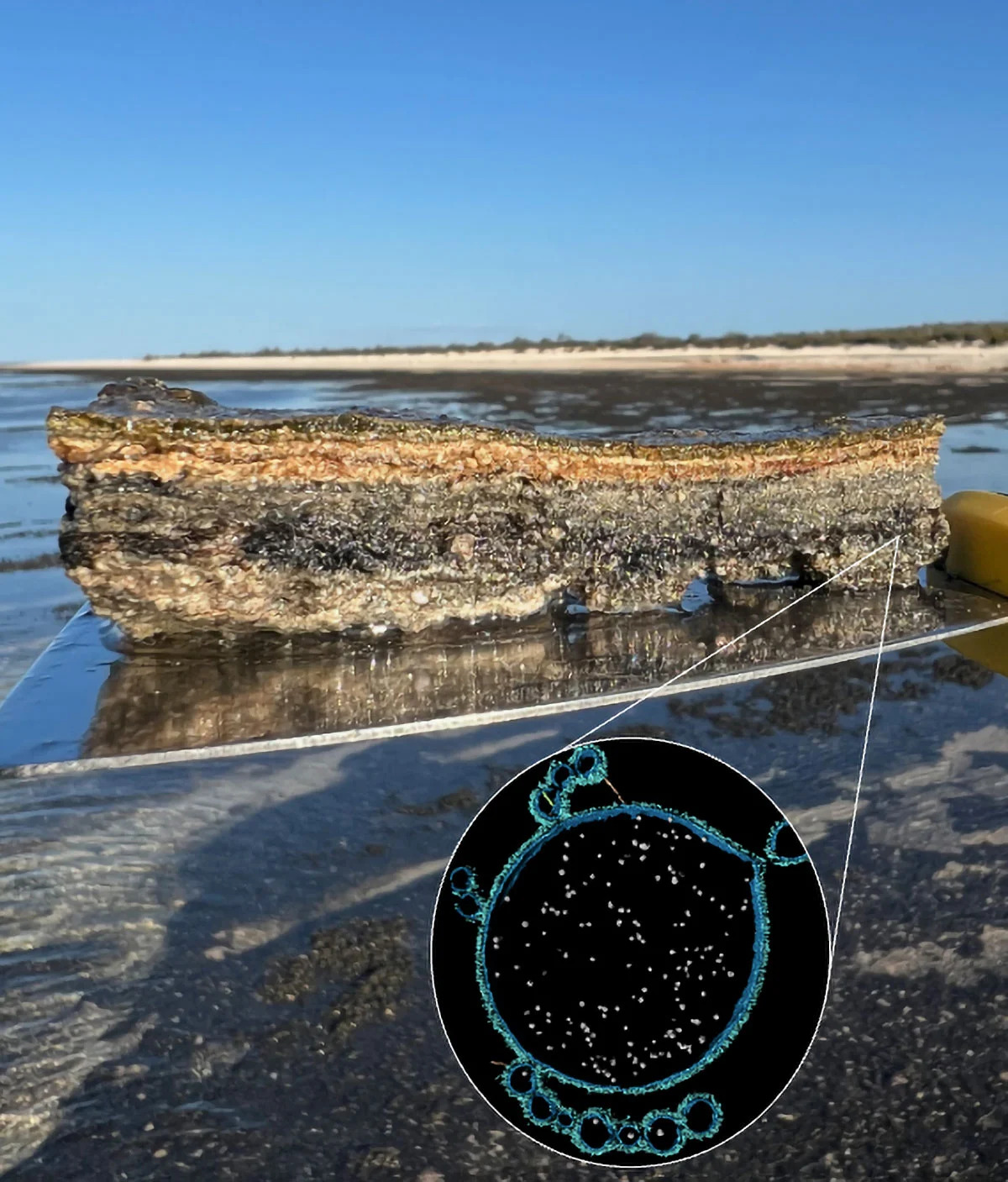
A research team led by UNSW Sydney has identified a newly described microbial pairing living within these structures that may help explain how early cellular partnerships evolved. The study, published in Current Biology, focuses on interactions that resemble processes thought to have driven the emergence of complex cells billions of years ago.
The Asgard connection
At the centre of the discovery is a newly identified archaeon, Nerearchaeum marumarumayae, belonging to the Asgard archaea group, microbes considered among the closest living relatives of the ancestors of eukaryotes, the domain of life that includes plants, animals and humans.
For decades, scientists have proposed that complex cells arose through a long-term partnership between an archaeon and a bacterium, an idea known as the endosymbiotic theory. But direct evidence of such close microbial interactions in natural environments has been limited.
A close microbial partnership
Using electron cryotomography, the researchers captured detailed 3D images showing Nerearchaeum physically associated with a bacterial partner through tiny tube-like structures.
“It could represent a snapshot of how these relationships began,” said Brendan Burns of UNSW Sydney, who described the microbes as interdependent “companions.”
The team spent nearly five years attempting to grow the organisms in the lab, but found neither could survive alone—suggesting a strong dependency between them, including the exchange of hydrogen, vitamins and other compounds.
Cultural and ecological context
The discovery also reflects collaboration beyond science. The species name, marumarumayae, was developed with the Malgana people, Traditional Owners of the Shark Bay region, and references the layered nature of the microbial mats found there.
Researchers say stromatolites should not be seen only as relics of early Earth, but as active ecosystems that continue to reveal how microbial relationships may have shaped the evolution of complex life.
Leave a Reply