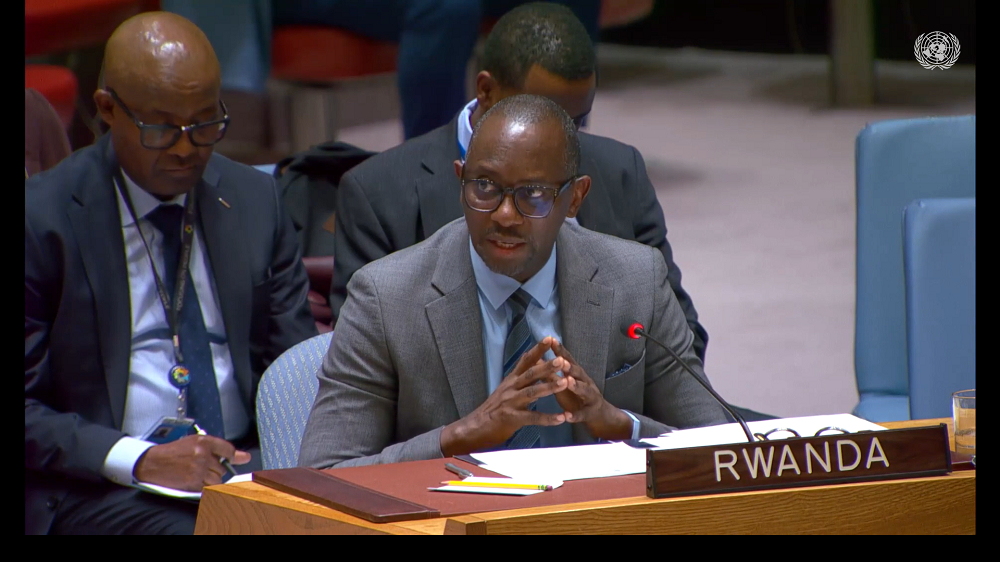
Speaking at a Council briefing on the Peace, Security and Cooperation Framework for the DRC and the Great Lakes region on Wednesday, Rwanda’s Deputy Permanent Representative, Robert Kayinamura, said the continued presence of the FDLR in eastern DRC constitutes an “existential threat” to Rwanda and a major obstacle to peace efforts in the region.
“There can be no credible path to peace without its effective and irreversible neutralisation,” he told Council members, reiterating Kigali’s long-standing position on the armed group.
The meeting came a week after Rwanda commemorated the 32nd anniversary of the Genocide against the Tutsi at the UN General Assembly Hall. Kayinamura noted that some of those responsible for the genocide fled into the DRC and remain active today, a factor he said partly motivated the establishment of the regional Peace, Security and Cooperation Framework in 2013.
Rwanda maintained that it has consistently upheld its commitments under the Framework over the past decade, but argued that key drivers of instability have not been addressed. According to Kayinamura, this reflects “a failure of implementation” rather than a weakness in the agreement itself.
He stressed that the FDLR issue has remained unresolved despite repeated engagement with UN officials, regional mediators, and successive Special Envoys.
Rwanda also expressed concern over what it described as escalating hate speech, ethnic targeting, and violence against Rwandophone communities in eastern DRC, including the Banyamulenge. Kayinamura said the continued portrayal of these communities as foreigners undermines the objectives of the Framework.
“These realities point to deep-rooted challenges that must be addressed directly. Sustainable peace cannot be built on avoidance,” he said.
The Rwandan envoy emphasised that peace in the DRC and stability in the broader Great Lakes region are inseparable, warning that selective implementation and accountability would not produce meaningful results.
While reaffirming support for ongoing diplomatic efforts, including ceasefire arrangements and processes in Washington and Doha, Rwanda also backed interim security measures such as a buffer or interposition force to help stabilise the situation as political negotiations continue.
Kayinamura posed two recurring questions Rwanda has raised in implementation discussions: how the root causes of the conflict remain unresolved after 13 years of the Framework’s existence, and why hate speech and persecution of communities continue unabated.
“If these issues remain unresolved, what basis do we have to expect a different outcome?” he asked Council members.
He concluded that after more than a decade, the path forward is clear and requires full and consistent implementation of agreed commitments. Rwanda, he said, remains engaged in good faith but stressed that success depends on all parties meeting their obligations.
“There is no military solution to this crisis,” he said. “Only a genuine return to the principles of accountability, cooperation, and mutual respect will deliver sustainable peace for our region.”
Leave a Reply