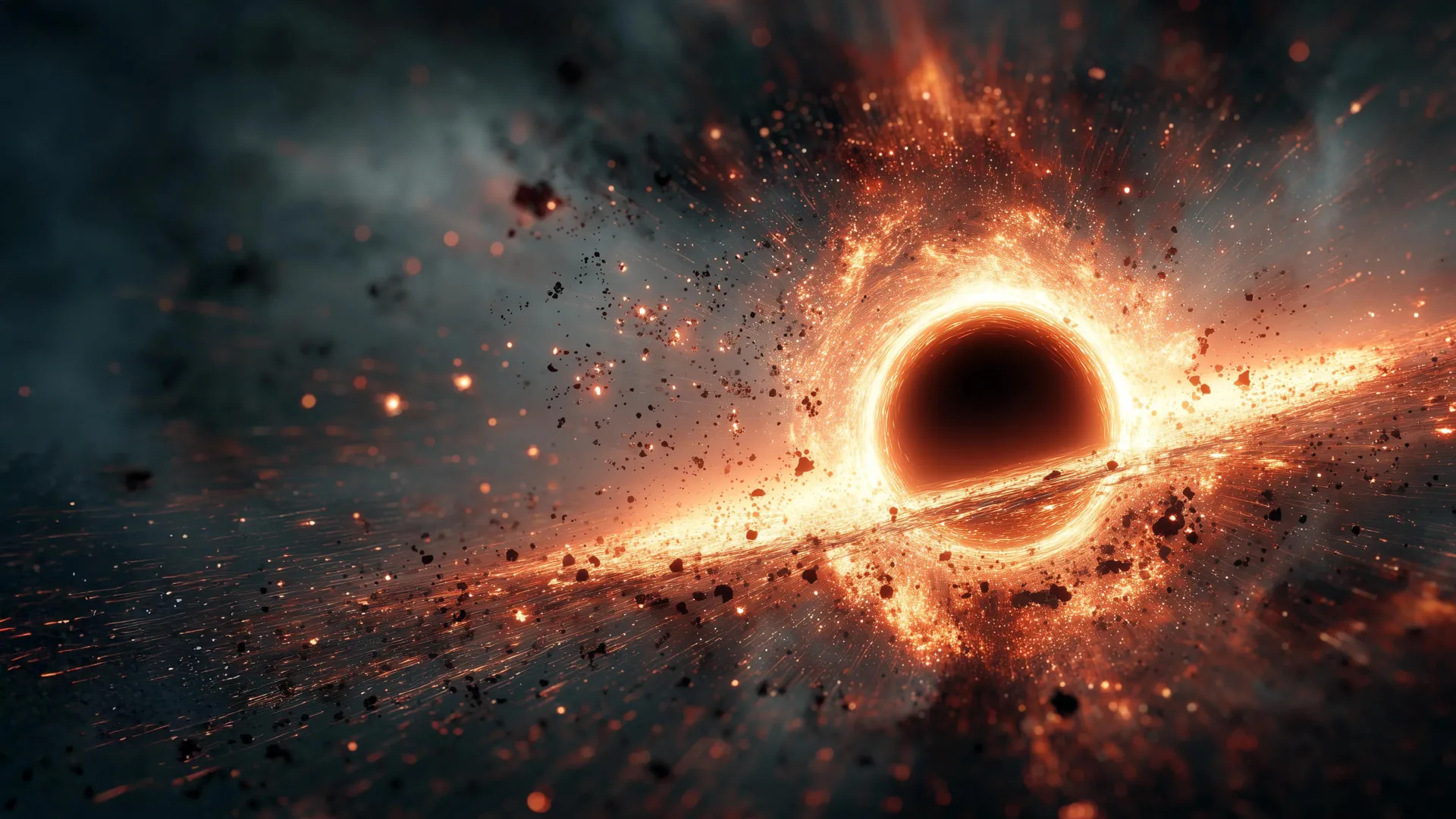
The findings were published in Monthly Notices of the Royal Astronomical Society and are based on observations from highly sensitive radio instruments.
Using advanced radio telescopes like the Low Frequency Array (LOFAR) in the Netherlands and India’s upgraded Giant Metrewave Radio Telescope (uGMRT), scientists captured detailed images of this eruption. The images reveal new jets of energy bursting out from the galaxy’s center, twisting and turning under the extreme pressure of surrounding hot gas. This is just one example of how these enormous cosmic entities continue to shape their environments in ways we are still learning about.
What makes this discovery particularly interesting is that the black hole has shown signs of being active in cycles, switching between periods of quiet and powerful eruptions over millions of years. In fact, the black hole’s jets appear to have erupted multiple times, with layers of older, faded plasma surrounding the new jets. This suggests that the black hole has experienced repeated bursts of activity over its long history, making it an exceptional case study for astronomers.
The surrounding gas is not just a passive background, either. It actively interacts with the black hole’s jets, shaping their direction and structure. The jets bend and compress as they move, creating intricate patterns in the radio images. Some regions of the gas show signs of having aged and lost energy, revealing the long, complex history of the black hole’s relationship with its galaxy.
This discovery gives scientists new insights into the life cycles of black holes and their role in shaping the galaxies they reside in. By studying how black holes cycle through active and dormant phases, astronomers can better understand the processes that drive galaxy evolution across the universe.
In the future, researchers plan to use even more advanced telescopes to observe this black hole and others like it, aiming to uncover even more about how black holes influence their galaxies and the cosmos as a whole.
Leave a Reply