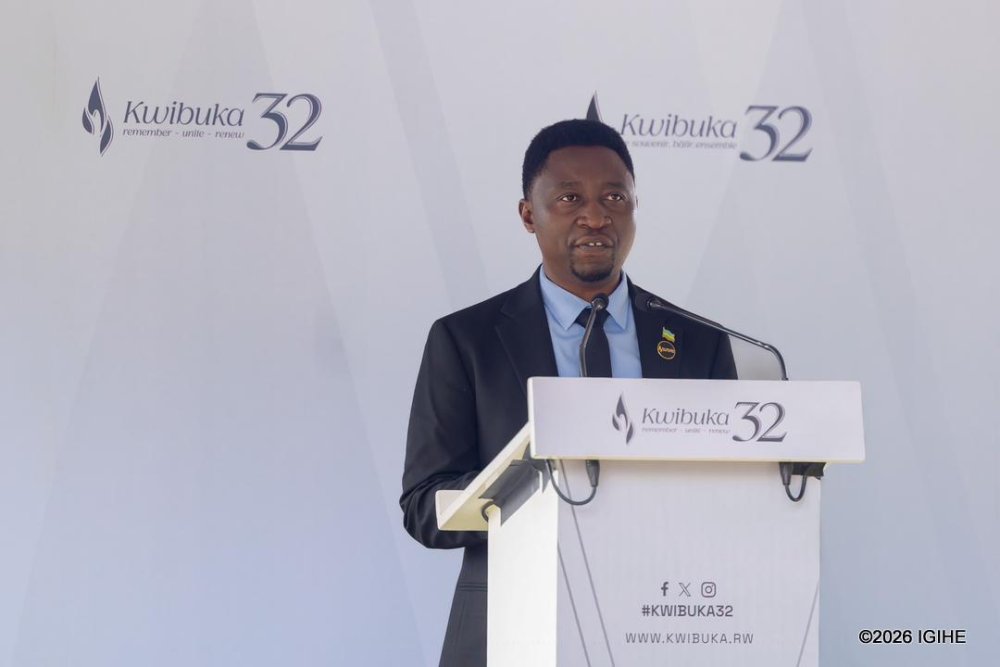
He made the remarks on April 13, 2026, during the 32nd commemoration ceremony for politicians who were killed in the Genocide against the Tutsi.
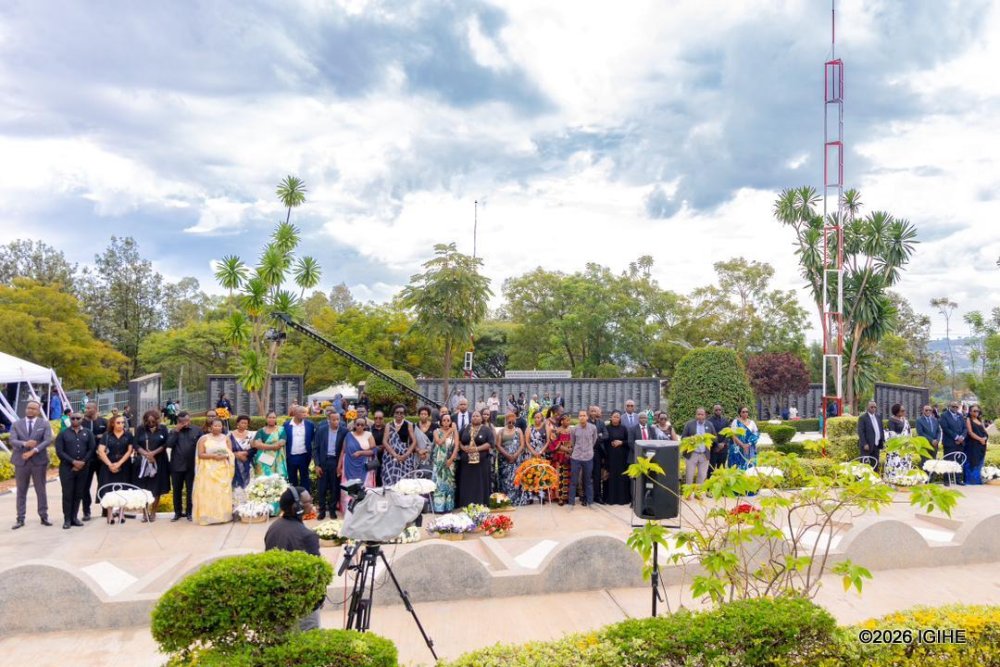
The event marked the closure of the Commemoration Week and was held in Rebero, Kigali City, at Rebero Genocide Memorial, where the remains of 21 politicians are interred. The politicians were killed for opposing discrimination that culminated in the 1994 Genocide against the Tutsi.
Senator Dr. Habineza emphasised that Rwanda has 11 political parties, each guided by its own ideology. He noted that while their ideas may differ, they all operate peacefully within the national governance framework, and each maintains its own independent political stance.
“All 11 political parties are represented in Parliament and in other leadership institutions of the country. It should be clearly understood that meeting and sharing views on national issues does not remove the independence of each political party,” he said.
He further explained that this independence naturally includes differing political opinions, commonly referred to as “opposition.”
“It does not prevent each political party from having different views from others, what some call ‘opposition.’ Opposition to the government in Rwanda is not about fighting or destroying what has been achieved in the 32 years since the 1994 Genocide against the Tutsi. Our opposition is about presenting ideas and proposing solutions to existing challenges, while keeping in mind Rwanda’s difficult history,” he said.
Dr. Habineza added that such political differences should always align with the principles the country has adopted to promote unity among Rwandans.
He also criticised politicians based abroad, whom he accused of misleading the public about governance in Rwanda, stating that their actions should not be tolerated.
“We support our leadership, led by the President of the Republic. We will not allow anyone who seeks to take us backwards, regardless of the means they use,” he said.
Referring to the ongoing period of commemoration, Dr. Habineza noted that some Rwandans remain abroad, including exiles and individuals who were involved in the 1994 destruction of the country, among them members of the FDLR. He reiterated that Rwanda’s policy is that no Rwandan should remain in exile indefinitely.
“Rwanda’s policy is that no Rwandan should remain in exile forever. The Forum of Political Organizations calls on Rwandans still in the forests of the Democratic Republic of Congo and elsewhere in the world to distance themselves from those who hold them hostage and return home, especially given the crimes they committed in Rwanda, including the 1994 Genocide against the Tutsi. Let them come home in peace […]. We have chosen to pursue a constructive, inclusive form of politics that values all Rwandans,” he said.
Leave a Reply