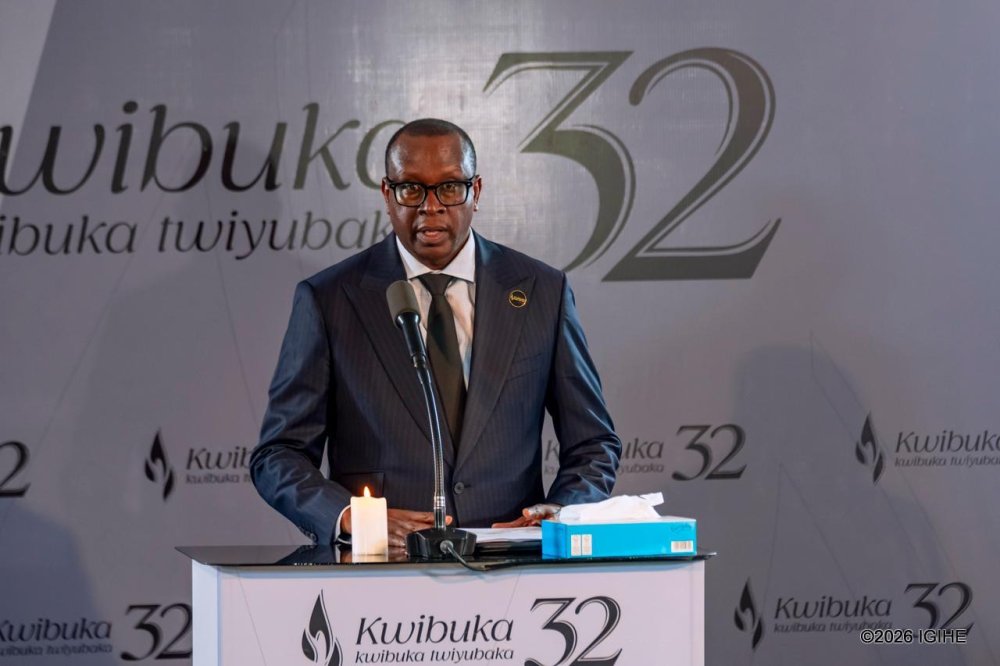
He made the remarks on the evening of April 10, 2026, during a commemoration marking the 32nd anniversary of the Genocide against the Tutsi.
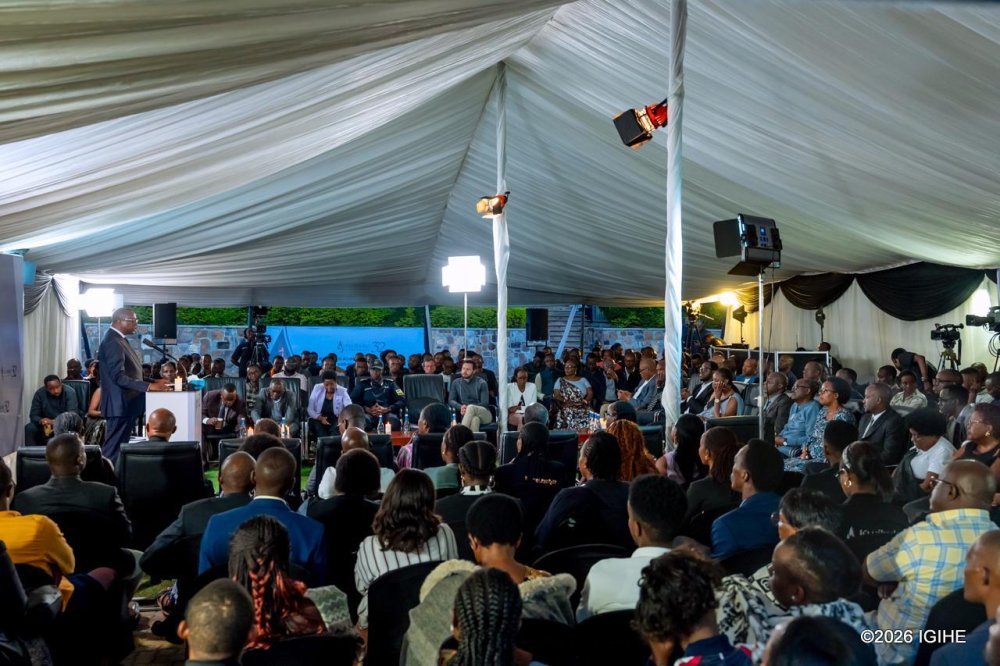
The event, organized by the Rwanda Media Commission, brought together journalists and media leaders to honor media professionals who were killed during the genocide simply because of their identity.
The Director General of the Rwanda Broadcasting Agency, Cléophas Barore, emphasized that the journalists who were killed were not targeted for professional misconduct.
“They did not broadcast or write anything that incited violence, nor did they violate any journalistic ethics. They were well-known and respected, yet that did not protect them. Instead, it made them targets, because to genocidaires, a Tutsi life had no value,” he said.
Barore also noted that some journalists were later prosecuted in international courts for their role in the genocide.
Diane Uwadede Isimbi, daughter of Vincent Shabakaka, the founder of the former Kiberinka publication, said her father used journalism to counter the hate and misinformation being spread, particularly propaganda directed at the Rwandan Patriotic Front.
The Chairperson of the Rwanda Journalists Association, Dan Ngabonziza, called on journalists to reject hate and actively fight genocide ideology.
“Our country’s painful history has shown us that the pen and the spoken word can either destroy or build. Today is a moment to renew our commitment and ensure we never become channels for messages that fuel division,” he said.
Ngabonziza urged journalists to deny a platform to individuals who promote or deny genocide, stressing the importance of safeguarding national unity.
“We must honor our colleagues who were killed by standing firm against genocide ideology, refusing space to denial and distortion, and protecting the unity and progress Rwandans have achieved,” he added.
He further emphasized that journalism should serve as a force for unity, reconciliation, and resilience, while actively rejecting divisive narratives.
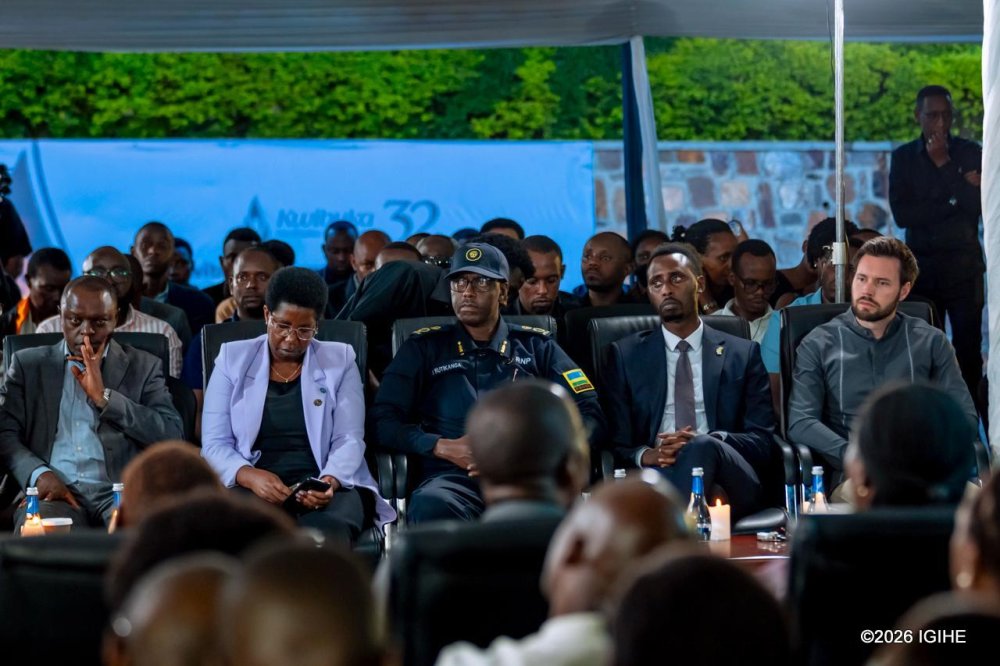
The President of IBUKA, Philbert Gakwenzire, also highlighted how media outlets contributed to spreading anti-Tutsi hatred.
However, he commended the post-genocide transformation of Rwanda’s media into a sector that supports nation-building.
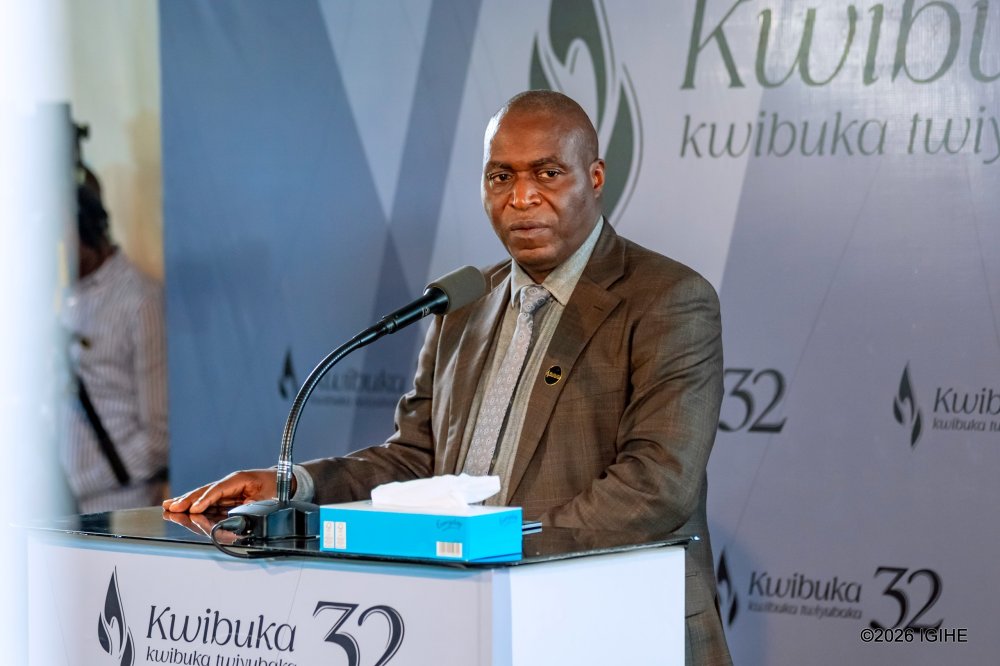
Dr. Bizimana explained that genocidal propaganda in the media was rooted in extremist political movements. He outlined how, prior to the genocide, various media outlets systematically spread hatred and encouraged Hutus to kill Tutsis.
He cited cases of media figures prosecuted internationally, including Ferdinand Nahimana, Jean-Bosco Barayagwiza, and Hassan Ngeze, who were tried together for their role in inciting genocide.
The minister described different categories of media at the time: state-owned outlets, so-called independent outlets aligned with the government, and others that did not openly promote hatred.
He pointed out that the infamous Radio Télévision Libre des Mille Collines recruited skilled journalists and former officials to effectively disseminate its extremist agenda.
He further explained that RTLM’s operations were closely linked to the presidency, underscoring its political importance. Government officials were integrated into its leadership structures, while intelligence officials were tasked with supplying information and identifying loyal, hardline journalists.
Among those involved were Donath Hakizimana, then Secretary General of the national intelligence service, who helped source information and personnel for RTLM, and Gaspard Musabyimana, now based in Belgium, who managed programming and collaborated with intelligence networks.
Musabyimana is also linked to Radio Inkingi, which continues to spread genocide ideology.
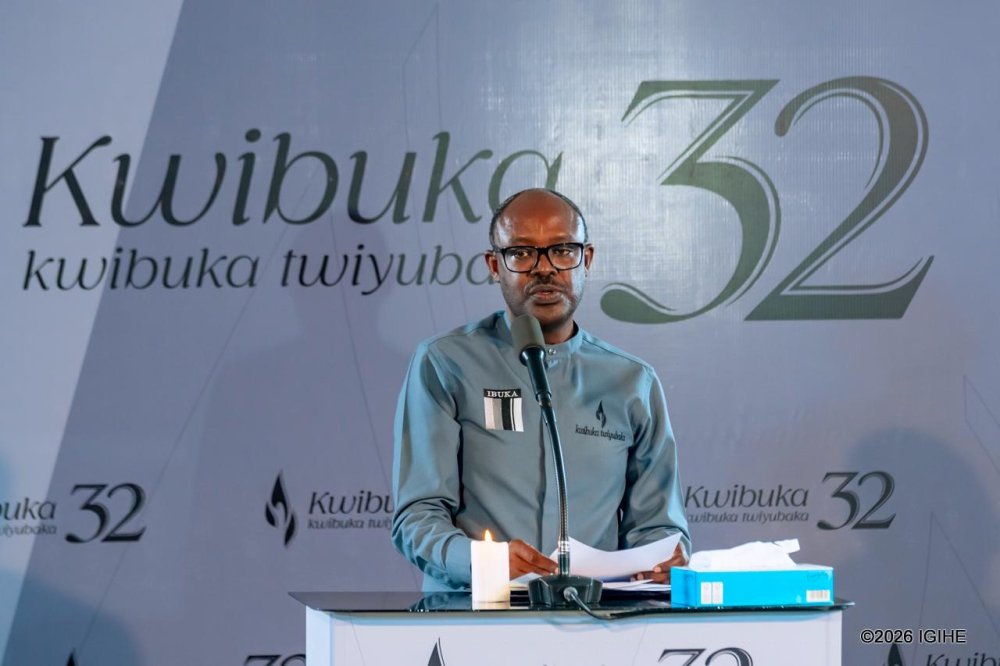
Dr. Bizimana also identified Ferdinand Nahimana as one of the key architects of genocide ideology, including the concept of “civilian self-defense,” which encouraged collective violence against Tutsis.
He noted that media houses such as ORINFOR, Imvaho, Kangura, and Kinyamateka played varying roles in spreading divisive narratives at different times. He specifically highlighted how Kinyamateka contributed to shaping anti-Tutsi sentiment through its publications.
According to Bizimana, RTLM strategically recruited charismatic journalists known for engaging content, including music, sports, and general news, to attract a wide audience while subtly embedding hate messages. These included figures such as Georges Ruggiu and Valérie Bemeriki, among others.
Dr. Bizimana stated that journalists played a role in the Genocide against the Tutsi through the words they used on radio, television, and in other media outlets.
“They did not pick up machetes to kill, they did not throw grenades into crowds, they did not use guns, nor did they engage the enemy in combat. They killed through words and through their publications,” he said.
He added, “Killing can also be carried out through writing and speech, and that is often where genocide begins.”
Dr. Bizimana emphasized that no one in a country that has experienced genocide should afford themselves the luxury of forgetting its history or acting as if they are unaware of the country’s past.
“In a country that has gone through genocide, with a painful history of ethnic politics, discrimination, and the Genocide against the Tutsi, no journalist, politician, or any individual should behave as though they are in a country without such a background. It is clear that there are journalists and self-proclaimed politicians who act carelessly, ignoring the unique history of ethnic division and genocide in this country,” he said.
He urged journalists to learn from those who upheld professionalism and integrity, to avoid aligning themselves with hate, division, and genocide ideology, and instead commit to playing a constructive role in building society.
List of some journalists killed during the Genocide against the Tutsi and their respective media houses
ORINFOR
1. RUBWIRIZA Tharcisse
2 .MWUMVANEZA Médard
3. GASANA Cyprien
4 .KARAKE Claver
5. KARAMBIZI Gratien
6. KARINDA Viateur
7. RUDAHANGARWA J. Baptiste
8. SEBANANI André
9. KALISA Calixte
10. NSABIMANA Emmanuel
11. BUCYANA Jean Bosco
12. MBUNDA Félix
13. MUNYARIGOGA Jean Claude
14. NSHIMIYIRYO Eudes
15. Byabagamba Stratton (killed in 1992, he worked for teh Catholic Church hosting a show at Radio Rwanda)
LE PARTISAN
15. HABINEZA Aphrodice (SIBO)
LE TRIBUN DU PEUPLE
16. MUKAMA Eugène
17. HATEGEKIMANA Wilson
18. GAKWAYA Eugène
19. RUGAJU Jean Claude
LE FLAMBEAU
20. BAZIMAZIKI Obed
21. KARINGANIRE Charles
22 .MUNANA Gilbert
RAFIKI
23. KAYIHURA Octave
24. NTAGANZWA Alexis
KINYAMATEKA
25. NKUBIRI Sylvestre
26. MUGANZA Clement
27. KAYINAMURA M.Beduwa
28. SERUVUMBA Anastase
LE SOLEIL
29. KAYIRANGA Marcelin
30. MUKAMUSONI Jeanne d’Arc
31. BURASA Prisca
ISIBO
32. MURERAMANZI Néhémie
KANYARWANDA
33. NKUNDIMANA Joel
34. MUTESA Donat
KANGUKA
35. RWABUKWISI Vincent (RAVI)
36.MBARAGA Wellars
KIBERINKA
37. SHABAKAKA Vincent
38. NYIMBUZI Aloys
39. KAMANAYO Théotime
RWANDA RUSHYA
40. KAMURASE Martin
41. MUDATSIKIRA Joseph
42. KAMEYA André
L’OBSERVATEUR
43. MUNYAKAZI Bernard
INDEPENDENT JOURNALISTS
44. MBUGUJE Sixbert
45. MUKAMANA Winifrid
46. RUKUNDO Emmanuel
47. RUTSINDURA Emmanuel
48. RUTSINDURA Alphonse
49. RWEMARIKA Claude
50. TWAGIRAMUNGU Felix
Leave a Reply