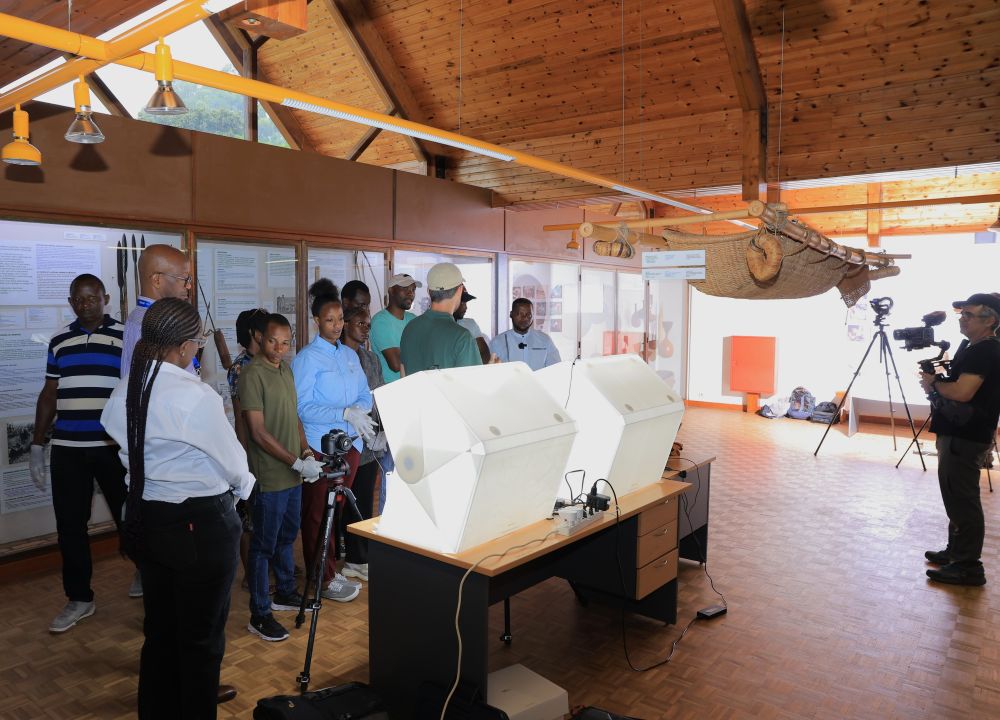
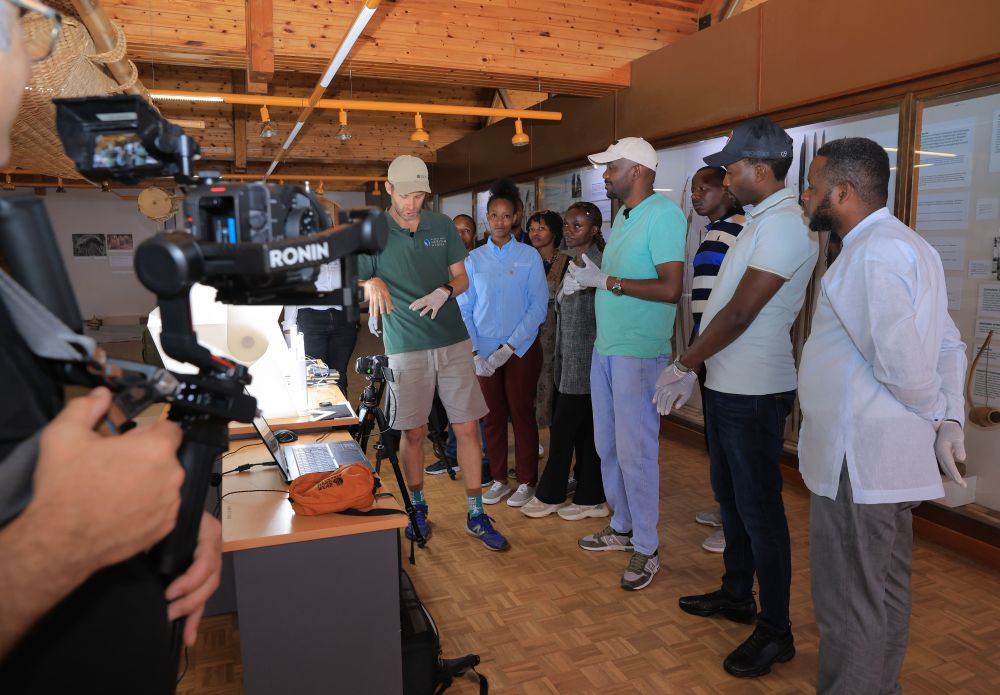
The announcement came at the conclusion of a week-long training program organized by the U.S.-based Global Digital Heritage Center, designed for staff responsible for managing exhibitions in museums and heritage sites across the country.
3D technology allows objects or sites to be captured in a way that lets people view them from all angles, replacing traditional photography, which only captures a single perspective.
This means that anyone will soon be able to rotate and examine artifacts or historical sites virtually, gaining a much fuller understanding of their details.
The digitization program is planned to be rolled out museum by museum until all sites are covered, with new discoveries continuously added to the digital archive.
Chantal Umuhoza, a staff member of the Rwanda Cultural Assembly responsible for Exhibitions and Digital Heritage Projects,
Chantal Umuhoza, Museum Curator at the Rwanda Cultural Heritage Academy (RCHA), specializing in exhibitions and cultural heritage protection, said the technology will improve the preservation and global dissemination of Rwanda’s heritage.
She explained, “This technology helps us preserve and safeguard artifacts in museums and at heritage sites. Take, for example, the Musanze cave, you can now explore it virtually and see all angles as if you were there in person. This is the level at which we want to showcase our heritage.”
Umuhoza added that digitizing museums will also raise the international profile of Rwanda’s heritage, allowing anyone with an internet connection to visit the museums virtually without needing to travel physically. This is expected to increase curiosity and interest among potential visitors worldwide.
Historians and cultural experts note that making museum artifacts digitally accessible will help people better understand the country’s history and culture, while also making it easier to share Rwanda’s heritage with foreigners.
Steven Iradukunda commented, “In today’s world, technology is the most advanced way to quickly share information. As someone interested in history, I feel this technology will provide an easy way to explore museum collections, helping our children learn more about our heritage instead of wasting time on trivial content on social media.”
Addressing concerns that digitization might reduce physical visits to museums and heritage sites, Rwanda’s Cultural Heritage Academy clarified that this is unlikely. Instead, virtual access is expected to stimulate interest, encouraging more people to visit in person, ultimately increasing attendance.
Visitor numbers to Rwanda’s museums and heritage sites have been steadily increasing; from 139,538 in the 2014/15 fiscal year to 263,061 in 2024/25, generating Rwf 439,885,212 in revenue that year.
Leave a Reply