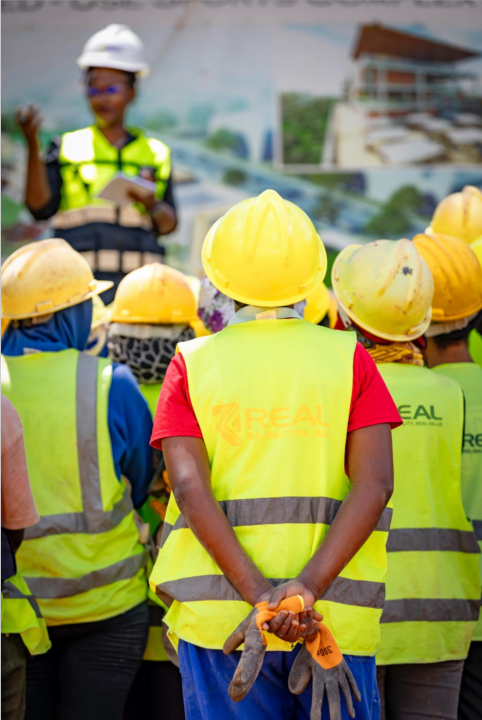
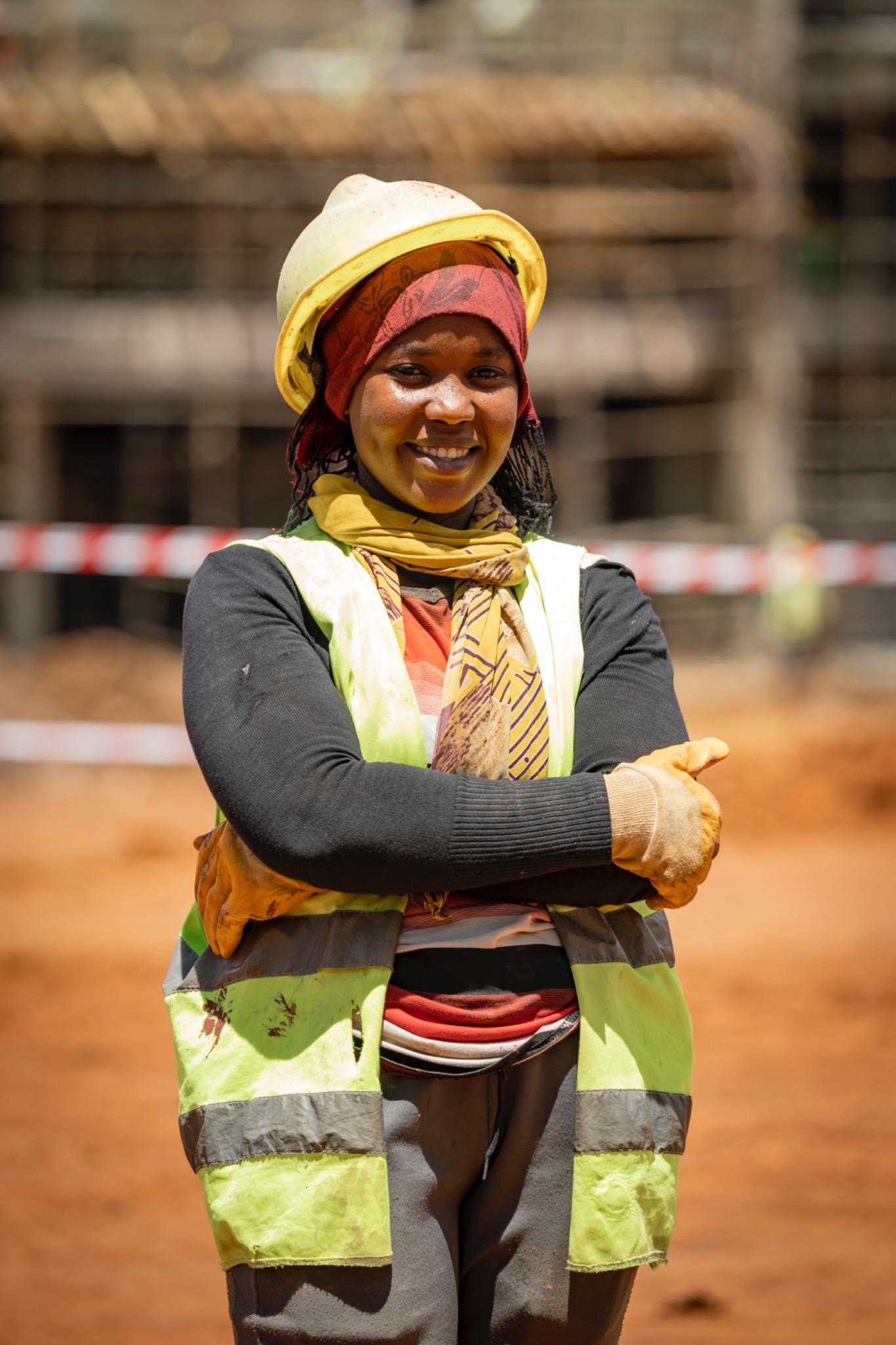
In less than a year of operations, 41% of the hotel’s employees are women. Not as a result of a last minute diversity push, but because women were present, active, and essential at every stage of the hotel’s journey, from the earliest days of construction through to the team running the property today. Their contribution is not a footnote in the story of Zaria Court Hotel. It is central to it.
A hotel built with more than materials
Great hotels are not simply constructed; they are crafted. The difference lies in the people involved and the care they bring. At Zaria Court Hotel, that philosophy is visible in unexpected places.
In the hotel’s conference room, a striking ceiling installation handcrafted entirely by women greets every guest who enters. It is more than a design feature; it is a declaration. A reflection of what the hotel stands for: African talent, craftsmanship, and the belief that the most powerful details are those made by human hands.
Across the property, this same attention to detail is evident in the warmth of the spaces, the precision of the finishes, and the overall guest experience from arrival to departure, creating a place that feels intentionally built.
Operations driven by excellence
Running a world-class hotel is a high-stakes, detail-driven undertaking. Every day at Zaria Court Hotel, women are at the centre of that work, leading teams, shaping guest experiences, and upholding the standards that come with one of the world’s most recognised hospitality brands.
What that figure represents goes beyond representation, it is a workplace culture where women are trusted with responsibility and decision making from day one. Women at Zaria Court Hotel hold roles spanning sales leadership, marketing, front of house operations, and culinary teams, present not just across the floor, but across the org chart. This does not support work. This is leadership.
“Being a woman at Zaria Court Hotel is a privilege that allows me to bring empathy, care, and attention to detail into every guest experience. It’s also an opportunity to grow professionally and show that women can lead, excel, and make an impact in hospitality,” says Flavia Mbabazi, Head of Sales, Zaria Court Hotel, Tapestry Collection by Hilton.
This leadership is reflected consistently in both performance and in the sense of ownership over what the hotel represents.
Rwanda’s ambition, reflected
Rwanda has built a strong reputation on the global stage as a destination for investment, tourism, and world-class events. That reputation is shaped by institutions and people who refuse to be ordinary, and Zaria Court Hotel is one of them.
In a region where hospitality is among the fastest growing sectors, the example set here matters. A workforce that is nearly half women, achieved within the hotel’s first year, demonstrates what becomes possible when women are centred not as a statement, but as a strategy. Rwanda has long been cited as a global leader in women’s representation at the legislative level, and this progress is increasingly visible across business and operations.
“It’s powerful to see strong representation of women across all levels at Zaria Court Hotel. It reflects both the hotel’s commitment to empowerment and Rwanda’s wider progress in promoting women in leadership. This strengthens the brand’s identity as inclusive and forward thinking, while contributing meaningfully to the country’s growth,” says Chiquita Mugabo, Marketing Manager, Zaria Court Hotel, Tapestry Collection by Hilton.
More than a hotel
The Tapestry Collection was built on a simple but powerful idea: the most memorable hotels are those with genuine character, shaped by the people and places around them. At Zaria Court Hotel, that character is unmistakably Rwandan, unmistakably African, and unmistakably built by women.
The practical lesson for the hospitality industry is this: inclusion by design, hiring with intention, building roles that welcome women at every level, and measuring outcomes from the start does not compromise standards. It creates them. For those in the industry ready to move beyond pledges to practice, Zaria Court Hotel offers a working blueprint and an open door.
A note as Women’s Month draws to a close
As March comes to an end and the world pauses to celebrate women, it is worth asking a question that goes beyond tributes and campaigns: are we truly creating space for women to build, lead, and leave their mark?
Zaria Court Hotel answers that question not with words, but with action and with data. In less than a year of operations, 41% of its people are women, reflected not only in its workforce, but in its craftsmanship and daily operations. This is a story that did not begin on Women’s Day and will not end when March does.
The most meaningful way to honour women is not to celebrate them once a year. It is to include them from the very beginning. To trust them with the blueprint as much as the welcome desk. To build institutions where their excellence is not the exception, but the expectation. Zaria Court Hotel has set that example, and set it early. The question now is who follows it.
Zaria Court Hotel Kigali is Rwanda’s first urban lifestyle hotel, located in the heart of Kigali Sports City, steps from BK Arena and Amahoro Stadium. The 80-room property features locally-inspired interiors, multiple food and beverage outlets, event spaces, and a heated pool. Inspired by the vision of Masai Ujiri, the hotel is part of Tapestry Collection by Hilton and offers guests access to Hilton Honors benefits while maintaining its distinctive, community-driven character.
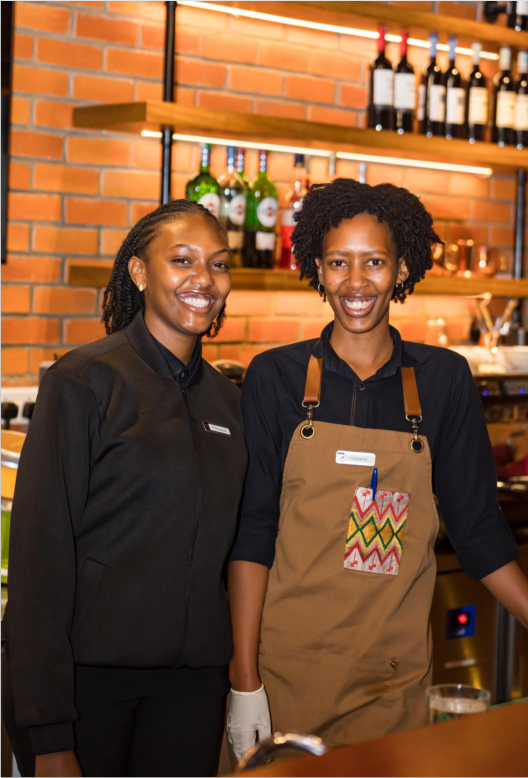
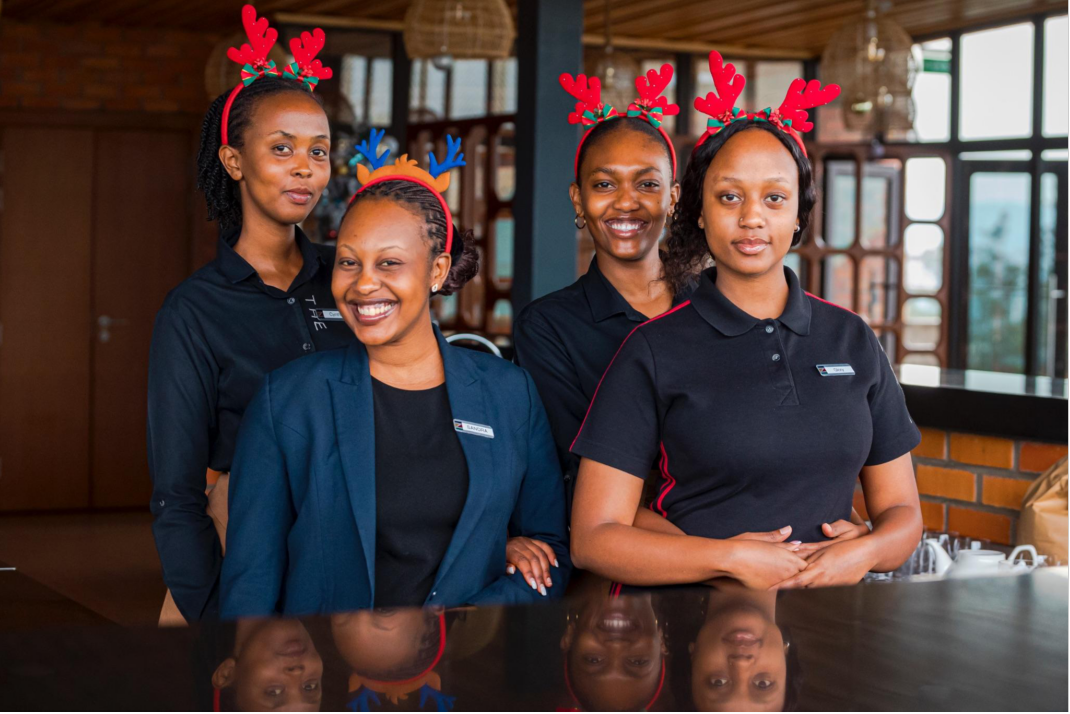
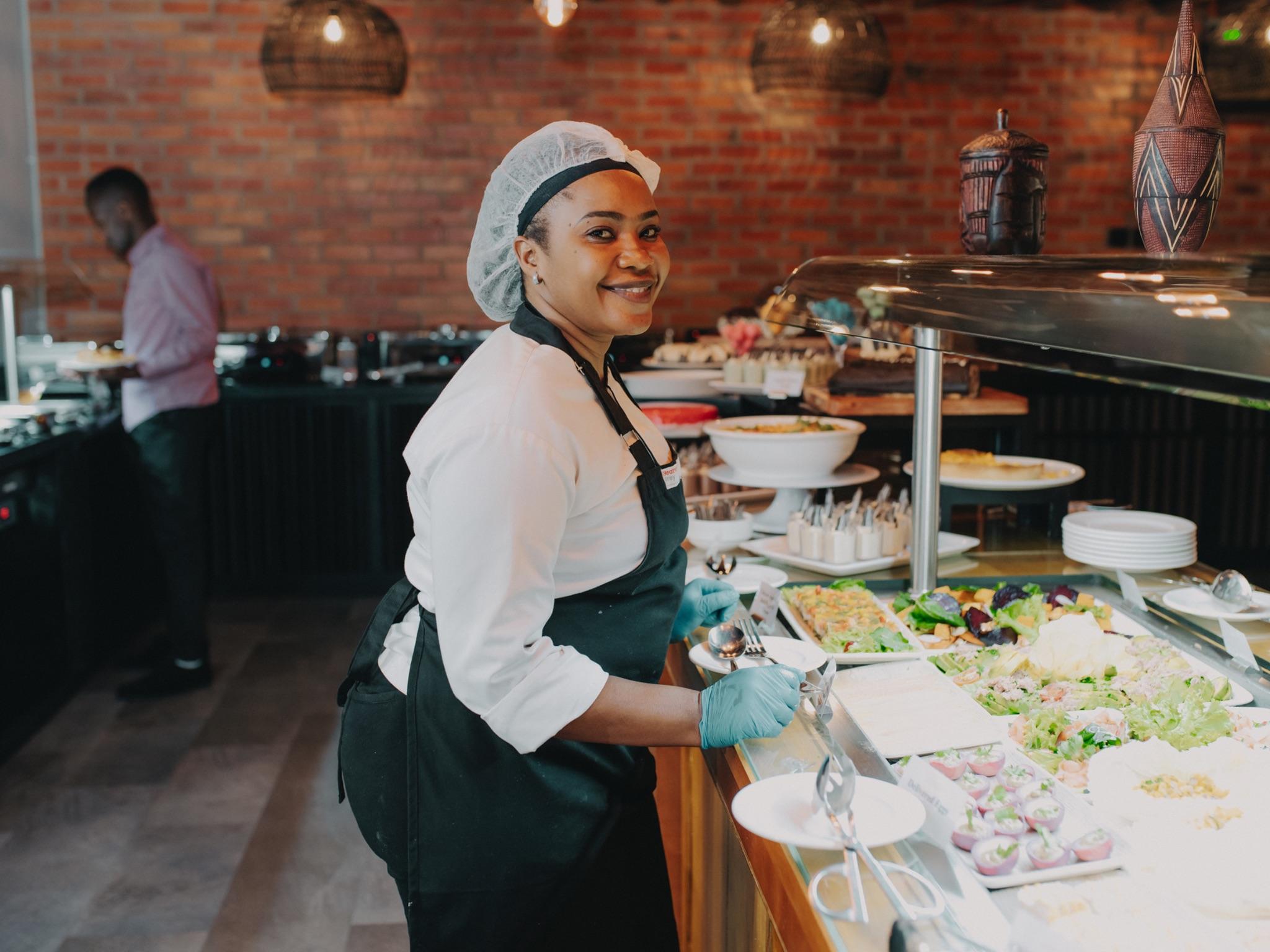

Female employees help maintain the hotel’s high standards and distinctive style.
Leave a Reply