The study, published in Nature Communications, shows that the crater formed about 43 to 46 million years ago when a space object struck the seabed, triggering a massive tsunami. The research was led by Uisdean Nicholson of Heriot-Watt University, with support from the Natural Environment Research Council.
Located about 700 meters beneath the seabed and roughly 80 miles off the coast of Yorkshire, the three-kilometer-wide crater was first identified in 2002. Its circular shape and surrounding ring of faults led some scientists to suspect an asteroid impact, but others argued it might have been caused by underground salt movement or volcanic activity.
Using new seismic imaging, geological samples and computer simulations, the research team found clear evidence supporting the impact theory. Rock samples taken from an oil well revealed “shocked” quartz and feldspar crystals, microscopic minerals that form only under the extreme pressure generated by asteroid collisions.
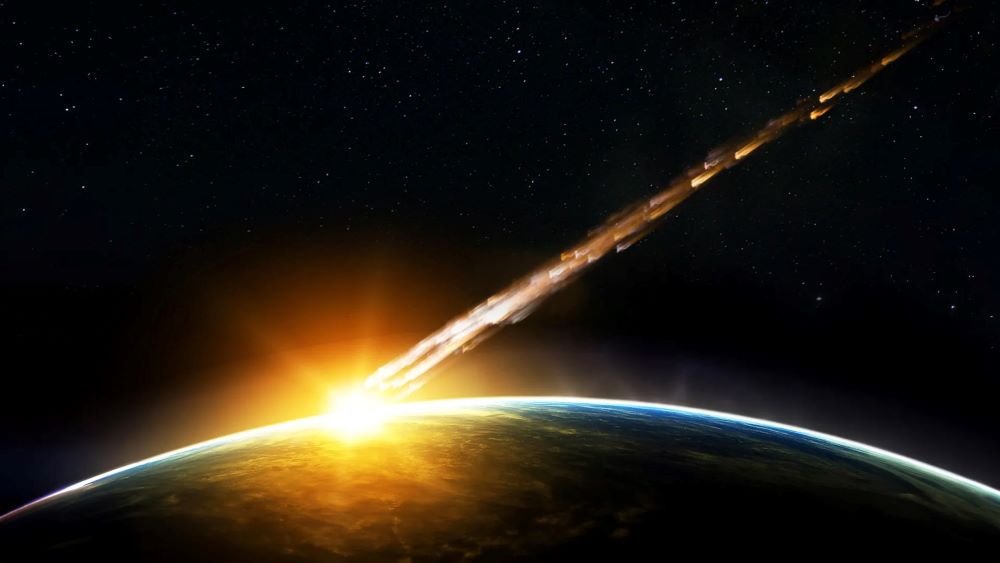
According to Nicholson, a roughly 160-meter-wide asteroid struck the seabed at a shallow angle from the west. The impact created a towering column of rock and water that quickly collapsed, producing a tsunami estimated to have exceeded 100 meters in height.
Scientists say the finding confirms Silverpit as one of the relatively few known impact craters on Earth. Fewer than 200 have been identified on land and only about 33 beneath the oceans, making the site a rare and well-preserved example of how asteroid impacts shape the planet’s surface.
Leave a Reply