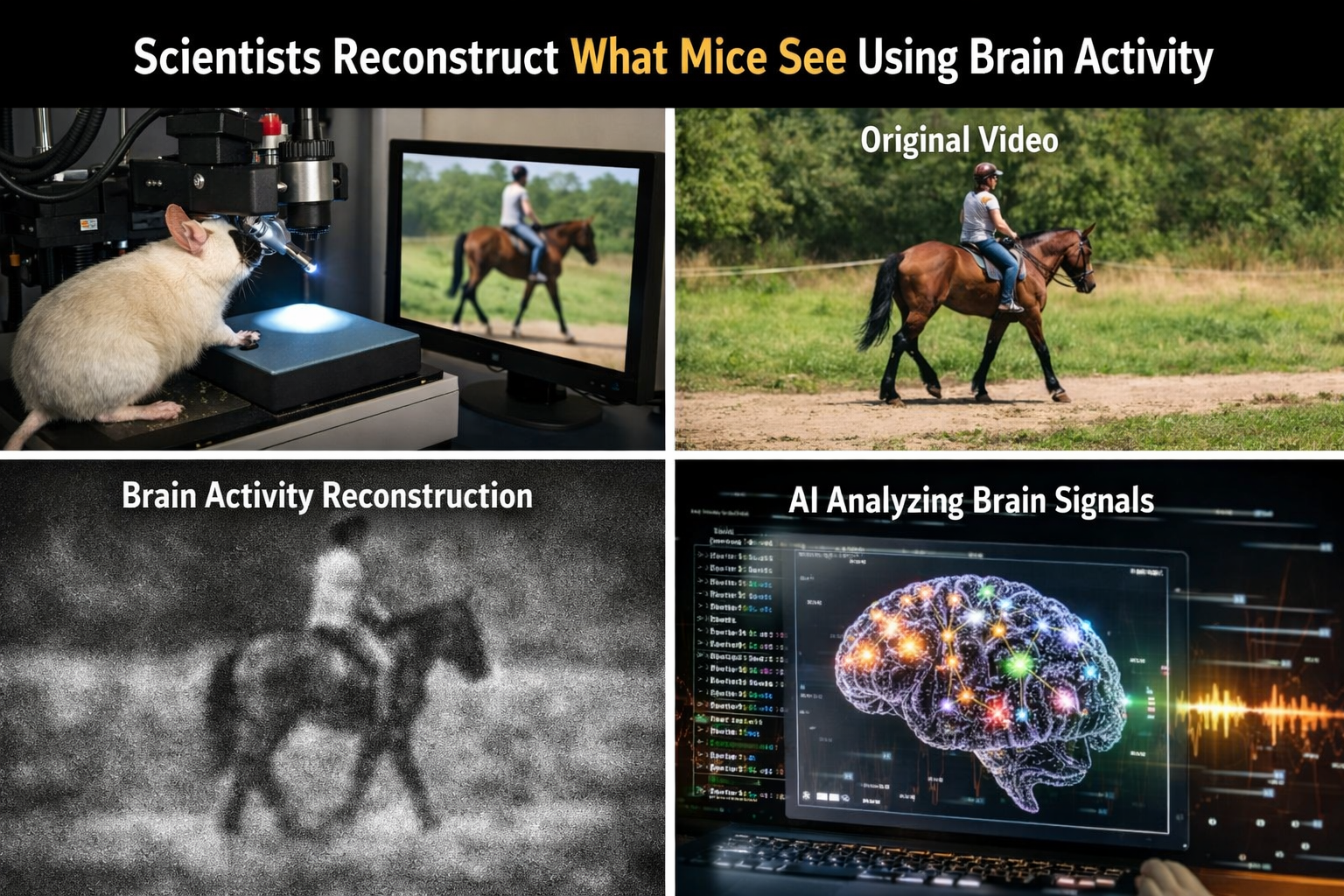
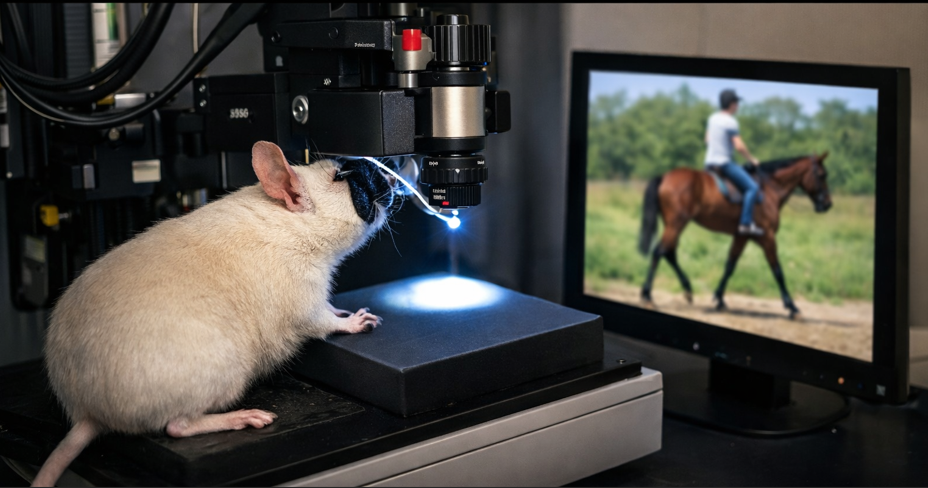
In the experiment, mice were shown 10‑second video clips that included scenes of activities like horse riding and wrestling. While the mice watched, scientists used infrared lasers to record electrical signals from the animals’ visual cortex, the part of the brain that processes sight.
Using this data, they trained an artificial intelligence (AI) program to predict how neurons responded to what the mice saw. Then, the AI was used to generate images that matched the mice’s brain activity. The result was a series of grainy reconstructed video clips that give a glimpse of what the animals were seeing.
Although the recreated clips are still blurry compared with normal video, this research marks a major step toward understanding how brains interpret visual information. Scientists say that as technology improves, this technique might one day reveal even more detailed visual experiences and help answer questions about how animals think and dream.
However, lead researchers also warn that if similar techniques are used on humans in the future, it could raise privacy concerns especially if it becomes possible to reconstruct imagined thoughts, not just what someone sees.
Leave a Reply