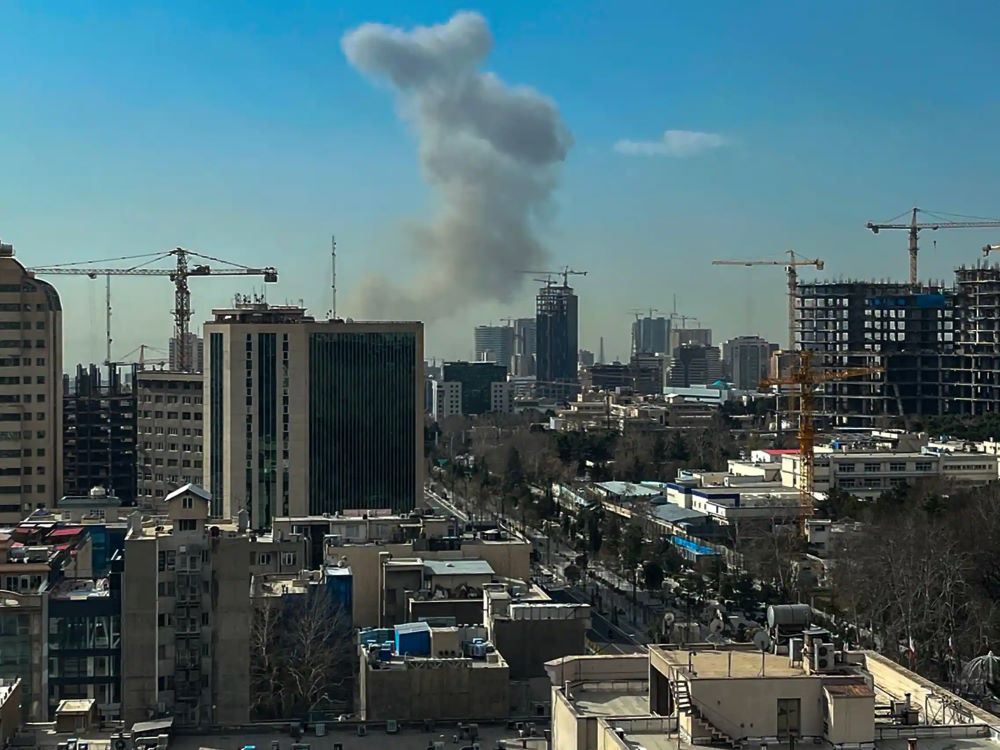
According to reports, plumes of smoke were seen rising from central Tehran following explosions reported near offices associated with Supreme Leader Ali Khamenei. Iranian state television confirmed the blasts without providing details on casualties or damage.
It remains unclear whether Khamenei was present at the time. Iranian authorities subsequently shut down the country’s airspace and issued warnings to pilots as additional explosions were reported across the capital.
Israeli Defence Minister Israel Katz described the strike as an operation aimed at “removing threats,” though he provided few specifics. The Israeli government later identified the offensive as “Operation Lion’s Roar,” underscoring what officials describe as an effort to neutralize security risks tied to Iran’s nuclear programme.
Air raid sirens sounded across Israeli cities, prompting the Israel Defense Forces to issue a proactive alert advising civilians to remain near bomb shelters and avoid non-essential travel.
At Tel Aviv’s international airport, passengers were directed to shelters amid fears of missile retaliation. Air India announced it would suspend flights on one affected route for at least a week as a precaution.
The confrontation has drawn in United States, with President Donald Trump confirming American participation in military operations targeting Iranian facilities.
Washington has also deployed additional fighter jets and naval forces to the region. Trump emphasized the need for what he described as a “meaningful deal” regarding Iran’s nuclear ambitions but acknowledged the seriousness of the unfolding situation.
Israeli Prime Minister Benjamin Netanyahu framed the joint operation with Washington as an effort to remove what he called an “existential threat.” In a public address, he urged Iranians to pursue political change, saying the military action could create conditions for a different future in Iran.
In response, Iranian officials warned of a “crushing” retaliation, signaling the potential for further escalation. Meanwhile, Qatar said its internal security situation remained stable but confirmed it was closely monitoring developments.
Exiled opposition figure Reza Pahlavi also weighed in, claiming the situation could mark a turning point for Iran’s political future.
Saturday’s events mark the latest chapter in decades of confrontation between Iran and the United States, a rivalry rooted in the 1979 Islamic Revolution and intensified by disputes over nuclear development and regional influence.
With airspace closures, military alerts, and diplomatic tensions mounting, the region now faces growing uncertainty as global leaders monitor the risk of broader conflict.
Leave a Reply