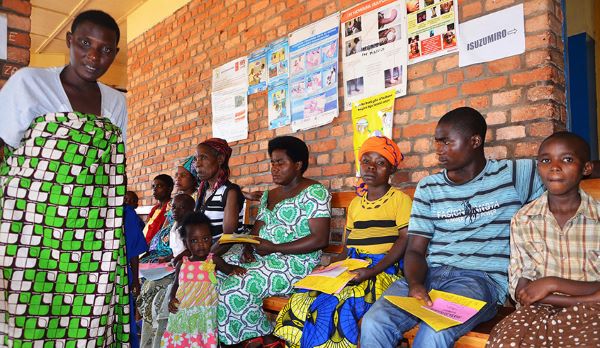
The announcement was made on Tuesday, February 24, 2026, during events marking 25 years of community-based health insurance in Rwanda, held in Rusera Cell, Kabarondo Sector, Kayonza District. The occasion also marked the launch of new reforms aimed at strengthening community-based health insurance services nationwide.
Mutuelle de Santé is one of the Government’s flagship social protection programs, built on the principle of solidarity and designed to ensure that healthcare remains accessible to all citizens. It reflects Rwanda’s long-standing policy of placing citizens’ wellbeing at the center of national development.
When the scheme began, each citizen paid 1,000 Rwandan Francs annually. In 2011, the contribution rose to Rwf 3,000 . Under the new structure, fully government-supported beneficiaries will now receive coverage valued at Rwf 4,000 per person.
Citizens in the second level of social registry will pay Rwf 3,000 with a Rwf 1,000- government subsidy. Those in the third level will pay Rwf 5,000; the fourth level, Rwf 8,000; while individuals in the fifth level will contribute Rwf 20,000 per year.
RSSB estimates that about 90 percent of members will pay between Rwf 4,000 and Rwf 8,000 annually.
RSSB Director General Regis Rugemanshuro explained that, historically, citizens’ contributions covered about 67 percent of healthcare costs. However, as the cost of services rose and coverage expanded, that share dropped to 34 percent.
Over the past decade, total spending under Mutuelle de Santé more than doubled, from Rwf 39 billion in 2015/2016 to Rwf 98 billion in 2024/2025. The increase is largely attributed to the rising cost of healthcare and the addition of high-cost services.
Newly covered treatments include cancer care, kidney treatment, organ replacement, orthopedic and spinal surgery, and assistive devices for people with hearing or vision impairments. These services, many of which have been covered for the past two years, significantly increased the program’s financial demands.
Rugemanshuro noted that although services expanded, contributions had not changed since 2011. Last year alone, Mutuelle de Santé spent Rwf 98 billion, while members contributed only Rwf 31 billion, about 34 percent of total funding.
The remaining resources came from government support, including revenues from telecommunications taxes, fuel levies, and other funding streams.
Even with the new contribution rates, citizens’ payments will account for about 42 percent of total program financing, with the government continuing to cover the majority share. Around 70 percent of Rwandans are expected to pay no more than Rwf 5,000 annually, while only about 8 percent will pay Rwf 20,000.
Number of covered medicines to nearly double
Minister of Health Dr. Sabin Nsanzimana said the contribution adjustment is directly linked to improved treatment access. The number of medicines available under Mutuelle de Santé will increase from 845 to 1,450.
He emphasized that, considering the breadth of services now covered, contributions could have exceeded Rwf 50,000 per person if the government had not stepped in with substantial subsidies.
“Today, patients can receive treatment for conditions that would normally cost Rwf 10 to 20 million, heart disease, kidney conditions, and major surgeries, under Mutuelle de Santé,” he said. “Someone who used to pay Rwf 3,000 is now asked to pay Rwf 5,000 francs if they are able.”
Cancer treatment will now be fully covered under Mutuelle de Santé, including diagnostics, imaging, medication, and related care. Kidney dialysis, previously limited to eight sessions, will now be available as needed. Major heart surgery, often costing at least Rwf 10 million, will also be accessible through the scheme.
The minister added that the government will begin advancing funds to health centers for medicine procurement so that patients consistently find drugs available at facilities. The measure is intended to eliminate shortages previously caused by delayed reimbursements from RSSB.
Residents speak out
Celestin Niyonsaba, a 75-year-old resident of Kabarondo praised the scheme, recalling that in 2018 he underwent abdominal surgery at University Teaching Hospital of Kigali (CHUK) costing Rwf 3 million francs but paid only 52,000 because he had Mutuelle de Santé coverage.
“Since then, I never delay paying,” he said. “Without Mutuelle de Santé, I would have sold my house or land. Instead, I sold a goat, received treatment, and recovered.”
Josephine Barakagwira from Rusera also welcomed the reform, noting she once paid Rwf 3,000 francs and received surgery that would otherwise have cost over one million Rwandan francs. She acknowledged that while some households face financial constraints, the program remains highly valuable.
Citizens have been urged to begin paying the new rates now to ensure uninterrupted access to healthcare starting July 1, 2026.
Leave a Reply