The originally approved budget stood at Rwf 7,032.5 billion. The proposed adjustment trims Rwf 80.4 billion, primarily through more favorable financing terms for major initiatives like the New Kigali International Airport and a rescheduled RwandAir loan repayment, bringing the revised total to Rwf 6,952.1 billion.
Revenue collection from July to September 2025 reached Rwf 1,156.6 billion, closely aligning with the targeted Rwf 1,157.2 billion.
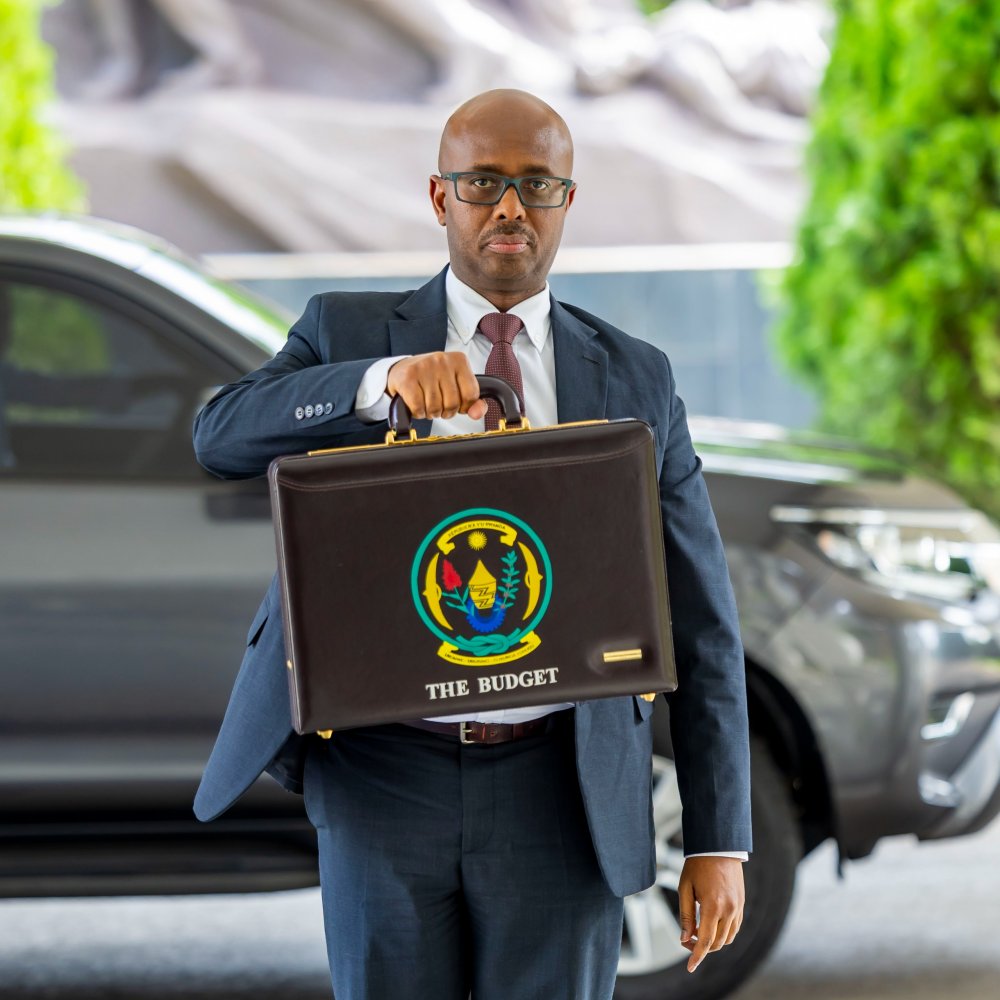
Presenting the progress update, Minister of Finance and Economic Planning Yusuf Murangwa highlighted advances across agriculture, infrastructure, energy, health, and social protection.
Agricultural production support featured prominently during the first quarter of the fiscal year. Farmers received 4,162 tonnes of improved seeds, including maize, wheat, and soybean, along with 50,452 tonnes of mineral fertilizer.
Climate resilience efforts are expanding through irrigation development, with Mahama I and II agricultural zones in Kirehe District now 75% complete. Crop and livestock insurance coverage also broadened, protecting 14,783 hectares of farmland, more than 16,000 cattle, and over 96,000 small livestock.
Industrial supply chains performed above expectations, with processing plants receiving more raw materials than initially projected. Export revenues remained strong, generating $104.6 million from coffee, $49.5 million from tea, $3.1 million from flowers, and $53.2 million from fruits and vegetables.
Transport infrastructure works continue to reshape connectivity across the country. Construction of 184.8 kilometers of tarmac roads is progressing steadily, including major corridors linking eastern and northern regions. Rehabilitation of feeder roads is also advancing, particularly in Rutsiro District and Karongi District, improving access between production areas and markets.
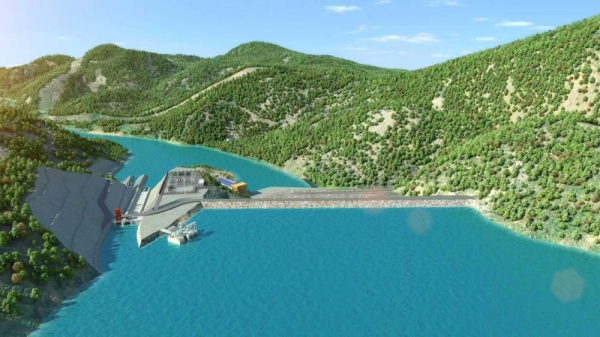
Energy access has expanded through grid extension, solar installations, and network upgrades. More than 34,000 households have been connected to the national electricity grid, while over 8,000 households now use solar power and dozens of public institutions have been electrified. Construction of the Nyabarongo II Hydropower Plant, expected to generate 43.5 megawatts, has reached 60% completion.
Water supply projects are advancing in multiple districts. Pipeline construction is underway in Nyamagabe District and Gisagara District, while rehabilitation of water networks across 13 districts is nearing completion under programs aimed at improving nutrition and public health outcomes.
Urban development initiatives are expanding housing and basic infrastructure. Servicing works are underway for more than 500 housing units in Gasabo District, while development of the planned Nyabisindu model settlement is progressing as part of broader efforts to promote organized urban growth.
Education and health investments remain central to the budget’s implementation. Thousands of teachers have been recruited, and new teacher training colleges are approaching completion.
Technology-focused education infrastructure continues to expand, while the modernization of Masaka University Teaching Hospital is nearing completion.
Digital health systems are now operational in hundreds of health centers, strengthening patient record management and continuity of care. At the same time, thousands of patients diagnosed with non-communicable diseases have begun receiving structured follow-up treatment.
Social protection programs have provided employment and direct support to vulnerable households. Public works initiatives created jobs for tens of thousands of people, while nutrition programs supplied milk and fortified foods to young children, pregnant women, and breastfeeding mothers.
Environmental management efforts are also advancing. Restoration of major wetlands in Kigali has reached 78%, and tens of thousands of fuel-efficient cookstoves have been distributed to reduce reliance on firewood.
In the justice sector, community mediation committees and legal aid services resolved the vast majority of cases received, while authorities reported the recovery of approximately Rwf 300 million in misappropriated public funds.
Leave a Reply