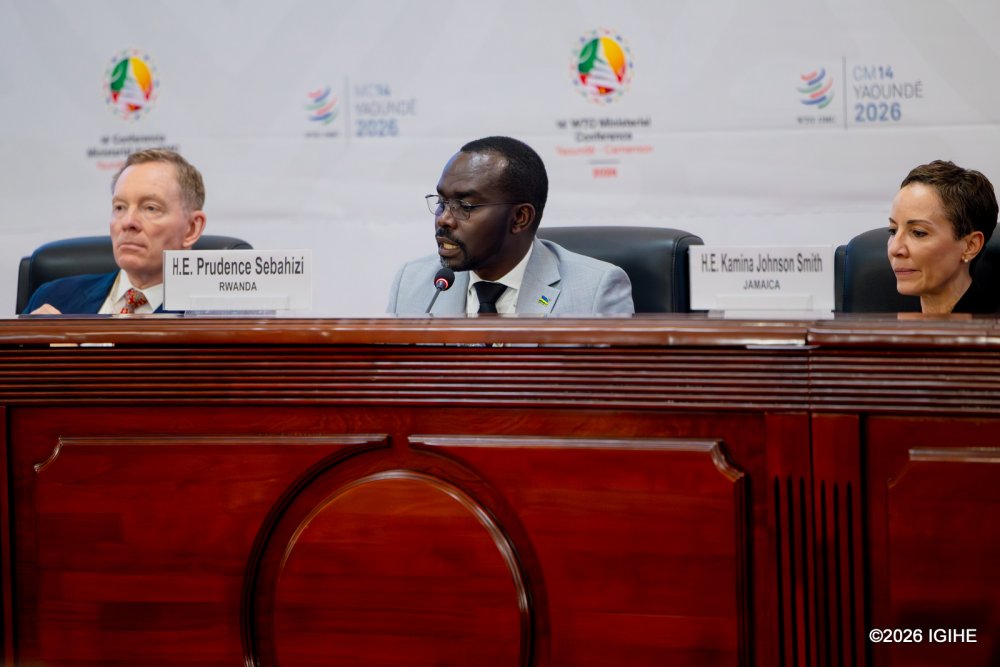
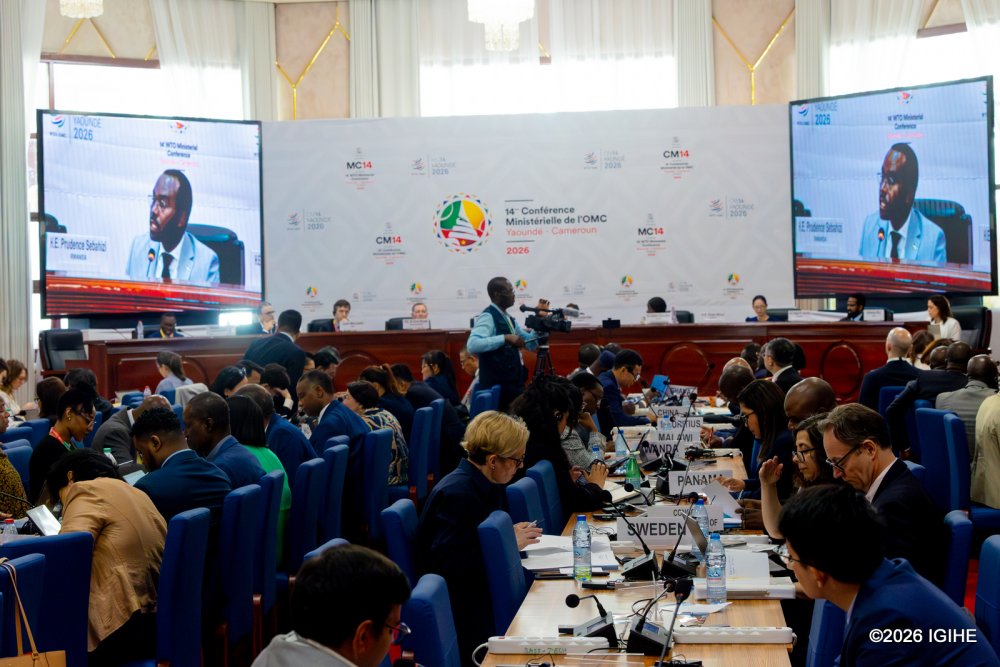
The funding, approved during the WTO Ministerial Conference in Yaoundé, falls under the third phase of the Enhanced Integrated Framework (EIF), a global initiative designed to help poorer nations strengthen their participation in international trade.
The EIF was established by developed countries to support least developed nations in improving their trade capacity, particularly by helping them access international markets. The program focuses on building technical skills, enhancing production standards, and supporting small and medium-sized enterprises (SMEs).
It also provides training for workers and entrepreneurs seeking to expand into global markets. Since its launch in 2005, the program has been updated every ten years and is now entering its third phase.
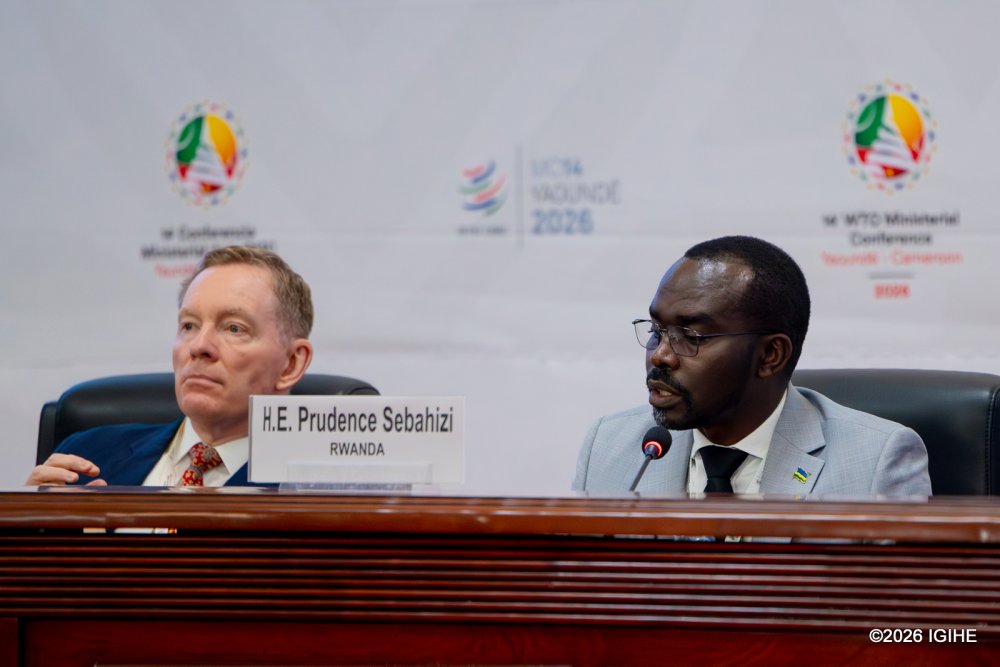
Speaking to IGIHE on the sidelines of the conference, Sebahizi welcomed the development, noting that Rwanda will have another decade to leverage such support in strengthening its SME sector.
“This means we have another 10 years to support small and medium enterprises in Rwanda to meet quality standards and access international markets,” he said.
He highlighted that many of Rwanda’s existing export promotion initiatives, such as the “Zamukana Ubuziranenge” program, already benefit from donor funding, including resources from the EIF.
Institutions like the International Trade Centre (ITC) also play a key role in supporting SMEs through training and export facilitation, using funds from the same framework. Similarly, several United Nations Development Programme (UNDP) initiatives supporting entrepreneurs rely on EIF financing.
“In essence, many of the programs in Rwanda that help SMEs export their products are supported by these funds,” Sebahizi explained.
Although there are no precise figures showing how many businesses have benefited so far, Rwanda is preparing to actively compete for the newly approved funding.
To access the funds, the country must submit detailed proposals outlining how the money will be used.
“If we need, for example, $2 million, we must present a solid business plan and compete with other countries seeking the same support,” the minister said.
Leave a Reply