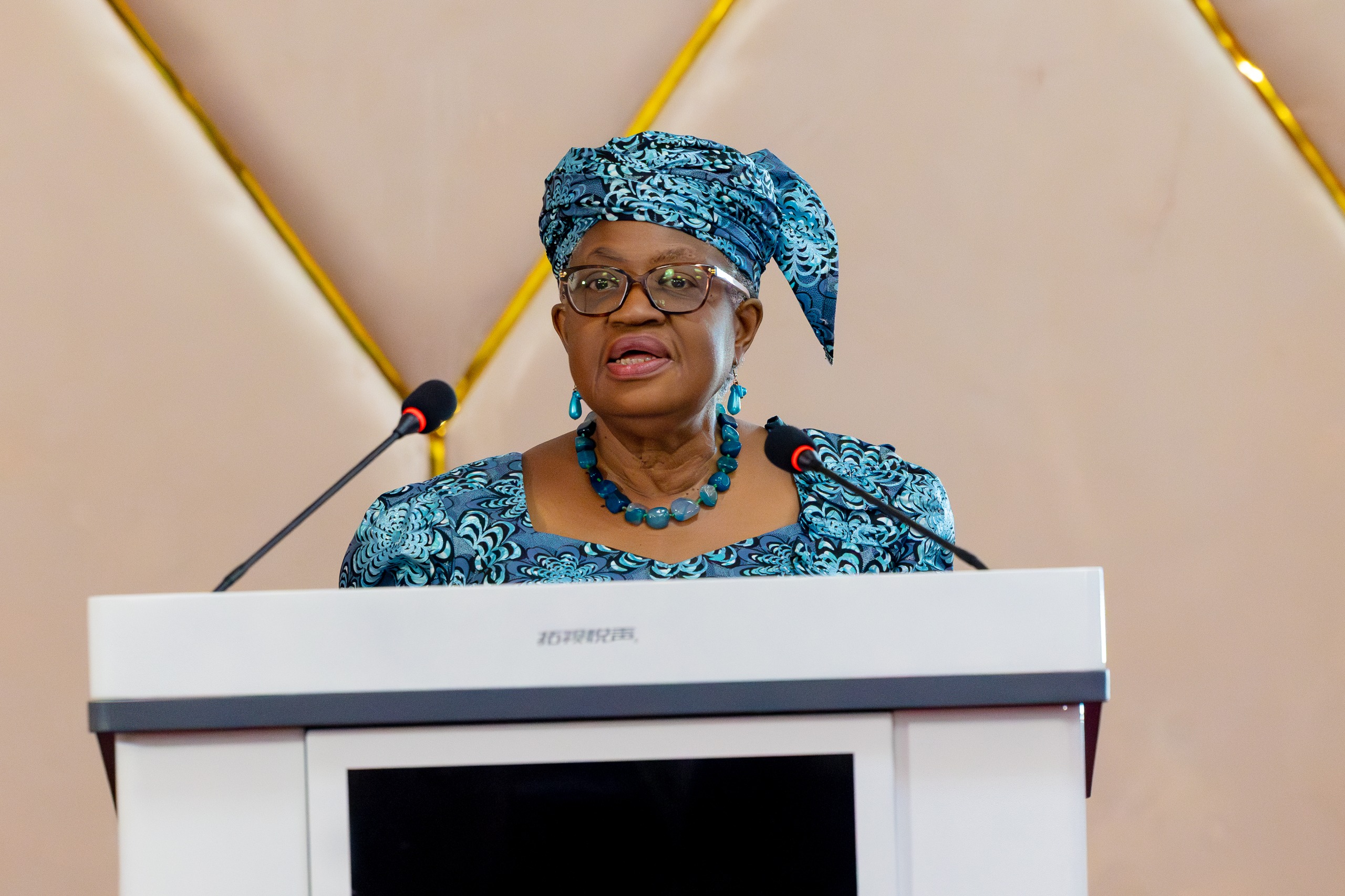
Opening the 14th WTO Ministerial Conference in Yaoundé, Ngozi Okonjo-Iweala delivered a stark message about the future of global trade.
“The world order and multilateral system we used to know has irrevocably changed. We will not get it back… we must look to the future,” she told ministers and delegates.
She said the current disruptions from geopolitical tensions to climate pressures are not temporary shocks, but part of a broader transformation shaping the global economy.
The WTO chief also outlined a cautious outlook for global trade, noting that growth is expected to slow significantly in the coming year.
“For 2026, our economists are forecasting slower growth… reflecting geopolitics, energy prices, and policy uncertainty,” she said.
According to WTO projections, goods trade growth is set to decline from 4.6% in 2025 to 1.9% in 2026, with risks of dropping further to 1.4% if high oil prices persist. Services trade is expected to grow by 4.8%, though this could fall to 4.1% if disruptions in transport and travel continue.
Despite these pressures, she stressed that the system remains resilient.
“Our latest analysis shows that around 72% of global goods trade still remains on WTO terms… providing global trade with a stable core,” she noted.
Okonjo-Iweala also highlighted growing structural challenges within the WTO, particularly a lack of transparency among members.
“Lack of transparency leads to a lack of trust, and that breeds suspicions of unfairness and anti-competitive behaviour,” she warned.
She noted that only 64 members had submitted subsidy notifications, undermining confidence in the system and contributing to delays in reform.
At the same time, she pointed to the growing role of technology in global trade, noting that digitally delivered services reached $5.26 trillion, accounting for about 15% of global trade, while AI-related products contributed significantly to recent growth.
She urged ministers to use the conference to push forward reforms and restore trust in the system.
“We cannot forever complain and then miss the opportunity to fix the problems,” she said, calling for stronger political will among member states.
During the meeting, Rwanda called for a more balanced and development-driven global trading system, warning that without meaningful reforms, smaller economies risk being left behind.
“WTO reform must remain development-centred, ensuring that the interests and capacities of developing countries and Least Developed Countries are fully reflected,” said Rwanda’s Minister of Trade and Industry, Prudence Sebahizi, urging members to translate ongoing reforms into tangible gains, particularly in agriculture, digital trade and access to a fair dispute resolution system.
Leave a Reply