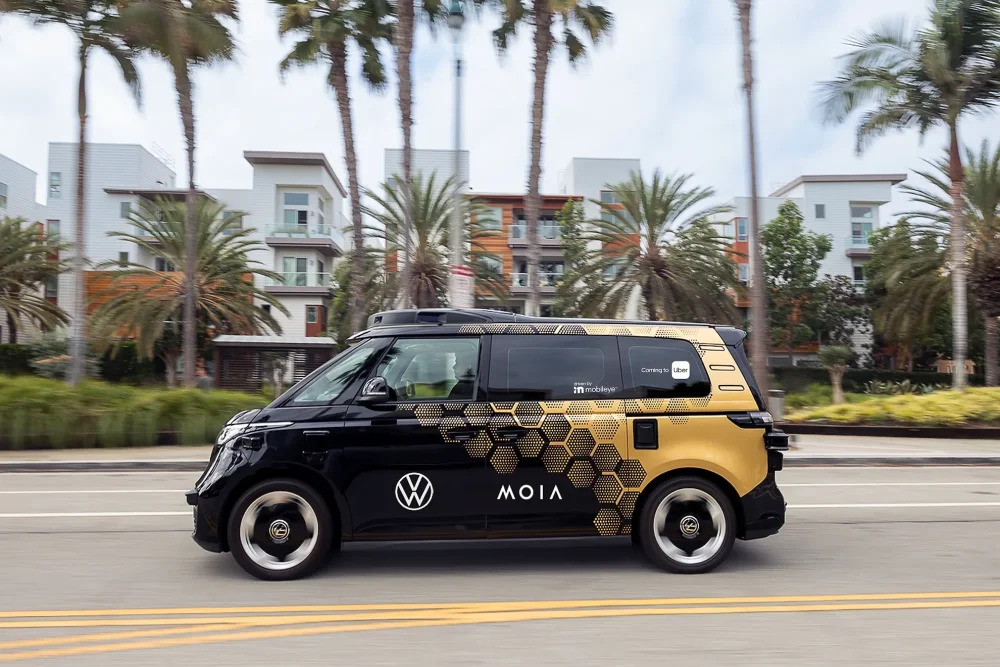
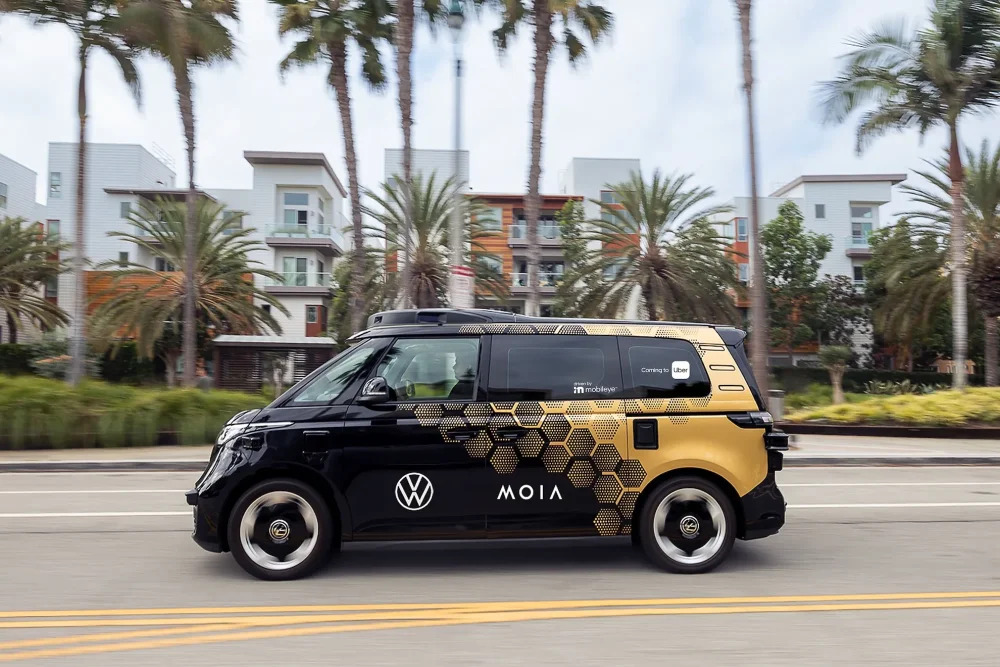
The trials utilise the Volkswagen ID. Buzz AD, an all-electric, autonomous version of the iconic microbus. The initial test fleet consists of roughly 10 vehicles, specifically configured to seat four passengers to maximise comfort during the pilot phase.
The companies have already opened a joint operations facility in Los Angeles to manage the fleet, which they plan to scale to more than 100 vehicles for real-world validation before the public launch.
Throughout the current testing phase, a human safety operator remains behind the wheel of every vehicle to supervise the technology. If these validation milestones are met and the necessary permits from California regulators are secured, the companies expect to offer commercial rides on the Uber app by late 2026, transitioning to fully driverless operations in 2027.
The project is led by MOIA America, which was rebranded from Volkswagen ADMT (Autonomous Driving, Mobility and Transport) in early 2026 to align with Volkswagen’s established European mobility brand. The ID. Buzz vehicles are equipped with a Level 4 autonomous stack developed in collaboration with Mobileye, featuring a suite of 13 cameras, nine LiDAR units, and five radar sensors.
Beyond its work with Volkswagen, Uber continues to expand its “platform for partners” strategy. In March 2026, the ride-hailing giant announced a major investment of up to $1.25 billion in Rivian (with an initial $300 million commitment) to deploy 10,000 autonomous R2 robotaxis. Those vehicles are slated to begin operations in San Francisco and Miami starting in 2028.
Leave a Reply