The impasse stems from disagreements over how to support U.S. and Israeli military actions against Iran, particularly in efforts to secure the Strait of Hormuz, a strategic waterway through which nearly a third of the world’s oil passes.
Trump has publicly expressed anger that European NATO countries have been reluctant to send naval forces or military assets to help reopen the strait and protect shipping lanes disrupted by Iran’s blockade.
This resistance has been met with sharp rebukes from the U.S. president, who has questioned the usefulness and reliability of NATO allies.
Trump’s comments have included blunt language calling into question Europe’s willingness to shoulder shared security responsibilities, and at times suggesting he may consider withdrawing the United States from NATO if the alliance does not change course.
Although U.S. law technically prevents a president from unilaterally exiting NATO without Senate approval, Trump’s repeated threats have still alarmed European capitals and sparked broader debate about the cohesion of the alliance.
European leaders have sought to counterbalance the criticism. Many have reaffirmed their commitment to NATO’s core mission of collective defense while also making clear that their support for Middle East military actions is separate from the alliance’s traditional role.
France’s President, for example, has emphasized that reopening the Strait of Hormuz by force would be unrealistic and risky, underlining the need for diplomacy and coordination.
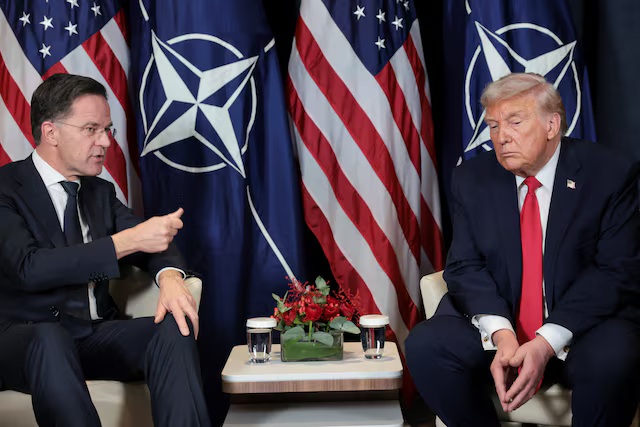
Amid the tension, NATO Secretary‑General Mark Rutte has scheduled a visit to Washington to engage directly with U.S. officials in an effort to mend the relationship.
The move underscores the broader anxiety within the alliance about sustaining unity in the face of mounting geopolitical pressure.
Many analysts say the crisis represents one of NATO’s most vulnerable moments since its founding nearly 80 years ago, with trust between the United States and its European partners at a notable low.
The situation also reflects deeper changes in global geopolitics, especially as the United States and its allies grapple with the fallout from the broader Middle East conflict and challenges to international security structures.
While Trump’s opponents within NATO argue that the alliance must remain strong and united, supporters of Trump’s position say Europe must do more to defend shared interests and contribute to global security.
Leave a Reply