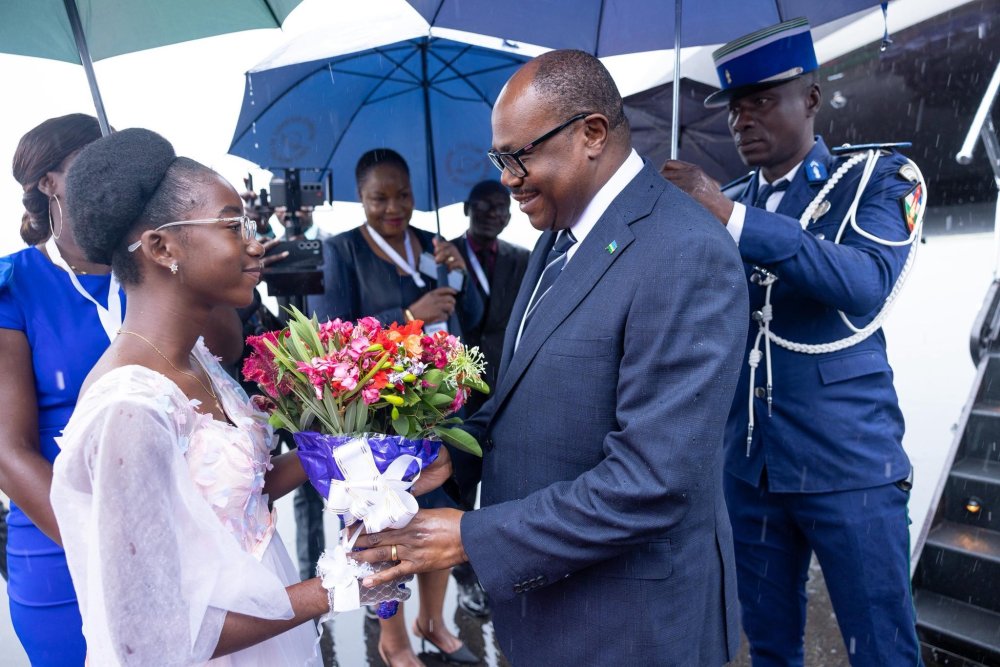
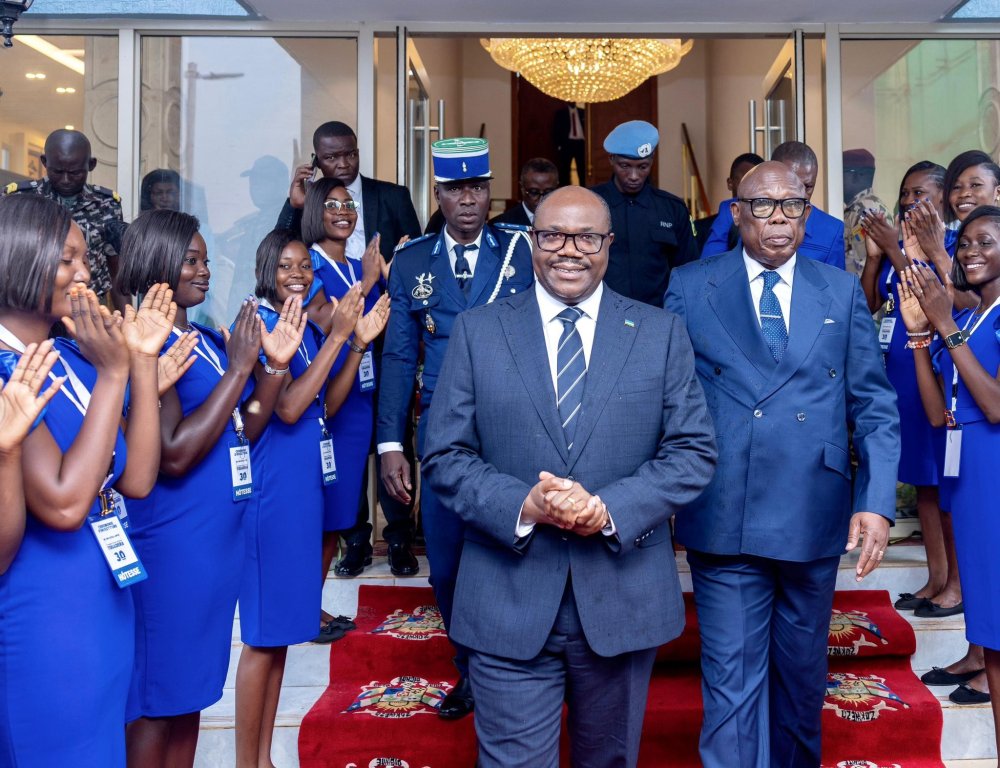
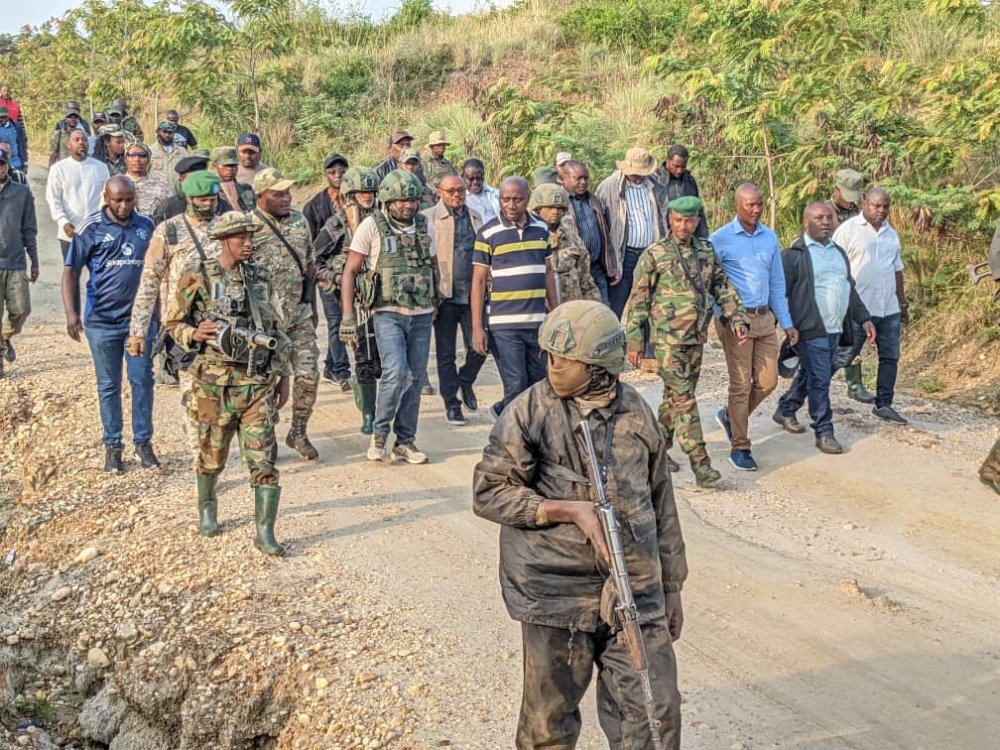
According to the Prime Minister’s Office, Dr. Nsengiyumva arrived in Bangui on the morning of March 30, 2026.
President Touadéra was re-elected in the December 2025 elections, securing 76.15% of the vote. His 2026–2032 agenda emphasizes building lasting peace in the country, implementing political reforms, and investing in initiatives that promote economic growth and improve the well-being of citizens.
Rwanda and the Central African Republic share strong bilateral relations in several areas, particularly in security, mineral resources, and other sectors.
Security cooperation is a key pillar of the relationship. Since 2014, Rwandan Defence Forces (RDF) and police have contributed to the United Nations peacekeeping mission in the Central African Republic, MINUSCA.
In 2020, the two countries signed a bilateral agreement under which Rwanda deployed around 1,200 troops to help neutralize rebel groups loyal to François Bozizé, which were threatening Bangui.
Beyond this, Rwandan forces provide security for the President and the capital city of Bangui, while also helping to build the capacity of the Central African Armed Forces (FACA) so they can maintain security independently once the Rwandan mission ends.
To date, the RDF has trained over 2,400 new Central African soldiers and 300 officers. The first cohort of 512 soldiers joined FACA in November 2023, followed by 634 in August 2024, 438 in March 2025, and 545 in November 2025.
Rwandan troops and police in CAR perform a wide range of duties, including protecting civilians and their property, high-level government officials including President Touadéra, UN personnel and assets, and critical infrastructure such as M’Poko International Airport.
Currently, around 1,200 Rwandan personnel are deployed in CAR under these bilateral arrangements, separate from the UN mission. Their responsibilities include restoring peace and security, safeguarding Bangui and its surroundings, and ensuring that daily life continues smoothly for local residents.
Another key responsibility is securing President Touadéra’s residence in the Damara area of Ombella-M’Poko Prefecture.
Rwanda’s Prime Minister, Dr. Justin Nsengiyumva was warmly welcomed upon arrival in Bangui, the capital of CARDr. Nsengiyumva arrived in Bangui on the morning of March 30, 2026.
At the center of the deadlock was the e-commerce moratorium, a long-standing rule that prevents countries from imposing customs duties on electronic transmissions such as streaming services, software, and other digital products.
Diplomats worked through Sunday to bridge the gap between Washington and Brasília, but positions remained far apart. The United States initially pushed for a permanent extension of the moratorium, later showing flexibility by backing a compromise proposal for a four-year extension with a one-year sunset clause, which would run until 2031.
Brazil, which had earlier proposed a two-year extension, later signaled openness to four years but insisted on a mid-term review clause, a proposal that failed to gain support.
Developing countries broadly resisted a long-term extension, arguing that the moratorium deprives them of potential tax revenues that could be reinvested into their economies and limits their ability to shape domestic digital industries.
Rwanda takes a balanced approach to the e-commerce moratorium at the WTO. As part of the Organisation of African, Caribbean and Pacific States, it shares the view that more discussion is needed to fully understand how the moratorium affects developing countries, especially in terms of lost revenue and long-term economic benefits.
Rwanda supports keeping the issue open for negotiation rather than rushing into a permanent decision, and it agrees that development concerns should be at the center of any outcome.
At the same time, Rwanda tends to be more open to digital trade than some of its peers. The country sees the growth of the digital economy as a real opportunity — to attract investment, create jobs, and connect to global markets.
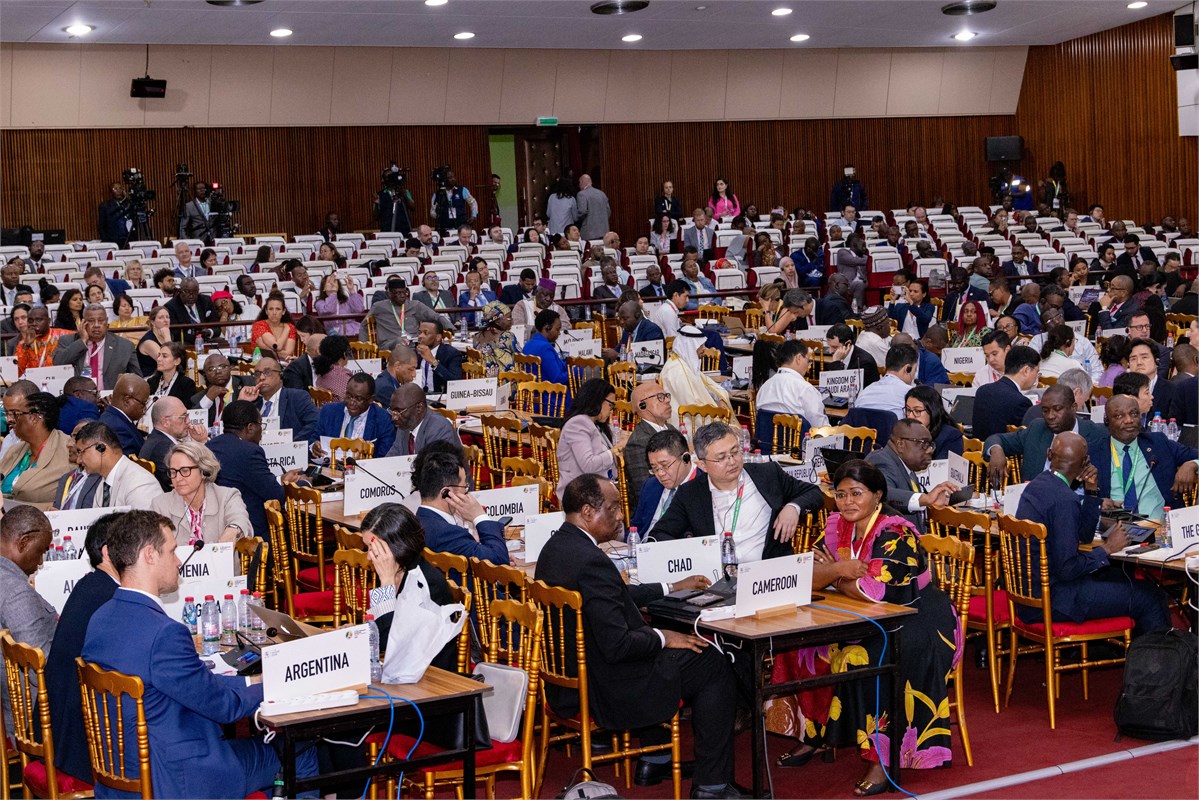
Despite intense negotiations, the Yaoundé summit ran out of time before a final deal could be reached.
Instead of focusing on taxing digital services, Rwanda is more focused on building its own capacity: improving infrastructure, supporting innovation, and helping local businesses compete. In simple terms, Rwanda is saying that digital trade should remain open, but the rules must also give developing countries a fair chance to grow and benefit from it.
With no agreement reached, the moratorium is now set to expire, effectively opening the door for countries to impose tariffs on digital services such as streaming platforms, software, and other electronic transmissions. Such a shift could significantly reshape global digital trade, increasing costs for businesses and consumers while introducing new uncertainty into cross-border data flows.
Negotiations are now expected to move back to the World Trade Organization headquarters in Geneva, where members will revisit the issue during a General Council meeting scheduled for May.
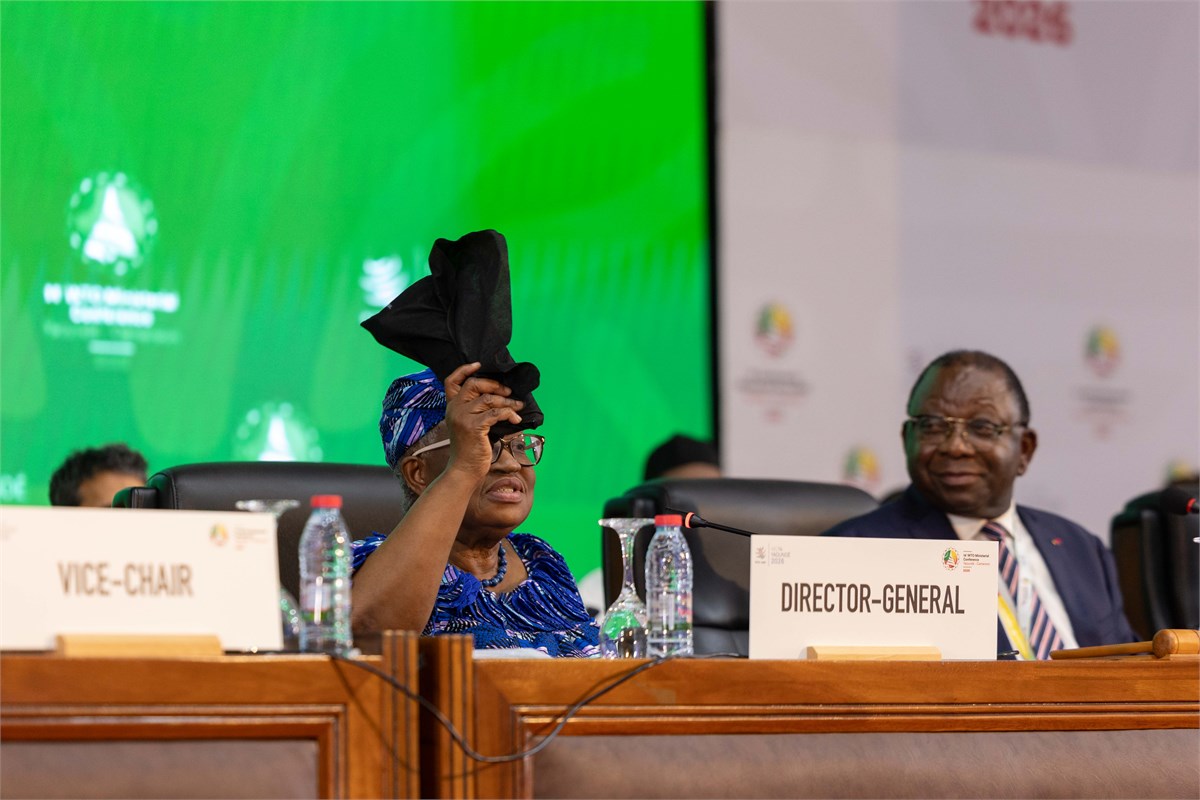
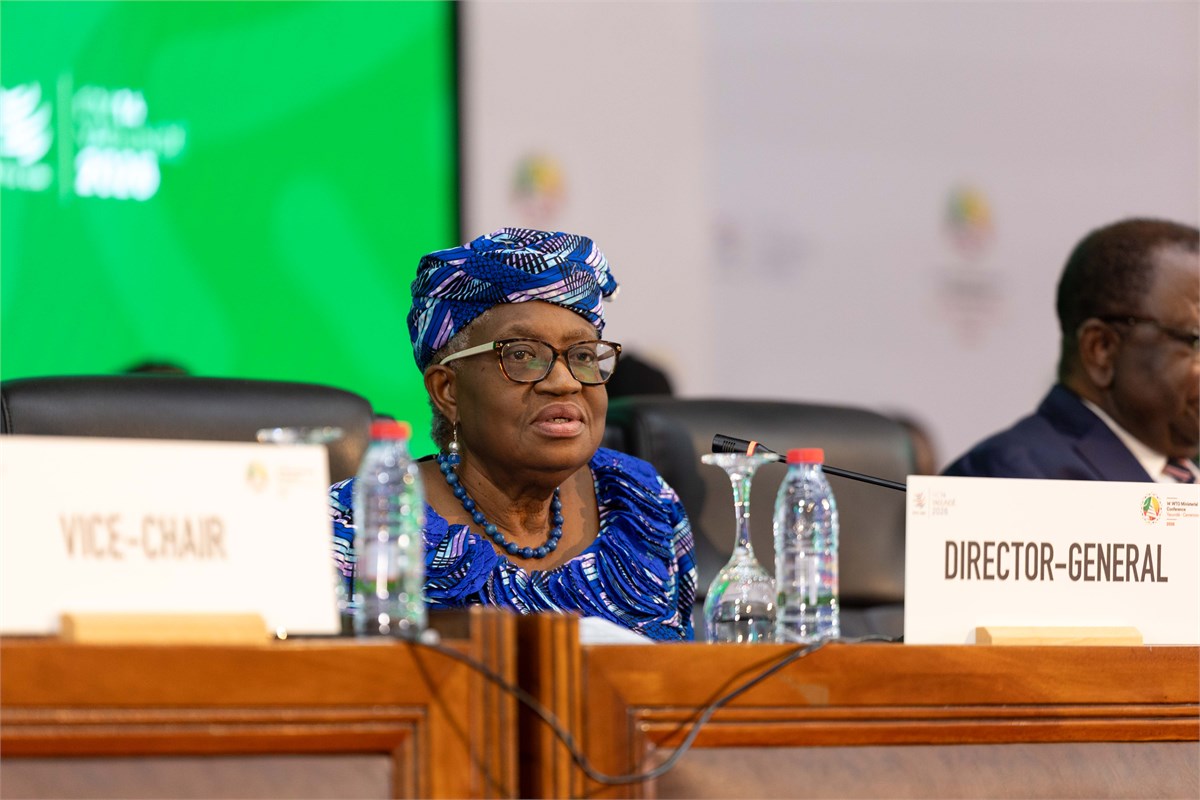
Director-General Ngozi Okonjo-Iweala praised progress in Yaoundé despite talks ending without a final agreement.
The failure to agree on the moratorium also derailed a broader reform package that had been taking shape during the four-day ministerial meeting in Yaoundé. A draft roadmap outlining timelines and key priorities for modernizing the WTO was reportedly close to agreement before talks ran out of time.
The reform plan aimed to improve decision-making in the WTO’s consensus-based system, increase transparency around industrial subsidies, and revisit rules governing special treatment for developing countries. The United States and the European Union have argued that current rules allow countries like China to benefit unfairly, while critics say reforms must also address development concerns.
Washington had also linked its support for the reform package to a satisfactory outcome on the moratorium, raising the stakes of the dispute and increasing pressure on negotiators.
Despite the failure to reach a deal, WTO Director-General Ngozi Okonjo-Iweala said negotiations in Yaoundé had made significant progress, even as time ultimately ran out.
“We were supposed to finish at 1pm today, and it is now almost midnight. It’s been a long, hard day and I am deeply grateful to all of you for the patience you have shown today, as we tried to bridge a handful of remaining differences on some of the key files before us,” she said.
She acknowledged that practical constraints, including ministers needing to leave, brought the negotiations to an end before consensus could be reached.
“However, we have run out of time. Some have already caught flights, and some have changed flights, and some will need to go soon,” she added.
Okonjo-Iweala stressed that members had come close to agreeing on a comprehensive package of outcomes that could shape the future of the organization.
“We are very close to a Yaoundé package of agreements that would be important for Members and the future of the organization. We’ve worked really hard here, and we are very close, but we’re not all the way there yet.”
She urged members not to abandon the progress made, noting that the work done in Yaoundé could still form the basis for an agreement in the next phase of negotiations.
“It would be regrettable to lose so much effort and work, with the finish line in our sights… we believe that it would be appropriate to preserve the important texts we have developed here, and use them as a basis to finalize agreements in Geneva.”
Looking ahead, she signaled that the process is far from over. “We have come a long way. All we need is time. And we can give ourselves that between now and the next General Council.”
The collapse leaves both the future of digital trade rules and the WTO reform agenda uncertain, with upcoming discussions in Geneva expected to determine whether members can salvage the progress made in Yaoundé or whether the deadlock signals a deeper crisis in the global trading system.
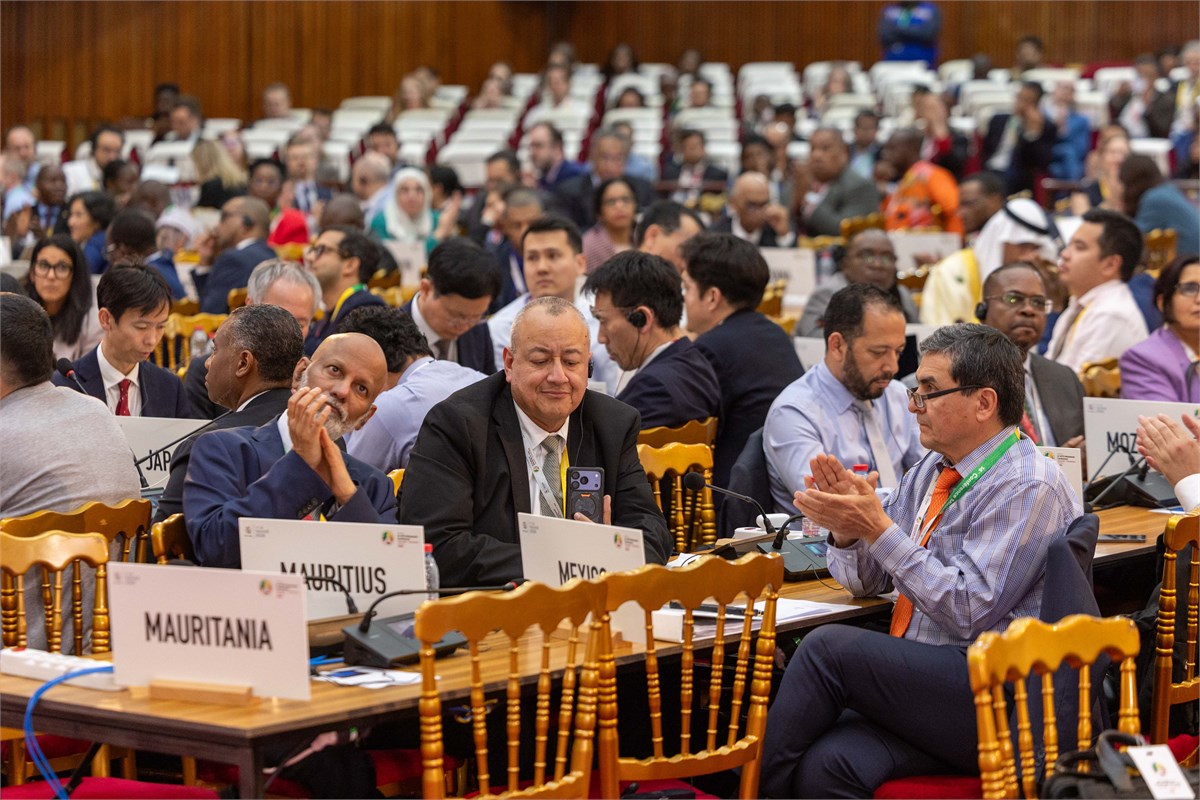
Negotiators at the Yaoundé summit struggled to resolve disagreements over the e-commerce moratorium.Okonjo-Iweala urged WTO members to preserve the Yaoundé texts as a foundation for future negotiations in Geneva.
A Persian-Norwegian with a background in architecture and systemic design, Gharavi recently spent two weeks in Kigali, scouting Rwanda’s “hidden entrepreneurial gems” and exploring opportunities to connect them with European and Nordic investors.
“Rwanda is a bold and dynamic country,” Gharavi told IGIHE during an exclusive interview. “It has fundamental elements for finance structuring and project development in place, which makes it a very good base to expand into Africa.”
She added that the country’s commitment to entrepreneurship, strong institutions, and regional connectivity made it an ideal location for ENFA to establish a presence and test its model in practice.
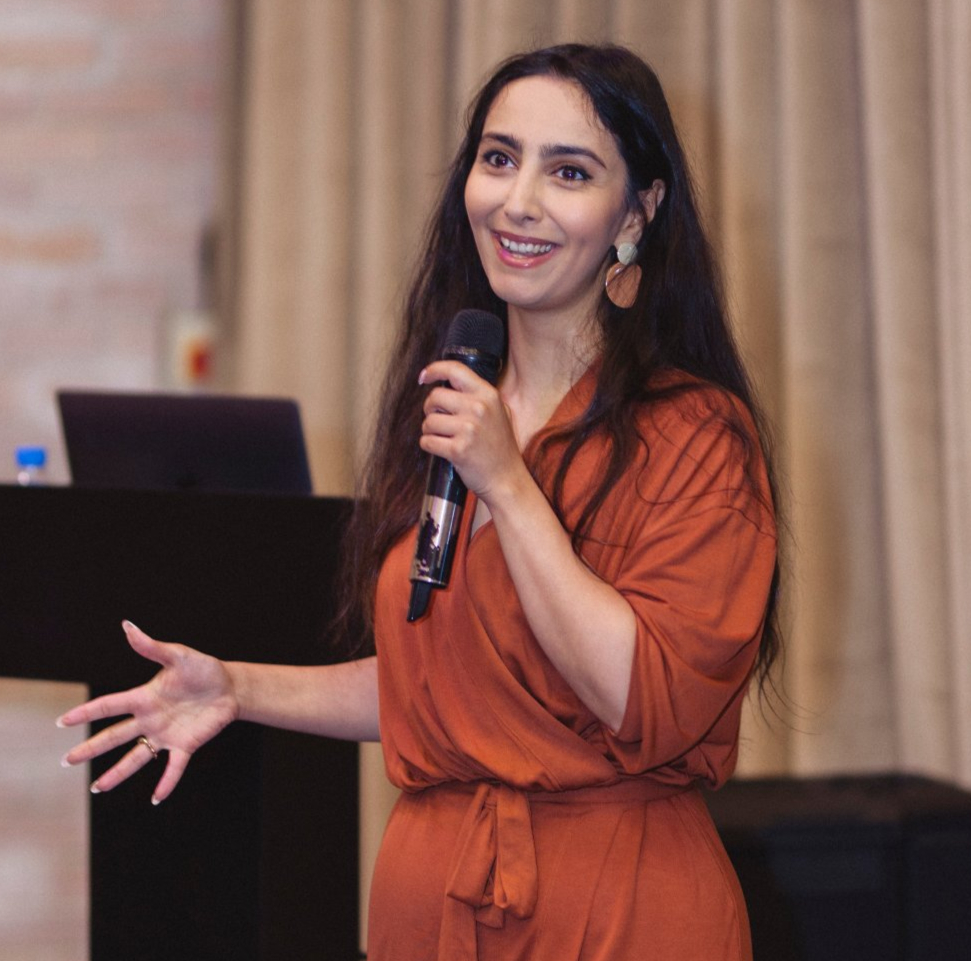
Euro Nordic Funding Alliance (ENFA) boss Niloufar Gharavi, during a recent meetup with startup founders and stakeholders in Kigali’s entrepreneur community at Norrsken.
Founded three years ago, ENFA has grown from a concept into a presence in 21 countries, operating as a facilitator of cross-border business development and blended financing. Gharavi explains that the organization’s core philosophy is not merely to introduce entrepreneurs to capital, but to become a development partner: providing training, advisory support, and strategic connections to ensure startups and SMEs thrive in the long term.
ENFA has been active in Rwanda for nearly a year through local partnerships, guided by Regina Mukamusinga, the CEO of ENFA Rwanda and a former investment analyst with 14 years of experience at the Development Bank of Rwanda. The organisation has now formalised its presence by establishing a legal entity in the country.
“The reception has been overwhelmingly positive,” Mukamusinga said. “Local entrepreneurs are eager to join our network, and we’re seeing real progress in turning these SMEs into internationally connected businesses.”
Gharavi highlights the impact of this approach using Rwanda’s honey industry as an example. Through ENFA, women-led honey businesses that had previously operated independently were connected, advised on value chain development, and introduced to international partners. This collaboration not only enhances production capacity but also opens doors to broader markets.
A systemic designer by profession, Gharavi, says she approaches business through a lens of complexity and interconnectivity.
For Grace Mbabazi, founder of M&M Sozo, producing and exporting honey, joining ENFA has shown her just how transformative the right support and connections can be for a growing business.
“Before ENFA, our business was mostly local. Now we have access to training, strategic advice, and European partners. It’s transforming how we operate and where we can sell our honey,” she said.
Beyond SMEs, ENFA is actively exploring larger projects across Rwanda in sectors such as affordable housing, health tech, and agriculture.
Initiatives include a state-of-the-art prefabricated housing factory, a network of 50-bed clinics to expand rural healthcare access, and digitised agricultural solutions to facilitate export and market expansion.
Gharavi also emphasised the potential for renewable energy projects, including Lake Victoria and Lake Kivu developments, as well as data centres that can tap into European and Nordic investment.
A systemic designer by profession, Gharavi approaches business through a lens of complexity and interconnectivity.
“Everything is a system,” she explains. “Your business, your product, your value chain; they’re all interconnected. We don’t just bring capital; we help entrepreneurs redesign and optimise their systems to generate sustainable growth.”
ENFA’s funding model spans five brackets, from €500,000 to over €15 million, combining public grants, philanthropic funds, and private investments. But Gharavi underscores the importance of local equity.
“Investors want to see Rwandans actively putting their own capital into their projects. That’s how trust is built and exploitation avoided,” she explains, adding that this approach supports local ownership and ensures international support complements, rather than replaces, Rwandan initiative.
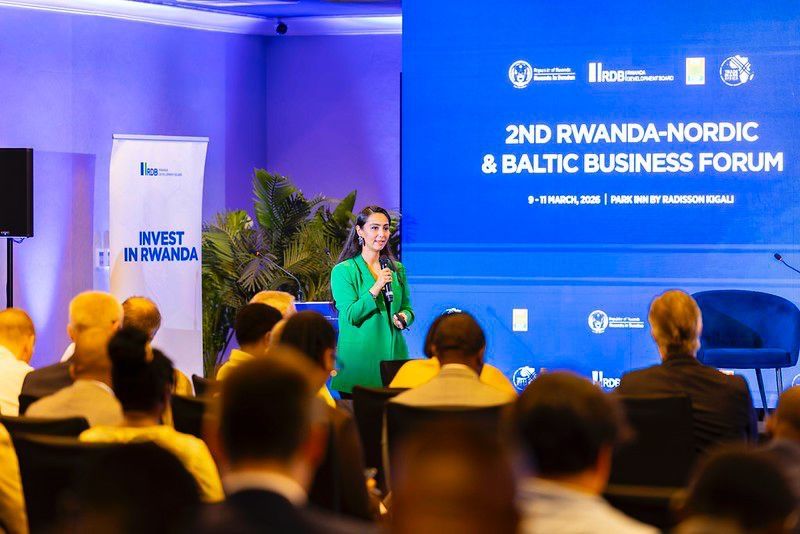
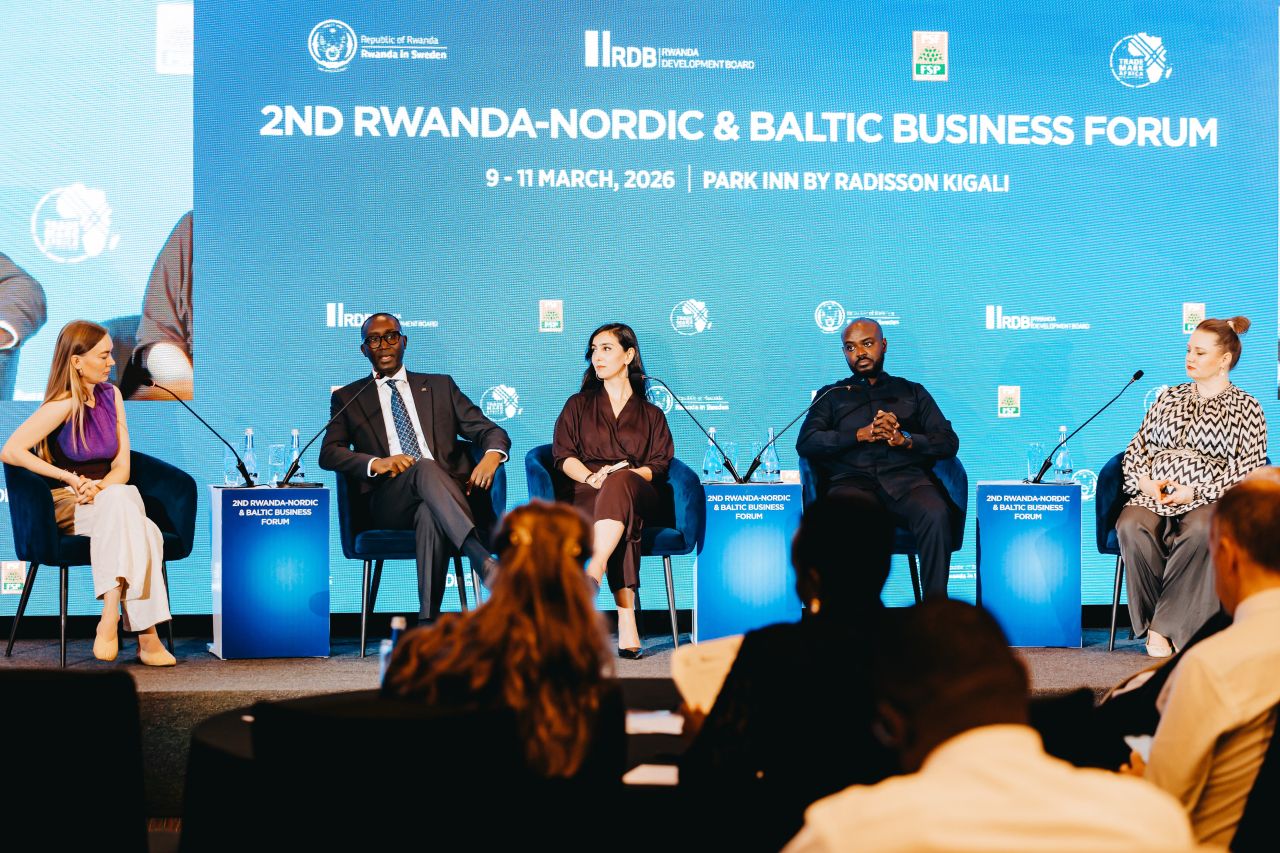
Niloufar Gharavi was a panellist at the 2nd Rwanda Nordic-Baltic Forum, held in Kigali from March 9–11, 2026
Earlier this month, Gharavi was a featured speaker and panellist at the 2nd Rwanda Nordic-Baltic Forum, held in Kigali from March 9–11, 2026. In the interview with IGIHE, she reiterated ENFA’s hands-on approach to connecting European and Nordic investors with African businesses.
“We actually become their partners. They join us, we give them the right advice and the right network, and support them as they grow,” the founder explained.
Last December, Gharavi launched her book, Save the World Before Breakfast, introducing the concept of design-driven entrepreneurship.
“Everything we do is designerly,” she stressed. “Designers see the world from scratch. We know that this chair, this building, this phone, even the lifestyles we live, they didn’t exist naturally. They were all created over time. Once you realise that everything can be redesigned, that’s when real sustainability and regeneration become possible.”
Niloufar Gharavi’s book Save the World Before Breakfast challenges conventional notions of startups, innovation, and leadership.
She emphasised that this philosophy shapes ENFA’s operations, from its internal code of conduct to member training programs. ENFA’s newly established holding in Luxembourg, she added, will champion regenerative, fair-share economies built on design thinking, equipping entrepreneurs to approach challenges with “fresh eyes on the world.”
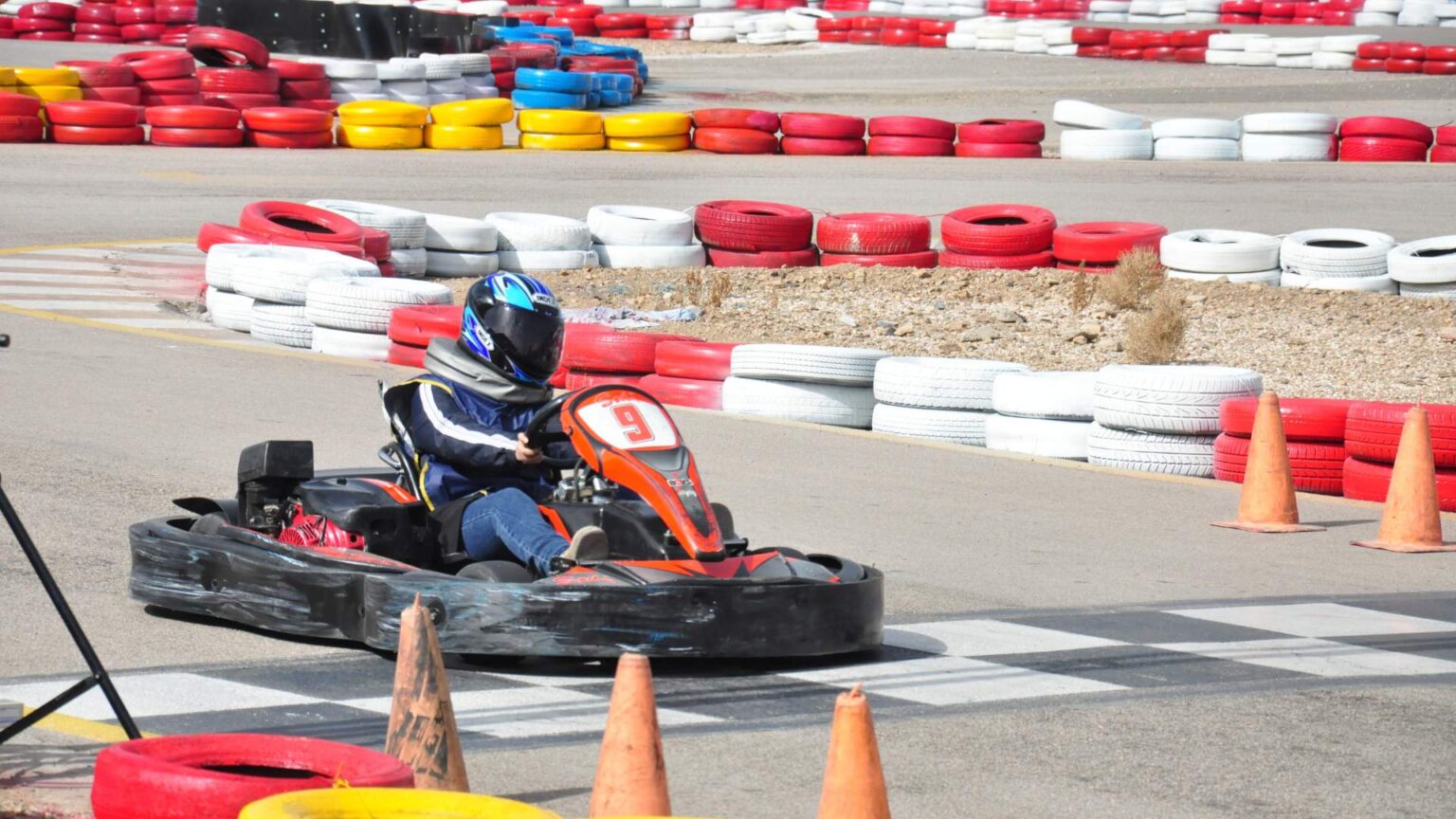
For Gharavi, the journey from architect to global entrepreneur has been shaped by high-stakes decision-making and a design-driven mindset. Her experience as a professional rally driver also plays a role.
“Racing taught me to assess risks, make decisions quickly, and trust the team around me. Those same skills are vital when supporting entrepreneurs across continents,” she said.
Niloufar Gharavi is a former racing driver.
Reflecting on Rwanda’s entrepreneurial ecosystem, Gharavi is optimistic.
“We are becoming a fund ourselves, but primarily, we facilitate growth,” she said. “The local teams and authorities play a central role. Rwanda has the readiness, the infrastructure, and the entrepreneurial spirit to become a gateway to the continent.”
Gharavi envisions similar partnerships expanding across Africa, leveraging Rwanda as a model for design-driven, investor-backed entrepreneurial growth.
Curious to learn more? Watch her full conversation with IGIHE below.
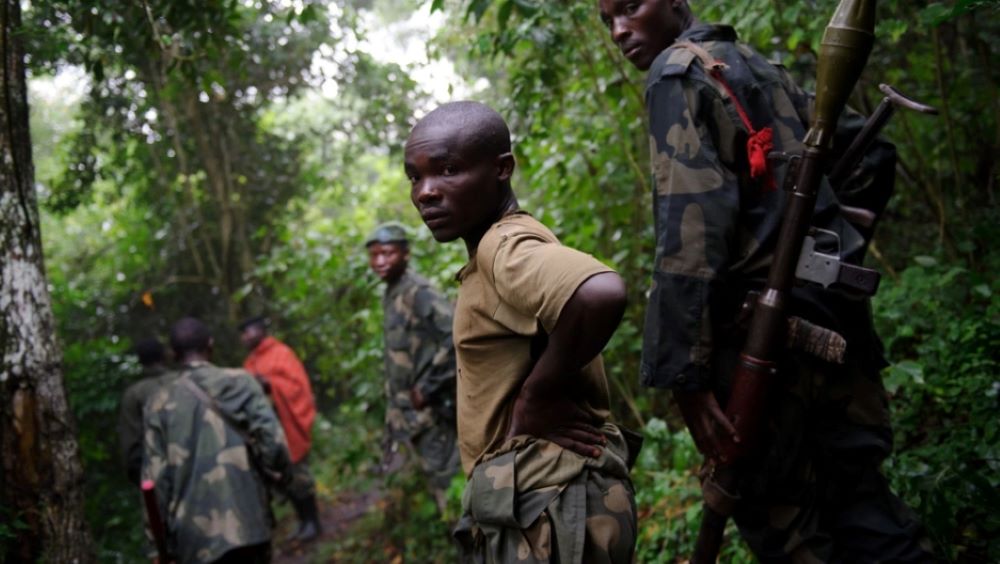
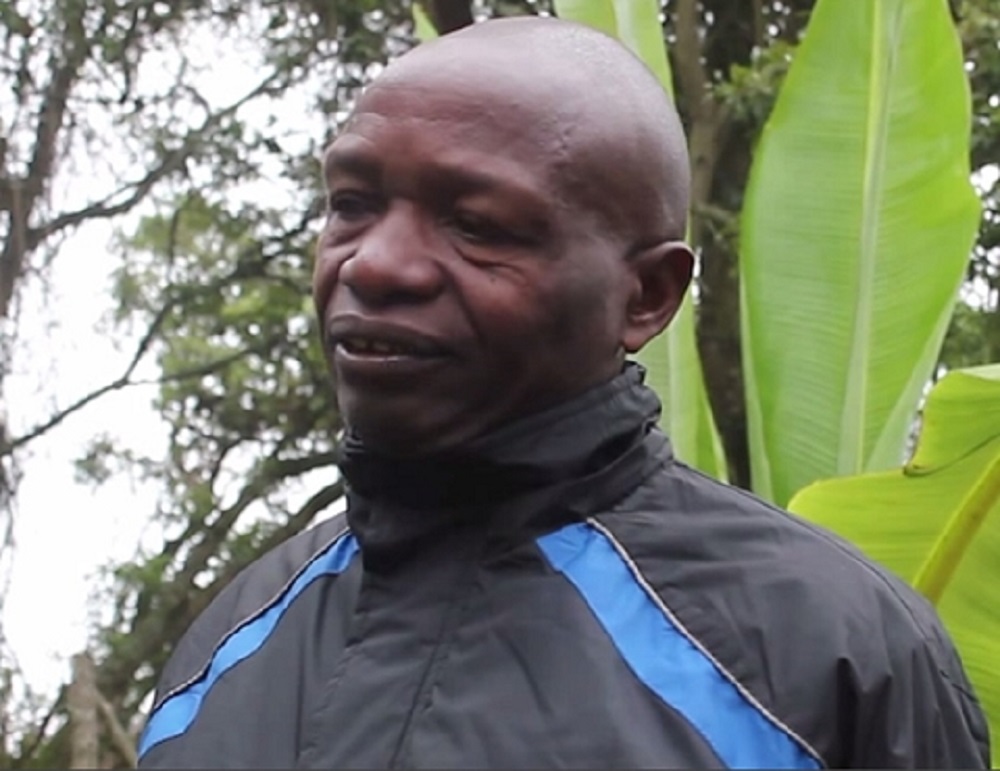
Despite its ongoing presence, there are those who downplay its significance, particularly in the international community. Often, it is portrayed as an organization no longer a threat to Rwanda, to the Congolese civilians, or to the Great Lakes region in general.
The first mistake made by those who hold such views is the neglect of the fact that the FDLR is rooted in genocide ideology. The extremists within this group continue to wreak havoc in eastern Congo while seeking to destabilize Rwanda.
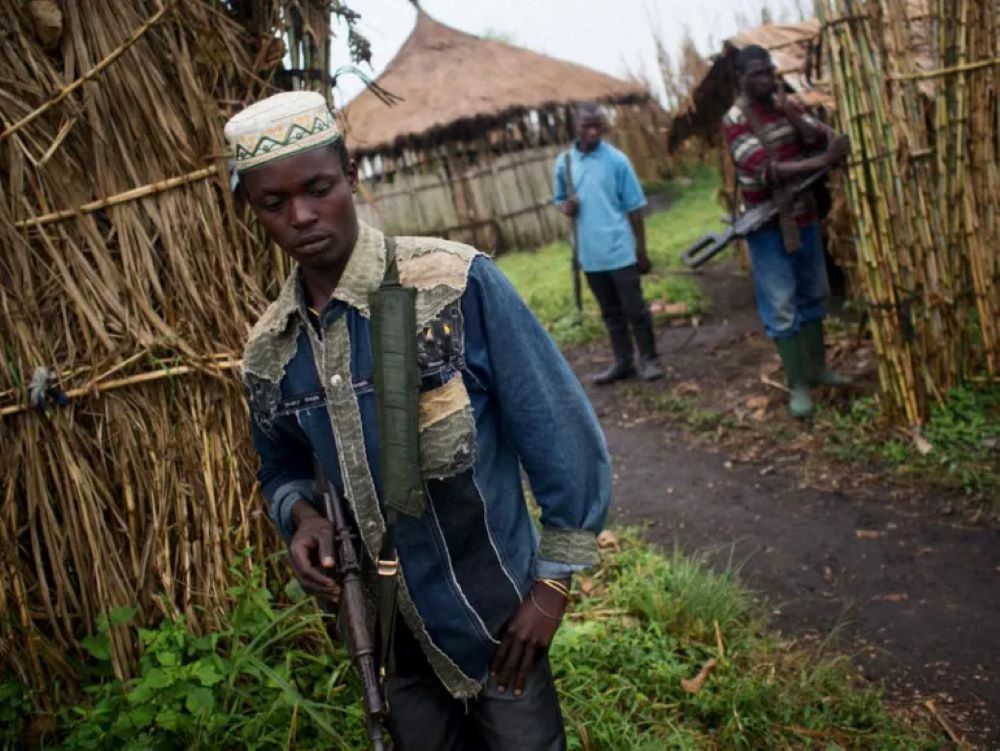
Although the group remains under UN and U.S. sanctions, this has not stopped it from continuing its operations, even receiving occasional political, military, and logistical support from the Kinshasa government over the years.
Congolese authorities have repeatedly claimed that the FDLR is no longer a formidable force and is merely composed of elderly individuals fleeing justice. However, this claim is far from the truth. The FDLR remains active in politics, military actions, and the propagation of its genocidal ideology.
This has been further demonstrated in the ongoing conflict between the Congolese government and the M23 rebel group.
Reports from UN experts in 2024 and 2025 revealed that the administration of President Félix Tshisekedi has utilized the FDLR and other groups such as Wazalendo as auxiliary forces to support government troops against M23. These developments should decisively eliminate any confusion or misinformation about the group being a mere historical relic.
Who are the current leaders of the FDLR?
The FDLR is currently led by Lt Gen Iyamuremye Gaston, also known as Byiringiro Victor or Rumuri, who serves as the group’s president.
Iyamuremye, born in 1948 in the current Musanze District, now resides in Hembe, Bashali-Mokoto, in Masisi, eastern DRC. He is under both UN and U.S. sanctions.
During the 1994 genocide against the Tutsi, Iyamuremye held the rank of major and led an armoured battalion.
His continued leadership of the FDLR underscores the fact that the group is still directed by individuals with direct involvement in the genocide.
Iyamuremye has close associates in both political and military operations within the FDLR. These include Moïse Izabayo, who is in charge of foreign relations and also based in Hembe, and Maj Gen Bunani Daniel, also known as Busogo Ukwishatse, responsible for security.
Another key figure is the FDLR’s spokesperson, Augustin Maniragaba, known as Cure Ngoma, who also operates from Hembe. Maniragaba, who hails from Nyamutera in Ruhengeri, Rwanda, was a teacher during the 1994 genocide against the Tutsi and has been a prominent advocate for the group’s genocidal ideology.
FDLR continues to pose a significant threat to both the region and Rwanda
Military backbone of the FDLR
The FDLR’s military wing, the Forces Combattantes Abacunguzi (FOCA), is led by Maj Gen Pacifique Ntawunguka, known as Omega. Ntawunguka was born in 1964 in Gisenyi (now Rubavu) and resides in the Kirama forest in the Rutshuru area of North Kivu. He was a lieutenant in the FAR (Rwandan Armed Forces) during the 1994 genocide against the Tutsi and later fled to Congo after the defeat of the genocidal regime.
Ntawunguka, with his extensive military training, remains a senior leader within the FDLR, having undergone military education in Egypt, Greece, and France. His role and leadership show that the FDLR is not a random or ill-trained group, but one with substantial military expertise. He continues to express his defiance, stating that he will not return to Rwanda until no Tutsi is left.
Intelligence and propaganda within the FDLR
The FDLR also has an intelligence division led by Brig Gen Uwimbabazi Sebastien, known as Kimenyi Gilbert Nyembo. Uwimbabazi was sanctioned by the U.S. in 2023 for his involvement in the ongoing conflicts in eastern DRC. He was a lieutenant colonel in the Rwandan gendarmerie during the genocide and is closely linked to the group’s propaganda efforts.
FDLR also runs a military academy, headed by Brig Gen Hitimana Bernard, who has been instrumental in training the group’s forces. Hitimana was involved in the FDLR’s operations in 2008-2009 and has served in various leadership capacities in the group.
Ntawunguka, with his extensive military training, remains a senior leader within the FDLR, having undergone military education in Egypt, Greece, and France.
Elite forces
Among the most notorious commandos within the FDLR is Lt Col Rurakabije Pierre Célestin, known as Samba Guillaume, who leads an elite unit called CRAP (Commandos de Recherche et d’Action en Profondeur).
Rurakabije is listed on four international sanctions lists due to his involvement in promoting violence and insecurity in eastern DRC.
Another prominent figure is Col Kubwayo Gustave, known as Sircof Modeste, who leads operations under the name SINAI in many areas of Rutshuru, including Kahumiro, Kazaroho, Katanda, and Mayamoto.
Additionally, there is Col Oreste Ndatuhoraho, who uses the names Uwikunda Oreste or Issa Pierre. He leads CANNAN/JERICHO, which is considered the main headquarters of the FDLR.
Ndatuhoraho was born in Rutobwe in 1970 and worked as a secondary school teacher before joining armed groups. In 1994, he participated in military training for the Interahamwe militia to use weapons aimed at killing the Tutsi during the Genocide.
FDLR is not a group to underestimate
The FDLR is a highly organized and skilled group, with a clear political, military, and ideological agenda. It is not a group of displaced individuals without power, as some would suggest. On the contrary, the FDLR continues to pose a significant threat to both the region and Rwanda, bolstered by military expertise, political ties, and a genocidal ideology that remains influential.
To dismiss the FDLR as a mere historical artifact is to ignore the real threat it still poses today. The international community must recognize the continued existence of this threat and work together to address it. Military action alone is not enough to dismantle the FDLR; a coordinated and sustained international effort is necessary to address the root causes of this violent group.
The FDLR is currently led by Lt Gen Iyamuremye Gaston, also known as Byiringiro Victor or Rumuri, who serves as the group’s president. The FDLR remains active in politics, military actions, and the propagation of its genocidal ideology.
The research, conducted by the Agency for Science, Technology and Research, tracked 2,449 children aged three to six between 2018 and 2019, and followed up with the same children in 2021.
The study found that parental joint media engagement, such as watching together, talking about content, or playing alongside the child, was positively associated with children’s prosocial behavior, including sharing, cooperating, showing empathy, and interacting positively with peers. These early behaviors were also associated with continued positive social development as the children grew older.
By contrast, screen time alone, or parental rules about screen use without active involvement, was not associated with improved social outcomes once factors such as children’s characteristics and family background were considered.
The agency said the findings, together with previous research, suggest a more complete approach: limiting screen exposure is important during infancy, while the quality of parental engagement becomes increasingly crucial in nurturing children’s social-emotional skills as they enter preschool and primary schools.
The study found that parental joint media engagement, such as watching together, talking about content, or playing alongside the child, was positively associated with children’s prosocial behavior. AI generated photo
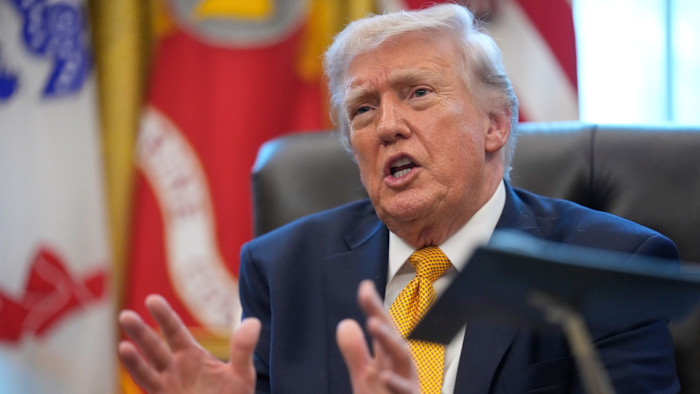
In an interview with the Financial Times, Trump said, “To be honest with you, my favourite thing is to take the oil in Iran,” comparing the U.S. move to Venezuela, where Washington intends to control the oil industry “indefinitely” after it forcibly seized President Nicolas Maduro in January.
Taking Iranian oil would involve seizing Kharg Island, through which over 90 percent of Iran’s oil is exported, the Financial Times reported, warning that such “an assault” risks raising casualties and prolonging the war.
“Maybe we take Kharg Island, maybe we don’t. We have a lot of options,” it quoted Trump as saying. “It would also mean we had to be there for a while.”
He added that he believed Iran had little or no defense on the island. “We could take it very easily,” he said.
Trump’s remarks came as he steps up the U.S. military buildup in the Middle East while weighing a military operation to extract nearly 1,000 pounds of uranium from Iran, according to U.S. officials.
He has also encouraged his advisers to press Iran to agree to surrender the material as a condition for ending the war, The Wall Street Journal reported, citing an anonymous source familiar with Trump’s thinking.
The Pentagon is reportedly deploying up to 10,000 additional ground troops to the region, with the U.S. Central Command announcing Saturday that over 3,500 troops, including 2,500 Marines, had arrived in the Middle East.
Despite the threat, Trump noted that indirect talks between the United States and Iran via Pakistani “emissaries” were making progress. “A deal could be made fairly quickly,” he said.
Oil prices have surged since the United States and Israel launched massive attacks on Iran on Feb. 28, with Brent crude rising as high as 119.5 U.S. dollars a barrel in March, the highest since June 2022.
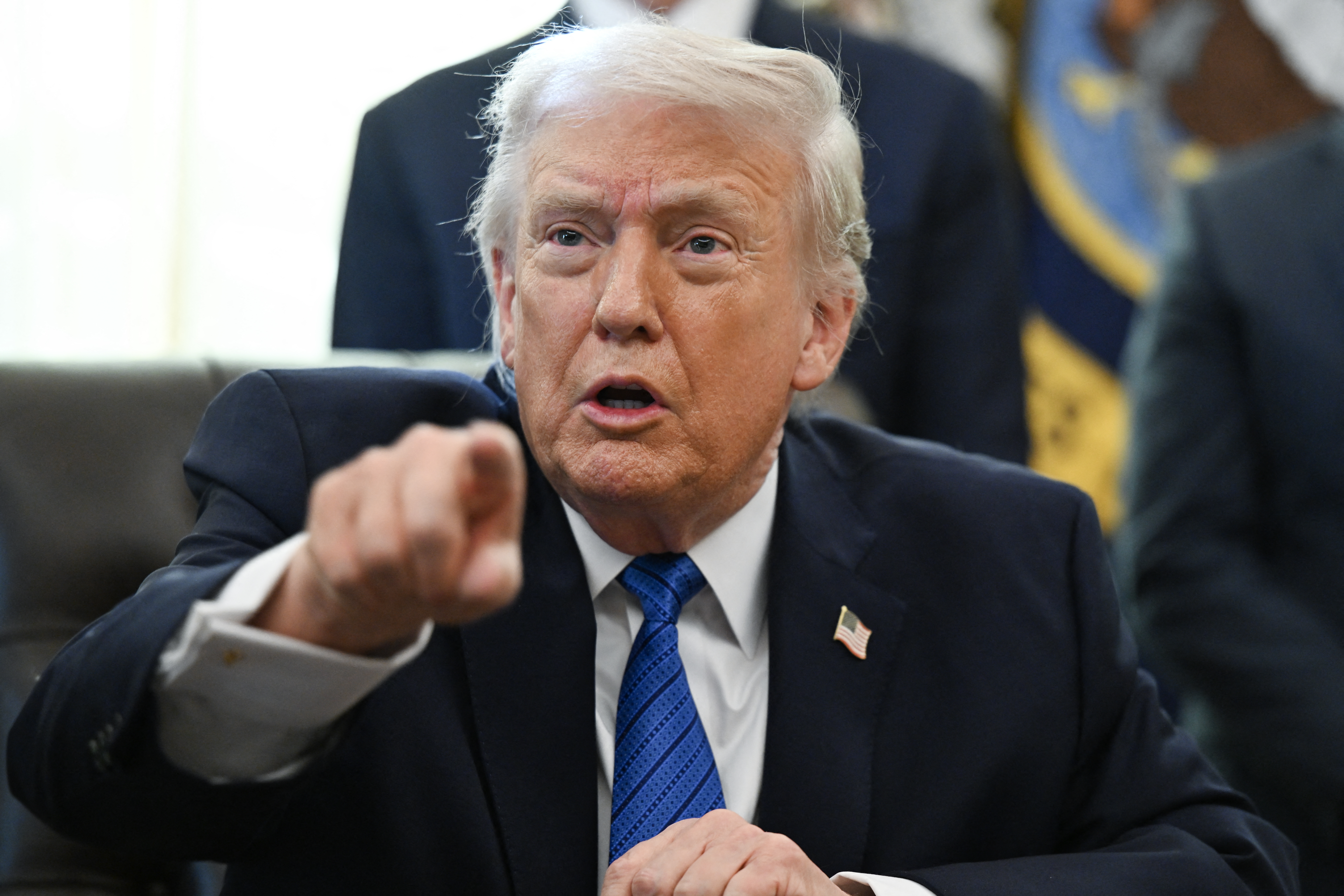
US President Donald Trump speaks before signing executive orders in the Oval Office in the White House in Washington, DC, on January 30, 2026. (Photo by ANNABELLE GORDON / AFP)
Earlier this week, media outlets in DRC began reporting that AFC/M23 was withdrawing fighters from areas in the Lubero, Lunyasenge, Bukununu, Musiya, Katondi, and Kipese territories, relocating them to Alimbongo, Kirumba, and Kanyabayonga.
These reports suggested that the move was prompted by pressure from the United States government on AFC/M23.
In a statement released by the Governor of North Kivu Province, Erasto Bahati, these reports were dismissed, with the governor clarifying that what is happening is simply a routine rotation of troops.
The statement read: “The leadership of North Kivu Province reassures all citizens that the activities occurring along the battlefront are part of the regular military troop rotations within AFC/M23.”
“It is completely different from the rumors fueled by social media and the Kinshasa government, which aim to confuse and frighten people who are living in peace and security. AFC/M23 remains committed to protecting all citizens from harm, regardless of its origin.”
Governor Erasto Bahati also urged citizens to continue their daily activities as usual.
AFC/M23 has dismissed reports suggesting withdrawal from occupied positions
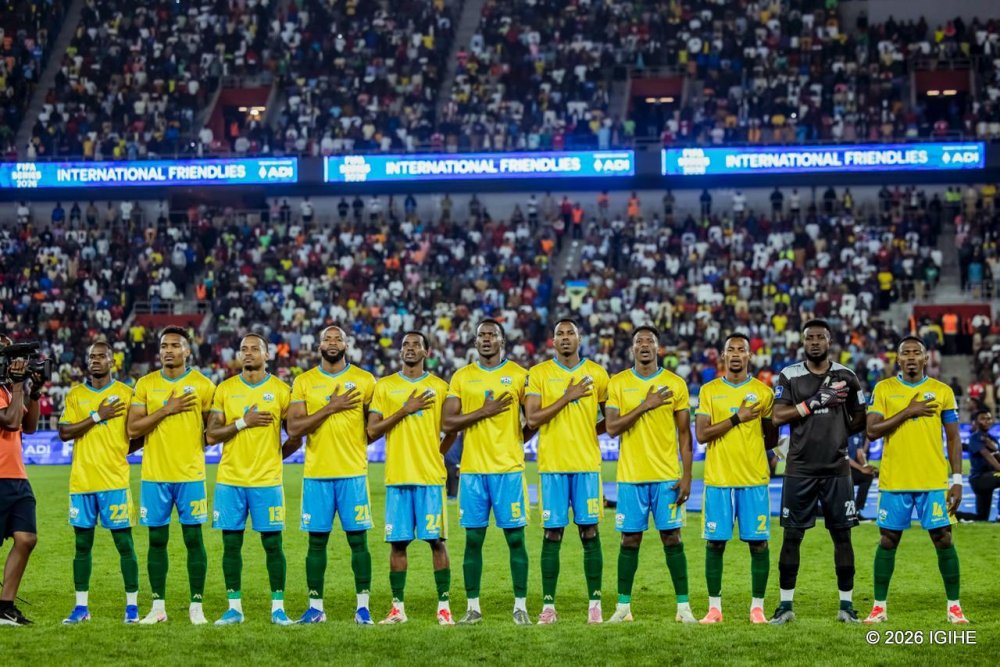
In a press conference on Sunday, March 29, 2026, Bizimana shared his thoughts ahead of the final match of the FIFA Series in Kigali.
When asked about facing Estonia, the first European team Amavubi will face, he acknowledged the tough challenge ahead.
“This will be our first time playing against a European team since I joined Amavubi. We closely follow their leagues, and many European players have a similar style of play. As a team, we’ve discussed this, and we’re determined to win the match,” he said.
“Each player is eager to win a big match, especially one that others might think is out of reach for us. What we also hope for is the support of our fans, just like in our last match. We’re committed to giving our all to secure the victory.”
Rwanda’s national team has often given their fans hope with impressive wins, followed by disappointing losses or draws.
However, Bizimana assured that this time, Amavubi are determined to create a new chapter in the team’s history.
“History is history, and the past is behind us. Now, we are preparing for the final game, and we know we must give everything we have to keep the trophy with us because we may never have another opportunity to host it. This is a new moment for us to make our own history,” he emphasized.
The final Group A match of the 2026 FIFA Series will see Amavubi face Estonia on Monday, March 30, at 1:30 PM at Amahoro Stadium.
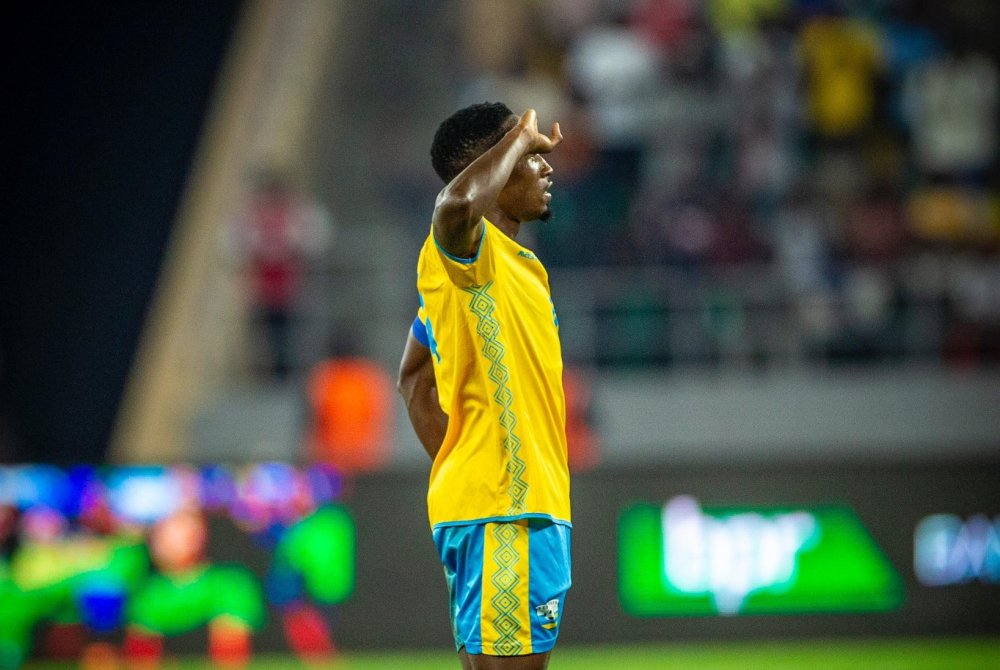
Rwanda secured their spot in the final after a dominant 4-0 win over Grenada, with goals from Leroy-Jacques Mickels, Kwizera Jojea, Bizimana Djihad, and Hakim Sahabo.
Estonia advanced after defeating Kenya in a penalty shootout, winning 5-4 after a 1-1 draw.
Rwanda secured their spot in the final after a dominant 4-0 win over Grenada,Bizimana assured that this time, Amavubi are determined to create a new chapter in the team’s history.
Researchers at Karolinska Institutet in Sweden found that while fathers tend to have fewer mental health diagnoses during pregnancy and the first months after birth, the situation changes significantly later on.
The study analyzed national health data from more than one million fathers whose children were born in Sweden between 2003 and 2021.
The researchers looked at when these men received diagnoses for conditions such as depression and stress‑related disorders, beginning a year before pregnancy and continuing until the child reached one year old.
Surprisingly, the results showed that mental health diagnoses were lower than expected during pregnancy and in the months right after birth, possibly reflecting the emotional high and support that often accompany the early stages of becoming a parent.
However, by the time the baby reached about 12 months old, the trend reversed. Diagnoses linked to depression and stress had risen noticeably by more than 30% compared with the year before pregnancy.
One of the study’s authors, Jing Zhou, a PhD student at the Institute of Environmental Medicine at Karolinska Institutet, commented that the transition to fatherhood involves both positive moments and new pressures.
He explained that sleep disruptions, changes in relationships, and the ongoing responsibilities of caring for a growing child may contribute to increasing emotional strain over time.
The researchers say these findings challenge the assumption that fathers’ mental health is mostly stable after a baby is born.
Instead, the study suggests that the emotional toll may build up gradually, with symptoms becoming more pronounced as fathers continue to juggle work, family life, and other responsibilities.
The study was published in JAMA Network Open, a widely respected medical journal.
The authors hope the research will raise awareness about paternal mental health and encourage better support systems for new fathers not just immediately after birth but throughout the first year of parenting and beyond.
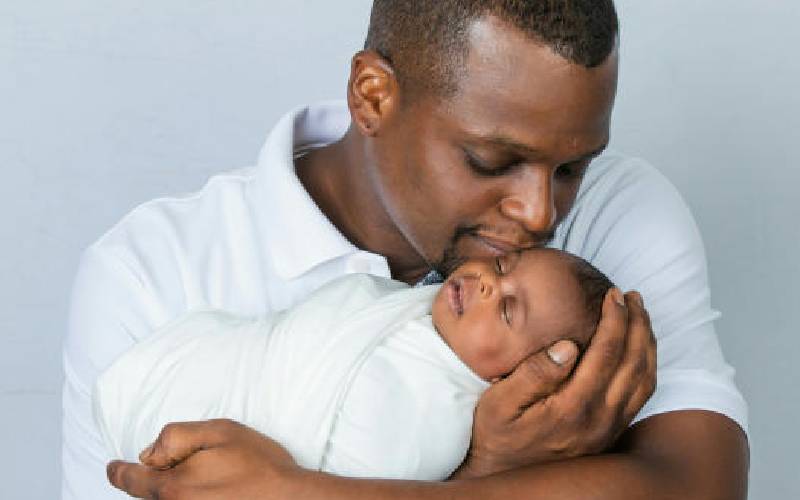
Fatherhood’s mental health toll may hit hardest a year after the baby arrives.
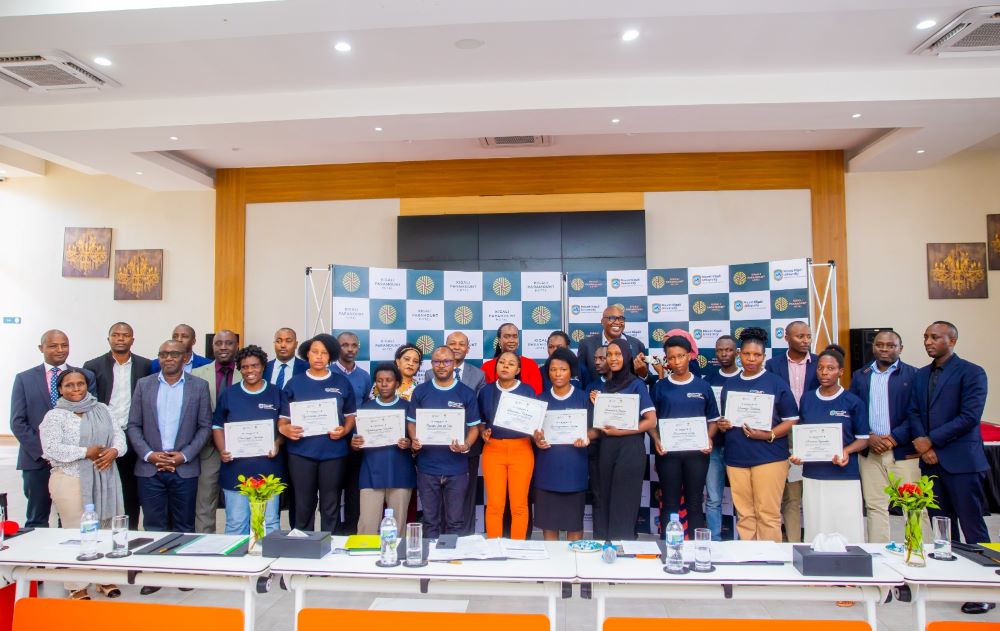
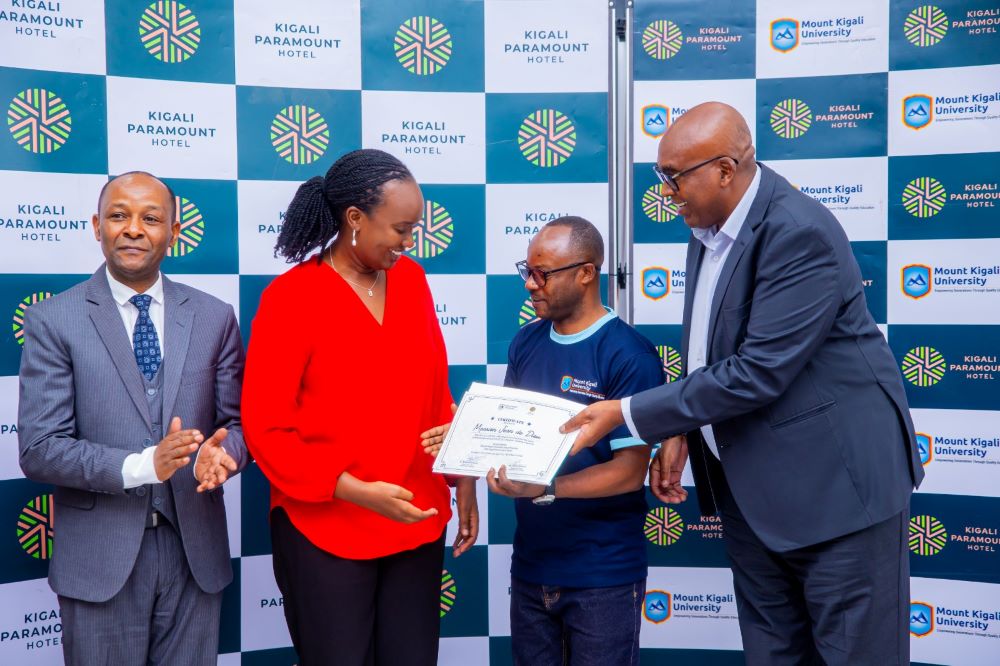
The certification ceremony that took place on On March 25, was presided over by Mount Kigali University founder Prof. Simon Gicharu founder of Mount Kigali University, alongside Imbuto Foundation Director General Elodie Shami.
The training is part of a broader effort to improve the quality of care and education for young children in Rwanda.
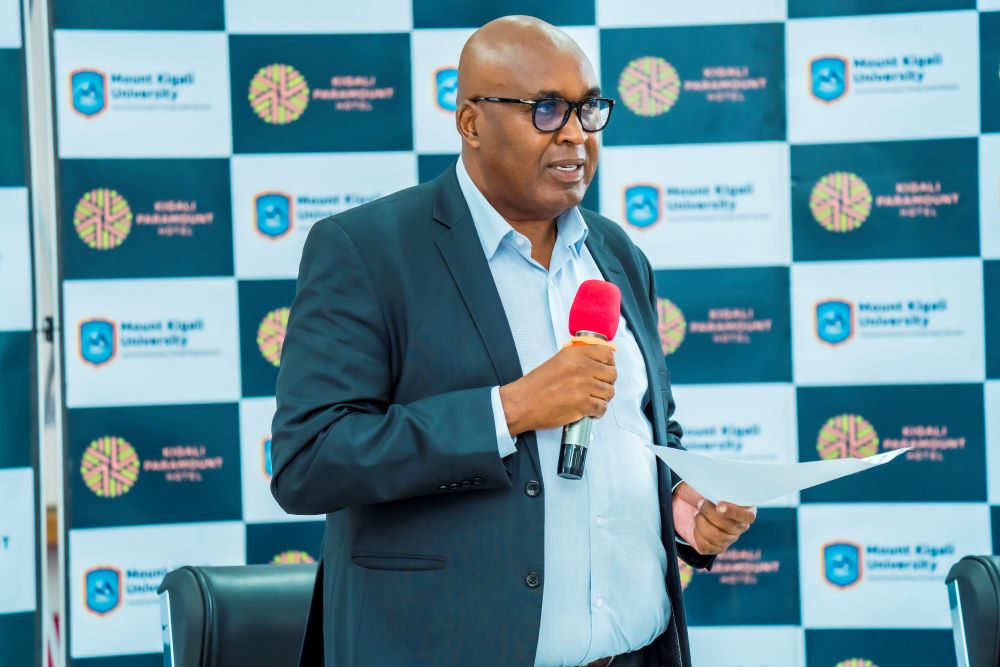
Speaking at the event, Prof. Gicharu emphasized the importance of building strong foundations in early childhood, noting that the future of any nation depends on how well it invests in its youngest generation.
He reaffirmed the university’s dedication to supporting continuous professional development for caregivers and educators, highlighting that solving societal challenges requires empowering people with the right skills and mindset.
“As we reflect on our progress, one key issue stands out,” he said. “The challenge is not the presence of problems, but our ability to effectively solve them. We must focus on building solutions and equipping individuals with the capacity to address real-world challenges.”
He further stressed the importance of mission-driven work, collaboration, and innovation in shaping sustainable development, applauding caregivers for their dedication to community service and their lasting impact on families across the country.
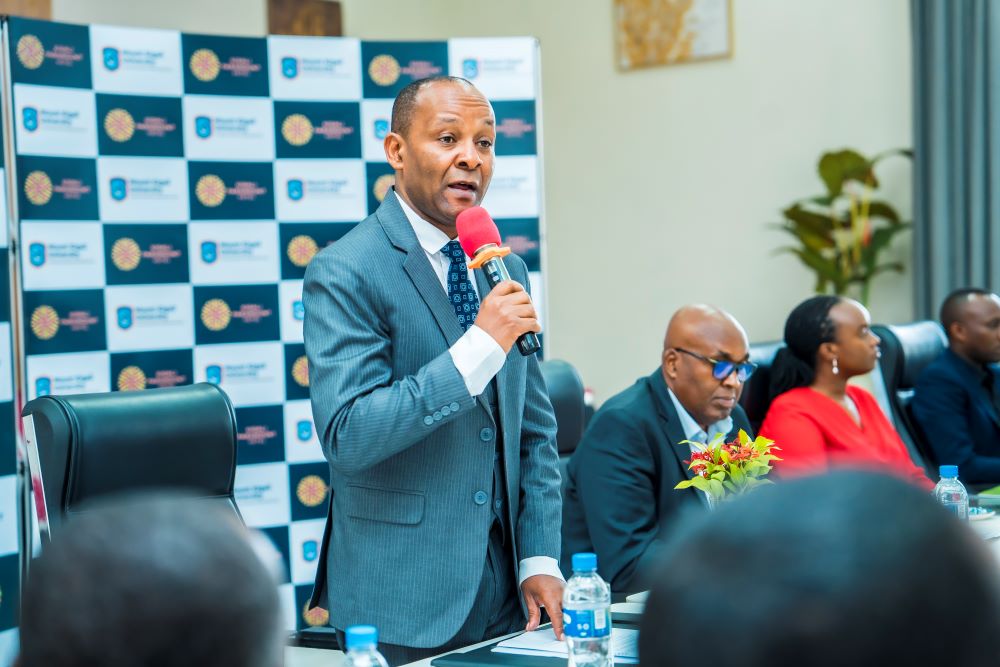
Imbuto Foundation Director General, Elodie Shami expressed deep appreciation for the partnership, describing it as transformative and community-centered. She highlighted the critical importance of the first 1,000 days of a child’s life, noting that this period lays the foundation for future health, learning, and productivity.
“Caregivers are at the frontline of this work,” she said. “Their role cannot be overstated. They are central to ensuring that children receive not only education, but also proper care, nutrition, and support.”
She added that investing in Early Childhood Development aligns closely with Rwanda’s national vision for long-term growth, including Vision 2050, which prioritizes human capital development and the creation of a knowledge-based economy.
Mount Kigali University Vice Chancellor, Dr. Martin Kimemia, also commended the graduates, describing the occasion as both a celebration of achievement and a step forward in building resilient communities.
“Today, we celebrate not only your success but also the future you are helping to shape,” he said. “The early years of a child’s life are critical, and through your training, you are now better prepared to guide and support the next generation.”
During the event, Mount Kigali University also extended further support to more than 100 students in the Edified Generation Scholarship Program, which has already assisted more than 400 secondary school students with education costs. The program’s second phase is currently underway, with 200 students having graduated and 200 more progressing through their studies.
The collaboration between Mount Kigali University and Imbuto Foundation spans nine years, making it a long-standing initiative aimed at improving early childhood education and community development.
Over the years, the partnership has supported the establishment of several Early Childhood Development Centres (ECDCs), including projects in Masaka sector and the ongoing development of a new center in Kinyinya.
Dr. Martin Kimemia, Elodie Shami and Prof. Simon Gicharu award a certificate to one of the caregivers Prof. Simon Gicharu expressed his commitment to work with Imbuto Foundation on several projects Dr. Martin Kimemia encouraged the trainees to remain committed to excellence, innovation, and adaptability in their work, reminding them of the responsibility they carry in influencing young lives that is placed in their hands at a very critical stage.