Under the revised structure, individuals in the first level are required to contribute Rwf4,000 annually, an amount fully covered by the Government. Those in the second level of social registry pay Rwf3,000 per year, supplemented by a Rwf1,000 government contribution. Members in the third, fourth and fifth categories contribute Rwf 5,000, Rwf8,000 and Rwf20,000 respectively per person per year.
The Order also maintains a co-payment system for services received through Mutuelle de Santé. Beneficiaries pay Rwf200 when receiving care at health centers and primary clinics, and 10 percent of treatment costs at hospital level. However, individuals classified as indigent are exempt from these co-payments.
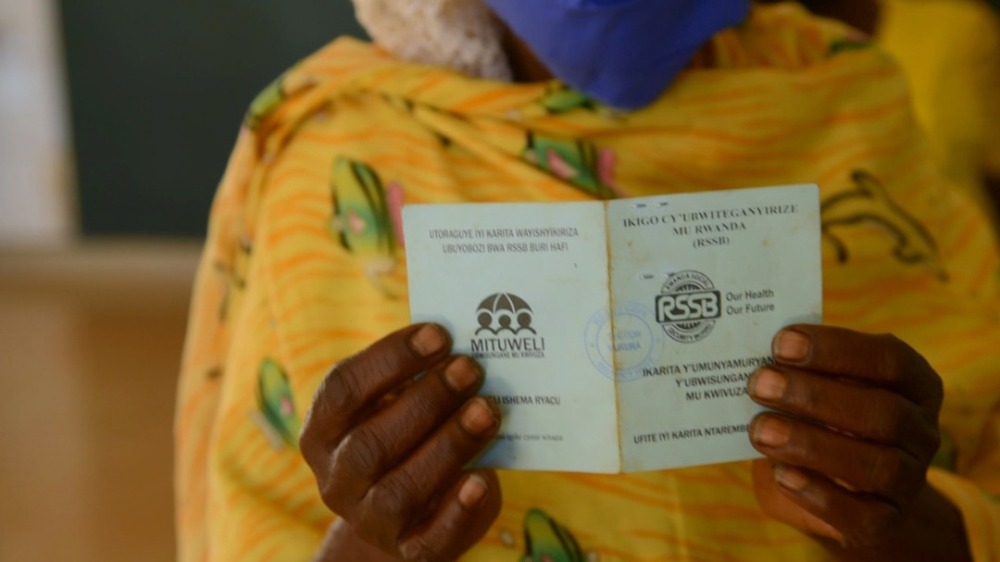
The Prime Minister’s Order issued on February 16, broadens the range of contributors supporting the scheme. Banking institutions and general insurance providers have now joined the list of entities required to support Mutuelle de Santé financially. The order, published on February 23, 2026, had earlier been reviewed and approved by Cabinet on January 17, 2025.
The order confirms that funding for the scheme comes from multiple sources, including the Government, employees in both public and private sectors, health insurers, telecommunications companies, petrol and gas oil trade companies, general insurance providers and banks. Direct government support amounts to Rwf 6 billion annually from the national budget, in addition to targeted subsidies for people in the first and second levels of the social registry.
Further public contributions are drawn from a range of regulatory and service-related revenues. Half of the fees collected for the registration of pharmaceutical products, medical devices and food products are channeled into the scheme through the Rwanda Food and Drugs Authority.
Revenue from vehicle mechanisation inspection and a share of traffic fines collected by the Rwanda National Police also support the system, alongside penalties imposed on traders dealing in substandard goods. Additional funding is generated through parking fees collected by the City of Kigali, a share of tourism revenue, and charges applied to vehicle and motorcycle ownership transfers.
Employee participation remains a central component of the financing model. Workers in both public and private sectors contribute 0.5 percent of their net salary, which employers deduct and remit monthly to the Mutuelle de Santé fund.
Health insurance providers operating in Rwanda contribute five percent of their annual premiums, while telecommunications companies provide three percent of their yearly turnover. General insurance companies contribute five percent of annual pre-tax profits, and banking institutions contribute two percent of their annual profit before tax.
Institutions are required to transfer their contributions within 30 days following the close of their financial year. Where audits reveal underpayment, the concerned entity must settle the outstanding amount and may face an administrative fine equivalent to 200 percent of the unpaid contribution.
Together, the revised contribution levels and expanded funding base are intended to strengthen the sustainability of Rwanda’s community-based health insurance system.
Leave a Reply