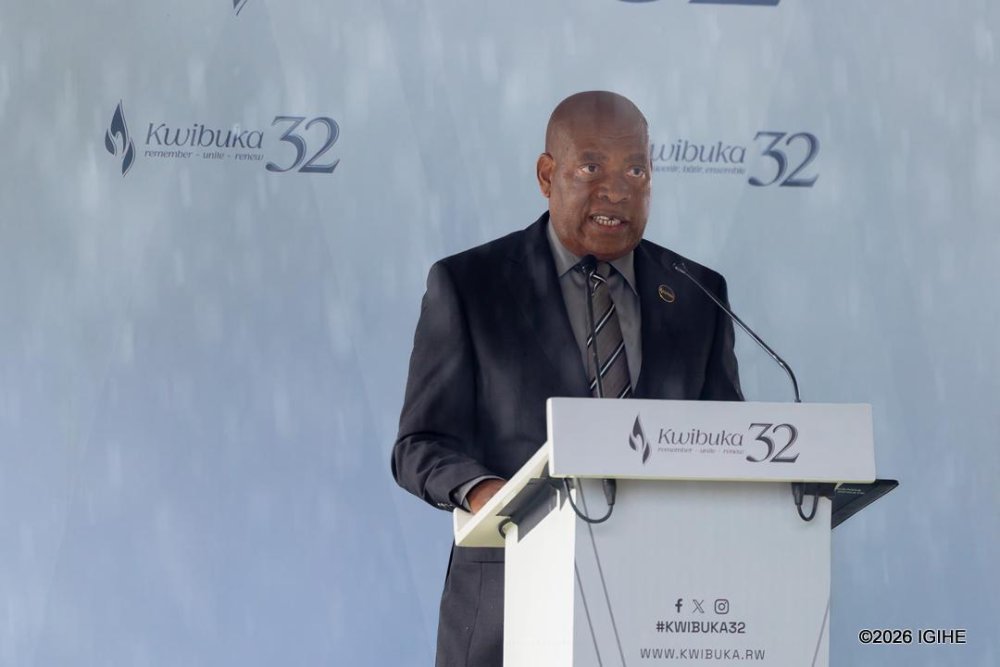
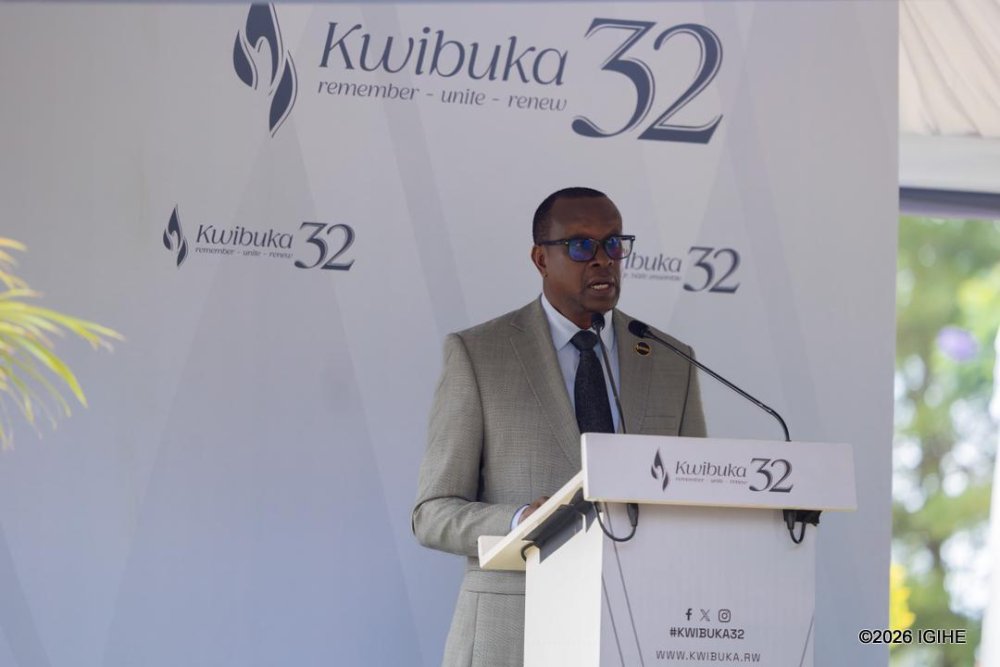
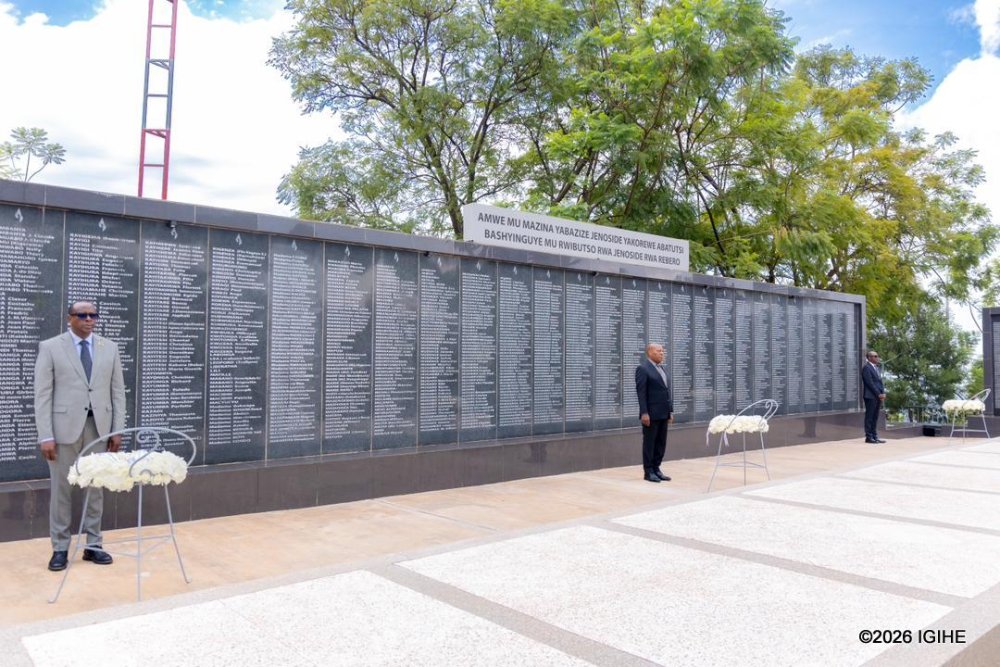
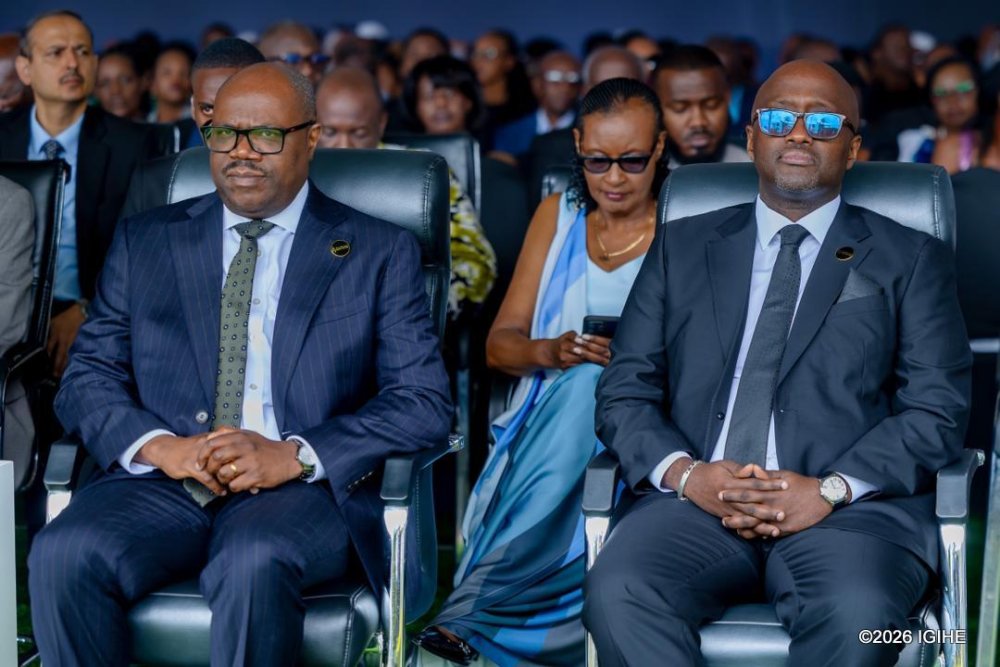
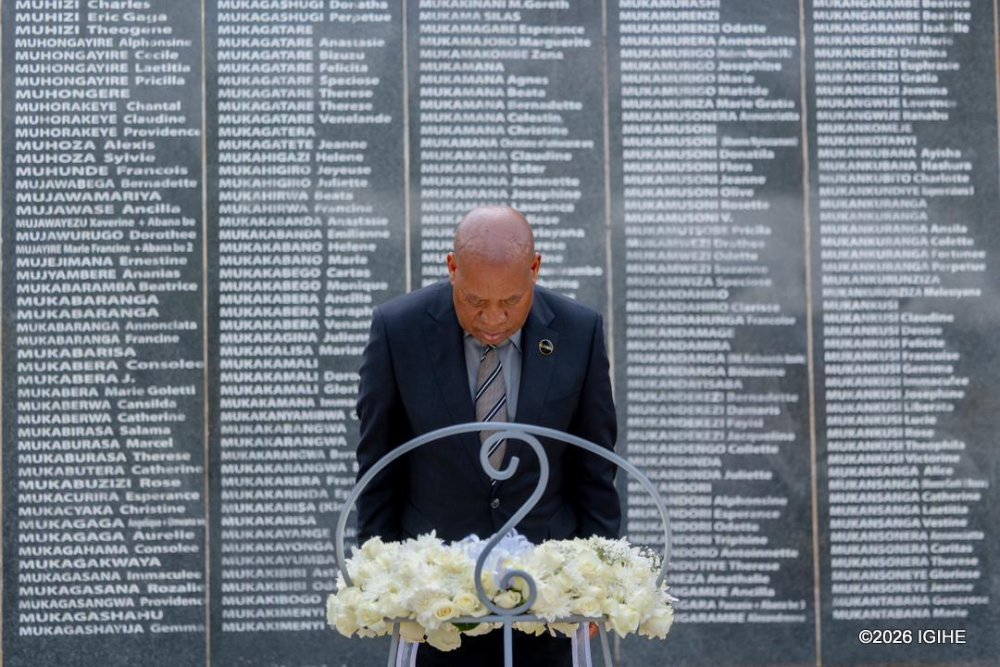
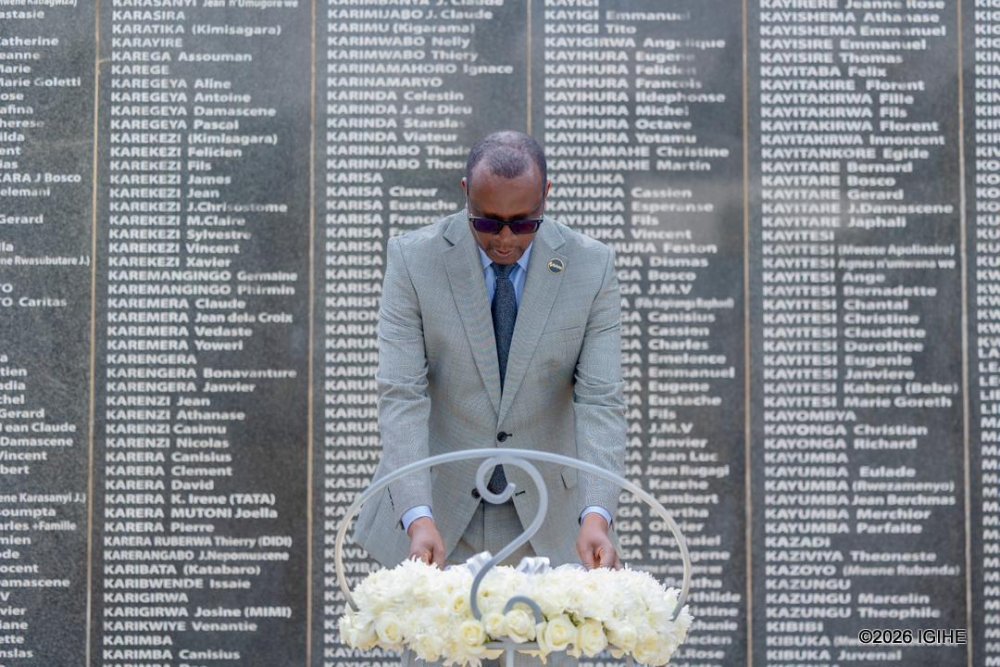
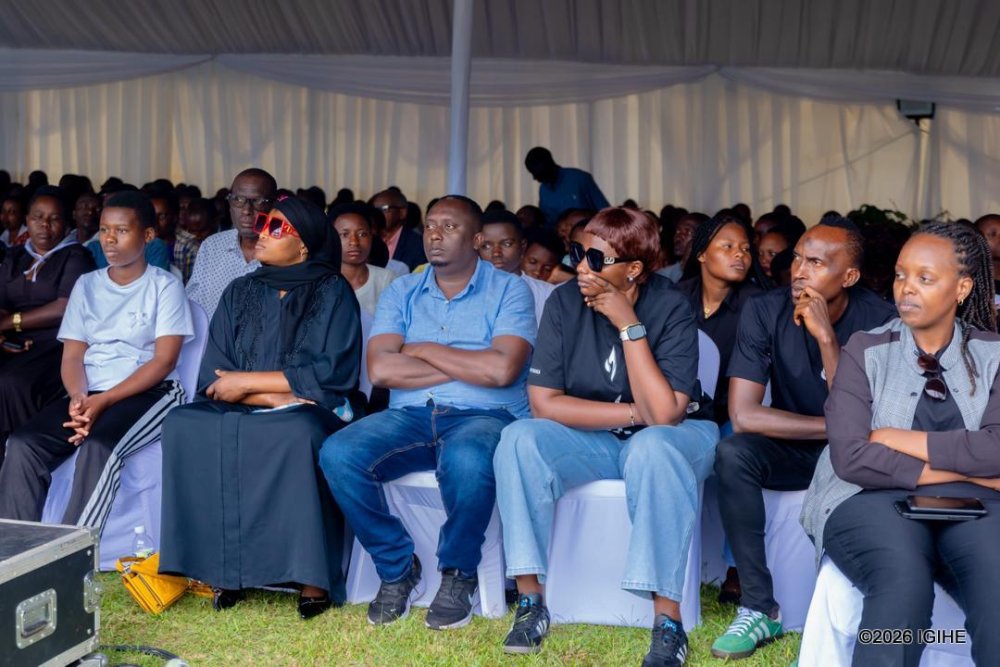
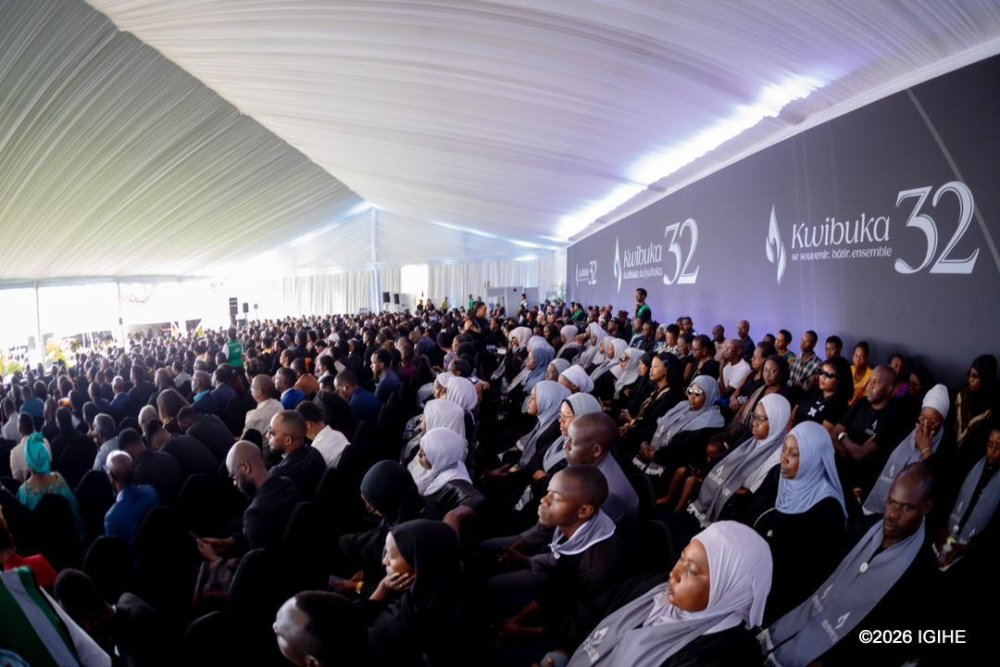
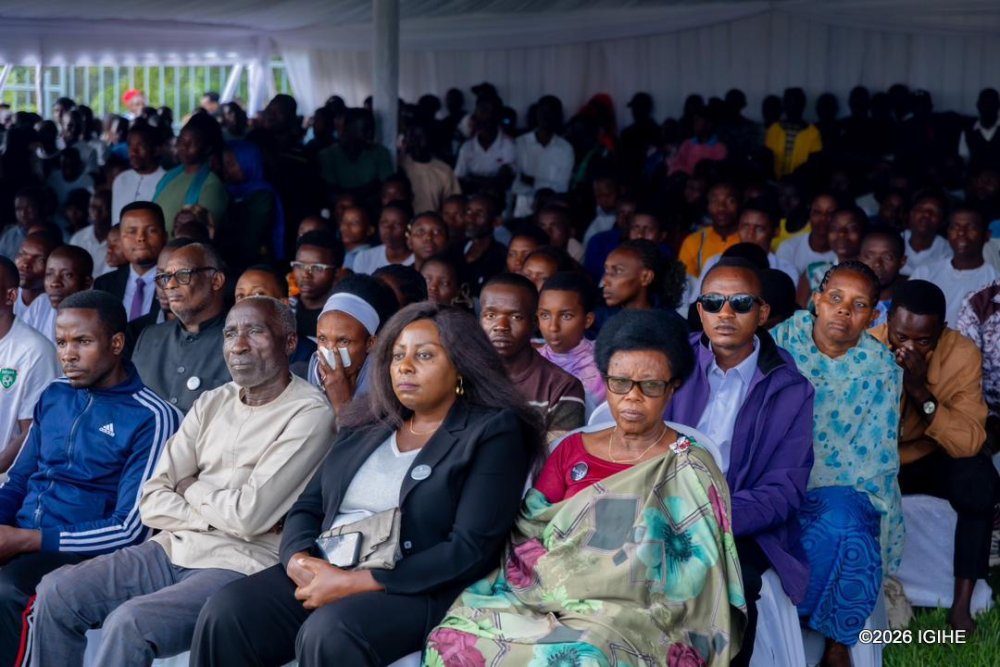
He made the remarks on April 13, 2026, during the closing of the Commemoration Week at national level, as politicians and leaders gathered to honor fellow politicians who were killed during the Genocide against the Tutsi for opposing the extermination campaign.
The commemoration took place at the Rebero Genocide Memorial, a site dedicated to preserving the memory of politicians who stood against injustice and resisted divisionism.
Kalinda explained that discriminatory politics rooted in ethnic division played a central role in leading Rwanda to genocide, stressing the need for vigilance among current political actors.
“The Genocide against the Tutsi was the outcome of a series of poor leadership decisions, starting with colonial rule that fractured Rwandan unity and institutionalized ethnic divisions, followed by the First and Second Republics which entrenched discrimination against Tutsis as state policy,” he said.
He emphasized that remembrance is essential in preserving truth and countering genocide denial.
“Remembering is crucial to uphold the truth about the Genocide against the Tutsi, to show that it was planned, and to fight against denial and minimization while preventing its recurrence in Rwanda and elsewhere,” he added.
Kalinda noted that, in the aftermath of the genocide, Rwandans chose a path of unity, building a nation free from discrimination as enshrined in the Constitution.
“Good governance that prioritizes unity and equal opportunities for all Rwandans is the path we chose. The progress made over the past 32 years is remarkable and gives hope for the future of our country,” he said.
He, however, warned that elements of genocide ideology, denial, and minimization still exist and must be actively confronted. He called on politicians to take the lead in combating such tendencies and in educating the youth about the country’s history.
Kalinda also reminded attendees that although the Commemoration Week has concluded, the 100-day commemoration period of Kwibuka32 continues.
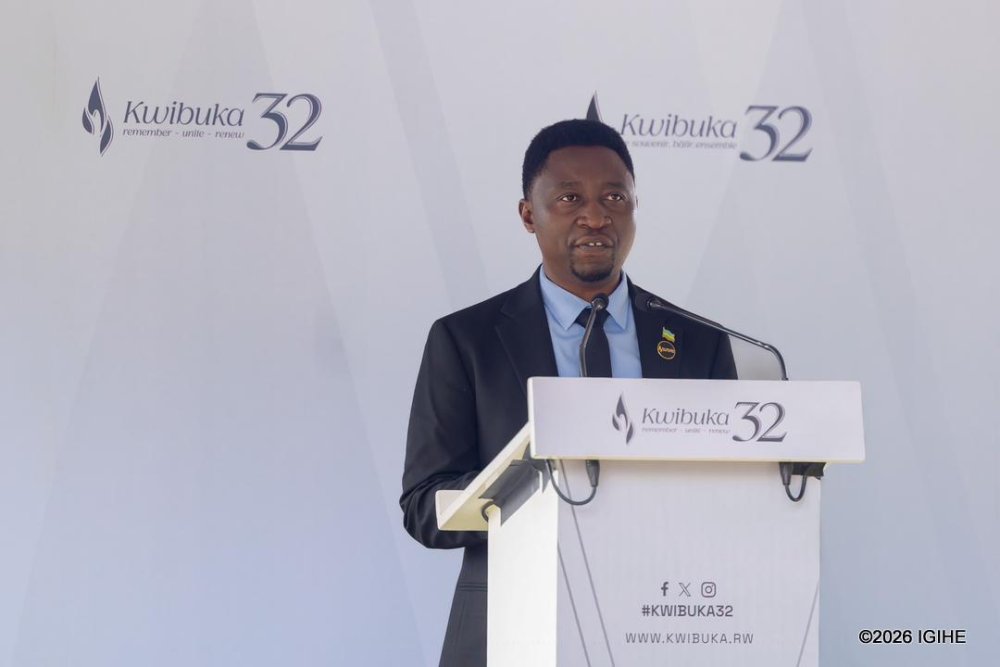
Frank Habineza, spokesperson for the National Consultative Forum of Political Organizations (NFPO), said the politicians being remembered were killed for their courage in rejecting injustice and authoritarian rule.
“The politicians we honor today were killed because of their bravery in resisting oppression and injustice. They stood for a country governed with dignity and equality for all,” he said.
He highlighted that Rwanda’s 11 registered political parties currently work together toward national development, stressing that differing opinions should not be equated with conflict.
“Having different views is not fighting or undermining the achievements made over the past 32 years. Our role is to contribute ideas and solutions while remembering the painful history that led to the Genocide against the Tutsi,” he noted.
Habineza urged political party members to reject any attempts to reintroduce divisive politics.
“We will not accept anyone who seeks to take the country backward under any pretext,” he said.
Minister of National Unity and Civic Engagement, Dr. Jean-Damascène Bizimana, outlined how politics of hatred were institutionalized under former leaders such as Juvénal Habyarimana and Grégoire Kayibanda.
He explained that although Habyarimana initially justified his rise to power by citing injustices, including discrimination in education, his regime went on to reinforce ethnic division and exclusion.
Dr. Bizimana noted that refugees who had been persecuted were denied the right to return and reclaim their property.
“Even those who attempted to secretly visit their families were chased away,” he said.
He also criticized ongoing efforts by some individuals, including Jean-Luc Habyarimana, to sanitize the legacy of the former regime, insisting that evidence of its role in persecuting Tutsis remains overwhelming.
Dr. Bizimana called on political leaders to prioritize educating young people about Rwanda’s history to prevent them from being misled.
“It is essential to properly educate the youth within political parties so they understand this history and engage in politics that unites Rwandans, supports national cohesion, and prevents the country from falling back into division,” he said.
He further urged young people to reject hate speech still propagated by some politicians influenced by past discriminatory ideologies.
“Hate speech persists among some politicians shaped by ethnic-based politics that deny the country’s inclusiveness. This ideology continues to influence them,” he said.
The minister stressed that unity cannot be built without understanding what destroyed it.
“We cannot build unity without first understanding what broke it and those responsible. That is what helps protect it and prevents the country from returning to divisive ideologies like those that characterized the regime which planned the Genocide against the Tutsi,” he said.
He concluded by urging today’s politicians to learn from Rwanda’s history and from past leaders who upheld integrity, emphasizing the need to safeguard national unity through truth and shared values.
Leave a Reply