Blog

  • Museveni praises Trump for mass deportations

    Museveni praises Trump for mass deportations

    Speaking at a rally in Arua City on Friday, Museveni lauded Trump for “kicking out immigrants” and urged Ugandans to focus on national development rather than seeking opportunities abroad.

    “Africanism. Love Africa. Why? Because you need it,” Museveni said. “I like Mr. Trump so much myself. He has said, ‘Don’t come here now to America.’ I say thank you so much for chasing those wanderers. What are they going to do in America?”

    “I love Trump for chasing you, people who don’t care about their country, they go all over the place,” he added.

    Museveni used the example of Trump’s deportation measures to emphasise African self-reliance.

    “This teaches you that you build your own capacity, within Uganda, within Africa. Love Uganda, love Africa,” he said, highlighting that national markets and domestic production are critical for wealth creation.

    Trump’s mass deportation program, which began upon his inauguration on January 20, 2025, has been described by the administration as the largest in U.S. history. The program combines formal deportations with “self-deportations,” facilitated in part through the repurposed CBP One app, renamed “CBP Home”, which offers voluntary migrants cash incentives to leave.

    By December 2025, the Department of Homeland Security reported over 2.5 million people had left the U.S., including more than 600,000 formal deportations and nearly 1.9 million self-deportations.

    In addition to enforcement actions, Uganda was recently added to an expanded U.S. visa bond program requiring some travelers to post refundable deposits of up to $15,000 for certain visa applications. The initiative is part of the U.S. government’s efforts to reduce visa overstays and enforce stricter immigration controls.

    President Yoweri Museveni has praised his U.S. counterpart, Donald Trump, for his strict immigration enforcement, calling it a lesson for Africans to build their own countries.
  • Over 50 Congolese refugees die in Burundi, UN says

    Over 50 Congolese refugees die in Burundi, UN says

    The refugee agency reported on Friday that 25 of the deaths were caused by a cholera outbreak, while six others resulted from anaemia and malnutrition-related complications. Authorities are still investigating the causes of the remaining deaths, with the UN working alongside local officials and humanitarian partners to gather more information.

    More than 100,000 people have sought refuge in Burundi since December, when fighting between the Congolese army and M23 rebels intensified in the border town of Uvira. Many of the displaced are living in makeshift shelters with limited access to food, clean water, and basic services.

    Children and women, including pregnant women, are particularly vulnerable, with roughly half of those displaced under the age of 18. Overcrowding in refugee sites has also increased the risk of outbreaks of cholera, measles, and malaria, UN officials warned.

    Jean Jacques Purusi, governor of South Kivu province where Uvira is located, described the situation as “misery” and “a crisis completely forgotten by the international community and media.”

    The Burundian government confirmed that the number of Congolese refugees exceeded the capacity of nearby camps. Feeding them was a challenge, and many were affected by cholera outbreaks caused by poor sanitation.

    Although UNHCR confirmed 53 deaths, other sources were even more alarming. The CPCC, a community-based NGO, reported that 105 Congolese refugees had died in camps in Burundi over the past two weeks, mostly due to lack of food and medical care.

    On January 5, 2026, the organisation’s director, Ahadi Bya Masu, told Radio Okapi that some refugees had also been attacked by criminals while in the camps in Burundi, resulting in additional deaths.

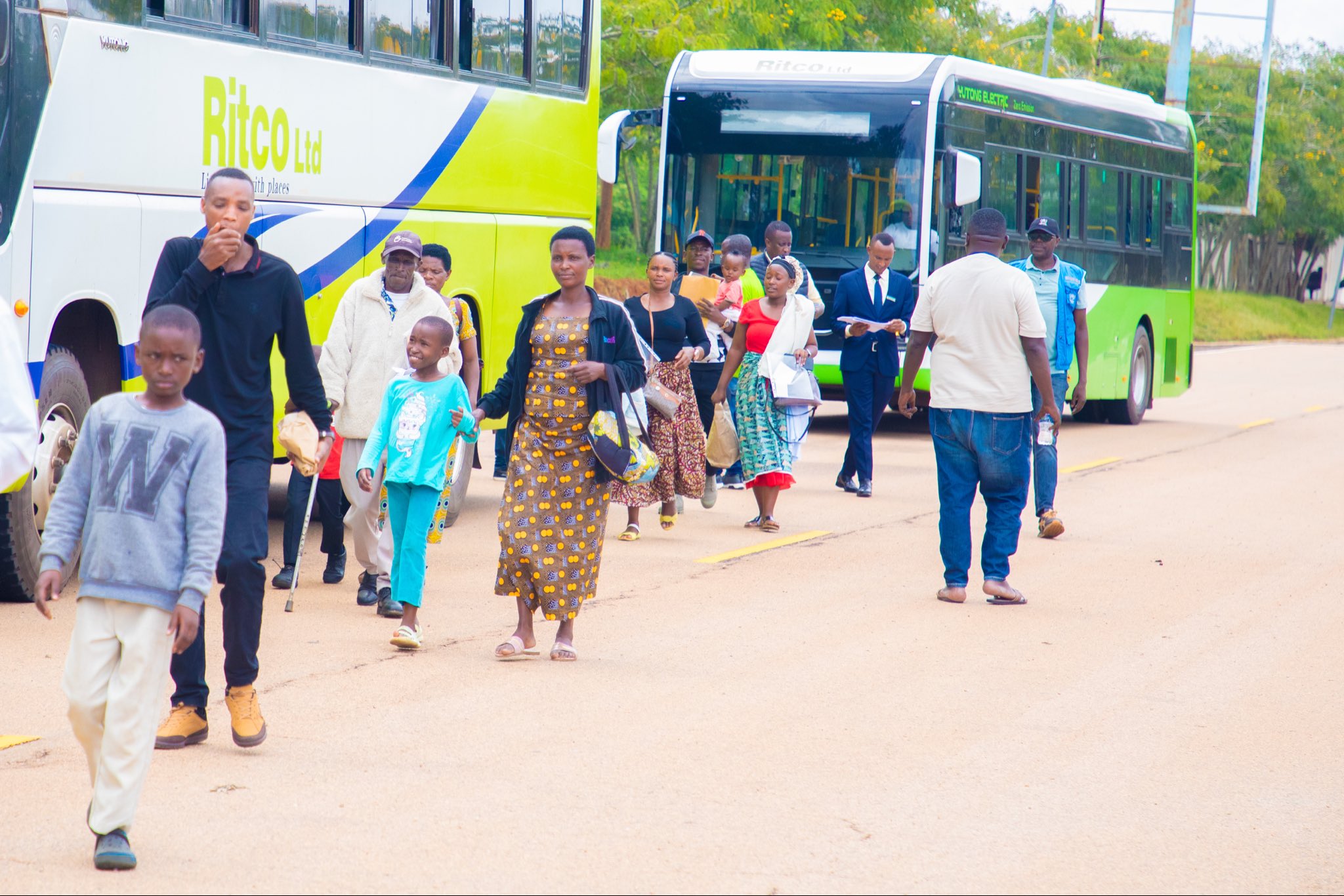
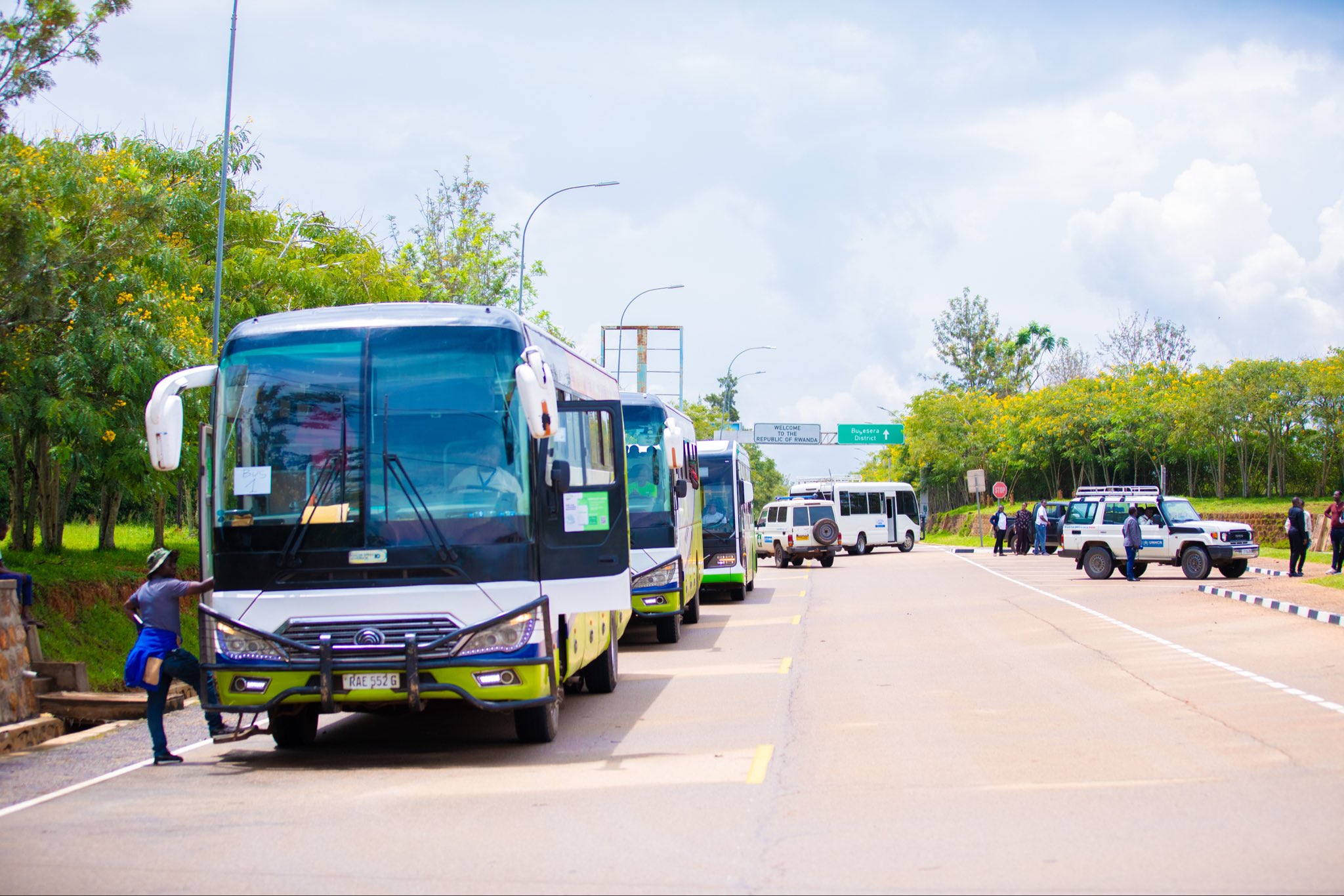
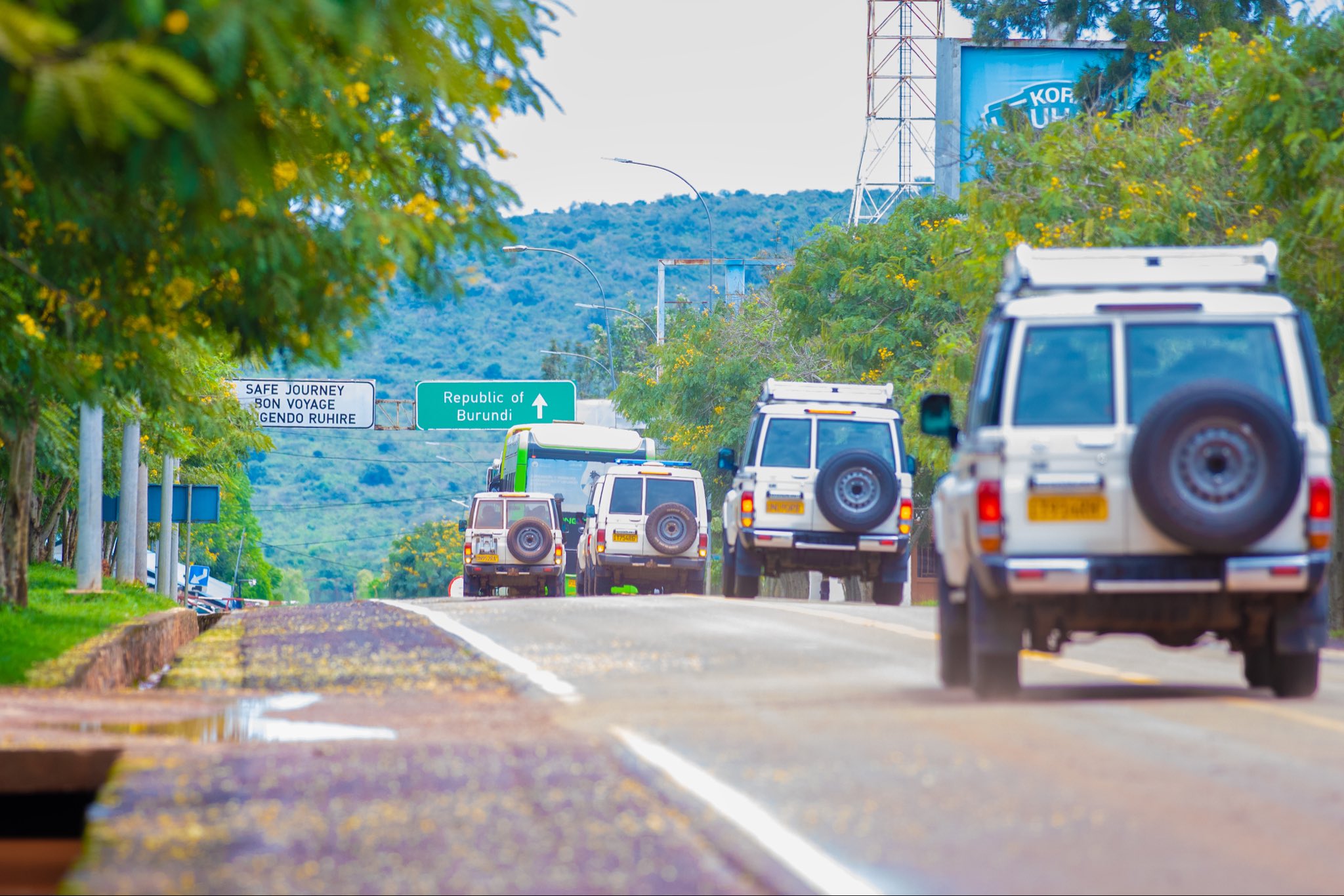
    At least 53 Congolese refugees who fled escalating fighting in eastern Democratic Republic of Congo (DRC) have died in neighbouring Burundi, according to the United Nations High Commissioner for Refugees (UNHCR).
  • U.S. launches large-scale strikes against IS targets in Syria

    U.S. launches large-scale strikes against IS targets in Syria

    “Today, at approximately 12:30 p.m. Eastern Time, U.S. Central Command forces, alongside partner forces, conducted large-scale strikes against multiple ISIS targets across Syria,” the command posted on X.

    The command said these strikes were part of Operation Hawkeye Strike, which was launched and announced on December 19 in response to a deadly IS attack on U.S. and Syrian forces in Palmyra, Syria, on December 13. In the attack, a lone IS terrorist carried out an ambush, killing two U.S. soldiers and one U.S. civilian interpreter.

    The strikes are “part of our ongoing commitment to root out Islamic terrorism against our warfighters, prevent future attacks, and protect American and partner forces in the region,” U.S. Central Command said, adding that U.S. and coalition forces “remain resolute in pursuing terrorists who seek to harm the United States.”

    The U.S. Central Command said these strikes were part of Operation Hawkeye Strike, which was launched and announced on December 19 in response to a deadly IS attack on U.S. and Syrian forces in Palmyra, Syria, on December 13.
  • Emotional fans, surprise customised cake & cow milking: IShowSpeed’s unforgettable Rwanda stream

    Emotional fans, surprise customised cake & cow milking: IShowSpeed’s unforgettable Rwanda stream

    The tour began in Volcanoes National Park, where IShowSpeed, whose real name is Darren Jason Watkins Jr., came face to face with Rwanda’s famed mountain gorillas. The 20-year-old content creator documented the experience on social media, visibly excited. He later described Rwanda as one of the most beautiful countries he had ever visited.

    “All my life, I kid you not, this has to be one of the most beautiful countries I have ever been to,” he said.

    The tour began in Volcanoes National Park, where IShowSpeed came face to face with Rwanda’s famed mountain gorillas.

    Back in Kigali, the atmosphere shifted dramatically at Amahoro Stadium, where IShowSpeed made a surprise motorcycle entrance during a women’s football match between Rayon Sports WFC and Indahangarwa WFC. Thousands of fans erupted into chants of his name, creating scenes more commonly associated with national leaders than internet personalities.

    Inside the stadium, he took part in traditional Rwandan dance and drumming performances, entertained the crowd with Cristiano Ronaldo’s signature “Siuuu” celebration, and posed for countless selfies. “Amahoro Stadium is the best stadium in Africa,” he told his livestream audience. The appearance drew national attention and was widely covered by local media.

    At Amahoro Stadium, IShowSpeed participated in traditional Rwandan dance and drumming performances.

    The tour continued at BK Arena, where IShowSpeed participated in a basketball challenge with local players, demonstrating his competitive energy beyond the digital realm.

    Later, he made a stop at the magnificent Zaria Court, where a large crowd had gathered for a fan meet-up. Here, the lighter and more humorous moments of the tour took centre stage. A fan presented IShowSpeed with a customised cake featuring his face, which he famously bit into mouth-first.

    Another supporter arrived with Speed’s name shaved into his hair and merchandise bearing his face, though the name was humorously misspelt. He was also presented with a custom painting from a local artist. During the visit, he wowed fans with backflip stunts, leaving a lasting impression on those who had waited hours to meet him.

    Beyond the city’s central attractions, much of the livestream’s impact came from spontaneous encounters across Kigali and its outskirts. At a ranch just outside the city, IShowSpeed milked a cow for the first time and even drank the fresh milk.

    Later, while driving through Kigali, fans repeatedly stopped his convoy, including one emotional encounter in which a supporter broke down in tears upon meeting him. Speed comforted the fan, a moment many viewers called the most wholesome of the entire stream.

    IShowSpeed warmly embraces a die-hard fan during his tour in Kigali.

    After the broadcast, IShowSpeed shared that security had alerted him to a 16-year-old boy who had been riding a bicycle behind the convoy for more than three and a half hours, despite the bike repeatedly breaking down, just to meet him. Realising how far the teen had gone left Speed genuinely shocked, and he gave him a special, heartfelt greeting in return.

    Other memorable moments included a local challenge in which Speed was asked to pull two motorbikes while their riders tried to drive away. Against expectations, he succeeded, earning cheers from the crowd.

    Throughout the day, he also spoke candidly about the demands of his tour. Running on just four hours of sleep, he admitted it was tough but said his mental state was improving. He publicly thanked his team for their tireless work behind the scenes, even as some viewers complained the Africa tour felt rushed. Despite that, the numbers were undeniable: in Rwanda alone, the livestream drew over 4.1 million viewers in just a few hours.

    The Rwanda visit concluded in Biryogo, Nyamirambo, where IShowSpeed fully immersed himself in local cuisine. He sampled pilau, ugali made from cassava, traditional sombe, and grilled brochettes, praising the food and visibly enjoying the experience.

    From gorilla trekking and stadium ovations to cow milking on the city’s outskirts and emotional encounters with fans, IShowSpeed told his followers that he hopes to return for a longer stay, saying he would like to come back ‘for a week, just for a vacation.

    IShowSpeed’s visit to Rwanda is part of his broader project, “Speed Does Africa Tour,” which he launched on December 21, 2025. The tour sees him livestreaming and sharing experiences from different African countries, showcasing culture, people, and tourism to his global audience.

    IshowSpeed was warmly received in Rwanda.
    He broadcast his stunts and engagement with fans to over 47 million followers.
    IshowSpeed took part in a Rwandan traditional dance.
    He also entertained the crowd with Cristiano Ronaldo’s signature “Siuuu” celebration.
    IShowSpeed was challenged to pull two motorbikes while their riders tried to drive away, and succeeded, earning cheers from the crowd.
    Fans were excited to meet the internet sensation.
  • Rwandans visiting national parks increased by more than 6,000 in 2024

    Rwandans visiting national parks increased by more than 6,000 in 2024

    This data comes from the latest Rwanda Statistical Yearbook.

    In 2024, Rwandans accounted for 30% of all visitors to the three main national parks: Akagera, Volcanoes, and Nyungwe.

    By comparison, visits by foreign residents in Rwanda grew more gradually, from 3,142 in 2008 to 8,491 in 2024, representing 6% of total visitors.

    International visitors from abroad continued to dominate, making up 64% of the total (96,271 visitors) in 2024, from 70% (30,151 visitors) in 2008.

    Overall, visits to Rwanda’s national parks have grown dramatically over the past two decades. Total visitors have increased more than sixfold since the mid-2000s, driven by conservation successes, improved infrastructure, and targeted promotion of domestic tourism.

    Akagera National Park has seen particularly strong growth, with visitor numbers rising from 11,239 in 2005, when it attracted 47% of all park visitors to 67,661 in 2024.

    In 2005, Akagera was the most visited park, followed closely by Volcanoes National Park (44%) and Nyungwe National Park (10%).

    Akagera National Park recorded over 56,000 visitors in 2024.
  • IShowSpeed praises Rwanda’s stunning beauty, thrills fans at Amahoro Stadium during Africa Tour

    IShowSpeed praises Rwanda’s stunning beauty, thrills fans at Amahoro Stadium during Africa Tour

    As part of his ongoing visit, the 20-year-old YouTube and Twitch star took part in a motorcycle ride through Kigali, during which he openly expressed his admiration for Rwanda.

    Speaking during a live session with his followers, IShowSpeed described the country as one of the most beautiful places he has ever visited.

    “All my life, I kid you not, this has to be one of the most beautiful countries I have ever been to,” he said, pointing to the scenery around him. He added that traveling a few hours outside the city and into the countryside left a lasting impression. “I went into the jungle, and it was just beautiful. The nature here is insane. Rwanda is so beautiful.”

    He went on to tell his fans that he hopes to return for a longer stay, saying he would like to come back “for a week, just for a vacation.”

    Earlier in the day, IShowSpeed visited Volcanoes National Park, where he came face to face with Rwanda’s iconic mountain gorillas. He shared photos and videos of the experience on Snapchat, visibly excited as he observed the primates in their natural habitat.

    The highlight of his evening came at Amahoro Stadium, where he made a dramatic entrance on a motorcycle during a women’s football match between Rayon Sports WFC and Indahangarwa WFC. Thousands of fans erupted in cheers as he dismounted at the center of the stadium, describing Amahoro as “the best stadium in Africa.”

    Handed a microphone, IShowSpeed entertained the crowd by recreating Cristiano Ronaldo’s famous “Siuuu” celebration, dancing to traditional Rwandan music, beating traditional drums, and posing for photos with fans. Many supporters rushed to take selfies with him, while others presented him with gifts, including bracelets and souvenirs.

    Throughout his appearances, the content creator was livestreaming to a massive global audience, with more than 47 million viewers following his activities in real time across his platforms.

    IShowSpeed’s visit to Rwanda is part of his broader project, “Speed Does Africa Tour,” which he launched on December 21, 2025. The tour sees him livestreaming and sharing experiences from different African countries, showcasing culture, people, and tourism to his global audience.

    American internet sensation Darren Jason Watkins Jr., popularly known as IShowSpeed has thrilled fans during public appearances in Kigali.
    Earlier in the day, IShowSpeed visited Volcanoes National Park, where he came face to face with Rwanda’s iconic mountain gorillas.
    IShowSpeed was also introduced to Rwandan traditional dance in Kigali.
  • Trump wants U.S. to own Greenland to deter Russia and China

    Trump wants U.S. to own Greenland to deter Russia and China

    Speaking to reporters at the White House, Trump argued that merely having a military presence on the island under an existing agreement is not enough to guarantee its defense, and that full ownership would strengthen U.S. strategic security in the region.

    Trump noted that the United States already maintains troops in Greenland under a 1951 defense agreement with Denmark, but he said that the U.S. must move beyond defensive arrangements and assume ownership.

    “You defend ownership. You don’t defend leases,” he told journalists, suggesting that without such a move Russia or China could gain influence in Greenland—an outcome he considered unacceptable for U.S. national security.

    Greenland is an autonomous territory of Denmark with a population of about 57,000 people, and it is not part of the United States. Trump suggested several options to make this happen, including potential financial incentives for Greenlanders to consider breaking away from Danish control and joining the United States, although he did not provide specific financial figures.

    The proposal has drawn strong negative reactions from European leaders. Officials from France, Germany, Denmark and other NATO allies issued a joint statement reaffirming that decisions about Greenland’s future belong exclusively to Greenland and Denmark, and warning against foreign interference in the island’s status.

    Leaders in Greenland itself have firmly rejected Trump’s push for U.S. control. A joint statement by political party leaders emphasized that Greenland’s future should be decided by its own people, highlighting concerns about sovereignty and international law. They insisted the island is not for sale and reaffirmed calls for self‑determination without outside pressure.

    Denmark’s prime minister also condemned the idea, warning that any move to take control of Greenland by force would jeopardize the stability of NATO, the transatlantic military alliance that includes both Denmark and the United States as members. Critics have said that a forced takeover would undermine trust between longstanding allies and could weaken broader cooperation on global security issues.

    In response to the escalating controversy, Greenland’s parliament said it will bring forward a meeting specifically to address the situation and discuss how to protect the territory’s rights and future amid external pressure from Washington.

    Trump’s renewed push to acquire Greenland revives a controversial idea he first floated during his first presidential term, but it comes at a time of heightened global competition in the Arctic, where Russia and China have been increasing their presence.

    U.S. president Donald Trump said on January  9, 2026, that the United States must own Greenland to prevent Russia or China from taking control of the Arctic territory in the future.
  • How Iraqi filmmaker Ibrahim Mushtaq found peace and thriving career in Rwanda (Video)

    How Iraqi filmmaker Ibrahim Mushtaq found peace and thriving career in Rwanda (Video)

    For someone who grew up surrounded by war, noise, and urgency, this calm still feels significant.

    “I came from big cities where life is stressful,” he says. “But here, everything is relaxed and calm.”

    Ibrahim is a filmmaker, cinematographer, editor and often all three at once. His work revolves around motion, but his life in Rwanda has taught him the value of stillness. It’s a lesson he didn’t expect to learn in a country the world once defined almost entirely by tragedy.

    He first felt it the moment he landed at the Kigali International Airport.

    “I landed in Rwanda, and the first moment I stepped into the airport, I felt something,” he says. “It was like it could become home.”

    In his early days, he spent most of his time at Mocha Café in Kigali. Coffee turned into conversations with strangers. Strangers became friends. Friends became family. It happened naturally, without effort. Coming from cities where survival required constant alertness, the openness disarmed him.

    “I met a lot of people,” he says. “They became friends. They became family.”

    Ibrahim’s relationship with conflict is not theoretical. He was born in Baghdad in 1998. War was already part of the city’s language by the time he could understand it. When the American invasion began in 2003, chaos followed quickly. His father, a journalist with Al Jazeera, knew how dangerous everything could be. In 2004, the family left Iraq.

    Baghdad became a memory suspended in time. He hasn’t returned since.

    “I left Iraq in 2004,” he says. “Sadly, ever since then, I haven’t seen my hometown.”

    Rwanda, too, carries the weight of memory. In 1994, a million lives were lost in the Genocide against the Tutsi. The country the world expected to collapse chose a different path, one that Mushtaq openly admires.

    Thirty years after the genocide, Rwanda hosts international sporting events, builds infrastructure at a staggering pace, and quietly rewrites the assumptions placed upon it.

    “What happened 30 years ago and what you see today, no country on this planet can achieve that in 30 years,” Ibrahim says.

    It’s that contrast that keeps him here.

    He arrived in Africa in 2023 as a filmmaker on assignment, unaware that the continent might leave a mark on him personally. Having grown up in Qatar after leaving Baghdad, and later moving to Turkey to study cinema and begin his career, Africa was not on his map. His first stop was Uganda, where he went with his father and brother to film a project.

    The timing, however, was far from ideal. Work was delayed by the Gaza war, and the unfamiliar surroundings quickly took a toll. Malaria struck, leaving him bedridden for fifteen days. Isolated and exhausted, the new environment felt overwhelming.

    “At that moment, I decided to go back to Turkey and never return to Africa,” he says.

    But his father remained behind, moving on to Rwanda, and it was through him that Ibrahim was introduced to the country. Weeks later, a single photo of a roundabout framed by the Kigali skyline and the Convention Center arrived with a simple note: “Just give it a chance.”

    He did, and what followed was movement.

    After settling in, Ibrahim rented a car and began driving. Not just Kigali, but beyond it. North. South. East. West. Villages. Districts. Forests. Hills. He discovered an impressive Rwanda: rainforests in Nyungwe alive with monkeys, mist rolling through Volcanoes National Park, roads that curve endlessly through green.

    “Kigali is just one part of Rwanda,” he says. “You need to go and discover the nature, the diversity.”

    By the time he finished, he had seen nearly 90 percent of the country.

    His camera became both witness and argument.

    When friends back home joked about Africa, do they have phones, cars, internet? Ibrahim didn’t respond with words. He posted stories. Reels. Quiet moments of daily life. Clean streets. Safety. Beauty.

    “They don’t know,” he says. “That’s the stereotype.”

    People started asking questions. Then they started visiting.

    Professionally, Rwanda unlocked something new.

    Starting a business was easy. So he did. Premium Cut Production became his base, a production house where projects move from idea to final cut under one roof. He shot for clients, cafés, events. Slowly, the work grew.

    The UCI Road World Championships in September 2025 marked a turning point. As one of the event’s photographers, Ibrahim moved behind the scenes, watching cyclists collapse from exhaustion after Rwanda’s relentless hills, documenting fleeting moments.

    “One was sitting on the ground, tired,” he says. “His whole team was around him. He was exhausted because Rwanda is very challenging.”

    Away from work, Rwanda reshaped his body as much as his mind.

    “I used to smoke for almost 15 years,” he says. “Then the environment and the community here made me see myself as different, so I quit.”

    He started running. Training. Lifting weights at Soho, where fitness turned into community. The running club meets twice a week. Thirty to sixty runners. Consistent. Quietly disciplined.

    “This environment gave me a feeling of calmness, of a healthy environment,” he says.

    Ibrahim thinks often about what comes next, not for himself, but for others.

    He dreams of giving back to Rwanda through a free filmmaking school or weekly workshops for Rwandan youth. “We learned from others; it’s our duty to pass it on,” he says. His goal is to provide aspiring filmmakers with the tools to build their skills and income. “No fees, just tools,” he adds.

    He encourages young videographers and photographers to seek information online, to copy styles at first, learn from mistakes, and eventually develop their own unique voices.

    “YouTube has billions of tutorials,” he points out.

    One day, he hopes to return to Baghdad. To walk the streets he left as a child. To see what time has done to the place that shaped him. Until then, Kigali holds his present.

    Watch the full video below.

    Ibrahim is a filmmaker, cinematographer, editor and often all three at once.
     Ibrahim Mushtaq told IGIHE that his work revolves around motion, but his life in Rwanda has taught him the value of stillness.
    He arrived in Africa in 2023 as a filmmaker on assignment, unaware that the continent might leave a mark on him personally.
     Mushtaq is the founder of Premium Cut Production.
    He produces video content for a wide range of clients, spanning commercial, documentary, and creative projects.
    He works out to stay in shape and maintain his health.
  • Rwanda’s consumer prices increase by 8% in December 2025

    Rwanda’s consumer prices increase by 8% in December 2025

    Among the major categories, the food and non-alcoholic beverages group , which carries significant weight in the CPI basket, increased by 3.6% on an annual basis but declined by 0.6% month-on-month.

    Alcoholic beverages, tobacco, and narcotics rose by 16.7% year-on-year and fell by 0.5% compared to the previous month.

    Housing, water, electricity, gas, and other fuels climbed by 8.4% annually and edged up by 0.3% monthly. The Health category recorded the most dramatic annual surge at 70.8%, while remaining stable month-on-month.

    Transport prices increased by 9.4% year-on-year and by 0.6% month-on-month. Restaurants and hotels saw a substantial 17.4% annual rise, with a modest 0.1% monthly increase.

    The data also highlight differences between product origins and types. Prices of local products rose by 7.3% on an annual basis but decreased by 0.2% month-on-month, while imported products increased by 10.1% annually and by 0.4% monthly.

    Fresh products saw a 3.6% annual increase but dropped by 1.2% compared to November. Energy prices rose by 14% year-on-year and by 0.8% month-on-month while the general index excluding fresh products and energy increased by 8.9% annually and by 0.3% month-on-month.

  • $3.27 billion in investments fueled over 50,000 new jobs in Rwanda in 2024

    $3.27 billion in investments fueled over 50,000 new jobs in Rwanda in 2024

    These figures appear in the Rwanda Statistical Yearbook 2025, which NISR released in late December 2025. The investment statistics were compiled from data sourced from the Rwanda Development Board (RDB).

    According to the report, both investment inflows and associated job creation showed a generally upward trend between 2017 and 2024, even though the period included several fluctuations. After starting at $1.67 billion in 2017, investment dropped to $1.14 billion in 2018 before recovering to $2.46 billion in 2019.

    The COVID-19 pandemic caused a sharp decline to $1.3 billion in 2020. The highest level during the eight-year span came in 2021, when investment peaked at $3.75 billion. It then fell to $1.63 billion in 2022, rose again to $2.47 billion in 2023, and climbed to $3.27 billion in 2024.

    Investment has consistently played a major role in employment generation. In 2017, it supported the creation of 37,548 jobs. The figure decreased to 24,946 jobs in 2018, rebounded to 35,715 in 2019, and then dropped to 24,675 in 2020 due to the pandemic’s effects.

    A strong recovery followed in 2021 with 48,369 jobs created. The highest annual total occurred in 2022, when 57,627 new positions were generated. Job creation eased to 40,198 in 2023 before rising once more to 51,635 in 2024.

    The data clearly shows that investment remains one of the most important drivers of job creation in Rwanda, even when annual investment amounts vary.

    Looking ahead, the Government of Rwanda’s Second National Strategy for Transformation (NST2), which covers the years 2024 to 2029, sets an ambitious target of creating at least 250,000 new jobs every year.

    Over the full five-year period, the plan aims to generate a total of 1.25 million new jobs across the country.

    The National Institute of Statistics of Rwanda (NISR) has reported that total investment commitments in Rwanda reached $3.27 billion in 2024, almost double the $1.67 billion recorded in 2017.