Blog

  • Frw 25.4 billion recovered in student loan repayments over four years

    These loans were issued under the government bursary scheme to students pursuing higher education at the University of Rwanda.

    The figure was disclosed in BRD’s 2024 annual report, which noted that 2024 recorded the highest annual recovery, with Frw 7.2 billion collected from loan beneficiaries that year alone.

    Since 2016, when BRD was officially mandated to manage and recover student loans, the institution has recovered a total of Frw 34.7 billion.

    This marks a significant effort in recent years, considering that by 2023, only Frw 24.4 billion had been repaid from a total loan portfolio of Frw 221.85 billion.

    The Government of Rwanda first introduced the student loan program in 1980. In 2016, BRD assumed full responsibility for both loan disbursement and collection, taking over an existing loan book valued at Frw 70.9 billion. As of July 2024, the bank had disbursed over Frw 376.9 billion in student loans.

    Under current ministerial regulations, loan beneficiaries—or their employers—who fail to make timely repayments incur a 1.5% monthly penalty on the outstanding amount.

    This penalty applies starting from the day the beneficiary begins formal employment or signs a repayment agreement, as outlined in Article 22 of the regulation. Even a delay of less than a month is counted as a full month for penalty purposes.

    The aim of this penalty is to encourage compliance and ensure the sustainability of the loan scheme so that future generations of students can also benefit.

    In an earlier interview with IGIHE, Wilson Rurangwa, Head of the Education Loan and Bursary Division at BRD, highlighted several challenges that have slowed down loan recovery.

    One major issue involves employers who deduct loan repayments from employees’ salaries but fail to remit the funds to BRD.

    “There are cases where employers, after being notified that an employee received a government loan, deduct the repayment amount but do not transfer it to BRD,” Rurangwa said. “We have seen instances where this happened for four consecutive months.”

    He also noted that some individuals remain listed as debtors despite having completed their repayments, usually due to administrative or reporting errors. In such cases, BRD encourages affected individuals to come forward with documentation so that any overpayments can be refunded.

    Rurangwa further explained that some employers fail to properly declare the deducted payments to BRD, which results in loan balances appearing unpaid even though the funds were received.

    “BRD cannot identify the payee unless the employer reports the transaction,” he emphasized. “That’s why the law requires employers to always notify BRD when making deductions.”

    An audit conducted by BRD across 28 major institutions operating in Rwanda revealed that none of them were fully compliant with regulations governing student loan repayment deductions.

    These gaps, Rurangwa said, remain a key barrier to improving recovery rates and ensuring accountability in the system.

    Since 2016, when BRD was officially mandated to manage and recover student loans, the institution has recovered a total of Frw 34.7 billion.

  • Amb. Bizimana presents credentials to represent Rwanda in Senegal

    Following the formal presentation of the credentials, Amb. Bizimana conveyed a message from Rwandan President Paul Kagame and reaffirmed Rwanda’s firm commitment to strengthening the longstanding diplomatic relations between both countries.

    He highlighted the growing collaboration between the two nations across various sectors, with particular emphasis on enhancing economic ties through increased trade, investment, and business partnerships, especially within the framework of the African Continental Free Trade Area (AfCFTA).

    President Diomaye Faye also expressed his appreciation for the strong and friendly relations between the two countries.

    He warmly welcomed Amb. Bizimana, wished him success in his mission, and assured him of the full support of the Senegalese government during his tenure.

    President Faye also requested the Ambassador to convey his cordial greetings and best wishes to President Kagame.

    Rwanda opened its embassy in Senegal in May 2011. The diplomatic mission also oversees the country’s interests in Cabo Verde, Gambia, Guinea-Bissau, and Mali.

    Ambassador Festus Bizimana is Rwanda’s fourth envoy to Senegal, following in the footsteps of Gerard Ntwari, Mathias Harebamungu, and Jean Pierre Karabaranga.

    President Diomaye Faye also expressed his appreciation for the strong and friendly relations between the two countries.The ceremony took place at the Presidential Palace in Dakar, the capital city.Amb. Bizimana has presented credentials to represent Rwanda in Senegal.Following the formal presentation of the credentials, Amb. Bizimana conveyed a message from Rwandan President Paul Kagame.

  • UN, AU urge warring parties in South Sudan to embrace dialogue

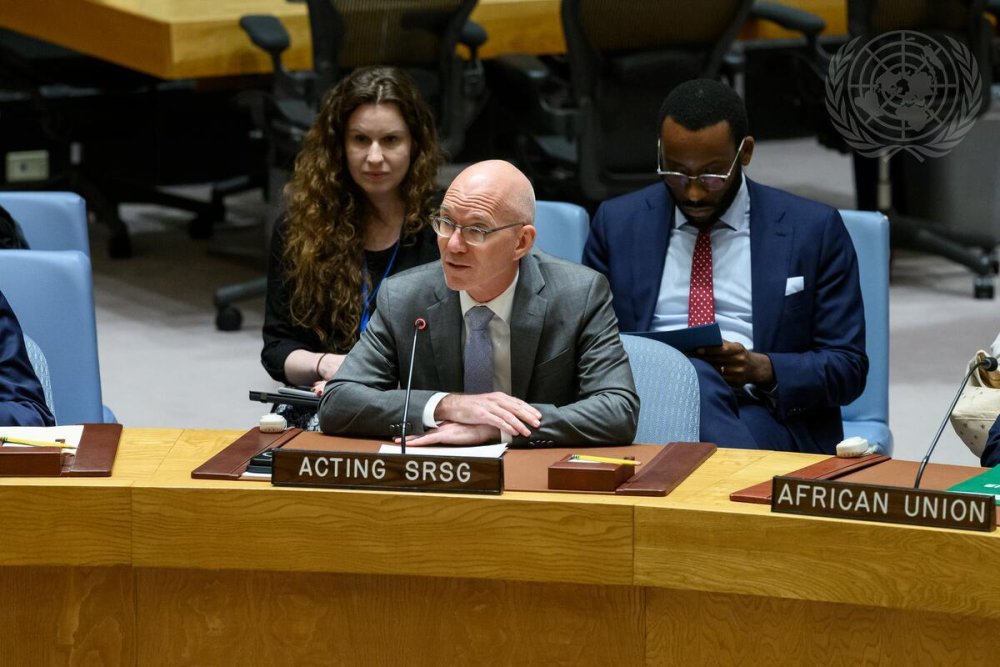
    The AU Mission in South Sudan, the UN Mission in South Sudan, the Intergovernmental Authority on Development, an East African bloc, and the Reconstituted Joint Monitoring and Evaluation Commission, which monitors peace implementation, expressed concern about the rapid deterioration of the political and security situation across South Sudan.

    “Ongoing air and ground attacks are leading to an alarming loss of life, property and civilian displacement, even as ethnically polarizing rhetoric and hate speech are rising. The targeting of humanitarian facilities is also unacceptable and must stop,” they said in a joint statement issued in Juba, the capital of South Sudan.

    The organizations said these escalations are fast eroding the confidence of communities and peace partners in the sincerity of the promise made by the parties not to return this country to war, and urged the leadership to recommit to a transparent, consensus-driven, and collaborative approach for lasting peace.

    “They must reinvigorate visibly stalled peace implementation by addressing all grievances through an inclusive political dialogue,” they said.

    The missions said inclusive political dialogue can be achieved through the release of First Vice President Riek Machar and other opposition officials and members currently under detention, as well as by creating an enabling environment to reconvene and resource inclusive institutions and mechanisms provided for under the peace deal.

    This photo shows the aerial view of Juba, the capital city of South Sudan. UN and AU have urged warring parties in South Sudan to embrace dialogue

  • American Robert Prevost becomes new Catholic Pope  

    His selection was signaled by white smoke that billowed from the Sistine Chapel chimney, confirming the selection of a new Pope to lead the Roman Catholic Church.

    This traditional signal indicates a successful vote, where a candidate secured the required two-thirds majority—out of the 133 voting cardinals—during the conclave.

    Joyful cheers erupted from the crowds filling St. Peter’s Square as the white smoke, a sign of a successful vote, appeared.

    The identity of the new Pope is revealed in the traditional ceremony from the loggia of St. Peter’s Basilica, when a senior cardinal announces “Habemus papam!”—”We have a pope!”

    The new Pope also made his first public appearance on the balcony, and delivered his blessing to the faithful below.

    Pope Robert Francis Prevost, the successsor of Pope Francis, was born on 14 September 1955 in Chicago (Illinois, United States).

    He becomes the first American Pontiff.

    Background

    In 1977 Robert Francis Prevost entered the novitiate of the Order of Saint Augustine (O.S.A.) in the province of Our Lady of Good Counsel, in Saint Louis.

    On 29 August 1981 he gave his solemn vows. He studied at the Catholic Theological Union of Chicago, receiving a diploma in theology.

    At the age of 27 he was sent by the Order to Rome to study canon law at the Pontifical Saint Thomas Aquinas University (Angelicum).

    He received priestly ordination on 19 June 1982. He received his licentiate in 1984, and was then sent to work in the mission of Chulucanas, in Piura, Peru (1985-1986).

    In 1987 he was awarded a doctorate with the thesis: “The role of the local prior in the Order of Saint Augustine”.

    In the same year he was elected director of vocations and director of the missions of the Augustinian province of “Mother of Good Counsel” of Olympia Fields, Illinois, United States of America.

    In 1988 he was sent to the mission of Trujillo as director of the joint formation project for Augustinian aspirants in the Vicariates of Chulucanas, Iquitos and Apurímac.

    There he served as community prior (1988-1992), director of formation (1988-1998) and teacher of the professed (1992-1998).

    In the archdiocese of Trujillo he was judicial vicar (1989-1998), and professor of canon, patristic and moral law in the “San Carlos e San Marcelo” Major Seminary.

    In 1999 he was elected provincial prior of the “Mother of Good Counsel” province, Chicago.

    After two and a half years, the ordinary general Chapter elected him prior general, a ministry again entrusted to him in the 2007 ordinary general Chapter.

    In October 2013 he returned to his province (Chicago) to serve as teacher of the professed and provincial vicar, roles he held 3 November 2014, when Pope Francis appointed him apostolic administrator of the diocese of Chiclayo, Peru, elevating him to the dignity of bishop and assigning him the titular diocese of Sufar.

    On 7 November he took canonical possession of the diocese in the presence of the apostolic nuncio James Patrick Green; he was ordained a bishop on 12 December, Feast of Our Lady of Guadalupe, in the cathedral of his diocese.

    He served as bishop of Chiclayo from 26 November 2015. In March 2018 he became second vice president of the Peruvian Episcopal Conference.

    Pope Francis appointed him a member of the Congregation for the Clergy in 2019, and member of the Congregation for Bishops in 2020.

    On 15 April 2020, the Pope appointed him apostolic administrator of the diocese of Callao.

    On 30 January 2023 Pope Francis appointed Cardinal Prevost as prefect of the Dicastery for Bishops and presidet of the Pontifical Commission for Latin America.

    He was created and proclaimed Cardinal by Pope Francis in the Consistory of 30 September 2023, of the Deaconry of Santa Monica

    American Cardinal Robert Francis Prevost has been selected as the new Catholic Church’s Pope and has chosen the papal name of Leon XIV.White smoke has emerged from the Sistine Chapel chimney, confirming the selection of a new Pope to lead the Roman Catholic Church.

  • Why is SADC not grateful to Rwanda?

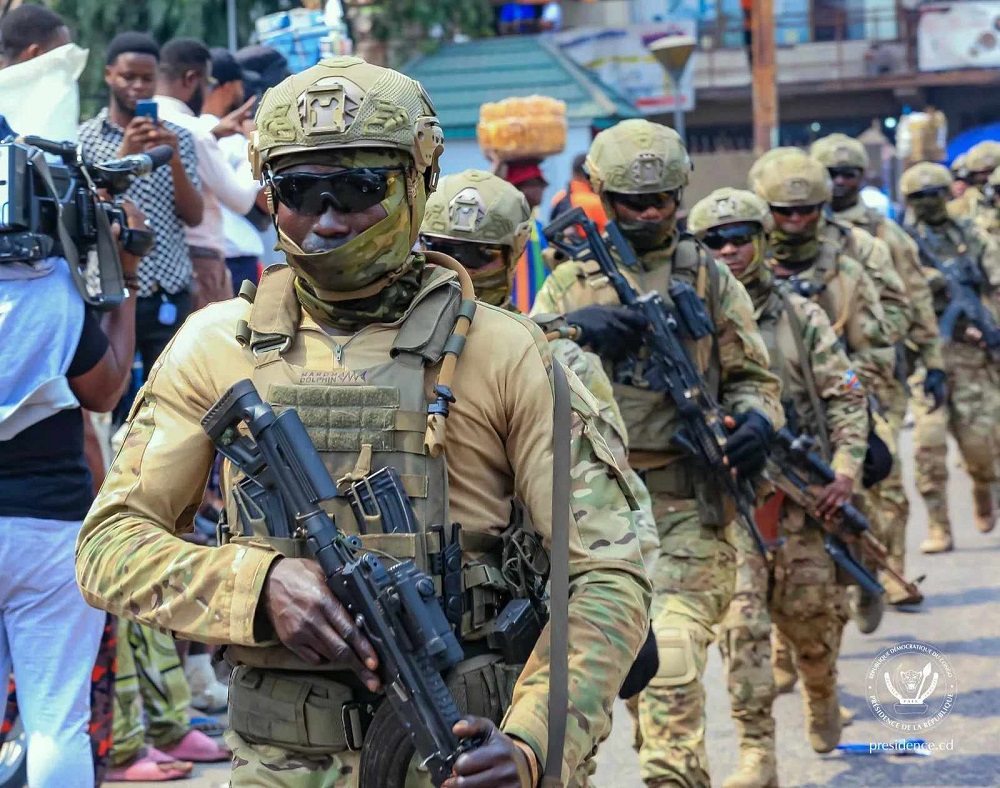
    The SADC forces entered eastern DRC under the SAMIDRC mandate, officially on a so-called peacekeeping mission. But in practice, they aligned themselves with the Congolese government and the FDLR—a militia notorious for its role in the 1994 Genocide against the Tutsi and its ongoing efforts to destabilize Rwanda.

    Intelligence reports confirmed that the joint forces’ base was not only used for operations against M23 but also served as a command post for planning attacks against Rwanda—despite the fact that Rwanda is not linked to M23’s cause, even though some foreign actors have tried to force that narrative.

    While these troops claimed their objective was to neutralize M23, their posture, movements, and equipment on the ground suggested a broader readiness for confrontation—including with Rwanda. Long-range missiles were reportedly positioned near the Rwandan border, aimed in Rwanda’s direction.

    Despite all of this, when these forces were defeated and needed to exit Congolese territory, Rwanda acted with maturity. The very country they had once viewed as a threat facilitated their safe withdrawal. Rwanda provided a secure and humane corridor—via Rubavu, the very town they had shelled, to Rusumo. It could have refused.

    It could have insisted on logistical delays or demanded security reviews. But it didn’t. Rwanda’s tragic past has taught it the true cost of hardship—and that’s why, wherever support is needed, the answer is a resounding yes. That’s why the request from the TCCs in SAMIDRC for the safe withdrawal of their defeated soldiers was honored. Both the troops and their equipment are being escorted until they safely exit Rwandan territory.

    There was no official statement of thanks. No acknowledgment from the SADC bloc. Just silence—as if Rwanda’s gesture were an expected obligation rather than an exceptional act of regional solidarity. I watched the media briefing organized by the Ministry of Defence of South Africa in collaboration with the SANDF this Sunday, but it ended without even a mention of Rwanda’s vital contribution to the ongoing repatriation, which is expected to conclude this month.

    And yet, Rwanda’s role was critical. Goma’s airport had been rendered inoperable by those very forces. The surrounding terrain had been heavily mined by FARDC, FDLR, and allied troops in an effort to block M23—ironically putting SADC forces at even greater risk.

    Without Rwanda’s cooperation, the withdrawal would likely have been nearly impossible, or at the very least, extremely costly. Some of their equipment might not have been evacuated at all. Yet, this crucial support is not acknowledged, with even a simple ‘thanks’ to Rwanda for its efforts and this moment reflects a broader trend of persistent ingratitude toward Rwanda.

    For years, Rwanda has faced unfounded accusations and diplomatic hostility from both regional and international actors. Yet it continues to prioritize peace over provocation. It has facilitated the repatriation of foreign mercenaries—including those linked to European countries. But instead of appreciation, some actors have called for sanctions on Rwanda, often based on politically motivated or biased narratives.

    The lack of recognition from SADC is not just an oversight—it reflects deeper insecurities within the region. Rwanda’s progress since the 1994 Genocide against the Tutsi is remarkable by any standard.

    In less than three decades, the country has rebuilt from devastation to become one of the most admired, stable, and efficient states on the continent. Its achievements in gender equality, anti-corruption, digital innovation, public health, and cleanliness are globally recognized.

    Instead of learning from Rwanda’s model, some African governments remain trapped in outdated rivalries—resorting to sabotage, smear campaigns, or proxy warfare in an attempt to “cut Rwanda down to size.”

    This destructive mindset has prevented them from showing gratitude to a nation that provided safe passage to their troops, who had been decisively defeated by rebels simply fighting for survival.

    Rwanda has much to offer to any nation willing to learn: governance reforms, social cohesion policies, digital transformation models, community-based security frameworks, and more. Rwanda opens its arms to genuine learners and guests. But those who arrive with hostile intentions will be handled accordingly.

    Africa cannot build a shared future with a divided mindset. We must begin to recognize and uplift success where it exists—not sabotage it. Rwanda’s resilience should be seen as a lesson, not a threat. It is time for African leadership, including within SADC, to act with the maturity the continent demands: acknowledge the truth, own past miscalculations, and give credit where it is due.

    Gratitude is not weakness—it is a mark of strength, and of leadership.

    Rwanda has already shown it.

    Will SADC?

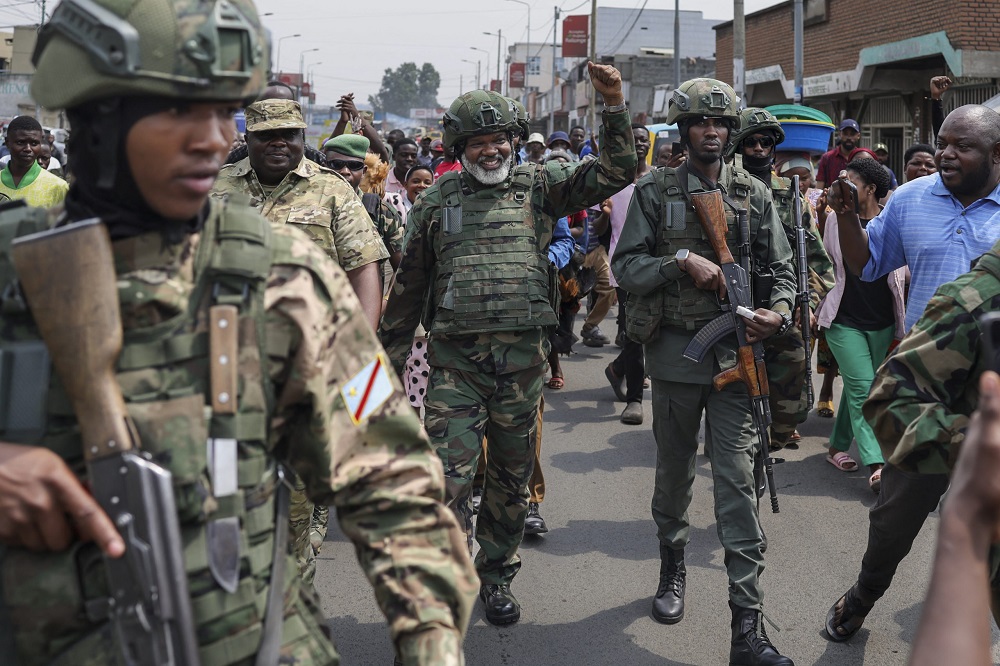
    SADC troops were deployed in December 2023 to support the Congolese military against the AFC/M23 coalition

  • Govt plans to spend over Frw7 trillion in 2025/2026 budget

    This was presented on May 8, 2025, by the Minister of Finance and Economic Planning, Yusuf Murangwa, during the unveiling of the Budget Framework Paper (BFP) for the period 2025/26 to 2027/28.

    The framework is aligned with the National Strategy for Transformation (NST2) and Vision 2050, focusing on sustainable, inclusive development.

    The proposed Frw7 trillion budget will support strategic national projects, including the ongoing construction of the New Kigali International Airport in Bugesera, the expansion of RwandAir, and post-crisis recovery initiatives related to COVID-19, May 2023 floods and Marburg disease outbreak.

    To fund the budget, the government projects Frw 4,105.2 billion in domestic revenue, comprising Frw 3,628.0 billion in tax revenues and Frw 477.2 billion from other sources. It also expects Frw 585.2 billion in external grants and Frw 2,151.9 billion in loans.

    Spending will be split between Frw 4,395.1 billion for recurrent expenses—including salaries and operational costs—and Frw 2,637.4 billion for capital investments that support long-term development.

    The full budget for 2025/26 is expected to be formally presented to Parliament in June 2025.

    Minister Murangwa highlighted the country’s resilience and growth in the face of global challenges, noting that Rwanda’s economy grew by 8.9% in 2024, surpassing earlier projections of 8.3%.

    “Rwanda’s growth momentum remains strong, despite a challenging environment caused by climate change effects, global inflation, geopolitical tensions, trade wars, among other factors. Our economic recovery has been resilient.

    “The Government remains committed to maintaining macroeconomic stability and fostering inclusive growth by investing in key areas such as agriculture, manufacturing, healthcare, social protection, and education,” he stated.

    The Minister of Finance and Economic Planning, Yusuf Murangwa, during the unveiling of the Budget Framework Paper (BFP) for the period 2025/26 to 2027/28.

  • Malicious distortion must not obscure the authenticity of history

    Chinese President Xi Jinping will visit Russia from May 7 to 10 at the invitation of President Vladimir Putin and will attend the celebrations marking Great Patriotic War Victory.

    Historians seldom completely agree with one another even on some of the most important events of the past. There are different views on various historical events such as World War II (WWII).

    With new documents being declassified and new excavations at the sites of the main battles, we are likely to see new theories and hypotheses emerging that will feed more discussions and offer contrarian narratives of the most devastating military conflict in the history of humanity.

    However, there is a clear red line between looking for new facts and deliberately trying to falsify history. The former is a noble quest for truth and understanding, while the latter is a deplorable attempt to revise past events in favor of political goals or personal ambitions.

    An honest scholar entering a research project cannot be completely sure what will be found at the end of the road; an unscrupulous politician presenting a falsified version of history knows perfectly well what picture to present to the target audience. Truth is skillfully mixed with lies, while fabrications are dissolved in real facts to make the picture more credible and attractive.

    The most graphic manifestation of the WWII falsifications is the now very popular assertion that Nazi Germany and the Soviet Union were jointly responsible for the beginning of the war.

    The narrative equating Nazis and Soviets is nonsensical because it completely ignores the history of fascism in Europe and repeated attempts by Moscow to convince London, Paris and Warsaw to form an alliance against it. Only after the “Munich Betrayal” by the West, the 1938 pact among Germany, the United Kingdom, France and Italy that forced Czechoslovakia to cede territory to Germany without Czechoslovakian consent, did Moscow decide to go for a non-aggression treaty with Germany to buy itself time before invasion.

    Likewise, the dominant Western narrative of WWII increasingly frames the conflict as a stark moral battle between good and evil. As a result, there is a growing reluctance to fully acknowledge the pivotal roles that Russia and China played in the defeat of Nazi Germany and militarist Japan.

    Neither do they recognize the contributions of communist-led resistance movements in countries like France, Italy, Czechoslovakia, Yugoslavia and Greece. This is largely due to ideological biases that exclude these groups from the dominant narrative of “heroic liberal forces” in the fight against the Axis nations, the coalition led by Germany, Italy, and Japan.

    Instead, the predominant view in most Western countries credits the U.S. as the primary force behind victory, along with limited support from other allies. This reading of WWII has nothing to do with reality, but it nicely fits the now popular Manichean interpretation of world politics.

    Another typical distortion of history is the selective portrayal of the victims of the war, often shaped by a distinctly Eurocentric perspective. Much attention is given to the atrocities endured by Europeans under Nazi occupation or by Europeans in Asia at the hands of the Japanese, while the immense suffering of non-European populations frequently receives far less recognition.

    Every human life is of equal value, and all victims deserve empathy. Even those who served in the German and Japanese armed forces during WWII should not be indiscriminately labeled as criminals; the notion of “collective guilt” must not override the principle of individual responsibility for verifiable war crimes.

    However, it is often overlooked in contemporary Western discourse that the Soviet Union and China suffered the heaviest human cost of WWII – with casualties reaching 27 million and 35 million, respectively. A significant portion of these losses were civilians, and the scale and brutality of wartime atrocities committed on Soviet and Chinese territories far exceeded those experienced in most other regions.

    Contemporary politics inevitably shapes how we interpret the past, as people often seek historical narratives that align with their present-day beliefs and agendas. Yet history should be approached with integrity, not as a tool to justify current political positions. This is not about defending national pride or preserving comforting myths; every nation, regardless of size or wealth, carries both moments of honor and episodes of regret in its historical journey. A balanced national narrative includes both triumphs and failures.

    But when history is deliberately manipulated to serve short-term political interests, we risk blurring our understanding of the present and undermining our vision for the future. Such willful distortion is not only intellectually dishonest but could also lead to grave consequences.

    The Red Square in Moscow, Russia, March 17, 2023. /Xinhua

  • Winners Mount Academy’s partnership with Israel embassy opens doors to enhanced ICT education

    The partnership was officially announced on May 7, 2025, during a visit by Israeli Ambassador to Rwanda, Einat Weiss. During her visit, the students showcased their talents, and the ambassador took time to engage with them directly.

    Elie Muhizi, the school’s founder, described the partnership as a significant milestone and expressed pride in collaborating with Israel—renowned for its global leadership in technology and innovation.

    He emphasized the long-term value the partnership could bring to both the students and the broader national education landscape.

    “Israel is a powerful and advanced country. Partnering with them is an honor. It will benefit our students and our nation in many ways, and we expect the collaboration to keep expanding,” Muhizi stated.

    He noted that the initiative will strengthen the school’s use of technology in learning and hinted at broader opportunities ahead, including the possibility of students pursuing further studies in Israel.

    “Another aspect of our partnership involves teaching Hebrew—the official language of Israel—to students at Winners Mount Academy,” he added.

    Winners Mount Academy currently serves around 300 students, with 170 girls and 130 boys enrolled.

    The school is preparing to present its first cohort of 18 candidates for Rwanda’s national primary leaving national exams.

    Muhizi expressed high expectations for the students, aiming for top marks that will enable them to gain admission to the country’s best secondary schools.

    Israeli Ambassador to Rwanda, Einat Weiss visited Winners Mount Academy on Wednesday, May 7, 2025.Students showcased their talents during the visit.Israeli Ambassador Einat Weiss spent cheerful moments interacting with students at the school.The school is preparing to present its first cohort of 18 candidates for Rwanda’s national primary leaving national exams.w2-3-9fab1.jpgw4-2-444d5.jpgWinners Mount Academy currently serves around 300 students, with 170 girls and 130 boys enrolled.

  • Key insights on Rwanda’s ten newly discovered mining blocks

    These blocks, rich in high-value minerals like cassiterite, coltan, wolframite, and rare earth elements, were detailed in the Rwanda Mining Board’s (RMB) May 2025 Mining Investment Pitchbook.

    Designed to attract strategic investors, the findings highlight Rwanda’s untapped mineral wealth across Kamonyi, Bugesera, and Gatsibo districts.

    Below is an overview of each block, showcasing their geological potential and investment opportunities.

    1. Binyeri

    Nestled in the Rukoma Sector of Kamonyi District, the Binyeri block spans 50 hectares and is geologically tied to the mineral-rich Kayenzi granite.

    Surrounded by active mining licenses, this area has a history of artisanal and medium-scale mining.

    Past surveys confirmed rare metal pegmatites, with cassiterite as the dominant mineral, making Binyeri a promising site for targeted exploration.

    2. Juru

    In Bugesera District, the expansive Juru block covers 1,354 hectares of quartzite and brecciated schists. It hosts epithermal deposits of tin, tungsten, and tantalum (3Ts), with tin being particularly abundant.

    A 2014 geophysical survey estimated 52,998 tonnes of cassiterite, and the block’s geology hints at potential for rare earth elements, positioning Juru as a high-value prospect.

    3. Mamfu-Rwasama

    Spanning 1,300 hectares in Gatsibo District, the Mamfu-Rwasama block lies in a tin-rich region historically mined by companies like SOMIRWA and Luna Smelter.

    Affected by regional metamorphism, it features two main vein types yielding high-grade cassiterite and coltan.

    The coltan found in the area contains about 63% tantalum and 20% niobium, while the cassiterite is very pure, with tin levels between 90% and 99%, making both minerals valuable for commercial use.

    4. Musenyi

    Located in Bugesera District, the Musenyi block covers 1,000 hectares and is a brownfield site previously licensed to Hard Metal.

    Near other active licenses, it contains Sn-rich pegmatites with significant tin and tantalum concentrations.

    Although current production is modest, the block’s high-grade ore and scalability make it an attractive investment opportunity.

    5. Remera

    One of the largest blocks, Remera stretches across 4,025 hectares in Gatsibo District, part of a historically productive tin district.

    Geophysical surveys have identified primary cassiterite veins beneath lateritic cover, with past production exceeding 4,488 tonnes.

    The block also shows iron ore potential, broadening its appeal across Gatsibo, Gicumbi, and Nyagatare.

    6. Rubiha

    In Gatsibo District, the Rubiha block encompasses 450 hectares near the Rugarama granite. It hosts over 20 mineralized quartz veins rich in cassiterite and columbite-tantalite.

    Decades of geological studies have mapped favorable pegmatite zoning, ensuring high-purity tin and a well-structured mineralization profile for efficient extraction.

    7. Rubona-Gatunda

    This 925-hectare block in Gatsibo District, a former Luna Smelter concession, is hosted in Bulimbi meta-sediments.

    Known for its tin and tantalum potential, it has a history of cassiterite mining.

    Recent petrographic analyses reveal late magmatic mineralization, particularly rich in tin, enhancing its prospects for modern operations.

    8. Rugarama

    Covering 2,175 hectares in Gatsibo District, Rugarama has benefited from extensive geological studies since the 1980s, including UNDP and BRGM surveys.

    The block is renowned for tin-rich placers and greisen zones, with over 20 quartz veins forming stockworks that yield significant cassiterite and tantalum, making it a cornerstone of Rwanda’s mining portfolio.

    9. Rweru

    Situated in Bugesera District, the Rweru block spans 875 hectares. It boasts high concentrations of niobium, tantalum, tin, lithium, and rare earth elements.

    10. Rweru-Kimvubu

    Also in Bugesera District, this 1,300-hectare block lies between two large granite bodies, intersected by fault systems.

    Soil and rock samples reveal niobium and tin concentrations well above global averages, alongside significant wolframite deposits.

    Its rare metal pegmatites and potential for rare earth element exploration make it a standout opportunity.

    According to Donat Nsengumuremyi, the Division Manager of the Mining Extraction and Inspection Division at RMB, these blocks align with Rwanda’s strategy to expand its processing industry and attract investment.

    Facilities like Gasabo Gold Refinery, LuNa Smelter, and Power Resources International are well-positioned to process minerals from these sites, supporting downstream value addition.

    Innocent Kagenga, Chairperson of the Rwanda Mining Association (RMA), highlighted the importance of transparent data, noting that mapping and publishing these blocks levels the playing field for local and foreign investors.

    Rwanda’s mining sector is poised for significant growth, targeting $2.2 billion in annual revenue by 2029, up from $1.7 billion in 2024.

    So far, Rwanda has issued 136 mining licenses to 99 companies, 18 exploration permits to 17 companies, 76 licenses for mineral trading companies, and 3 for mineral value-addition activities.

    In addition to the 3Ts, Rwanda also has deposits of gold in districts like Gicumbi, Musanze, Burera, Nyamasheke, Rusizi, and Nyarugenge.

    Gemstones used in jewelry can be found in Ngororero, Ruhango, and Muhanga; sapphire is found in the Western Province; and lithium and other minerals are under active exploration.

    Rwanda has discovered ten new mining blocks, collectively covering over 13,000 hectares.

  • Papal Conclave enters day two

    The first day of the conclave, held on Wednesday, concluded without a decision. As tradition dictates, the appearance of black smoke from the chapel’s chimney signaled that no candidate had secured the necessary two-thirds majority to be named pope and succeed the late Pope Francis.

    While only one round of voting is customary on the first day, Thursday marked the beginning of a more intensive schedule. From now on, the cardinals will hold up to four ballots each day—two in the morning and two in the afternoon—until a new pontiff is chosen.

    Outside the Vatican, a quiet tension mingled with hope. St. Peter’s Square glowed under the morning sun, the basilica’s iconic dome casting long shadows across the gathering crowds.

    Pilgrims, clergy, tourists, and reporters—speaking a blend of languages—waited patiently for the next sign from the chimney.

    Some found shade under the colonnades; others sat cross-legged on the cobblestones, gazing toward the roofline for a glimpse of smoke.

    The mix of ages and backgrounds spoke to the global significance of the moment. From the devout to the curious, seasoned observers to first-time visitors, all had come to witness history.

    As the world watches, the color of the smoke remains the only clue to the proceedings within. Until white smoke rises—signaling the successful election of a new pope—the search for the next leader of the Catholic Church continues.

    The first day of the conclave, held on Wednesday, concluded without a decision. As tradition dictates, the appearance of black smoke from the chapel’s chimney signaled that no candidate had secured the necessary two-thirds majority.The process to elect the next pope entered its second day on Thursday, with 133 Catholic cardinals once again entering the Sistine Chapel for another round of secret voting.