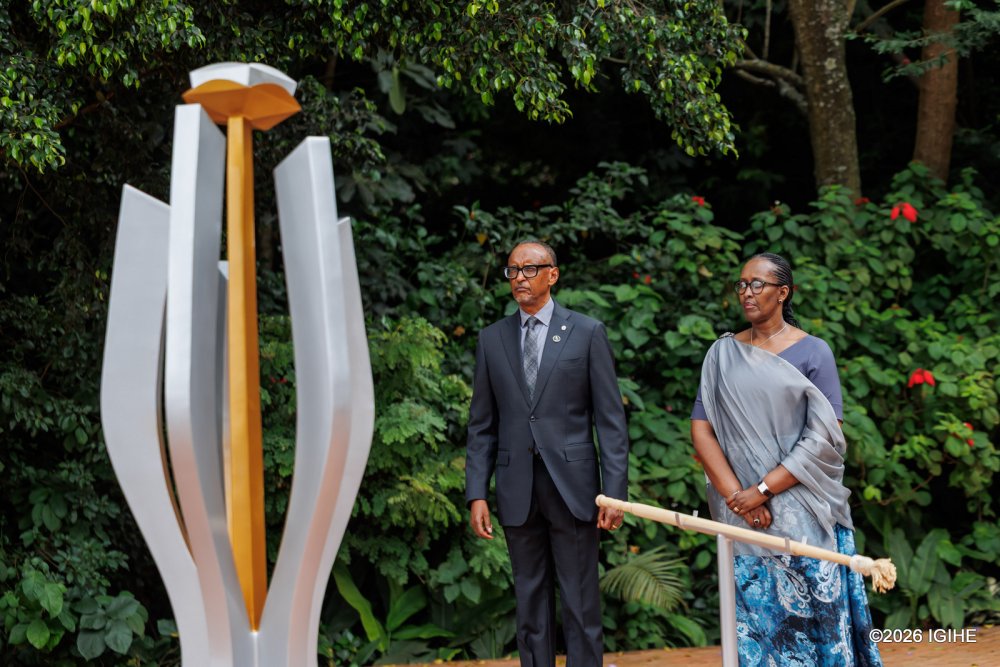
He delivered the message on April 7, 2026, at Kigali Genocide Memorial, where genocide commemoration at national level brought together Rwandans, friends of Rwanda, and members of the diplomatic corps, among others, to honor the victims.
Rwanda’s commemoration period, known as Kwibuka, begins on April 7, with a week of national mourning and continues over 100 days, reflecting the duration of the genocide in which more than one million victims were killed.
This year’s commemoration is observed under the theme “Remember, Unite, Renew”.
In his address, Kagame emphasized the importance of survivor testimonies in preserving the truth about what happened in 1994, describing them as a vital foundation for collective memory and national identity.
“These testimonies keep memory alive for all of us and for those who will follow us,” he said.
He added that survivors are not alone, noting that their stories form a shared moral resource for the country. “They provide a reservoir of humanity that feeds our nation’s soul,” he said.
Kagame stressed that remembrance goes hand in hand with responsibility, saying every Rwandan has played a role in rebuilding the country, from documenting crimes through community-based justice systems to rejecting division and choosing unity.
The President also pointed to ongoing challenges in how the genocide is understood and described globally, warning against efforts to distort or minimize the truth.
“In 2018, the United Nations General Assembly adopted a resolution that called the genocide against the Tutsi by its proper name. The truth is undeniable, and yet we still find people sowing doubt and twisting the facts up to today. This is not just a matter of ignorance, but something much deeper,” he said.
“It means that the risk of seeing history repeat itself is a constant danger, if we allow ourselves and our friends to become indifferent.”
Kagame warned that genocide denial often begins long before violence erupts, taking root in subtle and dangerous ways.
“Genocide denial begins long before the genocide itself is committed. There is a pattern of looking away from the warning signs or taking them lightly,” he said.
“Hate speech turns into hate acts, dismissed as expressions of popular discontent. Behavior that should be immediately condemned is rationalized and minimized. The preparations are masked by narratives of popular grievance and fear.”
He rejected claims that the genocide was spontaneous, insisting it was deliberately planned and executed.
“All of these elements were present in our own history. There are some who pretend that the Genocide against the Tutsi was a spontaneous event. That’s not true. It was carefully prepared and carried out in plain sight.”
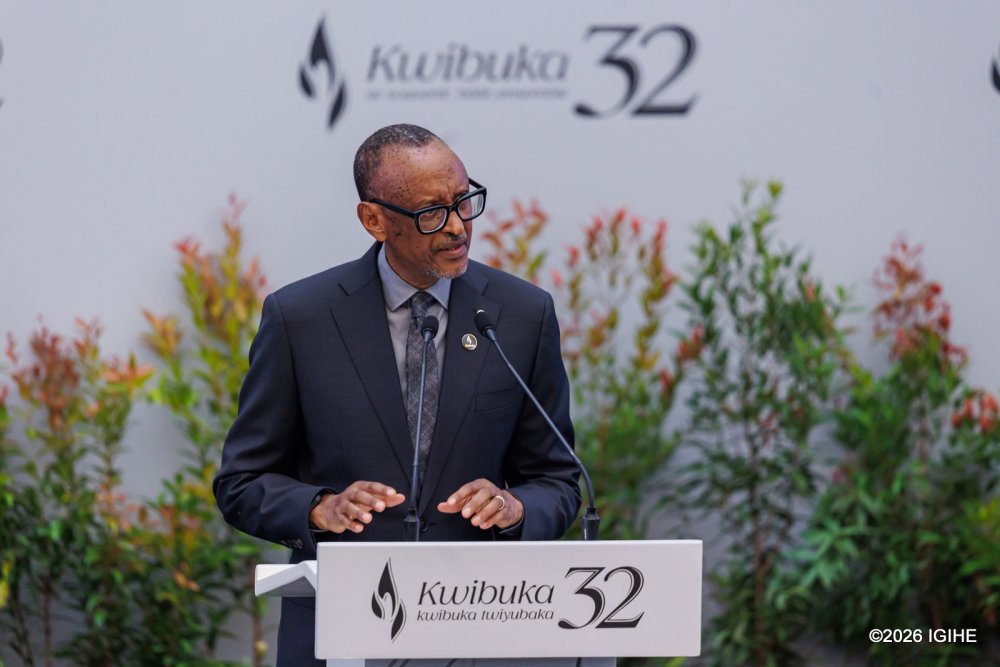
Kagame also criticized the international community’s failure to act despite clear warning signs, noting that more lives could have been saved.
“The lives saved by the United Nations peacekeepers who were allowed to remain makes clear how much more could have been done with political will. Even as the killings accelerated, the language used to describe what was happening itself became a matter of calculation.”
Despite that failure, he highlighted the role of the former Rwandan Patriotic Army (RPA), now the Rwanda Defence Forces (RDF), in stopping the genocide and protecting civilians, saying its legacy continues to shape Rwanda’s security philosophy.
“It guides the conduct of our forces who serve abroad in peace-building missions, earning universal respect. Indeed, no sanctions or insult from outside can ever tarnish the honor and integrity of Rwanda’s Defense and Security Forces who are among the finest that can be found anywhere.”
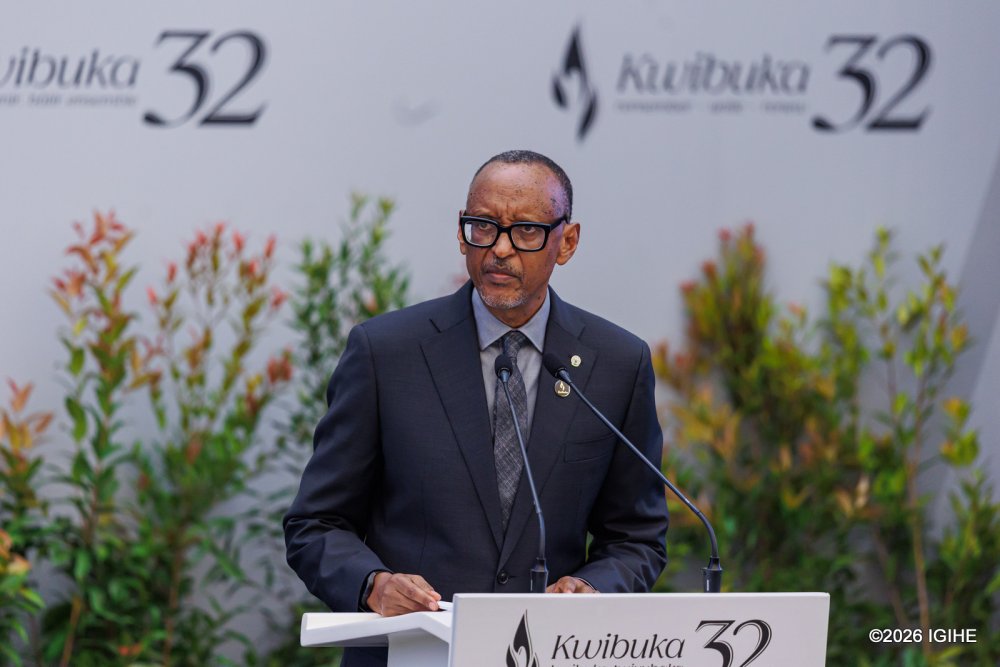
Reflecting on post-genocide security challenges, Kagame recalled the insurgency that followed the collapse of the genocidal regime in 1994.
“This was the period known as the Abacengezi Insurgency. And the western border was only fully secured by the end of the 1990s through the combined efforts of our army and the brave residents of those areas.”
“And since then, our defensive measures have been aimed at ensuring that such attacks can never again be made across our borders. This is not a problem that should be left to Rwanda alone. Doing so only rewards those behind the threat, while Rwanda is penalized for standing up for itself.”
He warned against double standards in addressing security concerns and used a metaphor to illustrate the dangers of inaction in the face of rising threats.
Kagame likened it to a farmer watching a small fire spread while others assume it will burn out on its own, even as “a pyromaniac is secretly adding fuel to the fire.”
Turning to the broader African context, he called for vigilance and responsibility across the continent.
“Africans, more than most, should understand the danger of moral passivity in the face of hatred and violent extremism,” he said.
While acknowledging the importance of national sovereignty, Kagame cautioned against its misuse.
“Bad actors must not be allowed to hide behind the principle of sovereignty,” he said, warning that “we cannot afford to repeat the mistakes of the past,” as genocide ideology spread in the region has the power to take people backwards again, if left unchecked.
Leave a Reply