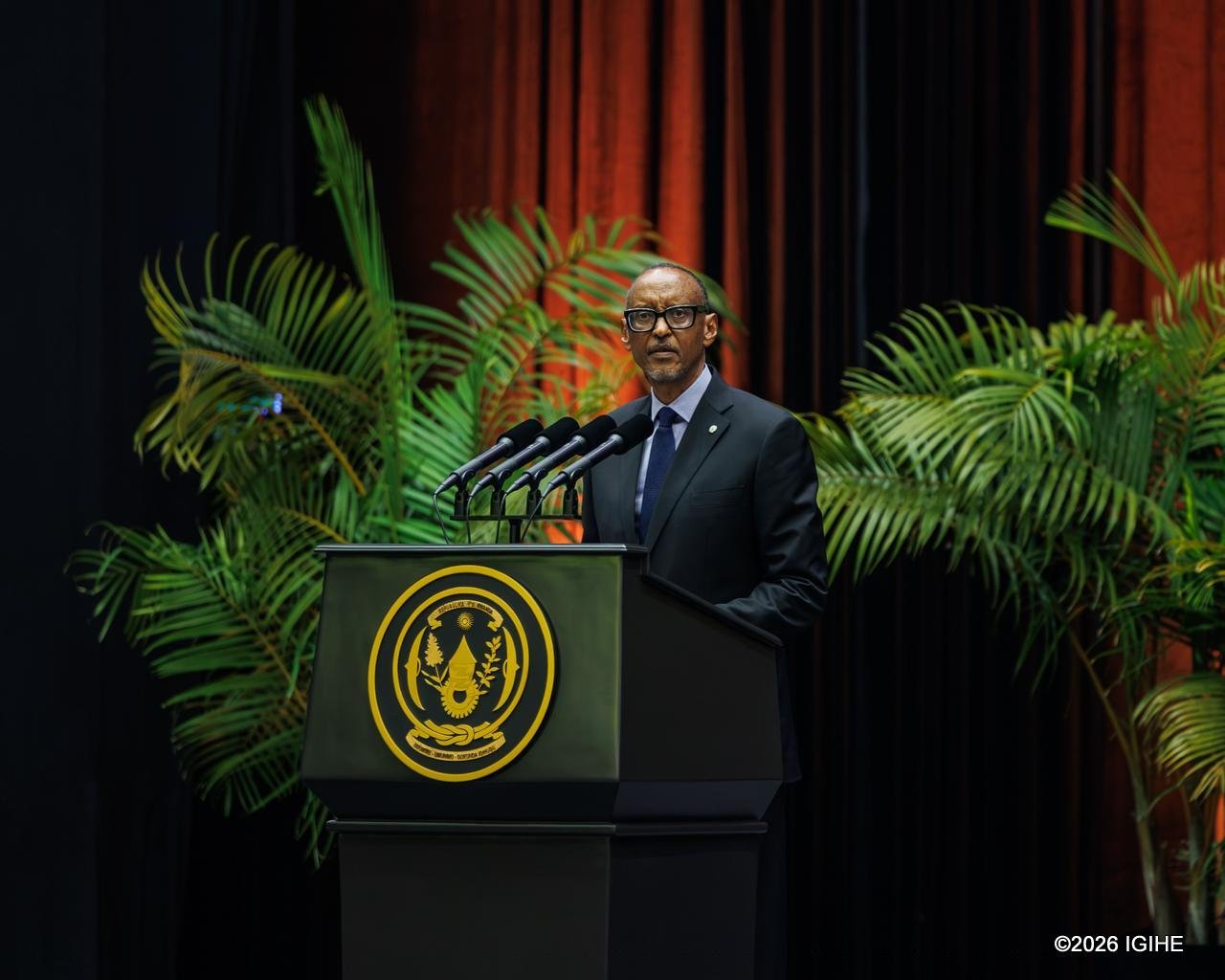
Speaking during a diplomatic dinner with ambassadors, high commissioners and representatives of international organisations in Kigali on Friday, Kagame said Rwanda faces what he described as an “impossible choice” between tolerating threats near its borders or defending itself and facing condemnation.
His remarks come days after the United States imposed sanctions on the Rwanda Defence Force (RDF) over the conflict in eastern Democratic Republic of the Congo (DRC).
The Head of State said Rwanda’s defensive measures are driven solely by security concerns, particularly the continued presence of the Democratic Forces for the Liberation of Rwanda (FDLR), a militia group formed by perpetrators of the 1994 Genocide against the Tutsi, in the eastern DRC.
“Rwanda faces an impossible choice: to either tolerate the continued presence of the FDLR and its growing network of militias and allow them to grow closer to our border or to defend ourselves and be condemned for it,” Kagame said.
“Any condemnation that comes, by the way, is a badge of honour for our security forces,” he added.
Security concerns
The president told diplomats that Rwanda’s security concerns stem from the continued presence and activities of the FDLR in eastern DR Congo, accusing the Congolese government of providing political cover and support to the group.
According to Kagame, the militia continues to spread an ideology rooted in genocide and has formed alliances with other armed groups in the region.
“One thing that has not changed is the right and duty of every nation to ensure the safety of its borders and people. Rwanda is no exception,” Paul Kagame said, adding that the country’s defensive measures are intended to address security threats and nothing else.
He argued that Rwanda has repeatedly raised these concerns in regional and international forums, but claims that the root causes of the conflict are often ignored in favour of short-term political interests.
Kagame also questioned the implementation of the Washington Accords, saying the agreement was intended to address security concerns for all parties involved.
He noted that the accords involve three parties, Rwanda, DR Congo and the United States, but said expectations often appear to place the burden of compliance primarily on Rwanda.
“A signed peace agreement should bind all parties equally,” Kagame said, adding that selective pressure risks emboldening armed groups and prolonging instability.
Call for lasting peace
Despite the tensions, Kagame emphasised that Rwanda remains committed to peace in the region.
He said Rwanda would be ready to lift its defensive measures if DR Congo fulfils its obligations under the Washington Accords, including addressing the threat posed by the FDLR and other armed groups operating near Rwanda’s borders.
“Rwanda wants peace,” Kagame said. “But we want a genuine and lasting peace on which we can build our future prospects.”
The president also warned that Rwanda would never compromise on the security gains it has built over the past three decades.
“We have made a promise to ourselves never to go back to the dark days,” he told the diplomats. “That is not something we will waver from.”
Leave a Reply