Category: News

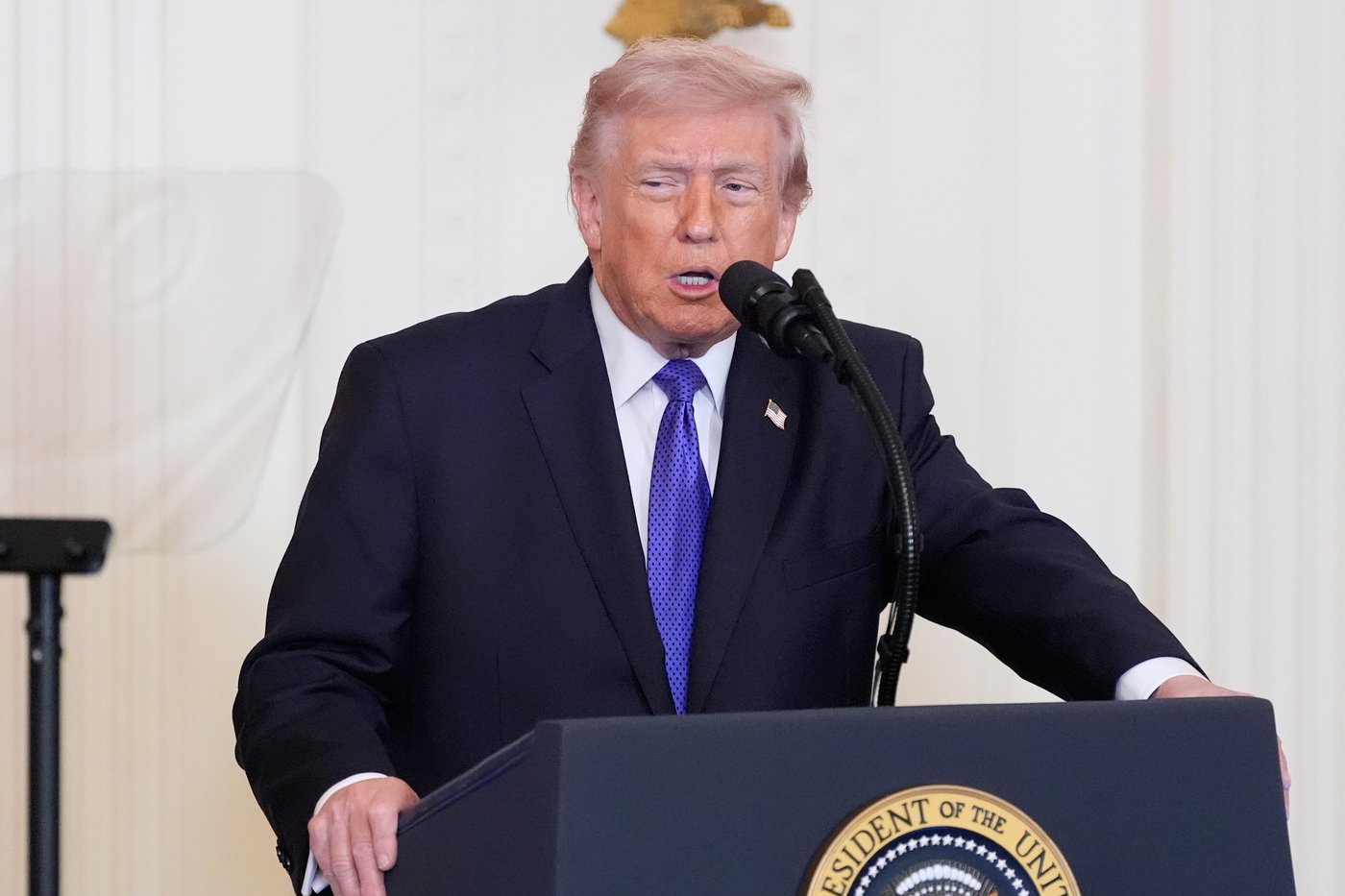
  • “Looking very good”: Trump applauds progress in mediation between Rwanda, DRC

    Trump made the remarks while hosting Ramaphosa and his delegation, who are in the U.S. to revitalise diplomatic and economic ties with Washington.

    In a wide-ranging discussion that touched on regional conflicts, trade, and African development, Trump singled out the Rwanda–DRC peace process as a highlight of his administration’s recent diplomatic efforts.

    The mediation process is coordinated by Senior Advisor for Africa Massad Boulos.

    “Looking very good,” President Trump said. “I’m hearing phenomenal reports because what I was hearing before was deaths, deaths and chopping of heads off. It was very horrible over there. It was really brave of you [Boulos], to go there. I really appreciate it. It looks like we have something very substantial.”

    The U.S.-led mediation has made significant headway in recent months following widespread tensions that escalated after the takeover of large swaths of territory in eastern Congo by the M23 rebels, fighting what they describe as decades of persecution and marginalisation of Kinyarwanda-speaking Congolese.

    While the Congo accuses Rwanda of backing the M23 rebels, Rwanda denies this, stating that its main concern is the presence of the FDLR militia group, linked to the 1994 Genocide against the Tutsi, and its collaboration with the Congolese army, which poses a security threat along the border with Rwanda.

    During the meeting at the White House on Wednesday, Boulos confirmed that Rwanda and the DRC recently signed a declaration of principles and have submitted their respective versions of a peace agreement. A unified draft incorporating both proposals has now been shared with both parties for final review.

    “We are in the process of finalising it,” Boulos said. “A couple of weeks ago, the two parties signed a declaration of principle in which they agreed on the way forward. They have both submitted draft peace agreements, and we have compiled one that incorporates their suggestions. It looks very good.”

    The U.S. State Department last week also confirmed that a peace agreement draft had been shared with President Paul Kagame and President Félix Tshisekedi of the DRC.

    If all parties approve the final version, a landmark signing ceremony is scheduled for June at the White House. Presidents Kagame and Tshisekedi are expected to attend the event, which will also feature the signing of new economic cooperation deals with the United States.

    Before the deal can be finalised, the U.S. has outlined key preconditions, particularly for the DRC. These include disbanding the FDLR militia and enacting governance reforms to ensure a fairer distribution of national resources.

    If successful, the agreement could usher in a new era of stability for the long-troubled eastern DRC and boost regional economic integration, with U.S. investments playing a pivotal role.

    Trump said his involvement in the conflict was motivated by a desire to save lives, not geopolitical gain.

    “I have nothing to do with Rwanda and Congo, but I felt I had a very talented person in this administration, and I sent him there. He did an unbelievable job. He has done the hardest part of the job. I want to save the lives of each and every African—if it’s in Europe, wherever it may be,” Trump told the delegation.

    In typical fashion, Trump also drew parallels to other global conflicts, saying that “we settled” tensions between India and Pakistan “in less than two days” through strategic trade diplomacy, while also citing ongoing efforts to resolve the conflict between Russia and Ukraine.

    “It’s a very small investment for me compared to the consequences,” he added.

    Ramaphosa hails mediation efforts

    President Ramaphosa thanked the U.S. for its role in pushing forward a peaceful resolution, revealing that the Southern African Development Community (SADC) had withdrawn its troops from eastern Congo to make way for diplomatic talks.

    His visit to Washington comes amid efforts to reset relations between South Africa and the United States, especially in light of recent tensions and controversy over claims of racial violence in South Africa, which saw Trump offer refuge to white farmers fleeing the country.

    Despite disagreements during the meeting, particularly when Trump raised long-standing “white genocide” claims, Ramaphosa expressed satisfaction with the private discussions, calling the visit “a great success” in opening communication channels and advancing trade opportunities.

    Trump’s message to Africa

    As Africa Day approaches on May 25, President Trump shared a broader message of peace and prosperity for the continent, stating that what he wants to see is peace across Africa.

    “What I want is peace. I want to see happiness. I want to see health. You have an incredible land that has tremendous value—a lot of countries don’t have that,” he stated.

    “We have settled a war that has been raging for years, Rwanda and the Congo, and I think we have done it.”

    United States President Donald Trump said his involvement in the conflict was motivated by a desire to save lives, not geopolitical gain.

  • Iran executes man over 2023 attack on Azerbaijan’s embassy

    The man attacked the diplomatic mission on Jan. 27, 2023, with a Kalashnikov rifle, killing a staff member and injuring two others, Tehran Police told local media in the wake of the incident.

    The man was executed after the completion of relevant judicial investigations and trial process, during which he was convicted of willfully murdering an Azerbaijani national using a firearm inside the embassy, purchasing, carrying, and keeping an illegal weapon and ammunition, and disrupting public order, the Mizan news agency affiliated with the judiciary reported.

    The ruling against him was also upheld by the Supreme Court of Iran, according to the report.

    In the aftermath of the incident, Azerbaijan shut down its embassy in Iran. Baku described the attack as an “act of terror,” but Tehran said investigations revealed that the assailant had “personal and family-related” motives.

    Azerbaijan reopened the embassy at a new location in Tehran in July 2024, after nearly a year and a half, with a guarantee from Iran that it would take appropriate measures to ensure the security of the new embassy.

    Image from Mizan News shows the attacker, face blurred, sitting in court during his trial over the Azerbaijani embassy shooting. Photo by Iran International

  • Xi inspects central Chinese city of Luoyang

    During the visit, Xi toured the Luoyang Bearing Group Co., Ltd., the White Horse Temple, and the Longmen Grottoes.

    He learned about local efforts to accelerate the development of advanced manufacturing, enhance the protection and utilization of historical and cultural heritage, and promote the high-quality development of the cultural and tourism sector.

  • Xi sends congratulatory letter to 2025 SCO forum on poverty reduction, sustainable development

    Xi pointed out that poverty eradication, a global issue, is a common goal of all countries in the world.

    Through arduous efforts, China has successfully won the battle against poverty, achieved the poverty reduction target of the United Nations 2030 Agenda for Sustainable Development ten years ahead of schedule, blazed a poverty reduction path with Chinese characteristics, and written a new chapter in the history of mankind’s fight against poverty, Xi said.

    Stressing that the root cause of poverty is inadequate development, Xi said the SCO has actively carried out cooperation on poverty reduction and sustainable development in recent years, achieving remarkable results.

    As the rotating chair of the SCO, China is willing to continuously enhance policy communication with all parties, share poverty reduction experience, deepen practical cooperation, help more countries explore poverty reduction and sustainable development paths that suit their national conditions, and join hands to build a beautiful world free from poverty and with common prosperity, Xi noted.

    The forum opened in Xi’an on Tuesday under the theme of “Sustained Poverty Reduction and Cooperative Development: Advancing Poverty Alleviation and Sustainable Development among SCO Countries.” The forum was co-hosted by the SCO Committee on Good-Neighborliness, Friendship and Cooperation and the People’s Government of Shaanxi Province.

  • Xi calls for stronger manufacturing industry to advance Chinese modernization

    Xi made the remarks during his inspection tour in a bearing producer in Luoyang City, central China’s Henan Province, on Monday afternoon.

    Xi visited the company’s intelligent manufacturing plant to learn about the performance and applications of various types of bearing products. He inspected the intelligent production lines and had an amiable conversation with the workers.

    “China has always adhered to the path of developing the real economy. From the past reliance on imported matches, soap and iron, to now becoming the world’s largest manufacturing country with the most complete industrial categories, we have taken the right path,” Xi noted.

    China must continue to strengthen the manufacturing sector, adhere to the principles of building self-reliance and strength, and master core technologies in key fields, Xi said.

    He also urged efforts to strengthen collaboration between industries, universities and research institutes, and cultivate a large number of high-quality talents.

    The producer, Luoyang Bearing Group Co., Ltd., is a traditional manufacturing firm that has invested heavily in scientific and technological research and made significant progress in industrial upgrading in recent years. Its wind turbine main bearings now hold over 40 percent of the domestic market share.

  • Xi stresses firm confidence in high-quality development during Henan inspection tour

    Xi, also general secretary of the Communist Party of China Central Committee and chairman of the Central Military Commission, made the remarks during his inspection tour of the cities of Luoyang and Zhengzhou in the province on Monday and Tuesday.

    He emphasized that Henan should focus on building a modern industrial system and strengthening its agricultural capacity, improving people’s well-being and social governance, enhancing ecological and environmental protection, and promoting cultural prosperity.

    On Monday afternoon, Xi visited Luoyang Bearing Group Co., Ltd. Its predecessor was a factory established during China’s inaugural five-year plan period (1953-1957). The five-year plan laid the industrial foundation via concentrated efforts to build New China’s first steel production base and first auto manufacturer.

    It is imperative to maintain a robust and reasonable share of the manufacturing, a key pillar of the national economy, in the process of advancing Chinese modernization, Xi said.

    “Modern manufacturing relies on sci-tech empowerment,” Xi said, while calling for greater efforts in the quest for core technological breakthroughs and pursuit of a path of independent innovation.

    Xi then visited the White Horse Temple, originally built during the Eastern Han Dynasty (25-220), where he learned about the adaptation of Buddhism to the Chinese context and local efforts to preserve cultural relics.

    At the Longmen Grottoes, an over 1,500-year-old UNESCO World Heritage site which also represents the pinnacle of Chinese stone carving art, Xi underlined the importance of preserving, inheriting and promoting these treasures of Chinese culture.

    The integration of culture and tourism holds great potential, Xi said, requiring efforts to promote the high-quality development of the sector and turn it into a pillar industry that benefits the people and enriches their lives.

    On Tuesday morning, Xi heard the provincial authorities’ work report.

    Xi emphasized that high-quality development is fundamental to advancing Chinese modernization. In the face of a complex external environment, China should unwaveringly focus on managing domestic affairs well and expanding high-standard opening up, he added.

    Xi called for concrete efforts to maintain the stability of employment, businesses, the market and expectations.

    As an economic powerhouse, Henan should strengthen its real economy as the bedrock of development and foster new quality productive forces tailored to local strengths, Xi said.

    He also highlighted the need to enhance farmland protection and development, advance comprehensive rural revitalization through integrated urban-rural development, and strengthen the ecological conservation of key river basins.

    Xi urged more efforts to strengthen social governance as Henan faces complex and diverse social issues due to its large population, high population density, and significant population mobility.

    He also demanded the province to enhance Party-building within new-type economic and social organizations and among groups in new forms of employment, emphasizing the need to improve public services, and forestall and defuse risks in key sectors to safeguard social stability.

    Carrying out the education campaign to implement the Party central leadership’s “eight-point decision” on improving work conduct is a major task for Party-building work this year, and the focus should be put on solving problems, Xi said.

    As drought has lingered in certain regions of the country since the beginning of this year, Xi called for better water allocation to safeguard water supply for residents and meet agricultural irrigation needs.

    Xi urged all regions to make thorough preparations for flood prevention and control as the flood season arrives.

  • Exploring Yunnan, a Chinese province where tea trails wind to towering peaks

    Covering just four percent of China’s land area, Yunnan contains more than half of the nation’s plant and animal species, earning its reputation as China’s kingdom of biodiversity.

    From the wild elephants of Xishuangbanna to the elusive Yunnan golden monkeys, this province harbors life found nowhere else on Earth. Ancient tea trees that have witnessed millennia still grow in Lincang, and the deep, fertile forests offer rare orchids and medicinal herbs used for generations.

    But Yunnan’s uniqueness runs deeper than its flora and fauna. This province is the birthplace of Pu’er tea, a fermented treasure steeped in tradition.

    For over a thousand years, caravans of traders traversed the Tea Horse Road, exchanging tea bricks for sturdy Tibetan horses, forging a cultural artery that connected China with its Himalayan neighbors. Today, those ancient tea trees—some more than 3,200 years old—still stand.

    Yunnan is home to 25 of China’s 56 officially recognized ethnic groups, including the Yi, Bai, Dai, Naxi, Hani, Miao, Lisu, Tibetan, and Mosuo peoples

    At the heart of Yunnan’s character is its extraordinary human diversity. Of China’s 56 recognized ethnic groups, 25 live in this single province. The Yi, Bai, Dai, and Naxi peoples, among others, maintain rich traditions that shape daily life, from the joyful water-splashing rituals of the Dai New Year to the firelit Torch Festival celebrated by the Yi.

    In the old town of Lijiang, the Naxi people preserve Dongba culture, the world’s last remaining pictographic writing system still in use—a fragile bridge between ancient belief systems and modern life.

    Ancient tea trees in Lincang, some over 3,000 years old, continue to produce leaves for Pu’er tea

    Yunnan’s landscapes feel as if drawn from a fantasy map. At one end lies Shangri-La, whose snow-capped mountains and Tibetan monasteries inspired James Hilton’s fictional paradise.

    At the other, the Stone Forest stretches like a petrified city, its 270-million-year-old limestone spires rising from the earth in surreal formations.

    The mighty Tiger Leaping Gorge slices nearly 4,000 meters deep between towering peaks, while the Yuanyang rice terraces ripple down hillsides in UNESCO-protected harmony with the land and seasons.

    In the provincial capital, Kunming, the air carries the mildness of what locals call eternal spring. The city rarely experiences frost or sweltering heat, maintaining an average temperature of 15 degrees Celsius year-round. The climate has nourished not only a unique ecosystem, but also a colorful cuisine.

    Kunming, known as the City of Eternal Spring for its mild year-round weather

    Local dishes like Crossing the Bridge Noodles are served with ceremony, while wild mushroom hotpots tempt diners with earthy aromas—and occasional hallucinations if one picks the wrong fungi.

    Rose pastries from Dounan Market, the largest flower market in Asia, capture the province’s fragrant creativity in every bite.

    Despite its inherent natural beauty, Yunnan stands as a powerful testament to human resilience in the face of challenging geographical obstacles.

    Ninety-four percent of the province is mountainous, with elevation ranging from under 100 meters in the Red River Valley to over 6,700 meters at Kawagarbo Peak.

    The terrain is so rugged that three of Asia’s great rivers—the Yangtze, Mekong, and Salween—run nearly parallel through towering gorges just kilometers apart.

    The engineering required to make this region accessible is staggering. Yunnan is home to more road tunnels and bridges than any other part of China, including marvels like the Gaoligongshan Tunnel, one of the world’s deepest at over a kilometer underground, and the Beipanjiang Bridge, which soars higher than the Eiffel Tower over a plunging canyon.

    Tourists in Yunnan find experiences as rich and varied as the province itself

    Yunnan’s highways are more than mere infrastructure; they are bold testaments to human endeavor, often spiraling through mountains in defiance of the rugged terrain. The newly opened expressway between Lijiang and Shangri-La packs 86 tunnels and 120 bridges into just 125 kilometers.

    Despite such progress, less than a third of Yunnan’s land is truly habitable. In the most remote corners, some villagers still rely on rope bridges or mules to reach markets and schools.

    Others continue to live in matriarchal societies, like the Mosuo people near Lugu Lake, where women inherit property and lead households in a tradition that defies mainstream norms.

    In a country as vast and fast-moving as China, Yunnan remains a world apart. It is a place where tropical jungles brush against snow-capped summits, where languages, scripts, and beliefs intertwine in daily life, and where the earth itself resists being tamed.

    Yunnan’s engineering marvels are vital in conquering the province's rugged terrainYunnan’s dramatic terrain rises from river valleys to snow-draped peaks like Kawagarbo, reaching over 6,700 metersYanjin County, tucked between cliffs along the narrowest stretch of the Jinsha River, is considered the narrowest city in the worldMountain ridges fold into each other under a fading sunCrossing the Bridge Noodles in Kunming—a dish served with theatrical flair and rich traditionEngineering innovation has made once-isolated communities reachableDespite its mountainous geography, Yunnan leads in infrastructure development, with roads that stretch across canyonsAsia’s largest flower market, craft rose pastries that bloom with local flavorA highway tunnel emerges into breathtaking alpine scenery, revealing how infrastructure cuts through some of China’s most dramatic terrainA high-speed rail line linking Kunming to Vientiane, Laos, opened in 2021A bustling border crossing in Hekou County connects Yunnan with Vietnam

  • Frw 5.9 billion set aside to compensate residents in Muhanga Industrial Park zone

    While addressing the Chamber of Deputies, Trade and Industry Minister Sebahizi Prudence revealed that the government is prioritising the development of both Muhanga and Musanze Industrial Parks in the upcoming fiscal year.

    He noted that the Muhanga project alone will require over Frw 16 billion, although the 2025/2026 national budget has so far earmarked Frw 3.2 billion, as it is a multi-year project.

    Out of the current allocation, Frw 5.9 billion is designated specifically for compensating property owners within the Muhanga Industrial Park zone.

    Minister Sebahizi said that in the 2025/2026 fiscal year, more than Frw 2.2 billion will go towards resident compensation, while Frw 1 billion has been allocated for road construction and other essential infrastructure. However, the full cost of road construction in the area is projected to exceed Frw 10.5 billion.

    Sebahizi stressed that the industrial parks initiative is aligned with Rwanda’s ambition to expand its manufacturing base and increase the output of locally produced goods.

    The Musanze Industrial Park will also continue to receive attention, with infrastructure development—including roads—expected to cost Frw 7.8 billion. However, only Frw 2 billion is planned for use during the 2025/2026 budget year. Completion of the entire project is anticipated by 2029.

    The Ministry confirmed that some residents still occupy land designated for the Muhanga Industrial Park. To date, 157 households have been relocated from 19.4 hectares, with additional families expected to be moved no later than the end of fiscal year 2025/2026.

    Between 2022 and 2024, the government disbursed over Frw 2.7 billion in compensation to those already relocated from the Muhanga site.

    Once completed, the Muhanga Industrial Park is expected to become one of Rwanda’s most significant industrial zones outside of Kigali.

    The industrial park already hosts several manufacturing facilities, including Cheetah Cement, a Chinese-owned plant operated by Anjia Prefabricated Construction Rwanda Company Ltd, along with factories producing cookware, tiles, and hygiene products.

    The government has earmarked Frw 5.9 billion to compensate property owners within the Muhanga Industrial Park zone.

  • Rwanda, UN sign $1.04 billion cooperation framework to accelerate development

    The signing ceremony held on Tuesday, May 20, 2025, was officiated by Mr. Yusuf Murangwa, the Minister of Finance and Economic Planning, and Mr. Ozonnia Ojielo, UN Resident Coordinator in Rwanda.
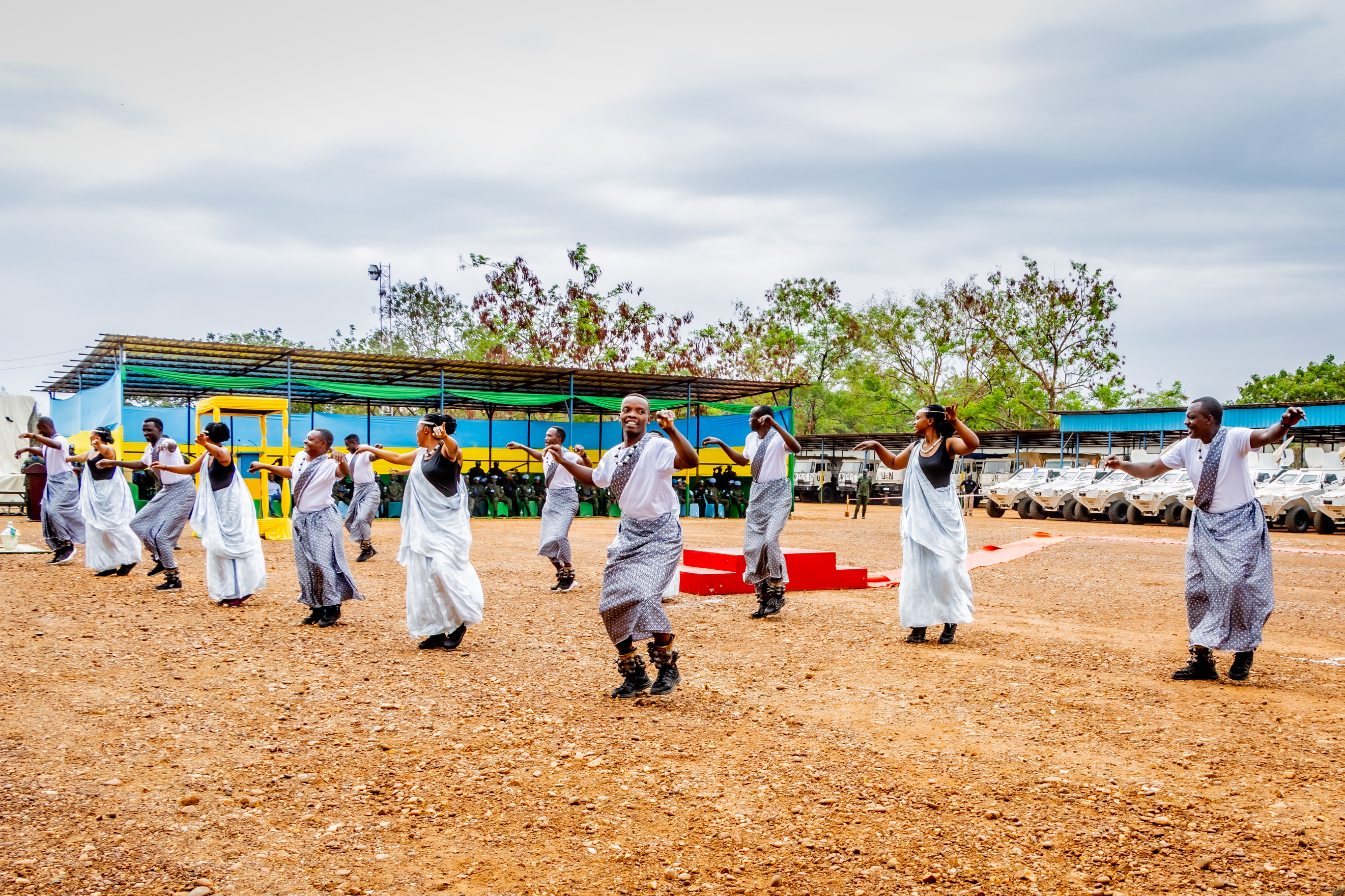
    Anchored in Rwanda’s Second National Strategy for Transformation (NST2) 2024–2029 and aligned with Vision 2050, the UNSDCF represents the UN’s most important strategic planning and implementation instrument at the country level.

    It outlines a shared commitment to support inclusive economic transformation, human capital development, and transformational governance—with a cross-cutting emphasis on gender equality, climate resilience, and innovation.

    “This new Framework is a testament to our enduring partnership with the United Nations and to Rwanda’s vision for a more inclusive, prosperous, and sustainable future,” said Minister Murangwa. “It reflects our shared priorities and values, and our resolve to leave no one behind.”

    The UN system in Rwanda through this Cooperation Framework commits to mobilize resources —estimated at USD 1.04 billion over five years—which will be operationalized through joint programmes, innovative financing, and catalytic partnerships involving Government, civil society, the private sector, and international partners.

    Commenting on the development, UN Resident Coordinator Ozonnia Ojielo emphasized that the Framework signed as the United Nations turns 80, reaffirms commitment to ‘Delivering as One in support of Rwanda’s transformation journey’.

    “It is both a call to action and a platform for results—driven by national ownership, powered by partnerships, and guided by the ambition to achieve the SDGs,” he noted.

    The UNSDCF 2025–2029 was developed through an inclusive and consultative process involving over 50 national institutions, UN entities, and key development actors.

    It responds to emerging challenges such as climate change, regional instability, and financing gaps—while leveraging Rwanda’s potential in digital innovation, green growth, and youth empowerment.

    As the world enters the final stretch toward 2030, Rwanda and the UN are stepping forward with a bold, forward-looking framework—one that translates global commitments into local action, and ensures that development reaches those furthest behind.

    The Government of Rwanda and the United Nations have signed the United Nations Sustainable Development Cooperation Framework (UNSDCF) 2025–2029, charting a renewed path of partnership to advance Rwanda’s national development priorities and the Sustainable Development Goals (SDGs).