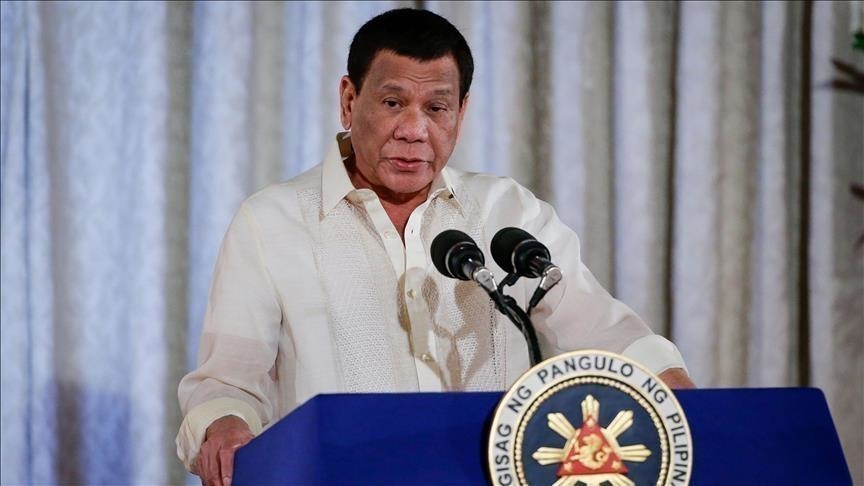
The ICC said the hearing will last four days. During Monday’s session, the Prosecution, the Defence, and the Legal Representatives of Victims delivered oral submissions, outlining their arguments on whether the case should proceed to trial.
Duterte faces three counts of crimes against humanity. The purpose of the hearing is to determine whether there is sufficient evidence to establish substantial grounds to believe that he committed the crimes charged. If one or more charges are confirmed, the case will be transferred to a Trial Chamber for the next phase of proceedings. The court is expected to issue its decision within 60 days after the conclusion of the hearing.
The 80-year-old Duterte did not attend the hearing in The Hague. Although the judges found him fit to participate in the proceedings, they separately granted a defence request to excuse his personal attendance at the hearing.
Earlier, his legal team had requested an indefinite adjournment of proceedings, including the confirmation hearing, arguing that he was unfit to participate. In response, ICC Pre-Trial Chamber I appointed three independent medical experts to examine his condition and received their reports on Dec. 5, 2025. On Jan. 26, 2026, the Chamber concluded that, based on the medical assessments, Duterte “is able to exercise his procedural rights and is therefore fit to take part in the pre-trial proceedings.”
Duterte served as president of the Philippines from 2016 to 2022. He was arrested and transferred to ICC custody in March 2025 under a warrant linked to his controversial anti-drug campaign, a move he has challenged. His initial appearance before ICC Pre-Trial Chamber I took place on March 14, 2025, and on Nov. 28, 2025, the court rejected an appeal seeking his release on grounds of age and declining health.
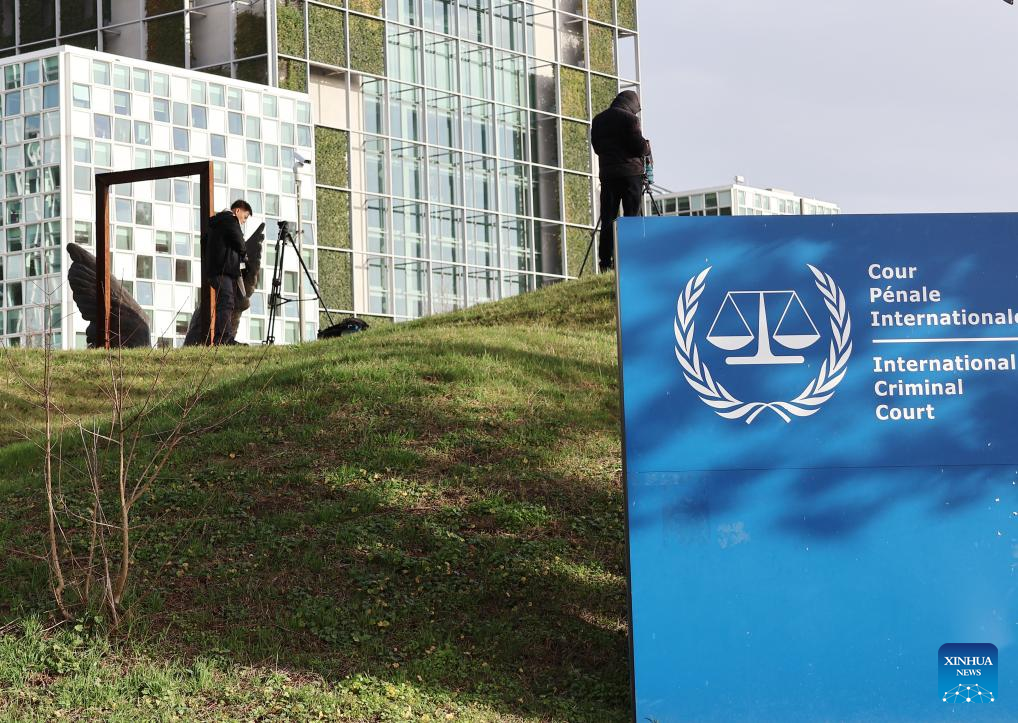
Cameramen work outside of the International Criminal Court in The Hague, the Netherlands, on Feb. 23, 2026.
Prince Kid, the former organizer of the Miss Rwanda beauty pageant, was convicted in Rwandan courts of rape and soliciting or engaging in sexual acts in exchange for favors related to contestants in the competition he ran.
In October 2023, the High Court sentenced him to five years in prison. Neither he nor his legal team appeared for the ruling, while the prosecution was present. It was later established that Prince Kid had fled justice.
The United States Immigration and Customs Enforcement (ICE) arrested Prince Kid in Fort Worth, Texas on March 3, 2025.
Authorities said he had been living in Fort Worth unlawfully for some time. This immigration-related offense is the basis of the case he currently faces in the U.S.
Speaking on Monday during the launch of the judiciary’s anti-corruption week, Prosecutor General Habyarimana said Rwanda is working closely with U.S. judicial authorities to ensure that Prince Kid answers for his crimes.
“The case concerning Ishimwe Dieudonné, known as Prince Kid, has been concluded with a final conviction, meaning there are no further avenues of appeal. It has now been established that he is in the United States, where he is also facing other charges under that country’s jurisdiction.
“As is standard practice when a person has been definitively convicted and their location is known, the required procedures were undertaken, including the preparation of an arrest warrant submitted to the competent authorities in that country. Cooperation is ongoing, and we are following the matter in accordance with the law,” she said.
She added that Prince Kid could be extradited to Rwanda after responding to the charges he faces in the United States.
“We informed them of the judgment against him, detailed the charges, provided his full identification, and formally requested that he be returned to Rwanda. When a person is facing proceedings in another country, extradition can sometimes take time. We submitted the relevant documents and case files in October 2024, but he must first answer to the proceedings where he is currently located. In due course, we expect to receive him as requested.”
The charges against Prince Kid stem from alleged sexual abuse of contestants who participated in the Miss Rwanda pageant, which he organized for years through his company, Rwanda Inspiration Backup.
On 2 February 2026, a session was held to review and update the list of individuals participating in the appeal proceedings.
The panel of jurors for the case is expected to be confirmed on 3 February, when the official list of witnesses and expert witnesses will also be announced.
At least 50 individuals are expected to testify, with nearly 20 scheduled to give their testimony from Kigali.
The proceedings will also include questioning of the accused and testimony from the professional who assessed Claude Muhayimana’s behavior, upbringing, and social background.
Meanwhile, the President of the Assize Court held a preparatory meeting with lawyers ahead of the appeal trial on 19 November 2025, during which they reviewed the list of witnesses to be called.
Muhayimana is seeking to have the charges against him dismissed and to be acquitted of the crimes for which he was convicted nearly four years ago.
Claude Muhayimana was born in 1961 in the former Kibuye Prefecture in western Rwanda. During the Genocide, he worked as a guesthouse driver. He later fled to France, where he was granted French citizenship in 2010 and settled in the city of Rouen.
On 9 April 2014, Muhayimana was arrested by French police following a complaint from CPCR, an organization that advocates for the prosecution of genocide perpetrators still in hiding.
On 10 April 2015, Muhayimana was released under judicial supervision while the investigation continued. His trial was initially scheduled to begin in September 2020 but was postponed due to the global COVID-19 pandemic.
When the trial opened on 22 November 2021, Muhayimana was accused of transporting Interahamwe militia members who were going to kill Tutsi civilians in Kibuye between April and July 1994.
The prosecution also stated that Muhayimana played a role in the killings of Tutsi civilians at Kibuye Parish Church on 17 April 1994, at Gatwaro Stadium, and at “Home St Jean” the following day.
Represented by lawyers Philippe Meilhac and Françoise Marthe, Muhayimana denied the charges against him, stating that he was being prosecuted because of his alleged membership in the RNC opposition group.
On 16 December 2021, the trial chamber of the Paris Assize Court found Muhayimana guilty of complicity in genocide and crimes against humanity and sentenced him to 14 years in prison after concluding that he had transported Interahamwe militia members.
The court stated, however, that it could not establish his involvement in the killings of Tutsi civilians in the town of Kibuye, noting that he claimed he was transporting the body of a gendarme named Mwafurika who had been killed in Bisesero to Ruhengeri at the time those killings occurred.
The genocide survivors’ organization IBUKA stated that the sentence imposed on Muhayimana was too lenient in relation to the crimes he committed.
Addressing the UPR on Wednesday, January 21, Rwanda’s Minister of Justice and Attorney General, Dr. Emmanuel Ugirashebuja, emphasised that the government continues to prioritise the rights and livelihoods of its citizens through legal, institutional, and social reforms.
“Rwanda approaches the UPR with a spirit of openness and constructive dialogue,” Dr. Ugirashebuja said. “This platform allows us to present measurable outcomes and to continue improving the lives of all Rwandans.”
The delegation reported notable achievements in access to justice, including the resolution of over 38,000 cases through alternative dispute resolution mechanisms such as mediation and plea bargaining between 2022 and 2026. Rwanda also inaugurated an alternative dispute resolution center in Kigali in 2024, which has mediated almost 200 cases and facilitated the resolution of 564 others, with plans to expand similar centers to other provinces.
Reforms aimed at rehabilitation and reintegration of offenders were highlighted, with 9,387 inmates released on parole and 434 receiving presidential pardons between 2021 and 2024. These initiatives have contributed to Rwanda being ranked first in Africa on the World Justice Project Rule of Law Index in both 2024 and 2025, and 39th globally.
On social protection, the delegation presented strong gains in poverty reduction and financial inclusion. The national poverty rate fell from 39.8 percent in 2017 to 27.4 percent in 2024, lifting approximately 1.5 million people out of poverty, while extreme poverty declined from 11.3 percent to 5.4 percent.
Through the Vision Umurenge Program, over 1.2 million vulnerable citizens, including older people, persons with disabilities, and pregnant or lactating women, receive monthly cash transfers, helping to protect households from extreme poverty and income insecurity.
Rwanda has also strengthened its social registry, Imibereho, which now registers over 3.5 million households, enabling more precise targeting of social protection programs. At the community level, 14,719 parasocial workers coach households, connect beneficiaries to services, and promote sustainable livelihoods.
Dr. Ugirashebuja further highlighted Rwanda’s commitment to gender equality and the rights of children, reporting continued progress in women’s representation across government and the private sector, as well as a decline in child labour from 4 percent in 2016–2017 to around 3 percent today.
“Rwanda continues to face challenges, including climate-related impacts and residual socio-economic vulnerabilities,” Dr. Ugirashebuja said. “However, the government reaffirms its commitment to sustained reforms, prevention strategies, and partnerships to further improve the rights and livelihoods of all Rwandans.”
Rwanda’s delegation also highlighted progress in education and health. Gross enrollment for children aged 3 to 17 rose from 79.6 percent in 2022–2023 to 92.1 percent in 2023–2024, and net enrollment increased from 53 percent to nearly 60 percent.
In health, under-5 mortality declined from 45 per 1,000 live births in 2020 to 36 in 2025, while maternal care coverage remains high, with 95 percent of women receiving at least one antenatal visit and 98 percent of deliveries attended by skilled health personnel.
The Rwandan delegation also noted improvements in civil liberties, media freedom, and access to information, as well as ongoing reforms to enhance transparency, accountability, and citizen engagement.
The UPR, a peer review mechanism established by the United Nations, provides a platform for countries to report on progress in human rights and socio-economic development. Rwanda’s fourth UPR report underscores the country’s people-centered approach to human rights, demonstrating measurable progress in justice, social protection, and inclusive development since the previous review in 2021.
Besides the Minister of Justice and Attorney General, Dr. Emmanuel Ugirashebuja, the Rwandan delegation included Rwanda’s Permanent Representative to the UN in Geneva, Ambassador Urujeni Bakuramutsa, as well as officials from the National Institute of Statistics of Rwanda (NISR), the Rwanda Governance Board (RGB), and the Ministry of Local Government.
Yamagami admitted to the crime during the trial, and while he expressed remorse, his defense raised complex issues regarding his troubled upbringing and resentment toward the Unification Church, which his mother was deeply involved in.
Yamagami’s defense team argued that he was a victim of religious abuse, claiming that his mother’s devotion to the church financially ruined the family.
They presented evidence that the family lost 100 million yen ($633,000) to the church, leaving Yamagami bitter toward Abe, whose connections to the church were revealed during the investigation.
Yamagami believed that Abe’s ties to the controversial group indirectly caused his family’s downfall, fueling his desire for revenge.
However, the prosecution countered that Yamagami’s act was cold-blooded and malicious, with Judge Shinichi Tanaka describing his actions as “despicable and extremely malicious” because Yamagami shot Abe from behind during an unguarded moment.
Yamagami, who had assembled a homemade gun from metal pipes and duct tape, shot Abe twice, killing him instantly. His actions triggered a national investigation into the Unification Church, which had been criticized for its financial exploitation of followers and its ties to Japan’s ruling Liberal Democratic Party (LDP).
The case also led to the resignation of several ministers whose connections to the church were exposed. Despite his defense team’s plea for a lighter sentence, arguing that Yamagami’s violent act was an emotional response to his family’s suffering, many felt that the crime could not be justified.
In a tearful testimony, Akie Abe, the widow of the former Prime Minister, spoke of the profound sorrow her husband’s death caused.
“I just wanted him to stay alive,” she said. The Unification Church, a South Korean-founded organization, has faced scrutiny for its aggressive financial demands and its controversial mass weddings.
Last year, a Tokyo court revoked the church’s religious corporation status due to its coercive donation practices.
Yoon was sentenced to five years in prison on his arrest obstruction charges stemming from a martial law attempt, live footage showed last Friday. Under South Korean law, the deadline to file an appeal is one week, meaning the appeal had to be submitted by Jan. 23.
After several of their key arguments were rejected in the ruling, Yoon’s side held a press conference earlier on Monday, announcing that an appeal was formally filed with the Seoul Central District Court at 4 p.m.
Meanwhile, the special prosecutor, who has yet to receive the full written verdict, said he plans to review the ruling and decide whether to file an appeal. The team of Cho Eun-suk, an independent counsel who led investigations into Yoon’s insurrection and other charges, demanded a 10-year prison term for Yoon. However, as the prosecution previously expressed regret that the sentence was only half of what was sought, observers widely expect an appeal to be filed.
The first-instance sentencing for Yoon’s insurrection charges was scheduled for Feb. 19. The special counsel sought a death penalty for Yoon on the charges.
The emergency martial law was declared by Yoon on the night of Dec. 3, 2024, but it was revoked hours later by the National Assembly.
The constitutional court upheld a motion to impeach Yoon in April last year, officially removing him from office.
The ousted leader was indicted under detention last January as a suspected ringleader of the insurrection, becoming the first sitting president to be arrested and indicted.
The criminal division of the Seoul Central District Court in charge of Yoon’s obstruction of justice case handed down the prison sentence to Yoon for abusing the presidential security service to hinder the anti-corruption agency from executing its arrest warrant in January 2025.
The Corruption Investigation Office for High-ranking Officials (CIO) was once thwarted in its attempt to arrest Yoon as the presidential security service formed human shields and bus blockades to prevent investigators from entering the presidential residence.
The team of Cho Eun-suk, an independent counsel who led investigations into Yoon’s insurrection and other charges, demanded a 10-year prison term for Yoon.
The court said Yoon privatized the presidential security service for personal safety and private interests by blocking the law enforcement agencies’ lawful execution of an arrest warrant and attempting to destroy evidence, pointing out that despite the very bad nature of his crime, he consistently offered unconvincing excuses and showed no remorse.
The court stressed that severe punishment was necessary, considering the need to restore the rule of law damaged by Yoon’s crime, but it noted that the fact that he was a first-time offender with no criminal record was considered a favorable factor.
The sentencing, which was broadcast live, was Yoon’s first verdict coming from his botched martial law bid.
The first-instance sentencing for Yoon’s insurrection charges was scheduled for Feb. 19. The special counsel sought a death penalty for Yoon on the charges.
The emergency martial law was declared by Yoon on the night of Dec. 3 in 2024, but it was revoked hours later by the National Assembly.
The constitutional court upheld a motion to impeach Yoon last April, officially removing him from office.
The ousted leader was indicted under detention last January as a suspected ringleader of the insurrection, becoming the first sitting president to be arrested and indicted.
Ingabire argues that Article 106 violates constitutional guarantees, including Articles 29 (b) and 61, and should be annulled.
The article allows a court, during criminal proceedings, to summon individuals suspected of being accomplices or witnesses to provide explanations. If no incriminating evidence emerges, the trial continues without further summons.
However, if the court deems their explanations inadequate and detects signs of criminal responsibility, it may direct the Prosecution to open an investigation based on matters raised in court.
Ingabire’s petition stems from her own experience in a case before the High Court involving Sibomana Sylvain and others.
She was summoned by the trial judge to give explanations, after which the court ordered the Prosecution to investigate her, leading to her arrest.
The Supreme Court first confirmed that Ingabire has standing to bring the challenge, as the application of Article 106 directly affected her and could impact others similarly.
Representatives from the State Attorney General’s office opposed admitting the case. They cited a prior Supreme Court ruling in the case of Mutebwa Alphred, which addressed a similar provision (then Article 121) and prompted subsequent amendments.
They argued that evidence against concealed suspects may only surface during trial and that judicial orders for investigation do not predetermine outcomes.
They also invoked the principle of res judicata, asserting that an issue already conclusively decided by a competent court cannot be relitigated.
Ingabire countered that a judicial order to investigate carries immediate legal consequences. She further noted that, despite the earlier ruling, the revised wording of Article 106 retains unconstitutional elements.
Drawing on scholarly opinions from French legal experts, the Supreme Court held that res judicata must be evaluated in light of the substance of the contested provision.
The principle does not bar courts from revisiting or correcting prior approaches, particularly when legislation has been redrafted. The court cited precedents from India’s Supreme Court allowing review to verify legislative compliance with earlier judgments.
The court observed that, although the Criminal Procedure Law was amended in response to the prior decision, Article 106 preserves the core mechanism of judicial summons and retains elements now challenged by Ingabire.
Accordingly, the Supreme Court declared the petition admissible and scheduled the merits hearing for March 4, 2026.
As a result, the ongoing trial of former DALFA–Umurinzi party members, led by Sibomana Sylvain before the High Court, will remain paused until the Supreme Court rules on Ingabire’s case.
“I was held for six months. Every day was a nightmare,” Mwiza, now living with disabilities caused by the abuse, testified during a protest by Congolese refugees in Rwanda, organised to condemn a recent anti-Tutsi slur by Major General Sylvain Ekenge, the suspended FARDC spokesperson.
“I was raped by over 100 soldiers. Everyone, including elders, their children, and even their guards, assaulted me, all to ‘experience what a Tutsi woman is like.’ I contracted HIV and sustained disabilities. I am now on medication.”
Ekenge’s remarks, widely condemned as incitement against Tutsis, included warnings against marrying Tutsi women, reflecting entrenched anti-Tutsi sentiment within the DRC military. Refugees in Rwanda expressed outrage at the comments, staging demonstrations demanding accountability and protection for Congolese Tutsis.
Mwiza’s ordeal began six months before fleeing to Rwanda, when FDLR soldiers abducted her and her niece from Shangi and took them to Kirolirwe in Masisi territory. While Mwiza survived, her niece was killed.
“They did whatever they wanted, denying me water, denying me care. Sometimes they told me to call Kagame [President Paul Kagame] to rescue me, but all I could do was pray. Everyone struck me, even children, because they were ordered to.”
Her escape came through the unexpected aid of a local soldier who recognised her plight. “He said my blood would not be accounted for. He helped me leave Kirolirwe secretly and guided me to Bishoga,” Mwiza recounted. From there, she moved cautiously to Nyamitabo, where M23 forces were stationed. She finally reached the Nkamira temporary camp in Rwanda, traumatised but alive.
In Rwanda, she joined the Mvura Nkuvure rehabilitation programme, which has helped her begin to rebuild her life despite deep psychological and physical scars. Her husband and father were killed, but her children have since been reunited with her.
“I survived because of God and those who helped me. But no one should endure what I went through,” she said.
Mwiza’s story is part of a decades-long pattern of violence targeting Kinyarwanda-speaking Tutsis in the DRC. After the 1994 Genocide against the Tutsi in Rwanda, the DRC harboured elements of the Interahamwe and forces loyal to former President Juvenal Habyarimana, cultivating anti-Tutsi ideology. Some of these individuals formed armed groups that evolved into the FDLR.
The FDLR continues to terrorise Congolese citizens, often with tacit DRC government support. Incidents include home burnings, kidnappings, killings, and sexual violence.
In October 2023 alone, nearly 300 homes in Nturo village were destroyed, with residents accused of supporting M23. Social media footage has repeatedly shown Congolese civilians attacking Tutsi neighbours, in some cases committing acts of extreme cruelty, including cannibalism.
Rwanda now hosts over 120,000 Congolese refugees, many fleeing decades of violence and displacement. Mwiza urges the international community to intervene to end decades of hatred and persecution of Congolese Tutsis.
The verdict in Karasira’s case was delivered on September 30, 2025. The court ruled that he was guilty of one of the several charges he faced.
Karasira had originally been charged with multiple offenses, including denying and justifying the 1994 Genocide against the Tutsi in Rwanda, inciting public division, and spreading false information. Prosecutors said the alleged offenses were committed through his YouTube channel at various times.
He was also accused of money laundering and failing to explain the source of his wealth, including cash seized from him and funds held in his bank and mobile money accounts.
The prosecution had asked the court to convict Karasira on all charges and sentence him to 30 years in prison.
During the trial, Karasira apologized to those who were hurt by his comments on YouTube, saying he never intended to spread hatred or deny the country’s tragic history.
Regarding the seized funds, prosecutors argued that the money came from individuals and groups opposed to the Rwandan government, who were supporting his public statements.
Karasira, however, said the money included severance pay from his former employer, the University of Rwanda, where he once worked, as well as donations from well-wishers. He added that he had no dependents and thus had been saving his income.
After reviewing arguments from both sides, the court sentenced Karasira to five years in prison and ordered the release of his seized property.
Karasira was arrested in May 2021 and has been detained at Nyarugenge Prison since then. Having already served four years, he now has less than one year left to complete his sentence — about eight months remaining until his expected release on May 30, 2026.