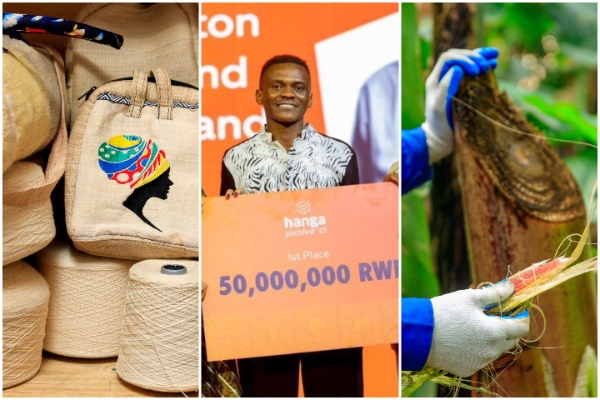
At the centre of that transformation is Jonathan Shauri Kalibata, a mechanical engineer trained at Rwanda Polytechnic and the founder of Re-Banatex, a startup turning discarded banana stems into textile fibres. His work recently gained national attention after winning Hanga Pitch Fest 2025, a platform organised by the Ministry of ICT and Innovation (MINICT) and the Rwanda Development Board, with support from partners including UNDP.
For Shauri, the idea did not begin in a lab, but in memory.
Growing up, banana stems were part of everyday life, playthings, discarded remnants, and later, invisible waste. Years later, that same material would become the raw input for an emerging textile innovation.
“Banana plants only produce fruit once,” he explains. “After harvesting, the stems are usually thrown away without any economic value. We are giving them that value.”
From agricultural waste to industrial input
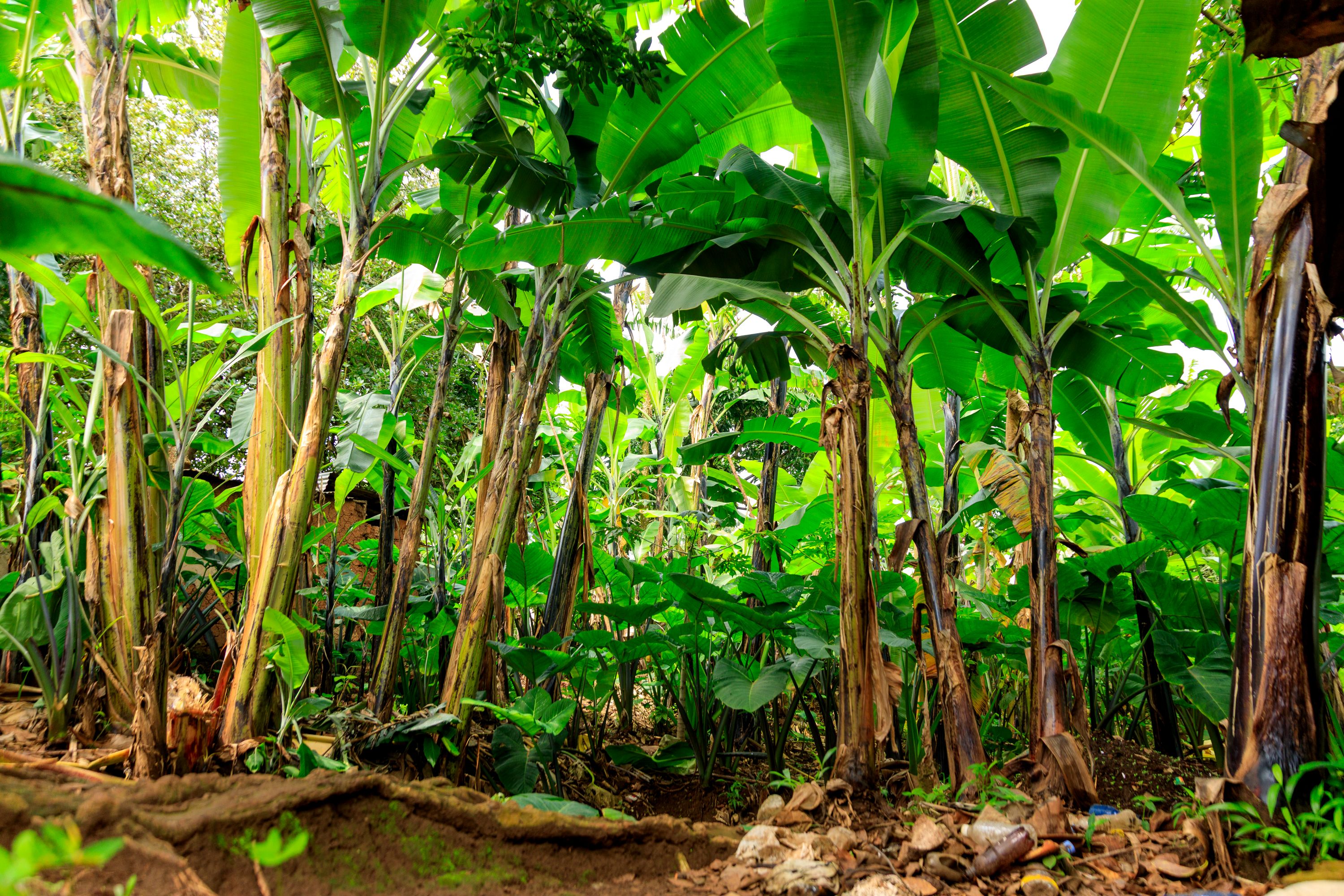
Rwanda’s position as one of the region’s major banana producers means large volumes of post-harvest biomass are generated daily. Traditionally left to decompose or be discarded, these stems are now being reclassified by Re-Banatex as a resource rather than waste.
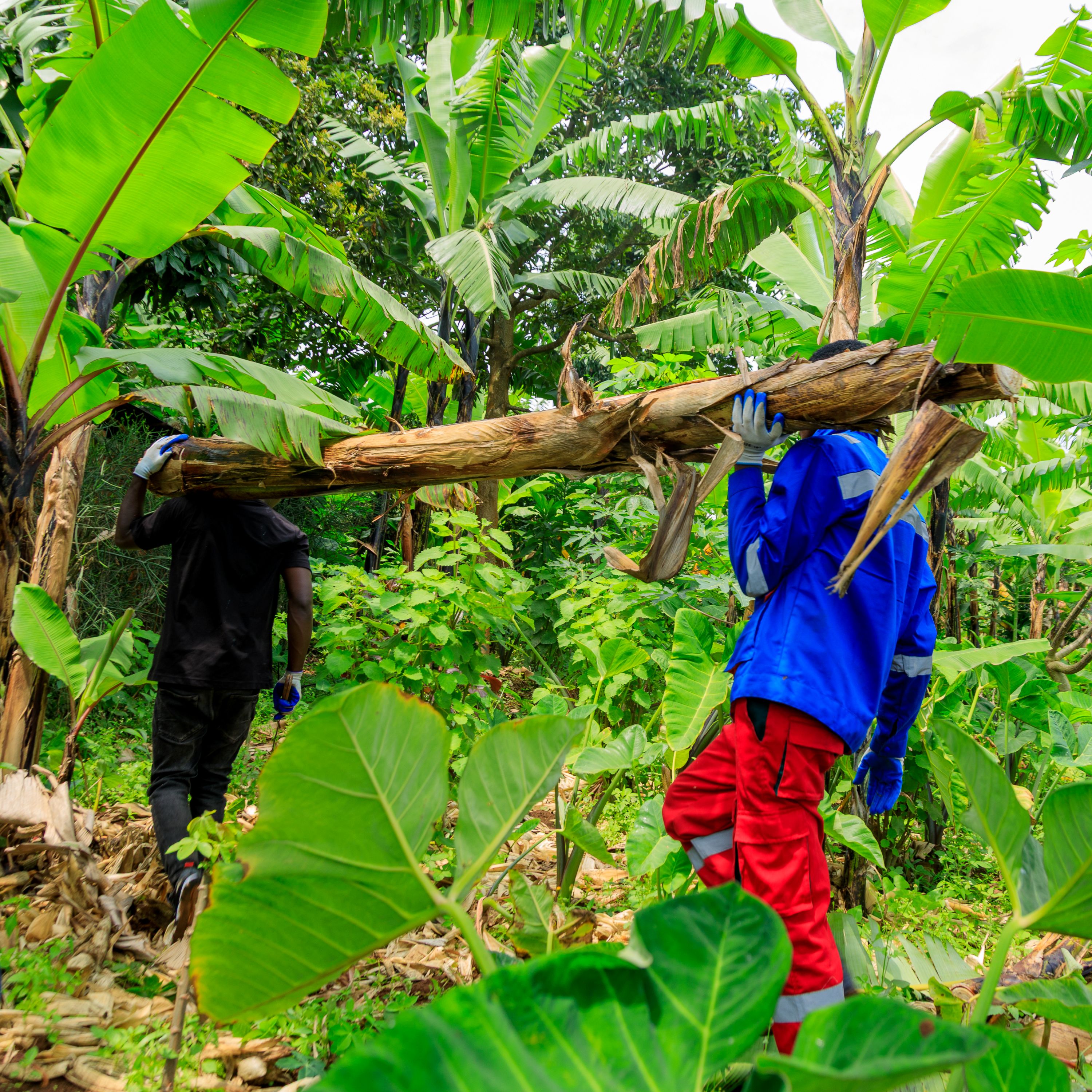
The process begins at the farm level. Re-Banatex works directly with banana farmers, purchasing stems after harvest at a rate of 100 Rwandan francs per meter. The arrangement is simple but impactful, allowing farmers to earn income from material that previously had no market value, while the company secures its primary raw input.
Rather than relying on dried material, the startup uses fresh banana stems. According to Shauri, fresh stems yield stronger fibres, which are better suited for textile production.
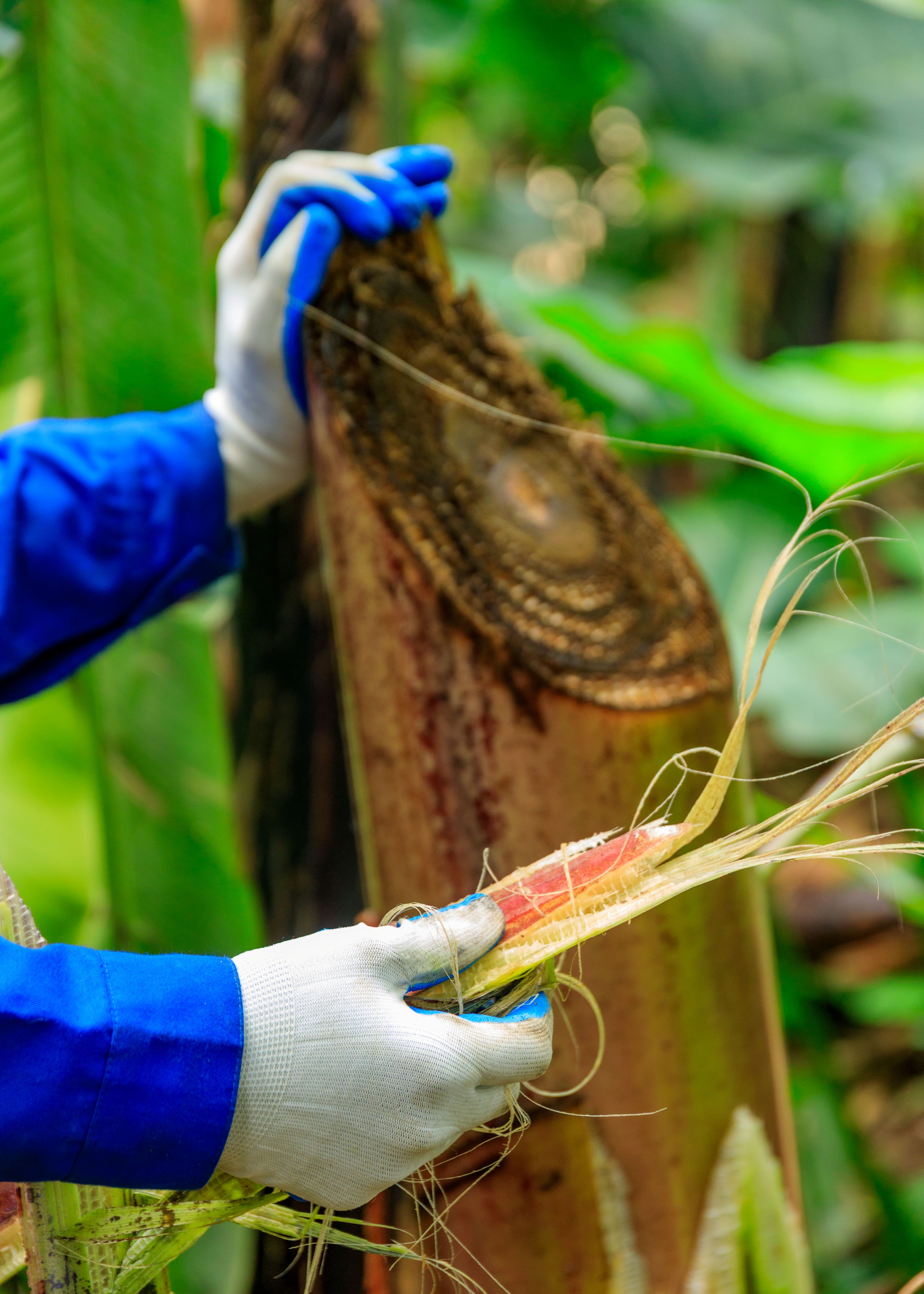
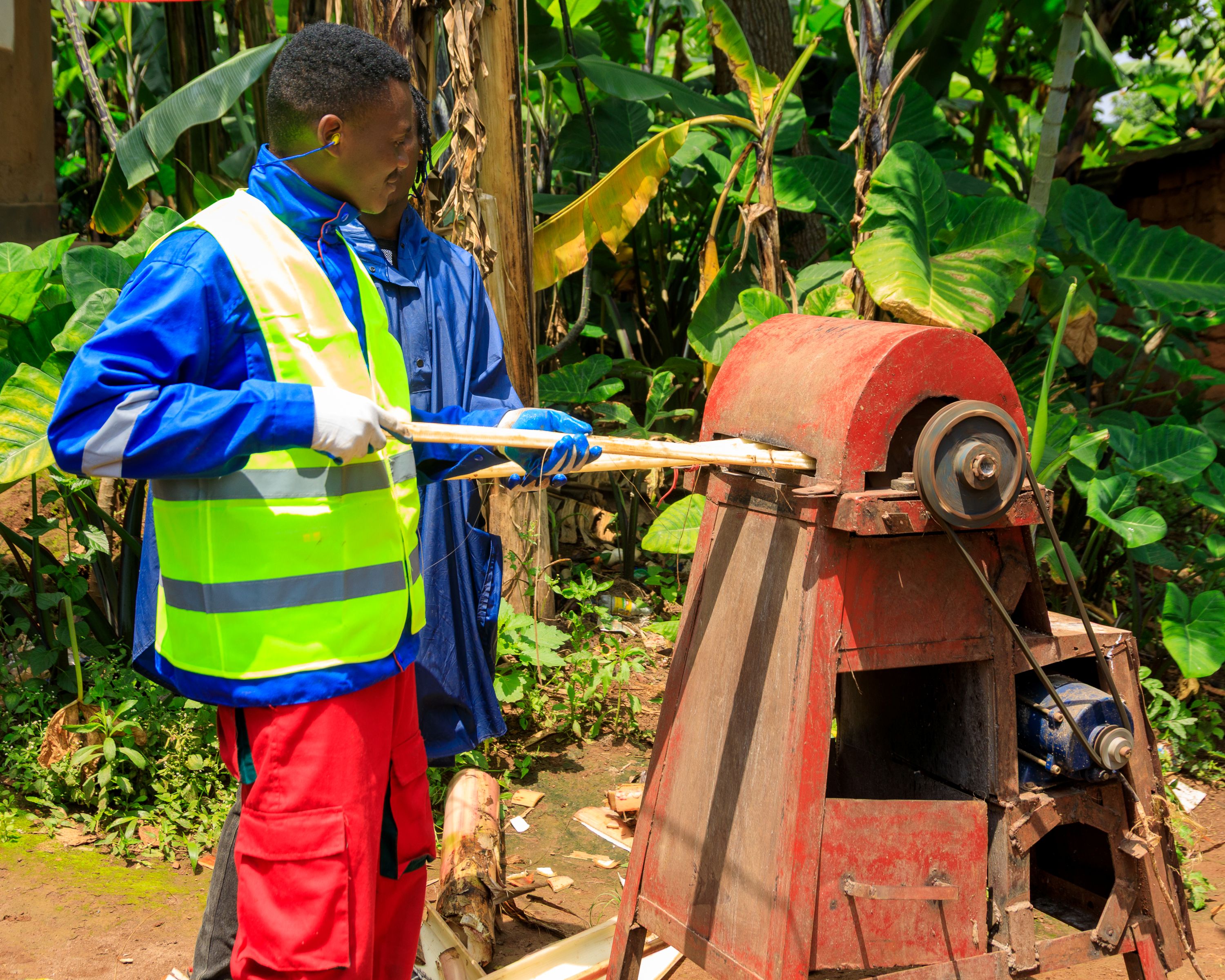
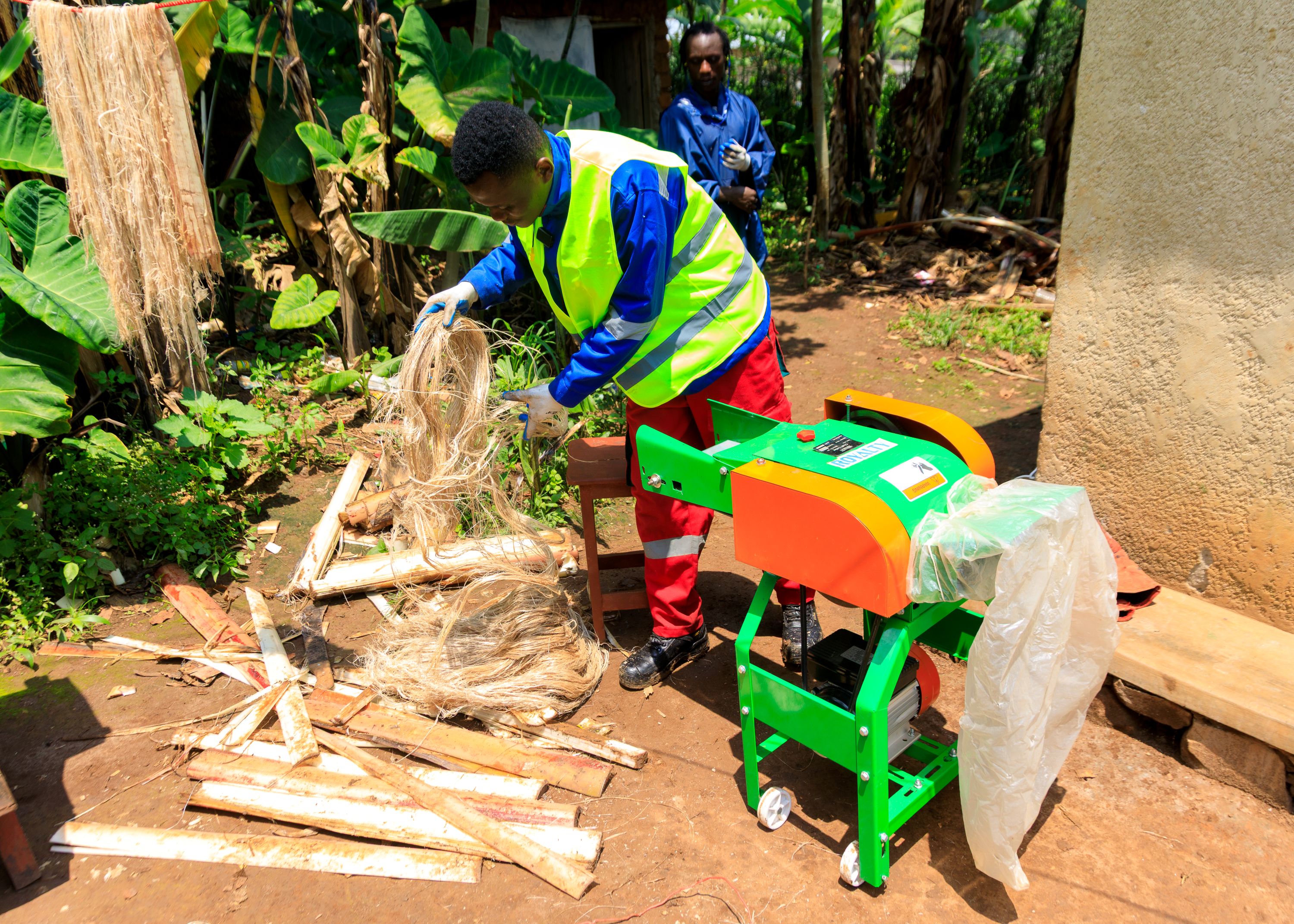
Once collected, the stems are transported to processing sites where fibres are extracted. Initially, this process was manual with workers physically beating the stems to reveal the fibres inside. Over time, the team engineered machinery to improve efficiency and consistency.
Engineering a new material
What begins as a thick, water-rich stem is transformed through a multi-stage process into usable fibre. The stems contain multiple layers, each with potential applications, though Re-Banatex continues to explore ways to utilise even the inner portions more effectively.
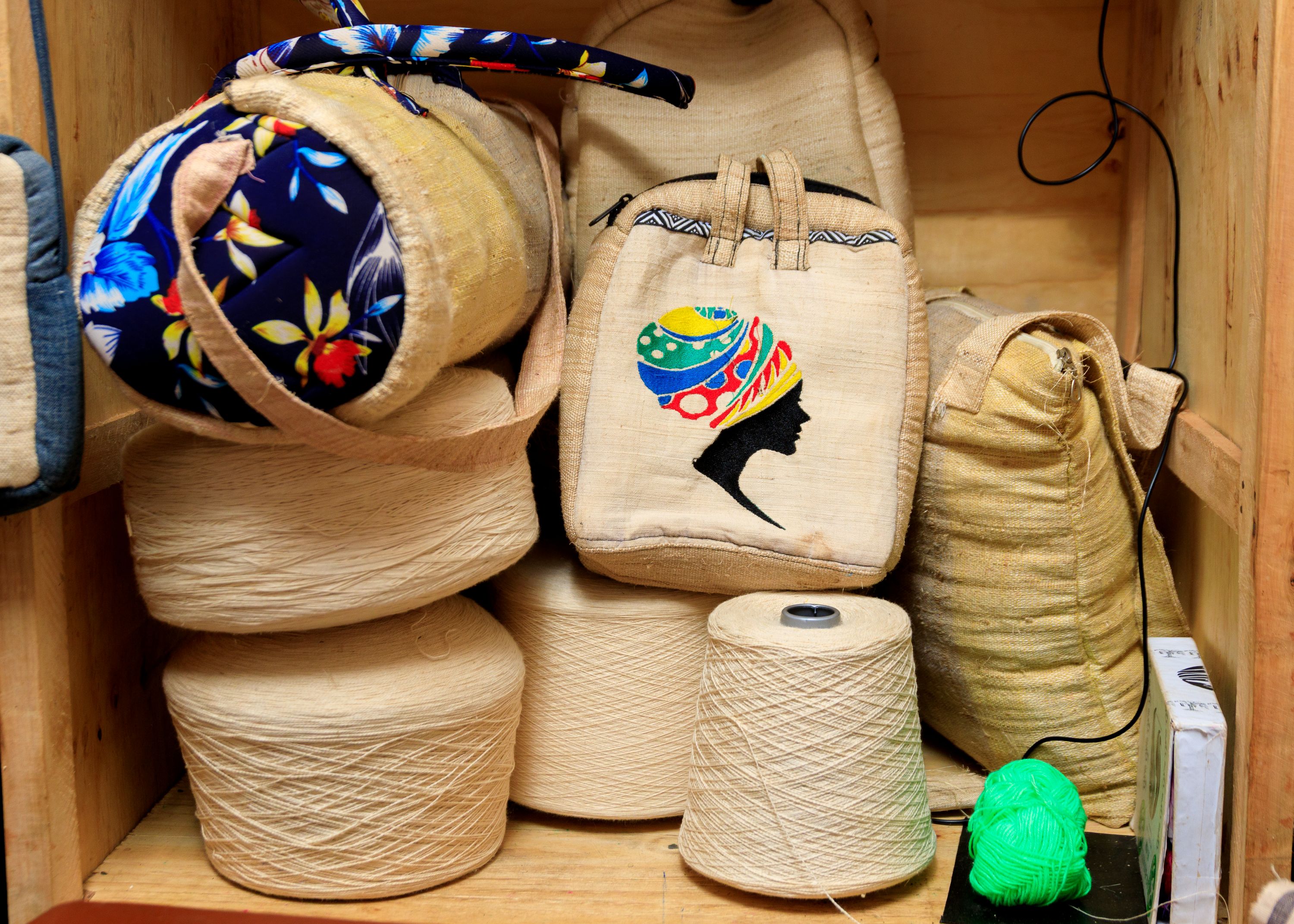
After extraction, the fibres are dried and processed into a softer form suitable for blending. This intermediate material is then mixed with cotton and spun into yarn, which can be woven into fabric using loom machines.
The result is a plant-based textile that can be used in a range of products, including bags and shoes to carpets and garments.
Shauri notes that the company is still expanding its material applications, reflecting the experimental nature of the innovation.
Trial, error, and iteration
Re-Banatex’s journey has not been linear.
The team’s first fabric prototype, Shauri recalls, was far from market-ready. It was stiff, rough, and visually unappealing. But rather than discouraging the team, it became a turning point.
“It was very bad,” he admits. “But it gave us feedback that pushed us to improve.”
That early failure led to experimentation with blending banana fibres with other materials, including cotton. The goal, as Shauri recalls, was to improve texture, durability, and usability while maintaining sustainability.
The company also began exploring ways to repurpose byproducts from the extraction process. The residual material left after fibre extraction is not wasted as it can be used as fertiliser, animal feed, or even for mushroom cultivation.
Building a circular value chain
Beyond the technical process, Re-Banatex is building a value chain that connects farmers, engineers, and designers.
Farmers benefit from an additional income stream. Designers gain access to locally produced, eco-friendly materials. And the startup positions itself at the intersection of agriculture, manufacturing, and sustainability.
“We bring banana farmers, fashion designers, and other stakeholders together,” Shauri says.
The company’s products, including woven fabrics and finished goods like bags, are already being introduced to local designers. These collaborations are helping test market acceptance while refining product quality.
Like many early-stage innovations, Re-Banatex has faced resistance.
Introducing a new material into a market accustomed to synthetic and imported textiles has required persistent education and outreach. Early reactions from designers were sceptical, particularly when presented with initial fabric samples.
At the same time, scaling production and transitioning from manual to industrial processes has been a technical and financial challenge.
There were moments of doubt.
“At some point, I felt like giving up,” Shauri reflects. “But innovation requires resilience.”
Recognition and momentum
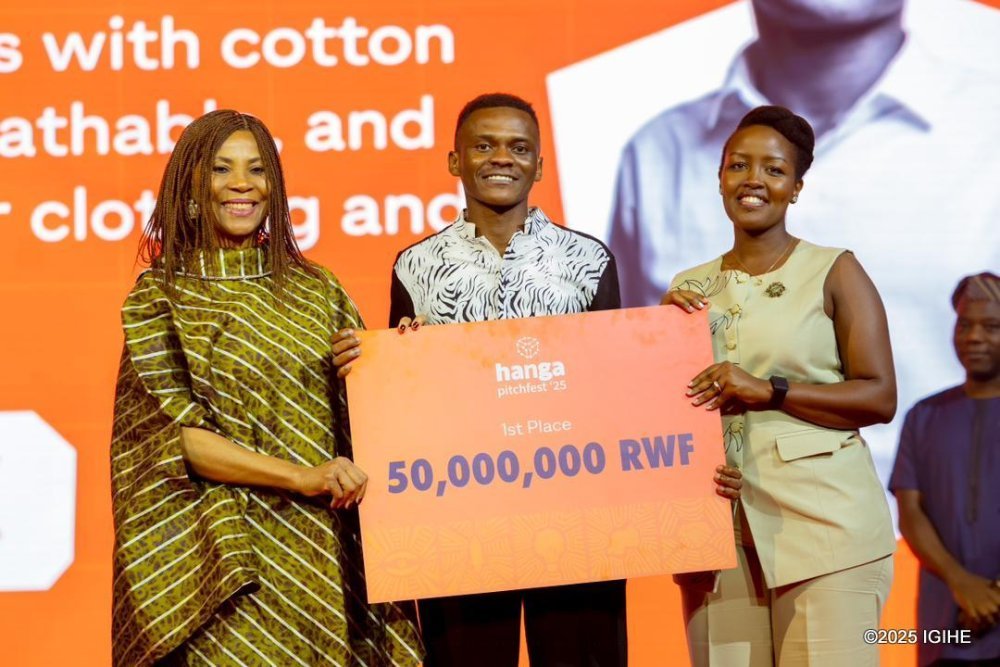
Winning Hanga Pitchfest 2025 marked a significant milestone for Re-banatex. As one of the Rwandan government’s premier innovation platforms, the competition has empowered hundreds of startups since its inception in 2021 by bridging the gap between raw ideas and market readiness. To date, it has disbursed over Rwf 600 million in direct grants, providing the critical capital and mentorship needed for entrepreneurs to scale their solutions.
For Re-Banatex, the prize of 50 million Rwandan francs extends beyond financial support. It represents validation from institutions such as MINICT and the Rwanda Development Board, signalling confidence in the startup’s potential.
Shauri says the recognition is already accelerating the company’s transition toward industrial-scale production. The start-up is in the process of importing new machinery to automate processes such as fibre carding and spinning, with plans to fully industrialise operations within months.
Aligning with “Made in Rwanda”
Re-Banatex’s ambitions extend beyond entrepreneurship. The company sees itself as contributing to Rwanda’s broader industrial and sustainability goals, particularly within the “Made in Rwanda” agenda.
By sourcing raw materials locally and reducing reliance on imported synthetic fibres, the startup is attempting to close gaps in the textile value chain.
“In the future, we want ‘Made in Rwanda’ to truly mean made from Rwanda’s own resources,” Shauri explains.
Over the next five to ten years, Re-Banatex aims to position itself as a leading player in eco-friendly textile manufacturing in Rwanda and across Africa. The vision includes expanding production capacity, improving material quality, and influencing a shift toward sustainable alternatives in the fashion industry.
For now, the journey continues, rooted in experimentation, driven by local resources, and sustained by a belief that waste can be transformed into value.
Watch the full conversation below:
Leave a Reply