Author: Théophile Niyitegeka

  • Germany not ‘first in line’ to boost Afghanistan troops

    {Chancellor Angela Merkel’s comments come as NATO considers increased presence in Afghanistan to fight the Taliban.}

    German Chancellor Angela Merkel has said that she does not believe Germany is “first in line” to send more troops to Afghanistan, as NATO considers a proposal to boost forces there.

    “I don’t think we’re first in line to expand our capacities there,” Merkel said after meeting with NATO Secretary-General Jens Stoltenberg on Thursday.

    She said Germany will continue to lead NATO’s military training mission in northern Afghanistan, adding that she will wait and see the outcome of the alliance’s assessment of a request from military chiefs to send more troops to the country.

    Al Jazeera’s Dominic Kane, reporting from Berlin, said there were few specifics revealed at Thursday’s meeting.

    “The news conference between Stoltenberg and Merkel was very heavy on warm words, on the appreciation of the role of NATO and the role of Germany, but it was light on specifics regarding whether the Germans would perhaps increase their contingent of troops in Afghanistan,” Kane said.

    On Wednesday, Stoltenberg met British Prime Minister Theresa May, a day after reports suggested NATO had asked Britain for more troops a few weeks ago.

    He confirmed he had received a request for more troops, but insisted it would not mean a return to combat operations.

    “We have received a request from our military authorities to increase our military presence in Afghanistan with a few thousand troops,” Stoltenberg said.

    “It will continue to be a train, assist and advise operation,” he added.

    Stoltenberg said a decision on the request will be made within weeks and the issue is expected to be high on the agenda at the NATO annual summit in Brussels on May 25.

    {{‘Desperate’ for assistance}}

    Since NATO’s combat mission in Afghanistan formally ended in 2014, Taliban attacks have intensified and Afghan military and civilian casualties have risen.

    NATO already has some 13,450 troops in Afghanistan, including around 6,900 US and 500 British military personnel, who are training the Afghan armed forces to eventually take over the country’s defence and security.

    The US has an additional 1,500 soldiers conducting assist missions directly under Pentagon command.

    They have sustained high casualties, up 35 percent in 2016 with 6,800 soldiers and police killed, according to a US watchdog.

    In April, the Taliban announced the beginning of its annual “spring offensive” and last week the armed group stormed and seized a district in the vicinity of Kunduz, in northern Afghanistan.

    Al Jazeera’s John Hendren, reporting from Kabul, said the Afghan government is in “desperate” need of assistance.

    “If you talk to Afghan troops, they say they desperately need the help,” Hendren said. “In the north and south of the country, they are embattled.”

    He added that the goal of the idea of a troop increase is to get the Taliban to the negotiating table.

    Security analyst Mushtaq Rahim told Al Jazeera that NATO and the international community should focus on the root causes of the conflict in Afghanistan.

    “The overall strategy should concentrate on beating the Taliban at the root levels instead of addressing the symptoms of the whole conflict,” Rahim said from Kabul.

    Separately, the US administration is reportedly considering deploying more troops to Afghanistan as well. Official sources quoted anonymously by US media said the increase would range from between 3,000 to 5,000 soldiers, including Special Operations forces.

    President Donald Trump is expected to receive a proposed new approach to the war this week, according to Theresa Whelan, a Pentagon policy official.

    According to the United Nations, 583,000 people have fled their homes as a result of the conflict in 2016, the highest number of displacements since records began in 2008.

    Source:Al Jazeera

  • Al-Wafaa Islamic Bloc wins Birzeit University elections

    {Student election at university in the occupied West Bank seen as indicator of Palestinian political mood.}

    A student group ideologically aligned with Hamas has won the most seats for the third year in a row in an election held at Birzeit University in the occupied West Bank.

    Al-Wafaa Islamic Bloc won 25 of the 51 seats in Wednesday’s student council election, with the Fatah-aligned Martyr Yasser Arafat party winning 22.

    The last general election held among Palestinians was the parliamentary vote in 2006, in which Hamas won a majority.

    Fatah’s refusal to recognise the result ended in divided rule among Palestinians in the occupied territories, with Hamas administering the Gaza Strip and Fatah ruling the West Bank in conjunction with Israeli forces.

    The West Bank university’s yearly election is therefore “perceived as a bellwether of Palestinian politics and an indicator of the overall political mood among Palestinians” in the West Bank, according to Alaa Tartir, Programme Director of Al-Shabaka: The Palestinian Policy Network.

    “The student body affiliated with Hamas won the elections for the third year running which debunks the myth that Hamas is losing its popularity and support of the Palestinians in the West Bank,” Tartir told Al Jazeera.

    “In fact, it is Fatah that remains shackled by its crisis and negatively affected by the failures and lack of legitimacy of their political leadership in the West Bank.”

    While campaigning largely revolves around university and student affairs, the election does take on a political tone, indicative of the fact that up to 50 percent of students vote according to political issues, according to the estimate given by Marwan Taha, 19, a Birzeit law student and a volunteer who helped organise the election this year.

    “Many do vote for student affairs, and the campaigning is specific to university and administrative issues,” Taha said.

    But the politics of the occupation tend to go hand-in-hand with student affairs.

    Previous years have involved students being detained by the Palestinian Authority (PA), which has long been known to pay university students to serve as informants.
    Birzeit students have also frequently been targeted by Israeli forces, and several academics and human rights organisations have called attention to the manner in which Palestinian education is threatened by the occupation.

    Political system ‘in crisis’

    But according to Tartir, “the election is not only an indicator of the Palestinian political mood but also a reflection of the crisis of the Palestinian political system”.

    Palestinians vote in municipal elections on Saturday, but only in the occupied West Bank and not the Gaza Strip, illustrating the persistent inability of Fatah and Hamas to overcome deep divisions.

    Efforts last year to hold joint local elections failed as the two parties failed to bridge their differences.

    Saturday’s vote for some 300 municipal councils in the West Bank, occupied by Israel for 50 years, has been seen as yet another sign that reconciliation may be a long way off.

    “The student election has re-produced the same political problems instead of tackling them. For example, the university’s political scene is still dominated by Fatah and Hamas despite all the damages over the last 10 years due to the intra-Palestinian divide,” Tartir added.

    The election on Saturday will involve 1.1 million voters. There will be 536 candidate lists with 4,400 candidates, the head of the electoral commission, Hisham Keheil, said.

    “Everything indicates that the vote should go well,” Keheil said while expressing hope that voters will show up at the polls.

    Turnout is a major question, however. A poll published by the Palestinian Centre for Policy and Survey Research suggested only 42 percent of Palestinians wanted to vote.

    Some 22 percent said they do not believe the election will help reconciliation between Fatah and Hamas.

    “The student community, and the whole Palestinian community, remains unable to challenge and reverse that Fatah-Hamas dichotomy. This means that they are failing to hold both parties accountable and failing to create a much-needed progressive front to challenge that dichotomy,” Tartir told Al Jazeera.

    Source:Al Jazeera

  • Zanzibar floods close schools

    {All schools on the islands of Zanzibar have been temporarily closed because of flooding following weeks of heavy rains, says the education minister.}

    The decision was taken for the safety of children and teachers after some schools were left submerged in water, minister Riziki Pemba Juma said.

    The rains have also destroyed property and roads.

    More than 350,000 students are currently enrolled in school in the semi-autonomous region of Tanzania.

    However, students are still sitting their school-leaving exams, Ms Juma said.

    A deluge of rain on East Africa’s coast has also reportedly killed 14 people and left 1,500 people homeless in neighbouring Kenya.

    The schools were closed for the safety of the students and teachers

    Source:BBC

  • Egypt ‘uncovers burial chamber of pharaoh’s daughter’

    {The 3,700-year-old burial chamber of a pharaoh’s daughter is believed to have been found near the remains of a recently discovered pyramid in Egypt.}

    The ministry of antiquities said the chamber at the Dahshur royal necropolis, south of Cairo, contained a wooden box engraved with hieroglyphs.

    Inside the box were four canopic jars filled with the organs of the deceased, likely a daughter of King Emnikamaw.

    The ruler’s pyramid is about 600m (1,970ft) from the chamber.

    Last month, archaeologists investigating the remains of the structure found a relief with 10 lines of hieroglyphs bearing Emnikamaw’s name.

    They also uncovered the remnants of an anthropoid sarcophagus.

    Dahshur is where King Sneferu of the 4th Dynasty built ancient Egypt’s first true smooth-sided pyramid, the 104m-high (341ft) Red Pyramid, about 4,600 years ago.

    He also constructed an earlier version, the 105m-high Bent Pyramid, whose slopes change angle from 54 degrees to 43 degrees about halfway up.

    Sneferu was succeeded by his son Khufu, renowned for the Great Pyramid at Giza, which – at 138m high – was a wonder of the ancient world.

    The discovery was made at an archaeological site at the Dahshur royal necropolis

    Source:BBC

  • Nigeria Chibok girls: 103 freed girls to go back to school

    {The 103 schoolgirls released from captivity after being taken by Islamist militants Boko Haram in Chibok, north-east Nigeria, will go back to school in September, a minister has said.}

    Women’s Affairs Minister Aisha Alhassan said the girls will be ready psychologically.
    She said the rehabilitation centre in the capital, Abuja, where some of the girls have been kept, will be closed.

    {{What we know about the abductions}}

    She told journalists that the young women were “stable” and “cheerful” compared to how the 21 freed last year were on their release.

    “Their psychological state is better than when these ones [ the 21] came, so I believe between now and September these other ones should be able to stabilise and we will be able to take all of them to school in September,” she said.

    “As a lay person, not as a medical doctor, I feel that medically too they are not too bad,” she added.

    Ms Alhassan also said the government will continue seeking experts’ advice on the girls’ psychological state.

    She said the vocational centre, which was especially set up for the girls’ rehabilitation, will be closed after they leave to resume their education.

    Ms Alhassan said girls at the centre had been receiving psychological care and were not “having nightmares anymore”.

    Those that were released on Saturday will be also be admitted to the vocational centre, where they will get skills training.

    She denied reports that the young women were being held against their will and said they were free to leave the centre. At least one is currently visiting her family but her plans were being kept secret, she added.

    Boko Haram militants are thought to be still holding more than 100 of the 276 taken from Chibok three years ago.

    The militant group has also kidnapped thousands of other people during their insurgency in the region.

    It is believed that some of those abducted have been married to fighters and had children with them.

    Ms Alhassan said they were still working with parents to identity the 82 girls released on Saturday.

    Parents are waiting to find out if their children are among the rescued girls

    Source:BBC

  • Zimbabwe’s Robert Mugabe ‘not asleep just resting his eyes’

    {Zimbabwe’s President Robert Mugabe is not asleep when he closes his eyes for long periods during meetings but is resting his eyes, his spokesman says.}

    “The president cannot suffer bright lights,” George Charamba was quoted as saying by the state-run Herald newspaper.

    Mr Mugabe, 93, has been seen apparently sleeping at several events, leading to speculation about his fitness.

    He intends to stand in presidential elections next year.

    The president is currently receiving specialised medical treatment for his eyes in Singapore.

    Mr Mugabe most recently appeared to fall asleep during a discussion panel about “fragile states” at a World Economic Forum meeting in South Africa earlier this month.

    There he stated that Zimbabwe was ‘one of the most developed countries in Africa’

    “I feel like a failure when there is this reading that the president is sleeping in conferences – no,” Mr Charamba said.

    He then compared Mr Mugabe to the anti-apartheid icon Nelson Mandela, whose eyes were affected by years of working in a limestone quarry while imprisoned on Robben Island.

    “You were not allowed to even use flashes whenever he was in the room,” Mr Charamba said.

    Robert Mugabe's eyes are sensitive to bright lights, his spokesman said

    Source:BBC

  • How do you solve a problem like Somalia?

    {This Thursday, the great and the good will descend on London to discuss Somalia, a country that has topped the Fragile States Index for eight of the past 10 years.}

    The London Somalia Conference, co-chaired by the UK, Somalia and the United Nations, will be held in Lancaster House, a grand mansion in the exclusive district of St James’s. Many of the delegates will stay in swish hotels nearby.

    This is the third such London gathering since 2012, and there is an element of “cut and paste” to its agenda, which focuses on security, governance and the economy.

    The official conference document emphasises how much progress has been made.

    But its description of Somalia from the time of the first meeting still applies: “Chronically unstable and ungoverned”, and threatened by Islamist militants, piracy and famine.

    There has been some improvement.

    Piracy, which at its height cost $7bn (£5.4bn) a year, is much diminished, although there has been a recent resurgence.

    US drones, African Union troops, Western “security advisers” and Somali forces have pushed al-Shabab from most major towns, although the jihadists still control many areas and attack at will.

    A recent electoral process resulted in a new and – for the time being – popular president, Mohamed Abdullahi Mohamed, nicknamed Farmajo, and more female and youth representation in parliament.

    {{Life-threatening malnutrition}}

    Somalia is in a “pre-famine” stage rather than the full-blown disaster of 2011, in which more than 250,000 people died.

    But it is perhaps surprising that the current water shortage will not be a headline topic at the conference.

    The country is in the grip of its worst drought in decades. Four successive rainy seasons have failed.

    Even before you enter Burao Regional Hospital, in the self-declared Republic of Somaliland’s drought-stricken Togdheer region, you hear the haunting, high-pitched wailing of malnourished children.

    One boy, dressed in purple, stares blankly at the wall. “His brain is damaged due to a prolonged lack of adequate nutrition,” says Dr Yusuf Ali, who returned home to Somalia from the UK two years ago. “He will never recover.”

    According to Unicef, the number of children who are or will be acutely malnourished in 2017 is up by 50% from the beginning of the year, to a total of 1.4 million, including 275,000 for whom the condition is or will be life-threatening.

    Most are too sick to go to school or help herd animals, making the life of the country’s many nomads even more precarious.

    People are already dying from hunger and diseases that strike those weakened by lack of food.

    Severely malnourished children are nine times more likely than healthy ones to die from illnesses such as measles and diarrhoea.

    The World Health Organization says there were more than 25,000 cases of cholera in the first four months of 2017, with the number expected to more than double to 54,000 by June.

    More than 500 people have already died from the disease.

    It is not just humans who are suffering.

    {{‘Triangle of death’}}

    In Somaliland, officials say, 80% of livestock have died.

    Livestock is the mainstay of the economy – the ports in Somaliland and nearby Djibouti export more live animals than anywhere else in the world, mainly to the Gulf.

    In south-western Somalia, tens of thousands of drought-affected people have fled to Baidoa, clustering into flimsy, makeshift shelters on the outskirts of the city.

    This area – known as the “triangle of death” – was the epicentre of the famines of 2011 and 1991.

    “Al-Shabab is harvesting the boys and men we left behind on our parched land, offering them a few dollars and a meal,” says one woman. “Against their will, our children and husbands have become the jihadists’ new army.”

    “The biggest problem in dealing with this drought is insecurity,” says Sharif Hassan Sheikh Aden, president of South West State, in his modest palace in Baidoa.

    The city, which is protected by a ring of Ethiopian troops, is right in the heart of al-Shabab country. “The militants have closed all the roads so we cannot deliver help to those who need it most.”

    {{Deadly clashes}}

    This brings home in the starkest of terms why security is top of the London Somalia Conference agenda.

    As long as Somalia remains violent, with different parts of the country controlled by a multitude of often conflicting armed groups, it will be impossible to deliver emergency assistance, let alone long-term development.

    The recently created South West State is one of the regions making up the new federal Somalia.

    Critics fear this will lead to balkanisation, and risks introducing another dimension to conflict, as the new states rub up against each other and start fighting. This has already happened in central Somalia, where last year there were deadly clashes between Puntland and Galmudug states.

    The attitude of people in South West State shows how much of a gamble the federal system is.

    “We have always been marginalised and looked down on by other Somalis,” says a farmer, Fatima Issa.

    “We do not want the federal troops here. They don’t hunt down al-Shabab the way our local militias do. We should push for more autonomy, maybe even break away and declare independence like Somaliland did in 1991.”

    One aim of the London Somalia Conference is to push for more progress on the sharing of resources between the regions and the centre. This contentious issue has been debated since before the first London gathering in 2012.

    {{‘Predatory carnival’}}

    South West State has a special friendship with Ethiopia, which is not on the best of terms with the new federal government. This highlights another possible problem – some foreign powers have started to sign bilateral agreements with regional states.

    For instance, the United Arab Emirates (UAE) is building a military base in Somaliland, a territory the federal government considers an integral part of Somalia.

    The UAE has also given military hardware to Jubaland State in southern Somalia.

    Somalia’s former special envoy to the US, Abukar Arman, has described the London Somalia Conference as a “predatory carnival”, with foreign powers gathering to slice up Somalia for their own benefit.

    Some in Somalia see it as a waste of time.

    “It is an expensive talking-shop,” says Ahmed Mohamed, a rickshaw driver in the capital Mogadishu. “The politicians and diplomats are obsessed with the conference instead of taking action on the drought.”

    But lessons have been learned, and there is now a far more nuanced approach to Somalia than there was when the crisis began, in the late 1980s.

    The US response to the Somali famine of 1991 was to send in nearly 30,000 troops.

    This ended in a humiliating withdrawal, following the shooting down of two US Black Hawk helicopters in 1993.

    Now, much of the talk is of “Somali-owned” processes, although the shadows of a growing number of foreign powers can be seen lurking in the background.

    Recent al-Shabab suicide bombings in the Somali capital, Mogadishu, have targeted the UN, hotels and military leaders

    Source:BBC

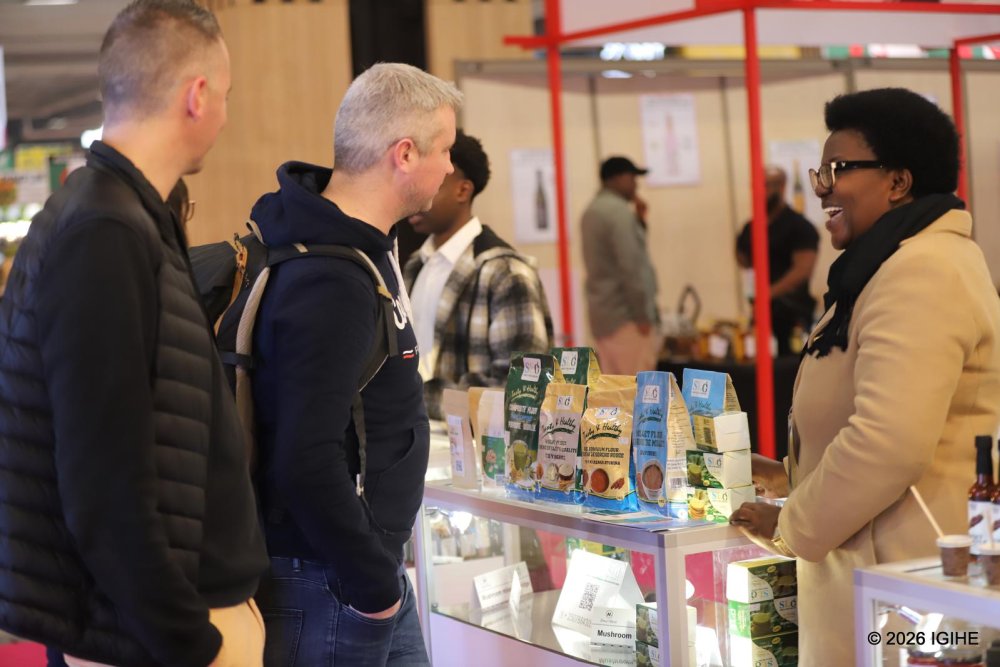
  • Museveni meets UK’s Theresa May over South Sudan, Somalia

    {President Yoweri Museveni has met United Kingdom Prime Minister Theresa May at the sidelines of the International Conference on Somalia currently taking place at Lancaster House in London.}

    According to a statement issued by Ms Lindah Nabusayi, the presidential press secretary, the bilateral meeting between the two leaders focused mainly on the situation in Somalia and the conflict in South Sudan, which has generated close to a million refugees making it the second-largest refugee-hosting country in the world after Turkey.

    The international conference on Somalia opens today in London and is organized under the auspices of the UK and the United Nations as part of efforts to put Somalia back on track.

    The conference has brought together Heads of State and Government from across East Africa and other key partners, along with senior figures from international organisations.

    President Museveni meets UK’s Theresa May over South Sudan, Somalia conflicts.
    Source:Daily Monitor

  • Uganda:Police officer dead, several injured in two separate accidents

    {A police officer has died and three of his colleagues injured in a motor accident along Jinja- Mable road.}

    The victims whose details are yet to be revealed are attached to Counter Terrorism Police department.

    They were riding on a motorcycle when a trailer knocked them near Ambacourt round about in Jinja District.

    The body of the deceased and his injured colleagues were taken to Jinja Hospital for post-mortem and treatment respectively.

    In a related development, one person has been confirmed dead and three others injured when a UPDF track rammed into a commuter taxi in Nansana, Wakiso District.

    Both vehicles were coming from Wakiso heading to Kampala city side when the accident happened.

    Police patrol car that carried body at Jinja mortuary.

    Source:Daily Monitor

  • Thousands flee DRC amid conflict

    {Thousands of people have fled fighting in Democratic Republic of Congo over the past month and sought refuge in neighbouring Angola, a provincial governor said, an exodus that is straining resources in villages along the border.}

    Ernesto Muangala said officials had counted more than 20,000 refugees in his Lunda Norte province, almost double the number recorded a month ago.

    All had fled clashes between Congolese government and militia forces that erupted in Congo’s Kasai-Central province in July, then spread to four other provinces.
    The clashes in the DRC pose the most serious threat yet to the rule of President Joseph Kabila, whose failure to step down at the end of his constitutional mandate in December was followed by a wave of killings and lawlessness across the vast Central African nation.
    Muangala said the refugees would be moved from overcrowded villages to a refugee camp in Lovua, about 1,000 km (600 miles) east of the capital Angola’s Luanda.

    “Angola is supporting the refugees to ensure safety until the situation is at normal and go back to their family in the country,” he told national radio station RNA.

    Thousands of people have fled fighting in Democratic Republic of Congo over the past month and sought refuge in neighbouring Angola.

    Source:ENCA