Solar activity, especially intense flares, can disrupt Earth’s ionosphere, a layer of charged particles high above the surface.
The researchers developed a theoretical model showing that when solar flares increase the number of electrons in the ionosphere, they can create strong electrostatic forces that travel downward through a kind of electrical coupling between the ionosphere and fractured rock deep in the Earth’s crust.
These forces, while subtle, might be enough to push a critically stressed fault a little further toward slipping especially if it was already near rupture.
Importantly, the team doesn’t claim that solar storms cause earthquakes outright. Earthquakes are complex and usually result from stresses building inside tectonic plates over years or decades.
Instead, the researchers suggest that space weather could act as an additional factor in some cases, potentially influencing when a rupture happens on a fault that’s already close to breaking.
The model also connects this theory to observations where unusual ionospheric behavior has been seen before major quakes.
The scientists plan to combine detailed space weather data and high‑resolution measurements of the ionosphere in future studies to better understand if and how solar activity might meaningfully interact with geological processes underground.
This research opens a new perspective on how phenomena in space could subtly affect conditions on Earth, reminding us that our planet is part of a much larger, dynamic system stretching all the way to the Sun.
New research suggests solar storms may influence earthquake timing.
Previous work had shown that infections often lead to appetite loss, but until now, the exact biological pathway behind this effect was not fully understood.
In the new study, researchers found that specialized cells in the gut detect harmful organisms such as parasitic worms and send chemical signals to the brain that effectively say “stop eating.”
This process doesn’t happen all at once. Initially, people may feel normal, but as the infection progresses and these signals build up, appetite can disappear completely.
The findings help explain why appetite loss can linger even after other symptoms begin to fade. Millions of people worldwide experience this pattern not only during short‑term stomach illnesses but also with long‑lasting infections where appetite remains low for extended periods.
The research suggests that the gut’s immune response plays a major role in controlling hunger by interacting with the brain’s hunger centers.
Understanding this gut‑brain communication system could lead to better treatments for conditions where appetite is suppressed in harmful ways, such as during chronic infections or in diseases that involve extreme weight loss.
The scientists behind the study hope future work will explore how this pathway might be influenced to help patients maintain healthy eating behaviors even while sick.
New study has uncovered how infections cause sudden loss of appetite.
In the research, scientists followed 81 African turquoise killifish, a species with a naturally short life span of four to eight months. Despite having similar genetics and identical living conditions, the fish aged very differently.
Some stayed active and slept mainly at night, while others became less active earlier and slept more during the day. These small differences in everyday behavior were strong predictors of how long each fish lived.
The research team, supported by the Wu Tsai Neurosciences Institute’s Knight Initiative for Brain Resilience, tracked each fish using a continuous camera system that recorded movement and rest patterns throughout their lives.
From this massive dataset, they analyzed thousands of moments to identify distinct behavioral patterns. These “behavioral syllables,” such as posture, swimming speed, and rest habits, helped the scientists see how individual aging paths diverged early even when the fish were in midlife.
One of the key findings was that fish with longer lifespans tended to stay more active during the day and sleep mostly at night, while shorter‑lived fish showed more daytime sleep and reduced activity. The researchers also used machine learning to show that just a few days of midlife behavior were enough to provide strong predictions of lifespan.
Lead researchers like Claire Bedbrook noted that “behavior is a wonderfully integrated readout, reflecting what’s happening across the brain and body,” suggesting that habits may offer a dynamic window into health and aging.
The study also found that aging doesn’t occur gradually in a smooth way. Instead, most fish experienced distinct stages of aging, moving quickly from one phase to another before settling into periods of stability. This pattern challenges traditional ideas about how aging progresses and highlights the importance of continuous behavioral tracking.
The researchers hope these findings will encourage further studies in humans, especially as wearable devices like smartwatches already collect data on activity and sleep. If similar patterns hold true in people, monitoring simple daily habits could one day help identify early signs of aging differences and inform strategies for healthier, longer lives.
How you move and sleep in midlife might quietly reveal how long you’ll live.
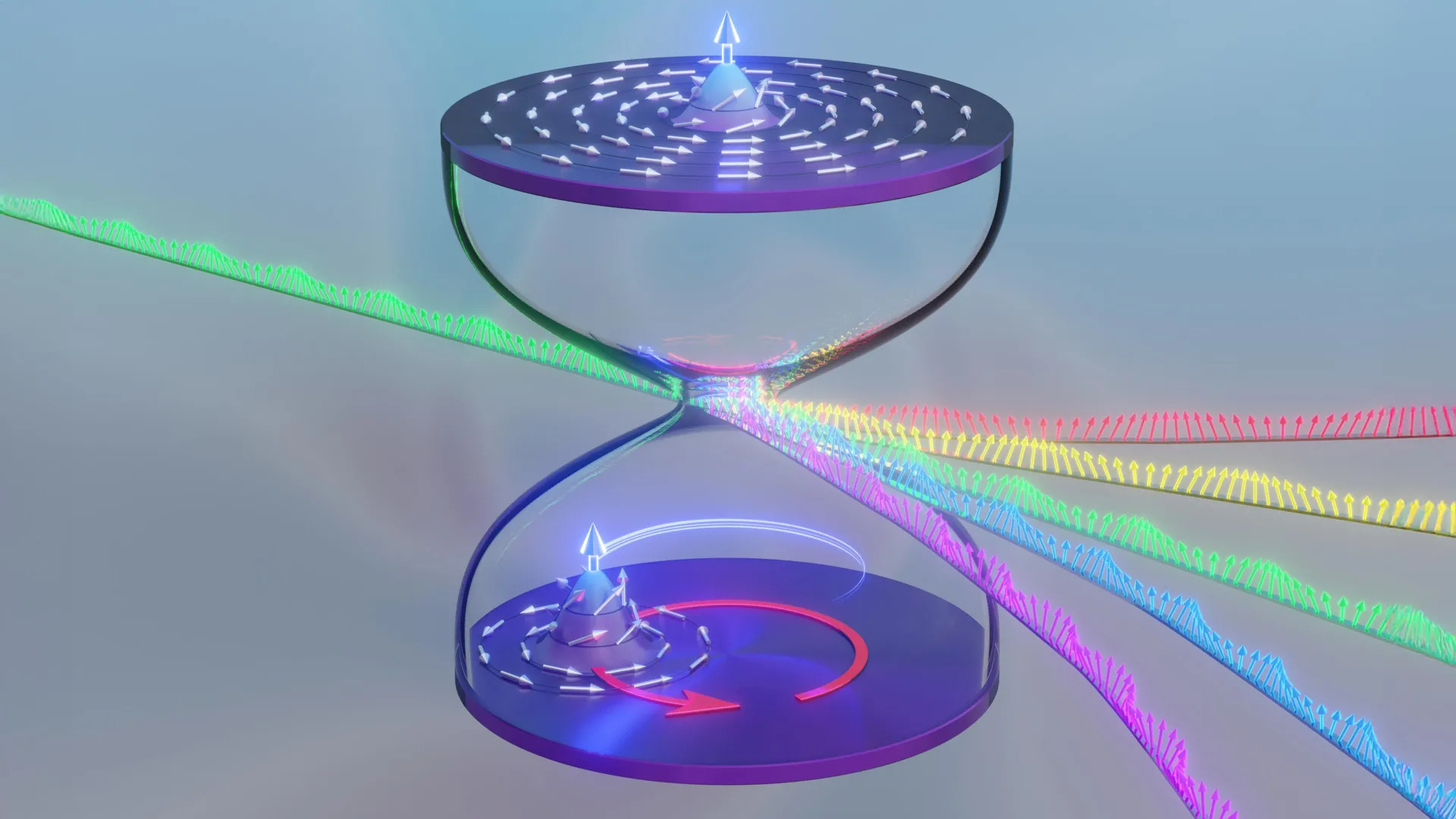
Magnetic vortices form inside very thin disks made from materials like nickel‑iron. In these disks, the magnetic moments tiny magnetic directions of atoms align in a circular pattern, like a miniature whirlpool.
When magnetic waves were applied, the vortex core began to move slightly in a repetitive way.
This motion caused the magnons (the collective waves of magnetic activity inside the material) to produce a frequency combining a series of regularly spaced signals instead of a single simple signal. This series of signals shows that multiple oscillation states can exist at once, something scientists had not seen in these magnetic systems before.
Project leader Dr. Helmut Schultheiß explained that the discovery offers “a powerful new way to link future computing technologies” because magnons can transmit information without needing to move electrical charge.
In conventional electronics, flow of electrical charge produces heat and energy loss. But magnons can carry information through magnetic waves, potentially allowing for low‑energy, highly efficient communication between devices.
What makes this finding especially significant is the very low energy required to produce these exotic states. Earlier research on related magnetic phenomena often needed intense laser pulses and large amounts of energy to see new oscillation patterns.
In contrast, the Dresden team showed that just weak magnetic excitations, on the order of microwatts (far less than what a typical smartphone uses in standby), are enough to trigger these complex magnon states.
This could help scientists design energy‑efficient magnetic systems for future technologies, including spintronics (electronics that use magnetic spin rather than charge) and even quantum devices.
The findings were published in the journal Science, and they challenge existing assumptions about how magnetic vortices behave, opening up new avenues for research into controlling magnetic information at the nanoscale.
New Discovery in Magnetic Vortices Could Lead to Low-Energy, High-Efficiency Communication Technologies.
Researchers at Karolinska Institutet in Sweden found that while fathers tend to have fewer mental health diagnoses during pregnancy and the first months after birth, the situation changes significantly later on.
The study analyzed national health data from more than one million fathers whose children were born in Sweden between 2003 and 2021.
The researchers looked at when these men received diagnoses for conditions such as depression and stress‑related disorders, beginning a year before pregnancy and continuing until the child reached one year old.
Surprisingly, the results showed that mental health diagnoses were lower than expected during pregnancy and in the months right after birth, possibly reflecting the emotional high and support that often accompany the early stages of becoming a parent.
However, by the time the baby reached about 12 months old, the trend reversed. Diagnoses linked to depression and stress had risen noticeably by more than 30% compared with the year before pregnancy.
One of the study’s authors, Jing Zhou, a PhD student at the Institute of Environmental Medicine at Karolinska Institutet, commented that the transition to fatherhood involves both positive moments and new pressures.
He explained that sleep disruptions, changes in relationships, and the ongoing responsibilities of caring for a growing child may contribute to increasing emotional strain over time.
The researchers say these findings challenge the assumption that fathers’ mental health is mostly stable after a baby is born.
Instead, the study suggests that the emotional toll may build up gradually, with symptoms becoming more pronounced as fathers continue to juggle work, family life, and other responsibilities.
The study was published in JAMA Network Open, a widely respected medical journal.
The authors hope the research will raise awareness about paternal mental health and encourage better support systems for new fathers not just immediately after birth but throughout the first year of parenting and beyond.
Fatherhood’s mental health toll may hit hardest a year after the baby arrives.
The idea came from a common frustration trying to tap a smartphone screen with long nails. Modern touchscreen technology works by sensing changes in an electric field when a conductive surface (like a fingertip) touches it. Nonconductive materials, like nails, don’t make that change, so the device doesn’t respond.
To solve this, the researchers experimented with dozens of formulas to find one that helps nails carry just enough electrical charge without being harmful or visibly cloudy.
After testing more than 50 different additives mixed into clear nail polish bases, the team found a promising combination of taurine (a safe organic compound found in many foods) and ethanolamine (a simple organic molecule).
This formula was enough to let a touchscreen register contact from nails coated with the polish. “Our final, clear polish could be put over any manicure or even bare nails,” said one of the researchers, explaining that the approach could benefit users with calluses or other fingertip challenges too.
Unlike previous attempts that used conductive metals or carbon materials which can be dangerous if inhaled during manufacturing and can make the polish dark or heavy the new formula stays clear and safer for everyday use.
The researchers believe the polish works through a chemical interaction that allows tiny charged particles (protons) to move when the screen’s electrical field is present, helping the device detect the touch.
Although the early results are promising, the polish isn’t yet ready for commercial sale. Even the best mixtures only last a few hours on nails because ethanolamine evaporates quickly, and researchers are still searching for a fully nontoxic ingredient that works as well.
The team says they are continuing their work and have even submitted a provisional patent for this approach.
A new clear nail polish could let people use their fingernails on touchscreens by helping them carry a tiny electrical charge.
In the study, researchers exposed human brain blood vessel cells to erythritol in amounts similar to what people might consume in everyday products. What they found was concerning.
The sweetener seemed to affect how the blood vessels in the brain work. Specifically, erythritol makes the cells produce less nitric oxide, a molecule that helps blood vessels relax and remain flexible.
It also increased the production of endothelin-1, which causes blood vessels to tighten. This combination could make blood vessels more prone to constriction, a condition that can increase the risk of serious issues like strokes.
The study also showed that erythritol could affect the body’s ability to dissolve blood clots naturally. The cells exposed to erythritol produced less t-PA, a natural compound that helps break down clots. Additionally, the erythritol exposure led to higher levels of free radicals, which are harmful molecules that can damage cells and tissues, potentially contributing to other health problems like heart disease.
While this research was conducted on cells in a lab, the results align with previous studies that suggest higher levels of erythritol in the bloodstream are linked to a higher risk of cardiovascular events, like heart attacks and strokes.
Because of these findings, the researchers are urging people to be more mindful of their erythritol intake. Many sugar-free and low-calorie products, which are often marketed as healthy alternatives, could contain higher amounts of this sweetener.
For those who regularly consume such products, it may be a good idea to check labels more carefully and consider limiting erythritol intake until more research can fully understand its long-term effects.
While erythritol has been popular as a sugar substitute, the new research highlights the importance of being cautious about its possible impact on health.
A common sugar substitute may quietly impair brain vessels and raise stroke risk.
The 18-year-old contestant, Kamolwan Chanago, who is competing for the Miss Thailand title, was responding to the judges when the accident occurred. She was not allowed to stop and restart her answer as per the rules.
Quickly reacting to the mishap, Kamolwan turned away from the camera to discreetly reposition her dental prosthetics before returning to the judges to continue her presentation.
A spokesperson for Miss Grand Thailand, the pageant she was competing in, confirmed that the incident was an accident and expressed pride in how Kamolwan handled the situation.
The spokesperson said, “It was an unfortunate accident when her dental prosthetics fell out while she was speaking. We are proud of how she maintained her composure. This incident will not affect the ongoing competition, which will proceed as planned.”
The winner of the Miss Grand Thailand title is set to be announced on March 28, 2026. The winner will go on to represent Thailand at the Miss Grand International competition in India in October 2026.
Upon realizing what had happened, the contestant turned around to reposition her dental prosthetics and then went on to present herself to the judges.
A team of researchers from Baylor College of Medicine and international collaborators found that metformin targets a small protein in the ventromedial hypothalamus (VMH), a part of the brain that helps regulate energy and blood sugar levels.
The protein, called Rap1, is crucial for metformin’s action. When metformin suppresses Rap1 activity, it causes special nerve cells in the VMH to become more active, helping to lower blood sugar.
To test this, the research team used lab mice engineered to lack Rap1 in their VMH. These mice did not respond to metformin, showing that Rap1’s presence is necessary for the drug to function properly. The findings suggest that metformin works not only by acting on the liver and gut but also through direct action in the brain.
Further experiments were conducted where metformin was delivered directly into the brains of diabetic mice. Even though the doses were much smaller than the oral doses typically used, the mice still showed significant reductions in blood sugar. This experiment confirms that the drug’s effects are not limited to peripheral organs but also directly involve the brain’s regulation of blood sugar.
The research also showed that metformin activates SF1 neurons in the VMH, which are essential for blood sugar control. Without Rap1, these neurons did not respond to the drug, further reinforcing the idea that this brain pathway is critical to metformin’s function.
This discovery is a game-changer in diabetes research. It not only alters our understanding of how metformin works but also opens the door to developing new treatments that target brain pathways for better blood sugar control. The study also raises questions about the drug’s potential impact on brain aging and overall brain health, offering exciting possibilities for future research.
With this new insight, scientists are now exploring how metformin’s action in the brain could lead to more effective treatments for diabetes and other related health conditions.
Metformin’s long-hidden brain pathway may redefine how diabetes is treated.
Fighters from across Africa, including Nigeria, Algeria, Uganda, Tanzania, DRC, Gabon, and more, have arrived in Rwanda, with many experiencing the country for the first time. Their reactions have been overwhelmingly positive, with many praising Kigali as a welcoming, well-organized, and beautiful destination for training and competition.
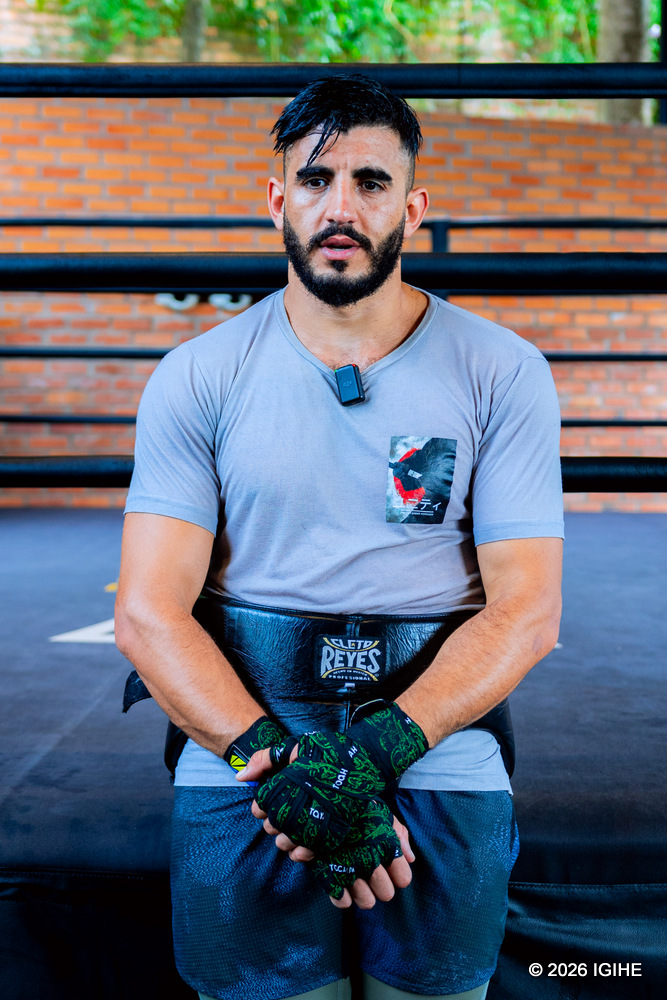
In an exclusive interview with IGIHE, Lamrani Abderrazeek, the Algerian cruiserweight, shared his excitement about his first visit to Rwanda. Having passed through Dubai before arriving in Kigali.
“This is my first time in Rwanda, and I really like it. The people here are nice. Everything is easy. Everything is straight. The weather is amazing. It’s the best place to visit. It’s the best place to do your camp, and it’s the best place to fight.”
Abderrazeek’s words reflect the sentiments of many international athletes who have praised Rwanda’s clean environment, modern gyms, and friendly atmosphere.
Lamrani Abderrazeek shared his excitement about his first visit to Rwanda.
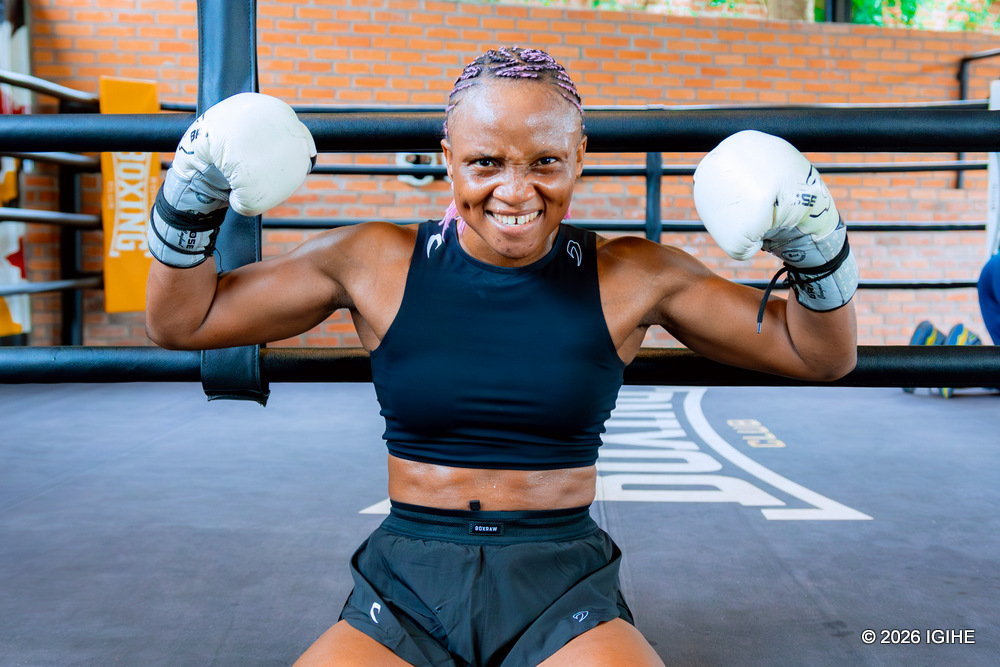
Nene Joy Ojo, the Nigerian female boxer making waves on the card, also called on her fellow Nigerians and supporters to show up in force:
“If you’re here, come support your girl. Get your ticket from KCC Roundabout on the 28th of this month.”
Ojo’s message highlights the growing visibility of women’s boxing at Kigali Fight Night, which will feature several high-profile female matchups.
Nene Joy Ojo highlighted the growing visibility of women’s boxing at Kigali Fight Night.
The excitement is shared by matchmaker Khaled, who hails from both Uganda and Dubai. He sees Kigali Fight Night as a landmark moment for African boxing.
“I’m excited to be in Rwanda simply because it’s a beautiful country, first of all, and yeah, it is a fresh market for boxing, especially pro boxing… Silverback says it is redefining African boxing. So we’re doing a great job, like putting fighters together and stuff like that.”
He added that the matchmaking for the event is strong, with international fighters on the card, and urged fans, “Definitely everybody has to come and watch.”
One fighter expressed pure confidence ahead of the main card:
“Fight night is on the 28th of this month. I’m ready. I’m ready to conquer. My opponent will have to be ready for me.”
Matchmaker Khaled, from Uganda and Dubai, sees Kigali Fight Night as a pivotal moment for African boxing.
Returning as the official ring announcer and MC, Rocky Try shared her pride in the event’s growth:
“Honestly, I was also the ring speaker last year, and being there is just electric. You can see the fighters’ real sportsmanship, their talent, and their hunger. This time, it’s going to be even bigger.”
Rocky emphasized the cultural significance of bringing professional boxing to Rwanda, especially with strong female participation both in the ring and behind the scenes:
“My pride for the Kigali Fight Night is the fact that we’re bringing the boxing culture to Rwanda… We have female athletes, we have male athletes, we have the young ones… Having something so new in Rwanda is exciting.”
To women still hesitant about boxing, she offered powerful encouragement:
“Do you know what? Let me speak to you. I started boxing at a time in my life when I had a lot of anger. But as I trained, it wasn’t about the anger anymore; it became about discipline. So, just do it. It’s like free therapy, you just pay a little more than a therapist.”
Kigali Fight Night 2026 promises to be a major milestone in Rwanda’s boxing culture, shining a spotlight on the continent’s rising boxing talent and highlighting Rwanda’s growing significance as a host for major sporting events.
Returning as the official ring announcer and MC, Rocky Try expressed her pride in Kigali Fight Night’s growth.