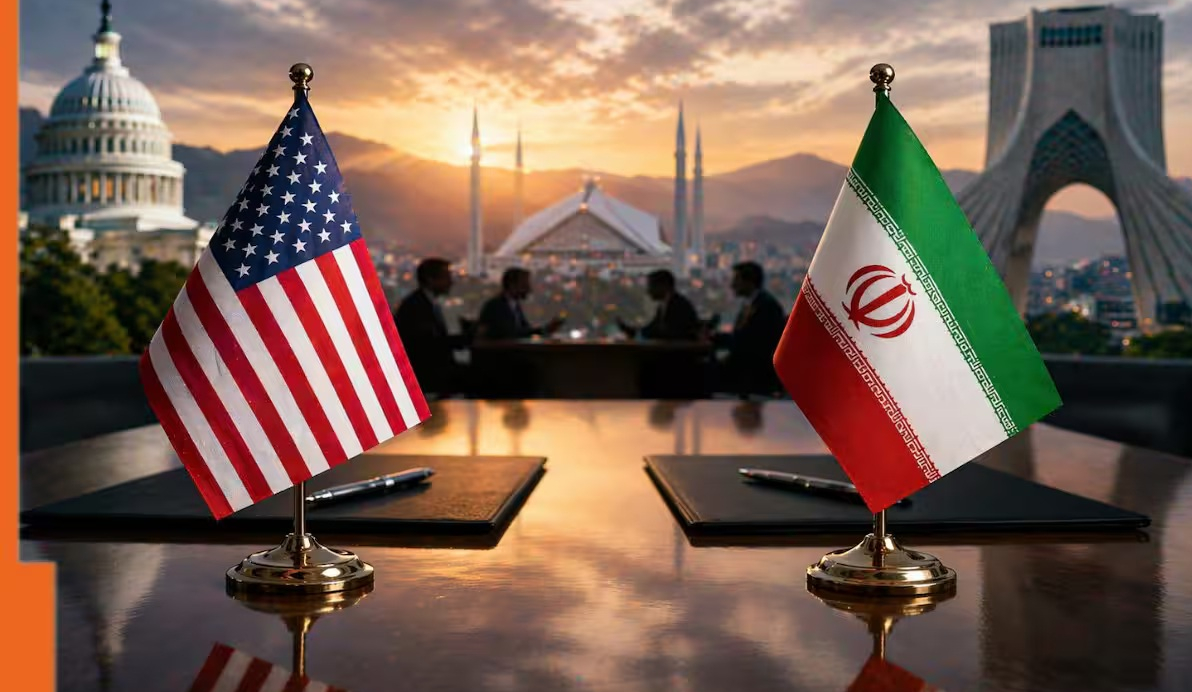
While the move is welcome, it has yet to generate momentum for dialogue. Iran has made it clear that it will not engage in a new round of talks unless Trump lifts his blockade on ships entering or exiting Iranian ports in the Strait of Hormuz. The contrast between a prolonged ceasefire and stalled diplomacy underscores the fragility of the current situation.
Against this backdrop, several key questions arise: Why has Tehran refused to attend the talks? What is Washington’s real intention in extending the ceasefire while maintaining pressure? And where might the situation head next?
Why Iran refuses to negotiate
Iranian Foreign Ministry spokesperson Esmaeil Baghaei said Monday that Iran currently has no plan for the second round of peace negotiations with the United States.
Tehran’s attendance depends on Washington meeting preconditions, Iran’s semi-official Tasnim news agency reported, citing the U.S. naval blockade and “excessive demands” as key obstacles.
Iran’s Foreign Minister Seyed Abbas Araghchi said Monday that U.S. “provocative actions” and ceasefire violations are major obstacles to continuing peace negotiations between the two countries.
The United States takes actions that are in no way indicative of its seriousness in pursuing a diplomatic process, Baghaei said, noting that since the ceasefire took effect on April 8, “we have been faced with the breaking of promises and nagging by the United States.”
He also noted an attack against an Iranian commercial ship earlier in the day, which he said is also considered a violation of the ceasefire.
Baghaei said that under UN General Assembly resolutions, the blockade of a country’s seas and ports is an act of aggression. He said Iran will carefully decide on how to proceed based on a single guiding principle: safeguarding the Iranian nation’s interests.
He said the issue of transferring Iran’s enriched uranium has never been an option in any of the negotiations, stressing the importance for Iran to maintain its nuclear, industrial and scientific achievements.

What’s Washington’s real intention?
The U.S. decision to extend the ceasefire indefinitely has been widely interpreted as an attempt to preserve a diplomatic window, but analysts caution that it also serves broader strategic purposes.
“Trump … remains eager for a diplomatic solution to the war, wary of reviving an unpopular conflict he’s claimed the United States already won,” CNN reported Wednesday.
However, the United States has not scaled back its military posture in the region. Multiple media outlets reported that U.S. naval deployments and surveillance activities in the Gulf have been maintained—and even intensified—during the ceasefire, suggesting continued pressure and the retention of military options.
The United States is expected to deploy three aircraft carrier strike groups simultaneously in the Middle East in the coming days, NBC reported on Monday.
The U.S. military will continue the blockade against Iran and “remain ready and able,” Trump said Tuesday, although Pakistan’s Army Chief, Field Marshal Asim Munir, told him that the blockade of Iranian ports would remain a major obstacle to meaningful diplomatic progress.
In this sense, the ceasefire extension is less a definitive step toward peace than a tactical maneuver to buy time for both negotiation and contingency planning.
Where are U.S.-Iran talks headed?
“Trump’s ceasefire extension means nothing,” said Mahdi Mohammadi, an adviser to Iranian Parliament Speaker Mohammad Baqer Qalibaf, who led the Iranian negotiating delegation.
“The losing side cannot dictate terms. The continuation of the siege is no different from bombardment and must be met with a military response,” he added.
Araghchi said Monday that Iran would decide whether to continue diplomacy based on “all aspects of the issue” and U.S. behavior, adding that Tehran would take steps to protect its interests and national security.
“Honoring commitments is the basis of meaningful dialogue,” Iranian President Masoud Pezeshkian wrote in a post on X on Monday. He said deep mistrust of U.S. conduct persists in Iran, with “unconstructive and contradictory signals” from American officials suggesting they seek Iran’s surrender.
Despite significant hurdles, a U.S. official said there is still a chance that U.S. and Iranian negotiators will meet soon, though whether and when such talks might occur is far from certain, according to CNN reports.
“The question now is not whether diplomacy has failed, but whether both sides are willing to keep trying despite that failure,” said an analysis article published by Geojuristoday, a non-partisan think tank based in New Delhi.

Leave a Reply