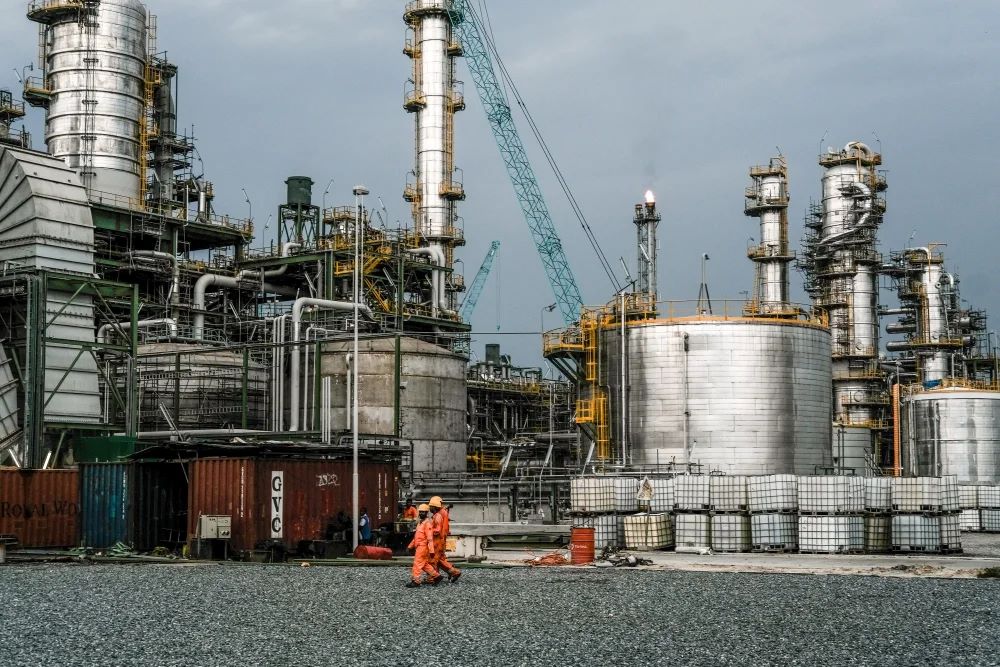
The Dangote Petroleum Refinery is Africa’s largest oil refinery and one of the biggest globally, notable for processing petroleum products through a single integrated system. It has a refining capacity of at least 650,000 barrels per day.
Currently, about 62% of the fuel consumed in Nigeria is refined at this facility, which has also expanded exports to several African countries, including Ghana, Cameroon, Togo, and Tanzania.
Global supply chains have been strained following disruptions around the Strait of Hormuz, a critical route through which roughly 20% of the world’s fuel passes. About 40% of fuel imported into East Africa originates from India, with 27% of it transiting through the Strait of Hormuz.
Although much of the fuel reaching Rwanda comes via alternative routes, instability in the Hormuz corridor has pushed traders to explore new supply options.
As Rwanda prepares to host the Africa CEO Forum 2026 in May 2026, bringing together top business leaders and policymakers across the continent, Rwanda’s Private Sector Federation is assessing the possibility of importing petroleum products from Dangote’s refinery. Dangote himself is expected to attend the forum.
The Chairperson of the Private Sector Federation, François Twagirumukiza, told IGIHE that efforts are underway to diversify fuel supply sources to prevent shortages.
“We are exploring alternative supply routes that do not pass through the Strait of Hormuz. Options exist, such as Nigeria and other countries that were not traditionally part of our supply chain, mainly due to pricing and transport considerations,” he said.
Dr. Joseph Akumuntu, head of Rwanda Association of Petroleum Products Importers (ASSIMPER) noted that engaging with Dangote presents a significant opportunity to explore new partnerships.
“We are currently facing challenges with supplies through the Strait of Hormuz, where shipments are not arriving as expected. Dangote has committed to supplying petroleum products across Africa, and we will have the opportunity to host him in Rwanda,” he said.
“This is a major opportunity for both the government and private sector, especially players in the energy sector, to present our needs and explore collaboration in logistics and pricing.”
However, Claudien Habimana, Managing Director of SP Rwanda, cautioned that importing fuel from Nigeria could come with high transportation costs.
“It is possible, but transport costs would be significantly higher. The route would involve going around through countries like Algeria, down to Southern Africa, and then back up. This is far more complex compared to sourcing fuel from the Middle East through ports like Mombasa or Dar es Salaam, which are closer,” he explained.
Leave a Reply