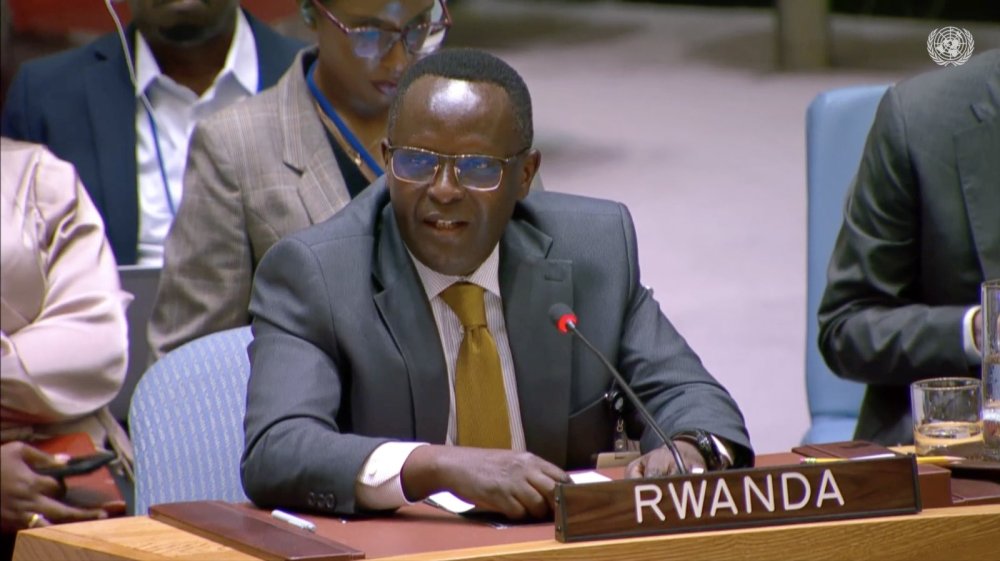
He was speaking at the UN Security Council briefing on the United Nations Organization Stabilization Mission in the Democratic Republic of the Congo (MONUSCO) on March 26, 2026, where he reaffirmed Rwanda’s commitment to a political resolution for the region, calling for a focus on the root causes of the conflict.
Amb. Ngoga made it clear that the conflict in eastern DRC is not of Rwanda’s making, noting that the country remains deeply concerned about the presence of the FDLR, a genocidal group founded by the perpetrators of the 1994 Genocide against the Tutsi.
According to Amb. Ngoga, the FDLR’s ideology remains unchanged and continues to spread throughout the region, posing a constant threat to Rwanda.
“The FDLR is not an ordinary armed group. It is a genocidal force, founded by remnants of those responsible for the 1994 Genocide against the Tutsi in Rwanda, and its genocidal ideology has never changed,” said Ngoga. “For Rwanda, it remains an ever-present threat, particularly given the devastation our country suffered as a result of that ideology.”
Amb. Ngoga stressed that eliminating the FDLR and its ideology is critical to any credible and lasting solution to the conflict in eastern DRC.
“Addressing the threat of FDLR is indispensable to any credible and lasting solution to the conflict in Eastern DRC,” he asserted. “This group must be neutralized, and their ideology and its vectors, such as hate speech, must be eradicated.”
Root causes of the conflict in DRC
Amb.Ngoga highlighted the internal dynamics of the conflict in DRC, stating that the root causes of instability in the region must be addressed by the Congolese themselves.
He emphasized the importance of the Doha Framework for Peace, which provides a platform for dialogue to address these internal issues and drive long-term peace in the region.
“The Doha Framework for Peace provides an important platform for dialogue aimed at addressing these internal drivers of instability. Progress in this process is therefore essential,” Amb. Ngoga explained.
He also pointed out that, alongside the Doha process, the implementation of the Washington Peace Agreement will be crucial in creating the conditions for a sustainable political settlement.
The Ambassador further emphasized that the peace process must address long-standing issues, including the return of refugees who have spent decades in camps.
“This track also provides the framework to finally resolve enduring challenges, such as the dignified return of refugees who have remained in camps for nearly three decades – Three hundred thousand in the region and many others in western countries,” he said.
International collaboration and accountability
Amb. Ngoga acknowledged the vital role of international partners, including the United States, Qatar, and the African Union, in supporting the peace process. He emphasized that the success of these efforts depends on continued impartial engagement, rooted in facts and verifiable evidence.
“Decisions and actions taken in support of peace must reinforce the credibility of these processes and ensure that all parties remain equally bound by the commitments they have made,” Amb.Ngoga stated.
“Enforcement and support mechanisms should apply equally and justly to all parties. In other words, enforcement and support mechanisms for these peace processes must be not only even-handed but also be seen to be even handed,” he added.
Humanitarian crisis and the need for immediate action
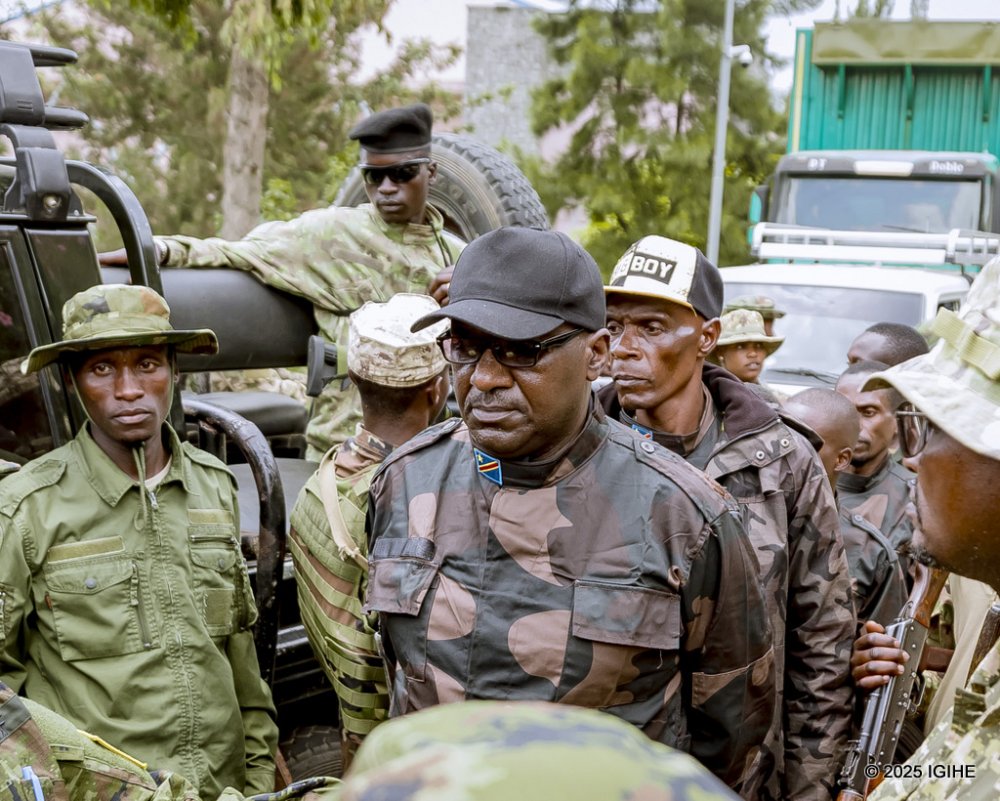
The Ambassador also addressed the rising humanitarian consequences of ongoing hostilities, particularly the increasing use of drones and aerial attacks in civilian areas.
These attacks have caused significant civilian casualties, including a recent tragedy in Goma, where a humanitarian worker and several civilians lost their lives.
“Recent months have also seen an escalation in the use of drone strikes and other aerial attacks in populated areas. As the report notes, such attacks have already resulted in civilian casualties,” Amb. Ngoga explained.
From January to March, Congolese army, FDLR, and other allied groups carried out several drone attacks, including one on March 9, 2026, in Minembwe, which damaged infrastructure, and another on March 19, 2026, that hit civilian homes, destroying buildings and causing numerous casualties.
Amb. Ngoga called for an immediate ceasefire and the establishment of conditions to protect vulnerable communities and support ongoing political processes.
“These developments underscore the urgent need for a ceasefire and for conditions that can effectively protect vulnerable communities and support ongoing political processes,” he stated.
Amb. Ngoga reiterated Rwanda’s commitment to the Washington Peace Agreement and the Doha Framework for Peace. He emphasized the importance of turning agreements into tangible progress on the ground and ensuring that the agreed monitoring mechanisms are effectively implemented.
“If we remain focused on implementation and on addressing the root causes of this conflict, we have a genuine opportunity to move toward a durable and lasting peace in the region,” Ngoga concluded. “Rwanda pledges to play its part honestly and fully.”
Leave a Reply