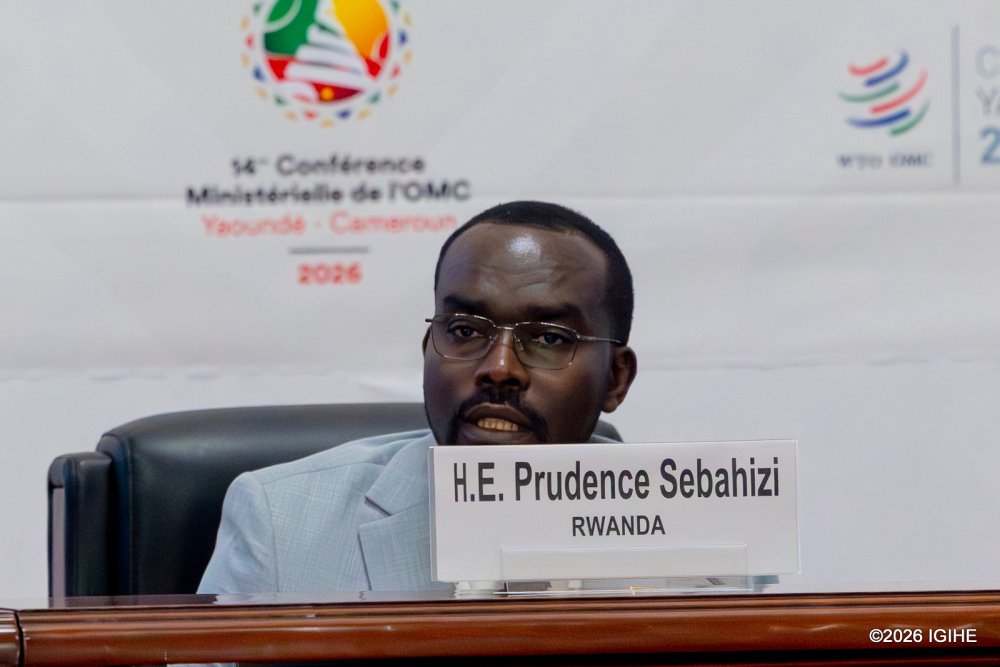
He pointed out that this rate is significantly lower than the 37% tariff Rwanda had already been paying on textile exports, despite arguing that such charges are inconsistent with international trade law.
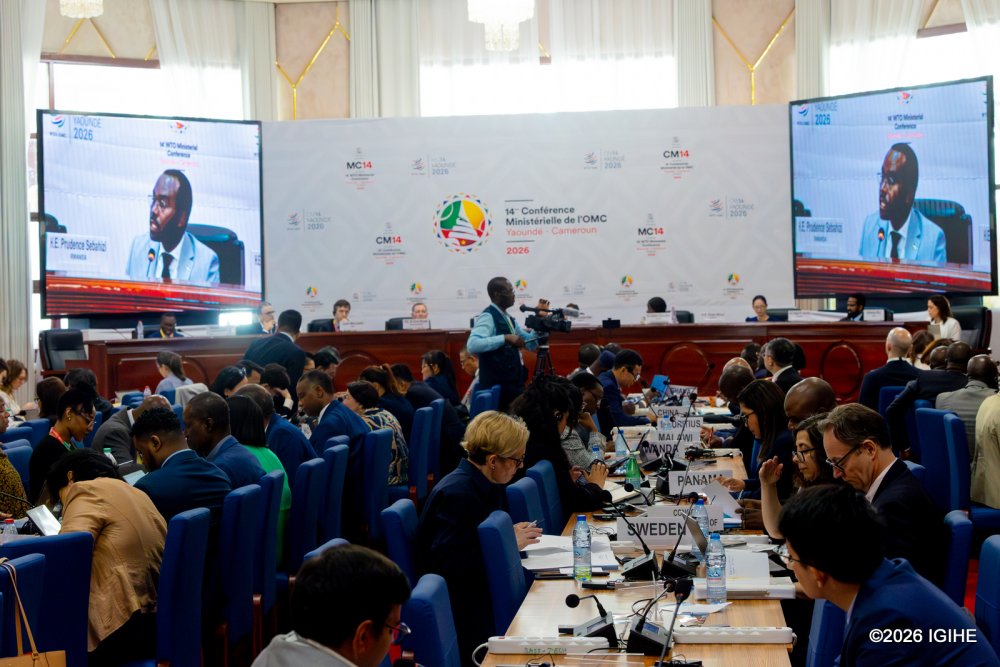
The minister is among participants of the World Trade Organization (WTO) Ministerial Conference in Yaoundé, Cameroon.
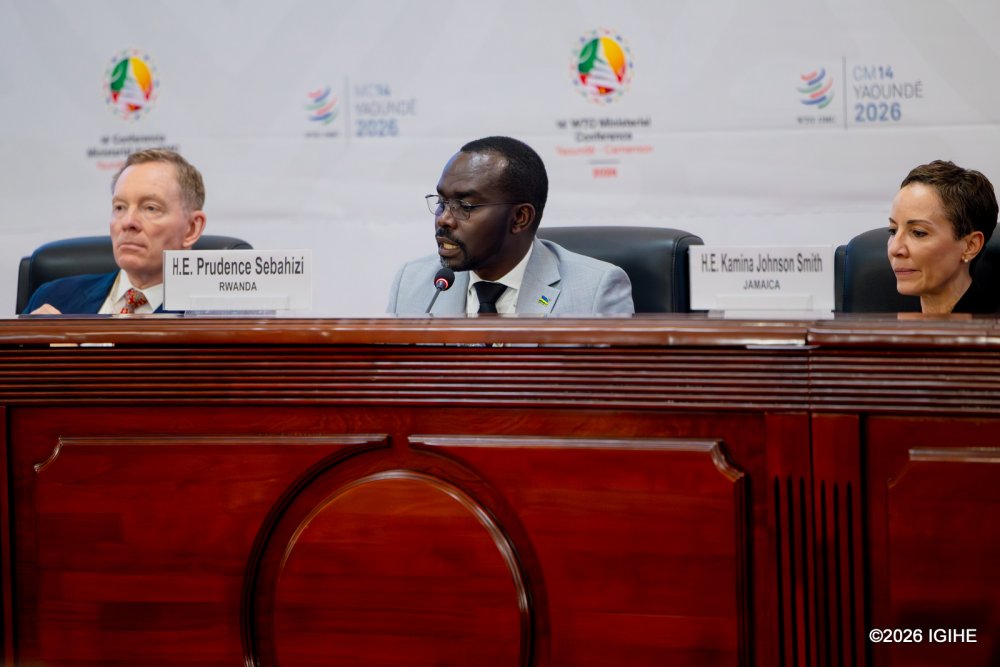
On Wednesday morning, he addressed a joint session organized by the World Bank and the WTO, where he outlined Rwanda’s strategies to boost trade through services, job creation, and inclusive economic growth.
In an interview with IGIHE, Sebahizi noted that the meeting comes at a time when the global trading system faces persistent challenges, particularly related to institutional reforms and the failure of some countries to adhere to established trade rules.
He emphasized that one of the core principles of international trade is non-discrimination. According to this principle, imported goods should be treated equally regardless of their country of origin. However, recent trends show that some countries are imposing tariffs based on origin, undermining these rules.
“There are fundamental principles guiding international trade law, especially non-discrimination,” he said. “But we have recently seen countries imposing tariffs depending on where goods come from.”
Sebahizi added that while preferential trade agreements may allow certain countries to export goods duty-free, countries without such agreements should still be treated according to WTO rules. He stressed the need for a return to proper implementation of these principles.
Addressing the U.S. tariffs specifically, the minister noted that although they have had some impact, Rwanda has not suffered significant losses. He explained that the tariffs apply to goods already being exported to the U.S., and that Rwanda had long faced even higher duties on key exports like garments.
“In reality, Rwanda has not lost much because we were already facing a 37% tariff on clothing exports to the U.S. market,” he said. “Now, under the new measures, Rwanda falls under a 10% tariff category.”
He added that while the reduction may appear beneficial, the broader issue lies in the inconsistency of applying or adjusting tariffs on goods from developing countries, which itself contradicts international trade norms.
Sebahizi further stated that, aside from the United States, Rwanda has not encountered other countries imposing trade barriers that violate global trade rules.
Leave a Reply