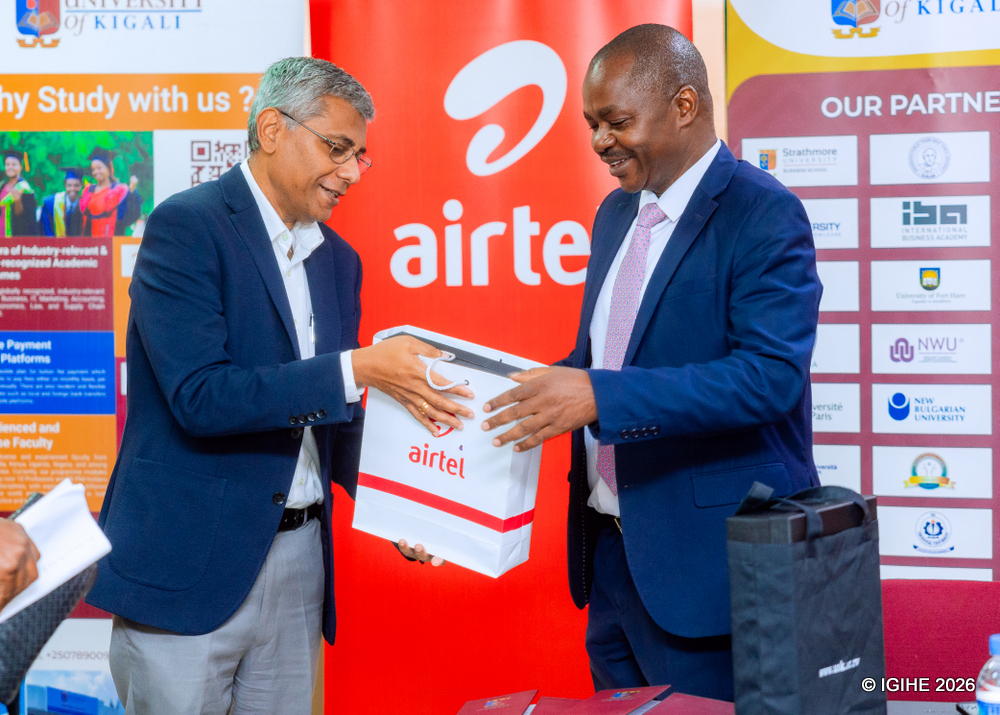
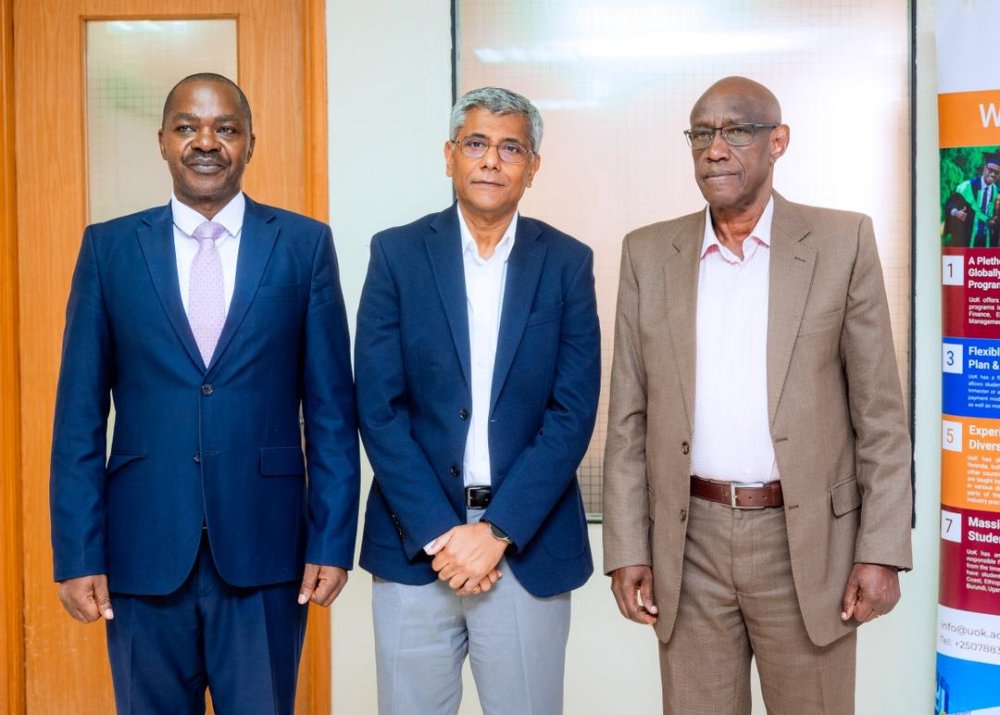
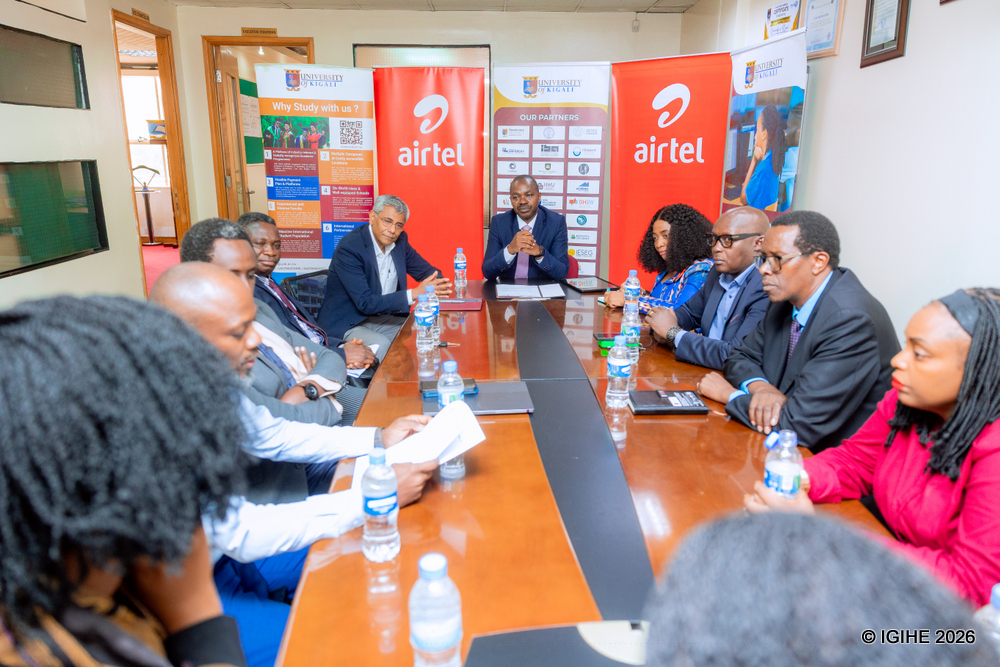
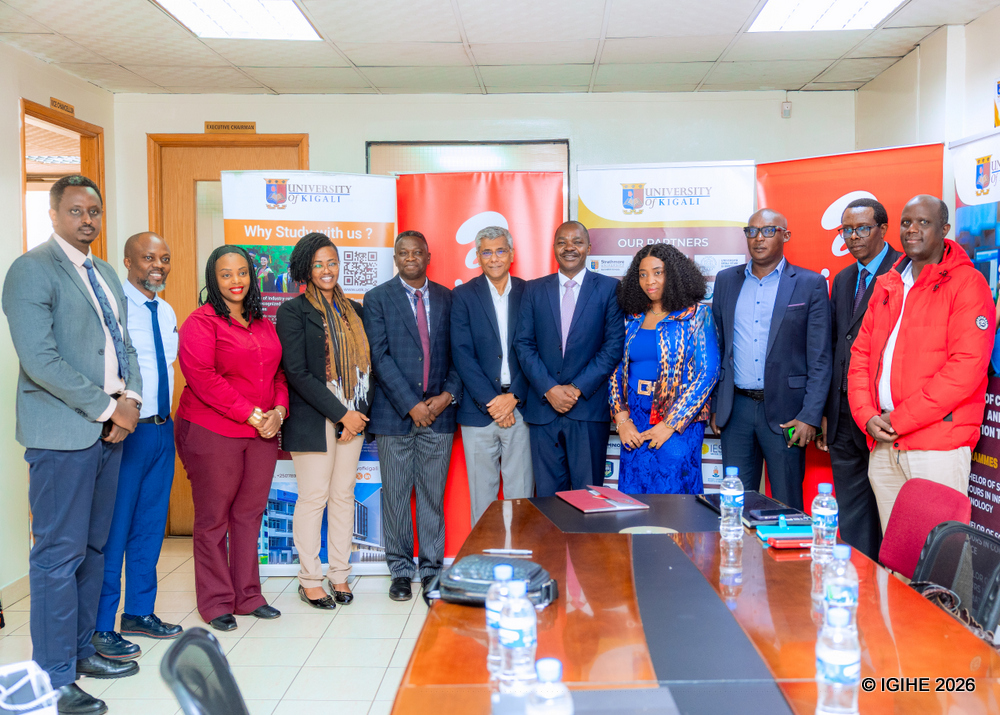
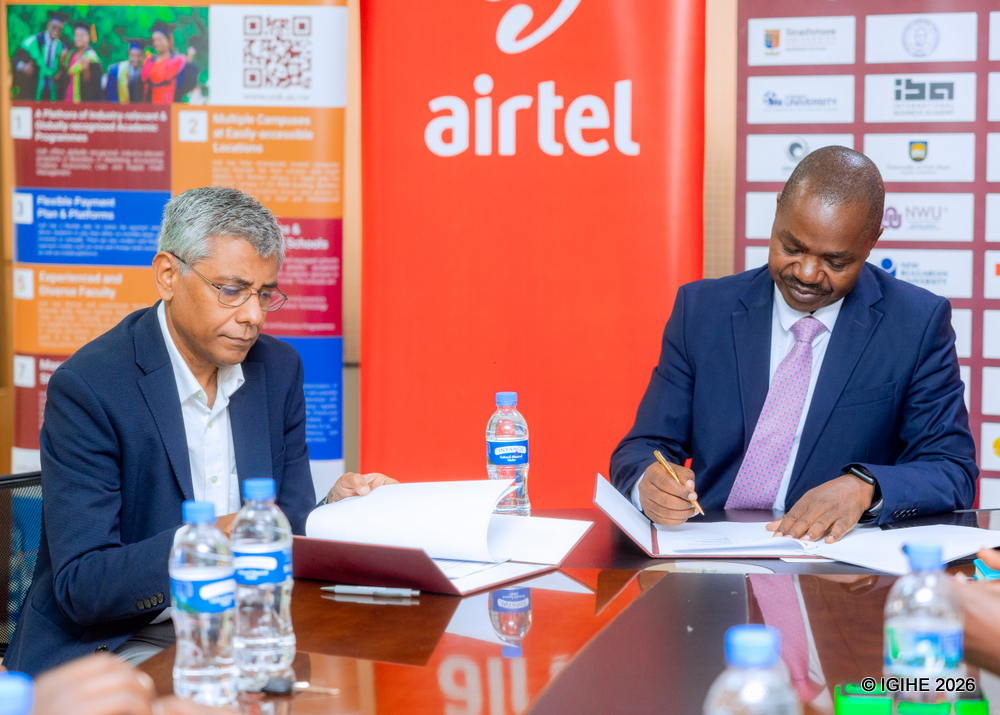
The agreement was signed at the university’s headquarters in Kigali on March 5, 2026.
Under the partnership, Airtel Rwanda will provide affordable internet packages and routers to students at the University of Kigali to support digital learning.
One of the initiatives includes offering a router with 60GB of monthly internet, normally priced at Rwf10,000, at a reduced cost of Rwf5,000. The package can be shared by up to ten users.
Students who prefer mobile connectivity will also be able to subscribe to a package costing Rwf3,000 per month, which provides one gigabyte of 4G internet per day along with the ability to make calls across all networks.
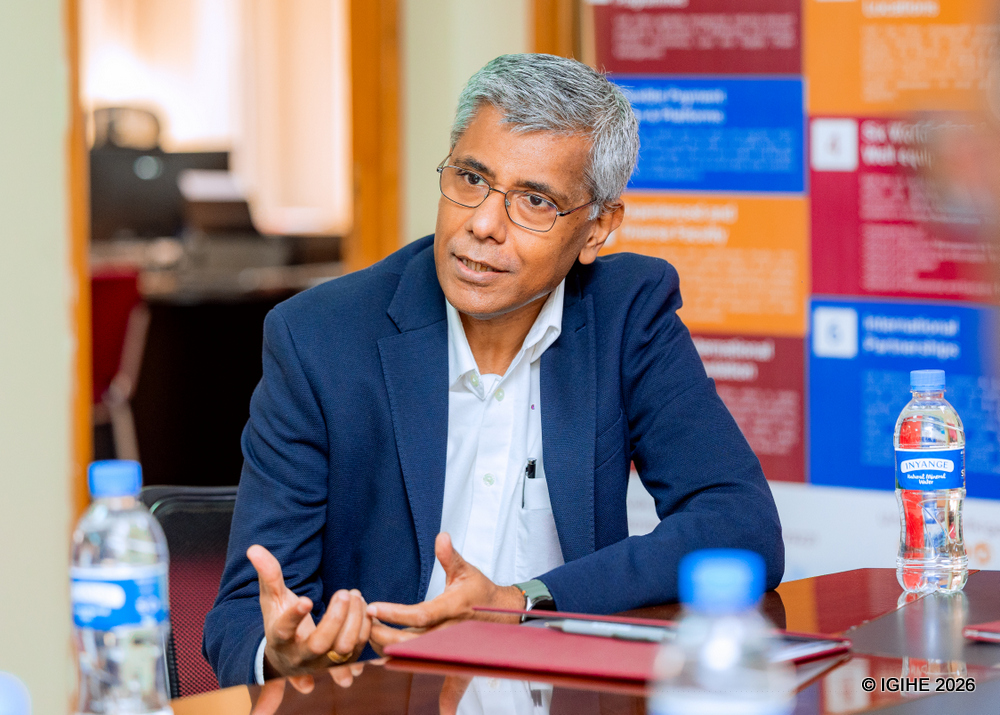
The Managing Director of Airtel Rwanda, Sujay Chakrabarti, said the company plans to expand similar partnerships with other universities in order to support students who rely on internet access for their studies.
“We believe that education is extremely important,” he said, adding that universities host large numbers of young people who increasingly depend on digital tools for learning. “With the university’s support, our technological equipment such as routers and other services will be made available to students.”
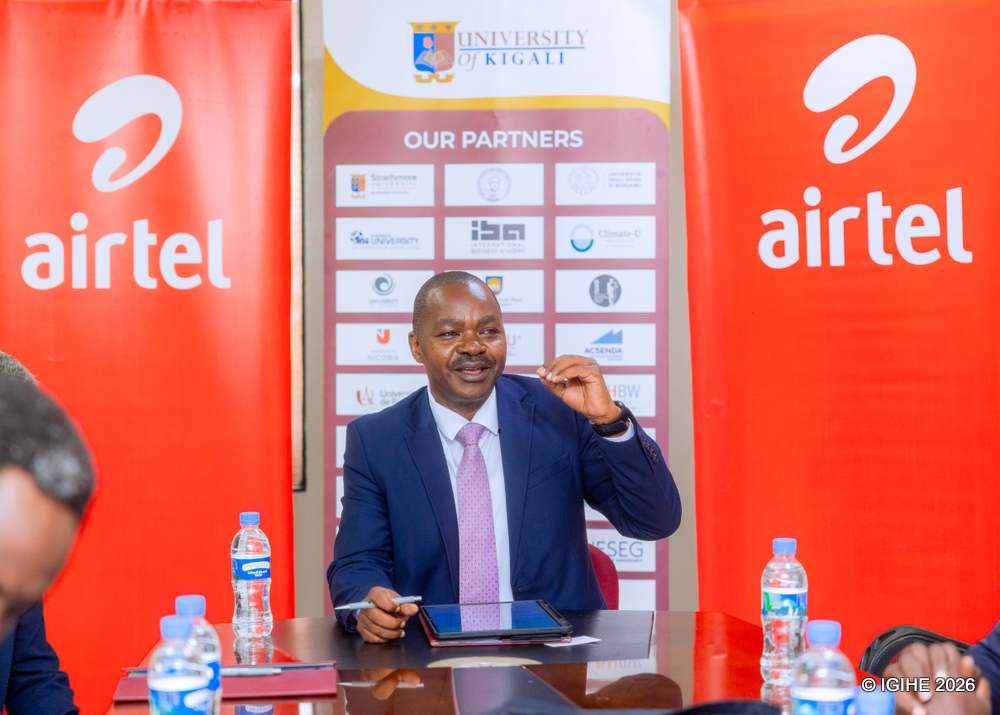
The Vice Chancellor of the University of Kigali, George Kimathi, said both institutions have strong experience in research and that the partnership will allow them to collaborate in finding solutions to global challenges.
“We have a large number of researchers here, and Airtel also has experts. Together we can conduct joint research to identify problems that need solutions,” he said. “This partnership will accelerate research and produce better outcomes than if either side worked alone.”
The collaboration will also allow Airtel Rwanda to expand its services among the university’s student community while enabling students to access relevant data and resources that can support research and practical learning.
Both institutions also plan to organize mentorship sessions, innovation activities, and knowledge-sharing events.
The partnership aligns with Rwanda’s Vision 2050 strategy, which aims to build a knowledge-based economy and ensure that graduates leave universities equipped with the digital skills needed to compete in a technology-driven job market.
Leave a Reply